
Fabric Conference 2024 – Ep. 307
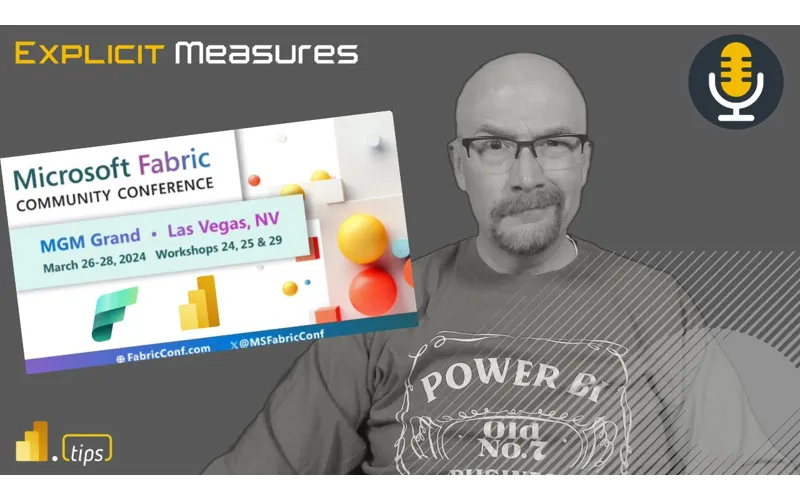
Mike just got back from the Microsoft Fabric Community Conference (FabCon) and breaks down what stood out—from the biggest product announcements to what it means for real-world adoption. The conversation hits AI/Copilot, task flows, OneLake + open formats, governance/security, and practical takeaways for teams planning Fabric rollouts.
News & Announcements
- Announcements from the Microsoft Fabric Community Conference | Microsoft Fabric Blog — Learn more about the exciting announcements from the Microsoft Fabric Community Conference. Including Microsoft data, AI, and security products.
- PowerBI.tips Podcast — Subscribe and listen to the Explicit Measures podcast episodes and related content.
- Power BI Theme Generator — Create and download Power BI report themes using the PowerBI.tips theme generator.
Main Discussion
Here are the core themes from the discussion (beyond just repeating the video title):
- On-the-ground FabCon recap: Mike shares how the conference felt, what sessions were packed, and why the energy matters for adoption.
- What Mike presented:
- Spark debugging in Fabric (how the experience has improved vs. earlier Synapse patterns).
- Migration path thinking for teams coming from ADF/Synapse into Fabric pipelines + notebooks.
- The ‘four promises’ framing (from the conference blog): Fabric as a complete platform, lake-centric/open, empowering business users, and AI-powered—then which of those felt most real today.
- AI/Copilot practicality: Where Copilot helps immediately (writing M/DAX/notebooks, chaining transformations) vs. where it’s still early and needs governance + structure.
- Task Flows as a potential game-changer: A visual way to document and communicate end-to-end data projects (including tagging + built-in documentation), and why that matters for both engineering teams and self-service users.
- OneLake + open formats: Why standardizing on an open lake format changes how compute engines can share data, plus the implications of shortcuts and cross-tenant/external sharing.
- Governance + security signals: More emphasis on enterprise readiness (private networking, secure access patterns, governance story) and what’s still missing/immature.
Looking Forward
Keep an eye on upcoming updates in Fabric and Power BI, and let us know what topics you want us to cover next.
Episode Transcript
0:31 n good morning and welcome back to the explicit measures podcast with Tommy Seth and Seth and Mike good morning gentlemen and happy Tuesday we’re back at it it’s another week at it it’s live again so we’re live this is not a record episode we are back from well I am back from the fabric conference that just happened and yeah we’re we’re there’s a lot of news to talk about now so we’re we’re probably going to take take this episode instead of going actually through like news or blogs or things that came out
1:02 news or blogs or things that came out we’re probably just going to spend most of our time discussing what was announced at the fabric conference and what were the main what we felt like were maybe some of the main points here that will help us change how we build things in the future what is this going to look like now moving forward so think I think there’s some very interesting things here that are going to be happening as of after listening to all the announcements from the the febc febc conference the nice thing is we had The Insider we had you there live sneak around the back sneaking around
1:33 sneak around the back sneaking around the back trying to figure out what’s going on hitting some hitting some sessions session you were you also yeah you also had a couple sessions right I did I had two sessions I talked at the conference I was talking on the spark debugging experience so Microsoft has brought spark to fabric but they have done their own flavor on how do you optimize that when something goes wrong how do you see what happened if you have a notebook running in a pipeline how do you go find what
2:03 pipeline how do you go find what command in your notebook failed so it’s definitely way different than what it was when it was inside a synapse the synapse has another spark experience where you can use notebooks you can you can write things but it’s very difficult to to debug things so their debugging experience has gotten much much better and I was speaking a lot of to a lot of the point around why why fabric is so much better than what you’ve seen in the past so that was very good good session had a lot of fun there was talking Jenny on that one and my second session which I absolutely love the
2:33 session which I absolutely love the videos that Mark chromer puts out so anyone who’s heard anything about Azure data Factory Mark you hear the soothing voice of Mark chromer on a video and he he walked you through what’s going on in pipelines and all these new things you can use so U we were basically talking about what happens if you come from Azure data Factory or synapse and how do you get upgraded Pathways or how do you upgrade yourself into a fabric type experience what new things do you get how do you do things differently so a lot of things are the same but we we talked a lot about what can we do
3:04 we talked a lot about what can we do to get migrated in and we talked a lot about like what feature gaps there are exist currently and the product team’s working on those feature gaps they understand that that Azure data Factory is different than pipelines and fabric but it seems like they’re highly motivated to continue to close gaps make the experience better seem more seamless there’s a couple fundamentals that don’t exist in fabric that do exist in other places for example you don’t have this concept of a service principle well you can use
3:35 of a service principle well you can use a service principle but there is no managed identity inside a pipeline like the workspace is like all driven by like user identities right so when you make a data sets it’s based on you the user making a data set so workspace identities hasn’t really been fully fleshed out yet but it’s coming it looks like but it’s just not there quite yet they’re beginning to do the same thing with the API the fabric API is radically different from the security point of view than powerbi before we get to all the fabric I gota ask you can’t you can’t you can’t say that drop that
4:06 can’t you can’t say that drop that comment and not elaborate on what you mean by that it’s not it’s not wildly different it’s just implemented slightly different security wise you can’t use service principles with the fabric API not right now right correct but that’s not wildly different no okay yes it’s not a radical shift yes you made it sound like this massive thing like oh now you have to use you not have to plug a USB drive in ACC there’s no python it’s Ruby yeah yeah exactly yeah everything now is written in Cobalt you have to R write
4:37 written in Cobalt you have to R write Cobalt to be able to talk to the fabric API it’s a radically different change everyone so I have to ask before we get to all the nice fabric things you’re in Vegas it’s a big Food Town how was the food it was great I thought the the hotel I was in was and the the whole conference was in the MGM Conference Center so it’s huge there’s lots of things going on there it was there’s tons of great places to eat I had some great sushi one night I had some great Italian Luchini I think it was the name of the restaurant so it was really good so in all it was good eating I
5:08 good so in all it was good eating I will say being in on the Strip everything is just overpriced so you’re oh yeah way overpaying for things even though some of the food is good you also get a mixed bag so some places are really good others times you get food that’s very average someone had a a burger like this burger was like very mid at best and then paid like $45 for it I was like whoa that seems wildly inappropriately priced through the gold Burgers
5:39 Burgers doesn’t on yeah like every every famous internet food show that you’ve seen has like some chea has got some restaurant there in one of the hotels like there’s there and there’s every single Casino seems to have their person of like what what kitchen came from a TV show that is now there at the at the in one of the casinos anyway that was fun we also walked a little bit up and down the strip there was a lot of like really fun like outdoor eating places there’s one called Beer House beer house I guess is
6:10 called Beer House beer house I guess is what you would say but they it just a a huge a wide array of TAPS and a lot of fun to hang out and talk and yeah there’s there’s a lot of fun activities on the Strip as well how so twoo question how how was attendance slash how was the overall Vibe and experience great question great question so tenance was really good I I believe there was over 4, 000 people attending the event wow so from compar and the reason I’m I’m going to put that number out there
6:40 I’m going to put that number out there because like comparison wise Seth and I went to the initial data Insight Summit which was out in Seattle and I think the very first year was like a thousand people and I think the second year they did it was like 2, 000 maybe maybe 2500 so they scale it up a little bit but it definitely felt larger than both of those it was but it had the same same let me say it felt like it had the same energy as those events I heard we heard a lot about fabric we heard a lot about data the things you can now
7:11 data the things you can now do with it there’s a ton of talk about Ai and co-pilot and how that’s going to help you and like examples around that so yes I’m okay with that I’m I’m I’m still keeping it at a bit of like arms length I think it does add value in certain areas we’ll see how it strategically is placed into the product but in general I felt people were very excited to be there the the energy in the main session Hall there was there was so many announcements coming so I think the main usually have a keynote even even the
7:42 usually have a keynote even even the amount that we’re gonna try to cover in an hour today we’re probably get through them all so that is that is a ton yeah I them all so that is that is a ton yeah the main key when you go to a event mean the main key when you go to a event like that there’s like a keynote and usually it’s like an hour there’s an hour I think we were like an hour and a half two hours of keynote so there was a lot of sitting there initially but there was a lot lot of things to touch on and have main points around and there’s a lot of stuff coming out from the product team did it do the keynote aroon jumped in into the keynote and then air came back and did a lot of like the demo and and examples of specific
8:13 the demo and and examples of specific aspects of what’s going on in fabric so yeah I think there was a lot of really good energy there we had this area called the community and asked the experts area super fun to be in got to meet a lot of the people that were attending the conference talk about technical art architectures and design things and like how I’m planning on building this workspace and alignment and well here’s some other patterns so there’s a lot of people I think really trying to figure out what patterns are going to work for their organization many organizations I believe are starting now even after
8:43 I believe are starting now even after only going to GA after four months I think there’s a lot of companies trying to figure out okay this this looks like a prod level thing we’re thinking this could be a prod level item that we’re going to start pushing into let’s start figuring out how to use it how many different ideas with I’m sure you heard a ton of different perspectives in terms of how they want to build out their workspaces to your point did you hear something off the wall or something you never you Haven we haven’t talked about yet or so shockingly no everything fits what we we typically talk
9:13 fits what we we typically talk about but what I one thing I would maybe mention here around designs it seemed like there was a lot of emphasis on I don’t understand how to secure things yet I I think there’s a and a lot of talk around self-service what does self-service look like and what can we do to actually and I think a lot of companies have this happening already in their organizations I think it’s more around where where do we put it where does that fit in this
9:44 we put it where does that fit in this ecosystem and I think everyone realizes that there’s going to be an amount of self-service and one perspective that I thought I think people were talking a lot about that but they didn’t actually address was we’ve talked on the podcast a little bit about okay there is this concept of like there’s regular workloads it’s like the the central bi workloads that are known we know what we know the inputs we know the questions people are going to ask it’s common information that is kind common information that is a known workload then there’s all of a known workload then there’s all this self-service side of things and self-service has to seems to be a lot
10:16 self-service has to seems to be a lot more let’s call it peaky or have spikes in demand and you’re not necessarily able to gauge when those spikes or in demand are always going to happen they just are going to occur yeah something goes bad with data something an event happens and we have a lot of usage toward the end of the month every Monday starts scheduling heavy stuff for refreshes and yeah exactly so there’s a lot of emphasis on that of
10:40 lot of emphasis on that of people a lot of people are talking about the self-service side of things yeah which is good but I’m not sure we have Clarity on the best way to manage and govern self-service as well there wasn’t any talk of One Security it it sounds like there’s a new word or new language just called unified security or something around un security is just built in by default so the messaging from that standpoint I felt like that messaging changed slightly and my opinion is the One
11:12 slightly and my opinion is the One Security story maybe I think there was a misconception when they started saying one security and then it never really got landed or we never saw like the actual output of that but it wasn’t that it wasn’t secure it’s just that it’s not unified yet well it’s it’s the long-term strategy yes correct so anyways there is I think there’s there was a new re-emphasis on everything is secure we’re building security into everything we’re doing that that was a very big story here so being able to
11:44 very big story here so being able to use data gateways to use your pipelines to go get data off pram was huge everyone was very excited about that it’s the vet one right like the vet data Gateway yep so v-net data gateways are in like inside where you can create a v-net and then have like your your sparkk cluster inside that v-net your Azure ecosystem yeah your Azure ecosystem around there as well there’s also trusted workspace access and manage private endpoints a lot of a lot more like these were things that
12:14 lot more like these were things that enterprises will say we have to have these in order to really use this stuff and that makes a lot of sense that that jives so one of one of the things like so was it more of of the crowd more of the data people crowd because as powerbi evolved it got into business Ops and then we were like almost in Dynamics world like and has it back now we’re talking now we’re talking data again yes so the the the last couple conferences when they did the Power Platform conferences the Power Platform
12:44 conferences the Power Platform conferences a lot of like there’s a lot of power apps there’s a lot of power automate and then there was a whole bunch of like Dynamics and data verse things and powerbi was this like little guy on the side that was like we were like hey we got data Prett good product too yeah exactly and like and like it it did not feel like that this time it felt like it felt like powerbi was front and center we were talking about big features we’re talking about new things the fact that fabric now is the data platform like pipelines spark real time analytics that
13:17 spark real time analytics that ate up most the story there was tons of session which which is hilarious it just means we were right all along right because we were saying hey we could have an entire conference about RBI and all of the data stuff that we do yes where is that represented now now we have one I guess my only request SL recommendation for next year is don’t put it during spring breaks for kids because family trips will always win and I it’s where I was I was enjoying fun in the sun in a different place but you
13:49 the sun in a different place but you the sun in a different place but yeah would have Lov to have been know yeah would have Lov to have been there they’ve already announced the dates for next year I believe I think it’s the first week of April next year sound like spring break again it’s going to be a back toback it’s going to be it’s going to be MVP Summit and then it’s going to be right back behind that it’s going to be the fabric conference we’ll fly together we’ll fly is it in Vegas again I believe it’s also in Vegas again yeah they’re doing it again in Vegas so anyway yeah real quick on that the self-service side and then and then we’ll move on but I think that’s going to be some good
14:20 I think that’s going to be some good content for us because I don’t think we’ve even mastered self-service with powerbi and you’re say you’re we’re talking about all this yeah so when we’re talking about all this stuff the security point of view again if people think we were running out of content oh my gosh there’s going to be a ton where I think we’re going to see here I am very intrigued to see how self-service goes with fabric so I I’m not sure I’m as intrigued I think I’m more worried about or more thinking about okay how do how do I govern it like what is that what does that security boundary
14:51 is that what does that security boundary look like and and now we’re talking a whole bunch of other things as well there was a huge session I think there was like almost 700 people in one session just talking about deployment of things inside fabric so ruy Romano did an amazing session on going deep on hey by the way we have all these new apis there’s a new powerbi report definition PB RS PB PB I don’t know what it is anyways there’s there’s a new report definition where there is no
15:21 report definition where there is no more strings as Json so everything is now just clean Json there’s been a lot of rework but with that there’s a whole bunch of more work and emphasize around a whole bunch of fabri API that let you deploy things and so one of the major announcements was you can now build Solutions around GitHub and track your code using GitHub as opposed to in addition to AZ your Dev Ops as well so I think Microsoft is making some huge strides in deployment of things that are going to make it easier for us to continue to build on top of
15:52 for us to continue to build on top of that pattern it will now mean any git integrator that you have will be able to work with things that are coming out of fabric so that’s another really I think major Improvement here as here as well that simply means I can remove seven extensions from vs code now that I’ve been trying to use for Azure devops there you go so happy about that it’ll simplify got some awesome announcements man so there’s a ton to cover what do you guys think about picking like your game changer pick it pick pick one to start
16:23 changer pick it pick pick one to start with that that you think is going to resonate the most or you think is just like one of the biggest Fe feuture announcements or do you the the blog talks about four promises and I feel like all the the releases around there I find it interesting that AO saying we have four promises for fabric that we’re going to deliver on want do you want to pick a promise or do you want to pick a product Oh that’s a good question I’m fine with either one pick a promise sounds pretty catchy
16:54 one pick a promise sounds pretty catchy though pick a promise Tommy all right all right I’ll I’ll start off I’m going to start off with my tried and true one man I’ll tell you what I’m I’m so happy with what are the four promises and then what is yours that’s a good that’s a better yeah let’s qu that I’m so I’m already so excited Seth you can tell I know I know I got to tell yes if you’re going to control the agenda you got to let the audience know let the audience let the audience I forget not everyone has an internet browser up in front of
17:24 has an internet browser up in front of them right now has an internet browser or has ADH yeah so got I forgot to remember that so great blog on the Microsoft site this is not just on the fabric blog site AO covers four promises fabric is going to deliver on this came out during fabcon the four promises fabric is a complete platform fabric is a lake Centric and open fabric can Empower every business user sounds
17:54 Empower every business user sounds familiar and fabric is AI powered powered all right Tommy’s picking AI powered yeah I’m I gotta I just knew it there’s there’s too many reasons here that we got to go here I I don’t think anything too new but we’re already seeing what Microsoft’s doing we’re still in the incredibly early stage of I think what Ai and data is going to do for the business for the user for careers we’re only seeing especially on
18:26 careers we’re only seeing especially on Microsoft side we’re just seeing co-pilot somewhat play a part in Dax queries and the Dax language in the fabric platform they’re obviously investing fully in here again what does AI run on data so it makes more than enough sense that there’s going to be this huge over overlap here two of the important updates in fabric at least that they announced in November this explore feature that they’re actually running these Dax queries on they’re going to integrate co-pilot with which
18:57 going to integrate co-pilot with which is pretty incredible and then we’ve already known about custom Q& A we’ve done a bunch of podcasts and episodes and conversations on how does QA actually really integrate with powerbi will it really work we’re gonna see that I I think that’s what aun saying like look I don’t think to me aun saying in the in the article listen we haven’t hit the nail on the head yet with Q& A and and powerbi but we’re going to and we have the capabilities now to do so so
19:27 have the capabilities now to do so so some of the questions that we’re we going to be able to ask on fabric and not just in a single report but in the platform this is where we need to go this is what the I think the the the tooling is meant for if we’re having an integrated platform of our data this only makes sense that hopefully with control so we can wait certain items but we’re moving in that direction and this makes total sense for the from an organizational point of view but more importantly also from someone who’s learning someone who’s trying to get
19:58 learning someone who’s trying to get part of this tooling there’s no book here and around Fabric and this is where AI comes into play this is a data culture this is going to solve I think a lot of data culture so I’m personally excited about the fourth promise that fabric is AI powered I think that’s that fits you very well in what you’ve really delve into there Tommy and and again I don’t know how it’s all going to eventually play out I I think I feel like the the AI landscape is getting incredibly
20:28 AI landscape is getting incredibly competitive as far as it relates to like data platform Solutions so like if you’re not competing in this place you’re going to be left behind and so I think Microsoft may not have the most robust AI solution yet but I I definitely think they’re listening to other companies that are doing something similar and trying to glean from them what is working and then we incorporate their flavor of this inside the inside the the tool areas that I think would be really best served inside the AI space and
20:58 best served inside the AI space and again I yes I think AI on top of the data would make sense realistically I think the main I think for me right now for where I see things AI works really well when you’re doing code based things so if it’s writing M if it’s writing Dax if it’s writing notebooks like those are three main Cod
21:18 notebooks like those are three main Cod based things people may not know how to write all the code themselves right away but being able to talk to an AI that is able to then go sift through a bunch of examples of stuff and return results that work could be really impactful like one of the demos that I did for co-pilot in my session I actually had a number of like you can do like chaining of commands which is which is cool right you could have delete these two columns Group by this column and then Aggregate and filter by the state or whatever you want you can just do some
21:48 whatever you want you can just do some talk to it and we’ll actually sequence a number of commands together which will do some action which is neat that’s that’s fairly impactful but one thing I found that was very interesting is it could actually make up data or could go get data and bring it to your data model so without having any information we said hey go get me a list of 50 states include their state capitals and add the latitude and longitude of each state capital in a table and it went out found things on the internet returned the results and
22:18 the internet returned the results and gave me all the states all 50 states with their capitals correct and gave me the latitude and longitude of all the capitals across all those states which I thought was pretty impressive iive because that was something I would have to go look up I have to go get a table I’d have to generate all this data and so that actually saved me a good amount of time to be able to generate data on the fly like that so simple commands like that gener make me a list of one to 100 make me a date table that includes this this and this I think those could be really impactful commands that the the AI
22:49 impactful commands that the the AI should be able to figure out how to how to utilize how to build those things and I I think we’re such in an early stage so I’ll I’ll do a very brief analogy where I see where we’re at and I think where Microsoft Fabric’s at with AI let me take you back briefly to 2007 if you I’m reading this book right now hang on 2007 2007 briefly okay hold on you’ll see you’ll see the connection yeah so let’s remember the world in 200 I’m reading this book right now great
23:19 I’m reading this book right now great book it’s called dog fight it’s about micos Apple and Google with the smartphone and the whole invention and where we went how what the fight was competitively between Industries but you’re talking about the world back in 2007 what technology we had available and what we relied on then to what we rely on now when you think about the internet in your pocket being able to search for technology the world was very clunky even when the first iPhone came
23:50 clunky even when the first iPhone came out and I think we’re in this first era of AI this first stage of AI we’re seeing that just with the we’re just trying to introduce all the co-pilot items into fabric right now but Mike you’re talking about the early stages of what Fabric’s going with co-pilot’s really going to be it’s the staging in the commands it’s the long-term memory of co-pilot with you not just a random command this technolog is already available in Microsoft with semantic kernel with what they’re doing yeah
24:22 kernel with what they’re doing yeah semantic Colonel is a huge one you’re going to they know they’ve invested a ton already in AI there’s an MVP program for AI I am personally I think we’re in this very very early stage just like when the first iPhone came out on where AI is and how we have that relationship just like we have that relationship with our phones now so I don’t think anybody disagrees with you I don’t okay that’s good things are rough like that’s
24:53 good things are rough like that’s what we’re talking about so it’s I I think it’s fantastic that you’re excited about it I think the Investments for every organization are going in that direction mostly because of the profound impact when things start clicking yeah right it the reason it works with really well with from my perspective from is there’s a box right there’s a box of a language and then it it it has that to always learn from and rely on so giving us code to do things that it’s
25:24 giving us code to do things that it’s seen repetitively or like can understand it always has the Box what what organizations everybody is assuming is just going to instantly happen is oh my organization is the Box no man it’s it is a it’s a mess of data there is no structure to anything that’s going on in all of the different areas unless you’ve got humans that are giving it structure which allows I think AI to figure out like what are these stupid humans doing what I’m saying like so I
25:55 doing what I’m saying like so I think will it evolve will it eventually get to the point where it can probably figure all this out on its own yeah and then we’re all in trouble so anyway but I I I think like that’s more of a future facing conversation than like hey where is fabric at now what are the features they just released what can we leverage today or soon in in preview and like there will be a shift in the conversation at one point where you’re like see I told you we’ll be like all right Tommy you’re right I and like I said we’ll go to the
26:26 right I and like I said we’ll go to the other promises but this is one of their four promises that that they’re talking about that they want to do so that’s very interesting but anyway that that’s my that’s my pick a promise I’m I’m GNA I’m not going to pick an entire promise because I think Mike want to Mike want might want to dovetail on two a promise as well okay but mine is the one the one area within fabric is a complete platform resonates with me the most and
26:56 platform resonates with me the most and I’m I’m I see how it serves multiple purposes and why they put it in there but it’s very I think business user focused focused potentially the one the one thing I want to talk about is a on sentence thing so I have to be careful of like I may or may not know more about it but there is the graphic and I think this is fundamentally one of the biggest things that business intelligence people
27:28 that business intelligence people talking about data talking about flows of information require and need regardless of it’s built-in a tool or you’re building it on your own is a visual representation of how things are what is going on yes and that is Task flows so there is this little GIF GIF that that’s going on on the background so I’ll only address what I see in here but if one of the biggest things that was turn off when we were talking about
27:59 was turn off when we were talking about building all these artifacts in a workspace right like what the heck is going on like I have all these icons but it’s just this like thing this list of things I can scroll down I don’t understand like what somebody is building in my ecosystem and they showed or announced a sneak peek of a new feature they’re bringing to Microsoft P fabric called task flows task flows can help you visualize a data project from end to
28:29 project from end to end end I’m I’m super stoked about this one because it’s a UI not just for for the people building all of this but for explaining it or showing it to business users and depending on how it’s implemented could it be a path for business users to build things right like I have this graphical thing it’s very similar to like ADF or alter or you very similar to like ADF or alter or like it’s a graphical
29:00 know like it’s a graphical representation and there’s relationships connected between them how does that all work is it different than the pipelines and the data flows I don’t know all right hasn’t announced everything here but at the same time just having this I think pulls forward into the conceptual map of like I can communicate very well now between teams or I can communicate what’s happening in this particular project or ecosystem and I think I think
29:31 project or ecosystem and I think I think this is probably one of the coolest features I’ve I’ve seen them talk about now there does that mean it’s more important than all the security section absolutely not but I think in terms of identifying what processes are doing and potentially helping business users build better processes this this looks really really compelling so I I’ll agree with you a lot on this one Seth I think this is another major Improvement on like
30:02 another major Improvement on like it part of the story of being the complete platform is that means you get a lot of things it just is what it is they’ve added real time things they’ve add like if you if you go into now Fabric and you go look at okay I want to add an object there’s a whole page of different objects you can add now we can add lak houses you have data warehouses you have SQL endpoints you have streaming you have kql dat like there’s like so many things that could be going on on like what’s the right pattern to use and this is this is already a problem
30:33 this is this is already a problem like we already had this issue when we were just talking about data flows semantic models and reports across workspaces this was already a challenge when we had those things now add into all all these other great tools that are lovely and they’re Enterprise grade and they do all these great things at at speed and at volume super awesome but how do you now pull all this together and I think a couple couple notes I want to point on this one I agree with you a lot task flow is going to be huge task flows is really made for
31:04 to be huge task flows is really made for the Enterprise this this is the growup story that we’ve been talking about for powerbi the whole time this is powerbi grownup it could be it could very well be in in this one you have like tag there’s like tagging on this one so they have like these colored images and in these colored images there is like so let’s imagine you have like a pipeline a pipeline’s going to run and load a bunch of data you may have 7 8 9 10 pipelines already today this is a problem inside AZ your data Factory when you have a lot of pipelines
31:34 Factory when you have a lot of pipelines everything is like Dove tailed together so in this one there’s in the in the graphic here what they show in the demo on the in the in the main session that a room was talking through was look you can have actually think air was actually speaking to this one specifically so they did they demo deeper at they demoed a little bit more they actually went in they showed you like here’s what you can do with it here’s why it’s not just this graphic it’s part of it they started talking
31:58 it’s part of it they started talking about look you can have multiple artifacts in here and then you can tag the artifact with a single color and then that’s what shows up in the diagram and then it acts like a filtering mechanism so like okay I’ve got six pipelines that are all doing some sort pipelines that are all doing some data loading right when you click on of data loading right when you click on the the colored Block in the in the wire diagram you can then filter down to all the objects that were tagged for that area because that’s one of the challenges right now is Tommy when you and I were doing yeah when we were when Tommy when I were doing like
32:29 Tommy when I were doing like learn fabric series within like two episodes we had like a thousand artifacts in this one little space and we’re like oh my gosh look at all the stuff we have here yeah what did you name it again yeah it was like what what is it what lake is it are we talking about what so all these things now start becoming important and even just thinking about something simple like let’s just talk about like a medallion architecture right okay I’m going to I’m going to have three lake houses that I’m going to tag and then in each of those l lake houses I’m going to have some sort
33:00 lake houses I’m going to have some sort lake houses I’m going to have some processing right I’m going to I’m of processing right I’m going to I’m going to bring a pipeline in to land the data initially in bronze I’m going to pick up the data from bronze and move it over to Silver I’m going to pick it up from Silver and put it in Gold just that process you could have a whole bunch of items here and the task flow piece could represent all those different artifacts as just a nice simple block diagram here’s how the data is moving from one piece to the next so it very well articulated and I think this is how people are going to start
33:31 this is how people are going to start communicating and what you need to build in powerbi so well and and I would argue right even even not knowing all the feature sets right that are going to be capable in task flows like what it what it speaks to me is is a a path when we were talking about self-service it’s a path for me to teach people like when you do your thing you have this process in your own ecosystem right now right like and and that process is manually doing a bunch of stuff yep we’re going to teach you a new process and how to do that in this
34:02 new process and how to do that in this ecosystem and if this is a not saying it is because I don’t know fully but if if it’s a it’s a more generic method to teach them like hey when you’re building your process here’s the color codes here’s the things we’re going to do and then we’ll help you walk through that right where you’re you’re replacing I’m just saying like I see a path here where all of the sudden the unknown known of self-service could be taught to people because it’s a there’s a visual tool now and and I think Mike
34:34 a visual tool now and and I think Mike you’re you’re you’re like-minded today because I I thought the same thing with the growup store but this is the first time and I I I don’t think I’m too out outlandish for saying this but the first time that we actually have a universal template or Vis A visual representation that can be reused across organizations right templates templates yes yes so you can show up with these things and say I’m gonna produce one of these and this is gonna be great for isvs or people who want to rebuild these things because Community hey here’s a
35:06 things because Community hey here’s a pattern here’s a pattern to go do one of these things go get this template this is what it looks like and then it can just help guide you to build all the things visual representation we had before was a semantic model diagram but that was based on a single model so it was not it didn’t cross over so this is really significant and Seth as much praise as you gave it I think you still sold a a little in terms of to your point it’s a radical change in process for us and how we work it very well could be but in the same in the same Tac
35:37 could be but in the same in the same Tac right process includes people right and there’s a there’s a method or a path here right but a lot of our conversation points and like I say that but how do you pull them from okay I like what you said manual manual powerbi and we can do shortcuts and quick quick wins does this become a quick win instead of a different path we chose before like it very preliminary right It just strikes me as like it it it strikes me as
36:08 as like it it it strikes me as significant that one sentence and a gif can can make my head go click oh my goodness like that could be extremely powerful for this story that we’ve been talking about for a really long time so I want to I want to dive in there a bit more one thing else you’ll notice in the GIF here and this is also demoed when we were at the at the main session here one thing they also noted there was each of those little cards has an entire area where you document what it is if you see in the right hand side of the panel there there’s a little fly
36:39 of the panel there there’s a little fly out panel that says okay task details or whatever so you name the card and then you enter in what is it there so like Seth your point like we need better ways of describing like the high level you of describing like the high level architectural piece this area is know architectural piece this area is for this here’s the bronze layer these are things these are the activities we would expect you to do in here it’s a useful data catalog catalog right and and it’s documenting the process by what you’re using it’s adding other details the again the designer of
37:11 other details the again the designer of the system can then in in inject how we expect you to use it or not to use it in a certain way now I love all this this is good my only back thought on this one or or step back on this one is this is great but this is under the secur security boundary of a single workspace so until we get more security items inside the context of a singular workspace right now what we do today is we actually use security boundaries between workspaces to keep people out of
37:43 between workspaces to keep people out of certain things like for example I may want my data Engineers to work on bronze and silver data engineering activities but I may want to put the gold data somewhere else that I want to expose more to the report Builders the data modelers of the world so there may be other opportunities to divide the workspace into multiple workspaces in order to control security now that is a traditional way of thinking about powerbi I don’t know if that’s going to hold true in the future so as we start talking about that’s one of their other stories here Security in fabric right if
38:16 stories here Security in fabric right if I can start securing things down table by table inside a Lakehouse if I can add more security okay inside the workspace these are the things that people can touch or cannot touch I don’t know if they’re going to to get there with that but unless I have that more fine grain control around this task flow and who can touch what inside the tax flow I think there’s a missing story here around what happens when taxk flows need to span multiple workspaces what does that look like yeah well and and at
38:48 does that look like yeah well and and at some point though I don’t I wouldn’t necessarily say a taskflow it doesn’t belong in a workspace but maybe as part of the other announcements right like domain and they’re adding subdomains now like is there a view within a set of workspaces right that I can get a read only for task flows so if I’m going to articulate what projects are doing or what things are happening with these task flows can somebody see the information without
39:19 can somebody see the information without being able to modify it and I think that’s what you’re speaking to is like can this be a something that can be leveraged by others that don’t necessarily have permissions on the activities or tasks themselves which I think would be extremely powerful because that’s the story that goes upwards versus it this this struggle when you go back and forth with documentation well where do you want it like you have a hard code well if you want to if you want to know what it’s doing go look at the code I don’t know enough about the code to go look at
39:49 know enough about the code to go look at your comments and whatever whatever I think this abstracts it all to the point of a very digestible thing not only for the people creating the actual processes but also for the visibility for others who don’t need to know that but they can look in here and say hey what are the things you’re using I need to go leverage the output oh the output is this thing in in my detail on the right hand side did you tell me like oh this is the artifact that can be reused
40:21 this is the artifact that can be reused by you in your workspaces or that you can go attached to and and that’s where the power of like yes it’s real close to the actual it is the actual process yes but the view of it is not just a list it’s digestable and discoverable for other people to leverage and I think that that if it goes that route would be what you’re speaking to yes I think regardless this definitely goes on my game Cher board and this qualifies as Game Changer this is what I’m saying
40:51 Game Changer this is what I’m saying yeah 100% on the game changer list wall Fame for Game Changers Mike I’m actually surprised you don’t even have a t-shirt right now or a new t-shirt there’s another feature in here that you’ve been talking about for years that should already be a sweater yeah I’m gonna agree with you on this one so I’m pretty sure you’re talking about the same thing I am folders in work like it was actually very funny that was like one of the first announcements they did and by the way we’re making folders now in preview wait a minute wait a minute why the heck are folders and preview
41:22 why the heck are folders and preview preview how how hard is it to test them is there not a certain amount point this better I’m I’m going to like we need to go on the twitters we need to be like okay when does folders go ga because I’m not using them until they go ga like how bad can how bad can folders be Microsoft folders yes literally your entire ecosystems built on top of folders how has this not been One released already and two why is it in G why is it PR was a reaction to that by the way oh people like clapped like that
41:53 the way oh people like clapped like that was like a big like a like everyone was freaking out and clapping and and doing things there so that was one other big announcement that that I’m very pleased about hearing that one I could tell a lot of so I I’ll Seth you picked a great feature there the the fabric is the complete platform and I think I would also have to pick if I if I had to pick one guarantee of what fabric is doing I love the story of the complete platform this this is great I think this would be one however I think what I what I would have
42:24 however I think what I what I would have to pick and I’ve said this from the day one to me is the fabric is the lake lake Centric and open okay that’s one I’ve always been tooting my horn about is like this like a lot of things are cool but the fact that every one of
42:39 are cool but the fact that every one of the compute engines that Microsoft provides to you verac pipelines data flows kql databases like all of the things now can communicate in a and Microsoft is changing the name here a little bit which is interesting so datab bricks has the Delta lake is the is the format that they use Microsoft has been continually throughout the conference using the Delta parquet format I don’t really love the fact that they’re calling it Delta paret because the paret piece is like
43:11 paret because the paret piece is like the file type that it is I understand they have to distinguish it away from like other competitor products that are using the delta type format but I I I wish they would just call it Delta formatted files and folder structures to me this is a huge Monument Al shift that I see Microsoft doing they’re investing a lot in making sure everything communicates into one lake with the same read write formatting that’s massive and that’s a huge undertaking from
43:41 that’s a huge undertaking from Microsoft’s perspective and I think that’s going to really make a lot of value for us the business users again this to me this is like a pivotal feature of anything that’s task flow oriented you can have task flows all day long but if the file format’s in the wrong type and it doesn’t talk together like that doesn’t work it the whole story falls apart so to me this is so fundamental that Microsoft has committed to investing into a central one L open format that’s huge and that’s something I think Microsoft has not done that I’ve seen previously and I think this is a
44:11 seen previously and I think this is a big win this this is so you yeah this is completely a my is it you can literally you can literally say yeah we could have literally picked each others it’s like when you go out to eat dinner and and you and your wife are looking at the menu and you’re like what going to like number two and she’s like oh yeah you’re going to like number three like that’s what you always order that’s not even true that means the lake house and then yeah yeah but that’s not even true because then if that was that would be Mike eating off my plate of food with folders and workes right oh
44:41 food with folders and workes right oh hey that looks good Seth actually honestly that you you you laugh in your joke that’s usually what happens I ordered something and my wife will order something and I want to eat off of her plate like that actually looks really good I should have ordered that one can we share a little bit how about we split in the middle here like it’s not tooo far off from the truth I I thought I accidentally order her twice I didn’t mean to oh well I got two two there’s a significant one here too Mike not just about the ingestion and something that I’ll never forget when I
45:12 something that I’ll never forget when I think the road map came out two years ago and they’re talking about J dead flows Gen 2 it was the ability to push data out of power which was novel concept and I remember that was my number one feature that was coming out well they’re talking about this in the in the one Lake Centric promise they’re saying they’re going not yet but apparently soon we are introducing an external data sharing experience for data and artifacts which I’m intrigued with the artifact so this one this one they talked about and they demoed a bit
45:43 they talked about and they demoed a bit more of this one this was to me this is a direct competitor to so think of it right you’re doing all this one L exercise you have all these files you’re making it’s in this Delta open format Tru boom like common file format that’s right there already out of the box like ready to go any other quote unquote powerbi environment because now we’re talking about this common one L experience right you can say well okay that’s one Lake for my company what about someone else’s one lake or you about someone else’s one lake or literally Microsoft is building the know literally Microsoft is building the next powerbi environment for another
46:14 next powerbi environment for another company that can literally read this this makes total sense and this feels like a direct competitor to what data bricks does with their Delta share it’s it’s again the whole concept of keep data at rest and let everyone access it is awesome like this is this is the way to go yeah so what so their announcement right now is if you you can share or the upcoming external data sharing with another fabric ecosystem yes yes essentially well and again it’s it’s an
46:44 essentially well and again it’s it’s an open format so I I would imagine again I don’t know the details on this one they didn’t talk about this one at at length there might have been some sessions on it that I didn’t get a chance to go to one thing I will note is I was very disappointed for the conference because because for me from my perspective I wanted to go to so many things and my sessions were like on Thursday the conference started on Tuesday so the literally the first two days I’m stressing because my my my sessions are all demos so when you so just as a as a speaker note here when you speak at a
47:15 speaker note here when you speak at a conference you’re always making sure that your stuff is dialed really ready to go and you’re you’re volunteering you’re helping talk to people but every every moment I’m spending in the community area helping out talking to people in the hallway like trying to make it a good experience for other people attending the conference that’s moments I’m missing out on other talks or or things and the only downside I would say is I wasn’t able to go back after the conference and like listen or watch I would have gone back and watched a lot more of those sessions and tried to get or glean some details from them
47:45 to get or glean some details from them that I think I would have liked to have seen there was a lot of emphasis on Direct Lake and understanding there’s a lot of tactical sessions around what was going on with the rec Lake and Phil seark did some deep Dives in there I think with can’t remember who else he was talking with but there were some major deep Dives on the direct Lake experiences of things which I thought yes we again this is one of the conference pieces that I’m thought I’m like this is what we needed we need technical deep dies on various features of the tool so we can
48:16 features of the tool so we can understand how do we use it the best way we we can so that was also pretty cool Tommy were you going to mention something else here before I moved on I have I was talking about the external sharing you said they did a demo of that I’m not sure if they did a demo they mentioned it they mentioned the idea of being able to external share again it’s it’s not importing the data from another tenant you’re shortcutting it I I believe it’s gonna act like short but there would be no reason why you couldn’t do an import like again the the
48:47 couldn’t do an import like again the the opportunity here would be very open right yeah the tricky part I believe is how do you ident so in this external share thing right there always has to be a little layer of like compute or some server like so if you think about what lives in a table right you have can the external user see the columns and can they see the rows and in a particular colum what data can they see of that column so something has to be in place to like let a external user
49:19 be in place to like let a external user show up send a query to your thing whatever that data may be and either see the whole whole table all up or have a compute engine that says okay I heard I heard your SQL query and then I’ll just give you the results that you need right so there’s there’s potentially some security mechanism that has to be on top of this which I think would be great I just don’t know what that looks like yet and we haven’t had a Blog about it and so I need to see more information around what that looks like to to feel like I understand the feature yet I don’t think I understand the
49:49 yet I don’t think I understand the feature read the sentence and then we’ll move on because I think this this is really significant because he experienced the external share is built on top of oneel shortcut capabilities you can share data in place from oneel storage locations without copying the data across tenants external users can access it in their fabric tenant in their own fabric tenant yes really big combine it with their data and work with it across any fabric engine and experience that’s really significant
50:20 experience that’s really significant yeah I agree and this is this is going to be great for any even if there’s companies that have intra company tenants like sometimes compies have multiple tenants inside them like this will also be great for companies it is the same company you’re allowed to see the same data but I do I physically have two different tenants again one tenant can generate the data store it in you can generate the data store it in Delta Park format and other users know Delta Park format and other users can show up and go use it so I think that’ll be also very impactful additionally yeah all right the last thing I want to point out here one thing
50:51 thing I want to point out here one thing that didn’t get a lot of love in amir’s blog post here which I think was underrated there’s a paragraph in the middle here and it’s underneath the section called fabric can Empower every business user and so I this I don’t know where the information on this is I don’t see any blogs about it I don’t see any other information so U Carly did a great demo with Christian Wade talking about what does the semantic layer going to be doing here in the future and there was a whole session on this one and again it’s
51:21 whole session on this one and again it’s not I don’t see anywhere I can’t figure I don’t know where the the session is so Carly if you’re listening after you wake up in Seattle give us some give us a Blog here we need a Blog about what’s this going on here on the podcast open invitation let’s get you on the podcast let’s talk about this feature so they’re introducing the thing a new thing called the metrics layer it’s coming soon it’s not out yet you’ll be able to create standardized business metrics and they are rooted in measurable and measure sorry they’re rooted in your measures and discoverable
51:51 rooted in your measures and discoverable and intended for reuse trusted creators can create powerbi measures to promote metrics metrics and then when you look at looking through the metrics you can preview and explore the data using these metrics in a simple UI and I think a lot of times this is this is very needed and it’s going to allow you to start with a discovery but then the experience will extend because metrics canot only be used just reports and scorecards but they’re also going to let you use it across to all artifacts and fabrics such
52:22 across to all artifacts and fabrics such as data science and notebooks so they’re going to try and make it a bit more of a unified experience hey here’s a collection of things we care about I will say the naming of this feature called metrics seems off I don’t know what you’re supposed to call it but metrics is already another thing called metrics which was goals so are we going to rename the existing metrics back to goals and now call this metric I not sure what’s going to happen here so not sure how this is
52:53 to happen here so not sure how this is all going to roll together but I think this is a really neat feature and this feels very self-service business user friendly because this is I think this is more of what you’re going to want to share like I think we’re going to start I I have opinion about how the future this is going to go I think we’re going to stop sharing semantic models I think
53:15 to stop sharing semantic models I think we’re I think we’re gonna do less of that and instead we’re going to say here’s a collection of semantic models here’s a collection of metrics and kpis that make sense put together some things where you can join together multiple data elements from potentially multiple models and you may have I can imagine a day in the world where wouldn’t it be wouldn’t it be cool if you could have page one pointing to semantic model one where you have some kpis and metrics and what if
53:46 have some kpis and metrics and what if you had page two pointing to semantic model two now you can do that with composite models today but if you decouple the report pages and think more like an app where you can have multiple reports multiple Pages all bolted together that’s another big win here oh speaking of apps another major announcement that’s not in this yeah no there it is is it we didn’t talk about it okay that’s another huge one mul day one from apps people
54:16 huge one mul day one from apps people have been asking for multiple apps from one workspaces yeah that’s getting delivered delivered that’s but I the audience yeah did that too sor just’s remember that one as as noted right we’re we’re running out of time we should have had two two hours for this one well we can have a second second episode which I which I think we should because a lot of at least my thoughts are around sometimes take for granted all of the infrastructure and security
54:48 all of the infrastructure and security innovations that are happening and there’s a ton of that in this this announcement so I think I think we should lean into those things because those are the confidence Builders those are the backbone for a lot of the things I’m talking about like that I I think I’m very focused on the self-service story our our build of things and as they’ve built Fabric and combined all this together there there’s a ton more that we we can dive into from
55:19 a ton more that we we can dive into from the announcement perspective the the last point I want to make that we probably pick up in the next one or I’m really interested Ed in in your thoughts Mike are under the security and Microsoft fabric there was there’s a part of this that I I need to go read the blog and I want to talk about more because he says today Microsoft is announcing a re-imagine data governance experience that offers sophisticated yet simple business-friendly interaction for your
55:50 business-friendly interaction for your multi-cloud multi-source data estate governance practice very he lot of words that that well and it continues to go on but when they’re when they say reimagine right like that that that means a lot of Shifting of existing products and processes I think so I’m going to go read that blog I think we do talk about a lot of those security and data pieces that you you alluded to with the the lake but there I think there’s a lot more we can unpack and it’s
56:22 lot more we can unpack and it’s worthwhile to to discuss that we’re not going to hit in the last two minutes yeah and the last thing I think that what you’re talking about there just want quickly note there I think this is a purview related Improvement is what that’s I think they’re alluding to on this one when so good I think perview is okay at this point but it’s not it’s not what where it needs to be like it needs to be better yeah Tommy go ahead I was gonna say I the last thing I’ll say I think said that’s a great point we continue this conversation I think a lot of kind
56:52 this conversation I think a lot of kind this conversation I think a lot of the back end of I’m seeing of this current of information is we’re going to see a lot of shift in roles right we have the bi analyst you have the data engineer as we’ve known it over the last seven years I see a lot with the task flows this metric layer which I’m very interested about with the with the AI I think capabilities that are coming I think we’re going to see another shift in roles and then you’re not going to just see you’re not going to have a business analyst and I can’t wait to argue with you on this we’re gonna we’re
57:22 argue with you on this we’re gonna we’re fighting words already I already disagree with you let’s do it baby let’s go let’s go team up for the next episode let’s just go I I see what you’re saying Tommy I I think I think I see I see what you’re saying in the fact that there is now more opportunity for users to shift what role they’re currently in and the tooling is now in place for them where there’s going to be less boundary less less friction for them to move so I think what’s happening is you’re now bringing this huge world of business
57:53 bringing this huge world of business developers into this new ecosystem I think you’re going to have a whole bunch of people at Ground Zero showing up and some people are going to embrace this and very quickly move through oh I came in as a business user where I only consumed reports now I’m building models now I’m building data engineering now I’m oh I’m now exploring data science because now the tooling has made it so easy for me to explore other things so I think that’s what you’re saying I don’t think the roles change however I think we need to more clearly Define what they
58:24 we need to more clearly Define what they are and when a person person is ready to move to the next role I think that’s more important now is to clearly Define what role you are in because that will now help you understand what is the proper skill set I should understand because now you’re going to look over the wall and say oh I see there’s someone over here doing data modeling and data engineering I want to do that what skills do I need to be successful there and I think there’s not clear definition to what is the next step in the ladder to get to that next level I’m already adding this as a topic
58:55 level I’m already adding this as a topic that’s a all right next week or Thursday all right anyways we’ve already done final thoughts here my final thought is around all this this is great love the conference super awesome can’t wait for next year very excited for all the energy that was coming out of it all the new announcements and features were great I think this very much aligns to Microsoft strategy you can definitely tell they’re putting a lot of eggs in this basket this is where they’re investing their time so I’m very pleased I I feel like the powerbi team
59:27 pleased I I feel like the powerbi team was a certain size I don’t know what size it was before they started doing all the fabric things now that they’ve added fabric it feels like the Microsoft team particularly around fabric has substantially grown 2x 3x I don’t know what the number is but it really feels like there’s a lot more people jumping into the mix that is now producing fabric so I think that is a double-edge sword for Microsoft if you don’t have a Clear Vision if you don’t have a clear Direction on where you’re going you get a lot more Dev deviations and things that don’t smoothly work together and
59:58 that don’t smoothly work together and seamlessly integrate so as long as as long as this thing continues to grow the way it’s growing and everything still works together I think we’re in a good place I think this is going to be a good long long run I had a sorry this is a very side note when I made the decision to leave like the the the corporate world and Go full in on powerbi I kept saying to myself does does is Microsoft gonna kill this am I am I jumping into powerbi and I’m making a bad career move because
60:28 I’m making a bad career move because it’s it’s going to be like a a short-lived thing and then some new tools going to come out and it’s going to be obsoleted right and then I thought about well Excel is still this massive tool and people have made basically entire careers around just doing only Excel and being an Excel expert and I felt like wow I hope that this Fabric and powerbi thing becomes like this Excel thing and after this conference I felt like yeah this is solid they’re they’re investing in it I’ve picked a good product to tie myself to and I think this is going to last a long time
60:58 think this is going to last a long time it’s going to add long-term benefit value to companies this is not something that’s just going to be a flash in the pan and out and we’re gonna move on to the next thing this is a this is a career move yeah it’s either this or a pizza shop for me that’s for sure Tommy you would do great at a pizza shop you would do great atop I would love to order pizza by the inch from you it fabric I got to think of a good pizza name yeah we we had we’ll have to have Tommy’s Pizzeria powerbi pies yeah yeah powerbi by the inch go awesome thank
61:30 powerbi by the inch go awesome thank you very much for listening to the episode this was super good I hope you enjoyed reading if nothing else go hit the blog from Aron go read it there’s a lot of great details in there stay tuned to the Microsoft Fabric and powerbi blogs as well I’m pretty sure that they’re also going to have a lot more Investments on additional elements there as well so I I for sure think there’s going to be a lot more additional blogs and details and things coming out in the near future here so I’m very excited to hear about all these additional announcements and Microsoft if you’re listening Carly Zoe
62:00 Microsoft if you’re listening Carly Zoe if you’re out there listening to the the podcast we’d love to have you on and talk more about this metrics feature that apparently is brewing behind the scenes so we want to know more details Let’s let’s let’s get that going with that we really appreciate your listenership thank you for spending a good long hour with us just thinking through all the things we appreciate your time we know your time is valuable please if you like the podcast if this is adding value to your day let somebody else know that you’re finding some value from so that they can also enjoy conversation and that’s the only way we really promote the podcast
62:30 only way we really promote the podcast is through Word of Mouth Tommy where else can you find the podcast so we’re gonna get this right apparently from the peanut gallery I haven’t been saying this fluently so yes let’s hear it you can find us on Apple Spotify or wherever get your podcast it’s pretty normal make sure to subscribe and leave a rating it helps us out a ton do you have a question an idea or a topic that you want us to talk about in a future episode head over to powerbi tips SLP podcast leave your name and a great question here we go join us live every
63:03 question here we go join us live every Tuesday and Thursday a. m. and join the conversation on all of powerbi tips social media channels there it is that’s the one okay perfect perfect good awesome excellent thank you all so much we’ll see you next time thank you for listening to the podcast we’ll see you on the next next
63:54 [Music] episode
Thank You
Want to catch us live? Join every Tuesday and Thursday at 7:30 AM Central on YouTube and LinkedIn.
Got a question? Head to powerbi.tips/empodcast and submit your topic ideas.
Listen on Spotify, Apple Podcasts, or wherever you get your podcasts.