
Metrics Hub, Hot New Feature – Ep. 316
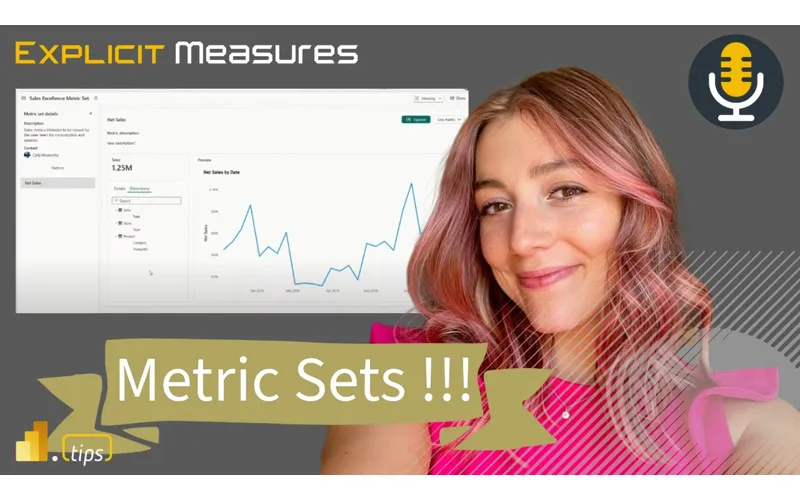
In this episode, the conversation digs into Metrics Hub—why it matters for KPI standardization, how it impacts adoption, and what governance you’ll need so “metrics” don’t turn into another scattered mess.
News & Announcements
- PowerBI.tips Podcast — Subscribe and listen to the Explicit Measures podcast episodes and related content.
- Power BI Theme Generator — Create and download Power BI report themes using the PowerBI.tips theme generator.
Main Discussion
Metrics Hub is positioned as a better home for KPIs: a place to find, reuse, and manage key business metrics across reports.
Key points from the conversation:
- Why Metrics Hub matters: it improves discoverability so people can find the “official” KPI instead of recreating variants in every report.
- Definition + ownership: a KPI isn’t just a number—someone needs to own the definition, context, and lifecycle.
- Governance without bottlenecks: how to enable teams to contribute while still preventing metric sprawl and duplicate definitions.
- Relationship to semantic models/measures: metrics should build on trusted model logic rather than inventing new math in isolation.
- Adoption angle: using shared metrics is one of the fastest ways to reduce conflicting numbers and build trust in reporting.
Looking Forward
If you turn on Metrics Hub, start with a small set of “gold” KPIs with clear owners and definitions—then expand once people are actually reusing them.
(Key takeaways coming soon.)
Episode Transcript
0:30 welcome back to the explicit measures podcast with Tommy Seth and Mike welcome back everyone to another great episode we’ve got some exciting things for you for you today or a new episode it is an exciting day because we’re gonna bring something new a little bit this is the first time I believe today what we’re about to do very standard episode we’ve never done before three we’ve done we’ve done one before but this is actually scheduled at the normal time it was a special
1:01 normal time it was a special not but this is more special but just during the regular time right exactly right exactly exactly and my my guest can hear us talking right now but but she can’t she knows I can see her but she can’t see me so so it’s great seeing the reaction that’s coming here so with no further Ado Let’s bring in our guest speaker today we actually we don’t typically have guest speakers I would love to introduce to you with our team today the the explicit measure podcast welcomes Carly sorry I’m putting all the in the right
1:35 spot it’s a it’s like a celebrity game where we slide all the celebrities around on the screen so with that Carly Nome is with us today and Cari is from the Microsoft product team she has been working to develop features inside the the fabric ecosystem and the powerbi ecosystem and there’s a feature that has been announced at the Microsoft fabric conference this was at this march called the metrics Hub or give me give me the right terms again so it’s it’s I know it’s we love confusing naming conventions so we are it’s the the fabric metrics layer is layer and then
2:06 fabric metrics layer is layer and then what you see in powerbi will be the metrics Hub okay so it’s a the powerbi metrics Hub and the fabric metrics layer is is the new feature that was presented in the the fabric conference initial keynote so this has been announced you can see a very short demo of this very very briefly not to do it justice so we wanted Kari to come in and do a full demo so we would also highly recommend go check out our description in the video of this of this video Carly does a good 45 minutes demo of like here’s the feature here’s the things you can expect it’s currently in
2:38 things you can expect it’s currently in private preview correct y but this stuff is getting worked on it’s being developed there’s still buggy stuff but that’s why it’s in private preview but it’s going to become to us in desktop eventually I don’t want to give timelines because everything can adjust but it’s being worked on actively now and eventually we’re going to see something like this come out for our features all right Harley anything else you want that I miss something there is there something else you want to add about the feature and what’s coming out here no I think you covered it very nicely since we just you covered it very nicely since we just it’s fresh fresh off your mind know it’s fresh fresh off your mind since we just did the demo but one thing
3:09 since we just did the demo but one thing I want to just run it back is what I heard is that I’m a celebrity and very special to this podcast episode and I just want to make sure that that doesn’t get glossed over oh yeah I don’t I don’t think there’s any question of that at all because because my my question back to you is what does it feel like being the first guest ever to appear during our normal podcast well it feels pretty good because there’s no comparison like you can’t compare me to any I can’t do
3:41 you can’t compare me to any I can’t do worse than anyone else that’s been on here because there isn’t bar I’m setting the bar the bar so so we’re doing great it feels great how high the bar is being set is to be determined but right now we’re setting we’re setting a bar and also the celebrity thing this is the same way how my kids look up to me when I like up the door with my keys and it’s amazing kind door with my keys and it’s amazing thing so you’re in a very of thing so you’re in a very Niche nerdy groups like someone wrote A Blog and they’re from Microsoft I have to follow them that’s usually the order of operations yeah I I do feel like we
4:13 of operations yeah I I do feel like we need to share just just some fun banter here just in general so you’ll notice in Tommy’s screen there’s this little green ball in the upper right hand corner of his screen and and this is this was a memory that came out of the the MVP Summit which was actually right before fabric conference so we went to the MVP Summit we had a lot of fun it was it was Tommy Seth myself and some other MVPs in a house and if you’ve ever watched Silicon Valley there’s this little ball and they have in the Silicon Valley and always P always blue always so like like
4:43 always P always blue always so like like this is just bringing back a lot of fun memories of just a really fun MVP summ and MVP Summit is the first time we met Carly I think you’ve been hiding doing some very neat things elsewhere in the power B Teams and you’ve just now became a PM and we’re like wow this is amazing yeah yeah we did me at MVP Summit and that was like such a whir one because that was the first time we had talked at all publicly publicly about the metric layer too so it was so fun because it was like I really felt like a celebrity because I was like look at
5:13 celebrity because I was like look at this new thing we’re doing and everyone was like oh my gosh it’s Live code oh my gosh especially that you guys took a left turn with the name of the the event I remember that was like I didn’t know I was signing up for this today amazing I don’t know what to do oh with our our session yeah you voiced your disagreement with the name of no there wasn’t disagreement no no it was just slight slight recommendations
5:43 slight slight recommendations opportunities for the future yes opportunities we’ll go with that yeah in fact I don’t think there was any disagreement I’m gonna be what we’re doing so let’s jump into the feature a little bit here so let’s talk about this so one thing I I want to just jump in here to here to metric Hub so what’s Carly explain to us like why does this exist like give us a little bit of like a heads up for people who didn’t watch the demo this is all on audio just only portion so give us a little bit of background K what is the
6:13 little bit of background K what is the couple challenges we’re facing as an organization and what does this feature fit or or fill a gap for yeah so there’s three main problems that we always like to talk about when we’re teeing up what we’re after with the metrics layer but normally I have some screens to go with this so I would like everyone who’s listening to just quickly close their eyes and I will I will paint a picture stressful scenario for you stress to be stress running on your train Hills or whatever you’re doing listening to this podcast I love it so you’re in a meeting with your
6:43 it so you’re in a meeting with your boss’s boss you’re in an exec with your other colleague that you you both work on similar features or similar areas on a sales team maybe so you pull your metric that you’re trying to present to your leadership team from your powerbi report and then the person who goes right after you your colleague pulls their number from a different measure from a different powerbi report that’s the same value it’s supposed to be showing like profit margin but you all are showing two different value stress okay your boss is not a
7:14 value stress okay your boss is not a friendly person your boss’s boss is not a friendly person everyone’s sweating everyone’s scared I’m sweating just thinking about it and because it’s very easy to do this to show different slightly different numbers Yep they’re derived from different slightly differently defined measures all across powerbi and they get percolated to all the different Power powerbi reports yep so your boss your boss probably looks a lot like Seth you’re scared there’s there’s a lot going on here right where you sit there he
7:44 here right where you sit there he doesn’t what was what was supposed to be like a highlight or just a point of reference becomes the topic the full-blown topic of the meeting and it completely derails that’s what you’re describing right Carl yes and then you’re sitting there with your colleague just just like finger pointing begins so so then I ask I ask questions like so why don’t your numbers match and then you’ve got to look at each other and try to like figure out how to say what you need to say in front
8:14 how to say what you need to say in front of the leadership team yeah okay I’m getting real stress guys I’m get I’m sweating Seth can add stress like no other I’m telling you right now he’s good at that come on come on what but that is one of the main problems that we are trying to solve right better data quality across the entire organization because with the metric layer with the metrix Hub you can take a measure that’s rooted in a powerbi that exists in powerbi semantic model and say I want to elevate this to a metric and
8:44 I want to elevate this to a metric and in doing that you make that number discoverable you can pair it with Dimensions where you can say this is the these are the groupings that Mak sense to be paired with this metric it’s searchable you have a landing page for consumers to just go view it and you can also use that number in your reports in your scorecards in your apps whatever however you want to create your content in data science notebooks because it’s a fabric metrics layer so better data quality across the organization so reusing that same metric that’s intended for reuse so that I keep
9:14 that’s intended for reuse so that I keep my job this well this this blew my mind a couple things that you highlighted in the demo and again I highly recommend you got to go watch the demo there’s a lot of really rich things in here Carly demonstrated okay we made a metric a metric we attached some Dimensions to it and this is where I pointed out a little bit of this Michael kosi space where Michael kosi has doing this he’s he’s another I think he’s on the cat team I believe is what he’s in I don’t think he’s a PM but he works heavily in the details of powerbi and he has this concept of like the master and
9:44 has this concept of like the master and the mini models so there’s this larger bigger model that has all the dimensions you need all the measures you may want many many fact tables lots of Dimensions I but it’s overwhelming to your business users to go get what they need like a portion of your model may be related to sales information not all of it yeah how do you highlight that little mini portion of the model and what you demoed I think really really well was this is what I
10:08 really well was this is what I think Tom and you’ve been talking about this for like for months about how you need like that consistent metric oh like you as you said the much longer than just months ago when we talk about metrics and because I literally the situation that you just had I had to just slowly calm down because I just remember those situations I it’s something that I share during training something I share during adoption because it’s so prevalent and because
10:38 because it’s so prevalent and because that at the end of the day people are trying to find their information they’re trying to find where are they going and obviously the best Avenue is the report now I’m not going to go into the questions yet but the idea of elevating a metric that you said it wasn’t copying or mirroring a metric you were elevating one we’ll get into the yeah I’m gonna pause there because foreshadowing so I wanna I want to back up one second though because either I missed the two other points because bu
11:10 missed the two other points because bu them for okay we still haven’t covered the okay we should pause there and let okay good I got I got we got carried away with the stressful Dr that I you away with the stressful Dr that I point one was so good we already know point one was so good we already see value in 0. 1 move on all right two of the other things that we want to solve with the Met Slayer yep and Mike you were just hinting at this with the like how messy and complex semantic models can be like they could be beautiful but
11:41 can be like they could be beautiful but massive and super overwhelming to not only end users but also analysts who are using like that Enterprise model to then try to do some like self-service work even they’re can be like okay there’s a lot going on in this model I’m not really sure exactly what I should be prioritizing what I should be using and so that’s where our metrics layer comes in as well because when you create a metric like I mentioned earlier you can say here’s the dimensions here the columns that I want always paired with that metric and what that does is create basically a mini semantic model for that
12:12 basically a mini semantic model for that metric and those Associated Dimensions that are end users can view in a simplified way and our business analysts who are creating reports on top of that would would be a really complex messy semantic model they can just use the simplified paired down information in that mini model that they know is intended for reuse and for report creation and content Creation with the most important like blessed metrics I I hope today’s conversation I hope the Mini model sticks like we’re talking about mini models here and
12:43 talking about mini models here and you’re saying it you’re repeating the language if we could just if I don’t know if you’ve been talking about this already I don’t know who you’re talking to this with already but I I really hope that the explicit measures podcast has been able to lay line a stake in the ground here and say hey we helped coin the phrase the Min model that’s what we’re gonna do we’re gonna stick to it that’s awesome if anyone asks me where it came from I’ll write it in my spec I’ll credit and then I have like an appendix version that’s like credits and it’s just podcast what that reminds me of like I don’t know if
13:13 reminds me of like I don’t know if anybody else was this is this is a way tangent any anybody else in choir in high school I was but because I’m good there was a warmup there was a warm-up like many mumbling mice are making midnight music in the Moonlight you all m that reminds me of many mini models many min models yeah I like it I I guess I guess on a more relevant relevant topic are there any are there any are there any fears around how many mini
13:44 there any fears around how many mini models are created off semantic models is this just going to be a sprawl thing or is it going to be regulated because some of these metric sets and things will rise above the others your second point essentially so what happens when you and let me back up a little bit and elaborate so what happens essentially is when you create a metric set that is the fabric artifact that is the item and inside of that metric set you can have a bunch of metrics that are derived from your
14:15 of metrics that are derived from your powerbi measures and each one of those metrics has its own Dimensions that whole metric set basically becomes a composite model of just those metrics that are measures and the dimensions when you reuse them you can reuse one metric or the entire metric set so you have that variability so you’re not really like you’re not creating when you create one metric you’re not creating a mini model that exists on its own you can like access that mini mini model like inside of the metric set Mini model
14:46 like inside of the metric set Mini model this is where I’m going see many mini models referencing model model see this is good but but to your point though it’s a pointer back to the original information it’s not we’re not making other xmla enabled semantic models this is just definitions of how do I go get the data for that metric with what dimensions and it’s connecting to that original data model the whole time yeah okay and you can also certify and promote and endorse this
15:19 and promote and endorse this this item just like you can any other item or artifact whatever we’re calling them right now in powerbi or across fabric so that’s another way that you can make make sure that the ones that you want elevated are elevated oh this this makes me think about about like I hope I hope there’s metrics in there that are going to let us see this in like the activity log like in the activities analytics you have the activity API and when someone uses something and some action happens in the service I’m guessing
15:49 happens in the service I’m guessing there’s going to be some layer of like oh look these metrics have been hit these metrics have been pulled and made into things so you we be able to see the noise essentially of when the metrics are getting utilized across our powerbi tenant yeah that’s the plan and you can do that in like I want to say many anymore but you can do that in many ways with our first release where you’ll be able to see metric sets in the lineage View and you have in the table you have a table section below each metric that tells you
16:19 section below each metric that tells you hey this is exactly how this metric is being used it’s being used in these 10 reports and these five notebooks so you start to get some of that information and we’ll have like a little bit of free stuff we get in purview but we don’t have any big plans for purview yet yet yet don’t come at me yet well eventually but yet but we’re that’s the idea you’ll you’ll be able to track exactly where this intended metric for reuse is being reused and how and how that’s impacting your tenant Your
16:50 how that’s impacting your tenant Your Capacity and all all that all that good that good stuff so just from maybe a Semite technical question every metric set or every metric is still tied and binded to a semantic model a single semantic model it points back to its original semantic model that the measure exists in yeah that’s exactly right I like the different word play I don’t know if that means a technical difference or not so no I no that’s phrasing that we always use when we so it it always has a relationship to you’ll be able to see
17:21 a relationship to you’ll be able to see it in the lineage view that oh this metric was created from the semantic model because people especially our data engineers and our our analysts they often know the names of those semantic models and they trust those semantic models so we want to make sure we keep that connection so that people say oh this measure that’s powering this metric lives in this semantic model that I know and trust okay we’re good yeah we’re that like that’s another indicator of trust that we have built in and so you can see you we have built in and so you can see where it’s coming from in the know where it’s coming from in the product as well that includes the fields and dimensions that’s still coming from
17:51 and dimensions that’s still coming from a single model if I want to update the metric I have to update the semantic model yeah that’s right okay all right all right love it and was that point number two or is there Point number three that was Point number two okay sorry Tommy did you have another question Tommy I have a hundred questions okay okay let’s let’s get through point three and then we’ll come back to Tommy’s thousands question all the way on the plane so point three is we often have Silo data that gets stuck in powerbi in the form of measures right it’s really hard to use powerbi measures
18:22 it’s really hard to use powerbi measures outside of powerbi so enter fabric metrics layer once you elevate a measure to a metric you can point to that metric from all the other fabric Data Solutions so for example notebooks we have Senpai integration so you can be in your notebook and say I want to go point to this measure that exists in fabric or this metric that exists in Fabric and then pull that in with its related Dimensions or whichever ones you want to include so that our data engineers and our data scientists aren’t having to reverse engineer a measure that already exists in powerbi
18:52 measure that already exists in powerbi they can just use that one sure and and this is I want to try and say the name right because last time I we we just had an episode on why you care about semantic link and I kept saying synoptic link it’s semantic link so I got the name wrong but this this is the integration of the feature inside and and Carly again demoed this as well that I thought was really cool there’s like a one button press like hey I want to get the code of the thing out in into a semantic link type there’s you said
19:22 semantic link type there’s you said there’s gonna be some features added there to make it a bit smoother but the idea is like you can get the line of code that gives you that metric with some information on it and you can just land that into a notebook and boom I get a table of dates and Su of sales or whatever the metric is being made of as a table Yeah and then I can save that table and that information back to my lake house and then use it for all my other data data science yep data science data science all data science y excellent any other any other
19:53 y excellent any other any other questions Tommy that you were thinking about for that one do that he’s like like I said let’s keep the road going going and I think those are your three main points right so to summarize one is yeah you have the first point was around making sure that we’re we’re B we’re building these to increase usability second one
20:13 these to increase usability second one is we’re trying to get rid of it second or third data silos are going to be removed and we’re going to do Master model and Mini model that’s the other main well I think I got the backwards Master model miniel kind like the the middle option and then the third one is get rid of data silos how can we get people access ACC to what they care about yes couldn’t have said it better myself maybe slightly better but just not that much no no I probably way better you you wrote the feature you’ve got all the ideas in your head head so that doesn’t mean I can say I’m off the top of my head okay I’m trying F I’m
20:44 the top of my head okay I’m trying F I’m trying to with you siloed okay we haven’t created a metrics layer for my brain yet love it so where does your Tom where does your mind go Tommy on some of these questions what are you thinking about what how this fits because this to me what the Fe Fe you describe metrics Hub layers how all the things are going to come together is literally what Tommy’s been talking about for like eons he’s like I want an easy way to certify use this measure and these three dimensions and if it doesn’t come out of this certified metrics bundle don’t use
21:16 this certified metrics bundle don’t use it don’t don’t go out and build your own stuff you already have it and making it discoverable I think is so challenging for users right now because even now I’m building projects for clients where the model we’re trying you people are wanting to say hey we want to in give people access to the models themselves and so we have to do a lot of work at the model level to like make it super simple so people don’t get overwhelmed with all the things that are happening inside the model if there’s too many tables people get overwhelmed there’s
21:46 tables people get overwhelmed there’s too many dimensions people get overwhelmed so how do we really highlight this measure should be used in these ways and models have thousands of measures in them especially when you start doing time intelligence some people make the decision to not use calculation groups and they build a measure for every single time intelligence things that you want well it’s it’s it’s hard for the end user to understand it right so if you if you’re not using calc calculation groups have a little bit of a a unique way of how you need to put them in the visual so you get the output that you want so in some cases it’s a little bit harder to work
22:17 cases it’s a little bit harder to work with these things yeah it’s time intelligence but how do you best Supply that time intelligence information to the visual and I think this could potentially help out with some of those features yeah absolutely let us solve this problem for you we we aim to please yes yes exactly so I think it’s probably good to start with the first one the building increase usage and those milestones and I think my heart always goes honestly to the consumer to the lay person and organization in their ability
22:47 person and organization in their ability to trust and know their data with the metrics Hub by the way will it say metrics Hub like one L data Hub in powerbi service I actually don’t think we use the word Hub in the UI like anywhere in the screens that’s just what we call it actually if my any of my designers are listening to this right now I’m so sorry because I’m pretty sure don’t call it the metric Hub it’s the metric experience or something like there’s something else I’m supposed to be calling it like the Jimmy Hendrick experience but now it’s the metric
23:17 experience but now it’s the metric experience exactly I love it so with with really making that prominent and I I’m I’m going to stick on the word that you use elevated metrics and not just we’re highlighting a metric and I think that like I said I I could go through the whole Soap Box on why that’s so important yada y y was that one of the major origins of having the metrics layer was we know that yeah we have our corporate reports and our department reports that show here’s our
23:48 department reports that show here’s our numbers this year but people still don’t know if something’s filtered and sometimes there is something filtered and there’s a lot of ways to get there that it was still not a great experience for what’s the number where are we at thing and then Al so I’ll start with that was that the origin of this if I could ask like where did this really come from yeah that’s definitely a big part of it like exactly what you described and then also our end users it’s really really hard for them to know what is my number
24:20 hard for them to know what is my number like they just come into powerbi with one question usually they’re like what is my blah metric number right now and it’s really hard for them to get that answer if they don’t have their report bookmarked exactly right if it’s not refreshed at the same time every day if they if something changed and broke if they they can’t search for it anywhere like you can’t search for just that one thing and so we were like let’s just go ahead and make something where they can come to powerbi and search for their metric their answer and then we
24:50 their metric their answer and then we had to back up and say well there’s like a billion there’s like three billion measures in powerbi like across all of powerbi today like there’s no way that that’s really give them their answer especially because people will recreate the same measures across like every report so let’s first give away for people to say this is the metric and then let’s give them a way to surface that in search results so you can come into powerbi now with the metric layer with the metrics Hub and say profit margin year-over year what whatever you want to search for and get a metric result that’s like hey in yourf
25:22 a metric result that’s like hey in yourf face this is the one that you should be using this is not just we’re not like the other measures we’re a cool measure we’re a metric we have Dimensions we have we’re popular we’re cool we’re intended to be seen everywhere so that’s that’s really where this came for we’re my my I I love all of our users but my heart also really resonates with our business users and our consumers because that’s just the closest to my own like Persona my own use case so a lot of this is me being like how can I make powerbi easier for me to use like how can I not have trouble finding my own
25:53 have trouble finding my own metrics let’s just go build that so I love it yeah Tommy did that answer your question question oh yeah and and I’m I’m thinking about I I wish I could be a fly in the room in this conversation with Microsoft because to me this is one of those features where it’s like how is this not out before the last nine years so I I’m assuming there was probably some harder conversations with leadership or with some of the product team on the U the risk involved with this right because if we’re going to elevate metrics there’s
26:23 we’re going to elevate metrics there’s that’s a big deal because it’s going to be who can do it are there redundancy or or if I’m we’re both creating a metric layer and more importantly if yeah like who can doing then how do I know that it has the right filters for what I’m trying to look at obviously there’s it’s not just as simple as total sales because total if you have your Year date or your target well that’s based on a other measure measure so there’s a lot of interdependencies so
26:54 there’s a lot of interdependencies so I guess what were some of the main concerns that were highlighted when this this would be really started getting legs and where has that shaped the product yeah so two main main conversations that we had pretty repeatedly come to mind so one is this idea of who’s going to be who’s G to be creating these metrics right like who’s gonna be in charge of this and the way that we the place we landed was it’s going to be one of two things it’s either going to be a centralized it department is going to be reserved and
27:25 department is going to be reserved and committed to saying here out of all like I’m going to take inventory of all of our measures essentially and go and create and promote the ones or Elevate the ones that should be metrics and that metrics layer fully will be managed created curated by an it an internal it department and then other users will just access the metrics Hub and say oh these are the things I want to use if there needs to be more interaction or inter conversations for between those two groups like hey you need to go include
27:56 groups like hey you need to go include XYZ tables in this Dimension like we anticipate that that’s going to happen anyway and we’re going to build in Futures that help that interconnectivity that that communication so that was kind that that communication so that was the one the like one piece of it the of the one the like one piece of it the other people that are going to be creating this that maybe aren’t organizations that are big enough to have an internal it centralized department or like Center of Excellence that’s going to do this but still want to use the metrics layer are really dedicated chosen creators that people trust across the or like who right now
28:26 trust across the or like who right now is managing the big Enterprise semantic models that you have even if it’s you models that you have even if it’s not an Enterprise organization it’s know not an Enterprise organization it’s just this is the one that we typically use to create all over reports that person is probably going to be the one who’s going through and creating all the metrics and they’re going to be certifying the metric sets for people and they’re probably going to rely on domains to do this a lot too right like I have my metric sets for my sales domain I have my metric sets for my finance domain that maybe all point to the same semantic model maybe it’s two or three but it’s paired down Min models
28:56 or three but it’s paired down Min models versions of those so those are the kind versions of those so those are the two like groups that we see managing of two like groups that we see managing and curating a met and upkeeping a metrics layer for an organization but it took us a while to figure out to land on that we think that this is what’s going to resonate and this is how it’s going to play out I I love those two groups that you’re talking to because I feel like we’ve all played some role in both of those so as we’ve grown up with powerbi or grown old with powerb I guess we’re older now than as we grow old with powerbi now I feel
29:28 we grow old with powerbi now I feel like more conversations are occurring at that Central it level and maybe that’s just maybe my growth is like as I’m working into larger and larger organizations where top down we’re defining these are the things that we care about metrics wise that’s what we’re going to define the M but a lot of times there’s also this like we’re in smaller mediumsized organizations there’s not this great communication pattern across teams and Tommy you you speak to this one all the time like we Define sales as this but we
29:59 time like we Define sales as this but we Define sales as that and we cut our years by fiscal year but we cut our year by Financial year like or or the the calendar year right there there’s all these little different nuances and like my opinion is all those metrics are valid those those measures and KPS are are real the only difference is
30:20 are real the only difference is each team you just need more description you need more information to tell us why this thing exists and then someone needs to take ownership whether it’s that dedicated Creator or it’s the central someone’s got to say the we’re we’re saying the same thing we’re saying total sales but your definition doesn’t match mine so let’s change the name of one of them so it meets your needs but yet we can still have total sales and then you can talk about that differently so I think yeah the challenge we talk
30:51 so I think yeah the challenge we talk about this all the time the people the process and the technology the technology is clearly outpacing our people and our process and so I feel like a lot of This Is Us catching up to the tooling is now giving us more ability to build better process around our people to help them have these conversations we should have been having a long time ago well Andor in in the past it was a lot harder to generate useful reports right or pull data from like systems get it to a place business
31:21 like systems get it to a place business can digest and like pushing it into the next steps was was harder and I think with the Advent of powerbi the semantic model Dax like all these things that we can generate real time it gives us a lot more power on the front end to the to the point now where we can do like Microsoft can develop metric sets because we’ve got so much more feedback from the business using things that are meaningful to them and they’re getting
31:53 meaningful to them and they’re getting them in such a rapid like cycle that all of the like solving those more business-facing problems is now I think where we can focus a lot of the attention yeah absolutely this this actually relates back to what I was going to say as our second like the one of the second things that we were talking about a lot and one of the risks that we were talking about for metrics layer we were like okay once we have our groups and we know who’s going to be creating these how do we help people know like what that they’re not creating
32:26 know like what that they’re not creating the same like how do we not have the same problem that we have with measures yeah with metrics and so we have some designs in place and we’re going to keep improving these to say like oh this metric set name already exists like do you want to just go take a look oh I like that on like do you really need to create this new metric or like in the same workspace even or in the same tenant hey these things already exist like take a beat do you really need to create this but also we can’t we came to the realization that it’s not necessarily
32:58 realization that it’s not necessarily A always a bad thing to have multiple versions of the same metric if they’re defined differently and if they’re four different audiences or different groups of people which is like I think what you were saying too trying to yeah in so many words I think that’s where domains come into play too and they they’re going to be really like they’re really well poised to partner well with metric sets because you can have a sale a net sales metric intended for your marketing team or you can have a net Sal metric intended for your you
33:29 a net Sal metric intended for your you a net Sal metric intended for your forecasting team that’s doing all know forecasting team that’s doing all the forecasting work and they might be just defined a little bit differently and that’s fine that’s okay we have other things in place in the viewing of the metrics that are going to allow the end users that are meant to be viewing that to say okay this is the one that I should trust right we have that usage section that’s like oh my boss is using this metric oh my I oh I know Mike and Seth and Tommy have all use this metric to create like all these reports this is the one that I should be using or like oh this other metric even though it has the same name I can see this description
34:00 the same name I can see this description and I can see that this is the one that makes sense for me and it has the right dimensions and it’s been reused 25 times that that looks good enough for me so having those additional indicators of trust within the metric itself because we’re saying it’s okay in some scenarios to have repeats of metrics and that was like a big conversation that we had to have it’s like we don’t want to create the same problem that we have with measures with metrics like how do we fix this so we put some guard rails in place and have also just taken a step
34:31 place and have also just taken a step back and said yeah people are going to do what they’re going to do so let’s just make it easy for them to differentiate between the ones that are the same so you you answer I love how this conversation is going because every question I lay out we’re we’re getting to right before I ask it which is I guess great and horrible at the same time I use co-pilot to breed your mind yeah or we’ll just go okay so so as you’re as you’re going through these different implementation methods of how
35:02 different implementation methods of how to like Define what the best metric is in in the take a beat one right like you’re is that experience such that you’re about to create a metric that is already created and it shows you where that’s coming from or who owns it or how is the person who’s generating or creating the metric supposed to understand like where in the ecosystem that lives these are great questions that I don’t have experienced answers for you for you yet it’s not a part of our private
35:33 yet it’s not a part of our private preview which is happening now but that will be a part of our public preview which is coming later this year probably September but we’re working on like what that looks like what’s the information that people actually want to see do they want to see if you’re a Creator and and we’re like take a beat something like this exists do you want to see the other ones that exist or do you just want to see how they’re used like what what is the information you need to make an educated decision on if you should just spin up another metric that’s slightly different for a different team or if you can say nope I’m good I’m just going to point to this one that already exists
36:03 point to this one that already exists yeah so I’m I’m going to keep my gas the the foot on the gas pedal of hard questions hopefully this one’s easier actually the different metrics right so say I I’ve created multiple and you were saying you can group those by domains right so if I have a sales metric for finance a sales metric for commercial we know those are wildly different all the time what about where like needs where like that’s fine it sounds like we can do the domain right marketing is going to be in their realm Finance is going to be in their
36:33 realm Finance is going to be in their realm what about the cross domain need where I need to aggregate these metrics together for the elt report and I want those to be sourced from those different places can I do that yeah you can do that in powerbi desktop so right now well for the public preview when everyone who’s probably listening their hands on us you’ll be able to go into powerbi desktop and let’s say you’re you have your support that you’re building for your leadership team and you’re like hey I have these two separate sales metrics one for finance one for marketing or I can’t remember
37:04 one for marketing or I can’t remember what the domains you said were but I want to use both of them in this report to do some aggregations to play around to make the visual or the view that makes sense for my leadership team to have in this report you can actually just connect to those two different metrics from the metric sets like you could say one Lake data Hub drop down click on Metric sets will be which will be an option in the one L data Hub menu pull in the two that you want to create and it brings in the dimensions that are related to that metric to so that you can slice and dice accordingly and
37:34 can slice and dice accordingly and everything makes sense and then you can just treat it like a normal measure in a report you can do any kind measure in a report you can do any activities you want to do on of activities you want to do on it that work on measures so nice I like that experience and Carly demoed this one this is another one I would highly encourage towards the end of the video Carly demoed a little example of this one where here’s here’s a metric here’s where you go find it it’s literally in the drop down menu go grab it a metric shows up but it was interesting because in in our traditional my mental model how my mental model Works in my mental
38:04 how my mental model Works in my mental model typically it was the table and then the measure and then you’d have other columns and the columns would have hierarchies attached to like a date Dimension right the the date column would have a year month quarter attached as a hierarchy when you represented this the metric the measure was like at the at the top level and then the DI iions that you could use against that metric were under like the the hierarchal the
38:34 were under like the the hierarchal the the the elements underneath of it so it makes a lot of sense that the metric is for front and center because if you just drag the metric it just gives you the number and then when you want to leverage the date the category the type whatever the other dimensions are you now have this very concise way of saying this is your metric and these are the dimensions that only apply to that metric and so you can now get this really neat experience there so very interesting to see how that would I haven’t played with it yet it’s still in private preview yet but that’s one
39:04 private preview yet but that’s one feature I’m very excited and actually when you demoed it it blew my mind because I was not even I was like freaking out I was like what in the world is happening here this is totally shifting how I would think about how metrics should be pulled into reports especially in desktop level so I was very pleasantly surprised by to your point sath I’ve got a couple metrics that maybe from different mels Maybe not maybe they’re the same but we can still join join them together in this fluid way that still makes sense to the end user yeah and one one more question
39:34 end user yeah and one one more question and and this is this is by the way I’m I’m not trying trying to play stump the star celebrity here on the show I hope so I hope I hope this isn’t like a hard one but so in in talking about the third part right the usage section I really like that in solutions that are really really fully baked right like I have a metric hubs metric set I can see that this metric by far is the most used across the ecosystem an open question
40:05 ecosystem an open question first to you but also the guys is does especially in scenarios where the metrics section is gaining traction or being being created do those in do those metrics us usage metrics inherently Drive trust to one metric or the other or is there going to be how do we reduce the
40:26 going to be how do we reduce the confusion around which one wins so that’s I’ll I’ll answer first just because from a product perspective what our pitches that section was specifically added based on customer feedback that was like how do I know which one to choose right so that is completely a trust indicator for our users if I go in there and I look at that metrics if I have two metrics my sales metric and my sales metric right that’s confusing
40:57 that’s confusing how do I know which one to use right if I go in there and look at the contact for who created that metric and then also at that usage section and see that my boss created a scorecard I in the past didn’t remember but I created like a notebook here I know the people that are like using these artifacts and creating these artifacts because we have a column that says like who created this artifact or like who who’s the owner here so if I recognize names and I recognize report names like I know I have a pretty good indicator that like that’s the one that I should using if I
41:28 that’s the one that I should using if I go to the other one and I’m like who the hell is Sally can I say hell on this podcast I don’t know sorry I will say I will say there are there are some we we do try to keep it PG I probably should have made a disclaimer for you that’s fine it’s fine I do know that there are some leaders inside Microsoft who have their kids and they listen to on their way to dropping kids off at school and stuff like that so so just you probably heck is there we go we got it covered and I’m like I don’t really recognize any of these people any of these owners here I don’t recognize any
41:58 these owners here I don’t recognize any of these reports and then one step further I might not see a ton of usage for metrics that don’t aren’t really applicable for me because I have to have access to those things to see them right now anyway I have they have to be like in some pipeline where I have a permissions access so if I go and I stumble across a metric that I have access to for some reason but I don’t have access to like anything in the usage section that’s also probably a pretty good indicator that maybe it’s not the one for me if there’s another one that exists that has the same name with people I recog that the usage section looks super full
42:29 that the usage section looks super full to me oh that’s interesting I didn’t even put those two pieces together but yeah should you be using it if you can’t even see any of the reports that people made on top of it it’s above your pay grade bud that’s interesting it just depends on the permissions that you have so right now it works like any other artifact so I can share the artifact but I will also need we want to make sure that this is safe so you can share the artifact and it shares permission to the metric set but if you don’t have access to the underlying semantic models within
43:01 to the underlying semantic models within that like where the measure is defined that P that the metric is pointing to you’ll get a little UI that says like request access and then that will request access to the underlying semantic model that’s powering the measure so you could get access that way but still not have access to the rest of the reports that are like used from that metric so it’s still a good trust indicator even if like you get by and you get access to this metric that you maybe shouldn’t have have access to somehow I think you alluded to this earlier that’s you’re talking about
43:31 earlier that’s you’re talking about basically build permissions to in order to use the metric you have to have build permissions on the data set or the semantic model that’s right okay yeah if I want to use it in a report or if I want to save an exploration that I do or if I G to use notebook or whatnot I I need build permissions to the underlying semantic model I think you make a really good point here because this is a very confusing I think aspect for people in general with like the workspaces and who’s supposed to access them there’s a lot of talk there’s a lot of talk around governance like okay if I’m
44:01 talk around governance like okay if I’m a developer of reports and models or semantic models I should have access to the workspace but if I’m not if I’m just consuming content what does that mean and because I can have access to the semantic model and now with lak houses you can also have access to the Lakehouse with not having access to the actual workspace itself so there’s this this weird V diagram incurring in my head between like okay do I first own access to the workspace well then yes I get access to all the artifacts but you
44:31 get access to all the artifacts but you can have scenarios where I can carve out like a portion of a workpace where I give users just access to like the app well you can see things in the report but not all the reports it’s a it’s a lens of what is in inside the application or I may give access to build permissions on the semantic models or lake houses but it’s not access to the workspace so it’s another it’s another surface area of who is owning the responsibility of said workspace said reports and I think this is also
45:01 said reports and I think this is also very interesting because I I did note in your demo there’s a really clear call out as who created who owns this metric set and I think that’s going to be incredibly important as we try to govern this I feel like there’s a lot of conversation around where do we draw the boundaries between reports semantic models lake houses like there’s a whole bunch of things that we’re all smooshing together where do we draw the lines and I think we have the ability to draw the lines anywhere we want now what where
45:32 lines anywhere we want now what where does it make sense to draw those lines I don’t know if I made that if that makes any sense at all I’m just trying to in my mind it’s I’m drawing pictures in my head right now I’m already diagramming things out like drawing lines around these different artifacts it makes sense to me but like I think it’s hard to articulate that in a picture or a document to external users like what’s happening here no it’s it is 100% you’re you’re absolutely correct and I think that our team is aligning to we what we can say for our metric Hub team and our metrics
46:02 for our metric Hub team and our metrics layer team is like here’s the best practices right give viewer permissions to the workspace if you want people to view this metric set or you can share directly like we can figure out what our best practices are and and go say hey here’s how you should share it out but that doesn’t mean that the problem goes away or gets any less confusing right like this is a more holistic problem I think that that powerbi all of needs to like come together and solve like what does that vent diagram look like and how is it a little bit less confusing to share with
46:32 little bit less confusing to share with our our our consumer family well there are there are definitely many different ways to share many different types of content and they are all different well a lot of them are different yeah one of one of the key things I’m I’m glad you Incorporated based on the feedback is the contact because I I think what that allows at least in the initial startings up of things is to create a communication between the business
47:03 communication between the business and our users to say hey here are the primary users that you should all like if they’ve created a report or they’re the owners or they’re the ones building this metric follow their lead don’t recreate something an interesting thought comes to mind from the standpoint that it it almost strikes me as a an area I’d love to see like ad groups instead because I may have a team of people and rather than having the organization have to understand every single user that’s doing something if
47:34 single user that’s doing something if they’re part of that team then it’s just it’s the bi team you don’t like it go it doesn’t go beyond that right to simplify the the the level setting of which metric should be used yeah well Seth have I got great news for you we have that you can have an ad group or a security group in there as love it just needs to be an email so you love it just needs to be an email so okay that’s fine like we we support know okay that’s fine like we we support that so an email enabled Security Group would just go fit right in there no
48:05 would just go fit right in there no problem love it so you you mentioned something very briefly I want to ask you I want to pick your brain a little bit on you said you can say the metric set I guess I’ve never really understood where do you is it I said share share okay maybe I said it the wrong way maybe you said it where does it live like so is the metric set like is it a is it like in my mind I’m thinking is this a new line item in the workspace that says metric set yeah it absolutely is okay and that and then that thing that line item gets saved in we saved stored it’s
48:37 item gets saved in we saved stored it’s in the context of the workspace so the workspace and it doesn’t have to be in the workspace where the semantic model lives no it does not so you can have oh boy this is my head blowing up now so we can have semantic models fitting in its own works so here’s the reason I’m saying this is because I’m thinking about like I go to the dev test prod cicd pipeline the whole enchilada of like what’s going on here so I can have I typically right now I have a report workspace where all I put my reports I have a separate workspace
49:07 reports I have a separate workspace where I put all my semantic models and I’m even now thinking about maybe there is a data engineering workspace where I do all the Lakehouse development it sounds to me like we could also have a separate workspace for metric sets so there’s a metric set workspace it can still point at other workspaces that have semantic models in them but it can be its own storage pile of just just here’s where all the metric sets lit yeah absolutely that’d be a great implementation whoa again my head’s just melting in in the concept of what this could be Tommy’s getting happy
49:38 Tommy’s getting happy now no honestly I’m doing the Italian thing and I’m thinking of all the possible worst case scenarios here oh no I have to go so great to see you so great to see you well and I’ll tell and I’ll be not I’ll not negative at all but let’s look at scorecards right when scorecards came out I was over the moon and honestly we didn’t I don’t think I saw with clients the takeoff or the adoption that
50:09 clients the takeoff or the adoption that I was expecting or that I thought it could provide it’s like hey now you take all your your data from your entire team project and have it in a Consolidated place and one thing is trying to manage the scorecard and trying to ma manage each of those I guess their called metrics or goals in scorecards which you’re probably might have to change is obviously it was
50:33 change is obviously it was connected to the report so there still where’s this number coming from and that truth and then obviously if something changed and I think that’s where I’m going is we also know semantic model change because the metric Hub is going to be so wonderful for executives for a team for people look wanting to look at bonus just trying to see like like I said just the normal information however it doesn’t matter if it’s easier and it’s a nice one metric
51:03 it’s easier and it’s a nice one metric on a page but if if we go through and we’re modifying the semantic model obviously from business have has there been a discussion on I don’t want to say version history but change management when it comes to some of these numbers well we I can tell you how it will work and maybe you can ask a followup question because I think the answer is yes if the if the Dax definition changes or if you’re changing
51:33 definition changes or if you’re changing something in the semantic model and we have a metric that’s connected to a measure that metric will update okay will that will that be visible at all for for users I see not for the our end users no not for our end users at least not right now but early days if this is something we hear from all of our private preview feedback that is about to start funneling in then we’ll go build build it well guys we had the conversation
52:04 it well guys we had the conversation last week when it came to the data documentation that went into its own little journey about major semantic models and going through like if something were to drastically affect that model Downstream Downstream whether it’s something out of our control or not how can that be reflected because again if if a if I’m an executive like oh this metric here’s here’s our budget to actuals number great and that’s what they look at all of a sudden it drastically changes that it it defeats all the entire purpose so I’m
52:36 defeats all the entire purpose so I’m just G of going through that yeah it’s almost like the check-in history we have in in scorecards yeah some implementation like that to show like here’s even if it’s like even if it’s like a last yeah but like what would you track as far as a change Tommy right like yeah but this is what so I think but I don’t think this feature is designed for that so where I would push on this one i’ like what you’re going Tommy but I think that’s actually more of a process related thing that needs to be happening
53:07 related thing that needs to be happening at the semantic model level and I think this is where John kky would talk a lot about data Ops like this is this is where semantic link and this is where we talked about semantic link this is where semantic link I think shines honestly I think there needs to be a very clear I’ve made a model I’m doing a change I’m reloading some new information before before that model gets out into production there should be some clear process that says we’re going to run this semantic link on this Dimension with these different things let’s count the numbers let’s make sure the numbers haven’t changed Delta from
53:38 the numbers haven’t changed Delta from this month to last month or whatever this this the the Baseline is if we can verify that those numbers are in fact correct then we can then promote into production then there’s no issue so I I think you’re addressing a problem Tommy that should be solved with process earlier in the model but it’s not if if anything if if anything this isn’t adding to that problem Tommy like if you’re not doing any of that or checks and balances to ensure like your measure that could be used in N number of reports if something breaks all those
54:08 reports if something breaks all those reports are broken so just because you have a single Consolidated metric this isn’t adding to that it’s just I think maybe potentially reinforcing that you should have the checks and balances like Mike is outlining that’s where I’m going with it so I I’ll I’ll not shift gears but I’ll say like the origin of the question because okay that’s process and here’s the thing though if you start talking to your executive oh well we have a a data Ops they’re they barely care what a semantic model is right now they really
54:38 semantic model is right now they really just want to get to the report now if they’re primary means and one can make the argument for some of these metrics the primary means of someone getting to a number is going to be through the metrics Hub not necessarily the report and it doesn’t matter it doesn’t matter all we’re introduc all you’re introducing is another layer hopefully easier for the business to digust whether it’s there or whether in a report your breakdowns it like this doesn’t complicate things and l l gent issues are before
55:10 things and l l gent issues are before this this ladies and gentlemen is the conflict portion of our type of episode really interesting so this is where we have different opinions so this is why I think we love beating these ideas up so much because there is different ways to lens our way into this like and I think we can solve these problems so many different ways and I agree with you Seth I think I I agreee with you like this is just one more thing if the metric breaks any number of excel reports or part other reports it’s going to just fall apart anyways so like this is just a better way of trying to get that exposure to those things in front of users to make it easier for them to
55:40 users to make it easier for them to consume pieces I don’t think this is necessarily meant to be your data quality Checker at this point and I think that that’s a process left Upstream in front of the model so I’ve I have one final real quick question because I know we’re we’re nearing end of time probably a very easy answer so I know I can I know I can save like metrics as a report or an exploration because I’ve I’ve watched some of the demos can I embed those objects for external use
56:10 objects for external use applications in an app or in external external external we okay so the same page have the same problems same problem right I want to simplify this stuff and you are giving me a feature that let me just give them the metric or better yet a guided experience called the metrics exploration where you get three dimensions and then they can pretend they’re building their own report because that’s the P Sky which
56:41 because that’s the P Sky which nobody ever builds no but if I give them a tailored experience like that externally huge great answer is yes com out oh right right in public preview that’s what I don’t okay I don’t but it’s on the road likely not but it is on the road map yeah it’s but it’s not I will say like that huge differentiator for for those cases where
57:11 differentiator for for those cases where you’re putting powerbi out in front of many customers I think that’s a fantastic experience and I’d frontload that if I were a PM for are you coming for my job no I’m just trying to you to get this feature nudging you to say like that should be a priority that’s all I heard I’m coming to take your job no I don’t want your job no I I am not a super no I’m just kidding it’s a it’s a really good thing and I think I
57:41 it’s a really good thing and I think I think Microsoft is doing incredible things inside the power. com experience another one that we that I really want is like the pagein report Builder experience I can embed pagein reports as an embedded experience but I can’t do the editor as an embedded experience yet so the these are things that like our top of mind we build huge applications on top of powerbi the ecosystem the more exposure we can get to again this is hard because there’s another team that’s doing all the embedded experience stuff but like the more we can get that yeah any experience if I can build a report a pageant report or any the not only the
58:11 pageant report or any the not only the rendering of the output of it but also the creation of it is hugely valuable for us as developers to be able to incorporate that into our products yeah so all right with that I want to thank everyone very much Carly thank you so much for your time it’s been a pleasure talking to you you’ve been wonderful and we really appreciate your time taking away I know you’re busy you’ve been doing a lot of things thank you so much for jumping on baning with us about all these things about metrics we’re excited for the feature I think this is going to be huge we’re going to continue to shout your praises to the ends of the
58:42 shout your praises to the ends of the Earth of like how great this cool feature is going to be people need to try it out it’s going to be awesome I think this is going to change phys I feel there’s a couple moments in powerbi where I feel like there are some pivotal things that will change how you do your work to me this feels like one of those moments where I’m going to physically change how we do work with these things this will be a very big talking point I think in the future for helping more people consume powerbi usage is just going to go up well that’s what we love to hear especially from people who are
59:12 to hear especially from people who are using the product so we love to hear it awesome well that thank you all very much we appreciate you listening to the podcast We’ve you’ve wasted a perfectly good hour with us bantering about this new thing this new feature coming out we really appreciate your time we know it’s valuable we hope you’re B ycle your run your walk whatever you’re doing right now I hope you had a good exercise we appreciate your time or only ask if you like the podcast if you like this conversation let us know in the comments or share it with somebody else who’s going to engage with this content as well we’d love to continue sharing the podcast other
59:42 continue sharing the podcast other people Tommy where else can you find the podcast ah you can find us on Apple and Spotify or wherever you get your podcast make sure to subscribe and leave a rating it helps us out a ton do you have a question an idea or a topic that you want us to talk about about a future episode head over to powerbi. com
60:36 [Music] out out [Music]
Thank You
Thanks for listening to the Explicit Measures Podcast. If you enjoyed this episode, consider subscribing and sharing it with a friend.
• YouTube: https://www.youtube.com/@ExplicitMeasures • Apple Podcasts: https://podcasts.apple.com/us/podcast/explicit-measures-podcast/id1568949453 • Spotify: https://open.spotify.com/show/6kK8G1nPpQvQ0MyoVo9hw3 • Mike Carlo: https://powerbi.tips