
Fabric Deployment Methods – Ep. 315
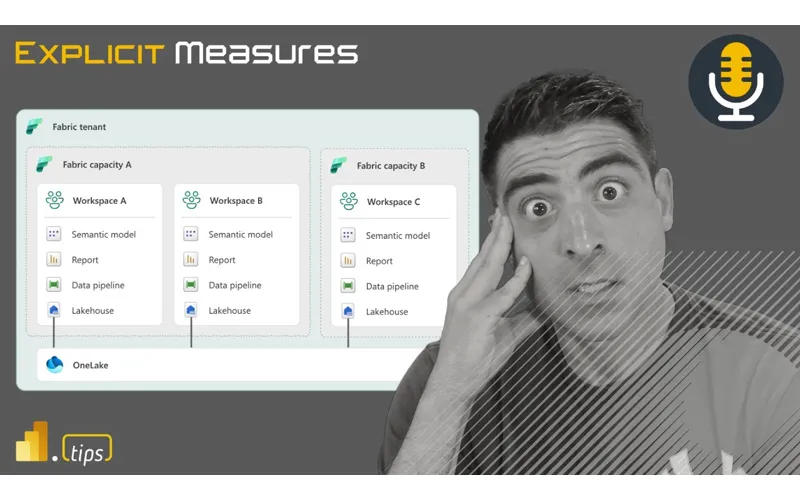
This episode focuses on Fabric deployment methods—the real-world patterns teams use to organize workspaces, promote changes safely, and avoid turning a Fabric rollout into an ungoverned free-for-all.
News & Announcements
- Deployment Patterns for Microsoft Fabric - Azure Architecture Center | Microsoft Learn — Learn about common deployment scenarios for Microsoft Fabric.
- PowerBI.tips Podcast — Subscribe and listen to the Explicit Measures podcast episodes and related content.
- Power BI Theme Generator — Create and download Power BI report themes using the PowerBI.tips theme generator.
Main Discussion
The discussion is about the operating model behind Fabric deployments—because the platform features don’t matter if you can’t promote changes, control access, and keep your environments clean.
Key points from the conversation:
- Workspace/environment strategy: when a single workspace is fine vs. when you need clearer separation (dev/test/prod, domains, or team boundaries).
- Promotion + repeatability: why you want a consistent path to move changes forward (even if you start with manual checklists before full CI/CD).
- Permissions and groups: using security groups and least-privilege patterns so the right people can build while security still applies.
- Semantic model + report ownership: keeping a stable “source of truth” model while enabling many reports/creators on top of it.
- Governance trade-offs: how to balance speed (quick experimentation) with guardrails (certification, documentation, review).
Looking Forward
Pick one deployment pattern and pilot it with a single dataset/report end-to-end; once the promotion path is reliable, scale it across additional domains/workspaces.
What are you trying in Fabric/Power BI this week? Share your wins (and your war stories).
Episode Transcript
0:32 good morning and welcome back to the explicit measures podcast with Tommy Seth and Mike hello everyone and welcome back good morning gentlemen happy Tuesday here we go everyone knows you would never know what episode you are in or what day of the week it was unless Seth did his thing so the day of the week it goes by quickly these days does espe engage your week on the exclusive Mets podcast episodes I’m
1:02 the exclusive Mets podcast episodes I’m sure most people do it’s like their Clockwork now for sure yeah I’m a I’m a oneth the way done my week now so starting off strong on a Tuesday yes so we obviously have to record we we do have meetings in work and family I miss you guys so much when it’s a week off it feels too long Tommy Tommy goes to like withdrawal for that week I had to teach someone powerbi last week oh yes we we saw videos this week yeah
1:34 oh yes we we saw videos this week yeah Tommy has been in his family doing some lessons here do we want to save this or let let me give you the main topic here today and then we’ll jump into some news and some fun things all right so welcome everyone today’s main topic is going to be around fabric deployment patterns or models around you can how you deploy things potentially through Dev test prod or how do you deploy artifacts across different environments for testing things that’s the the open discussion here I’ve got some ideas around some of that one I all been
2:04 around some of that one I all been experienced a little bit of this but how will this work inside Fabric and what can we do all right Tommy that’s our main topic who are you teaching powerbi to that you’re so excited about so my wife is been getting more involved with the business I think we you realize really really quickly in in very very non non necessarily unsure ways about your strengths and weaknesses when you’re a full-time consultant and especially when you run
2:35 consultant and especially when you run your own thing and with all things getting busier I know the things that I could work on I know the things I’m strong in but was like Hey I asked her one day I’m like would you just help me write a blog or just edit it just to look over it for my own standing she yeah anyways so she getting more involved and she’s going to do some more stuff but I’m like it’ probably help if you do you don’t need to be an expert in it but know the basic T it’s like a dimension or a fact table and then we started talking more Thursday
3:06 then we started talking more Thursday actually did a Dash War day with the clients I’m like I’ll be fresh so I’m like let’s do it what you can do it and she was game we did the full dashboard in a day we did in about six hours because obviously one person because obviously an expert I’m going to reference here this is someone who one hates data numbers two has just started using a computer in the last few months on a regular basis in the last six years because she’s been home so she’s been
3:37 because she’s been home so she’s been out of the game for so long it’s like now we’re gonna learn powerbi awesome and I was like I sent you guys dude and it was pretty fun it got me angry because she was catching on to things and I like when you do some training with you have the stragglers I’m like if she can get this she actually loved power query love clean data that thought was amazing Dax it wasn’t necessarily the functions but just like why is it doing this welcome
4:07 just like why is it doing this welcome to everyone’s first experience with RBI this is like the things yeah so I’m actually pretty excited well as Tommy I’m here for the community and and that means all types of workers so I’m offering my services to your wife so she can give me a call and I will give her some advice on how to negotiate her salary oh salary oh yeah especially if she’s in an environment where she’s got to learn new skills her value is now increasing exponentially so I agree I think it’s
4:37 exponentially so I agree I think it’s important that she talked to somebody that isn’t her boss yep and and make sure that she’s being treated fairly within her new work environment so just throwing that out there like everybody else right like yeah yeah it’s probably having any outside voice granted all the the shade you’re sending me beforehand like I had to send you I was text messaging you videos I and I did force her to talk oh
5:10 videos I and I did force her to talk oh no way Tommy no way came across you you you forced her to do the video I I never it’s just from my it’s just for my neither would my wife who saw them laughing because a similar thing my wife works in powerbi all day and popped her head in the door yesterday she’s like I’m building my own report I’m like that’s awesome she’s like yeah I’m like want to see something
5:41 funny check out this data oh goodness it’s it’s Universal it’s everywhere I’ve heard a lot of people doing both things I think I was talking with Ben Ferry and he does powerbi guy on YouTube channel just some candid conversations with people his wife is also into RBI so he’s had some gr candid conversations where they’re going talking together thankfully or maybe not my wife’s like I you you do the data I’m going to do other things I’m not going to do that so there’s no there’s no learning parv at my house not at this point although
6:11 at my house not at this point although my kids are enjoying it my kids have taken a liking to trying to build scrims and background images for reports so we’re trying to they’re trying to work an angle there which is excellent all right any other oh we want to go through a couple items I know we have a couple more items here the Microsoft fabric blog blog which it comes out weird the the April blog came out like at the end of April like April 24th so it’s like here’s what happened in April oh by the way here’s the blog so the blog is now out the keynote for fabric
6:44 is now out the keynote for fabric conference day one the keynote is available oh speaking of which inside that keynote Microsoft talks about a new feature that is coming to fabric which is called the metric Hub or the fabric metric layer I think is what they’re calling it not quite sure exactly what the language is going to look like when they’re done with it but we had Carly a Microsoft product manager from the team of Microsoft come talk and discuss all about this new feature she did a great demo we did it yesterday on the on the YouTube channel so go check it out
7:15 the YouTube channel so go check it out it’s on the YouTube channel Carly is talking about the new metric Hub and what you can do with it and why it’s going to be impactful for your models building the master Mini model scenario here which I think is actually really interesting so very much excited to see where this is going to go can’t wait to get my hands on the actual feature and start playing with it a bit because I think it’s really really neat anyways there might be a play on words in there somewhere but there’s got to be yeah yeah it’s in my mind yeah something one
7:46 it’s in my mind yeah something one other announcement what on our favorite Channel and site powerbi tips just put out a new tutorial and video on how to use the AI feature in their Fant fantastic tips plus theme generator boom check check it out you can even demo it on two pages if you go to the wireframe section and go check it out so Seth has done got a video up talking about how to actually use AI wireframing inside power Bay reports hopefully helping you build
8:16 Bay reports hopefully helping you build reports faster and easier more fast more reports more fast more things fast Tommy I’m I’m disappointing you you shouldn’t have taught your wife RBI that harbi a day but you should have taken her to so now that you’ve done that okay now now here’s what I need you to do I need you to have a follow-up session now that you now that you’ve gone through the vanarsdale demo and you’ve done all the things there okay teach your teach your wife how to so she has the model have her go to powerbi tips theme generator have her walk through the experience of
8:46 have her walk through the experience of just building the report page no data but just the the pages and getting the visuals on the page okay and then and then have her the experience of say isn’t that much better than going to the desktop and building everything from scratch is there’s a lot less clicks first off the van and by the way I didn’t know the the emphasis was on the it’s not van arale so how do you say it that’s how I say it van arel that’s how I say it oh I they he said a
9:16 how I say it oh I they he said a different like well they seven years down the down the drain no that’s the data set they use like a van arale I the pronunciation I thought I was wiely off that’s how I say it it still has the image background which is of a cheat we were like and we’re going to have Fast Track the last hour and a half so well I’m just saying so the images are there you have all the things you need from the vanarsdale dashboard today you can just Ro rock those things in and go stylize your theme and in in the DI in the the tutorial they do like a lot of
9:47 the the tutorial they do like a lot of like you can change the title here you can change this thing there you can do like you don’t need to do that anymore you can change it on all visuals all at once all inside the theme generator so that maybe we should see if we can get in on the Van Arsdale demo at the very end in end in there and by the way this last half a day you could have just erased all of that and just done it in five clicks by going to P tip theme generator anyways we should probably now I think set this as a challenge now we need to go out get the Van Arsdale images and go put out a a theme to make the dashboard in the day
10:19 theme to make the dashboard in the day that much easier oh my gosh that’s a great idea that’s a great idea here we’re going to we should make a we should make a a scrim a theme they start they start with that section in some just goes done done I already downloaded it from from the theme generator it’s already
10:35 the theme generator it’s already complete it’s good I like that we should think about that one it’s really good that is really good okay anyways in other news there is a ton of announcements that came out from the fabric blog and and Tomy you’re making the comment earlier and I think this is where they’re going it seems like Microsoft is trying to combine the powerbi blog and then all the fabric elements into one monolithic blog so I don’t know we’ve got a incredibly scrollable page right now on the fabric blog 68 pages if you made a PDF oh my
11:05 blog 68 pages if you made a PDF oh my gosh yes jesz so of of the 68 pages of really great this is well one on one hand this feels a lot like what we were doing when we first saw powerbi show up to the scene there was there’s a lot of sanding of the edges and refining and making new features this is this is encouraging like I want to see lots of features popping out from fabric but anyways that aside what what features of this blog post stood out to you guys anything that you want to
11:35 anything that you want to note so I think the big thing is there’s all everything from powerbi updates are here but to me it’s the fast copy for data flows which I’m will always be a fan of my data flows especially my Gen 2 they released this feature I think actually they announced it previous in April but it really really makes sense I think it’s closure to pipelines in terms of the scalability of our the fabric data pipelines I think that’s
12:06 data pipelines I think that’s the biggest gripe a lot of people have with data flows but we can actually enable per query basically ingesting terab terabytes of data using data flows ingesting it into a SQL Source or into a Lakehouse sure so really happy that that is finally now full and available I like it yeah comprehensively right like I think I think this blog to me is almost like a re it’s a fantastic recap of of the month if it’s coming out
12:38 recap of of the month if it’s coming out this late it’s more historical sense where people as they’re coming along have a centralized place to understand fabric right so we’re pulling all like I don’t obviously we’re tied into the powerbi one so that one comes out earlier we know all these powerbi features we’ve talked about them because they’ve been released already and I’m I’m assuming it’s the same for the other maybe except for the whatever was the latest in releasing it and that’s why the fabric block wasn’t put out yet because it would be incomplete right you need all of these components to be done
13:09 need all of these components to be done yeah so we talked about I think a lot of these elements but in in the same way that I don’t know where I land on the fence because yes it’s a ex an exercise for your finger in scrolling as far as the length of the blog it is nice that they can solidate it all though right so you have your contents there’s quick links for all the areas that you’re interested in so I I don’t know what I like did you guys catch the fabric metadata scanning
13:41 metadata scanning app so this is a little interesting it’s only two only two paragraphs but it’s a open source project for building on all the admin rest apis that are now available for fabric utilizing the scanner API and I think it pulls in all the other entities and basically this application in GitHub it handles all the steps for calling the scanner API authentication the throttling incremental U because of multiple over
14:12 incremental U because of multiple over workspaces and it’s available just to use with a service principle and this is something relatively new when it comes to all the artifacts and fabric so it’s only a little paragraph but it’s pretty cool yeah it’s it’s out but it’s just a it’s just a GitHub repo it’s not really anything but it’s nothing special and it’s all in C so it’s in a language that you probably can’t use and it’s like a full you have to have
14:42 like a full you have to have VSS Visual Studio Projects so just to say this like there’s going to be Solutions out there and I we’ve built a solution around all these apis already we have a monitoring solution that does a lot of this but I think you’re going to see a lot more companies clamoring to try and get access to their analytics and their data from Microsoft soft but I haven’t seen a very off-the-shelf solution yet for this this is the closest one that I’ve seen but I don’t think it’s yeah it’s okay I would say just interesting idea but
15:12 say just interesting idea but you’re going to be this is for it it shop it’s not for the business user at this this point one thing I’ll point out one couple things that I liked was all the stuff around spark I’m a big fan of spark there’s a lot of improvements that have been coming from spark and the the community has been really vocal about the this new feature called optimistic job admission for fabric spark which allows more notebooks to run simultaneously and starts queuing up it sounds like they’re saying they’re queuing up more jobs into your your
15:42 queuing up more jobs into your your pools and so that way you can run more notebook simultaneously it’s not reserving as many cores for your job running so that is very exciting to see that one it’s a great option in the spark settings which is one this is one of these things where Microsoft I felt like has been behind in the marketplace on spark and they’re starting to catch up they also announced the percent run feature inside notebooks so now you can run a notebook and then call another notebook to run inside the previous notebook which is again very common in a
16:13 notebook which is again very common in a lot of other data engineering spaces which again we’re catching up I feel like and then the final option that’s coming out for Fabric or for spark is the let’s see where was it thought there one more here that I had they had add another one for I don’t remember where it was now not put my finger on the percent run oh get integration now is included with your your job definition and I’ve been using synapse and vs code quite a lot with notebooks
16:45 and vs code quite a lot with notebooks which is actually neat you can go right into spark and you can just drop the code right into vs code and now you have all your vs code fanciness that you like your customizations that are there and you can write your notebooks directly inside vs code which is really cool so I really like that integration it’s getting smoother easier to use we’re closing a lot of gaps here quickly people it’s getting really interesting to be hardcore Dev yeah I I don’t know how much You’ used the the the synapse vs code extension which allows you to like run and utilize the Jupiter or that’s that’s what I’m
17:15 Jupiter or that’s that’s what I’m talking about that’s what’re I think that’s what they’re talking about there the it’s now at a container which makes more sense because it’s a pain did you do all your work on desktop because if I I couldn’t open a notebook wait I need to hear that again say that again say what you just said it’s a pain to use notebooks in vs code with for fabric because oh no you were saying something about desktop for vs code desktop yes because I get 18 prompts
17:46 desktop yes because I get 18 prompts from the extension to set a local folder and if I want to open one notebook I have to open a new window and I lose my workspace and lose that so they’re making basically for those who have some clue what we’re talking about rather than making it the extension they’re making the synapse vs code a container like something like a Docker an image so it probably all runs in a nice little place so which makes a lot of sense so we don’t have to worry about losing
18:16 we don’t have to worry about losing previous history in a vs code workspace so excellent lot good things there anyways the blog is in filled with good stuff so definitely hit it up go look at the blog go check out the features that you like I’ll see if grab snag a link here for the most recent update that way everyone can see all the the notes upd updates in details this is exciting I’m very pleased to see how much stuff is coming out the door so fast so the the link is in the chat window as well if you want to go check out the most recent April update anything else should we just jump
18:46 update anything else should we just jump into our main topic now it’s been like 15 minutes let’s go to the main it’s been a while maybe we should we should probably jump in all right so let’s jump into our main topic today main topic for today is going to be around what deployment method can we use inside fa Microsoft has a blog post around this so there’s actually a link in the description of the video I’ll also put the link here inside the chat window as well just in case you want to follow along with what’s inside the description so here’s the the the article for today it’s now currently in the chat window
19:16 it’s now currently in the chat window talking about different from the learn documentation different deployment patterns and so they start talking about different levels in fabric deployments how a deployment patterns can align what are your business business requirements and then they start actually outlining pattern one pattern two talking about multiple workspaces backed by a single fabric capacity and then pattern three multiple workspaces backed by separate capacities which is I me we’ve talked about this a little bit on on the online and I’ll I’ll be honest whatever
19:48 online and I’ll I’ll be honest whatever is being whoever’s doing the graphics for this feels a lot like Kurt this feels like a Kurt graphical element it feels like a a figma and what he’s kind feels like a a figma and what he’s been drawing out there and then I of been drawing out there and then I see him and contributors that’s well you don’t though you only see the most recent contributor I think no contributors at the bottom do they have it fixed now they have they I know there was an issue was they just listed multiple oh maybe he’s not on that one okay okay interesting and I think there’s going to be I think these are three patterns that
20:18 be I think these are three patterns that Microsoft is observing I’ve definitely been talking about these for a while now it’s nice that Microsoft is actually coming out with some documentation supporting the different patterns we’re talking about here so I think that’s very helpful let’s just jump in What do you guys think what any of these patterns resonate with you what makes sense to you so I’m just actually G to start maybe not too much off wall but did you find it interesting at all that this was in the Azure architecture documentation not even in fabric documentation I
20:49 not even in fabric documentation I didn’t even catch that honestly and I I wonder if there was a choice there I don’t think that was an accident accident submission but I what that actually means I I I’m not sure to say but I think this is really to me where powerbi really stood alone for the business users we’re really seeing if you touch fabric you’re
21:12 really seeing if you touch fabric you’re really playing to all hands of the business from a infrastructure point of view I think that it’s just really making that point there where it is so easy to create a a lak house and get started with Microsoft fabric but that being being said your hands can reach a little farther now so to speak and and can touch a few more things or can affect a few more things around the kitchen in so many words and I think this was definitely a intended approach to actually have this in the Azure
21:42 actually have this in the Azure architecture but no I think really just starting off for me it’s high level this is not one of the Microsoft documentation that has 18 other Pages it’s much shorter than the blog but but I I think it’s doing the high level point of view in terms of how would you really go about fabric from an IT and if you already have had synapse if you’ve already been working in one of
22:13 you’ve already been working in one of these systems already how is your transition going to go and I think that’s where to me the biggest thing that stood out was the high level high levelness of this and and really who like who the audience for and like where do do you start with fabric General General comments I agree with agree with that just from this from the standpoint that I do it I think they do a really good job of like laying out a couple patterns and then each of those patterns have the
22:45 each of those patterns have the things that are helpful right like if you if you are a monolithic user right when you provision a single fabric capacity and attach a single workspace to it the following points are true right like bullet bullet bullet bullet and then you might choose to implement this P pattern if you have one of them these following reason like those that type of guide for people helps them lock into the relevant points that they need to care about right at least on a high
23:15 to care about right at least on a high level you still need to do your due diligence after this think about the architectures where do you need to go y Etc and I I I also think they do a really good job of the considerations right so even when you’re like is this for me this resonates because all of these things are true about my environment or my company or what we’re trying to do then it’s okay but are you sure part where it’s like they they add the tables of considerations that might influence your
23:47 considerations that might influence your decision to adopt this deployment pattern so it’s like the aspect and the considerations right so even for for example for the audience right if we talk about the monolithic right let’s just yeah like where you’re going with this one M it starts off with this deployment pattern you’re provisioning a single workspace to cater to all of your use cases and then it’s single capacity obviously correct so everything is in the same place so it goes through those different points I was talking about but even like goes
24:18 was talking about but even like goes down to the third part where you’re talking about considerations and it’s like lower governance mandates and restrictions on platform are required it suits smaller organizations that prefer faster time to Market challenges might develop if governance requirements evolve to become more complex yes right so those those bits of information where it’s like oh wait there’s a check here there’s a there’s a balance of like if I choose this what are the pluses and minuses of of that so I love this type
24:50 minuses of of that so I love this type of documentation because it gets people to lock into the particular area but then re-evaluate like double check think about the other aspects that they might not be thinking about instead of just barreling forward into yep that’s me let’s go and not think about like the next steps of where they need to be or potential challenges with choosing one or one one of these patterns or or or another yeah I like what you’re going with that sou one and one thing I will
25:21 with that sou one and one thing I will say I find interesting across the entire article you’ll see every time they draw these documents there’s a little image that they Supply and they talk about the fabric tenant and then there’s the fabric capacity so they have like they’re basically thinking about like a an entire powerbi tenant or fabric tenant it’s like the same thing right it’s what they’re communicating inside that context they’re drawing the semantic model the Rapport the pipeline makes sense they also have the lake house great no no big deal there but every single drawing they’re drawing the one
25:52 single drawing they’re drawing the one Lake outside of the fabric environment which I find interesting because and my understanding is one lake is a concept one lake is not you don’t go by a one Lake it’s just part of what fabric is so I find it very interesting that they’re they’re attaching this concept of a one Lake but they’re actually drawing it outside of the fabric capacity but one lake is more or less just a concept it’s not necessarily like the one lake is a collection of lake houses that’s what
26:22 collection of lake houses that’s what that’s the intent there so it’s this API layer that it just manages all the data for you it keeps the storage for you easy to use and consistent but there is no item that is the one lake and you’ll see that in all three diagrams that they’ve supplied that the one lake is independent of the fabric workspace which I found interesting they’ve been doing that since they introduced Microsoft fabric if you look at the slides from build last year one Lake was always at the bottom but
26:53 one Lake was always at the bottom but not necessarily connected so that’s still completely in sync so I just looked at him I’m like that sounds oddly familiar what you’re saying yeah it’s it’s been this like I got agree like every organization gets the idea of a one Lake but I don’t think you get access to the one Lake features unless you are paying for a fabric capacity where you’re now standing up one L so it’s this interesting dichotomy of yes we’re talking about one Lake yes your data lives in all places but you don’t one the thing that I don’t think they call out very clearly here is
27:23 they call out very clearly here is the boundaries and responsibilities between the different workspaces and how is important across the different security boundaries I think there should be more emphasis there’s they just they talk about some of this about the security control plane I think that’s very relevant when we’re starting to talk about breaking things apart into different workspaces and I I see the the monolithic deployment I almost never see that anymore that is a very very early it is a very early stage of when
27:55 early it is a very early stage of when people get involved with PBI and very quickly I think most organizations outgrow that for governance security and thinking through breaking apart the responsibility as the as the powerbi surface area grows so so let’s talk about that though like the the monolithic easy setup easy capacity easy management sure you’re you’re suggesting you think that most organizations move quickly past that yeah or or we’re thinking or I’m thinking like the
28:26 thinking or I’m thinking like the monolithic is only for so I’m thinking organizationally most organizations don’t just have one workspace there usually multiple to be fair and the reason I’m I’m pressing into this is more often than not you’re working with larger larger companies I would agree I run a small business and even me as a small business I I have even I only have know itake too I know but you itake too I know but there’s there’s always a use case know there’s there’s always a use case of here’s some data that I need some
28:57 of here’s some data that I need some people to see here’s some other data that everyone needs to see so to me there’s always some dichotomy that’s happening there there’s always a minimum of a couple areas when you think about that so because this is suggesting one workspace correct right a single workspace for all the stuff for all the people for all the things yes yeah and I would you got to be really small to do want everybody to play in the same Playground now what I will lean on here is like okay as an organization this probably doesn’t occur as much but
29:28 this probably doesn’t occur as much but if we talk about departments and teams of people okay I could be more swayed towards okay there’s a team of people in a department and they and they man like so this is to me this is like hey look you are going to go do your own thing you need to have access to fabric or whatever go team figure out your stuff like and I think from my perspective that happens in much smaller teams like three to five people that’s what I’m saying in my experience that’s where the monolithic deployment makes sense and you’re not expecting to go get data from
29:58 you’re not expecting to go get data from other parts of the organization they’re just acting like in a vacuum that’s their space well or or doesn’t this also apply to places that have a person or multiple people that surface up reporting in the organization completely Central right like nobody nobody else you don’t have self-service going on you just have consumers of information and I would I would see that you could scale into like larger smaller businesses where like yeah they have a team and
30:28 where like yeah they have a team and that’s where everybody all the reporting stuff happens there see that I could see that going for quite like up to a certain level of of size of a company without needing to scale right because it’s it’s where you start to Branch out where other parts of the organization would want to get engaged in these activities because they have like the initiatives gets larger the objectives get larger requires more people Etc like you’re scaling as an
30:59 people Etc like you’re scaling as an organization and it requires that separation as opposed to like I’ve worked for shops where I’m the guy or I’m part of a team that develops like consolidates all the information from the organization everybody’s under you secure ndas and you’re know secure ndas and you’re you’re dealing with sensitive information in some cases but all the reporting generates from that team like I I I I see this as a valid approach that could actually extend a while it
31:29 that could actually extend a while it where you’re going to run into problems like it calls out is like how do you unwind from that or how do you break apart or or adjust as the business scales if that’s on the road map and
31:45 scales if that’s on the road map and this is where I would say like it’s okay to start like this but fully no like to me that monolithic deployment probably happens in a place where we don’t have a center of excellence there’s maybe one person managing all the things the tenant admin the workspace deploying all the reports your your center of excellence is based on the Excellence of the person of the person right the one person yes yes but what I find is that one person essentially what happens is if you work with that leader of that
32:15 if you work with that leader of that powerbi space and your leadership in your organization you can quickly take that person and that person very fast and I’ve seen this happened to a number of careers of people that we’ve worked with they move from I’m doing this very small thing where I manage everything leadership gets a hold of it and say look we’re winning with this how do we scale this out further so I’m saying you can start here but I think there is real conversations you need to have as your organization to say okay where do we go from here if we’re going to start this route so I think that was a very appropriate call out set that you made was there may be some friction as you go
32:46 was there may be some friction as you go from one workspace how do you carve out who owns what data who owns what data sets and I’ll argue a monolithic deployment is going to get a lot easier now that we have multiple apps coming from a single workspace one of the early reasons why we wanted to have many workspaces because I couldn’t have more than one app linked to one workspace yeah so I think I just saw a note here from the Microsoft team on the ideas page in I think there’s trying to early July preview the idea of multiple
33:17 early July preview the idea of multiple apps one workspace well if you’re consuming data this makes total sense right you could you can definitely do a distribution of content people consuming data at a larger scale by having six seven eight apps from that single workspace yeah and now also add that we have the ability to use folders now so like I mentally I can organize it a lot better so like yeah that those are two huge features that I think makes this a lot easier to use well how how easy does that make it for the central team way better right way better like everything
33:49 better right way better like everything that comes out from my my team can be managed from one workspace yep to the different parts of the organ oranization through apps correct like that that’s the central like area of how do I deploy reporting throughout the organization for my things as opposed to right now right the struggle of okay does that belong in the business workspace because that’s their report okay I can share it with them now do my people know all the works spaces they have to go to to find
34:20 works spaces they have to go to to find their reports to redeploy them it’s so I I’m I’m looking forward to like just for my own sanity but I’m also control freak so like getting like moving all this stuff into that central place where i’ I have a place to deploy things and I want to point out one thing that you said there real quick sorry Tommy I apologize I think Seth you made a really good point there is there’s there comes a point in time where I’m in the monolithic deployment if you’re Distributing things through
34:50 if you’re Distributing things through apps I think it’s a safer method than giving people like view or sorry member or view access inside the workspace because there’s always this risk and and my my heart palpitations come in light of this right if there’s a model in there or a model and th and model and report all in one right if someone comes in and adjusts that model somehow some way we potentially get ourselves into some problems because if that model changes and people are relying on that data Downstream you could be breaking a lot
35:20 Downstream you could be breaking a lot of things very quickly and so there in this in this model deployment it’s very hard to test things and figure out if you’re adjusting the model if you’re changing things how do you preview a test of that before it gets out to the real world and that’s one of the reasons why I’m like H I’m I’m probably never starting organizations on the monolithic deployment anymore you want can make the argument because with the folders because folders really are G to be such an incredible Game Changer but yeah I can’t say even if just for a powerbi
35:52 can’t say even if just for a powerbi deployment starting and ending all in one workspace regardless if there’s multiple apps or their folders one of the the big tenants which I’m surprised especially with the introduction of the article they start with the monolitic approach maybe they are seeing that but to me they’re kind are seeing that but to me they’re the technology or their technology is of the technology or their technology is going in the opposite direction where there’s a big focus in the introductory on domains right so really the the work
36:22 domains right so really the the work maybe that single workspace you’re right is the center of excellence is me yep that’s it I think so yep fine but I think they’re go seem to be going in the other direction when it comes to the use case in really utilizing domains as part of the of the strategy yeah I would I would I would say domains really don’t get get in fully used until their third pattern you might maybe use them in the second
36:52 second but no say part of the yeah from the alignment and the levels of deom they’re saying it’s tenant then we’re going to utilize domains yeah and I think they want to push people there to me I’m I’m looking at domains and not to go too off topic but I’m looking at how Microsoft is building domains in their intention and I think it’s a lot more than just a nice to have we we’ve done an episode I think on it but I’m just seeing more in the documentation
37:22 just seeing more in the documentation and not just this one but other fabric documentation on the governance and the Security on utilizing okay yes this is this is I think it’s a really good point you make that that point Tommy and I agree with you domains allows you to delegate some administrative privileges to The Domain owner like that’s really important so I think actually your your point there Tommy is very timely because I think this moves us right away into pattern number two which is now multiple workspaces potentially backed by a single fabric capacity so this is now
37:52 single fabric capacity so this is now talking about workspace a and workspace B and this is what I think I typically start with when when I talk to organizations around building things and I think very quickly we should be having this conversation if we’re talking about monolithic you should immediately compare two workspaces side by side because I’m what I’m what I’m in my mind what I’m thinking is this is the example of I’m going to build a model A semantic model and a thin report and I think honestly if your team is larger than one
38:22 honestly if your team is larger than one person the model and thin report pattern is a very solid pattern to use especially now that you can actually create reports in the workspace and we can have models hang having lots of other things like an exploration hanging off of that if you watch our demo on Monday with Carly Carly starts talking about other things you can start hanging off of these models as well like the the metric sets these are other elements that we’re going to be able to produce from the model so I think right away I’m
38:52 from the model so I think right away I’m already in my mind I’m thinking okay because the model is so important and it’s so valuable to what we’re going to be building either Central bi or self-service bi I really think you need to separate the models into its one workspace and then you link the associated reports in a separate workspace just from a pure controls and governance standpoint because I don’t necessarily want all my users who are in the workspace building reports I’m not expecting all of them to be expert modelers and so I’m not sure if I I I
39:22 modelers and so I’m not sure if I I I don’t like that pattern that much go ahead so so two points just for clarity for everybody right we’re like pattern two is you use separate workspaces but a single capacity right and it’s interesting that they call out right away because a single capacity is shared across workspaces workloads that run concurrently at any time might affect the performance of jobs and interactive queries like that’s right right under description patter two right so be aware but to your point Mike
39:54 right so be aware but to your point Mike it like you’re saying when you talk to people you you’re recommending pattern two right out of the gate because it’s scalable you’re scaling already corre yes there is the caution that you’re going to use the same capacity so cost Remains the Same however you’re just you’re separating things out by workspace so you’re going to you’re going to do what you’re going to add a little bit of overhead in terms of administration what what other gotas are there or things that people need to consider going from pattern one
40:25 consider going from pattern one to pattern two that are unique to to you to pattern two that are unique to to unique challenges or things that know unique challenges or things that they would need to be aware of yeah I I think the the I think pattern number two when you have two workspaces I think actually sends sends a message more to I’m preparing for self-service I think every conversation I walk into is someone saying how do we do self-service in powerbi well we’ve talked about this a lot in the on the podcast extensively Central bi has consistent workloads I’m going to load this data I’m going to get the information in and it’s going to be consistent and then there’s reports that come out and people
40:55 there’s reports that come out and people consume them and and that’s how we build we build well the on demand or the or the self-service side of things is much more variable I think I feel like the demand of those self-service reports can be much higher the demand usage on when those self-service reports are being hit or run or or run or executed they can absorb a lot more capacity without as much planning around that so something weird happens the end of the month is occurring those self-service reports are people in Excel going to powerbi and trying to rip out a
41:25 going to powerbi and trying to rip out a whole bunch of data not necessarily the best way to do that all the time but it’s going to happen so I think in this pattern here while you’re not really managing that usage at this point how you are planning a lot more for I’m going to have models that we’re willing to use to build a app or workspace B where we have all the reports so I’m now really thinking about there’s a user in my team who’s probably really good at modeling and I have maybe two or three users that are really good at building reports so someone focuses
41:55 at building reports so someone focuses on the model owning the the speed in the performance of the model and other users are focusing on executing the report side and now I have people that can work simultaneously I can be building changes to the model at the same time as building changes to the report page I can’t tell you how many times I’ve gotten into trouble when the report and the semantic model is the same file yeah you run into conflicts all the time someone will do some work you can only have one person doing an edit to a page because they also have control of the
42:21 because they also have control of the whole model so I think from a scalability standpoint I I I focus on that as well I I like your point and I think I would extend it right so you said preparing for self-service yes I think I think this pattern is the safer approach because you’re preparing for changes in the business right a little bit broader scope of of of thing because sense it it accounts for usage patterns right potentially with self-service right usage patterns are changing it it
42:52 right usage patterns are changing it it accounts for growth right because all of a sudden hey we may not we may have a central team right now but all of a sudden all it takes is go get earned Finance to separate out their you earned Finance to separate out their work streams and have data people know work streams and have data people right and then all a sudden now you have a separation that actually might require pattern three right but ultimately like you’re sustaining it all until hyinks happen yep but but also one of the things that that may lead into pattern three and I don’t want to like go too
43:23 three and I don’t want to like go too far Tommy if you want to talk about pattern two a little bit is is potential like growth in geography yes that’s a good point yeah if you’re yes I like that one too it’s a really good point no I think we makes natural move or pattern two is powerbi premium what we’ve been doing already so yeah I think it would be good to go to pattern three so the only thing I will I will not again I like your point here Seth if we’re using workspace a and
43:53 Seth if we’re using workspace a and workspace B one thing that’s missing from this article that I’m I’m these are deployment patterns on how people are deploying I’m looking at this and going every deployment pattern I see here feels like we’re only only doing we’re only building a prod type environment of what this looks like so one other area here that I’m I’m in my mind I’m rolling in my head and thinking through is how do I how do I build a report and how do I build a semantic model where I can have things break but not interrupt the service to my
44:24 not interrupt the service to my Executives to my reports to everything else that’s happening and I think a lot of organizations again as we start thinking we’re now moving away from let me say it this way in pattern one users using systems to get data everything’s prod there is no I don’t have two CRM systems it’s like I’m buying Salesforce all of our data lives there we’re not building a Dev test prod version of Salesforce we have one version of it we’re going to consume data from there so in my my thinking
44:56 data from there so in my my thinking we’re also aligning a little bit of what the workspace does according to what our organization has purchased so if you do a lot of things in your organization that only runs in prod which I see a lot of people doing we only operate we only build we only develop in in P so it happens but that pattern works better in the monolithic and pattern two when you start talking about multiple environments Dev test and prod and you have multiple servers to connect to those those initial pattern one and pattern two and
45:26 initial pattern one and pattern two and I think start falling apart a little bit they’re a little harder to manage it gets more difficult to figure out what you’re using well and and the consideration that’s even like larger there is you’re using a capacity to manage like the workloads of test environments and your production environment yes so that’s where I want to go with that if if you are doing heavy something in those test environments you’re affecting your prod environment or you could affect your prod Environ that may not be acceptable at all
45:57 acceptable at all so all right so I think with that transition that makes a lot of sense to move over to the third section which is talking about pattern three now and before I go into pattern three there is a great in in this article there’s really nice tables that are listed throughout every section of this the pattern one pattern two pattern three in those tables it has every single area you should be thinking about governance security security control Administration devops administrators usability for
46:28 devops administrators usability for other roles performance like there’s there’s a nice consistent section these are key aspects that you need to think about when you’re picking these different patterns I thought that was really good and the fact that those tables are consistent across every single area is relevant it potentially would be nice if they gave me a matrix at the end that let me see all three of them together with like yeah I get what you’re saying yeah but I I love the idea of like there’s three tables that are doing it I just feel like at the end there should have been like a matrix of okay here’s a summary of the comparison across the three different models yeah it might have been very
46:58 models yeah it might have been very wordy and very long but at least it would have been like a table that you could expand and see all the details from it so maybe a combined version of those three tables at the end would have been helpful too sorry anyways pattern three we’re now talking about three workspaces and this feels a lot more like Dev test prod in my world like well you’re talking about multiple many workspaces many workspaces so there could be capacity a handles workspace A and B and then you have a separate capacity call it capacity B which is handling another workspace a third
47:28 handling another workspace a third workspace potentially so to me this feels what you were talking about just a second ago Seth this is I’m going to make sure prod stays on and running and we’re going to have workspace C is our production environment and then A and B are our Dev and test environments so we can get people confirming things are working we’re able to deploy the right things in workspace a I’m my developers are attached to it in workspace B there’s no developers there’s only individual looking at checking the data quality and looking at
47:59 checking the data quality and looking at apps that are coming out of workspace B that’s the QA environment and then workspace C is really production we we’re putting things live in production and that’s where that lives how how do I I agree with you right like in a perfect world we have Dev test prod or or at least test prod sure or Dev prod but but in those in those scenarios right there are there are you’re basically replicating processes data reporting yep
48:30 replicating processes data reporting yep that’s that’s costly right like you’re you’re basically saying if I have an f64 I need another f64 for that test environment in order to get all of the features that are part of my prod solution aren’t you oh you make a great great Point here Seth so if we’re talking fabric I think the answer is yes if you’re sticking so this is where again we’re focusing on fabric because that’s what the article’s about but if we’re not talking fabric there are some talking fabric there are
49:00 there are some talking fabric there are some other P if you’re just a powerbi shop at this point like there’s are there are other patterns that they’re not talking about here which you can use the same pattern where you have premium per user for your workspace A and B and then you can switch over to fabric at the workspace C Level so the final workspace can be something so you can actually switch and mix and match some of the premium SKS depending on what features you’re using there but you’re right Seth I I don’t know it depends on what security features you’re trying to look for right if you if you need managed
49:34 for right if you if you need managed virtual networks that is an f-64 only feature that exists in that fabric workspace C if you’re looking for free users to consume content from your QA environment or testing that’s an f-64 gated feature you can only get those free users to consume content at that f64 level so you you are 100% right if you in this example here if you’re using an f-64 in production and there are certain features you need to come Upstream in capacity a where you’re
50:04 Upstream in capacity a where you’re splitting that off yes you’re you’re doubling your cost in this one however I would argue in certain situations you don’t need to have all that and if you’re not using all the specifically f64 features you can get away with a smaller capacity in your workspace A and B yeah and and now you can start optimizing to me this gives me more ability to optimize cost costs a bit more and juggle between okay it’s an f8 and now it’s an F32 in production so that still gives
50:34 F32 in production so that still gives you options there I I asked that question specifically to drive home the point of what is so significantly different between pattern two and three and that is you you pattern three forces architecture right you really have to think about the environment that you’re creating and maybe Tommy this is why it’s in the Azure section right because what we’re talking about is okay what are our patterns what are the things we need to support and there’s ultimate flexibility in this pattern right I can
51:04 flexibility in this pattern right I can create multiple different workspaces they can be owned and managed by other teams I can create multiple different workspaces and I can separate out separate different types of capacity for the different needs of a workload right in my ETL process or in my data infrastructure Etc skies the limit kind infrastructure Etc skies the limit thing of thing but there are costs with those decisions or patterns that you would want to follow specifically to tie back to the
51:35 follow specifically to tie back to the business need right and I alluded to it in Pattern 2 so so some of the ones that we would in the prod area talk about a lot is hey we have these fabric capacities the main workloads are you capacities the main workloads are through these workspaces however a know through these workspaces however a lot like we have reporting that’s done in this geographic area and way out here in a different part of I’m a US based so Europe right and we want that reporting or versions of those reports to operate as at Peak
52:05 reports to operate as at Peak efficiency as well we also need a separate capacity in that Geographic re region right correct there’s a there’s a business need performance of these reports in a particular Geographic realm right like could there be a business need for separating out by departments and they run their own capacities sure there could be a business need to say we don’t like throwing things into prod we want a test environment yep I have different workspaces and domains for that
52:36 workspaces and domains for that thing so like this is where those patterns and practices I think really get engaged and require the for thought and thinking through how do you set these things up so it it is a lot more work to stand up the environment or
52:55 more work to stand up the environment or set it up correctly but to your point like I think pattern two and three work pretty seamlessly together from the standpoint that a great starting point is pattern two yes and you can evolve that pretty quickly into three but don’t just move into three without that that proper planning and that’s a really amazing point that I was going to make there Seth I think you make you hit the the nail and the head on that one you need at by the time you get to pattern three if you are thinking about doing pattern three you’re getting to that level you need I would say it’s a very
53:25 level you need I would say it’s a very hard requirement in my mind to have a center of excellence to have governing documents on how you’re going to use it have someone architecting the plan of this and that that a bare minimum needs you need to have a community practice at least a page that’s describing here’s our architecture here’s our decisions here’s how we’re deploying this stuff this is why we’re doing this way because I really think with fabric there’s we are in an are in an untapped world of amazing capability and let me let me reiterate my let me refine my comment there so I can give you some
53:55 my comment there so I can give you some more context to this I really do think with the ability to have lake houses and shortcuts or lakehouses and data flows or data pipelines that are pushing data into other environments I’m really firmly believing that there could be a central workspace that can do a lot of the central data engineering from the central bi team and when we need to distribute content out to various departments within our organization we have the capability to provide a handful
54:25 have the capability to provide a handful of shortcuts so let’s talk about product Master demm product Master there’s probably going to be many departments that need access that information but you don’t want them to own or touch that centralized data you want to give them an access to that area so to me there’s no reason you could have a central Hub a capacity that is doing the data Engineering in Fabric and you can have a lot of spokes either at the business unit level at the department level at a single Team level depending on their capabilities and you can provide them direct shortcuts to your
54:57 provide them direct shortcuts to your Lakehouse data through one Lake and now everyone’s talking about the same table the same way and now you have really clear ownership of this team owns product master that table comes from them and so if I think about this there’s a really rich story here that could be shortcuts for Dimensions yeah Donal you’re saying right shortcuts for Dimensions is going to be a thing I think we can do this and we can actually now have proper ownership of certain teams so what if your product Dimension table has to that come from some people who do a bunch of
55:27 come from some people who do a bunch of excel work on it great my requirement to you is you’re going to make a Delta lake table that has all the product dimensions in a table you’re going to own it and you’re going to provide the rest of the organization shortcuts to your information now we have a very clear this is your workspace these are the dimensions you own you these are responsible for you and if they’re wrong we know who to go back to there’s an owner for the workspace so I really think this is a very strong pattern here and we can really enhance the the self-service
55:57 enhance the the self-service capability by not requiring that it the central it department is continually getting beat up with them paying for a large capacity we can delegate this this this allows us to delegate costs into other parts of the organization and so that they stop whining about well you don’t ever give me the data I can’t have access to great here’s a whole table go get yourself wrapped around the axle and here’s your own capacity you’re going to pay for it if you do bad design that’s on you so how how important is this to you because there’s a cost to everything that you’re EXA and that’s really really
56:29 that you’re EXA and that’s really really Val if it’s free everyone’s going to use all of it as opposed to and well man that spools up an interesting cost conversation where where it belongs in the organization but at least it brings it Forward right like rather rather than costs of of an analytics or bi team being questioned like where’s the value yeah like well the value is finance needs this yeah well that’s not that’s not proving anything well in this way it’s like well we’re providing the core data for finance and finance goes yeah obviously we need to pay for this because it’s our like without it we
57:00 because it’s our like without it we don’t have any data exactly right one of the things I liked actually in the strategy point of view too and I think we’re probably getting there I as well is that you may have workloads in different either different departments or different regions that have an actual SLA or a performance tied to it in terms of how much you’re actually spending trying to do this correct so actually having those other capacities organiz yeah a in this way actually can say obviously I don’t know how much you’re actually moving things around but
57:31 you’re actually moving things around but to your point Mike there’s more options like with with the with shortcuts and just how much like there how many approaches we can do with that I many approaches we can do with that this is slightly similar to our mean this is slightly similar to our powerbi premium that we’ used to with multiple premiums but one thing I think I would have liked to see in the diagrams is the types of artifacts but that’s probably more for our technical doc yeah I think you’re right Tommy because there could there could have been a lot more other things that are happening in
58:01 more other things that are happening in these work spaces and they literally simplified it to like report model pipeline Lake like I get I think it’s more conceptual at this point but you’re right there’s a lot more that can be going on here so I know we’re kind be going on here so I know we’re at time I maybe we should do final of at time I maybe we should do final thoughts and wrap here so Tommy any final thoughts that you’re thinking through this article as you think through and to kind you think through and to unpack these different patterns I of unpack these different patterns I think the biggest thing is it’s it makes more and more sense right that they’re retiring power ba premium skes
58:32 retiring power ba premium skes because this is the same teally the PE skew the PE skes yeah because honestly both with deployment two and three these are the same things that I I helped with powerbi premium organizations but it was just semantic models yes that we were focusing on now if we’re going to be focusing integrating and relying on lak houses both from the business point of view you and your Excel sheets and just will pass it through but for everything else too I think one this just makes logic
59:03 I think one this just makes logic more sense and I think two hopefully having the track on what those artifacts are in those workspaces I think that’s the next documentation maybe rewrite that in terms of if you’re going to have a multiple workspace solution or multiple capacity solution how would you want to organize that how would you want to actually locate things but no this is right down the Wheelhouse so thanks Azure yes exactly and I will say a lot of fabric
59:33 exactly and I will say a lot of fabric things feel like Azure in general this feels like we’re getting a lot of azure things pulled into powerbi which is kind things pulled into powerbi which is cool Seth any final thoughts for of cool Seth any final thoughts for you yeah I couldn’t oh man F f64 from P I think I couldn’t disagree more with Tommy but maybe that’s a whole another episode I would say I agree with Mike I I like the pattern too right because it starts at least with the ability to scale it scale that Hub and spoke model I have a central team I’m going to grow I don’t know how to change but like it
60:05 I don’t know how to change but like it it doesn’t take much to spool that up single capacity get your head around things and then you can scale from there if you scale just make sure it’s intentional make sure that you tie out those things to the specific additional costs or teams whatever so I I love the documentation I love the article because I think it it elicits this type of conversation within an organization and it it was it was a worthwhile read for sure I’ll my final thoughts here are around the
60:37 thoughts here are around the more you move up in complexity in your architectures the more you’re going to need thought and thought leaders and thinking through what is the the balance between value and cost so everything I’m going through this whole thing and saying okay there are as I’m moving up in complexity as I’m adding more elements in my environment I’m really trying to balance okay how much do I want to pay and how what’s the value that produces for me right if if it’s okay if a report breaks for my CEO because we’re playing with one environment if that’s sometimes
61:08 environment if that’s sometimes that happens and and they’re like oh it’s fine let’s just fix it and get back to me the answers like that could be okay in your organization that could be a culture that’s there that’s that’s there’s a balance there right you’re you’re then centralizing more things into one monolithic workspace if that’s not okay and people are going to get heads are going to roll and we have you heads are going to roll and we have big decisions being made on numbers know big decisions being made on numbers that we need to have available we’re probably going to we’re probably going to be willing to spend more to get the value and security of making sure things are running properly when we rollal production so if you have if you have customers consuming your
61:39 you have customers consuming your content from powerbi through an embedded application like 100% you’re not going to just go roll everything in a prod you’re gonna you’re going to have things to test out so like there’s a value proposition that’s the value of having things correct and right and always running is much the cost of not doing that correctly is very expensive to your business so to me it’s just a lot of balancing these costs and value opportunities so love the article thought it was really good I I personally got a lot of value from the big tables that we’re talking about the different aspects of governance security devops those patterns I think that’s
62:10 devops those patterns I think that’s very relevant I would like to see more of this maybe I’ll have to add some more I I already have some of this in my Administration and governance class already so training. tips has a lot of this information in there about deployment patterns I’m in my mind thinking there’s probably a lot more patterns that are evolving now with fabric what is that going to look like how what are other patterns we can utilize to build this out bigger so stay tuned there’s probably more to come on that as well awesome thank you everyone for participating we love your your ears and being in tuned to us for an hour a
62:40 and being in tuned to us for an hour a little over an hour now so thank you so much we appreciate your listenership our only ask to you is if you like this content if you found this engaging please share this article from Microsoft as well as go share the podcast with somebody else either on social media someone at work talk about it we want more conversation around what is happening in your powerb environments these are things that are very relevant I think on top of mine for a lot of people Tommy where else can you find the podcast as always you can find us on Apple Spotify or wherever you get your podcast make sure to subscribe and leave a rating it helps us out a ton do you
63:11 a rating it helps us out a ton do you have a question an idea or a topic that you want us to talk about a future episode head over to power. tisp podcast leave your name in a great question awesome join us live every Tuesday and Thursday a. m. Central and join the conversation all powerbi tips social media channels excellent and we’ll see you all next time
Thank You
Thanks for listening! If you enjoyed the episode, please subscribe and leave a review—it helps others find the show.