April 21, 2026
Why I'm Burning Down Every SaaS Tool In My Business
A hard look at why rigid SaaS stacks are breaking down, how AI agents are becoming the new interface layer, and what that means for teams building on Microsoft Fabric and Power BI.
Tag
153 posts
April 21, 2026
A hard look at why rigid SaaS stacks are breaking down, how AI agents are becoming the new interface layer, and what that means for teams building on Microsoft Fabric and Power BI.
March 13, 2026
Mike and Tommy map out what a practical three-year Power BI roadmap looks like as Fabric, AI, and enterprise data workflows keep colliding. If you're trying to decide what to standardize, what to experiment with, and what skills your team needs next, this episode gives you a grounded framework instead of hype.
March 11, 2026
Mike and Tommy tackle a mailbag question about submitting Fabric ideas, what makes a good idea stick, and where data engineering is headed next. Plus, Mike reveals he has 147 versions of Power BI Desktop downloaded.
March 6, 2026
Mike and Tommy break down what it really means to start a Fabric implementation the right way, from setting expectations early to choosing practical first moves that won't box teams in later. They also cover a coming permissions change for Fabric data agents that makes semantic models easier for more people to use.
March 4, 2026
Mike and Tommy explore AI-assisted TMDL workflows and the hot reload experience for faster Power BI development. They also cover the new programmatic Power Query API and the GA release of the input slicer.
February 27, 2026
Mike and Tommy dive into the February 2026 feature updates for Power BI and Fabric, with a deep focus on the new input slicer going GA and what it means for report filtering. The conversation gets into filter overload — when too many slicers and options hurt more than they help.
February 20, 2026
Mike and Tommy dive deep into what it means to live in a Direct Lake world, exploring the practical realities of building semantic models on top of Fabric lakehouses. They cover the trade-offs, gotchas, and best practices for teams making the shift from Import mode to Direct Lake.
February 18, 2026
Mike and Tommy unpack what a report developer should know in 2026 — from paginated reports and the SSRS migration trend to the line between report building and data modeling.
February 13, 2026
Mike and Tommy dive deep into whether Microsoft Fabric has earned our trust after two years. Plus, the SaaS apocalypse is here, AI intensifies work, and Semantic Link goes GA.
February 12, 2026
Episode 501 covers the new OneLake Catalog updates, AI's impact on workplace productivity, and strategies for organizing workspaces in Power BI.
February 12, 2026
Is being late to the data game actually an advantage? We explore AI readiness, the power of coding agents like OpenClaw, and why the conductor's era is here.
February 4, 2026
Mike Carlo and Eugene Meidinger discuss how AI is reshaping the data analyst's toolkit with practical frameworks for adopting AI in your daily workflow.
January 21, 2026
Mike and Tommy unpack a viral LinkedIn article where a consultant saved a client $57,000 per year by moving from Fabric F64 to Premium Per User — sparking a bigger conversation about when Fabric actually makes sense, licensing confusion, and the tipping points that justify the investment.
January 16, 2026
Mike and Tommy unpack Model Context Protocol (MCP) servers for Power BI and Fabric — what they are, how to use them, and whether organizations should be turning them on today. Plus, a deep dive on what makes AI agents actually useful versus just impressive.
January 14, 2026
Mike and Tommy kick off 2026 asking the big question: will AI drive Fabric's success? They share their real AI toolkits, debate the future of consulting in an agent-powered world, and brainstorm how Claude Code and agent skills could transform their daily workflows.
January 9, 2026
Mike and Tommy hand out their completely made-up Fabric Awards for 2025 — from 'Most Likely to Be Disabled by IT' to 'This Is Why We Can't Have Nice Things.' Plus, Marco Russo confirms what they've been saying all along: notebooks win.
January 7, 2026
Mike and Tommy share their 2026 Fabric resolutions — from doubling down on Power BI embedding and data warehouses to validating AI-generated code and building custom workloads. Plus, Microsoft acquires Osmos to bring agentic AI to Fabric data engineering.
January 2, 2026
Mike and Tommy revisit Dataflows Gen 2 after giving it a hard time for months — and the verdict? It's actually good now. New parallelization, modern query evaluation, and smarter pricing make it a real option again. Plus, the PBIR format admin setting and creative image visual tricks.
December 26, 2025
Mike and Tommy exchange Power BI and Fabric feature wishlists in a holiday Secret Santa format, proposing everything from sticky notebook cells to integrated Python notebooks in desktop. A fun Christmas special packed with product ideas that could reshape the developer experience.
December 24, 2025
Mike and Tommy explore the emerging 'Intelligence Developer' role—a new position shaped by AI and Fabric IQ that shifts focus from metrics to dimensions and data governance. They also recap the biggest SQL, Fabric, and Power BI developments of 2025.
December 17, 2025
Mike and Tommy explore the new 1-click notebook experience for Power BI semantic models, including Semantic Link integration and what it means for BI developers moving into Python and Spark workflows. Plus, how Fabric's forecasting service makes Spark notebooks feel instant.
November 21, 2025
Mike and Tommy tackle one of Fabric's most confusing topics: how to design and manage workspaces when you're juggling branching, deployment pipelines, and a growing number of artifacts. They share patterns that work and anti-patterns that create chaos.
November 19, 2025
Another mailbag episode where Mike and Tommy emphasize the most important question in any data project: what problem are you actually trying to solve? Before picking tools, building pipelines, or designing models—start with the why.
November 6, 2025
Mike Carlo and Pragati walk through everything you need to know to level up from PL-300 to DP-600 — from lakehouses and pipelines to semantic model optimization and security in Microsoft Fabric.
October 31, 2025
Mike and Tommy break down Fabric's Real Time Intelligence for Power BI professionals—what it is, when you need it, and how to get started with KQL and event-driven data without leaving the Fabric ecosystem.
October 29, 2025
Mike and Tommy explore how data modeling changes when your source data comes from event-driven systems rather than traditional transactional databases. They discuss the shift from state-based to event-based thinking and what it means for semantic models.
October 15, 2025
Mike and Tommy take a deep dive into Fabric's Real-Time Intelligence workload—what it is, how Eventhouses work, and why it represents a paradigm shift from batch analytics to event-driven decision making. Plus, metric sets deprecation and OneLake Table APIs.
October 10, 2025
Mike and Tommy explore the intersection of Data Agents and semantic models—how well-built models become the foundation for AI-powered data experiences, and what best practices look like for configuring agents that actually deliver useful answers.
October 3, 2025
Mike and Tommy tackle the identity question: is Fabric a BI platform, a data engineering platform, or something else entirely? They discuss where Power BI fits in the bigger Fabric picture and whether BI professionals need to expand their skill sets. Plus, Copy Job and Dataflow Gen2 updates.
September 26, 2025
Mike and Tommy rank Fabric features in a pyramid format—from the single most essential feature at the top to the supporting cast at the base. A fun exercise that reveals what they think matters most in the Fabric ecosystem right now.
September 24, 2025
Mike and Tommy recap FabCon Vienna—the big announcements, the September Fabric feature summary, the new extensibility toolkit, and calendar-based time intelligence. A packed episode covering the European conference highlights.
September 19, 2025
Mike and Tommy compare composite models and reusable datasets—two approaches to sharing and extending semantic models across teams. They also react to Translytical Task Flows from listener feedback in their 'Beat from the Street' segment.
September 17, 2025
Mike and Tommy share first impressions of Fabric Data Agents—what's promising, what's still hype, and how multi-agent orchestration with Copilot Studio fits in. Plus, smarter agent instructions and a Chicago Fabric crash course meetup.
September 12, 2025
Mike and Tommy tackle one of the most common Fabric questions: how do you plan and size your capacity? They walk through Microsoft's capacity planning tools, estimator, and optimization strategies to help teams right-size their Fabric investment.
September 12, 2025
If you had a magic wand and could add any feature to Fabric, what would it be? Mike and Tommy riff on Stephanie Bruno's LinkedIn post about dream Fabric features, sharing their own wish lists and debating what would have the biggest impact.
August 29, 2025
Mike and Tommy walk through the Fabric Data Warehouse roadmap—what's coming, what's already shipped, and where warehouse fits in the broader Fabric story. Plus, materialized lake views and notebook UDF integration.
August 27, 2025
Mike and Tommy discuss the latest Fabric Data Warehouse improvements—migration assistant, SQL endpoint refresh upgrades, snapshots, and the 'creature comforts' that make warehouse feel more like home for SQL professionals.
August 20, 2025
Mike and Tommy discuss the evolving role of SQL in Fabric—what's new and coming soon in the SQL analytics endpoint, connecting Fabric SQL to Desktop, and whether SQL is gaining or losing ground in the modern data stack.

August 15, 2025
Mike and Tommy discuss the end of Power BI Datamarts—Microsoft's plan to unify datamarts with Fabric Data Warehouse. They cover what this means for current datamart users, the migration path, and whether datamarts ever found their audience.
August 13, 2025
Mike and Tommy explore the design considerations between Microsoft Fabric's Lakehouse and Warehouse—when to use each, where they overlap, and how to think about the decision for your organization.
August 8, 2025
Mike and Tommy discuss how simplified data ingestion UIs in Microsoft Fabric can lead to unexpected issues, plus Mike previews his upcoming conference talks on report visualization and CI/CD.
August 6, 2025
Mike and Tommy unpack translytical task flows in Power BI—a feature that goes far beyond the Gartner buzzword. Plus news on OneLake as a source for COPY INTO and a new Fabric Notebooks competition.
July 9, 2025
Mike and Tommy break down the Fabric June 2025 update with a rapid-fire draft of the features they’re most excited about. They also cover Copilot inline code completion in Fabric notebooks, shortcut transformations from files to Delta tables, and new data agent data-source instructions.
July 4, 2025
Mike and Tommy dig into a very real Fabric pain point: connections that get created by one developer and become invisible or unusable for everyone else. They share practical governance patterns—especially security-group driven ownership—and what Microsoft could improve to reduce friction and ‘paper cuts’ in team-based pipelines.
July 2, 2025
Mike and Tommy tackle a mailbag question from a small business struggling to justify Power BI and Fabric over their existing SSRS setup. They break down licensing strategies, the value of the semantic model, and why even small organizations can find the right price point for Fabric.
June 27, 2025
Mike, Tommy, and guest Mathias Thierbach unpack CI/CD branching strategies — Git Flow, GitHub Flow, GitLab Flow, and trunk-based development — exploring how they apply to Microsoft Fabric, the tooling gaps that remain, and practical advice for teams just getting started with source control.
June 25, 2025
Tommy, Mike, and guest Mathias Thierbach unpack what DataOps means for Power BI and Fabric teams — from source control and automated testing to scaling with junior developers. The trio debates whether AI is the key to rapid DataOps adoption and why the click-and-drag approach to Fabric projects won't survive long-term.
June 18, 2025
Mike and Tommy are joined by Mathias Thierbach to unpack what DevOps really means for Power BI and Fabric teams — beyond just CI/CD. They cover why source control is the starting line, where automated testing fits (and why Microsoft tooling is still thin), plus how PBIR/PBIP and modern file formats unlock collaboration at scale.
June 6, 2025
Mike and Tommy debate whether your next investment of time should go toward making reports better or making your semantic model AI-ready. They unpack Microsoft's new 'Prep Data for AI' features — AI instructions, AI data schema, and verified answers — and ask the hard question: is the juice worth the squeeze?
June 4, 2025
Mike and Tommy dive deep into Microsoft Fabric shortcuts — from managing connections and creating shortcuts programmatically to using them as data contracts between teams. They explore how shortcuts are changing data architecture patterns and enabling new ways to distribute and govern data across organizations.
May 30, 2025
Mike and Tommy break down what Copilot Standalone for Power BI is and why it changes the consumer experience for chat-with-your-data. Then they role-play a realistic rollout plan—starting with real problems, measurable wins, and AI-ready semantic models instead of a blanket mandate.
May 28, 2025
Mike and Tommy unpack Microsoft Build 2025 announcements through a practical lens — from open mirroring and SQL database tooling to the new standalone Copilot for Power BI. The main topic: a role-play exercise on how you'd actually roll out Copilot standalone in your organization.
May 20, 2025
Mike and Tommy debate whether the Power BI and Fabric ecosystem is still truly self-service or quietly drifting back toward corporate BI, exploring semantic model-to-lakehouse sync, data contracts, managed self-service, and where the line between central IT and business users really falls.
May 16, 2025
Mike and Tommy unpack TMDL — the Tabular Model Definition Language — tracing its origins from the monolithic BIM file to today's human-readable, file-per-object format. They explore practical use cases in VS Code, from find-and-replace renaming to AI-powered measure descriptions and unused-object cleanup with GitHub Copilot.
May 14, 2025
Mike and Tommy dive into the rich ecosystem of third-party and first-party tools that help Power BI developers build, test, deploy, and optimize their models and reports. From SQLBI's comprehensive overview to hands-on favorites, this episode is a toolbox tour for every Power BI practitioner.
May 9, 2025
Mike, Tommy, and special guest Alex Powers deep-dive into squeezing maximum performance out of Power Query—from Excel origins to Dataflows Gen 2 in Fabric. They cover staging defaults, V-Order optimization, query folding, the ELT mindset shift, and why copy-pasting Gen 1 code into Gen 2 will burn your CU budget.
May 2, 2025
Mike and Tommy serve up their half baked ideas for the Power BI and Fabric ecosystem. From wish-list features to wild predictions, this episode is all about thinking out loud.
April 30, 2025
Mike and Tommy explore whether recent Fabric updates change how we should design a lakehouse architecture. With Direct Lake now available in Power BI Desktop and new workspace item limits, the design conversation is shifting fast.
April 25, 2025
Mike, Tommy, and guest Ginger Grant explore what education for a data scientist should look like in the age of Microsoft Fabric. They discuss whether traditional college degrees still hold up, the value of internships, and how the evolving data platform landscape is reshaping what skills matter most.
April 23, 2025
Mike, Tommy, and guest Ginger Grant explore whether now is the right time for data scientists to make the switch to Microsoft Fabric. They dive into the evolving data platform landscape and what a Director of Data should consider when adopting Fabric.
April 18, 2025
Mike and Tommy tackle whether data scientists should pay attention to Power BI, featuring a lively discussion on the intersection of data science and business intelligence. Plus, news on Fabric User Data Functions and VS Code custom instructions for Copilot.
April 16, 2025
Mike and Tommy tackle a community question about whether data science platforms are poised to replace traditional BI tools. They explore where analytics is heading and what it means for Power BI practitioners.
April 9, 2025
Mike and Tommy break down the biggest announcements from FabCon 2025, covering agentic AI capabilities, new warehouse functions, and metadata-driven lakehouse patterns. They also spotlight the Power Designer Workload and Entelexos for Power BI Embedded.
April 2, 2025
Mike and Tommy dive into data contracts and how they apply to Power BI and Microsoft Fabric environments. They explore why formalizing expectations between data producers and consumers is key to building trustworthy, scalable data platforms.
March 21, 2025
Mike and Tommy dive into the new DAX Performance Testing notebook from Microsoft's Fabric Toolbox, a powerful open-source tool for automating query benchmarks across cold, warm, and hot cache states. They also cover the latest Tabular Editor releases and code actions features.
March 14, 2025
Mike and Tommy explore what you can accomplish with just $100 invested in Microsoft Fabric and Power BI. They also check out PowerTable's new private preview for building data apps on modern data platforms.
March 12, 2025
Mike and Tommy dive into naming conventions for Microsoft Fabric items and why a consistent structure matters as your workspace grows. Plus, news on AI functions in Fabric and the February 2025 feature summary.
March 5, 2025
Mike and Tommy dive deep into composite models in Power BI, reviewing how they work and when to use them. They also cover the new Spark connector for Fabric Data Warehouse now in public preview.
February 28, 2025
Mike and Tommy reflect on the journey of a citizen developer growing with Power BI. They share practical advice on leveling up from self-taught report builder to trusted data professional.
February 26, 2025
Mike and Tommy dive deep into SQL databases in Microsoft Fabric — what they are, why they matter, and how to get started. They also cover the new Fabric Quotas feature and debate which social media platform they'd keep if they could only have one.
February 21, 2025
Mike and Tommy celebrate episode 400 and dive into the Microsoft Fabric decision guide for choosing the right data store. They break down when to use a lakehouse, warehouse, eventhouse, SQL database, and more — helping you pick the right tool for the job.
February 19, 2025
Mike and Tommy compare two practical ways to manage small-but-critical reference tables: Power BI Dataflows Gen1 versus a Fabric SQL database. They break down tradeoffs around refresh, governance, CI/CD, and downstream consumption so you can pick the simplest option that still scales.
February 14, 2025
Mike and Tommy dig into what it means for Power BI semantic models to move ‘onto the web’, from editing models directly in the service to live editing Direct Lake models from Desktop. They also connect the dots on governance, versioning, and cost—so you can adopt the new workflows without breaking your production reporting.
February 12, 2025
Mike and Tommy break down what’s new in Semantic Link Labs and why it’s becoming a go-to toolkit for automating Fabric and semantic model workflows with notebooks. They share practical scenarios—from incremental refresh policy updates to operational monitoring—so you can move faster while keeping governance in mind.
February 5, 2025
Mike and Tommy walk through their ‘draft’ of the Microsoft Fabric January 2025 update, calling out the changes they think will matter most for Power BI and Fabric practitioners. From TMDL scripting and semantic model version history to Copilot/Q&A improvements and OneLake catalog metadata, this episode helps you prioritize what to test next.
January 31, 2025
In this episode, Mike and Tommy unpack a mailbag question: why are there still so few job listings that explicitly ask for Microsoft Fabric? They break down what’s really happening in the market today and how both job seekers and hiring managers should think about Fabric skills as adoption ramps up.
January 24, 2025
In this episode, Mike and Tommy wrestle with a question they keep hearing: is Microsoft Fabric too complex or too simple, depending on who’s using it? They also dig into the ‘myth of the data catalog’ and why getting clear on definitions and outcomes matters more than buying another tool.
January 22, 2025
Mike and Tommy tackle a common Fabric design question: can you ship analytics by building only a Bronze layer, or do you really need Silver and Gold. They break down what you gain (and lose) when you skip refinement layers, and share practical rules of thumb for keeping models trustworthy, performant, and maintainable.
January 17, 2025
Mike and Tommy dig into a deceptively simple question: can you build Power BI reporting straight off the Bronze layer and call it ‘done’? They break down when it’s a smart shortcut, when it’s a trap, and the minimum guardrails you need to keep raw data from becoming everyone’s problem.
January 15, 2025
Mike and Tommy unpack what OneLake security and data access roles mean for real-world Fabric governance—especially when your data lives behind shortcuts. Then they zoom out to Microsoft’s Azure AI Foundry announcements and talk through what it could mean for building AI-enabled apps on top of trusted data.
January 10, 2025
Mike and Tommy break down what Fabric SQL Databases are, where they fit in the Fabric ecosystem, and the scenarios where a relational database is the right tool instead of a Lakehouse. They also cover how this changes your architecture choices and what to watch for as the feature matures.
December 27, 2024
Mike, Tommy, and Seth break down the new Org Apps experience in Power BI and how it changes the way you package and ship content to your organization. They cover practical setup patterns, governance considerations, and what to watch for as the feature continues to evolve.
December 25, 2024
Mike, Tommy, and Seth dig into the new Organizational Apps (Org Apps) experience in Microsoft Fabric and how it changes the way teams package and distribute content. They break down what’s different from classic workspace apps, where the feature helps, and the preview limitations you need to understand before rolling it out broadly.
December 20, 2024
The crew digs into OneLake data cataloging and governance: what it enables, where the current gaps are, and what to watch for as Fabric’s governance story evolves.
December 18, 2024
Mike, Tommy, and Seth talk about the rise of the notebook engineer in Fabric: why notebooks are becoming the default interface for data work, and what good notebook practices look like in real teams.
November 20, 2024
Mike, Tommy, and Seth discuss whether Microsoft Fabric domains should have dedicated leaders, how ownership impacts governance and adoption, and practical ways to roll domains out successfully.
November 15, 2024
Mike, Tommy, and Seth break down the November 2024 Power BI updates and discuss the latest Power BI pricing changes—plus what to watch for next.
November 13, 2024
Mike, Tommy, and Seth discuss why building an effective team matters for long-term success—and share practical ways to set roles, expectations, and collaboration rhythms that work.
November 8, 2024
Mike, Tommy, and Seth explore how OneLake can accelerate adoption in Microsoft Fabric—covering practical ways to simplify data access, reduce duplication, and get teams moving faster.
October 23, 2024
In Episode 365 of Explicit Measures, Mike and Tommy dig into the realities of bringing Dynamics/Dataverse data into Microsoft Fabric and what to watch out for in real implementations. They also cover Fabric news and how these platform choices affect teams building reliable analytics at scale.
October 18, 2024
In Episode 364, the crew digs into Domains, Tags, and Workspaces and how they impact organization and governance in Fabric and Power BI.
September 25, 2024
In this episode, Mike and Tommy are joined by Seth Bauer to break down three common Microsoft Fabric adoption scenarios—when leadership wants it now, when decision-makers are on the fence, and when the org is starting from scratch. You’ll leave with a practical way to frame the conversation, identify the right “Avengers team,” and define what success looks like in the first 30–90 days.
August 21, 2024
Domains in Microsoft Fabric help you organize content, standardize ownership, and make discovery easier — but they also add a new layer to how teams think about governance. In this episode, Mike, Tommy, and Seth talk through when domains help, what to watch out for, and how to roll them out without creating chaos.
August 9, 2024
In this mailbag episode, the crew talks through writeback scenarios in Microsoft Fabric and how to think about building practical, maintainable solutions.
August 2, 2024
In this episode, the crew walks through practical scenarios for using the OneLake File Explorer and where it fits into day-to-day Fabric and Power BI workflows.
July 12, 2024
Mike and Tommy discuss how Microsoft Fabric is changing the day-to-day work of Power BI developers and analysts, plus share links and community resources mentioned in the episode.
July 10, 2024
Mike and Tommy kick off a series on CLM (lifecycle management) for Power BI and Fabric, covering core concepts and why teams should care. They also share community links mentioned in the episode and set the stage for practical patterns you can apply in your own deployments.
July 3, 2024
In this episode of Explicit Measures, we dig into Creative Solutions & Data Products - Power BI tips and what it means for Power BI practitioners.
May 10, 2024
Fabric is shifting roles across BI teams. The discussion covers how report developers, modelers, and data engineers are converging—and what skills and processes help teams adapt.
May 1, 2024
A practical look at Fabric deployment methods—how to structure workspaces, environments, permissions, and promotion paths so teams can ship reliably without creating chaos.
April 10, 2024
In this episode of Explicit Measures (Ep. 309), the team discusses Microsoft Fabric, AI, and what these changes mean for the future of consulting.
March 13, 2024
In Episode 301, Mike and Tommy break down the key takeaways from 'Two Edged Swords - Ep.301 - Power BI tips from the Real World'. You’ll hear what matters most for Power BI and Fabric practitioners and what to try next.
March 8, 2024
Episode 300 is a milestone conversation about what it takes to show up consistently and keep learning in public. Mike, Tommy, and Seth reflect on community, career growth, and the habits that make Power BI and Fabric work sustainable.
March 6, 2024
AI can accelerate analysis, but it can’t rescue a weak data culture. In this episode, the crew digs into where the real bottlenecks live—definitions, trust, and ownership—and how teams can use AI as an assistive tool without skipping the fundamentals.
February 23, 2024
A listener asks how to help analysts find the unexpected “aha” insight inside a governed Power BI experience—without exporting everything to Excel. The team revisits Ep. 294 and outlines where exploratory analysis fits, what audiences need, and which Power BI/Fabric tools actually enable discovery.
February 9, 2024
Most teams don't need a unicorn - they need clear responsibilities. In Ep. 292, Mike, Tommy, and Seth unpack why one person owning engineering, modeling, reporting, and governance becomes a bottleneck, and how to scale delivery without burnout.
February 2, 2024
It's mailbag time. In Ep. 290, Mike, Tommy, and Seth answer listener questions on adopting Power BI in a Google/BigQuery environment, surviving terminology changes like 'dataset' to 'semantic model', and balancing process vs. technology as tools evolve.
January 26, 2024
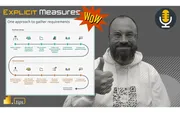
Episode 288 is a practical checklist for gathering semantic model requirements: who the model is for, what definitions must be nailed down, and the constraints (grain, security, refresh) that drive design decisions.
January 5, 2024
2023 was the year Fabric became the headline and Power BI’s authoring experience kept evolving. In Ep. 282, Mike, Tommy, and Seth review the releases that actually changed how people build, what cooled off, and what they hope improves next.
December 29, 2023
Customer 360 isn’t a dashboard—it’s an operating model for joining CRM, marketing, product, and support signals into one story. In Ep. 280, the team breaks down why Fabric’s shortcuts/mirroring + Direct Lake are promising for reducing data-copy chaos (while still forcing you to solve identity and definitions).
December 27, 2023
Ep. 279 is a holiday ‘Secret Santa for Fabric’: Mike, Tommy, and Seth swap feature wish-lists—better admin oversight, smarter lineage and monitoring, smoother migration into Fabric, and tooling that makes semantic models easier to build and trust.
December 22, 2023
Ep. 278 explains Fabric’s Semantic Link—how it connects Python to semantic models—and why that matters for repeatable data-quality checks with tools like Great Expectations (plus quick hits from the December Power BI Desktop release).
December 13, 2023
Ep. 275 breaks down business alignment for Power BI and Microsoft Fabric—how to connect analytics work to real business outcomes, decision-makers, and priorities. The crew shares practical ways to translate strategy into an operating rhythm your data team can actually execute.
December 8, 2023
Ep. 274 explores Microsoft Fabric Real-Time Analytics—how event streams, KQL databases, and alerting fit together for streaming scenarios. The crew also highlights the practical gotchas: governance boundaries, storing history, and the cost surprises that show up when “easy to turn on” becomes “left running for weeks.”
December 6, 2023
Ep. 273 breaks down two power-user additions: DAX Query View in Power BI Desktop (plus Performance Analyzer integration) and Fabric’s new `DeltaLake.Table` M function—bringing Power Query closer to Delta tables.
December 1, 2023
Ep. 272 breaks down change management for Power BI/Fabric programs—how to make platform shifts stick through communication, enablement, and an adoption rhythm—plus a practical PSA on Direct Lake data-type gotchas in semantic models.
November 29, 2023
Can Tableau plug into Power BI/Fabric semantic models? Yes—but Ep. 271 explains the real tradeoffs: XMLA/SQL endpoints, licensing/capacity cost, and when a shared semantic layer is a migration bridge vs. an operational burden.
November 24, 2023
It’s a mailbag episode: the team breaks down how to ship Power BI content like a product (Apps + Teams), why external sharing is still messy without Embedded, and what to do as Data Marts/Charticulator/Access fade into a Fabric-first world.
November 22, 2023
Ep. 269 breaks down the difference between delivering BI as a one-off project versus operating it as a data product—clear ownership, continuous feedback, and a pragmatic hybrid approach to intake vs. big platform work.
November 17, 2023
Ep. 268 distills the Microsoft Ignite and November 2023 release wave into what BI teams actually need to know: the most meaningful Fabric + Power BI updates, where Copilot fits, and how to roll changes out without breaking governance or capacity.
November 15, 2023
Ep. 267 turns Microsoft’s System Oversight guidance into an actionable playbook: what to monitor, what to standardize, and how to avoid governance-by-surprise. You’ll get practical patterns for balancing tenant controls with empowerment, plus tips for using capacity signals and APIs to keep Power BI + Fabric healthy at scale.
November 10, 2023
Ep. 266 defines managed self-service in Power BI: shared semantic models with clear ownership + certification so business teams can build fast without breaking trust in the numbers.
November 8, 2023
A rapid-fire mailbag: incremental refresh vs full reloads, migrating off Report Server, pragmatic workspace governance, and how Fabric adds new compute choices without changing the core tables→model→report pattern.
November 3, 2023
Low adoption isn’t a mystery—it’s usually a measurement problem. Ep. 264 breaks down how to define adoption for analytics work and which signals (report usage, model reuse, enablement, and outcomes) actually correlate with impact.
November 1, 2023
A tour of Fabric’s underrated workflow accelerators—OneLake File Explorer, Data Wrangler, and Shortcuts—plus a pragmatic look at burstable capacity guardrails and why the Capacity Metrics app should be your first install.
October 27, 2023
Ep. 262 is a practical walkthrough of bringing Azure DevOps + Git into your Power BI / Fabric workflow—using PBIP as the source format—so deployments become repeatable, reviewable, and less fragile as your content moves from dev to prod.
October 20, 2023
Ep. 260 breaks down Microsoft Fabric workspace roles (Admin/Member/Contributor/Viewer) and how to assign them with least-privilege in mind—so teams can build fast without turning every workspace into an admin free-for-all.
October 18, 2023
Ep. 259 asks the question every Fabric builder runs into: does a star schema still matter in a Direct Lake world? The answer: yes—especially if DAX is involved—but Fabric changes where the shaping work belongs (upstream) and raises the bar on governance.
October 13, 2023
Ep. 258 is a reality check for report builders: are your visuals helping people see the insight faster, or making them work harder just to decode the chart? The crew shares practical ways to keep creativity high while keeping cognitive load low.
September 29, 2023
Ep. 254 explores what ‘SQL in Fabric’ really means—from querying Delta tables in OneLake to the practical gotchas of building lakehouse-style pipelines. You’ll hear why the storage/compute split matters, what it changes compared to Synapse-era patterns, and where Excel-first teams still hit friction.
September 27, 2023
Ep. 253 answers a mailbag question every org is about to face: will Microsoft Fabric’s bigger toolbox overwhelm business users—or can you introduce it without killing self-service momentum? Mike, Tommy, and Seth share practical rollout language, guardrails, and adoption patterns that keep Power BI approachable.
September 20, 2023
Ep. 251 focuses on where AI genuinely helps (and where it doesn’t) in a BI workflow—turning vague questions into clear requirements, accelerating DAX and documentation, and improving communication—while staying realistic about security, governance, and hallucinations.
September 15, 2023
Ep. 250 tackles the practical question every Fabric team hits fast: what belongs in OneLake, and how do you decide the right boundaries for lakehouses, workspaces, and semantic models. Mike, Tommy, and Seth break down the OneLake vs. lakehouse naming confusion, then land on governance-first patterns that keep shared dimensions, security, and reuse from turning into a data swamp.
September 8, 2023
This episode breaks down practical Microsoft Fabric workspace design: how to separate environments, clarify ownership, and keep permissions sane as you scale. If your tenant is starting to feel messy, you’ll walk away with a repeatable pattern you can apply to new teams and new data products.
August 23, 2023
If you could spend $100 improving Microsoft Fabric, what would you buy? In Ep. 243, Mike, Tommy, and Seth build a no-nonsense wish list centered on cost clarity, stronger lineage, and admin tooling that scales beyond a single team.
August 16, 2023
Ep. 241 covers a practical Dataflows Gen2 approach to build history over time—and a bigger lesson: solving data problems means addressing technical, business, and adoption realities (not just shipping a clever automation).
August 11, 2023
Ep. 240 is a reminder that ‘the art of the possible’ isn’t just flashy dashboards—real Power BI/Fabric value comes from automation, clarity on the business outcome, and designing for adoption.
August 9, 2023
Ep. 239 breaks down six practical ways to add context to metrics—comparisons, history, scale, and confirmation—so your Power BI visuals actually drive decisions.
July 28, 2023
Ep. 236 breaks down the Fabric ‘SQL vs OneLake’ decision: what’s just different interfaces over the same Delta storage, where governance and permissions still matter, and how to keep architectures understandable as the platform converges.
July 26, 2023
Ep. 235 is a practical episode for anyone stuck in ‘fix the dashboard’ mode: it shows how to trace undesirable effects back to real root causes using a systems mindset. You’ll also learn what Chris Webb’s Fabric tests reveal about Direct Lake ‘data hotness’, capacity limits, and why some queries can quietly fall back to DirectQuery.
July 21, 2023
Ep. 234 breaks down what makes a ‘perfect’ data analyst: not just technical ability, but the communication and business context needed to turn messy questions into decisions. The team also uses Fabric’s data-integration options (pipelines, Dataflow Gen2, notebooks) to talk through tradeoffs, missing ‘table stakes’ features, and what lock-in really means while the platform is still maturing.
July 14, 2023
In Ep. 232, Mike, Tommy, and Seth break down the symbiotic relationship between data governance and data storytelling—why trust, ownership, and clear lineage are what turn dashboards into decisions.
July 5, 2023
In Ep. 229, Mike, Tommy, and Seth break down Fabric domains and why they’re only useful when paired with clear ownership and process. They debate central BI vs. business-led models, workspace roles, and the promotion/certification path needed to keep Fabric enablement from turning into chaos.
June 28, 2023
In Ep. 227, Mike, Tommy, and Seth explore what Fabric adoption really requires: governance, ownership, and cost visibility—not just new tech. They debate OneLake discoverability and the ‘lakehouse per dataset’ question, then land on a practical distinction: data quality is the condition of your data, while data governance is the operating model that keeps it trustworthy.
June 23, 2023
In Ep. 226, Mike, Tommy, and Seth unpack Microsoft Fabric capacities with a cost-first lens: how to read CU consumption, what ‘hidden’ background artifacts can imply for spend, and which controls (like pausing a capacity) help you experiment without getting surprised.
June 21, 2023
In Ep. 225, Mike, Tommy, and Seth unpack why ‘workspaces’ are getting noisier in the Fabric era: new item types that appear automatically, what should be hidden vs. governed, and the simple standards that keep teams productive while the platform shifts under your feet.
June 16, 2023
In Ep. 224, Mike, Tommy, and Seth use Microsoft’s Fabric Decision Guide to clarify when a warehouse-first approach makes sense versus a lakehouse-first approach—and how to pick a default pattern your team can govern consistently.
June 14, 2023
In Ep. 223, Mike, Tommy, and Seth continue the data ingestion series with a pragmatic Fabric lens: when to use pipelines vs. dataflows vs. Spark, what tradeoffs actually matter, and how to standardize ingestion so it’s scalable, governable, and maintainable.
June 9, 2023
In Ep. 222, Mike, Tommy, and Seth use Microsoft’s Fabric Decision Guides to pick practical defaults for ingestion and storage—and explain how to govern those choices so teams stop reinventing the platform on every project.
June 7, 2023
In Ep. 221, Mike, Tommy, and Seth break down OneLake and Direct Lake in Microsoft Fabric—what they are, how they work together, and where the sharp edges still are. If you’re trying to pick a durable lakehouse pattern, this episode gives you the mental model for shortcuts, security, and performance before you bet your architecture on the new stack.
June 2, 2023
In Ep. 220, Mike, Tommy, and Seth break down Git integration for Power BI in Microsoft Fabric—what version control changes for BI teams, how branches and pull requests map to report development, and the simplest way to start adopting source control without slowing delivery.

May 26, 2023
Ep. 218 is a high-energy breakdown of Microsoft Fabric—why it feels like the next evolution of the Power BI platform, and the governance, capacity, and admin decisions you should consider before enabling it broadly.