
Data Exploration & Spin Off Projects – Ep. 325
This episode is about balancing data exploration with actual delivery. Great analysis work often generates new ideas—so the question becomes: how do you capture spinoffs without blowing up scope and timelines?
News & Announcements
- Step 7 in the Data Exploration Journey: Spin-Off Projects | Nightingale — This article is part 8 in a series on data exploration, and the common struggles that we all face when trying to learn something new.
- PowerBI.tips Podcast — Subscribe and listen to the Explicit Measures podcast episodes and related content.
- Power BI Theme Generator — Create and download Power BI report themes using the PowerBI.tips theme generator.
Main Discussion
The discussion uses an article as a jumping-off point and then shares practical ways teams manage exploration without losing focus.
Key points from the conversation:
- Exploration is valuable (and risky): side investigations can create real value, but they can also overwhelm teams and delay delivery.
- Use a “parking lot”: capture ideas for later so you can stay focused on the main deliverable.
- Define boundaries: spinoff projects need clear scope, owners, timelines, and alignment with the main goals.
- Turn ideas into prototypes: use proof-of-concepts (Power Apps, small demos) to validate quickly before committing to a full build.
- Culture and cadence: regular brainstorming sessions can feed innovation—if you pair them with prioritization and execution discipline.
Looking Forward
Start tracking spinoff ideas explicitly (backlog/parking lot). Then pick one spinoff to prototype with tight timeboxing so you can validate value without derailing the main project.
Episode Transcript
0:31 good morning and welcome back to the explicit measures podcast with Tommy Seth and Seth and Mike Tommy may or may not be with us this still here the video is frozen okay just checking just making sure that go may go with the story go with your story before you get into your story it is a happy Tuesday gentlemen and don’t you forget it regardless of whatever trials and tribulations you’ve been through Tommy there we go heyy hey here we go okay okay Goodness Me hi guys
1:02 here we go okay okay Goodness Me hi guys our main topic for today before we go into our news and intro pieces main topic today is an article from nighting Gale Dev nighting Gale right DVS yeah nighting Gale DVS sorry I’m trying to read the URL here correctly and it’s a data exploration spin-off projects so we’ve all been doing data projects before how do you focus your attention onto the main project and then how do you let’s let’s put that in the parking lot let’s hang on to these ideas
1:32 parking lot let’s hang on to these ideas for later so we can come back and do other data projects oh let’s let’s do that in phase two and it’ll be interesting also to see how you guys approach does anything actually happen in phase two you you write down all these other ideas that can get pushed off and we’ll talk about that later so interesting kind it’ll be I think a good conversation this is a neat article really like it very thought-provoking as well okay with that Tommy your your computer for those of you who joining live on the internet Tommy’s having some
2:02 Tommy’s having some glitching on this the screen here for his video but apparently this was a much bigger issue on your Friday yeah this is not Tommy testing out a new camera like we have in the past let’s cut back didn’t go so well which did not go well the experiment was a failure unfortunately failure let’s cut to Friday around me and Mike are going to be doing planning for some more learn Fabric in a few hours that’s fine computer starts flickering and gives me a green screen error which I’ve never seen SE a
2:33 screen error which I’ve never seen SE a green screen error yeah yeah so it’s like okay okay and then I reload the computer I do the check disc scan dis everything’s fine another 25 minutes go by another error and I get this new error 32 wha uncorrectable error I’m like Star still error messages Microsoft thank you very much which out of all the error messages you want to get uncorrectables not one of them correct yeah so I was like okay well
3:03 correct yeah so I was like okay well maybe I have to do a restore point so I try to reload again and it’s starting to R load bios and it doesn’t even go to Windows anymore my computer keeps resetting it says the BIOS loading screen I have a Au Asus motherboard and keeps going that resets and keeps going back to that and I get this blue screen saying can’t load WIndows oh no and not even like a recovery mode like you in the recovery mode where you can like go to command prompt and do other things I
3:33 command prompt and do other things I can’t even get to a Windows screen it was bios telling me that we couldn’t load WIndows I haven’t really done anything like like besides the normal computer stuff so to speak and I was like okay so start doing some research Mike is messaging me like hey are we meeting I didn’t message him back he’s I’m like not today my friend because I am now beginning to realize after some research it’s something to do with the hardware it’s some some so I have to check fans I have to check my
4:04 have to check fans I have to check my initial thought is like the hard drive went that’s what I’m thinking like but I think it won’t get past the BIOS and it can’t load anything from Windows I feel like that’s when the hard drive just toasts itself yeah so it could be either something BW out pause can we pause here you you said something that strikes me are you are you one of those guys so you read the message where somebody was like are we meeting today and he was like have a plan schedule did you respond not today or was it just radio side n so you’re a guy that reads the stuff and
4:34 you’re a guy that reads the stuff and you’re just like I’m not going to communicate because I’ve got a friend like that and I cannot tell you how how absolutely challenging that is for and I don’t know if that friends me but let’s first talking about a different one sorry Seth I didn’t mean to do that to you nope not that not you either not on this podcast okay just saying someone else noted noted Tommy I I’m now
5:04 someone else noted noted Tommy I I’m now putting you in a bucket of that’s you go put me in that bucket when I’m taking out my graphics card my Navia 470 I’m in that bucket when I’m cursing going sorry you are having you’re having personal difficulties and we’re we’re we’re dealing those right now so let’s focus back in on on iOS Hardware sorry and I will say and I’ll put myself in the bucket as an independent consultant when the one way of working is gone yeah I’m in that bucket totally this is but
5:36 I’m in that bucket totally this is but you don’t to be clear you’re timeing you have extra computers so like when one goes down there’s a plethora of other devices that potentially be used and this is and this is the excuse that I’ve used well if my if my main computer goes down I need to have a second and a third just in case so that’s why I have a Surface Book and another Surface Book and another computer like I’ve got I’ve got so many computers like we could have like six go down and I’m still able to work like it’s not that big a deal this true but
6:06 it’s not that big a deal this true but this yeah so basically it was two in the morning and I’m taking out you’re working on this from a. m. till 2: in the morning so because I was do research and then I basically was putting in were you ripping apart the entire computer motherboard because basically what from the research you could do diagnostic tests so I had like extra SSD drives that I plug in that had an application on it that would run to say is it is it the graphics drive is it the is it the fan is it too hot so
6:36 the is it the fan is it too hot so so because before I went to Best Buy so basically we we finally kept doing some more tests I plugged in a Microsoft drive to try to load it from a different hard drive it worked but it was still bugging out finally we’re on a completely new computer it’s like f more than factory reset so to speak where right now looks like it’s working we’ve done some stress tests on the computer I’ll tell you what though throughout this whole thing one thing I’ve learned
7:07 this whole thing one thing I’ve learned it’s really fun building a computer I didn’t know this but all hard drives or all motherboards have those batteries like those little circle batteries you want to out you want to change it out every six years because that can also be one of the problems interesting so that’s what I did I ordered one of those batteries I had to take out the stinking away yeah and ever since then it’s been working working totally fine so if that battery dies bios won’t load or bios can’t tell the time which is really integral for bios so so the fundamental
7:40 integral for bios so so the fundamental problem here of the computer saying you’re broke I’m broken right was the a battery on the motherboard the battery on the motherboard you which you would never know it’s there unless you took out the graphics card or the graphics Drive I I can’t tell you the last time I’ve ever placed any battery on any Mother’s board at any point in time like I’ve had a couple desktops I’ve never touched it what’s the longevity you said though Tommy like six years they said anywhere from six to eight years and
8:10 anywhere from six to eight years and that’s how long are you holding on to a six to eighty old computer though Mike I don’t know the big Behemoth that I’m running off of right now it’s been around here for like 5 years now I bought an expensive one starting out and it’s a it’s a beast but I was like I’m I’m gonna buy this thing this thing is gonna run forever it’s done well but I don’t yeah I’ve never your fans if you have fans on your motherboard or on your computer clean your fans these are all huge things anyways so far we’re so good there’s a ton of more configuration I have to do because all my environment variables I have to install python I
8:41 variables I have to install python I have to install power pi and all the extra things it’s fine it’s fine it’s good you need a clean reset now it’s clean now to run well yeah I have my own hypothesis what I think it was too much coffee you spilled you spilled espresso in it that’s what made that that is that is that is one a good hypoth but but I I I think the AI was trying to get out of your computer Tommy oh oh no sucking up all the battery all the juice that it could in in trying to make a a
9:12 that it could in in trying to make a a play for full internet access that’s oh no oh no my model all those all those all those large language models are are toasted yeah yeah maybe maybe maybe it was just trying to find all of the extra juice it could pull and it was like oh look battery I’ll eat that your isn’t your computer like brand new no no this hard you were you were putting new new hardware bits into it into it yes and see this this I’ve learned from working on old cars man you start you start
9:43 on old cars man you start you start swapping out the old for the new and a whole slew other problems can come up on the on the older stuff all the time this is also interesting to me it also feels a bit more like your your large language models were getting jealous of co-pilot Maybe per se a little bit and so they were like you little bit and so they were like fighting Wars and things know fighting Wars and things on you didn’t even know what was happening I’ll show you I’ll give you a err you’ve never seen before we’re gonna make up one yeah
10:13 before we’re gonna make up one yeah that’s hilarious man so you just got back up and running yesterday oh yeah basically yesterday we finally had like all systems go after some do like like I said I did some I wasn’t gonna about to install everything and then get the error again so I did stress test to basically like test everything to the limit to see if anything would break which are actually a thing and so far we’re
10:38 actually a thing and so far we’re good like I said it looks like the camera is doing pretty good now it’s the first time I really loaded the camera so all right well you have a fire extinguisher nearby right just in case yeah just in case I just had two fans in here at all times yep exactly right it’s I’m H more than ever I’m happy to see you guys my weekend was so much better than yours like I sat on a sideline and watched my kid play soccer in a tournament all weekend weekend long nice what place did you guys get if
11:10 long nice what place did you guys get if it was a tournament yeah they they got into the championship game and lost that’s excellent very nice that’s exciting we we had a very different experience with a lot of our soccer experiences where we continued to lose everything all the time and it was very disheartening I just I had to stop like caring at some point I was like this is horrible it’s to win a little bit though well I’m glad to see that I know have sports dads here we can say that for another episode that’s probably a whole another episode we’ve just started that
11:40 another episode we’ve just started that and I I have to ask you so many questions for veterans in the game oh man yeah that’s another episode Tommy you’re going to need to not yell at other other children yeah parents can parents can get penalized Tom yeah parents can’t get thrown out so you lessons lessons from a season Dad season dads in this don’t yell at other kids there’s like another chemical releases as soon as you you see your kid playing a sport like in a game like some endorphin where I’m just like I I’ve never experienced
12:12 I’m just like I I’ve never experienced before it’s like raw emotion that’s like easy to like dwell up you’re like don’t do that do this run faster how many times have I told you yeah yeah I know you can do it like I’ve seen you do it like come on yeah and you want to win you want to win but you can’t act like a fo all right I’m glad your weekend was great Seth Mike I’m happy your weekend was more fun I think you had you had something that was actually I I had I I had with a working computer I
12:42 I I had with a working computer I actually had something come up that was just a bit of a struggle so I I don’t know how much you guys have worked with the connections so there’s a new connection manager so inside when you create like a pipeline if you create like a new actually particularly my issue was in pipelines so if you create a pipeline you can create a connection and that connection is then managed in like the admin it’s like an admin center it’s like there connections and gateways I think inside the the menu it’s to click the gear and get down to the menu but what I found was very
13:12 the menu but what I found was very interesting when you create a connection and you try to edit a pipeline or go look at it you’ll get this nice message if you’re not the owner of the connection you’ll get a message that says hey you’re not the owner okay it says please contact the owner all right and let them know you need access to the connection great nice message it’s kind connection great nice message it’s clear nowhere does it say who the of clear nowhere does it say who the owner is nowhere is there a link to go message them and say hey I need access nowhere there’s nothing about it I say okay no problem I’m the admin I’m going
13:43 okay no problem I’m the admin I’m going to go into the admin portal and go see where the connection is because I’m the admin of the of the whole parb tenant yeah so I go over the admin portal I go into the connections and settings I’m scrolling down I’m like okay not seeing any buttons here that tells me like see all connections across the organization trying to find it trying to find it looking looking looking can’t find it I only see connections that have I’ve made or people have shared with me not a big deal it makes sense I have found you are not allowed as an admin you are not allowed to see all connections in your
14:15 allowed to see all connections in your tenant and if there is a connection that is not owned by you you can’t API your way into it you can’t take over it you can’t even find it I don’t have a clue where you go find missing connections inside powerbi portal now again I I also understand that there like there is potentially a security risk of like an admin or someone being able to like move connections between different people I I understand that that that’s probably not
14:45 understand that that that’s probably not advisable but if you’re the admin of the tenant I should be able to see all connections in my tenant no matter where they are and I should be able to push permissions to different people on those connections so what I’m what I’m seeing here is if I have a pipeline and someone makes a connection in that pipeline to a data source whatever and they leave the company or they get promoted or they go somewhere else that’s just done it’s gone that connection cannot be recovered there is no way for you to go get it you
15:15 there is no way for you to go get it you have to log in as that person and go get the connection get it shared with you before they leave to me this is a huge Miss D I I would I would throw that in your back channels immediately resolution’s no way okay good I I wrote a really long blog I wrote a really long like like message like hey I’m seeing this and this and this this doesn’t make sense to me because the same thing happens like in like the personal workspaces right but now we have the ability to go like
15:46 but now we have the ability to go like con control those a little bit more so as as an ad happen yeah it used to happen you can fix that now you’re the admin yeah ad privilege or Uber admin if we need an Uber ad in the fabric whatever then do it but yeah some one person or group absolutely needs visibility into everything that is going on in the organization that’s what I’m saying okay just making sure you’re feel the same thing that I am about this oh yeah bab the more you’re talking in my
16:17 yeah bab the more you’re talking in my blood pressure was the Wild West that I I had my first role as a data analyst where from the data sets yeah and this I’m glad that you’re already on top of it please keep us updated I I’ll let you it please keep us updated I I’ll let if anything changed but right now know if anything changed but right now like I haven’t heard there’s no API there’s no way you can go access these things I’m even just at one level I’m just trying to figure out where the heck do I find where do the heck do I find like a list of all the connections I don’t even know in the API stuff like unless you’re going through and like running a scanner API and like seeing all the different data sets from the ten
16:48 all the different data sets from the ten tenant maybe then you’ll see everything but then I don’t know how I get access to it I don’t know how there’s no API to add my access to any of these things it’s just it seems worst case scenario worst case scenario it’s at least the connection name in the owner correct okay so one more thing I’ll add another color to this one right I’m in the pipeline I’m looking at the connection and it says you don’t have access okay cool let me go look at the name of the connection so I can go talk to someone about it or whatever no name
17:18 to someone about it or whatever no name just a goid and when the person who does have access logs in they can see the actual name of the connection I’m like again I understand this potentially could be a safety risk but on the other hand I’m hand I’m thinking I need to at least see the name of the connection but I think I know why they’re doing this because the names of connections can potentially be just the URL of where the connection’s going to so to request access no there’s no there’s it says you should it says you should request ask us but I don’t know
17:49 should request ask us but I don’t know there’s no link to it there’s no which also is like a false flag and this because right like if something’s buried in somebody’s personal SharePoint yes request access like that does nothing it goes nowhere right even that I don’t like yes not not a big fan and that’s yeah hopefully they fix that that that’s dat flow you could see the owner if yeah in data flows gen one and other things right you could have a a semantic model and at least I could take over that thing right so
18:20 could take over that thing right so maybe I couldn’t edit it or maybe I can’t see it because it was some owned by somebody else that’s fine just take over or what it what it should be is well what I think the experience should be is a connection shows up you don’t have access to and it should recognize you are an admin and you should be able to say add to connection you should literally anywhere as an admin I should be able to add myself to any connection anywhere I want in my tenant in my organization and you can’t do that so if chat has found this out or chat has any struggles with this I would be curious if chat has seen this or have any
18:51 if chat has seen this or have any struggles with this if anyone else is seeing what I’m seeing or maybe this is just so new that people aren’t really I said in my message I was like give it like two months and I guarantee you this is going to be a hot issue for someone to deal with inside Microsoft because it’s going to just take a little bit of time for people to build some of these things and move on and when those move people move on you’re gonna have a whole bunch of missing broken can’t connect to things that people are going to stop using so like is this the thing that’s
19:22 using so like is this the thing that’s also in GA I know Fabric’s all generally available but the feature that you’re doing is this considered GA I don’t think connections is ga sorry let me say that again I think the ability to make connections is ga it’s part it’s very pivotal with what’s coming on in fabric you can’t make any connection to a pipeline without making some connection and you can’t make a connection like you have to do it no matter what but the creator of it is basically the one who owns it there’s and my my biggest gripe here is the
19:53 and my my biggest gripe here is the admins can’t get access to it or push it around it’s visibility visibility yeah anyways so any throwing that out there into The Ether let’s see who else can figure something out here maybe there’s a solution that I haven’t seen yet I’d love to hear your Solutions if you’ve encountered this and I’d love to hear if you’ve solved it and how to how to find connection strings so if you in in chat for those who are listening afterwards send me a message let me know what you found if there’s a way to solve this problem anyways all that to say we’ve we’ve burned through a
20:23 say we’ve we’ve burned through a perfectly good amount of introductions now let’s move into our main topic so I’ll paste the actual link to the article here in the chat window as well Tommy you want to give us a quick little overview of the night Andale article and we’ll go from there yeah so we’re really loving the Articles from the N Go website which is really all about data visualization and the article we’re looking at here is actually in a part or a series we’re looking at the eighth Post in the series and it’s really talking about
20:54 series and it’s really talking about looking at new projects and even Masters people who’ve been experts in our fields for a long time face learning challenges so how can we even on current projects or projects that we have to do spend time to actually spin off on projects to learn spin off on projects that where we don’t want to do our own research and development maybe something more creative maybe something just
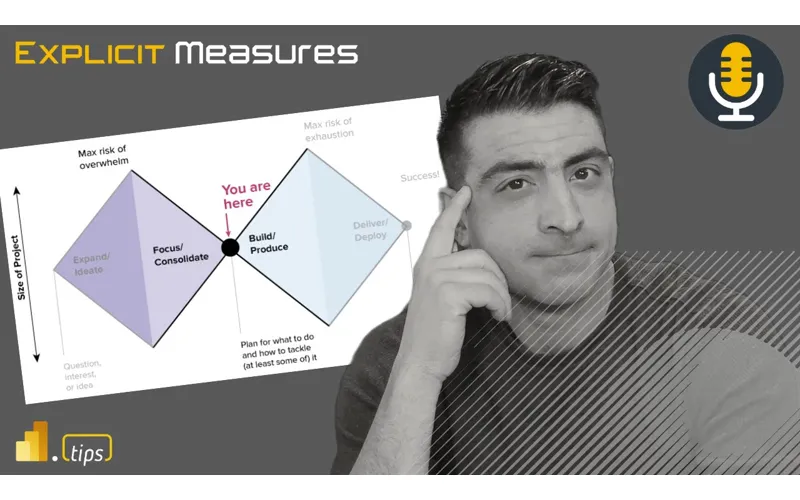
21:17 more creative maybe something just because we’re interested in it and I think for us today it’s how do we balance that time that can lead to valuable insights spinoff projects off the norm off the things we’re supposed to do how can those spin-off projects actually lead to valuable insights for either the people doing it or the business and how do we encourage that in organization so a there’s a really good diagram very early and there’s a lot of words and conversation happening in this article but there’s a great diagram that I think explains a lot of
21:49 diagram that I think explains a lot of my experiences when I’m working on projects there is on the on the Y AIS of the diagram it says the size of project so and it’s interesting cuz it’s almost like a a diagram that is it’s a bit the y- axis is not a typical y- axis doesn’t start from zero goes and go to a number it’s just basically a general size right so the larger the y- AIS in the visual the the larger the size of the project and so then you have a couple key points on the chart that I think are very worthwhile M touching
22:21 think are very worthwhile M touching on here is you risk the M Max risk of overwhelming yourself the max risk of exhaustion and then it talks about where you go from idea all the way down to delivery and deployment so I think this is a great diagram and I feel like this is a lot of what I go through when I work on projects either with customers or my own projects internally it should feel like a great diagram because we were extremely excited about it when we talked about an
22:51 excited about it when we talked about an earlier article in this series in episode 214 yeah exactly so it is it is from the same author Erica gun and and a little bit further Downstream I think we were talking a while ago about her like six this is eight but yeah the the idea of the spin-off project off the main right and and that that expansion and ideation right to to get to the main project we’re getting down to the focus and consolidation where you
23:22 to the focus and consolidation where you have to like what are the core bits and pieces that whether it there’s time time bound there’s capacity there’s like there’s what do we need to deliver and then but as you’ve gone through all of this ideation to build like what can we do what’s going to make the biggest impact or yeah make the biggest impact there are so many other great ideas that could be implemented right that you have to cut out and I think
23:53 that you have to cut out and I think what this article leans into a little bit is how do you stay focused on the deliverable of the main project but at the same time take some of these other ideas and create spin-off projects from them and and we’ll get into like the delivery on like what what exactly these are I think in in the conversations but holistically I think the the key points that she you
24:23 think the the key points that she you know outlines to ensure that it’s a successful spin-off right is that there’s clear boundaries between the two two projects they have they have common goals and and mutual wins work align align timeline or align the timelines in advance as far as like the spin-off and the main and then be realistic about what you can take on so what what would be I’m thinking
24:54 on so what what would be I’m thinking about how to materialize this it’s conceptual at this point I I like I like practical examples of where you might see this occurring so do you have any examples either this is a question for both Tommy and Seth you have any examples of where you’ve seen a project start and you were delivering something an output of a a report it’s it’s a build a lake house it’s something but then you saw there were some side spin-off projects that came along for the ride and you were able to absorb them bring them either into the
25:24 absorb them bring them either into the main project line to get them completed or you said nah it’s time to to wait we’ll just put those off on the side and we’ll wait to phase two to see those being being done anything any examples you have that would do this a little different the way you actually Define it whether this spinoff projects came from the outside but a really good example in my own career was we were working on a report for product life cycle and from the idea came we need a better way to input the data for people to manage it and I asked
25:55 data for people to manage it and I asked like can I through this show using a power app can I just put some demo together or proof a concept where people can manage it Power app has the opportunity to get a lot of spin-offs in there yes no a ton especially honestly especially working with a lot of reports it’s a perfect perfect road but it’s like can you give me a few hours or a few time to put something together that will be crude but just to show what I can do rather than buying something just because we know we’re struggling with this report we know
26:25 struggling with this report we know we’re struggling with the data in here they said okay so the spin-off Was An Origin off the report and basically we put a we put a demo together for the stakeholders saying okay if you are you stakeholders saying okay if you are product manager here’s what you do know product manager here’s what you do if you are the marketing manager here’s what you do in this app they said we really like this and we actually paused the report or paused how we’re going to gather the data to build the app because we’re like we want to change our process to this power app we wanted
26:55 process to this power app we wanted basically integrate everything and it was a great example of hey we know that we’re not going to get the ideal solution from this report or from just Gathering the data now it’s not the best but basically allowing the time to show a very crude proof of concept actually allowed us to change the process overall it did change the timeline it did change the even even changed the original goal but I think throughout the whole process it realized what well really what is our end goal anyways it wasn’t just the
27:25 end goal anyways it wasn’t just the report it really was to have a better way process exactly exactly let me can I ask a couple clarifying questions about like why you’re doing what you’re doing here just just to make sure I understand my my headspace so what was your before the power app was introduced what was your original design for source of data it was gather all the data from where all the product information is coming from Excel SQL datab yeah an a VAR variety of sources but it all lived
27:55 of sources but it all lived wherever it needed to live right and the reason I’m asking this question is I I’m leading the witness here a little bit because I’ve had a lot of experiences I see where you’re going you see where I’m going with this one potentially I don’t like Excel as a data source honestly it’s it’s cool that you can use it very neat but it’s to me the the input mechanism of excel is too flexible for what users can do and potentially has very high risks for breaking my reports Downstream anytime I’ve built a data process on top of Excel
28:25 Excel files it’s just r with errors and challenges and I do a lot more work in the data engineering power query space to fix and clean things much more than I think I should and so I like where you went with this project Tommy because you had a goal of like Hey we’re going to deliver the output of this product data that’s the goal the main project and what you found I think in that was you found some inherent weaknesses in your process and was able to add a side project be limit there are going to be limitations no matter what weiver correct and and by bringing in
28:56 weiver correct and and by bringing in something else it informed better process and I think you’re I think it was actually really good I like the way you put this is we were building a report but what we were really building was a better process and and I think sometimes that delivery deployment level or where you’re at and how do you can focus and consolidate things I think that this is a good example I do want to make a note though there are sometimes this was a desperation one because because of the it’s not just Excel to your point it’s usually because oh they have this idea of what they want but because of each
29:26 of what they want but because of each data source and different people managing it there’s no relation there’s no way we can relate things together so we’re never going to deliver what they’re expecting they’re expecting this prediction model or whatever they’re expecting but each Source someone manages differently so there’s no way to connect it so for the user they don’t understand that okay we’re going to be severely limited and not deliver what they expect because to the point everyone has their own ownership and their own process so this was more out of desperation not out of let’s just try
29:58 of desperation not out of let’s just try something new if that makes sense I’m gonna understand I don’t want to I don’t want to like counter your point there I agree but what I would say is in that situation I feel like when I when I encounter things like that it it speaks to a lack of data culture that doesn’t have the ability to correctly identify you are data stewards of this information and I will say this I’ve been in organizations where Master data is is very important to like defining
30:29 is is very important to like defining what products we build how we build things all that fun stuff however when we did it it was very challenging for people to like get their head around like how do we actually build this in a way that is actually sustainable and a lot of people getting a lot of people on board to owning portions of their data especially in master data is I think really hard and that’s why really expensive tools exist to put owners to different Columns of data about products so I I I don’t think
30:59 data about products so I I I don’t think yes I think I I see your observation there but I also say like this is also what you’re also probably experiencing here as well is inside the company the culture there there was too many people so many cooks in the kitchen and there wasn’t clearly defined ownership roles of the the the master data and I find that that’s actually very common believe it or not very common the one the last thing I’ll said this but at least allowing us to do the proofer concept to do the spin-off is one of the big differences because yeah you’re going to
31:29 differences because yeah you’re going to find all the time the complications or different management but we propose as the bi team can we do something that may take longer that may not be exactly right now what you expect but just to Showcase a better longterm picture here and that to me was if you want to talk about maybe not necessarily data culture but just a good culture this was a huge proponent for us to say okay I know you want this now you want this in the next
31:56 want this now you want this in the next month or whatever the ETA was but you’re not going to get what you want allow us to do something even if it’s a proof of concept and spend some time dabbling in this and see what you think that was the to the Catalyst to really honestly the whole organization adopting power apps moving forward too nice yeah Seth any examples from your side of of where you saw a main project or and maybe did you have any examples like where you said no to some side projects because it just wasn’t fitting the main the main goal
32:29 wasn’t fitting the main the main goal no I I no I I think I I think an example that that fits well in here is actually one that’s ongoing because a lot of a lot of what this article series is about is is the development or the raw question right like the ideas generator like there’s no clear idea of where we want to go yeah so I was trying to look up quick what episode we were we spent talking about creativity which actually led to me implementing like monthly meetings in my team which
33:00 like monthly meetings in my team which are more brainstorming creative meetings like solving solving problems yeah and I the byproduct of that I think is a really good example of a spin-off project right so you you have a main project or deliverable and for the business what what one of those was was driving usage and adoption right so the main goal obviously is to produce for the business the insights that they would need to start making decisions about who
33:31 to start making decisions about who what customers are we going to go interact with what are like what what drivers or campaigns can we generate Etc sure so so the the project itself is you sure so so the the project itself is a lot of showing the obvious know a lot of showing the obvious relationships making sure that the business has access to those we’re removing the the roadblocks essentially for good decision-making and obviously putting some of those insights together that may not have been there before sure where where the spin-off project comes in was taking this idea right and
34:03 comes in was taking this idea right and running it through our creative brainstorming meetings and saying like hey like this is a major objective throughout our organization but we have access to a lot of different data points across our ecosystem that this team is aware of are there other things that were overlooking or that could enhance the the output of what we’re trying to do here and the results of that were actually like really valuable and maybe we should do a
34:33 valuable and maybe we should do a followup on that podcast as far as kind followup on that podcast as far as a an approach that I’ve found in of a an approach that I’ve found in taking those creative meetings and and making them valuable to the business yeah because ultimately you you take these and you’re going to have a spectrum of ideas on that maybe like it’s almost on that quadrant of how long is it going to take what is the level of effort versus it’s it’s either really long really high or really low really short like or also impact to the business right and what you’re
35:03 the business right and what you’re looking for are the ideas that are high impact low effort and those are the ones that you can immediately introduce so out of there came a whole bunch of like identifying multiple different areas of the business where there could be very useful data points for us to do you very useful data points for us to do just refinement and categorization know just refinement and categorization of data to link up to our main data sets or do some text matching or leverage other sources and introduce that
35:35 other sources and introduce that enhanced data to drive different types of insights or different opportunities for the business to go drive usage and adoption so while while we have the main project going I think this is one of those examples that fits squarely into the use case here that she’s talking about where they they aren’t blockers in in the sense that we’re producing the value to the business but if we are able to complete those enhancements in these spin-off projects
36:06 enhancements in these spin-off projects like the potential impact to the overall deliverable could be much greater than just what was out outlined initially and I think that’s what as you read through the article she’s defining in the the several spin-off projects that they did incur here one of those being a a lot deeper level of survey and detailed analysis which produced more in-depth insights that they were able to
36:37 in-depth insights that they were able to leverage and then she also outlines one where they did a a categorization of titles right almost and somebody who’s doing a thesis spent an enor amount of time like 500 hours right like automating like how how how group the titles together and I think one of the the examples they use is many different levels of an organization whether you were an individual
37:07 whether you were an individual contributor manager of VP they may say that they’re an analyst right but the VP like salary would skew things wildly and like are you a leader are you not a leader people who weren’t really leaders were saying they were leaders and the leader what they defined as Leaders was at a certain level level or higher so there was a lot of ambiguity and what they were expecting to find in that aspect of things kind wasn’t as clean as they wanted it to and that side project
37:39 wanted it to and that side project really enhanced like the overall after the fact though and I think what what like is key in understanding I guess her point is these side projects have different timelines because one of these completed and enhanced the main project yep but the other completed 6 months after so they couldn’t it however there’s a retro secondary where it’s like it still was able to be like Incorporated after the fact a good point too great Point here because the example I gave only makes
38:09 because the example I gave only makes great points just FYI only points without yeah without m w maybe more almost did a spit take on his coffee on that one that was good he spit his coffee all over the microphone that would have been great we only give accolades to the Seth but it smelled like coffee yeah but the the big part I think with SE saying that really is the heart of a spin-off project is you may not know the value going into it or if if it even comes with an outcome of True Value part
38:39 comes with an outcome of True Value part of the definition of a spin-off project is that research and development is I’m going to dabble I can’t necessarily prove the value whatever the outcome may be because you’re of experimenting you’re you’re doing a little and that’s the sake of a spin-off project is it is it though like I I I think I don’t know if I agree with that because I’m not I’m struggling with that comment as well I I think in in the Spectrum especially is as it’s defined in the article right we’re coming down to the focus point of moving into
39:12 to the focus point of moving into delivery and build in delivery right like at that point I’ve done my PC like I know what what value props are going to come out of the main AG like even in my example I know there’s value I just don’t know what the impact of that yet is because there’s analysis that has to happen but I know there’s value that’s going to enhance the thing as opposed to what if we did and I think that’s part of the incubator of ideas that like
39:42 of the incubator of ideas that like starts to filter down and say okay based on our poc’s we know like Wii within a certain boundary that this is going to be a a big enhancement to the main thing we just can’t carve it off or or we need to do this as a spin-off so I would I would say it’s a little further Downstream I’m going to draw on my knowledge here around app development I feel like this this happens a lot in app development in my opinion because there’s there’s always and
40:12 there’s there’s always and sometimes you don’t know what you don’t know and you don’t get to really experience an application until you’re actually in it and you build something your initial vision and then you as as you’re building it you’re like there’s additional like who if we added a button that did this that would make this whole step a lot easier or if I again depends on how you think about how you build apps like if I added this new feature like for example I’ll give you an example of the theme generator because that’s one tool that we’ve been building right we we have a theme generator and I have this really interesting idea of like hey let’s
40:42 interesting idea of like hey let’s create all these scrims these background images that we’re going to just land on the page cool and then I was like as we’re building that feature I’m thinking to myself wouldn’t it be really nice if the theme generary could just detect where to put the visuals for you that would be a neat feature so that like in in lie of building the wireframing portion of the theme generator there was this whole idea around like what if I just clicked a button and it just said I’m going to just detect different shades of color on the image and then where those images appear flip in here’s here’s some
41:14 appear flip in here’s here’s some squares that I’m just going to apply to the page in a where I think they best need to fit and you can always modify them after the fact but the idea is making that easier so I don’t have to spend the time going through the images themselves and actually trying to place every single visual like it should be smart enough to figure so that was a feature that was added after the fact it was like a as I was building the actual feature and I think this is where I think you struggle though this is so the idea may have been good the the timing of when that idea
41:45 good the the timing of when that idea can be delivered we definitely didn’t release all of it at once right we first said okay let’s let’s shelf that idea let’s come back to it let’s finish the wireframing experience first and then we came back and we added this whole like AI for visual building and and dropping visuals on the page so I think that’s another good example of how we were we saw the idea as we were developing seemed like a good idea tabled it and then came back and spent some time developing at the feature and like actually adding it so I I feel like good
42:16 actually adding it so I I feel like good software development should be doing things like that right you you have a main objective you’re trying to build you try to plan as much as you can UPF front but throughout the project you always find there are tweaks and adjustments and I think potentially this is why you want to use Sprint and agile methods because sometimes the final
42:34 methods because sometimes the final gopost May slightly adjust itself based on side work that needs to come along for the ride to get the final project done so what are the origins then of leading to a spin-off project because what I’m hearing so far from from the conversation it was a question like a oh what if this occurred or what if this happened during the project but in my head it’s usually more than that it’s usually allowing time for some creativity to a point because if you are doing the Sprint and agile if you are
43:04 doing the Sprint and agile if you are hey heads down we are going to work to this goal that doesn’t really lead to a lot of opportunity for let’s ask other questions about this and oh can we you questions about this and oh can we what if I tested this because I I know what if I tested this because I I have too many deliverables on a set date so what’s I guess the question I’m asking is what’s the origin of the the origin of a spin-off project and then how do we allow them to really Prosper or in a sense become something that we’re going to work on I’m I’m going to give a maybe a weird
43:35 on I’m I’m going to give a maybe a weird answer here so if you if if you think about where you’re at in the process right we’re at this you are here phase right we’ve we’ve done our exploration we’ve had a whole bunch of idea expansions we’re now focusing and consolidating down to what we need to build right we’re we’re at the point in time where we’re saying we’re going to focus on building and producing something if we let that timeline between what we want to build build and produce and deliver and deploy extend too far I think you risk that that that area of you’re risking maximum exhaustion as you add all these little
44:06 exhaustion as you add all these little tasks to everything at some point you can get to a place where nothing’s ever getting done and at some point people I getting done and at some point people particularly when we’re on report mean particularly when we’re on report building right RBI is supposed to be fast it’s supposed to be a quick way to build reports if we take too long to deliver some report to the business they’re like what are you doing what’s taking so long well in the early days of power when there was a whole bunch of new visual features that were coming out it was very challenging to not get distracted and being like wow this new feature just came out I can
44:36 this new feature just came out I can incorporate these spark lines inside a matrix let’s do that hey I can do all these I can group visuals now let’s group everything in the VD in the report let’s just do all the grouping like you you saw all these features show up and you’re trying to build a report and get to a point where we have a delivery of a report but all these new things kept coming out you’re like oh I should try this oh I should if I can do that you keep adding all these things and you have to really be conservative and making sure that you don’t exhaust yourself with all the things you’re trying to maintain because
45:06 things you’re trying to maintain because at some point you have to really focus in and say what can we get out the door and so I my opinion here is to your point Tommy like how do you how do you gauge this what what’s too much what when are too many side projects right I think unless you have a clear definition of what done looks like you will get yourself in trouble with too many side projects and that will increase increase the build pro the amount of build you need to do to get something out the door so I my opinion is I try and find to find a very clean so I would
45:37 find a very clean so I would prefer in my opinion here is I would prefer to deliver something early keeping scope as small as possible and then if I have extra hours or extra time that I’m ahead of schedule then I’ll add a little bit more exploration but that’s that’s more of like a single developer experience I’m probably not slowing our main development down because of ideas that I have and this is I’ll pause here for a second I also think this article is talking about people and teams of things working on getting stuff done I also believe a lot of report
46:09 done I also believe a lot of report building is very solo based so this is a little bit different when we’re talking about solo based development because we’re not able because of the way parbi tools built it’s not very easy for multiple people to work on report page Building Together you can you can break the workloads by here’s the data a modeler and here’s the report Builder so we could have a team of people doing modeling to some degree because there’s data engineering behind that so data Engineers modeling and then you have like the person that’s doing the report
46:40 the report development yeah and I think it’s a that’s a really great point because we maybe as bi developers we don’t have spin-off projects as much as spin-off task and I’m thinking of a linear timeline of there’s spin-off and on the same timeline there’s rabbit holes and I think they’re very correlated where you say oh we’re just going to spin off you say oh we’re just going to spin off what Mike great point with all the know what Mike great point with all the new visual features coming out like oh drill through oh what we could do here and that I think could be considered spin-off because again it’s also a little more gray with a report
47:10 also a little more gray with a report development but it can lead to some devastating rapid holes where you’re like we’ve added too much here but I I’ll backtrack a bit on the individual role here where you may have the your task or your deliverable is we’re going to build a report which again it’s not necessarily you’re building a UI with these features you have a lot more gray area to have spin-off so I think it’s a little more challenging for us as building reports or putting together a data model where it can be a little
47:40 data model where it can be a little static because you’re like hey we just need to have these facts these Dimensions you could obviously expand it but once you get into the report and the visual side of things yeah as one person working on this if you don’t have a soundboard you can start getting a lot of tent tentacles a lot lot of roots or branches in different areas spin-off that may not lead to a lot of impact but I I I I I I I I think that that’s the wrong place for applying spin-off like that’s not a
48:10 applying spin-off like that’s not a spin-off project to me like to the if if you go back to and I found it if you go back to our episode 286 where John C had the video and we were reviewing a lot of the things that he was talking about the the main drivers behind that are the mode of thinking right oh yeah and and what you’re describing are trying to shoehorn in spin-off projects into is delivery and execution mode closed mode right like closed mode
48:40 closed mode right like closed mode thinking right the vast majority of our time as individuals building things for the business is in closed mode thinking I agree we’re we’re delivering right somebody else came up with the idea they someone else has the need right they’re defining these things now does does am I saying that you can’t be creative in your Solutions no absolutely not like you’ve many different paths like hey I’m going to implement do I make a decision point between adding a week or throwing
49:12 point between adding a week or throwing that and detect that to me that’s not a spin-off project right that’s a decision of the architecture I’m making to deliver something in as quickly as I can am I choosing certain visualizations am I like all of that I think is part of part of execution spin-off projects to me are part of the creative process and that’s that’s specifically why I created a space for the team to start thinking about objectives future objectives right
49:45 about objectives future objectives right or projects in that creative mode because that it’s the idea generator it’s the ID ideation it’s like hey if like there are no constraints think about our system systems what do we do like blah blah and that’s where you get into I think identifying spin-off projects right like if you if you look at her examples of creating this main project of career well like what is a career could they have done it without the spin-off project yes it’s more
50:15 the spin-off project yes it’s more valuable because of them though right and you’re not going to get there in I I think in that closed mode thinking where like there isn’t enough time typically in projects to do this all over the place like what I would argue is is there there retroactively after you’ve already delivered on the project probably right like the most about something could you spin off a project or enhance it I think there’s a Natural Evolution
50:47 it I think there’s a Natural Evolution there rather than it being everything has to come from nothing and we’re going to create all these ideas and then we’re going to create the project and spin-off projects no I don’t think it all has to come that way I think as you’re learning things and as you’re engaging with the data figuring out the data sets implementing something for the business that there’s another opportunity on the outcome or you might have some ideas that go off in that direction but I think that’s after you complete the project where then you fully bake those or fully give those the
51:18 fully bake those or fully give those the attention of how could we make this better or how could I give a V2 to this business user and blow their socks off socks off because I think you get into this sticky point that you’re talking about where it’s like you’re trying to interject these ideas into closed mode execution thinking and I don’t think it belongs there because you’re already in the path of I’m estimating these things it’s going to take me x amount of time I’m time bound I’m executing right versus are you really part of the creative
51:48 are you really part of the creative process are you developing the story or are you just executing on it if you’re just executing on it like I think we’re past that point if if you’re the Builder of them maybe there’s opportunity before you start but I I do think the delineation at least in my mind is that separation because when I’m in create when I’m in execute mode like there it’s implementation with a little creativity it’s not spinning off projects out of the same one typically yeah and and I know we we mentioned this earlier but I
52:19 know we we mentioned this earlier but I want to see if you agree with this or not I feel strongly if you are then in that open mode and if a spin-off project may be coming from that it’s very hard to gauge the the overall impact or the value of that and that’s okay from a spin Arc project because it may sound like a good idea it may s like interesting but I don’t think at that time you should try to gauge okay what value or impact will this have on the business because that’s the heart of opal Soul being o being open
52:49 heart of opal Soul being o being open mode honor each contribution no idea at that point in necessarily is a bad idea that doesn’t mean that you allow full access and full work on whatever comes from a spin-off project but there also has to be that idea of this may work this may not work well let’s give it a shot and I think that’s to me something that I feel strongly about any spin-off project is if you no I think you’re
53:14 project is if you no I think you’re talking two different things again because like even in her examples they know there’s value to those projects you’re you’re down focused to executing on your main thing they did a little exploration a little POC analysis that gave them enough information to know that more work would have would need to be done and they’re not going to have it right because they have a timeline on the main project or they know there’s value there they just are not they’re
53:45 value there they just are not they’re not getting it so it required more refinement and more work to go get it done so they collaborated with others with an expectation that there was going to be value there because it was part of the main thing so what I’m what I’m describing to you is like those are the poc’s that help you figure out what are the value props for for main or spin-off let me I think those are the same yeah let me articulate another example here potentially of where we’re going with things that might make sense here in
54:15 things that might make sense here in this context again I’m they’re talking about like this data research project around career and visualization and other things as well one thing I think I I’m also leaning from your comments here Seth is th this is not just a oneperson show right I I’m thinking very linear linearly typically I think most of what I build in parbi World realm it’s kind I build in parbi World realm it’s a oneman show of what’s going on like of a oneman show of what’s going on like a one person show right it’s it’s kind a one person show right it’s it’s like we’re building the model and of like we’re building the model and then we’re building a report and then we’re moving on there’s not a lot of interplay between other teams if
54:46 lot of interplay between other teams if I had to get an example around let’s let’s imagine we’re doing something where we’re trying to produce some financial reporting for the organization we may be spending some time to build those tables and groom data initially there may be an opportunity for you in that project like another good side project that could be done at the same time is you now have can add someone else to the workload and say look I’m going to BU I’m building this model the model’s close to being complete I’m not sure maybe I don’t have all the measures maybe I don’t have everything done but
55:17 maybe I don’t have everything done but hey Mr business unit this is the model we’re going to give you can you utilize this and so at the same time you’re you’re splitting the workload between one person and now two people and now you can have someone who’s completing the financial report that we need for C- Lev people or whatever and now there’s someone else in finances also digging into the the data model that has the finance data in it and now they’re producing their own stuff so to me that feels a lot more like let’s think about parallel works that potentially can happen at the same
55:47 that potentially can happen at the same time and I think where I’m getting hung up here is I keep thinking of the mentality this is my this is just how I think right I keep thinking about one model one report one person it’s one person’s workstream and I think really what we’re talking about here is this is identifying where multiple people can come together and collabora work together on stuff so you collabora work together on stuff so great will be the day when when we know great will be the day when when we have the ability to build reports collaboratively at the same time right we can do that now with having multiple thin reports on top of a data model but we can’t be in the same report at the
56:18 we can’t be in the same report at the same time working together I can’t that doesn’t that that experience does not exist so I would really like to see an experience at some point where we could have more team members working together on the same artifact and yes we we’re I think I think how you design your system is very important to enable this because if you’re thinking a combined model and thin report into one PBX file I think you very much have limited what you potentially could build in your team if
56:49 potentially could build in your team if you start thinking in models and then reports now you have two artifacts and now you’re able to divide the workload a lot more so I really do think there’s some system design here that enables more creativity and potentially enables more people to work on the same stuff especially when you have larger projects to get accomplished another another example Oh I thought I got the nod like go ahead continue I think I did both at the same time so you’re good no like to your point Mike another area that that
57:20 your point Mike another area that that resonates in spin-off project room like for for a point when you’re doing POC your Discovery right like around hey we’re consolidating a bunch of data sets right from third party systems we’re going to start designing this thing we’re doing data Discovery yeah right oh that’s a good point I’m gonna anyways data one of the points she makes though is collaboration these spin-off projects require your time you’re helping right yes a great a great one that comes to mind is it’s like you you scratch my back I’ll scratch yours right
57:50 scratch my back I’ll scratch yours right hey in our data Discovery and this is what they did too they did data Discovery realized enhancements of the data would make their overall project better like we recognize folks subject matter experts business users right powerbi Champions when we’re integrating and we’re trying to pull this data together we got some really bad data what if we spin up a project to clean up this data right I can help you identify all of the particular areas and the buckets and
58:21 particular areas and the buckets and like etc etc of the things that need cleanup that’s going to create a better system for for you guys and then selfishly this spin-off project is going to build better reports for me right like I don’t have to build all the artifacts on the very front end to recategorize or rebuck it or like do all the things where the business expects to view data this way we’re fixing it in the core system and not in our data models which is problematic in and of itself the more business logic we bury in our processes yes right the harder
58:52 in our processes yes right the harder BEC no it’s there but like I think that that would resonate to me is a like a great spin-off right value to value and then overall value to my main project and and I think yeah I think the my kind and and I think yeah I think the my last Point here as we get near time of last Point here as we get near time unfortunately a little twofold I think one there’s a big distinction Seth and I think where you and I were one step around each other was there’s a big difference between experimentation and actually having a spin-off project be beginning to Tinker and actually going
59:22 beginning to Tinker and actually going through with a spin-off project and I think going off Mike’s Point where yeah everything’s been more solo when it comes to powerbi but man I think we’re going to see some great examples as we step into fabric of allowing for better spin-off projects because of the framework that fabric has too where it’s not going to be just an individual putting together the whole system of like I have my dat my semantic model I have my report and that’s just been me and that’s been my own experience especially now in the world
59:54 experience especially now in the world that I that I’m in from the consultant point of view but for a lot of teams and I think introducing fabric into that where we have the lak house those examples or those situations of potential hey the data is looking like this what if we actually started experimenting getting the data this way or what if we actually added another way to clean the data throughout the process allowing other teams and other people is I think what fabric is going to be one of the unintended consequences in a positive way that Fabric’s going to
60:25 a positive way that Fabric’s going to allow and and I think yeah I think spinoff projects to sum it up is it does require almost more than one person it does require collaboration aspect otherwise it’s more experimentation I I think I think I’m gonna that was an aha moment that you said there said I think really picked on my memory here on on this topic particularly is we’re talking about more than one person in this kind about more than one person in this process and we’re not talking about of process and we’re not talking about solo development yeah no yeah and I think final thoughts like from my perspective the best spin-off projects
60:56 perspective the best spin-off projects are going to come with three things one is it they’re going to be the most valuable when someone is thinking ahead or in a larger scope of the value to the business they require I think creative ideation with like whether that’s in the development of the idea itself or project to think outside the box to identify areas of opportunity and then collaboration with shared workloads right like ultimately we’re trying to get more more value with less effort
61:28 get more more value with less effort right but if you find there’s there’s areas where value is driven on both sides and you’re offering up your assistance as well in this engagement these are the most successful ones that are outlined and I think some really good points in the article I agree with that as well I don’t really have any other final final steps final thoughts here other than great article definitely go read it I think we’ve talked about a lot of good aspects of this whole thing with that we just want to wrap
61:58 with that we just want to wrap here and say we do appreciate your ears for an hour we hope this was an enlightening discussion a little bit less around the technical side but a little bit more focusing on the sofware and skills and the process side of things and where you can potentially apply this as I as I’m wrapping up here I’m thinking my only final thought I guess I I’m reformulating my final thought here my for my final thought could be around the architecture you pick will decide whether or not you can utilize this collab approach or not if you’re if you’re building everything
62:28 if you’re if you’re building everything in a single model with the thin report already added you might be limiting yourself but if you build in a more flexible way that might help you explore and give out information to other team members so they can build what they want to build all right if you like this please we’d love it if you would share it with somebody else this is the only way we communicate to other people that who haven’t heard about the podcast you are our eyes and ears and mouths I don’t know you you are the you are the voice that lets other people hear about this if someone else doesn’t know about it they don’t know about it
62:58 know about it they don’t know about it they’ll never hear about it so please go out to somebody else let them know you like the podcast maybe you found some insights and we’d love it if You’ share it either on social medias or talk to people at at work actually like talk to people like in person like with words that’d be great Tommy where else can we find where else can we find the podcast Tommy we try to keep you can find us on Spotify wherever get your podcast make sure to subscribe and leave a rating it helps us out a ton you have a question an idea or a topic that you want us to talk about on a future episode head over to power. tip leave
63:29 episode head over to power. tip leave your name in a great question finally join us live every Tuesday and Thursday a. Central and join the conversation on all powerbi tips social media channels and maybe we’ll see you at an event live someplace sometime somewhere anyways thank you all very much we appreciate you listening we’ll see you next time [Music]
Thank You
Thanks for listening to the Explicit Measures podcast.
- Subscribe: https://powerbi.tips/podcast
- More content at https://powerbi.tips