
CLM Part 2 – Plan & Design Content – Ep. 339
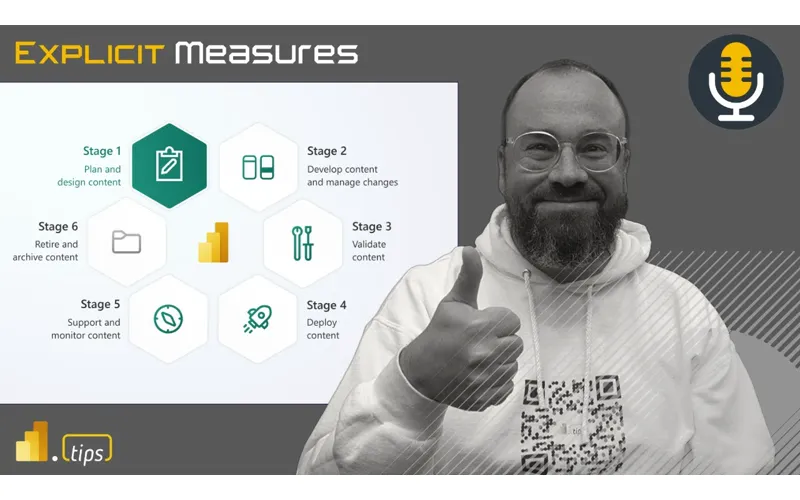
Mike, Tommy, and Seth continue the Content Lifecycle Management (CLM) series with a focus on planning and designing content in Microsoft Fabric and Power BI.
News & Announcements
-
Quickly Connect to your Azure Resources in Fabric with the Data Pipeline Modern Get Data Experience | Microsoft Fabric Blog | Microsoft Fabric — We are thrilled to share that you can easily browse and connect to your Azure resources automatically with the modern get data experience of Data Pipelines. With the Browse Azure experience, you don’t need to…
-
Unlocking AI for Power BI & Business Intelligence Skills – Prompting BI — Prompting BI
-
PowerBI.tips Podcast — Subscribe and listen to the Explicit Measures podcast episodes and related content.
-
Power BI Theme Generator — Create and download Power BI report themes using the PowerBI.tips theme generator.
Main Discussion
This episode continues the CLM series by digging into what it looks like to plan and design content with the end in mind: who the audience is, how content should be organized, what “done” means, and how you set yourself up for sustainable iteration.
Looking Forward
To move this forward, choose one idea from the discussion and apply it to a current report or model. From there, write down what changed (and what didn’t) so the lesson sticks so the approach is repeatable.
Episode Transcript
0:33 good morning and welcome back to the explicit measures podcast with Tommy Seth and Mike good morning everybody good morning gentlemen there is no high squeaky happy Tuesday this morning but a happy happy Tuesday someone’s feeling under the weather today oh man oh way way under the weather so I I am here we’ll see how much I I actually contribute to this conversation I just thought of it too that you had to do the happy Tuesday as we’re going I’m like oh poor
1:03 as we’re going I’m like oh poor guy this is one of the disadvantages of work from home because if you can walk to your computer it’s not like it’s you’re still wearing sweatshirts and sweatpants even though you’re under the weather indeed people still expect can you can you crawl your way up the stairs yes yes the answer is yes yes great oh great oh man let’s jump into some well our main let’s talk talk about our main topic today so our main topic is going
1:35 topic today so our main topic is going through there’s a there’s a new series I guess this will be the the new little bit of content here about planning and designing your report building so implementation planning going through planning and designing your content so second episode on our content life cycle management right yes so this is our our main second episode around content life cycle management we did the overview last episode on this now we’re going into like Step One planning and designing the content
2:05 One planning and designing the content that’s our main topic today figuring out how to design your content what things should we be considering and I I think a lot of this article will be just what we do as professionals doing this every day and how does that align with what Microsoft documentation is coming out and stating about how to how they’re describing and I’m going to probably highlight some things that I do more of and things that I find more valuable than other things in here that I’m like probably I probably skim over that one that section so anyways good article today really like the graphics that are being planned here again it’s
2:36 that are being planned here again it’s very solid article a lot of good things to pull out of here let me throw the link here in the chat window as well just in case and good call Seth there is the link for the article right there inside the chat window all right with that being said let’s talk about some news articles some things have been moving and shaking powerbi and particularly fabric I guess now is where I spent a lot of my time now it’s getting overwhelming all the things that are being worked on at one time there’s a crazy amount of like
3:08 one time there’s a crazy amount of like updates and changes and new things and refinements this really does feel like the early days of powerbi where the the program is changing so fast you’re having every month every week there’s another blog or post or announcement so this week Tommy found out a really good one here let’s talk about this one quickly connect to your Azure resources in in fabric with the data Pipeline and get the modern data experience what do you think about this one Tommy these are the types of
3:39 one Tommy these are the types of updates that I personally love to see not that the other ones aren’t less great but this is the Synergy or really putting everything together and those if there’s content out there or updates that is going to complete fabric these are the types of updates that are going to go so really a short story if you can’t read the article if you’re running doing your biking really we can connect to supported Azure data sources blob data L Gen 2 Cosmos DB synapse and you actually browse those resources and the ability to copy data
4:10 resources and the ability to copy data connect to that data becomes much more seamless and again you think about how or was this possible before yeah but it was apis it was you had to had the experience to do so it was not a this is my first time and these are the types of things that are going to make what fabric is going going to be or the big idea of fabric really come to fruition I like this and they have they really changed the UI around how to
4:40 really changed the UI around how to connect to data this this whole new UI modern and the left hand side it’s like a little navigation okay first connect to it connect to the data source connect to tell the destination wire it up all right review and submit so one thing I’ll note here is this is extremely useful inside I believe this is only inside Pipelines right Tommy yes as of right now I believe it is it is pipelines I have a couple gripes here and I’m going to throw in here as well one of my gripes is the the ability
5:11 well one of my gripes is the the ability to connect to data sources this is kind to connect to data sources this is universal this is through this new of universal this is through this new modern get data experience as well well as anything else you’re doing pipelines whenever you create a connection it’s a challenge to work on connections and pipelines with multiple people anymore just because you can’t see their connections as soon as you go into the pipeline it says you don’t have access you can’t touch this pipeline because or you can’t modify this step because you don’t have access to data connection on the source or sync side so
5:43 connection on the source or sync side so if any one of those things is not true typically where you’re writing the data it’s like a lake house so usually the the destination is not a problem but it’s usually the source that’s the issue someone’s connecting to something and it just comes up with a goid there’s no easy way of contacting the owner there’s no easy like you have you have an entirely different window to go to to get the connection screens so while I do like this like this UI there’s a very strong push back that I’m getting from it’s just difficult to manage connections and secure connections to stuff not
6:14 stuff not easy I think my other my other note here as well is inside the pipeline experience as well my other immediate challenges if things don’t fit out of if it’s not a very clean neat coming out of azure or SQL or something like that a lot of these more modern experiences of just trying to very quickly navigate you through it sometimes it it falls apart for me I feel like sometimes complex data or things that are coming out that are just a little bit harder to connect to and
6:46 a little bit harder to connect to and there’s not enough customization for me to actually use use these experiences I start falling back to apis directly connecting to it going right to the blob storage just because the the automatic part isn’t as easy for me that may be just me as what I develop other have a lot of like standard data sources that are just tables might be easier well and I think that’s the the conflict here because it’s like if you’re designing a highway and some of those Azure exits like oh wow that’s really seamless to
7:16 like oh wow that’s really seamless to get home but a lot of these extra ones still a little bit of gravel still maybe the stop signs aren’t up but and I I I think I want to touch on the first thing that you you mentioned because I think this is important part part of the the sell of fabric and I think part what’s going to take fabric above and beyond any other product is going to be the collaboration but we still have that issue with G what is data flows where the collaboration like oh do you
7:46 where the collaboration like oh do you want to overtake it no I just want to help I just want to look at it I just want to look at it why do I need why do I need to take over the entire data flow just to look at it yes and yeah so I think we’re getting there and I love these updates but yeah to your point the the Allure of fabric is not what the Allure of powerbi was because the Allure is really part of that a significant part is that collaboration feature I part is that collaboration feature let’s let’s be real here on some mean let’s let’s be real here on some things too a lot of power eyes was has still and still is single user
8:16 still and still is single user development it really is you can’t work on a model like when do we get to the stage where I can have two people inside a data model at the same time there’s a lot of other program program that I use one of them Microsoft programs there’s other programs you can have two people in the same UI doing the same stuff that seems to be a very common occurrence so I want more of that co- collaboration editing like Tommy is working on the report that’s connected to a data set so Seth should be able to
8:46 to a data set so Seth should be able to work on the data set have that open Tommy should and Mike should be a in the be in the report Tommy’s working on page one Mike’s working on page two like all this should be able to be happening simultaneously and it should just figure itself out I I think maybe maybe the pbip format is getting us closer to that step yeah but they do in power apps it’s and it’s awesome the collaboration feature in power apps I can see where someone’s Mouse is maybe it’s the data processing but I don’t know all I know is when we were doing our training series it felt very much like the old
9:16 series it felt very much like the old days of okay I’m gonna close it tell you pick it up close out no no it’s closed are you out are you really out no no it’s open on my other window oh shoot it’s it’s a second brows window oh old days that’s funny anyways good new good article good happy this is coming out stay in tuned with the blog I believe a lot of blog pieces are coming out here recently so there’s a lot more coming out stay
9:41 so there’s a lot more coming out stay tuned with that there’s more items coming so we’ll we’ll move there let’s move over to back to our topic so main topic for today oh sorry I didn’t mean there’s another item here on the list Tommy you have an announcement yeah so I’m excited about this I have a Blog I have a Blog I have a Blog so I actually just started last week and I’m actually really excited about this because we’ve talked about Ai and business intelligence where the
10:11 and business intelligence where the Synergy is for a long time and it’s been something that comes up and it’s going to keep coming up and honestly a lot of it’s like okay let’s put your words to where your mouth is or what you’re saying so if you go to prompting bi. com there’s an article there and it’s a website and the idea of this art this blog I hate redundancy so I’m not just GNA say hey I’m going to do another powerbi or another fabric blog I’m very interested in the event diagram of skills between what you do in bi and
10:41 skills between what you do in bi and what you’re going to do in Ai and specifically the focus is going to be around prompt engineering at least a lot of the first few articles because one of the things I mentioned here is like what’s the next C coding language that’s going to be essential for people it’s English and we’re going to talk about hard skills on obviously the core like what can I do with jupyter notebooks and and co-pilot what can I do with prompting but also what how can a team of business intelligence or a team working with data apply the soft
11:12 team working with data apply the soft skills around Pro prompting we’re going to obviously touch on a few other things a ton of other content but I’m excited to have this I’m excited to touch this space because I haven’t seen any content around this and it’s somewhat of a new space that I’m really excited to get people’s feedback on already pretty good but just a just a fun place where honestly I’m working on things now that I think I’ll be having as a service or a product two years from now and I just seeing where are where’s the evolution and not just
11:43 are where’s the evolution and not just in fabric but what is that Evolution also how’s AI going to come into our lives or the prompting side of it there are things two years from now that I’m I’m trying to look for that I think we’re experiencing or beginning to experience that beginning fruition of I like this I think this is this is I think it’s a very relevant topic Tommy just from the idea of that I think prompting is here to stay it’s a different way to program computers than what we’ve done traditionally instead of writing actual code we have to do more
12:13 writing actual code we have to do more creative prompts and and Tommy and I to be frankly honest Tommy’s taught me a lot about prompting and how elaborate you can go with these different prompts and I’m always like Tommy send me that prompt Tommy show me this thing Tommy what are you doing over here like he’s doing all these creative things and there’s no way to get it out there to the masses and I’m this I’m like dude this is a perfect place to start your own blog start figuring out how to use co-pilot in various forms across the fabric ecosystem give me example prompts let’s let’s start building a
12:44 let’s let’s start building a prompt notebook of thing this is one thing I think is interesting like wish and then and then you don’t have to ask him anymore and then ask well and again it’s not necessarily asking it’s more of like I don’t even know what you’re doing like you’re you’re just working on stuff and you’re like hey I found this really interesting thing well I don’t know like I don’t how do I get that information out of your head like what were you thinking you’re going to what’s the challenge you’re trying to solve and how does prompting and or a various co-pilot make that make that work well the inspiration and I’m not pandering here honestly the inspiration was you guys where you’re like hey we
13:15 was you guys where you’re like hey we have all these things let’s just put on the web let’s just put the blog together all of a all of a sudden the best powerbi blogger website in my opinion power. tips but no affiliation we’re actually quite a bit anyways but no I think I think for for anyone out there too if you have an idea like just start putting it out there I was so worried about beginning to write because my wife’s doing my editing and she’s like not only do I not understand AI I can’t follow your train of thought so just getting the writing out
13:47 thought so just getting the writing out there and I think for anyone too it’s not that difficult I expect this entire blog to be written by chat GPT all the time and Sarah P yeah the other chat GPT yeah excellent well that Jo go check out Tommy’s new blog we’re going to continue to push him to get content out there that is interesting and fun to engage with around the AI space I think this is going to be this is going to be a thing moving forward it’s it’s going to be interesting to see Telly where you can find what parts of AI make the most
14:20 can find what parts of AI make the most sense inside report design and Report building experiences I’m not sure I don’t think we’re there yet I definitely see it’s like it’s like TR there’s been attempts yeah it’s like when you look at you’re looking at a horizon or you’re looking at at a landscape and you’re seeing some glimmer of hope or some glimmers of the direction like I think I see that it’s going to really to come back to how is this really going to materialize into becoming yeah a single site or a single Direction where
14:50 single site or a single Direction where we can actually get value from it and I think I think clearly we’re there in like code I think code is there I’ve also heard some people people heavily especially on YouTube I watch I follow a lot of developers on YouTube and they heavily bash the AI because the AI just basically takes it looks at everyone’s code good or bad and decides here’s what here’s the code that you need to do the thing and so people like oh yeah this works and they just absorb
15:20 oh yeah this works and they just absorb the code and you and go with it but it’s not optimized it’s not very well written it’s and then that mediocre or end or bad code yes it does something but it’s not well written then it gets back into the ecosystem and then the thing trains itself on this other mediocre code so you’re always in this regression everything gets low Le less quality less quality less quality over time so what how do you add high quality information into the system that’s people people are the high quality adders of information anyways
15:51 quality adders of information anyways Donald asks a question that I think we get a lot but what are you guys using for a platform for blogging out your book I just want to do WordPress because I like the open source of it is still WordPress it’s still WordPress I I tried Squarespace I tried look at a few others but I really just like the fact that I can configure everything in WordPress so all the tweaking possible I’ve been enjoying it are you are you self-hosting it Tommy like an Azure are you okay no it’s a blue host so okay gotcha so Donald
16:24 blue host so okay gotcha so Donald also I will make a note here I have also built or probably tips on side of on WordPress and I stood up WordPress inside of azure so I’m basically managing it myself I’m not hosting it through wordpress. com because you can go to wordpress. com and pay for it there I was too cheap I de said I’ll just I’ll just do it myself I want to learn how to deploy apps and things one thing though I would recommend though if if you’re new users to the space and you don’t need a lot of like heavy customization like Tommy or we have done through the the WordPress
16:55 have done through the the WordPress sites which gives tons of plugins you can do cool things I would High recommend GitHub Pages or things that are static websites where you use markdown to build them one they’re extremely cheap to run and they are extremely fast to load so if you’re going to get into blogging or do things learn how to write markdown I would say 90% of every blog could be just written in pure markdown and then just absorbed into a program so some applications that I’m looking at using I
17:26 applications that I’m looking at using I think the one that I’m most recently interested in working with and we’ve been doing some projects around is Astro build Astro dobu I’ll put the link out there for you there’s Jackal right isn’t that one jackal’s another a and then there’s a bit of yaml too so there if you have some right well I’m not mistaken yeah so you’re mixing a couple things here so Jackal I believe is taking like a site like WordPress where you have like a headless CMS yes so you have a CMS a Content management system and then it compiles
17:57 management system and then it compiles down to a static website which I believe does that which is also a good thing again it makes a static website which I’d highly recommend that’s really what the speed comes from there all of our applications we build now are all static web web apps so I’d recommend that one and then I’d also recommend gith Hub Pages those are also it’s a little bit trickier to get started I think on GitHub Pages it’s not as straightforward as you would think but there are good examples out there to get going and I would recommend that one as well so those are those are two two items I would recommend if I was going to rebuild a website and start over again I
18:28 rebuild a website and start over again I would use GitHub Pages either Astro or build static web apps those are my recommendations all right let’s jump on to the main topic for today going to move to the main topic let’s do it all right so let me get the link here for everyone on the chat window so this is the main topic for today planning and designing our content Tom you want to give us a quick overview of what’s going on here yeah so again this is a series that we’re going to be doing every other Tuesday around
18:59 to be doing every other Tuesday around powerbi content life cycle or CLM for shorts our overview was again to about two or weeks ago and we’re focusing on not the publishing or creation planning deploying and retirement of content around powerbi this is something we’ve talked about this is something that
19:20 talked about this is something that we’ve worked on other projects around but up really until I believe a few months ago this content was not available from mic Microsoft on what does Microsoft say as the best practices what’s a road map here our first series our first episode was really around the overview what we’re going to be talking about we’re really now into really step one and this is going to be the first thing that you want to do before you create open up a PB or pbip or whatever you’re going to be creating what are you doing and where’s the planning where’s
19:51 doing and where’s the planning where’s the content around so we’re going to really talk about that planning and design stage which is our initial stage of the content live cycle all right so jumping into to stage one plan and design content there’s a couple main headers here we should probably talk through identifying describing your contents where the article starts off what is the what is the format of the content who will create and support the content what is the importance of said contents and that’s like your I think your for first
20:22 think your for first section I’m going to maybe lean in here I think they have I think these are all great questions and I really like this article in the fact that it’s actually going through and actually asking you specific questions what format should my content be in and it goes through and says what should we look like which type of of content do you want to create are we talking about a page a report are we talking about a report are we talking about analyzing Excel or model connected are now are we talking about tables I’m having a lot more conversations with organizations about what is your data
20:53 organizations about what is your data need and I think a lot of times I’m feeling more of the conversation is I don’t have access to any data I just need tables of information to show up to me so a lot more of the conversation more recently has been just focusing on how do I get content or tables of data in a place where I can play with them where we’re some organizations are having when we talk broader deployments many of the needs are at that lower end level there’s less need around hey I’m
21:24 level there’s less need around hey I’m building an executive or a summary or a kpi report that has all these highlevel directional things I think that comes with over time after you’ve had access to the data for a bit and can start making assumptions or figuring out what to do with the data over time well let’s lean into this because I think you’re you’re touching on a really I think underrated point on what we do I’m actually working with a client right now and they’re putting together these personas and skills assessments that they want to see for
21:54 assessments that they want to see for Power new power users powerbi people and one of the things I mentioned is like this is great you’re talking all the technical sides of what they need to do but there’s nothing in here about around Gathering requirements and that as a skill this is important and I like I said I really do think this is the most underrated aspect of what someone’s considered in business intelligence our ability to translate a business need a problem or a question and put that into a technical aspect of a data product
22:25 a technical aspect of a data product whether it’s going to be a report a semantic model or something in fact fabric this is really really integral that you can do this well you can do this efficiently and you can do this holistically yeah I think this is a very repeatable pattern yeah I think in those early stages it’s about what do you want what what are you trying to get one thing also that’s very relevant here as well is I think towards the end of this first section here is who is the person who’s expected to support the content this I think is also very
22:57 content this I think is also very underrated as well cuz let me think another conversation I’ve been having recently which has been very relevant here is think about all the different ways you can share things I can share via an app I can share a workspace I can share a data set I can now share tables so if you think about what you build like let’s think about the process of how you build things I bring data in I make enriched tables of information so I get to a point where I have a table that’s in a gold layer it’s good enough to give out to people and then I make
23:29 to give out to people and then I make from that gold layer tables I make semantic models I make reports and then I put them in workspaces and then I share them via apps the fact that we can share all the way down to the table level there needs to be a conversation held around what is the level of responsibility who’s going to own what in the process are we going to allow users to not own the report and just give them an app to consume or are we going to own the data set and give you your own workspace to play in or are we
24:00 your own workspace to play in or are we going to stretch even further and say we’ll just manage the tables as a central team and give you access to the tables build the models that you need and you maintain them and I think I think there’s a delegation of responsibility the further Upstream you go go yeah this decision relies upon how capable you think your business is and I would I would recommend you start with the app side because that’s the most groomed area of content unless you have teams of people that are actually capable or understand or can work on
24:31 capable or understand or can work on things on their own that every team may not be the same way you may have some teams that act on the tables you may have some teams that act on the models you may have some teams that only act on the the apps I I feel like yeah I think you need to backtrack a little even from that too personally when you think about all the technical aspects the first main header here I I I personally love that they they put it this way and it’s ident ify and describe the content because Mike I
25:01 and describe the content because Mike I and describe the content because Mike even if we’re talking about the mean even if we’re talking about the tables and the technical aspects we’re still dealing with the business on a lot of aspects here and one of the things that I I’ve worked on is projects around help des and when do we get to the building stage and that’s been a conversation debate that we’ve had and to me putting out the statement of what are we building and having PE everyone sign off on that is is critical to getting to the app or the table or
25:31 to getting to the app or the table or the sources agree and and I think again I I I want to lean in here because when you think about the people involved and they talk about the Coe and the bi teams so you’re dealing with people with heavy developmental skills you’re talking about people who are just business facing who could not tell you what Azure is except maybe it’s the color blue and so you’re dealing with all these aspects so we have to get them all on the same page and I love the idea
26:01 all on the same page and I love the idea of let’s put a statement out here on what we are going to build and let’s make sure we are aligning everyone’s expectations so this idea of the formatting to your point is it tables do we just need tables right like what are we going to be doing with this this is going to solve x those are the types of wording that we need to do and we need to make sure that everyone is on the same page and we’re not building too quickly yeah that’s where I think if I was going to change something in documentation that first section in the
26:32 documentation that first section in the tip I wouldn’t I wouldn’t put architectural diagram because that’s not the right type of diagram for this from my perspective I think we’re at a conceptual phase where you’re outlining a lot of these things and and we did a podcast on like the multiple hierarchy of like your architectural diagram is the most granular where you you have your data types you have all the the nitty-gritty but through there I think there was one in in between where you’re you you have to to your point Tommy be
27:03 you you have to to your point Tommy be on the same page with people and and one of the best ways to do that is through visualization when you’re just like hey okay well we’re going to pull data in from here and this is how we’re going to do this and then we’re going to add some business logic we’re going to filter this out and then we’re going to add that and I think that is much more effective with communicating to the business rather than talking about the tools the data types the nitty-gritty of like tables and things because they’re not lot of times it like they’re not used to engaging with those types of
27:33 used to engaging with those types of conversations I think you actually just got my hot take for later from what you mentioned so no no I’m G I’ll wait but I think you just got what my statement’s going to be but this is a interesting point and it was I think it was Data Mark who had the conceptual data model or the conceptual semantic model I think this is important at this phase yeah that’s exactly what the stage yeah I think another I think another one maybe they’re also doing one here is you they’re also doing one here is where does the content come from
28:03 know where does the content come from like when we say internet data or sales data from this Source or whatever like let’s define what that looks like and I think a lot of this also for me is in this especially in this early phase there’s probably people already doing something similar or something where they’re getting an like and also thinking about here too you transition from other tools into powerbi a lot of companies are moving from click or Tableau or getting to powerbi as well I think people have already set processes in place that do this so I think a lot in this phase especially in
28:34 think a lot in this phase especially in this early planning design is show me what you’re doing show me what you’re adding to this information I like that a lot more what is your F like show me the final output of what you’re doing in Excel so I can understand what are the data sources and I do think you need maybe it’s not an architectural diagram set like you said but maybe it’s more of a conceptual model of okay we have users we have people we have websites we have hits like what are those things and how
29:00 hits like what are those things and how do those things join together so we can then go find okay do we even have all the data is there a place where all the stuff lives yet odds are no and we might need to start being a little bit more creative about loading some different data sources to the same place and would you let me ask you a question because I think that goes along with what you’re saying because I how many catch or issues have we had where it’s like oh no the data is coming from here once you start the project you realize that there’s a lot more comp applications would you consider research part of
29:31 would you consider research part of planning and design and content and the reason I asked that is yes you can get requirements from someone saying it’s it’s it’s Salesforce you’re like okay but it may be an obscure table and sales force that needs a lot of work so would this be part of planning and designing where not only are we getting where the source is but we’re also describing here maybe what are the barriers that we’re going to face what are the critical this is one of the sources but man we have
30:02 is one of the sources but man we have we’ve done our work and we found out that it’s going to need some merges it needs a lot of work in order to get it to what everyone’s describing they think it is I don’t I don’t know if research is the right term for that we we use we say Discovery right there there’s a lot of unknowns around what it is we’re trying to accomplish and like you may have an idea that like in your cursory glance like you’re saying like there’s some really messed up stuff in this table we got to go figure it out
30:32 in this table we got to go figure it out first yeah and and those are precursors to like the project because a discovery could lead to the fact that you can’t do it or there’s a dependency on something else that you need to have in the data set before you can go down that road so really we’re killing our assumptions here if you were to if there’s a lame inm well you have to right because you like in anything in terms of like a larger project to Define the requirements you you you can’t leave a lot of ambiguity right like otherwise
31:03 lot of ambiguity right like otherwise you’re going to get an outcome that’s unexpected or not wanted excuse me so in general you have to knock all that out prior to technically grooming it with whomever is going to be estimating the work I I like I like the term Discovery more than research and I I agree with you Tommy I think research is part of what we’re doing here but I like the word discover a bit more because I think in this first phase you’re also identifying again the reason why you put down these topics and
31:34 reason why you put down these topics and sources fit together because you want that to come back to a what what do we know we can do and what do we know we think what do we know we think we don’t know what are the unknowns we had to go research or discover about them and I I feel like a lot of these things too is this is not necessarily a super fast cycle or or maybe it is a super fast cycle right we’re quickly okay great we understand your context point me to the servers where this data lives let me just go do some discovery on it to make sure we know we we need to go get I will I will
32:07 know we we need to go get I will I will say this I think people severely underestimate how much data engineering is required to manipulate data to get it to a place where it’s ready to be used inside a report or a semantic model because that’s it’s just hard to figure things out and when if you’re ever chasing bad data where did it come from or you apply business logic to it and that’s changing how the data anytime I hear the word let’s restate something the the phrase let’s restate this or
32:37 the the phrase let’s restate this or let’s that to me sends red flags up for me from a that means we’re just doing a lot of additional data engineering work that we’re going to have to like really understand what you mean because a restatement means the source system or the systems that are generating the data don’t match the way you want to report on the data so you’re reallocating or restating the data in a way that makes sense to the business so they can run their business that’s incredibly time consuming to get right and so whenever I hear that phrase I’m
33:08 and so whenever I hear that phrase I’m like whoa whoa whoa let’s really make sure do we really need to restate it or can I just give it to you as its form in its current form and let you use that that so two great things with that one I agree with you with the re if you’re ever using the word restate not just in business but do that with your sign other when next time like let me restate what I was saying doesn’t work but I think think the it’s the same thing but I think the last five minutes as we’ve talked about this discovery phase and the effort
33:40 this discovery phase and the effort involved I’ve had a shadow coming over me that is time and I’m thinking about this more and more as we’re talking about the the whether you call it research it’s Discovery the time and taking to make sure we’re killing assumptions involves more time involves delaying so to speak actually the end result so this is a critical part too is how do we manage the need or the the willingness of the business to say we’ll
34:10 willingness of the business to say we’ll take the time right now but we really want to see some fruit we want to see some results here and even though this may take quite more time than people expected expected to oh What’s The Phrase the pursuit of perfection is the enemy of good or something like that or what is it I don’t know what it is I’m saying that all wrong I’m sure that’s incredibly incorrect Donald can you pick me up here what’s What’s the phrase here I don’t know what the phrase is but I think I think I think your your point there is taken is Tommy is if you spend all your
34:43 taken is Tommy is if you spend all your time to make it perfect day one you’ll never get anything done and you’re going to spend a lot of time and the the project will extend so long that we’re going to be like dissolution by it takes forever to get anything out of here it’s not worth our time and that’s not the idea of power power Donald say sorry I wasn’t paying attention sorry Donald was driving in his Tesla somewhere so we don’t know what he was talking about so Donald I was I was referring to the idea of perfect is the enemy of good I think is what the phrase I was looking for or good enough or something like that I
35:13 good enough or something like that I don’t I don’t know what it was take it don’t drive for Perfection right think of this as an iterative process you’re going to get a first product out there and from there yeah I’m I’m being perfectionistic about the quote myself that’s I know I’m sorry about that there we go James got it for me don’t let perfect be the enemy of good okay and the idea is being get something out there get people to react to it it may not be perfect day one but make it very clear that you’re going to take an iteration or design step on this one to your point Tommy we need quick wins we
35:44 your point Tommy we need quick wins we need people to see that the value of this is coming out of this very quickly on the other side I do I do think though because we’ve talked about content planning life cycle with in the context of just powerbi in the past right like we’re now that we’re introducing fabric like there are longer projects there are bigger data movement things and like the the so there’s this balance I think where the the project itself is going to
36:16 where the the project itself is going to take longer typically but at the same time the purpose of developing all these requirements and building out and understanding what the goals are is that you can show incremental value and sometime like and and I think where you can do that in phases or in an iterative fashion the business is much more like engaged there but at the same time like what’s interesting is aren’t the audience of requesters
36:47 is aren’t the audience of requesters different in the fabric realm as opposed to business like they can be one and the same but it’s like like when when you’re engaging with people who are asking for reports it’s business people who are generally I like to say like just flying by the seat of their pants right every day is just this like it’s a constant stream of the things they’re knocking down with no planning and a lot of I think business in general is like there’s a lot of things that got to get done but everything’s immediate right
37:18 done but everything’s immediate right like your time Tommy is my time because I have an immediate need right and and there’s that false assumption that that I think business bus intelligence people have to navigate through When developing things for business in that regard where that starts to shift like in my mind departmentally is like it’s not the front-end business user talking about Big Data projects right like it typically you’re moving back into a realm where folks are
37:50 back into a realm where folks are understanding that okay well yeah this thing may take a Sprint or two right like two two to four weeks or something but can we show some incremental value and push out a report right because we’re going to prove out the model we’re gonna validate the data sets we’re going to do all these things and yes we can produce that for you but in the realm of fabric right while we’re in here we may as well build this certified data set completely right like we may might as well knit all of these structural things behind the scenes
38:20 structural things behind the scenes automate all the refreshes etc etc and then scale up or allow ourselves more opportun to grow and expand on the backend data models as opposed to just keeping that right in front of right in front of business users James you came in late yeah not feeling
38:40 James you came in late yeah not feeling well well today energy is a little low I think he’s doing great by the way I think he sounds I like this voice this grungy voice thing this is like this is like Nickelback or something I was G to say it sounds like a good old rock band now look at this Photograph look at this F fac was not spending time at concerts data flows wide open okay all right move on Tommy move on no so I I as you described that and honestly this
39:11 you described that and honestly this article there’s an idealism here I don’t know people realize that they can’t afford and and I’ll I’ll expand on this everything in this article the importance of the content describing who’s going to collaborate where are we going to collaborate who’s going to be responsible for what are what tables are the ownership all of this is still the again that conceptual diagram the conceptual model none of this is fruition none of this is anything that anyone’s going to be a tangible
39:42 anyone’s going to be a tangible product and you think also too it’s not just us putting this together well we now have to work with all the other teams and all the other people to get their feedback to get the information to make sure that they’re open to collaborate and they’re giving us the information we need that’s a lot of resources and a lot of time most organizations especially I was saying average data culture is not going to afford or is not going to allow you have a very healthy data culture
40:13 you have a very healthy data culture this is already the expectation you’re doing this for the first time somewhere I don’t know I and and again correct me if I’m wrong or tell me I’m wrong but a lot of organizations while it sounds great are not going to go for all this off right off the bat especially if it be usually the needs the what you’re working on if it’s one of your first things is a priority I don’t I’m not following completely I think it depends on what the organization really wants I regardless Tomy I think you’re saying I
40:44 regardless Tomy I think you’re saying I think what you’re saying is the the business needs to commit to this it’s a it’s a large investment of time resources and money to get to this phase and so I would argue depending on where you’re at in your organization if you are just saying we’re just trying to start out with PBI what are some good projects for us to begin with that is a larger project it’ll probably be handled by more of a central team or a certain group of people a very single team that’s going to start to figure out can we use powerbi effectively so a lot of this what I’m seeing is if if we’re trying to
41:15 what I’m seeing is if if we’re trying to roll out powerbi and do this staging and planning content I would argue you’re you’re you’re probably you’re probably putting too many things in one basket to get everything accomplished where and this is another part of the article that I want to point out now is going further down the article it starts talking about how content creators will collaborate and I feel like this section on how you collaborate whether it’s going through Azure devops or through SharePoint where you collect the resources and how the files work I think
41:46 resources and how the files work I think both of those should be viable processes but those should be decided a bit more upfront and beforehand right you shouldn’t be you shouldn’t be in the middle of creating your first work of content or work of content for a team and not knowing how you’re going to work together as a team we’re going to publish everything to SharePoint that’s why we’re going to store things all our version we’re not going to use underscore final underscore onecore two this is final final final final version three like we’re not going to do that we’re GNA have just a single name
42:17 that we’re GNA have just a single name and we’re just going to yeah overwrite it in SharePoint that we have versions of this of the file so I think I think there are patterns here that we need to establish but as we look through some of this if you look at this from a green field starting from scratch this looks different than if I already have some established processes and how this should work yeah I don’t think we’ve given a lot of a lot of love to the the collaboration side of that and the importance of planning that that actually may be a third part of the series we may actually just split this into two because I’m looking at all this
42:47 into two because I’m looking at all this content and I think our conversations have naturally lend itself to that planning stage and I think the the central bi team putting things together but to your point to the very beginning of our our news where powerbi has always been an individualistic tool maybe by Design where it’s usually one person building the report or the semantic model but now we’re getting to this phase of where collaboration is going to
43:18 phase of where collaboration is going to be much more critical and not just can you review my model but who’s working on it and at what phase in the supply chain so to speak I as I look through the rest of the article here we we quickly move away from like requirements Gathering about the report and then we we heavily focus on the the middle of the article to the end is all around okay what are we doing is it Azure devops and then in here this is where I get a little bit burnt a little bit Azure devops does a good job of giving you an
43:49 devops does a good job of giving you an Azure repository to collect the files and the the things of their ports in the article it talks about Azure pipelines in the article talks about test plans Azure boards Azure Wiki these are all good things that go along with this but have I seen any content blogs Pieces come out other than John kky around using an Azure pipeline to deploy the content into a workspace no I have not are there I’m not aware of anything Are there specific you’re not goingon to see it on of mine Are there specific tool sets that are letting me do tests on a data model when it’s been published
44:20 on a data model when it’s been published to to validate if it’s right or not like this stuff when you move into this Azure realm it is highly Technical and you’re doing you’re installing you’re installing tabular editor 2 running business practice analyzer against a model and kicking out a whole bunch of out artifact that says is this good or not to me this is very deep and so I not many organizations I think are at that level where they’re actually able to spend time so to me this really feels like okay are you a small team
44:50 feels like okay are you a small team then you go down the Microsoft teams route and SharePoint storing your files if you’re a large team and you have people that know how to use as your devops and can build proper tests on things and you and this also requires this means you have enough knowledge of the models to say in our models we want these behaviors in these models we don’t want these behaviors that’s a much more established process around what you say is or deeming as good and someone has to take the helm and Lead that effort in in the organization yeah I do like the
45:20 organization yeah I do like the Christmas tree effect down at the bottom of the the the more you go down you scroll down oh yes very very very poignant cautions and warnings and good it’s like if somebody’s just going to Breeze through the article it’s not it’s not a bad thing to do and I I think that’s the word of advice right so there’s definitely some cautions there definitely some big warnings here you definitely some big warnings here I agree with this one know I agree with this one if you’re using SharePoint or one drive don’t use personal one drives no one can
45:51 don’t use personal one drives no one can share anything with anyone right you really do want a SharePoint site that’s collaborative where you put these files that everyone can use the other here about one Lake a lot of items here as well so if you’re Building Systems that require so much caution and warnings and tips about things is it really a good solution would be my my push back here a little bit I this that’s a little intriguing you’re saying that because the Assumption I feel like if I was the author of the article my
46:21 was the author of the article my assumption is we’re building a pretty heavy project and you touch on something both of you we may not be always building the great latest and greatest Innovation to the company what about mid to small smaller projects I think where do some of that design I’m looking at just one of the sections here the where are we actually going to store the data it’s a lot like there’s a lot here of the considerations where to your point I don’t know of all that
46:51 your point I don’t know of all that needs to be considered because SharePoint may be a great solution for a lot more situations than you think again maybe we devote an entire episode or or series around devops and GitHub around this because you’re you’re talking about two drastically different Paths of the people involved in this and also really probably what you’re building building too there’s there’s a couple points here that I want to make note around this one like when you’re talking about bu like what are guidance on things have changed
47:22 what are guidance on things have changed over time I feel like right if we if we thought about early days of power beond we were very heavily create everything with desktop desktop is the way build it all with desktop and so I feel like there’s now opportunities for us to have less of that and one of the things that is written in the article that I do not agree with it says says it talks about in the idea of never creating anything from the portal never never create anything from powerbi. com inside the report side of things and yes
47:53 inside the report side of things and yes while I understand the the edge cases or the or the pros and cons of that there is a lot more it’s becoming more and more easy for us to download a live connected report off of existing content even though you may have a data set that you cannot download because it’s a data set and report so I feel like Microsoft is making the right strides to making things easier for us to leverage there’s a lot more coming and I really feel like
48:20 a lot more coming and I really feel like the right approach or the direction we’re going here is down this pbip file route where the report side can be EAS separated from the data side and you’re then able to grab and and manipulate these two items independently so all this to say is I think whether you’re going to decide to upload content via SharePoint one drive one Lake a remote repo like Azure devops or now GitHub which is in preview by the way and then just building in the service in all of those
48:52 building in the service in all of those scenarios someone at the Coe should be making up when is it acceptable to do these build styles styles what is the process that we’re going to use to do each one of these and then the business can decide okay is this a really big project okay then we need to go down the route of using a remote repository that’s what we’re going to do oh this is a this is a business team okay that who’s going to own that content I think a lot of that ownership conversation we had earlier in the article leans on okay if you’re a team
49:22 article leans on okay if you’re a team of people that are going to be building this one okay you use teams and SharePoint all right well well you’re a very field oriented or you have Max or something else something else pushes you okay you’re just going to create content in the service well you have access to data sets so I I really do think it’s very important for you to evaluate these different methods and pick which one is the right one and then build a process around that and that becomes part of your Community Practice anyways lots of thoughts here any other things you want to wrap here
49:52 any other things you want to wrap here Tommy do you have a hot take you want to jump into here I do I do have a hot take and this is this is inspiration from Seth of something earlier he said so I’ll bring it back to our initial designning planning Seth said the need for the visual side of how we’re planning designing what we’re how we’re communicating our conceptual model big part here he said is like the the importance of the diagram or the importance of visualizing what we’re going to build therefore I’m really feeling here that
50:23 therefore I’m really feeling here that part of the powerbi pro or the bi Pros skill if you’re leading this it’s essential to say if you’re excellent at your job in this space you better have good diagramming or visualization skills and I don’t mean data your ability to diagram whether it’s Miro or PowerPoint whatever that is to visualize and conceptualize it through visuals is an essential skill
50:54 through visuals is an essential skill essential I I’d agree with that that I would I’d give that a good if we’re doing ranking or agree or not agree if we’re doing one to seven I’m going to say that’s probably a seven for me I would say the amount of times I spend in front of people doing a whiteboard of like here’s what we’re doing here’s like the high level architecture here’s the here’s the concepts let’s just at least list out the data sources we’re going to try and join things by like all of that that’s to me that’s another language of communication right it’s just it’s a
51:24 communication right it’s just it’s a visual way and I think a lot of people especially now being as more remote I think a lot of people need to see things visually to stay engaged in the conversation and then it also helps as a takeaway at the end of that meeting to be like okay does everyone agree upon what we see here because to your point Seth earlier there’s discovery that needs to happen right you can easily label in that diagram okay we think we need five data sources to make this one data model we don’t know about this fifth one or we don’t know what we would connect on is the data even there to
51:55 connect on is the data even there to connect it between the system and our current system so we need to figure it out yeah I would I would argue it’s a skill that if you don’t have that you start spending time doing more because more often than not especi in so many different cases right it people will say like you go through this huge description right of all these different components and then you’ll ask okay does that make sense 99%
52:27 okay does that make sense 99% of the people are going to be like yep totally makes sense and then obviously it doesn’t because all the questions still come later or people are still confused Etc so what’s so fantastic about it is it does twofold one it brings them along for the ride allows people to conceptualize what you’re thinking about and then at to Mike’s Point at the end of it you have agreement on what you’re building right on a high level this is this is the scope of what we’re after and then the action items that that meeting that
52:58 action items that that meeting that conceptual or like okay well the team’s going to go do some Discovery over here and then we’re going to do this and then we’re going to do a follow-up based on the data that we’re seeing and and show you the other business logic that we’re applying now blah blah blah and then it leads into actual architectural diagrams where you go build stuff I think that’s important too because it is a I feel like it a different part of the brain than just doing data visualization yes it’s a different muscle I’ll put it that way where in taken from someone who has taken it’s been a long journey around
53:30 taken it’s been a long journey around conceptual designing for me but yeah man for I think for all the things that we’re talking about here this is a hard skill this is a hard and soft skill at the same time that if you are just starting your journey and you want to become part of the leadership capacity you need to have this this ability so you got me to agree with you Tommy on your hot take I’m actually pretty pretty St and I didn’t it was a negative stat so out of it and delusional I’ll probably I’ll probably
54:00 delusional I’ll probably I’ll probably fight it too and nail in some podcast yeah exactly this was not even did I did not nor would I ever agree with one of your hot takes to say we’ll take the win here I’m gonna you remember today that’s the best part you’re gonna forget that this even happens like no no you disagreed totally awesome good stuff well with that we really appreciate your your ears your your time listening to us and going through this episode here let’s just really quickly wrap with some final thoughts and then we’ll we’ll
54:30 and then we’ll we’ll we’ll get out of here so I think my final thoughts this one planning and designing is essential I think this is a very important topic I think a lot of the earlier content parts of the article talking about the questions of what content am I designing what’s the expectations how do I Stitch the DAT together like what is what is the expectations there more often than not people are just looking for page reports and extractions of data from systems when you you have to early identify what you’re trying to do is this a data extraction event or are we
55:01 this a data extraction event or are we actually talking about a report with insights and repeatable questions we’re trying to answer I think a lot of times people overbuild their reports and they just need to get data into a system and out so I think that’s really important in this phase and then I would say once you get through how could how content should collaborate and then how do you build those tools either one drive Repose or other ways I think all that should be process driven I don’t think I think when you’re building reports this should all be known you should automatically be able
55:31 known you should automatically be able to have a decision tree that says okay this is a censal it report we’re going to use repos this is a a governed thing great this is how we’re going to build it so I think a lot of other consideration points are very valid and worthwhile thinking about but I would hope but I would hope you already have this designed as part of your center of excellence or Community Practice before we go to our very first report and we’re doing this stuff I do have a few more hot takes the last thing honestly if you focus your time on
56:01 thing honestly if you focus your time on all just Developmental and the technical side you are really not understanding the full picture of what your job is and and I think what what we really bring to the table and I think what the value of us at an organization and it is our ability to project manage too and align people’s expectations we’re the we’re the therapy business helping people out and that ability to align expectations get people on the same page on what going to build is incredibly huge in what we
56:31 what we do anything any final thoughts St for you J to give your final thoughts I feel like I’m being taken advantage of because of from the chat so I’m I’m going I’m going to do something I normally don’t do and there is a Liam niss reference oh no and Enterprise AR wants me to say I’m a man with a particular data skill set I will find you and your data and that is that is my closing thought that’s today too I
57:03 is my closing thought that’s today too I enjoy it Enterprise AR great recommendation on that one we thank you very much that’s how you start your Discovery calls there you go that’s how they start that’s exactly right I love it well thank you all very much we really appreciate your ears if you don’t mind if you like this episode honestly go read this article and this is definitely worthwhile your time I think this is highly recommended if you’re in the powerp development space your team and you should know what planning and designing is doing we highly recommend driving you to that article it’s very great recommend to
57:33 article it’s very great recommend to somebody else we really appreciate your ears thank you everyone in chat teasing Seth we we appreciate it I know I do we don’t get to teas Seth very often so this was very fun too great opportunity very great opportunity there so thank you very much Tommy where else can you find the podcast you can find us on Apple Spotify or wherever you get your podcast make sure to subscribe and leave a rating it helps us out a ton do you have a question an idea or a topic that you want us to talk about in a future episode head over to powerbi. com
Thank You
Want to catch us live? Join every Tuesday and Thursday at 7:30 AM Central on YouTube and LinkedIn.
Got a question? Head to powerbi.tips/empodcast and submit your topic ideas.
Listen on Spotify, Apple Podcasts, or wherever you get your podcasts.