
Deployment Pipelines for Business Teams – Ep. 352
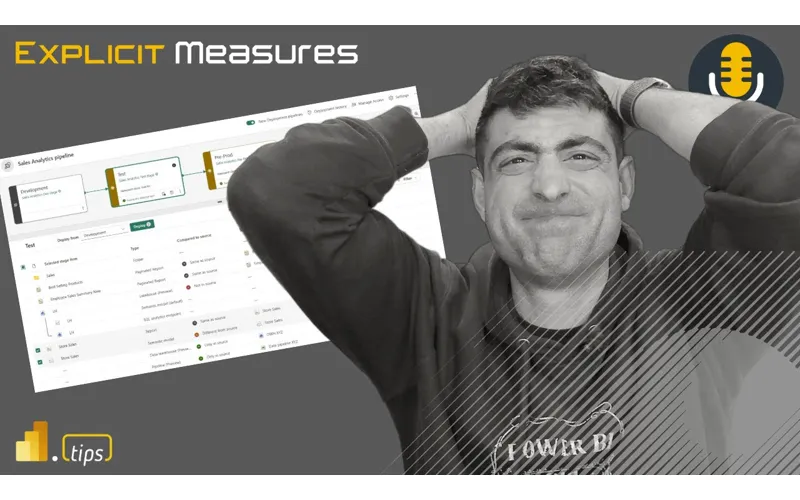
Deployment pipelines are getting a UI overhaul, and it changes how teams compare, deploy, and manage artifacts across stages. In this episode, Mike and Tommy talk through what the new experience means for business teams who want repeatable releases without turning CI/CD into a science project.
News & Announcements
-
Introducing the New Deployment Pipelines design: A leap forward in deployment Efficiency | Microsoft Fabric Blog | Microsoft Fabric — At Microsoft, we’re dedicated to enhancing the user experiences and optimizing processes through innovation. We’re thrilled to share that, starting the first week of September, we’ll be rolling out a new and improved…
-
Announcing TMDL support for the ALM Toolkit | Microsoft Power BI Blog | Microsoft Power BI — Explore the latest features of the ALM Toolkit! Our new update adds coloring support for TMDL, allowing you to view tabular model metadata in a user-friendly, YAML-like syntax. Enhance your Power BI experience and…
Main Discussion
This episode focuses on making deployment pipelines practical for real-world teams: the folks who need a consistent way to move content from dev → test → prod without creating a brittle “CI/CD shrine” that only one person understands.
Key themes include:
A more stage-focused workflow
The redesigned pipeline experience leans into the idea that most work happens from the perspective of a single stage—deploying into it, inspecting what’s inside it, and understanding how it differs from the source stage. That shift matters because it matches how business teams actually operate: pick the target environment and make sure it’s right.
Clearer comparisons and deployment intent
The updated UI surfaces sync concepts like “same,” “different from source,” and situations where something exists only in one stage. That kind of clarity is what prevents accidental deployments and helps teams answer the practical questions quickly: “What’s going to change?” and “What am I about to overwrite?”
Operational improvements that reduce friction
Search, filtering, sorting, and zoom sound small until you’re managing real pipelines with lots of items. The new canvas/stage split is aimed at reducing the mental load so pipelines feel like a tool you use every day—not a scary screen you avoid until release day.
Looking Forward
As the new pipeline UI rolls out (with the old one still available via a toggle), teams can start standardizing a lightweight release process: define stages, use comparisons as the default pre-flight check, and treat pipeline deploys as a normal part of shipping BI changes. Combined with Git-friendly model metadata (like TMDL), the ecosystem is moving toward repeatable, reviewable deployments without requiring every team to become a DevOps shop.
Episode Transcript
0:32 good morning and welcome back to the explicit measures podcast with Tommy Seth and Mike good morning everyone good morning good morning gentlemen how are you this morning such a fantastic day H I’m waking up a little bit yeah yeah me too I’ve I’ve with this year I’ve shifted a little bit little shifted a little bit making making the lunches for the kids in the morning oh boy getting up a little earlier yeah yeah so little little story yesterday I’m like okay second day of
1:03 yesterday I’m like okay second day of school put a little surprise in the lunch boxes so I’m like writing little jokes on poits throw a little Hershey’s kiss in there for a little treat right yeah get him off the bus yesterday hey guys how was your day fine anything bad happened at school day no anything good happened no any surprises no not even in your lunch how was lunch
1:35 not even in your lunch how was lunch fine nothing interesting in your lunch today and then both of them were just like no not oh oh yeah there was the joke I’m like all right you guys killed it not not doing it again today it’s a lot of extra effort all right you and far between oh the unpre welcome to every report building experience that I’ve ever done ever done there’s so many correlations there do you like your report I like that do you
2:05 you like your report I like that do you like how is the how is it did you enjoy your report did you like page two took me a lot longer visual on it oh yeah yeah you did that interaction yeah you did that I complain to your boss about oh yeah thanks no more bookmarks any any reports that’s it we’re throwing them out no more bookmarks you didn’t like it the first time I’m throwing them out that’s exactly how I feel with writing it’s so good awesome all right well our
2:35 it’s so good awesome all right well our main topic today it’s a good intro our main topic today is rolling out deployment pipelines for business intelligence teams we’re going to talk about how these things are working there’s some changes that are coming apparently down the pipeline for the the ecosystem of diplomate pipelines which is very much needed it’s very good but we’ll unpack this a bit more talk about how we Implement things today currently what does this look like and then and then that’s going to be our main topic with that let’s jump into a couple news items Tommy we’ve got a couple
3:06 Tommy we’ve got a couple here I have one here for the Alm toolkit so on the log for powerbi. com the Alm toolkit has just recently announced that they are getting a timle support So tmdl support for the Alm toolkit which is very welcome because you do want to be able to point at two different projects and be able to compare the files the same way you were able to compare the files you were be able to do for you Json or the the
3:36 able to do for you Json or the the Bim file so that’s extremely welcome I will say this Christian Wade this is you this is call out for you your Alm toolkit do. com website still is not secure so I think you need a new certificate for your website so Mr Christian Wade calling Mr Christian Wade there’s a there’s an issue on your website but other than that everything else looks pretty solid and there’s no surprisingly Alm toolkit is one that you have to install using the Microsoft installer it’s one of the only tools that you cannot use what I’m
4:06 only tools that you cannot use what I’m going to call a portable version of the tool what portable means is you don’t need the xexe installer you can just unpack the files and use it I believe it’s possible to make an Alm toolkit as a a portable version but you would notice all the major versions of tools tabulator 3 tabulator 2 Da studio all of them come with portable objects or portable applications you can just go and install without having used the installer so we’re we’re working to
4:36 installer so we’re we’re working to see if there’s a way we can fix that at some point and maybe we can get a portable version of the installer as well anyways any other news items speaking of deployment pipelines another article again soon as we finish our podcast Microsoft drops usually some of their more favorite releases let’s just say they’re trying to keep up with us let’s let’s let’s just say it that way Microsoft just up with the podcast and you heard it here first we already talked about pipelines on Tuesday now now we get with that literally in days yesterday well
5:08 that literally in days yesterday well actually it was probably the afternoon of the afternoon of our talk about deployment pipelines a new blog post yeah by the way I I’ve done enough things with AI I can guarantee you that title came from AI a Leap Forward in deployment efficiency okay I’m gonna after reading the article I’m going to definitely take issue with a Leap Forward I think took a couple steps maybe a step if we’re gracious here like I don’t think we’re taking leaps at this point I’m thinking leaps is like we’re getting a lot of new functionality
5:38 we’re getting a lot of new functionality here this did not feel like a a leap forward but I would I totally yeah yeah Leap Forward is definitely feels like strong work you run a website through is it AI or not yeah I don’t know I don’t have the whole article but so the whole the the changes that are coming coming out is really focus on the user interface which I think we’ve we can all agree has been in need of a bit of a refresh in terms of I think a great
6:10 refresh in terms of I think a great segment or a conversation of what we’re talking about today but if you’re just getting started with a deployment of Pipeline and if you don’t come from that environment it can be a little intimidating and it’s very easy to kind intimidating and it’s very easy to break things the first time so the of break things the first time so the idea of just really how you can actually man AG that user like all the different environments in your different workspaces goes in what they’re already doing with task flows or that same idea so I like unified interface
6:41 same idea so I like unified interface there and that’s it I think with the I didn’t see anything else man I I I I hate to pile on but I agree I I agree from the standpoint that it’s like o okay like if we are aiing articles not saying you are but what’s been added section the new design has a canvas area for the pipeline and an area for the selected stage content including Advanced capabilities now mind you when
7:11 Advanced capabilities now mind you when I think Advanced capabilities the following are not what I I think jeez for a better experience like search search filter sort and zoom in and out hey guess what I got a good idea guys we’re going to add we’re going to add task flows to pipelines there you go it feels like they’ve just taken task flow work they all actually look like task flows as well actually it
7:41 like task flows as well actually it looks like task flows there may be some Monumental things under the hood that’s happening here that I’m not I’m not observing from the article and maybe I need to see it maybe I just need to see it and play a littleit they’ll see what’s in there as a side note to your comment there Seth yes I read the words I was very underwhelmed by the words I went to the image and right clicked open image as new tab and then zoomed into the image to look at all the icons and the things do you do you guys do that when they put out blog posts
8:12 do that when they put out blog posts you’re like I don’t know what that looks like that image is too small the resolution is so small and you zoom in to go see what’s going do you do that at all periodically okay didn’t this time why what did you find I didn’t find anything amazing but there’s some things in there that I want to enforce that I hope is actually in the in the solution based on their screenshots so it looks like a honestly to to me this looks like almost verbatim task flows that’s the cards look the same the language is the same so okay I get it fine it’s task flose on the top part I was really hoping for more advanced
8:43 I was really hoping for more advanced options around code comparing different objects between the the current version and the next version you able to get that inside a data model so a data model can show you like the differences between okay what did you change what measures were different things of speaking of places where Alm toolkit would be really beneficial this I know so this so this is what I’m looking at I’m going okay well we have when you zoom into the item you now get this like click the card that
9:14 this like click the card that you want to Beyond and you get all the options in the card I see the same options we had before there’s nothing different select related there is the same button for comparing so I can compare items which again I’m not sure how that works so I want I’m actually very curious about the compare button on this and can I compare just can I compare a Lakehouse like the definition of a Lakehouse to a Prior Lake housee can I compare a report to a report can I compare a semantic model to a semantic model so I’m really interested I want to
9:44 model so I’m really interested I want to see if I can do more comparisons between the objects and more objects because honestly that’s where the value adds for me I want to know what changed between the two items yeah they have history already there though sometimes in these articles though if you there are some there are some gems of people asking great things at the bottom I just wanted to zoom in there’s one that says can I get a data flows Gen 2 inside the new new pipeline that is that’s a great comment there’s there’s a it’s made by
10:13 there’s there’s a it’s made by Mikel Carlo mik car Carlo Mike De Carlo yeah I I definitely made troll name online literally as soon as soon as the blog came out I trolled immediately hey what did we get do this just mean we get data flows now cuz it’s all new you will realize that there is no reply and no response to my comment so it’s still out there in the open and it did not get any thumbs up either so thumbs up I would hey Community I would appreciate you please I’m gonna put the link in the description below THS downam that thumbs up CH we need we
10:45 THS downam that thumbs up CH we need we need to get some thumbs up here going on here so I’m what I’m going to do is I’m going to put the article here in the in the post so here’s the post please go thumbs up the comments around data flows Gen 2 we need data flow Gen 2 support on things go smash that Thumbs Up Button don’t even like this video don’t even subscribe if we don’t care anymore just go to the post and hit a thumbs up that we need some data flows Gen 2 inside pipelines so that was interesting but but again a lot of this was it seems like just a this is where I
11:18 was it seems like just a this is where I disagree with the article right the article said a leap forward and what I saw was it just seems like a really big redesign and shifting of where things go it definitely I will say this looking at the screenshots and and hear what they’re talking about it definitely feels like a user functionality Improvement because the way you see things today in every single video and every single deployment pipeline today it it doesn’t work for me it doesn’t it doesn’t let me do what I want to do one thing I I would really like to see here so in task flows
11:49 really like to see here so in task flows you can Define the dependencies between different cards and so I can have a card that says ingest data I can have a card that says Lakehouse and I can build a card that is kind just on the side that doesn’t go anywhere I really would like to see this task flow or this this deployment pipeline allowing me to have multiple quote unquote destinations for the same items on the deployment pipeline so if you think about a deployment pipeline you have like Dev I go to test I go to prod but what if I want to go Dev test and
12:20 want to go Dev test and QA and not go to prod or pull prod directly from the test environment or what if I want to deploy I want to deploy everything in from Dev to test to HR Dev to test to finance Dev to test to these other areas so I I think there should be more branching enabled in the deployment pipelines and give you more flexibility because again we’re just code comparing two different workspaces anymore this is all feeling very natural to me there’s no reason why I need to
12:50 to me there’s no reason why I need to have only a single destination at the end of the pipeline I should be able to Branch off things wherever I want give me more flexibility in the deployment experience to make that work work so I’m not sure how they’re going to handle that I know there’s a lot of challenges I’ve been currently doing a lot of deployment things with Git and get moving git between different items I will say it’s extremely challenging to do things in the deployment pipeline space goids are changing all over the place you’ve got different artifacts being made from one environment to the next it is not a smooth experience the
13:22 next it is not a smooth experience the way it is today so anything they can do to help that experience I think I’ll be very welcome and very pleasantly surprised if they can deliver that so so yeah I’m holding my I’m holding my tongue crossing my fingers hoping that they’ll get to that that level of detail in the deployment pipelines and I and I think structurally here right like if there was a huge structural change to this right where all of the sudden you’re incorporating the the New Paths right new options new ways in which you can Leverage some of the stuff from task flows or put them in the
13:52 task flows or put them in the deployment pipelines and preparing ourselves to like for a much better user experience is a leap forward but you can’t claim that externally right that’s like that’s a lot of tech debt because we built it the wrong way the first time or we built it the we built it this way and now we pivoted and shifted this other way that’s going to extend things further like that’s a that’s a teaser right like hey with this release you see that things are changing get ready right yes because our next release is going to be
14:22 because our next release is going to be a huge leap forward whereas like yeah lackluster use your words wise that’s this article is it’s it’s prepare something’s coming we’re getting a lot of structural like that’s what I should have heard the message hey look the UI is changing we’re doing a lot of different things and this is to prepare us for another big leap we’re going to do in the future that’s what I wanted to hear so just it just like a yeah like like the and that’s that’s my gripe around Advanced features right like is it Advanced compared to the way it used to be because you couldn’t do that yes
14:53 to be because you couldn’t do that yes yeah it’s great but that’s table Stakes nowadays right like if it’s if if you don’t have a search function if you can’t sort if you can’t zoom in and like that people are going to be like I don’t want to use this right like this is lacking functionality as opposed to oh my gosh this is the greatest thing ever and that’s the only difference is like hey improvements are improvements making a tool better is making a tool better but but put them in the place that they need to be because this is the same thing that like I push back in some cases of like the announcement stuff is
15:24 cases of like the announcement stuff is if everything is a game Cher then nothing is right like every single time something comes out like oh my gosh like it’s the next great it’s the next big thing right then next big thing isn’t the next big thing speaking of the next big thing Tommy you want to tell us more about this AI skills thing that you found that the next big thing maybe for another day so okay maybe for another day Tommy still investigating the AI the AI skills thing
15:54 investigating the AI the AI skills thing there yeah if you are going to try out the the AI skills I we’ll I think we’ll start here I think we’ve already had one enough of some constructive criticism for one so start start the next show with a little more yeah we’ll do that on the next show yeah my my issues my qualms with Microsoft that’s how our new segment but there’s a there’s some limitations some that you wouldn’t expect in an AI skill such as the ability to generally
16:25 as the ability to generally look at your data besides just translating into a simple query like without but without getting into details right because we can we can save that for another session we can I I think I think what Tommy you’re finding is what I’ve talked about her reference before which is when is too early right and or that is especially true when there are competitive products on the market that
16:55 competitive products on the market that do things right and there are base level EXP expectations that people are having when you start slapping AI on on Technologies and I think that’s that’s where that conversation’s gonna go yeah and I I hope they expand their like I said I think that a rabbit hole in itself but I think yeah we’ll pause there because I don’t want to get started with that I don’t as I don’t want to and this I learned from Seth and I’m going to say
17:25 learned from Seth and I’m going to say Seth is a genius for this one this is genius move here when you see a new feature come out if you want to know how feature completed is or how much Microsoft knows the feature is complete go read the documentation go is go to the what is it at about page scroll down till you see this section called limitations read through the limitations because that will frame a lot of like again a lot of these features are announced and you’re like oh yeah this is so neat I’m got to go try this let’s let’s spend a lot of time figuring this
17:56 let’s spend a lot of time figuring this thing out when you read the limitations and I think think Tommy that’s where you you’re like excited about it and you heard like let’s put the brakes on a bit here maybe not because you reach the limitations and again this is in preview things are going to improve it’s going to get better but if your bullet list of pre of of limitations is long more than six items I don’t know what the number is there’s a number out there somewhere if your limitations is more than six items are we really ready to release it is it is because this one’s got a ton of them we’re all over 10 items here that they know that there
18:26 items here that they know that there that doesn’t support this it doesn’t support that do this and I think I think that’s the idea here is like when we’re when we’re coming into a market with a new feature if the feature is so brand new that there’s really no expectations with it it’s easier to release a feature because there’s no initial expectation when you come in with it with and this is another one of these plays where Microsoft is walking into the AI space where others have already set very good precedence in this space it’s why not let me why force me to use the
18:57 why force me to use the co-pilot one why not give me like an integrator that lets me integrate any any AI think think of it like vs code right it’s a plugin it’s an it’s an ad and it’s a it’s a a module and I could say well if I want to use cursor I use cursor if I want to use open AI I use open AI if I want to use co-pilot I can so you have this ability to look at all the different features and drop into whatever you want to whatever you want to work on so that that’s I think this my right now feeling of this AI thing is it’s too
19:28 feeling of this AI thing is it’s too hard and it’s moving too fast to have any one tool be like the solution for all your AI needs it feels like everything is moving so quickly again this cursor thing came out to me hit the other day like this is amazing you can build full apps with cursor and all these backend front end things I’m like what the heck are we really is seriously is this really what we can do right now so one thing I want to lean into here is is the genius of my statement scroll to the bottom and read up on on Microsoft tech articles is that what that is hey
19:59 what that is hey I’ll take it I think the reason why is not to just bash whatever the company who’s doing that but like that’s where you find the Nuance man immediately right if I’m gonna spend my time making this a skill for me and and investing in it and testing things out and tweaking it to actually say I’m very comfortable with that well you want to make sure there’s that again that said value U so I think yeah it’s something
20:24 value U so I think yeah it’s something I’m going to keep my eye on because it I the it I the idea is completely needed or the the concept of what they’re trying to do I think that is such a actually a viable product that has a lot of use cases you product that has a lot of use cases the way they framed it yeah I you know the way they framed it yeah I you spooled up a new blog you should you should you should have a Blog that says hey base level set of requirements if you’re launching AI tools and then maybe
20:57 you’re launching AI tools and then maybe tag them yeah yeah Kurt Kurt in the Kurt in the chat window has said he has also gone to write a new article welcome to co-pilot mistakes are possible right so myths magic co-pilot and powerbi so love the call out there so Kurt I love your work you you do a great job so I want to say thank you very much for all the contributions to the community the things you think about we love working through your articles the article was released on September 5th I think it was so just recently but I will put the
21:28 so just recently but I will put the article in the chat window so people please go check that out read the article and I’m I’m sure this will be a future topic for us somewhere we’ll probably review the article and go through it later on and it’s around that Co look at this look at look what I’m wearing I’m literally wearing the co-pilot shirt today so like it’s yeah but this mine’s more of a sarcastic comment right co-pilot told me to say me to say it it’s how thing that’s how it works great for great for the conversation to this is great for the co- pilot told me to say it’s amazing so that’s good hey the explicit
21:58 amazing so that’s good hey the explicit measures podcast a life-changing experience did the AI tell you to say that I’m not sure if you’re telling the truth pilot all right let’s jump into our main topic today let’s talk about just deployment pipelines and you how do we roll this out to the business team what does this look like and and and how do we interact with this concept of deployment and pipelines and environments one of the things I think I maybe struggle with the most here is there is a cultural shift in companies
22:29 there is a cultural shift in companies that when it’s more of like when do I need to start thinking about deployment pipelines I know it’s a it’s a premium license thing you need to have premium for to work but aside from that there’s I think there’s a maturity that needs to occur inside teams to to even start thinking about pipelines and I maybe I’d like to even talk about that part of our day our conversation today is just thinking about even where does that land what is the breakpoint from great I open everything from desktop I publish everything from desktop to the service and I think I had a
23:00 service and I think I had a conversation with someone recently around are we at the place where we can build everything in the web now can everything that we build be entirely created in the cloud and I think we’re getting closer and closer to that day anyways those are the initial thoughts Tommy kick us off some some initial thoughts and frame out the the conversation here a bit more and I I love the way you put that too because yeah it’s it’s deployment pipelines but and now with fabric too other Advanced features talking about when do you
23:31 features talking about when do you introduce that to a business team because they’re owning their data and we’re coming with the framework or the assumption that they’re probably not developer Centric they’re probably don’t have the concept of development or QA test prod and they may not have the same technical skills but if they’re continuing to own their data and we talked about this in the self-service conversation a few podcasts back there gets to a point where there’s some questions that need to be asked and
24:01 questions that need to be asked and considered when it comes to actually scaling up a team yeah that being said deployment pipelines but like I said there’s other features here so I think it could be a bit wider there they all apply on okay there’s we know there’s training involved there’s going to be someone who has to own it and basically what how do we introduce that and what do we need to look out for I like it let’s Jump Right In maybe we should do just a quick cursory overview we’ve been talking about the pipelines I assume everyone knows what they are but let’s just maybe do a quick
24:31 they are but let’s just maybe do a quick feature overview what they are the idea of a deployment pipeline is it helps you move items or artifacts between one workspace to another so the concept here is if you built everything in a single workspace your models and your reports you can publish an app from that workspace you can have Tommy’s amazing baseball workspace because Tommy loves baseball and his statistics so P Tomy is going to make this incredible data set he’s going to go build some data engineering he’s going to use a couple data flows he’s going to land the data in the lake and then he’s going to build a semantic model and a report or
25:01 build a semantic model and a report or reports on top of it right if you keep all those artifacts in one workspace which you can definitely do how do you publish it and distribute to the rest of your audience you’re going to have some consumers who want to access the model some consumers may want to access the data set others may just want to give me an app or just the reports at the end of it and so what you do is you you build an app on top of the workspace and then the app then packages up reports they’re they can be the works space reports can be different than the app reports because you have to publish them you
25:31 because you have to publish them you get like a mirrored copy of them and then you can distribute that to your people I think the challenge comes from when you have that single workspace working environment any changes to your data sets potentially will break the reports in the app so you can share the app to people and you break things so what seemed to came out come out of that design pattern was okay well that doesn’t really work we actually need two workspaces one workspace where I can do all my quote unquote development work build new model things
26:01 development work build new model things fix the measures literally break things like without having to impact anyone else so I’m I’m the creator of that model and content I’m going to physically Break Stuff then there’s a second workspace that is the released version so you basically from desktop would deploy only things to Dev when you’re making changes when you’re happy with the changes you would take your changes from Dev you would maybe go back down to desktop and deploy them directly into a new environment another workspace again the same pattern exists collect your things publish an app all those
26:32 your things publish an app all those things are sharable things so this became I think clunky in general and people were confused about which workpace am I publishing things to and to be honest this is an IT pattern that does not that does not exist in the business when I was working in the business it was like there’s one file for the things if you want a different version of the file you just add a V1 V2 V3 on it and we have SharePoint files or locations with like lots of versions of files of things you may or may not have broken you want to keep history it stays in one place so there there was no way
27:02 in one place so there there was no way for us to in the business to really think about these different environments be honest when I was in the business I was like why do I need environments man this is so dumb Seth Seth knows this we we work together Seth like got you got to have like separation dude like it’s you got to separate the things I’m like I it’s takes so much time to do that like why would I want all this time to do that well I could literally hear your voice in my head why why why why it’s like the birds from Finding Nemo mine mine but it’s why why why but that
27:35 mine but it’s why why why but that being said we get to this place where we do need some separation so maybe the business starts in this level of like okay let’s let’s build a development space where we can make things Break Stuff make changes and once we’re happy with those changes then we can move them to a different workspace that we’re going to release to other people and so here in lies the wow looks like it already figured this one out by having Dev test PR and we should start borrowing that language and that’s where I think all these pipelines and the initial pipeline only had three environments now we can have more all
28:06 environments now we can have more all these other things as well so that that’s how I see the progression of what a pipeline is a pipeline allows people to build things in a vacuum in a small environment with low low impact to the business and then when you completed the work that you are done you’re happy with it you can then promote it to a different workspace and then widely distribute it so that’s how I think about the models you guys agree am I off base on there is something you would add and I miss something no I I think a big part of that too is also once organization’s realizing that they have reusable data
28:37 realizing that they have reusable data and it’s not just hey one data set one report I publish that that very simple flow that maturity of well this model we’re over we’re reusing this data all the time and everything we have this this idea of dependencies and when we have in I don’t want to call it Master data but when you have more Source data that really starts to become integrated for that for that team or at least for what they’re looking at then this conversation too is of not just the environment but we have to
29:07 just the environment but we have to really make sure about these few things because it affects everything else and that’s just usually the the common maturity so I think with that being said if if I were to start with a business and all the things I love what he said he said mik and they come to you or they’re they have a the initial question of hey is there a better way to do this do we have in a sense like a prerequisites that we look at that team to say whether or not like whether again from what
29:37 or not like whether again from what they the data to their skills to the the structure of the team that you’re like can we even consider this great question first thing I’m going to react to you is the first one you said when does the business come to you and say we need better control around our they never do that one this is more of a I feel like this feature deployment pipelines or pip lines in general this whole idea of separation development and production things is more of an afterthought for the business and that’s okay but what happens is someone gets
30:07 okay but what happens is someone gets burned with a report that totally gets bonked or broken or does not work or you it stops refreshing and what just give me one Friday afternoon when someone publishes a change and stuff stops working and someone needs important data at the end of the month just give you one of those we only need one example for people to get really bent out of shape to be like what that probably wasn’t the best idea so one no releases on Fridays and two if you’re breaking stuff we can’t be
30:36 you’re breaking stuff we can’t be breaking things that are in prod and there’s a whole bunch of funny memes and shirts and things like I only work in prod I only build I only develop in prod like the it’s a thing like sometimes you don’t have that rigor to build out multiple stuff so one the first comment is Tommy does the business ever come to us and say we need a better way of doing no they don’t this is more of a forced action on them when they have some pain that I feel like hey by the way this is more of like let me show you some light there’s a better way to do this so that
31:06 there’s a better way to do this so that being said now we start now we bring in now it’s it’s more like hey look you guys had some pain points here let me introduce you to this thing right so you introduce you to this thing right so when does the business start know when does the business start thinking this way and I think I think you start with the concept of separation of the apps and the models and being able to build them in a different environment and so we don’t want to we don’t want to lead the business with a code first conversation because they’ll get lost it’s not really relevant we really want to illuminate the
31:36 really want to illuminate the idea of like look this is where we build this is where we publish from and I think a lot of times a business does a good job starting with a Dev production type pattern build things in development get things right and then move it over to production and that’s when we introduce it now I think to your latter question you said what skills do we need I honestly think there’s not a huge barrier to skills in this just not a major training thing I think you can run people through there’s actually a pretty good learn. microsoft. com I think
32:07 good learn. microsoft. com I think group that says how to use a deployment pipeline just going through that I think would give them the skills they need to be able to understand what’s going on there so it will be some Initiative for the people to learn how to do that now the center of excellence definitely needs to play a game here the the harder question to answer I think is how do you question to answer I think is how do when contents ready to move from know when contents ready to move from Dev to production what does that look like and how do you regularly make content move through from Dev to prod
32:37 content move through from Dev to prod I’ve been in a lot of organizations where we wait too long in Dev and the changes start mounting bigger bigger bigger bigger bigger and all of a sudden you drop this huge release down to production and everyone’s like whoa whoa so many things have changed I don’t know what’s going on so I think you you really do want to if you’re going to go down this mentality of pipelines you want to have thinking about think about the release pipeline what is our Cadence how often will we will we release things and I think Seth you’ve talked me a lot about this one and talked a lot about this as well is you
33:07 talked a lot about this as well is you need commitments back to the business of you’ve asked for a lot of features on this report or this data set I can’t give you everything at once let’s break them down into smaller task level things and I’ll slowly release those weekly to give you things in your hands to react to and I think that’s very reasonable because there’s maintenance things on other things you’re building there is to building new reports there’s building new data sets there’s cleaning up other things there’s a lot of stuff your team is doing in addition to just getting features out for one report for one team
33:37 features out for one report for one team and sometimes if they miss the opportunity to clean and check your report they get stuck back at the end of the queue and the bi team says look get back in line you did you didn’t review as as quickly as we needed you to and we can’t make Now new changes so you got to wait again yeah but that like part part I’m following you and I like a lot of the the thoughts there are there are some things that seem to vacillate between bi team versus business team and to those are those are separate things like the the last
34:07 separate things like the the last comments about like re release schedule planning implies a planning which which frankly wider audience in business not a thing so like to to back up a like or I would say is a a secondary lean in of here’s how you start to organize your life life if if you’re if a report person in the business or have a reporting team that lives in the business as opposed to a centralized sure I do like to to to draw back a
34:40 sure I do like to to to draw back a little bit on the prerequisites I agree pain pain only is one of the fastest things that will move businesses in a direction the only caveat to that is depending on how large the pain is is it a small burn and it’s just like your department your area oh you broke things and like you took things down and your manager pissed or did you burn your whole leg right like and the business now recognizes that key pivotal reports are not available because something happened so that absolutely is a change
35:12 happened so that absolutely is a change driver where how do you solve that problem deployment pipelines is a way you can manage that or mitigate that problem in the future so I think a recommendation here is absolutely if if this has happened to you before look into deployment pipelines like this allow you to break an environment completely and then go oh we should probably fix that before there’s ever a production impact but there’s a lot of overhead here and we’ve talked about like what are like you’re introducing an IT Centric thing to the business and
35:42 IT Centric thing to the business and that’s going to be a challenge because what is the value to the business well the value and the pain point is well we don’t want to burn ourselves again and we’ve been here before and that’s why we have this new process without that though I think it is a little bit more challenging and a little bit more Focus has to be driven into like convincing or BR like it’s a byproduct of a lot of the data maturity efforts that organizations should be investing in right you have a
36:12 should be investing in right you have a Coe you identify that there are teams that potentially have like you set the criteria where teams are hitting a threshold where the reporting that they’re generating is business critical whether that’s in their units or like there’s a wider spread of the reporting in in predominantly what I think we’re talking about like more of a self-service or the organization’s large enough that it has separate teams of individuals
36:44 separate teams of individuals building key reports that something like the rigor of deployment pipelines which is a tech introduction yep is important and Paramount you could like thresholds of like yep you’re you’re definitely in an area where you guys need to be using deployment pipelines so that you’re mitigating the business impact if if something were to go wrong so leaning into those two I I’m not a big like hey let’s just rock it until we hit the pain point because sometimes those can be
37:14 point because sometimes those can be extremely severe and it’s never worth somebody sign like oh something broke well there goes your weekend go fix it fun it’s just not fun sucks yeah and I think I think outside of those business drivers the third that I would be like is if you’re listening right and you’re a report writer report Builder like this is always something good at least have a like a Dev area prod in in internal ways because this saves you and your time from
37:45 from being being bogarted the the the challenge having said that okay like those are I think are the cases where like here the prerequisites are the things that are going to in iate change in the business because in large part there’s there’s this wide disparity that is is ever increasingly fascinating to me where when the business looks at technology it always demands planning it
38:15 technology it always demands planning it always demands estimation it always demands demands execution but when the business looks at itself it’s like squirrel squirrel squirrel it’s like the everything’s on fire all the time and rarely am I interacting and and this is gross generalization so bear with me if you’re a business person and you’re like I’m sorry I’m not trying that’s not true at all but Ina but Ina but it is it’s like you’re you’re like it is a struggle it is a struggle on both on on when you play Both Sides to not have people that
38:47 play Both Sides to not have people that have a plan that are following their own processes that have the same rigors around the way they manage their day-to-day and this is where I think the value of some of the things that people who live in technology can start to introduce that are extremely valuable to business people and if you think about powerbi it’s just it’s that thing I’m I’m fast I’m gonna just whip this stuff together and I’m going
39:17 whip this stuff together and I’m going to shoot it out to the the service I’m going to share it with people well this is one of those just checks and balances right it’s a simple check okay I published it I’m valid Val ating things and I’m pushing I I think there’s a lot more in the Nuance of like what are they actually checking versus professionals who are building reports because I think there’s a wide wide variety of potential differences in there but I’ve talked enough of I I find it I find it a humorous when I asked the
39:47 it I find it a humorous when I asked the prerequisite question at least initially you guys took it as what do we need to get them started and the way I was actually or actually asking it was what are the deal breakers where it may not work for them because Mike everything you said I 100% agree with but you were coming still with the mind or the mindset of a developer all the words that you use were words that people in development you that’s just it’s the world we live in right well well this is also this is this is our moniker
40:18 also this is this is our moniker right act like the business but think like it so the business is going to this is no it’s the other way around Seth and know you want the other way think like y act like it think like the business yeah that’s not right that’s the wrong way to say it act like the business think like it you want to I like to go fast get things done Tommy to your point right but this is this is a a good practice and what Microsoft is doing is taking the technology and commoditizing it so
40:48 the technology and commoditizing it so that everyone can use it the same thing
40:49 that everyone can use it the same thing with visuals visuals and reports were only Built by like a few people in the bi team you came to them with your requests I want this data these k on this page they had to curate all that and what happened with powerbi is now everyone can do it everyone can build their own dashboards reports and pagein air ports you can build your own artifact so the self-service thing becomes more accessible when the UI becomes easier to click I’m not having to write code I don’t write a bunch of things it just becomes easier to use so I I think you can solve 80 to 90% of the
41:21 I I think you can solve 80 to 90% of the problem by providing technology to that business team sure but but where where I was going with that is I think there’s a big conversation too on what I would call them the deal breakers too where there you may have a team that has a lot of pain but it’s it could be also them driving off a cliff every time is their it’s very much their fault or their infrastructure so they could have those pains of breaking things but I think it’s really important too to look at like two factors if you’re G to say let’s get them ramped up or this is a
41:52 let’s get them ramped up or this is a good candidate to get started with more advanced features in the service I think it one is look with what they’re building now because they may have such and trust me I’ve seen it such a wonky the way that the reports and everything is already located in in U powerbi that the amount of time to You’ have to migrate things over not just we’re gonna just move those reports to this workspace you’re done they a ton of either well we have this Excel file that’s located here we built that one report in the dashboard so we’d have
42:23 one report in the dashboard so we’d have to move it here and I think there’s a a whole migration that you have to look at because there if you want to talk about technical debt look no further than a business trying to do very Advanced things so that’s the first one I think the other side of this too is the cultural thing just because people are building powerbi reports or the people doing it does not necessarily make them it or technical there are a lot of people today who are responsible at for their teams to build a lot of data where
42:54 their teams to build a lot of data where either one that’s not their foray or they have everything to do or their their primary role I don’t and even if they have those pain points and they’re still doing things that are critical I think there’s a there’s some like okay we would love we know you’re guys’s having this pain points but if you were to go down this road there’s gonna be it’s a bit of a journey because there’s a lot of work they we’re gonna have to do are you okay with or are they going to be more I don’t want to say gung-ho for it because again to your
43:25 say gung-ho for it because again to your point Mike there’s a lot of handholding here but initially I think but I think this is I what I want what I want to be clear is the barrier to get into this space to think this way is not very hard I think if you generally sit back and say let’s just talk conceptually like what we’re trying to do here do you want to build things without breaking someone else’s report the answer is yes sure okay we all agree upon the concept of like what should be happening here whether you call it Dev Tech whatever maybe my words are too technology and developer Centric but regardless at the
43:55 developer Centric but regardless at the end of the day simple concepts are I want to be able to change my model I want to be able to rename measures and add things or delete stuff without impacting what has already been produced that’s the core principle many people grab onto that understand it I will say this and I think this is a point to Seth you’ve made to me as well in all situations anytime you’re deploying a pipeline of things it’s going to slow down your process it will take it longer to do things the only way you can speed that back up is automation sorry go
44:25 that back up is automation sorry go ahead Seth no and I think that that’s the main sticking point though right because agree if if to to Tommy I think you’re you’re reiterating some of the same same Concepts like what is what is going to drive a team in this direction and what we’re implying here is not only are you starting from like the vast majority of time you’re not starting from scratch so there’s work to get into deployment pipelines to get this set up and working and running and
44:55 this set up and working and running and the only net benefit is that you potentially could not break something now in the technology world that makes a ton of sense in the business world that’s a blocker to me dedicating more time to solving some problem that I I have to shift into or I have this laundry list of things that I have to do and what you’re introducing in my process is something that’s going to slow me down right and then and I I think this this brings up my secondary
45:25 think this this brings up my secondary point point if I’m using if I’m a self-service user of powerbi how much of powerbi do I actually know Tommy right and this is where I think it it it is hugely important like how evolved reporting teams or reporting people are in the business units because if they are more advanced then this would make more sense but if they’re not which I would argue is probably a wider audience right I’m
45:55 probably a wider audience right I’m introducing steps to not break something but as I’m moving from one environment to the other am I actually validating or testing anything I’m in the does it work mode I built a model because I have to relate these tables together not that I understand that there’s different ways I can relate them together or I’m doing bidirectional because I know I don’t know that one should should only have a unique record so I don’t have a properly formed model so like as I’m making changes to get the answer because
46:27 making changes to get the answer because that’s my intent as a business I need an answer I need to get this stuff to work how valuable is that only from just the break fix right and how much am I actually validating or checking as I’m going through a deployment process where in a more robust team or space you are going through those checks and balances you are testing you’re vetting you’re doing all these things because you’re thinking about the impact of what you’re building and I’m not suggesting that all teams aren’t doing that if you
46:58 that all teams aren’t doing that if you you’re not part of a central bi team but I’m saying in large part I think there’s a lot of powerbi users that are getting value out of the reports that would look at this and go I don’t understand like why are you making me go through this what I’m saying yeah no and I I love that because just to to your point earlier Mike about the V1 V2 versions there’s a lot of teams like that and I was one of them back back in the day where I had don’t use this report one V1 this is when we did this my SharePoint
47:28 this is when we did this my SharePoint and and without what they do what they do it was production yeah there put it out there and people started using it this one important I just wanted to make sure in Cas something happened but if and if you’re coming from that mindset I would be so concerned without I think maybe there’s the proper Journey for them on of course they would break something in a pipeline and to your point if they just if you’re especially if you’re
47:59 just if you’re especially if you’re putting it out there for process sake and not because like what are you actually doing in here are you actually having some process here because guess how easy it is for them to go oh I just need to publish this to production now because they’ve never had guardrails on that or that that concept there so unless I think there there’s like that two critical things what the training involved not just the training but I wouldn’t just do like hey let’s learn pipelines today you’ll be great you you definitely won’t
48:30 you’ll be great you you definitely won’t break anything or po something to production or TR try to find out what’s different with the source code good luck here there are so many ways to break a pipeline if you’re not familiar with again I think that more how critical those diff those versions version history is and what you’re actually trying to do again especially if you’re coming from V1 V2 V3 and I have to just give this out to the user right away and I think that’s a really critical part for me that we’re I
49:02 really critical part for me that we’re I don’t I don’t want to call it hesitation but this is more than okay this is where you guys are at we’re GNA build a pipeline for you we’re going to do a two-hour training have at it yeah I don’t think yeah yeah I think that’s easy at it I think it’s it’s the idea of like what pain do you have int that pain will get introduced at some point show them a better way here’s how it work and actually think this is this is a very logical easy step not hard to think about and and there’s
49:32 not hard to think about and and there’s also a difference here too Tommy between are we talking about selfservice reporting are we talking about Central and certified reports I keep I keep putting a very big barrier between those two things this is not require I would say my opinion here is very not required to have deployment pipelines in self-service reporting even departmental reporting maybe you want to use it maybe we’re at the decision where you’re big enough and your team is capable of being able to do those things maybe you use it or not I don’t really know it’s it’s your decision in your department
50:02 it’s your decision in your department who’s leading that area if you’re Central bi for sure you’re using this one if you’re creating certified content for sure this is part of the process so I definitely do think there are different reports and again i’ I’ve said this before I feel like powerbi content creation is like a pyramid and and Matthew roach has done a really good job of like Enterprise grade content that’s that’s the Apex the pyramid right I have a handful of data sets that are very large difficult to manage and it is
50:32 large difficult to manage and it is servicing the widest number of audience of people right the larger the audience of that report or the more important those audience members are of that report the more important you want to push that to make it certified if you just have a report being serviced by you just have a report being serviced by being used by three or four people know being used by three or four people a department a team a small group I’m less inclined to spend a lot of effort to to add the extra effort of deployment pipelines into this so my question at the beginning of this was where’s the right break point of when I
51:02 where’s the right break point of when I start really pushing for deployment pipelines well for sure if we’re talking and communicating data culture back to the business and saying I’m going to build Central things with a certification on top of them we will use deployment pipelines and it actually adds a lot of validity to that team to say we have a process to handle updates testing of those updates and releasement releasing or releases or versions of that report to me that’s a de that’s a requirement of the center of excellence
51:33 requirement of the center of excellence to say when we are doing certified content it goes through this process and that’s that’s a data culture decision so I a good place to go here unless there’s anything on we’re at to focus on but let’s talk about that roll out then let’s talk about the roll out or what does it look like for bi or the card Excellence to phase or what roll out the point pipelines to a team again coming from someone who may not be as familiar with this even if it is
52:04 as familiar with this even if it is self-service and we we’ll take the Assumption it’s more than just one report what what phases do we roll it out out in what phase do you roll it out in what are the phases that you would actually roll out a pipeline to the team like what are we doing to get them started so self-sufficient in it well I I would say well Dev test or devr is probably what you’re giving to yeah business unit level teams right so you’re you’re a department you’re the business unit you have a leader or someone who knows how to do powerbi
52:35 someone who knows how to do powerbi things maybe they’ve been working out for a while they know how to build reports they can build models great we’re now starting to build a single model and multiple reports or we’re going to build a model and let the team consume and build their own things on top of it great let’s do that to me that is a great opportunity to do Dev and production so the developers can build things they need to build they can test the data in inside those elements and then push it over to a production environment and then have it run that way I think if you’re going to certify things I think you’re going to have a minimum of three environments Dev a a
53:07 minimum of three environments Dev a a test a QA environment and then a production environment and the reason for that is what I really one is I I have the data changes so there’s three things I care about when I’m doing deployment pipelines I care about the infrastructure is it a lake house is it a semantic model is a report the infrastructure bu building the pieces of Hardware that are just as easy as clicking a button then something shows up that’s one thing you’re building the second thing you’re building is the code so if I have code in a notebook or have code inside the pipeline there’s the code that defines how to transform the data and the third
53:38 how to transform the data and the third thing is the data itself the data itself gets versioned as well so what I really want is I want development to be a sanitized sanitized version of of items and then I want test to be a copy of data from production but a very small window of it so I want like two months 3 months something representative of what production is doing so that way people can go in and test the numbers make sure the the year totals are what they should be we’re not missing any data those things
54:09 missing any data those things and then I want production to be all the data that we care about and we said we’re going to commit back to the business so in my mind I’m thinking there are the changes between the environments between Dev and test and production are really around what is in the data inside the infrastructure because we’re going to assume all the infrastructure pieces are the same the the semantic model is named Tommy’s baseball data in all three environments right the report is named why new YK Yankees is a mediocre team in all three
54:39 three reports that that’s yeah oh boy okay yeah Tommy just ignored me he’s like I everything you said my go null never makes it to PR never makes it to PR but that that’s my pattern there that’s what I’m thinking how the pattern works I would I would I would break things out a little differently so phases like fundamentally the team needs to understand the different components of what is in a deployment right to the Mike’s Point model report like all of the the things that they would need to worry about and in large
55:10 would need to worry about and in large part like like that’s table level Stakes right fundamentals of a deployment process and why we do them that’s a probably a foreign concept Al together what the actual process of building the pipelines is right like here’s the the features and functionality of how we go about doing that and Then followed with like how do you migrate like all of the things that are in the current workspaces like building on what are the
55:40 workspaces like building on what are the different things how do these things work how do we get them into this framework right because there’s rules and things that have to be followed in order for the deployment process to work correctly and then build a migration plan because ultimately you need to understand how long it would take when you do this start to finish and Discovery and all that stuff I think we’re we’re rolling up on time but like ultimately I think the the three key things for me if when I think about this from trying to engage business teams right into this is if
56:13 business teams right into this is if you roll this out it has to be solving a problem that resonates with the team right with the business and the business teams otherwise what you’re trying to do is Implement process for process sake and you’re going to have a a hard time getting teams to adopt I think there are a lot more data literacy efforts that I would focus on way before this to just raise the level of how do you work with data what are these models that you’re trying to create what are the capabilities of this tool like so to me
56:45 capabilities of this tool like so to me this is a little bit further down the path of trying to integrate teams but to Mike’s point I think this is another area where certification levels that are set by a Coe or by teams to say hey if you want to graduate to the next level this is a prerequisite for you to share to a wider audience or get this Badge of certification because then you’re declaring to the business that there’s some controls around how you deploy things I totally agree to that yeah I
57:15 things I totally agree to that yeah I I’ll I’ll add on to that solid points completely the only one thing I would add to what you said because I love the first one where it’s designed and trained but I would add the roles where we’re going to really establishing who’s doing what and what yeah the the owner the ownership of it again if and I think one of those things is if you can’t establish clear owners because either no one wants to do it or there for whatever the reason may not be a good candidate for appointment pipelines just on how they’re currently built or how the
57:46 they’re currently built or how the team’s currently built but that design the plan talking about again why are we doing this and we’re not just putting this here for process sake and I would imagine the last part of this too is the a little bit of oversight by your center of excellence too once is finally introduced into the system into the environment where there is a bit of a handholding in the beginning like I said and the only reason I say that because it is very easy to do deployment pipeline but it’s also very easy to
58:17 pipeline but it’s also very easy to break things so their first few versions that they go through the first few things that they’re actually pushing even and I love the idea of just starting with a Devon Pride but just walking them through the walking with them the first time or first few times so they’re comfortable with that and they’re aware of how things can break as well I’d agree with that all right with that I don’t have any other final thoughts I think this has been a good conversation going through the deployment pipeline experience really teasing out
58:48 experience really teasing out what’s happening here I I think I honestly I will say it is really good information to get into the stuff learn about it if nothing else go check out some videos or do some learn. Microsoft information about this deployment pipelines I think are a solid feature I like where it’s going it’s going to continue to get better and I’m very pleased one thing that we say a lot in the podcast is if you want to know the direction of Microsoft and where they’re going look at what they’re doing and how they’re building new blog posts and what content they’re building on top of watch
59:19 content they’re building on top of watch what’s being built that will tell you where they’re investing their time and their people and their money so this is very welcoming I’m very pleased to see deployment pipelines getting some more investment and time and feature in building if you like this podcast and you thought this was fun if you enjoyed the conversation here and you agree that the Brewers are the best team in the in the in the baseball league if you do agree in the baseball league that’s how yeah that’s how much I I follow things right in the baseball league when they score goal units if you love that stuff and you want
59:49 love that stuff and you want to tease Tommy Moore feel free to chat you’re more than welcome to do things Tommy’s very sad about the my comments there but anyways we’ll fight it out in in the games but that being said make sure you follow like And subscribe Tommy where else can you find the podcast what’s actually going on this weekend I could either say go pack go but where I’m at the Bears so ah Bears all right so you can find us on Apple Spotify wherever your podcast make sure to leave a rating it
60:20 podcast make sure to leave a rating it helps us out a ton do you have a question or idea or a topic that you want us to talk about in a future episode head over to power. podcast leave your name and a great question and finally join us live every Tuesday and Thursday a. m. Central and join the conversation on all of powerbi Dos or on all other the channels yeah those things ah we’ll see you on the social media things awesome thank you so much and we’ll see you everyone next time we appreciate your your ears and have a great day
60:51 great day [Music] [Music] w
Thank You
Want to catch us live? Join every Tuesday and Thursday at 7:30 AM Central on YouTube and LinkedIn.
Got a question? Head to powerbi.tips/empodcast and submit your topic ideas.
Listen on Spotify, Apple Podcasts, or wherever you get your podcasts.