
CLM Part 6 - Support & Monitor Content – Ep. 355
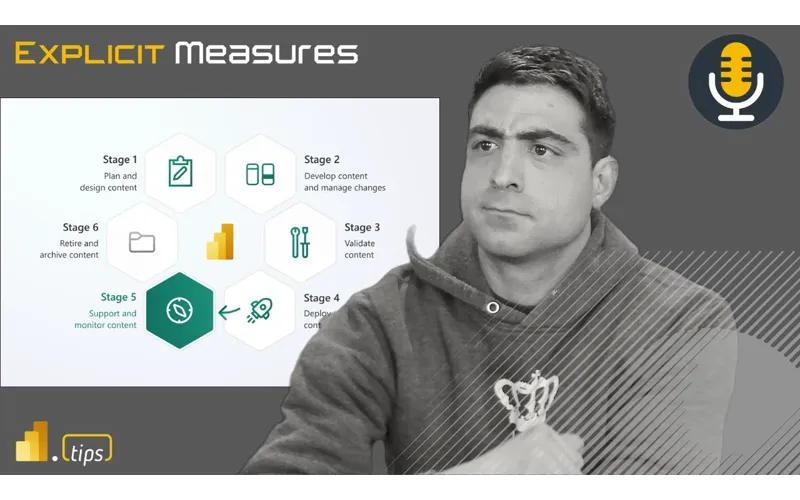
In this episode, Mike and Tommy continue their Content Lifecycle Management series by focusing on how to support and monitor your Power BI content at scale. You’ll learn practical guidance for operationalizing your environment so your reports stay reliable, governed, and easy to improve over time.
News & Announcements
-
Announcing: The Microsoft Fabric & AI Learning Hackathon | Microsoft Fabric Blog | Microsoft Fabric — Get ready for the Microsoft Fabric & AI Learning Hackathon! We’re calling all Data/AI Enthusiasts and Data/AI practitioners to join us for another exciting opportunity to upskill and build the next…
-
Power BI implementation planning: Support and monitor content - Power BI | Microsoft Learn — This article helps you to support and monitor content as part of managing the content lifecycle.
Main Discussion
Mike and Tommy break down what it means to “own” Power BI content after it ships: monitoring usage and performance, managing incidents, tightening governance, and building feedback loops so the content actually gets better over time.
Operational readiness
They talk through what you should have in place before declaring a solution production-ready, including clear ownership, support paths, and a plan for issues and enhancements.
Monitoring and usage
A practical look at what to monitor (adoption, refresh failures, performance, and stakeholder feedback) and how monitoring changes the way you prioritize the next iteration of your reports.
Continuous improvement
Support isn’t just fixing broken things — it also means creating a cadence for enhancements, retirement, and documentation so the organization can scale without chaos.
Looking Forward
The series continues with more concrete guidance for building repeatable, scalable processes around Power BI delivery — from planning to production to long-term support.
Episode Transcript
0:32 good morning and welcome back to the explicit measures podcast with Tommy Seth and Mike good morning everyone good morning and a happy Tuesday gentlemen there we go that’s it good good morning jumping in for our main topic today we’re going back into the content life cycle management part six we’ve worked our way around the bases I guess it’s pretty maybe this is like a a baseball game we have all these different different mm no man cuz there are not six bases I
1:03 mm no man cuz there are not six bases I do know that so we’re past four so analogy falls apart well yeah I know but it’s like we’re working around these like the the image diagram has these little cubby things so we’re like walking our way around the cube anyways from the Microsoft documentation hopefully we’ll hit a touchdown yes exactly now you’re getting it excellent score unit so we’re on we’re St we’re stage five monitoring and supporting your powerbi published reports that’s
1:33 your powerbi published reports that’s the section that we’re on right now so we’re going to continue down the content to life cycle management and keep working through that that’s our main topic but before we do that we do have some news Microsoft is promoting a very interesting event I guess I haven’t really seen a lot of events done in this way maybe there’s been things like this before in the past but Microsoft is pushing for a AI hackathon in fabric Tommy do you want to give us a heads up on like what’s what’s this all
2:03 heads up on like what’s what’s this all about yeah so this is the second I believe second annual Microsoft Fabric and Ai hackathon and whether you’re a powerbi developer admin new or seasoned professional Microsoft wants you to participate in this Microsoft learn challenge registration I believe is now open registration opens actually yesterday so registration opens today submissions start on September 24th and all rules and settings they’re giving away about 10 grand in prizes total with
2:34 away about 10 grand in prizes total with first price getting 2500 but really it’s about showcasing your skills learning something new and that’s what Microsoft’s trying to push which is great too because there a lot of things in fabric especially when it comes to AI it’s what is the realm of the possible and this is going to be a great demonstration of that that yes and as part of the submission deadline right there’s a 3 to five minut minute video demonstration and link to the documented repository containing the steps to recreate Your solution so for
3:06 steps to recreate Your solution so for those those who may not know but this is quite the compressed timeline right is well actually it’s it’s actually really good for a hackathon like you a full month you have a full month but if you’re not familiar like usually within organizations like a lot of orgs I’ve been part of do hackathons but they are really compressed timeline right like they call it a hackathon because if like for those not not familiar
3:38 not not familiar you’re working like a lot like you’re put in tons of like very sleepless nights to to pull together an idea now what’s fantastic about that is you’re diving deep into some particular area to solve some problem and it’s an accelerated like just all Tech go build a solution thing and the learning that you come out of there is is invaluable it’s a lot of fun especially if you can find a couple
4:09 especially if you can find a couple folks to do it with if you never had red bill you have now you will have by the or Monster whatever true statement there the latest iteration of that energy iy for the three of us to do a hackathon together I know schedules are so crazy we just find time to do this yeah man that’ be a blast we should Place County unfortunately Tommy you County unfortunately Tommy Mbps we couldn’t win right we
4:39 know Mbps we couldn’t win right we couldn’t get the pay so like I just yeah just sorry not going to work rent a place in dor County Wisconsin Wisconsin in there are some there are also some up stealing opportunities as well in the live ask me anything things as well so I just want to point out too there is a number of events AMA events in the Microsoft Tech Community that are coming up as well so September 17th October 88th there are some events that are happening I guess that’s today
5:10 that are happening I guess that’s today the September 17th one is is they’re doing a video now anyways if you want to get involved and understand more about it go visit the Microsoft Blog Page I’ll put the the link here in the chat window as well just in case you want to see it’s also in the description of this video today but if you want to learn more about the hackathon that Microsoft’s putting on check out the chat window or our description there’ll be more content there as well all right with that I don’t have any other major announcements other than jumping over to our main topic for today so main
5:42 to our main topic for today so main topic for today is unless you guys had anything else I didn’t want to push too fast I don’t know what’s going on next next week next week is a big event oh there is oh tell what big event is that Mike next week is the Microsoft fabric conference in Europe which will be a collection of Microsoft and Community speakers collecting in Stockholm Sweden I believe and there we’ll have a the version of the fabric conference over in Europe side of things so I’ll be helping
6:12 Europe side of things so I’ll be helping out with a fabric 101 I’ll be helping de Proctor an event inside the pre-conference so I’ll be there Tuesday helping in precon getting everyone started with fabric and getting familiar with the the materials and walking through everything providing assistance there and then I’ll be doing a speaking session throughout the week and I’ll be helping out at the volunteer area as well so if you are not going you should go see if there’s any room left to go get some tickets I guess probably the wheels have set in motion you’re probably not going to be like oh well I have nothing to do this next week I’m just gonna leave work and go to a
6:43 just gonna leave work and go to a conference but hope to see you there if you’re going to be coming to the fabri conference in Stockholm looking forward to the event should be very exciting have fun Mike if you happen not to be in Sweden by the way Kudos I’m sure you’re going to have an awesome time speaking you got to see my to Carlo speak to treat if you’re area we’d love to have you in our session Carlo yeah Carlo if we if we keep if we keep saying Mike De Carlo his last name is Gonna Change to DAR Carlo legally no for everybody hey Mike De Carlo so what
7:15 for everybody hey Mike De Carlo so what I’m saying is let’s keep going yes to Carlos Solutions yeah it’s funny you guys mention this because the person who wrote the blog post for Microsoft Fabric and AI learning hackathon is actually Paul the Carlo oh really no he’s actually he’s actually a your cousin he’s my cousin and believe it or not we look similar so the Italian jeans run run run thick I guess have a long history yeah the D Carlos have a long history so we
7:45 Carlos have a long history so we probably Trace back to some ancient group where we were CH chiseling on Stones together and his family and my family was was maybe somehow somehow related something with a bar chart why do I all of the sudden feel like somewhere in your family line somebody was like we got to drop we got to drop the the duh we got to americanize and be like Carlo and that’s it oh I don’t know what happened but we I I don’t know a lot about my family history but I I believe that happened when my great grandparents
8:17 that happened when my great grandparents came over on the boats over from Italy so I think I think names were getting changed but I don’t have a lot of connection to my my early part of my family so I don’t really know a history of our family how that changed but my my assumption is Maybe something may have changed on the way over here to America we settled here back back in the day you’d usually drop The O Part the vowel say yeah we’re Carl we’re de Carl now maybe we were hiding from something I don’t know yeah oh that’s great maybe we had a track record there’s another event coming up Mike you
8:47 there’s another event coming up Mike you just told me about if you happen not to be in Sweden that’s true so do you want to we could bring that I don’t know what you’re talking about but go ahead Microsoft ignite oh yeah Microsoft ignite sorry the other that other event that other event there’s another event coming out that’s Microsoft ignite it will be in our home backr our backyard Tommy more Tommy’s backyard than mine it will be in Chicago so we’ll be the ignite event is going to be in Chicago so I’m going to also be attending that one as well helping out there as much as I can so come visit
9:17 there as much as I can so come visit us if you don’t want to travel overseas come to Chicago we will have the Microsoft egnite Event there and pretty sure Microsoft will push out more new announcements around Fabric and things they’re working on so that’ll be very exciting to see that event as well well I lacked Intelligence on this one because you’re like hey you going I’m like I don’t think I can fly you’re like you don’t have to man it’s like like walk over to it Tommy I’ll probably I will probably be there helping for a few of the days I I know there’s some of things going on but yeah if it’s in Chicago I’m gone so
9:48 yeah if it’s in Chicago I’m gone so that’s what that’s I said Tommy you gota you gotta pay attention to these things you gotta come out and join us so anyways you want to come out and hopefully see Tommy and I in Chicago come out and see us at inside of the microsopic night it would be a lot of fun you’ll find me at the deli at the least there we go Tommy will be around he’ll just he’ll just have a huge pami just just just be chomping on it like it’s outside the building yeah yeah just outside the building Tommy you want to come in us no I’m eating meat I’m actually pretty good I’m just gonna hang out
10:20 good I’m just gonna hang out here awesome super fun should be an enjoyable event all right with that then now I think we’re ready to transition over to the actual topic for today today which is the the next section of implementation which is how to support and monitor your powerbi data sets what happens there what can you what options do we have in the monitoring area so want to give us a bit of an overview of support and monitoring this article and then we’ll jump in and maybe talk about certain sections on it I love to support monitor this article Mike as
10:50 support monitor this article Mike as you said so a few things yeah this is our part six we’re rounding the bases and we’ve talked about a planning designing content developing many content you can find all of our previous episodes on our content life cycle management series they’ve all been on odd numbers and every other Tuesday so make sure to listen to the other ones and today we’re really focused on part of that life cycle management is the importance of support monitoring the how do we support consumers and also how do
11:20 do we support consumers and also how do we monitor the content that’s out there this is one that I would argue has the least amount of Love out of everything that we’ve discussed today and the least amount of attention so what are some of the best practices out there what have we seen and in the world of fabric how does this look and I think that’s a good place to start it is a good place I don’t know if it’s going to end with the least amount of Love out of all these but so far yes I would agree with you I I think I think the love you’re saying is how much tooling
11:51 saying is how much tooling Microsoft has provided or how easy they have made it for you to understand what content you’ve made and how often it’s being used is that maybe what you’re talking about is is like the how to you get your hands on the data or the information or you talking about no one just no one’s just talking about it yeah funny enough I meant my idea of Love is the amount of processes around it a lot of teams and organizations that I see actually devote the time yeah see that’s what I I was I was picking up where you putting down okay yeah and maybe I’m I’m
12:22 putting down okay yeah and maybe I’m I’m thinking about a little bit more so I think monitoring and supporting is somewhat of a factor and I think that’s it’s weaker but I think the weakest thing is our next content life cycle management talk which is how to retire and archive content because I don’t think anyone does that so that’s what I think that’s that’s the part where I’m like no one is thinking that way at this point or how do we start killing content that’s out there but I would also agree in order to be able to turn off retire Sunset things you
12:55 to turn off retire Sunset things you need to have substantial data to at least some data to support the decision one way or the other so I would agree with you Tommy monitoring and supporting is not very well thought of and I think this is a Microsoft gives you some tooling to do this but I think in reality this is a lot of people and process building in your organization on how to get this to work and so I think there’s not a lot of governance or thought put to when we publish something how do we know it is a
13:25 publish something how do we know it is a it is a it is a success success is one one thing the the other interesting point that I I think we’ll get to at some point in time here is if we’re if we’re talking about when planning to deploy something or plan like deploy Solutions I think this is the stage that people don’t think about in terms of the volume of support needs right or or time involved in this that’s going to
13:55 time involved in this that’s going to take up in this step right and and it’s just not part of the plan and if anything at the end of this conversation probably one of my closing points is make sure it’s part of your plan and your your PL Your Capacity planning for it right because it’s easy as a team to just be in build mode and launch and then think you can go into build mode and launch again with like sets of projects or reports with the same levels of effort meaning if I have 80%
14:25 levels of effort meaning if I have 80% capacity it’s all going towards development in the next cycle it’s 80% capacity all going towards development next cycle it’s 80% no right it’s now 70% because 10% is support and monitoring of previous Solutions or you monitoring of previous Solutions or and it’s not just what’s going on know and it’s not just what’s going on with the reports right like this article is outlining there’s user support there’s platform there’s like all the things that go along with the solutions that we’re building within fabric yeah
14:55 that we’re building within fabric yeah and I think there’s a good indication of your the health of your data culture on the amount of time that your organization or your team spends on the sport monitor because honestly if you’re in an unhealthy one is to Turn and Burn well we got to show the fruits of what we’re doing so we’re how many reports do we build but a healthy data culture understands the the following areas that yeah you don’t see the fruits of what you’re doing because it’s not as a parent you’re not making major updates but there’s a underlying importance on
15:26 but there’s a underlying importance on what are we doing to get people to adopt these new reports it’s not just adopting powerbi there’s that micro area of we built a new report let’s get people familiar that cognitive load an understanding that and also what’s out there and what are we doing for that and spending good time quality time on this not the majority of your time but this is important from a from a data culture I thought you were going in a different direction with that because in a Turn and Burn culture or in one where you’re
15:58 and Burn culture or in one where you’re not doing a lot of the steps we’ve talked about previously you’re not putting out a good product and the result of that is you are going to spend more time in this sport realm because you’re going to have more bugs you’re G to have more problems to fix okay so yeah and honestly both of these are very valid points and they make a ton of sense interestingly yeah goad I want to jump into some of the article pieces I I
16:28 jump into some of the article pieces I I my initial reaction to the article is there’s a lot of notes and warnings right up at the beginning so the you right up at the beginning so the there’s you have the image here’s know there’s you have the image here’s where are we’re on step stage five immediately there’s a huge note says for an overview of content life cycle management read these other articles one I would highly recommend reading these other articles what is the the adoption a road map how do you handle user support how do you powerbi implement auditing and monitoring how do you VI
16:59 auditing and monitoring how do you VI solution planning deploy support and monitor migrate parbi from other Solutions into into parbi these are great topics for you just to understand so if you haven’t read those articles I would highly recommend going to read them because it will also form some opinions around what are the what is possible what what we can do with monitoring so I highly recommend those those notes as well but I really resonated with their first green tip in this list of documentation that says if you expect your data and powerbi
17:29 you expect your data and powerbi environment to thrive please don’t underestimate how important it is to start support above and beyond just production environments so non-development non- testing environments supporting the broader part of your organization with You’re Building content so one of the things I’m I’m really passionate about here is powerbi or fabric now gives us the ability to delegate responsibility to other teams and I think a lot of organizations don’t have a culture or
18:00 organizations don’t have a culture or don’t have process in place where we can hand other team members or provide a report an app a data set a table these are the different thresholds by which we are able to give people access to the information and the data we don’t have a good culture yet in these companies or that I’ve observed where it’s easy for us to transition responsibility from one person to another with this self-service or in these bi experiences so yeah you you have to decide what that
18:33 so yeah you you have to decide what that looks like for your organization and then you have to build process around it and almost enforce it of look if you want more access to higher levels of data what by that is I’m not just going to build you report I’m going to build you a semantic model and you can consume that we have to be okay with the report Builder consuming that semantic model and building something that’s they’re responsible for so having those those processes in place I think are incredibly important and monitoring and supporting this is pivotal to helping users build quality
19:05 pivotal to helping users build quality content build quality content so you don’t kill your data models if you have a large data model and people are building bad measures against it you’re going to have to address that that’s a problem you’re going to have to address so you have to be able to Monitor and know when those things are happening to then provide that support back to that team or person and help them find a better way of making the measure or building the report pages so I really really like this article but I think it’s it’s going to focus a lot on the people and the processes you’re going to use to build out your powerb environment I don’t I don’t disagree
19:35 environment I don’t I don’t disagree with you I think the point that you’re stressing here that I think is key is even for organizations that have created support and monitoring for powerbi Solutions I think what you’re poking at Mike is fabric support and monitoring is is much bigger than just what we had to do in powerbi from from an artifacts and or like because you’re introducing the whole data Pipeline and who owns those
20:05 whole data Pipeline and who owns those different artifacts or what am I building for teams and what do I need to go go support support and that opens up a whole whole slew of other things you as a centralized team or a builder of certain things needs to understand is going to be part of your workload going forward and and I think to to both your points it’s important to stress the support models or the approaches on if you’re doing the self-service for
20:35 you’re doing the self-service for creators and for consumers each of them needed to be devoted and I think have need to have special attention on the type and the people involved for me I I would not say I would focus first on the consumers but I’ll say I have a very special place in my heart for Consumer based support because that’s your feedback that’s your audience first and if they are not taking to it the whole model breaks in in a way so that’s
21:05 whole model breaks in in a way so that’s is so important on that model I I think we could probably Focus here I’m just thinking about what stage we’re in in terms of is this the first time we’re introducing our support or is the car already running at this point oh god well that might be a par question yeah no poke the Bear right off the bat right like you you can’t you can’t regardless of okay lots of
21:37 thoughts are we talking about creators of consumers are we supporting consumers right like in in F if you’re deploying Solutions into the ecosystem I think that that subset of articles that Mike addressed right in the beginning is also part of the conversation right because users there there is a an assumption that organizations find themselves in or business intelligence people or teams starting out get in trouble because they
22:07 starting out get in trouble because they don’t think about this internal support and if it falls into that separate article where it’s just informally organized like there is no support structure it’s just you right like that becomes part of your time and you’re going to fall behind and the organization’s not going to understand why because the more content you put out there the more things you have have to support which is why I’m a strong proponent of you want me to launch stuff like there is a formal organized way in
22:37 like there is a formal organized way in which we support this otherwise we’re not doing it like we don’t support it right like you’ll get Solutions but it’s it’s minimal support at best we’re not monitoring anything because there are no guarantees I can make you unless you want to formally organize around us having the resources and capacity to do so right so like that’s where I’m I I get stuck really quick because there’s this innate assumption I think that we can just keep pumping stuff out without this backlog of work
23:09 stuff out without this backlog of work coming back in that requires attention in order for these solutions to be successful because without that they don’t become successful right because and I think the article even points it out you have to have support of some kind whether or not you want to fight the Battle of formal or not otherwise is what are what are the end users going to do they’re going to find the workaround which is probably not ideal to the solution that you’re trying to build and
23:39 solution that you’re trying to build and and that is why it’s key when you’re launching programs or pushing out this stuff to a much wider audience that the proper levels of support be there be it training like monitoring what’s going on helping people performance tune Etc but training and and addressing the issues whether those be technology in their implementation or just they don’t know how to do something is key and and really important you’re heading my question back to you then around I like
24:10 question back to you then around I like this idea or the topic so in in the middle of the article it talks about two there’s two main bullet points that come out there are two main types of users to consider when you do the support model customer consumer support people consuming reports and then content creator support and I think now if we even talk about fa there is content creation as a I’m a report content creator I’m a semantic model content creator now I’m a table Builder like a data engineer creating lake house yeah content right so the the content space
24:41 content right so the the content space of what we can make that we can share now is actually much more much larger now that we have fabric bolted on here so I think these these points are extremely relevant my question back to you two is which do you think comes first do you start with the consumer support first in the organization helping people consume what little content has been made or strategic content has been made first and then start trying to grow the Creator support platform inside your organization what do you think is there is there a
25:12 do you think is there is there a precedence to these things or do you think it not matter does not matter you have to do all of at once what do you think I think it goes back to what Seth was saying because it hit a nerve where your support strategy does not come after you’ve launched things and if that’s case then you are you’re setting yourself up for failure and I think that hly is what I’ve seen a ton internally and with clients are like well we’ve already launched things and now we’re going to start thinking about how we’re going to do support when things are already in the production sphere and that’s usually too late because don’t
25:43 that’s usually too late because don’t want to intimidate people either no I don’t want to come into and like like you can’t build any content until you have this entire support mechanism rolled out not the entire support but what is the plan there’s got to be some plan but to your there got be easy win here somewhere there’s got to be an easy win but to your point if you’re going to launch your self-service as part of it then I think self-service the content creators come first but that’s why your support strategy has to be part of the the whole the whole package right if
26:15 the whole the whole package right if I’m if I’m not doing self-service or if I know I’m not going to do it at scale I’m focusing on consumers that’s going to be where my devotion of strategy process and time is going to be but if I know that my launch or whatever the the project deployment is has a lot of business users building a lot of things or that’s a critical part of the system then my first focus is going to be getting them up to speed okay I’m gonna disagree with your agree I agree in part
26:47 disagree with your agree I agree in part right like I from and the part I agree with is this has to be part of your how you are introducing deploying content within an organization and the volumes are part of that to answer your question Mike and then you can rebut both of us or disagree okay I think you support both of them at the same time the the only difference is it is I wouldn’t I’m not picking or choosing one or the other because I’m what I’m picking is very targeted audiences only
27:21 picking is very targeted audiences only that are only aligned with the largest objectives of the organization right like because my team is a service provider right we’re trying to enable the organization to do things but I can only do that with the capacity that I have to do that with right so that limits the reach that I have across the organization because I won’t publicly go out there and just say we
27:51 publicly go out there and just say we have all these things because I can’t there’s no way I could support that however what I do find are the particular individuals that are responsible for key organizational objectives and I lock in with them and sometimes those are content creators where we’re I can build content with or I’m developing a model that they go and build reports on top of or it’s the consumer who really understands data and we’re building a very targeted
28:22 we’re building a very targeted insightful report for them that’s of of key importance so in both those cases when I when I’m introducing those things I introduce that I I will support them but at the same time I’m clearly articulating to them that there’s a limited amount of capacity in terms of like enhancement growth Etc on these objects but we’re still doing it so I’m I’m G to maybe point out maybe push a a bit more on here so I I understand Tomy your emphasis on the
28:53 understand Tomy your emphasis on the Creator content area and Seth I agree with your point here as well but I’m going to really push back a little bit and say I disagree I really think if you if you look at the number of people trying to consume things from power. com I think if you’re looking to drive impacting your organization I think you have to look at it from a lens of if I have people who are just asking for data report give me the report build it for me how many people are going to know how to focus on building really good content that Everyone likes to use I’m going to say the largest audience you have in your
29:23 the largest audience you have in your company is the number of people trying to consume the viewer the consumer of the content so my opinion here is I think you start focusing if I I can’t do everything at once right unless you H unless you hire some outside help to come in and like lay it all out for you like you don’t know what you don’t know is what I’m trying to say so if you’re an individual who’s leading the Helm of powerbi and you’re just starting this thing out in your organization maybe you’re migrating from another tool into powerbi and you’re trying to figure out what are the feature gaps how we’re going to rebuild
29:54 feature gaps how we’re going to rebuild because every tool does things a little bit different Tableau click they all operate differently than how you deploy and and distribute content so you have to take this lens of where what what does my company understand and my my guess is this is a very sweeping guess there’s a lot of people who just consume content give me my report give me my table and I’ll take it from there so I think the consumer education points that it makes here in the article are the ones you should address first how do you get help who is the where is the
30:25 you get help who is the where is the office hours for the center of excellence or the team of people who understand how to use this report what does it mean I can’t how do I filter this data I’m missing data in this report how do I unfilter it I think you have to cover those basic functionalities first just from a consumer standpoint because that means you now drive a need to have more content created and I think behind that you follow it with okay now that you’re supporting the content You’re Building here’s a bunch of apps that we’ve created here’s a bunch of reports in
30:53 created here’s a bunch of reports in those apps once the organization starts getting established on this is how our data is presented back to us then you start focusing on okay now let’s start scaling up the amount of content we can create and highlighting certified or promoted content based on focusing your attention now down to the Creator support so I think it has to go consumer creator for that reason because you’re trying to drive the largest amount of impact and just from a pure audience size you’re going to probably have and
31:24 size you’re going to probably have and this is a generalization there are organizations that have everyone created content so I’m saying this this is just yeah from my observation there’s a lot more content consumers than there are creators and so therefore to address the need of the business you want to first get everyone able to consume content drill throughs Pages reports visuals how to interact with visuals all the things get that settled first at least enough to get people consuming it watch your metrics and usage if that starts uptaking then you’ll start having more
31:54 uptaking then you’ll start having more requests for getting more content and now you start focusing on okay let’s focus on how do we have a central team or a small team of people building content how do we start opening that realm up and getting more people into the content creator space so yeah okay sorry go ahead that’s that’s an like you you just went into a use case of an all-in self-service deployment methodology didn’t you like that it
32:24 methodology didn’t you like that it sounds Then I then I wildly disagree with you with you I don’t think so if I’m a person if I’m a one person team or a small team yep right it depending on what your responsibilities are as a business intelligence team the instant you go all out and you’re like hey everybody in the organization we’re here to support you here’s all the training material that we build here like let alone like that’s what you’re now assuming is part of your responsibilities here we are and then
32:56 responsibilities here we are and then the Deluge of incoming stuff comes and you can’t support it you will lose the opportunity with that audience which is everybody in the business to work with them because they’ll be like yeah we we ping them and they’re not responding I think I feel like your comment there is a little nuclear to what’s going on here because I don’t think it has to be you’re saying I am I am that nuclear guy yeah you’re you’re going nuclear on the on the option of I’m not interpreting my comment as hey I’m going to launch all this content expect every
33:28 launch all this content expect every user in the company to consume the reports that we’re we’re going to be building the likely this and what I observe here is it usually starts with a couple key groups Executives need their reports they have their kpis you start with them so there’s a there’s a narrow focused amount of people that are so there is there’s only announcing that to particular groups as you roll things out but that’s yes that’s what I’m but it’s that scales larger it’s not I’m going to I’m not going to release everything in one moment to your point right you have to have some level for
33:58 right you have to have some level for all these things but what I’m just I’m trying to adjust here is regardless of whether you take it team by team whether you take it all the whole company or not the whole company whatever you do you always have to start with educating the consumer of the content first because whatever you built in that report has to be educated or documented enough to get them going here here’s where I’m gonna it’s there I disagree disagree with you’re not you’re not you’re not going to get any success if you just I haven’t said a point yet no I’m arguing with Seth okay got Tommy we’re not Seth
34:29 with Seth okay got Tommy we’re not Seth is telling me no right up front and I have yet to see any implementations where you haven’t started with consumer training first to get into the content creator but that is but but that is the false that is the assumption that the organization itself is making this an initiative within the organization right because what is required for you to support that is putting together all the is the resources to support the organization what what I hear you saying is blindly this is where we go right off
35:00 is blindly this is where we go right off the bat and it’s like no not without proper planning of or understanding the the number or level of effort number resources or level of effort is going to take to support all of the things that you’re now opening the door to and it’s like I’m I’m much more in line with like okay do it phased in terms of like Department by department but at the same time like there’s going to be a threshold if you’re not thinking about that long term and yes I do have a nuclear approach from the standpoint that I’ve been in organizations where
35:32 that I’ve been in organizations where teams find themselves absolutely overwhelmed and the organization looking at them going why aren’t you delivering and this is in part part of that problem where you’re just launching things into an ether without an understanding of the level of effort that you’re launching out there that the team is now going to have to embrace and and support across the organization I feel like you’re making my point stronger actually by you’re arguing this just because you’re launching content there to begin with right you what you just said that statement was your your team there are
36:03 statement was your your team there are teams that are unprepared to handle the onslaught of support from the content that they have created yeah that’s because that that’s stay one phase one of that team creating the content to begin with there has to be some level of Education to that consumer of the content so even before I give you’re missing my point you’re missing my point I’m saying there is a finite team that is that is building all the content to support an audience I’m saying I have to understand the volume of what that audience is
36:34 the volume of what that audience is going to put back on my team especially in self-service in order to support that because if I don’t say say for instance this right I’ve got a team of four we’ve deployed content to a hundred people in the organization 20 of those people don’t do anything 80% are extremely interested in everything you have to say Mike 80 people start coming in with different questions and all of the sudden the team of five is like the the volume here is crazy we can’t support all this pause what you
37:05 we can’t support all this pause what you just said there sounds to me like consumer consumer support what you just said not Creator support you’re saying Consumer Report support that’s what you said start yes this is what you’re just explaining to me but but here’s what I’m saying I’m not I can’t go to that 100 unless I start to understand the levels of support that would be required because here’s my push back I think we’re saying the same thing no because 80 people are asking something what’s going to happen is that we have to create a backlog now
37:35 is that we have to create a backlog now of the sudden those 80 people filter down to 40 I’ve lost 40 because I’m not answering them quick enough I’m not giving them I’m not supporting them I’m down to 40 now I’m down to 30 now I’m down to 20 no you’re I’m I’m I’m saying you can’t start there immediately or just launch out because you’re going to lose 60% of your audience right out of the the gate I agree with you I agree you you have just confirmed my my assumption of when you as an
38:05 assumption of when you as an organization or making this the first thing you start with is consumer support not Creator support you’re not talking about in the in the example you gave me you didn’t talk about how do you when you’re you’re not talking about how am I publishing new content you’re not talking about how do I update security and you’re not talking about how do I access new functionality of reports or powerbi or fabric. com those are things of Creator support you’re you’re affirming my point where you have to have a clear understanding of what’s happening at the consumer level to your
38:35 happening at the consumer level to your to use your example I’m publishing a report and I’m giving it to 80 people that is consumer support how do I use this report how do I get this data that is all consumer-based reporting support that you had to plan for before you’re planning for how do we build the best models how do we build the best Pages how do we best articulate those business requirements into to report you just you affirmed my point which consumer which the consumer report is higher importance than your creator support hold on for
39:07 than your creator support hold on for planning or implementing well it the content consumer support says this in the article it says the questions they’re trying to address is how to get help how will the consumer contact who and what for help is there a strategy for readon customers is there a workflow for consumers are you addressing critical issues that block productivity these are all the things you’re talking about how do you resolve data discrepancies these are questions that are coming from the consumer this is consumer support how do you use the solution if you send it out
39:37 you use the solution if you send it out to 80 people to your point and they don’t know how to find the data get through the pages use the filter paint navigation they can’t even use the solution and the onslaught of 80 people’s of questions are those kinds of questions if we haven’t thought about that content consumer support first you lose them and I I agree with you if you you do not want to roll out something and have 880 people come at with you with questions and not being able to support it and then losing half your audience because they’re like well this report’s junk the data doesn’t look right I don’t know how to get to it I
40:08 right I don’t know how to get to it I don’t have access to what I think I need to have access to you you lose the momentum immediately when you’re plan to roll this out and then the last part here which I think is also very relevant is how do you accept that feedback when they when the consumers those 80 people come back to you and you’re not either one day able to track and address those tickets quick enough what are you what are you doing to resolve this oh this data was issue okay we’ve we’ve taken on a task to your point going back to the data set and fixing it or providing more reporting to say these numbers in fact
40:38 reporting to say these numbers in fact are correct and they do align to our kpis I think you’re affirming what we’re talking about here hold on everything you’re saying Mike from a consumer point of view I’m your number one fan however where I think the disconnect is if you from the start know you’re going to be supporting content creators who be become your representative of the content because the bi team is not the sole people creating reports if they don’t have the proper one knowledge experience skill and understand
41:10 experience skill and understand resources needed you have a lot of Disconnect before you even get to the consumers if the plan is going to be managed self-service at scale I’m not saying after after the fact I’m saying part of the initial idea of rolling out content and supporting content you already know that we’re going to have a wide web of content creators you have to start there because they’re your representatives they’re the ones creating reports and what do you get if you don’t have the proper processes and
41:40 you don’t have the proper processes and resources for them a wild west a lot of different looking reports and I almost use a different word there but you have a lot of Disconnect on the type of content out there before it even touches the consumers now this is all being said with the idea that I completely agree with everything you said about content support and again you and I share that same passion on the importance there but if you are doing managed self-service at scale and that and that before you launch then your first
42:10 that before you launch then your first Focus need to be Pilots need to be working with these people so they become valid representations they’re not presenting wrong data they’re presenting consistent looking reports they’re doing drill through right because they’re going to be the ones creating it for their teams not you not your team because they are the tentacles they’re the webs of report creation so you to you have but I would still argue you’re talking about phase two of something because if those content creators don’t even know if the if the consumer of that content right if you have a team of
42:41 content right if you have a team of people who are going to be building things if the consume if the people you’re giving those reports to don’t even understand how to use a drill through you’ve already you’ve already lost but we have before you even talk to the training of the content creators you but you don’t control who you get in terms of consumer or Creator right like as part of an organization you’ll have both at the same time agree right now now in terms of planning right there’s an there’s there’s a large volume of work to build
43:14 large volume of work to build documentation or repositories of information for a consumer to ensure that you have self-service success in in in the consumer space so there like already you’re at a finite amount of time and and I guess that’s where I still would argue like if if you’re going to approach the data initiatives and improving the data culture regardless of like using utilizing fabric right we have we can build a bunch of objects we can you
43:45 can build a bunch of objects we can you can build a bunch of objects we can create value for the business know create value for the business through reports and insights Etc to me that’s a it’s both of those at the same time and it’s but it’s small you’re you keep small because you’re limited to what you can support and if we’re saying the same thing and in just saying like this is you have to plan for this first before you start rolling things out then I would agree with you if you’re not saying that and you’re saying we start and we roll these things out that’s I’m saying the former of what you’re saying
44:15 saying the former of what you’re saying right in both cases you have to plan for these things I’m just saying when you start not when you start you have to have these things both played out so what I’m not trying to say here is we don’t ever teach anyone how to create content and we just start rolling things out and then what we’ve rolled out we just train them really well and it’ll go well that’s not what I’m trying to communicate in both these situations they have to happen at in parallel at the same time my my point is as you’re getting powerbi to roll out to the organization people just don’t know how to use powerbi. com where to find the
44:45 to use powerbi. com where to find the content how to use things that you built in the report and reports can be highly customized meaning there can be fly out panels there can be buttons what do these things do I have seen a very large hesitation for people I don’t want to break it I don’t want to if you don’t tell me what to do in the report I don’t know how to use it and so to me it feels like there’s a very large emphasis on if you want to provide those quick wins those satisfac satisfactions you start with a small Creator team with a very lightweight processes around the Creator side but your first major in your major
45:18 side but your first major in your major effort should be around what are we going to create and how do we make sure that the people consuming that content get the support they need to cons to be able to use that content in the way they need those creators where are they coming from the business or are they coming from the be like centralized bi team because that’s really it even if it’s a small team and it’s from the business that’s self-service and that’s your support first it’s going to depend on how your company handles this stuff so the answer there is there is no it it comes from one place because some businesses are going to say we’re just
45:49 businesses are going to say we’re just going to open up powerbi and everyone can create well then it’s going to be more self-service in nature because it’s business-led driven as opposed to Central bi driven and a lot of companies have these it depends on what your strategy is is there a executive sponsor involved do we have a good culture around data already I’ve seen organizations that just because they have an E5 license everyone creates things in powerbi prot licenses and we have hundreds if not thousands of report across the organization and
46:19 report across the organization and Central bi has no clue what’s happening they don’t even know what’s going on because people are just doing things not even kidding you I’ve been in organ Oran where this is occurring seriously then your role here is just training you’ve got to then your role is updating your resume yeah but my point is there’s organizations have different cultures and they handle these situations differently and it really depends on was there someone upfront that understood the ability of controlling powerbi and had a plan or did we just say this is useful let’s just turn it on so it’s it really is are
46:50 just turn it on so it’s it really is are we coming down and this is very clearly laid out in the powerbi adoption road map are we coming in with a Central bi standpoint it’s corporate down or are we coming from the business unit level up and there’s a blend here and and my recommendation is a mixed approach right it’s a Federated approach there’s some people from the business and there’s some people from Central it and they’re working together to build a better broader ecosystem around central bi or or reporting in general right it doesn’t have to be centralized I think with fabric adding
47:21 centralized I think with fabric adding to this we add more insult to injury with this one because now we have a lot of traditional only it based things pipelines notebooks data engineering lak houses all these other SQL servers all those things were typically previe perview of only Central it because you got to go ahead and provision them in Azure and it cost you money now I can get myself a fabric license and turn a lot of the stuff on without needing them and so this this is democratizing the ability to do these things so I 100%
47:51 ability to do these things so I 100% agree there needs to be a huge amount of effort also thinking about who are your creators and making sure they creat creating good stuff to actually add value as opposed to just traing creating crap and getting out the door yeah and my last point I’ll say on this area is this I think a lot of this comes too from what your executive sponsor wants if they want this manage self-service at scale right rather than a pick and- choose self-service where it comes to not just where your support is lying but where you start with because again if
48:22 where you start with because again if I’m doing selfservice at scale a lot of times bi is doing a lot of data modeling semantic modeling and then report creation is connecting those certified semantic models the bitam may not be doing as much report creation and if they are it’s more Universal across Department team’s doing a lot report creation off of a semantic model and again we could get into the weeds here so I’m trying to stay as general as possible because there obviously a lot of use cases but self-service at scale I
48:55 of use cases but self-service at scale I need to set them up for success first and that would be my last Point touch point there I guess I guess we we were right on the money right in the beginning with one how the article was laid out but two that a lot of this is people in process right becausee the first two areas are consumers and and creators right and that’s where you’ll have the most ambiguity of like how do you go about supporting those teams and make and ensuring you can I think which is where a lot of my my
49:25 think which is where a lot of my my stress is is because you’ll and that’s just because on the other side of that if you do it wrong that’s where you you may lose the ability to get everyone or a larger audience to adapt in the last five minutes whatever though there like let’s talk about monitoring and there there are some really key things and typically for the admins typically for the centralized teams to ensure these operational systems are operating
49:57 these operational systems are operating as they should or find problems before they become very big what are some key areas you guys think are important to to talk through this is this is a topic I’ve discussed at length is what is your measurement of success look like and what are the kpis that you’re using to measure what you’re doing your in your environment right so there’s many many different kpis I’m just going to throw out a couple kpis that I’ve views that that resonates with organizations they have a great outline here access of solution adoption
50:28 outline here access of solution adoption understanding published items reduce your risks find performance and health concerns within the system right these are great data points so some kpis I would look at this one is you can everyone knows the understanding of does my report get views how many report views am I getting easy not a problem one that is I think less thought about is I’m talking about performance and or reducing risks in your organization you want to look at how many times people are exporting to excel within your
50:58 are exporting to excel within your organization which reports are causing a lot of export to Excel data points this is something that’s a data point that’s not very well known in the organizations and if I talk to orgs they don’t understand this number or the impact of this capability so for one that’s important to understand where and who is doing those type of activities because that could be a very big data security risk where you think you’re putting data into powerbi everyone’s exporting it out and either emailing it around or doing something else with it that you’re not expecting so there’s a behavioral item there that I think is important another
51:29 there that I think is important another KP that I think is very relevant is your report to data set ratio especially on your certified versus non-certified content if you have a one: one ratio of every data set has a single report you have a problem with reusability of content you’re not best utilizing common things and you likely are with that metric alone you’re probably having performance issues or will have performance issues in the future because you’re now refreshing the same Dimension or the same factual information multiple times and your
52:00 information multiple times and your organization will now uptick a spend amount I will spend more because I need multiple refreshes of the same content so again that’s that’s a huge performance indicator of do you have six s eight reports per data set so that’s another one here and the last one I’ll point out here that I think is very relevant is understanding the mix of consumption of your certified content and you’re not a non-certified Content I I think there’s a lot of content that’s being created by users that are adding Great Value that should be in the
52:31 Great Value that should be in the certified realm and you need to have a a conversation a plan what does this look like and if we’re talking ownership of that information right a lot of a lot of powerbi is we now have so much more surface area to control who owns what data because of that we need to have plans on certifying or bringing content into a place where we can trust it so there’s I really emphasize this certified content because that’s where we should spend a lot of our time and
53:01 we should spend a lot of our time and effort is making sure certified content is being used well those are those are a couple there’s many many more but that’s just my initial thought few and I think that’s a perfect point to touch on Mike because I think part of that data culture too is how fluid your data is because if you do have everything set up in something I always ask everyone please have your scanner API please have your audit log set up before you launch because we need these numbers your data becomes much more fluid because then you could have conversations on hey what’s being used a ton is there a conversation
53:32 being used a ton is there a conversation here to certify this is there a conversation here to upgrade or or upscale this data it’s getting used by everyone there’s the conversations on no one from executive or leadership’s looking at the data they should be let’s have a conversation here with them let’s do a training or support that we talked about where I the numbers here it’s amazing how ironic it is that so many organizations don’t use their numbers of bi from scanner API and the audit log to
54:03 bi from scanner API and the audit log to dictate a lot what they do it’s always support requests it’s always support requests it’s always support requests but that not might that may not be what the data is telling them and so I I’ll touch on the usage log or the audit log this is integral to our monitori and content it will go into retirement which will be our next part here but it also goes into again where’s the data going to live is this good candidate to be more self-serviced is this a good candidate to be more certified based on who’s using it how often they are
54:34 on who’s using it how often they are using it where that has to be part of the strategy and to make your data more fluid or fluid or liquid yeah I think I think where’re I’d lean with a lot of the monitoring that I like table Stakes to me is just how report usage right how the platform is in terms of capacity planning where I’ve experienced the the most amount of time being sucked away from teams is not is in the data data monitoring and that’s going to be
55:04 monitoring and that’s going to be different and in fabric that ecosystem is all encompassing but having something that is monitoring your data source and and that’s just like am I like you can do volume checking right like here are my expected volumes am I am I in the range for today all the way down to very specific business logic and rules like you’re looking for values that are coming in and ensuring that something didn’t go blank right because the impact of that Downstream could be significant in terms of reporting pipeline in query
55:36 reporting pipeline in query performance and monitoring of that is pivotal to systems working and operating the way that they should especially with a whole bunch of data flowing in different places all day in in many different ways could impact when people are seen or seen stale data and reports and then that rolls into some of the backends of the the report experience in constantly monitoring your model performance like
56:07 monitoring your model performance like and your refreshes to understand whether or not you have a change in data that is affecting some of the architecture of your solution right where maybe you your solution right where maybe maybe you need a new index on on know maybe you need a new index on on the back end or potentially something changed and now a measure is is bogging everything down every time a user is using that so a lot of focus more in the understanding the data movement within the platform and where you put
56:37 within the platform and where you put the monitoring pieces in there I think has been pivotal in communicating the challenges and where they can lie within a lot of these data pipelines that affect the the end result which is the report right because everybody whether it’s a consumer like on the consumer side will always say something’s wrong with the report and the data owners know that it could be at any layer and the fastest faster you can get to the layer to to find a solution
57:07 get to the layer to to find a solution it it it allows you to rip through you it it it allows you to rip through the bug or the support much faster know the bug or the support much faster my Seth and I know we’re getting your time but your point there I think just really proves to our conversation today where really want you decide whether you’re looking at the content the consumer or the content creators both the the roads divert pretty drastically because you’re talking a lot about too about honestly content creators monitoring and the usage metrics is looking a lot about the consumer monitoring there’s a there are different
57:38 monitoring there’s a there are different processes not just for the support but really different processes and methods for content creator monitoring and consumer monitoring that we’re talking about here too well I think that’s where the opportunity with fabric is such that you can take a lot of the the comments I made which are more Central bi team building and Implement them for Content creators so they can triage their own issues as well yeah I love this this conversation this I think round up very well at the end here I really like
58:08 well at the end here I really like this idea of monitor content and I will argue Microsoft has not done a great job of giving you ample kpis access to data elements so you can collect this stuff holistically and make your own reports around this one so I really do feel like you either going need to go buy a solution off the shelf or get access I I have built my own solution off ourself and we sell it to customers it is Leaps and Bounds ahead of what you need to do every time I have a question about my tenant I go to my set tables that I’ve already built I can ask questions about that data I can quickly get a inventory
58:40 that data I can quickly get a inventory of all the data sources that have been used in my tenant who’s creating what where content’s coming from how it’s being exported these kpis I think are things that we need to be focusing on and we really need to start centralizing and focusing our attention to this is important that we build Sol solutions that you’re more easily understanding all the great richness of the apis that we provide to our organization that basically for monitoring things so the last thing I’ll note on this too as well is anytime you’re building owners or data stewards in departments or teams
59:11 stewards in departments or teams whatever you decide on your auditing monting solution you should think about how do you build it in a way that distributes that content to other data owners or stewards in your organization one thing I’ve been studying right now has been the use of domains and how domains can allow departments to self-certify their own data Finance there’s a person in finance who’s the lead in finance department identify who the admin is or the owner of that department give them domain ownership let them manage their own workspaces delegate some of those administrative privileges to them allow them to
59:42 privileges to them allow them to self-certify their own data sets but then Central bi or the center of excellence needs to Define what does certified mean what does that quality mean at that level and then work with the different teams to integrate that into their their processes so I think I think there’s a lot of really rich features here that are being underutilized domains being one of them to help delegate the responsibility to other content creators which I think is very relevant here too super great article at the very end of the article there’s a nice checklist assess how you how user support is handled you determine
60:13 support is handled you determine specific data needs all that great stuff so I really really like the end of the article so definitely take a good look at the checklist at the bottom read through those items and see if you’re prepared for being able to support your organization with your your monitoring around your content extremely great conversation I hope you liked our fight in the middle of getting a little bit heated I I love how you think these are heated I know I felt like we were doing a good job hashing out ideas I think I think we were saying the same thing but I thought I thought it was good having some good discussion the middle passion
60:44 some good discussion the middle passion it’s called passion it was so nice to monit or watch the passion for once and not be a part of it yes I had to say in an amazing job from our our listeners today everyone when jumped in the chat thread was giving a lot of great ideas really appreciated your input here that was a lot of great comments so chat thank you very much for doing that our only request here is if you like this content if you like hearing us argue about things please share it with somebody else let them have angst about their par deployment as well give
61:15 their par deployment as well give them some things to think about around deployment and monitoring with that Tommy where else can you find the podcast you can find us on Apple Spotify wherever you get your podcast make sure to subscribe and leave a rating help us out a ton you have a question an idea or a topic that you want us to talk about in a future episode head over to power bi. podcast leave your name and a great question join us live every Tuesday and Thursday at a. m. Central and join the conversation or powerbi tips social media channels awesome thank you so much
61:45 media channels awesome thank you so much and we’ll see you next time
Thank You
Want to catch us live? Join every Tuesday and Thursday at 7:30 AM Central on YouTube and LinkedIn.
Got a question? Head to powerbi.tips/empodcast and submit your topic ideas.
Listen on Spotify, Apple Podcasts, or wherever you get your podcasts.