
Should Fabric Domains Have Leaders? – Ep. 373
Mike, Tommy, and Seth discuss whether Microsoft Fabric domains should have dedicated leaders, how ownership affects governance and adoption, and practical ways to make domains work inside real organizations.
News & Announcements
- Domains - Microsoft Fabric | Microsoft Learn — Learn about domains and how to create and manage them.
- Easily implement data mesh architecture with domains in Fabric | Microsoft Fabric Blog | Microsoft Fabric — Today, organizations are experiencing massive growth in the volume of data they handle. As a result, they face an ever increasing need to be able to organize and manage that data in a logical way that facilitates…
- PowerBI.tips Podcast — Subscribe and listen to the Explicit Measures podcast episodes and related content.
- Power BI Theme Generator — Power BI.tips - The worlds best theme generator for Power BI reports. Increase your speed to develop stunning reports using this free theme generator. Themes are essential for any report developer’s tool belt. Visit…
Main Discussion
Domains are intended to bring structure and clarity to Fabric workspaces, but they only deliver value when there is real ownership and a clear operating model. In this episode, the team digs into what a domain leader actually does, when that role makes sense, and how to avoid domains becoming just another layer of admin overhead.
Looking Forward
If your Fabric rollout is growing fast, domains can help—but only if you pair them with defined responsibilities, lightweight governance, and a path for teams to onboard. Start small, name an owner, and iterate based on how your org actually works.
Episode Transcript
0:37 good morning and welcome back to the explicit measures podcast with Tommy Seth and Mike good morning everyone how’s everyone doing today good morning gentlemen and a happy Tuesday to you thank you you’re welcome love it just to be very clear here we’ve had a couple episodes people are traveling this is an episode that’s occurring in Microsoft ignite so Tommy and I are at the event Microsoft ignite so we won’t be able to do this one live so this is a
1:07 do this one live so this is a recorded episode just for you for your awareness but that being said Tommy do we have an announcement around this like I guess it would be tomorrow after recording this at microsof night dude we have a new user group going on and it’s gonna be in Chicago and it’s going to be in person no internet required but but suggested I guess so we’re going to be at the Chicago Microsoft building it’s right across the presedential building right off of Randol Street and we have a
1:39 Randol Street and we have a representative for Microsoft speaking and we’re gonna have an awesome time and our I believe our topic is going to be from trying remember the gentleman’s name get the name drop the name off the top of my head but we’re going to be talking the topic for our user group we’ll be talking about the admin monitoring solution so there’s the admin monitoring workspace we’re going to talk all about he’s going to give us he’s the PM for the feature and he’s going to be going deep dive on all the features around admin monitoring how does it work
2:10 around admin monitoring how does it work some of the back end some of the infrastructure what’s their plans just some general things around the admin monitoring section so if you are an admin and you see the little extra workspace this is this is the PM from this team so it literally the name’s going to come to me halfway through this this podcast I’m I’m just going to blurt it out here when I remember it it’s it’s I don’t know why it’s escaping this morning n enough coffee for you this morning I think I need some more coffee that’s for sure all right that being said we don’t have any other really announcements Tommy give us a some the main details around here topic to
2:40 the main details around here topic to topic today is going to be more topics around using domains and maybe picking on a little bit of should a m a domain have a specific leader and so maybe talking about that topic a bit more but going a bit deeper on domains and seeing all the features that are coming out from domains here inside your powerbi ecosystem Tommy give us some more context did you guys mention the time did I just miss that the time oh 6 the time 6 pm time of the me sorry 6 PM after just show up in Chicago
3:12 sorry 6 PM after just show up in Chicago randomly it will be show up any old put it on Loop every day he’ll just start presenting at 8 am. and then like yeah yeah okay got it 6m that’s that is your normal User Group time right Tommy you go to Meetup you should see the link to register should be all available by especially by now if if you’re joining so you can get all the details there as well so super exciting you also notice the Chicago User Group when under a little bit of rebranding so now it’s
3:42 a little bit of rebranding so now it’s not just the Chicago powerbi user group it’s now the Chicago powerp and fabric User Group there is limited availability at the event so you have to make sure you sign up there they won’t let everyone in we need names of people to get into the office there just for security things as well so make sure you if you are planning on tending and you’re coming to ignite make sure you sign up I believe also Alex Powers will also be there as well so if you want to go hang out with Alex he’ll probably be there as well excellent okay anyways sorry didn’t
4:12 well excellent okay anyways sorry didn’t mean to interrupt go ahead Tommy let’s dive in so these are these are the conversations I really love to have with you guys because we know about Microsoft fabric domains an admin setting that organizes your content on top a level up of the workspace but one of our previous conversations that we’ve had about this was well what does it actually look like from a governance point of view not just the technical implementation of a domain but what does that actually mean for the team and I think one of the things we’ve always said too if if there’s really no
4:42 always said too if if there’s really no meaning behind it if there’s really no responsibility behind it does it actually have value or weight on an organization or on a team so with that in mind our conversation today is this concept of the domain and how does it integrate with adoption and govern more importantly should domains have leaders what is the role of a domain leader if you’re going to implement that at your at your organization I think I’m going to have to push on you hard here Tommy to Define
5:13 to push on you hard here Tommy to Define your definition of what is a leader for an organization or a part of this because this is one of the things I’m start yeah I think I’m just going to unpack like what do you mean by leader what what is that definition look like is that has to be a manager is that someone who has to manage people is that someone that you’re just saying okay you own this department maybe you don’t manage people that you’re like I’m I’m in the quality department and I’m the senior quality person in that department like so can you help me maybe unpack the the leader term and then maybe I can I can have some more context around what where to go with the domain yeah and I’ll even back up besides the
5:44 yeah and I’ll even back up besides the role of the company whether they’re manager or not honestly when you think of a leader especially in this space we’re talking about someone who has Sway and has responsibility someone who can make decisions for that team or domain but also has responsibility behind it I want to keep it a little vague at least here because I think a lot of this will adapt here but I think the two critical aspects that you’re going to need to have to call yourself a leader of a domain is you have decision-making capabilities but you also have responsibilities that you have to be
6:15 responsibilities that you have to be you have to take care of it’s interesting that you you you make a note like that because I was I was immediately thinking of a domain leader being someone who’s a manager of people that’s exactly that’s where I first went my thought but I think the way you define now actually leaves it a bit more open for interpretation yeah you maybe you could be a PM of a project or an area of the business and you’re trying to hold the responsibility of getting things done or accomplished not necessarily having direct reports but
6:46 necessarily having direct reports but you’re in that role or this could be someone who of your team members you’re the one who’s been there the longest the most senior or you’re the one who’s used powerbi the longest maybe they they nominate you to be like okay you’re going to be the technical expert leader of our engineering team and you’re going to manage who has in and out of what inside power. com okay interesting I have another thought on this it’s totally separate but I’m I’m going to hang on to it till a little bit later talk about it Seth what do you think I’m with you guys so far cool cool
7:18 think I’m with you guys so far cool cool great well thanks for listening to the episode that was really good appreciate your time today you Mike you can’t ask set that question till 45 minutes in that’s true that’s true you minutes in that’s true that’s true if we’re 10 minutes in he’s gonna know if we’re 10 minutes in he’s gonna go sure I haven’t thought yet so what I I like the definition so far like and I would agree that it’s I would agree that it’s the appropriate one for saying leaders in domains if if we’re going to be as open as we need to be with the the structure of of how you would go
7:48 the structure of of how you would go about building I guess the question is there was there any leader definition like do you agree with the leader definition s like you do but was was there anything else you’d add to it like how else would you see it in your mind or Maybe not maybe that’s just that’s what you would interpret it as I I would maybe throw in that they are also one of the subject matter expert areas right like yeah if you’re if you’re if part of a domain you should have knowledge about the domain or I suppose be an
8:19 the domain or I suppose be an admin but we’re not really talking about that sure yeah and I I think that’s a good point too because one thing to make crystal clear the domain leader is not something sanction by Microsoft I believe that’s not anywhere in the documentation this has been from our conversation so I think that’s also kind
8:36 conversation so I think that’s also kind conversation so I think that’s also a good brainstorming here too Seth I of a good brainstorming here too Seth I really I think it’s important too that we specify it’s not just an admin right because I think we talk about that side so much and what an admin is where a domain may not not that they’re not touching Microsoft fabric as much but I think there’s a lot of different aspects of what a domain leader is going to be responsible of rather than just the Administration side it’s it’s not a lower level of administration at least in my head I think I think one of the things
9:07 head I think I think one of the things so I agree with you Tommy I’m going to maybe transition the thought here my thought I was going to hold on to a little bit earlier was domains and what we’re talking about here is there is a delegation of responsibility occurring we’re saying we’re going to allow you to be responsible for this thing whatever the topic may be and I think that’s what a lot of this I think a lot of companies struggle with this delegation of responsibility and letting other teams follow through with delivering the data that they need back to the
9:38 data that they need back to the organization I think this is just a a very hard thing to do and I think that’s what sometimes there’s been this this mentality of we’re going to build the business intelligence team and it’s this centralized team that everything gets run through that that is an approach that is one way it’s like a top- down very centralized approach but then I think now with powerbi the way powerbi rolled out to organizations I feel like a lot of the the powerbi Pie has started in the business and the business is trying to drive their little initiatives and at some point businesses come back and say look we’ve got all this stuff happening in powerbi how do we organize it so that we can have
10:10 we organize it so that we can have better responsibility right you have to integrate with corporate IBI or corporate data team right because they’re going to be Pro producing data data for multiple organizations and teams okay great well how do we give the individual teams autonomy to build what they need to build for their business unit but yet still they need to have responsibility so whatever ever they produce and reports has to be trusted because they’re doing the work but we need a process to click back and say hey something’s not right I’m questioning this data can you give us some help and that team has to
10:41 some help and that team has to be willing to support it if you’re going to take this Federated approach so that’s where I’m I’m playing my mind here a little bit on this domains thing it feels like domains is another one of these areas I’m going to Grant access or delegate responsibility to a certain team I I like that point because in there there’s so much back and forth with business intelligence right like and fabric we we talk about a lot of central team right like the the bi team engaging with the business but
11:11 bi team engaging with the business but in in this case if if you start adopting the the methodologies of data mesh and fabric right like this is almost doing the opposite where the business partners or the business people that have been building things in their ecosystem now at least get an inkling or want to scale in some way or understand that there’s capabilities that they can leverage now even more in their particular areas and they’re leaning they have to lean back into technology
11:41 they have to lean back into technology which is which is normal right it’s business has request from technology but in this case I think it just offers another opportunity to data mesh together where technology is bringing the structures and the management and the organization of all of the things right because if if there’s directives to say hey we’ve had this powerbi
12:11 say hey we’ve had this powerbi environment like we’ve got all of this stuff in all these places managing this now and starting to separate these things out into constructs for the business via domains is a great way to to one clean maybe potentially clean up an environment but also just set the standard of like hey who should have access to these things who’s the owner and then like do what domains are supposed to do which is consolidate th this information
12:43 consolidate th this information into areas where the people that know the most about the business eventually begin to manage it so I want to I want to just keep pointing on things here if you read the article that comes out so there is a domain design best practices that article Microsoft has produced I don’t know how new this is I’m going to go look at the article here it was October 16th 2024 so this is this is fairly recent article produced by Microsoft so I’ll put this in the chat window here or actually down in the description that
13:13 or actually down in the description that way in case you want to see it later on here’s the article but if you look in this article this is when you look up domains or Google domains it has like the what is a domain first and then then there’s this article and I think Seth this is actually speaking a lot to your point here in the planning section it talks about here are some questions you need to think about who’s responsible for the data what is the best structure for your organization and is there some hierarchy level of your org that you care about and so I like that organization and then it goes through a
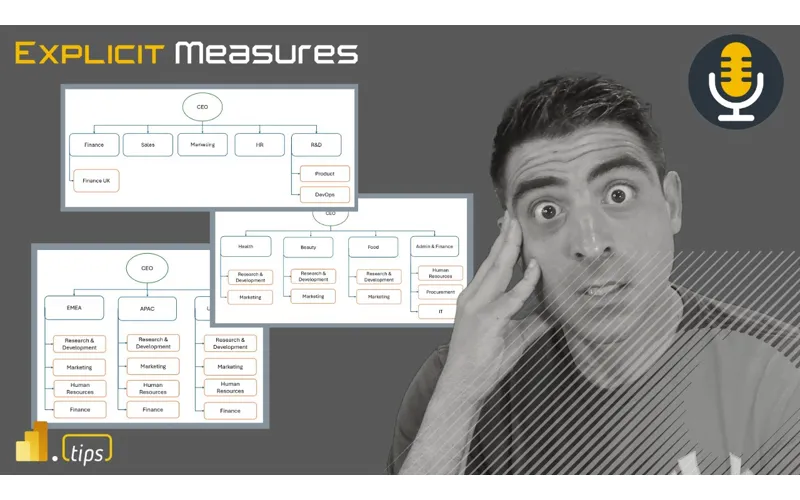
13:44 organization and then it goes through a couple like pictures of just saying here’s how you may want to see your organ here’s some common Common examples of how companies are laid out you have the CEO and you have buy Department sales Finance marketing HR that would be a way of thinking about these are domains so h would be the domain marketing would be the domain potentially you have like byproduct line so the CEO is the top and then you have like these different product lines Health Beauty food admin and finance right so it it could be broken up by what product are you building and that way each product team can run themselves and there’s
14:15 can run themselves and there’s some shared services at the the admin Finance level right so Human Resources it those are shared services but everything else is localized each team has their own R& D marketing and sales team because that’s how they broke out their company and then yeah go ahead Tommy I was gonna say one of the drawbacks there too and it’s funny if you’re actually just scrolling quickly through those diagrams one of the diagrams it says Health and Beauty I’m like why thought we’re talking about powerbi is an example organization so like Beauty like H not not this podcast
14:47 like Beauty like H not not this podcast but well one of the drawbacks there too especially if you’re going to that product line is that you’re dealing with what they call like duplication of functions because if you’re dealing with if you have multiple products they probably have Mark marketing on each of those yes correct because because they’re marketing specifically for their area so there could be a marketing team around just depends on how large you are of a a company like if you’re I’m trying to think of a big manufacturing company that makes a lot of things but if you’re a big manufacturer you’re going to have a lot of different product lines that maybe or may not make sense based on right so
15:19 may not make sense based on right so you’re you’re probably going to Market those things and this is where I think this is interesting to me because now is the domain the health and then underneath that you have subdomains of research and development and marketing so this is this is where things I think get a little bit more interesting and like how you want to potentially think about the domain structure because you probably would want that I’m not going to share a whole bunch of things between health Team and the beauty team or the food team and the other different teams it’s going to be not siloed but you’re going to need that team to operate together and
15:49 need that team to operate together and what what I like about that article is each of the diagrams or each of the approaches they talk about the positive then what the drawbacks are this goes a point in your favor Mike when you were talking about what the envisionment of a leader is because I’m I’m still stuck in that in my head on two questions that we can mle on later where who actually designates someone the leader and what are they actually responsible for but really to the from the diagram approach or at least these approaches point of view it would make sense as of now in my head
16:19 would make sense as of now in my head for this person to be a manager or someone in that capacity and I I think this is maybe the distinction here slightly is I’m just trying to unpack what this means I think Microsoft their lens of again you can use domains however you think is best in your company the patterns seem to be align larger teams of people together under the domains and so I think if if now that you said that Tommy I think what I’m thinking here is a domain is a collection of workspaces it’s not just one workspace it’s not
16:50 it’s not just one workspace it’s not like a very so that’s not what we’re talking about here we’re talking about 10 15 20 100 people in a department and all of them are trying to either work together on the same data or there are some people in that department that are building data that are going to give to other people right here’s you give to other people right here’s sales and marketing need to know sales and marketing need to self-manage their their advertising
17:12 self-manage their their advertising spend what they’re going to do for advertising what’s the new promotion what are competitors doing in promotion right they’re going to have their own set of dashboards they’re going to be all like around their Department their their team of people to communicate that the sales team’s going to have a whole this is one that seems very common to me if you have people out on the street running sales all the time they’re trying to like get things on their phones get them data that they need here’s C here’s a customer one pager right here’s the customer one pager for this so you log in here’s your customer you see your one page and then all the data is there so this to me makes sense like that all that should
17:42 makes sense like that all that should live underneath the sales domain and there may be like multiple workspaces there well not just multiple workspaces but especially in some of these very large companies this domain subdomain model Works yes right where you have these larger trunks I think what’s important about it it is a and I like the best practices article here because it these Concepts should align to how the business operates right and the only time you ever get off that rail is when there’s a
18:14 ever get off that rail is when there’s a fundamental shift of how the business operates which is not going to happen very very often or at all right so it’s pretty solid to go like yeah we’re going to put we’re going to create a domain under this thing and then here are the subdomains the other thing that interesting about this conversation is it seems like saying a leader of a domain is we’re not talking about a specific permission right we’re not we’re talking about a a role that has to go along or should go along with
18:46 go along or should go along with this and that being the subject matter expert role that can speak to the business of all the data underneath and what’s going on in that domain because you have to remember we’re we’re creating an ecosystem of data right yes one of one of the whole pushers of data mesh as opposed to centralized right is in a centralized approach you have the teams that are consolidating the data into the same location it’s fantastic it’s great what is one of the biggest
19:16 it’s great what is one of the biggest challenges with those teams you’ve got to find all the information of like what’s the business logic how do you shape it how do you how do you create facts and dimensions how do you like how do you make it useful for the business and and in the an architecture where you’re separating that out it’s a matter of those Technical Resources potentially the same ones depending on the size of the company right engaging with the owners or the leaders of each of these domains but there’s to your to Tommy’s
19:47 domains but there’s to your to Tommy’s Point there’s responsibility that those people have to make sure that the data artifacts or what’s being built is accurate and that’s I think one of the most important parts of a one of these architectures where you’re separating things out is if you’re sharing data with the rest of the organization it has to have gone through some vetting you’re monitoring in some way because ultimately at the end of the day it’s not just the responsibility of
20:18 day it’s not just the responsibility of the bi team right it’s the responsibility of the organization and I think that’s what the biggest shift into Data mesh architecture theories are is this this forces or should force organizations to understand that data is a shared a shared responsibility and when you’re in a framework that creates this ability for us to build domains against the structure of the organization organize things in such a way that 100% like
20:52 things in such a way that 100% like there should be a field for like owner owners of domain so that people know who to talk to so I’m not the word push back is probably not the right word to use but let me say there’s a few things I need to know before I’m gonna completely agree with that oh oh so I don’t want to use the word push back and here here’s here’s where I’m I’m struggling with SE seek more questions all right ask seek more questions yeah we’re just seek some more information here curious information finding this then this
21:22 information finding this then this domain leader then I I think the two things I’m trying to figure out in order for that to I think be the most applied is one what is the technical or what are the skills of this leader like what do they know in the data space and then two who’s assigning that person the domain leader and the reason I’m asking those two questions here is because Bas on the like the assignment here especially if we look at those approaches in the best practices design we know the common thing where the higher up you go if this person’s a
21:53 the higher up you go if this person’s a manager or higher up they might not know all the aspects of fabric or the way the data is supposed to operate so I think a big part here is what is that person supposed to know and I think that this leader what are they supposed to know what not just about the business because we’re obviously we’re obviously assuming they know the business they know the flow of the business but if they’re the domain leader then what is their minimum required knowledge or expertise in this
22:23 required knowledge or expertise in this space if we’re going to task them with being the domain leader yes what are they responsible for so what should they know oh God that’s a great question what can what should you expect them to know or will they probably a perfect way to put yeah I would go after what you would expect them to know there may be a gap so to your point here I think you’re you’re touching on the great questions I do want to answer the question Seth I think your question was also very revealing like what should they know I think we go after that
22:54 they know I think we go after that one because if they don’t know it who’s the one to teach them how to do it which I think comes out of the center of excellence that’s what that I think that’s where that should comes from I think Tommy to your second question here who is assigning the domain leadership role I also think that comes out of the SEC SEC the the center of excellence where they’re saying look this is what we think is the best plan for organization does leadership agree with this and the CEO or or the invested you this and the CEO or or the invested stakeholder right whoever know stakeholder right whoever whoever the one who’s saying we’re going to do things with powerbi they’re showing up and saying yes this does make
23:25 showing up and saying yes this does make sense for what we’re going to do do it right and now it’s like okay great now we have the we have the the charter we can now go find the people in the business that do these things sorry Seth go ahead I didn’t mean to interrupt your question no no you’re not you’re not I not I think I I I there are three questions in there right one is what what what should they know what or do they know what technical skills do they need to have and who’s assigning the domain later I agree with Mike hopefully the organization is right whether that’s a
23:55 organization is right whether that’s a Coe whether like if you have the structures it’s who owns the area and maybe that’s a shared thing because the Bucks The Buck has to stop with somebody and that’s usually going to be somebody who’s managing somebody or a leader that manages manages managers however to your point are they the are they the actual subject matter experts hopefully but do they know as much as some of the the their analysts or people in the mix on a daily basis no
24:26 or people in the mix on a daily basis no so is it is it the person who knows the most maybe that’s what so maybe as a graduating that like I would say I would say it also depends on the size of the organization I’m looking for somebody who understands the business as that were to grow I think it’s expanded to the the person who is responsible right where where they have a person or other people that are in the mix every single day right I don’t look
24:58 mix every single day right I don’t look at the owner of a domain as a technical also same thing that I don’t see them I see them as a subject matter expert not necessarily the technical expert of an area because I think domains are rolled out in different ways depending on the size of the organization and what should they know they should know how data works right they should know how to create good good data sets for the rest of the organization they should know how to
25:29 organization they should know how to test to ensure that their own data is good is that with assistance maybe right ideally not right where you’re you can actually pour through your own data you’re analyzing it you’re doing things with it to make sure that it’s dialed in
25:44 with it to make sure that it’s dialed in solving problems in Source systems etc etc so should they be data Savvy absolutely are they all maybe no no quick pause though I’m changing my company’s tagline to P ebi Consulting we know how data works so you mean I you mean I know how data works it’s not better with we I know I know I get it well no so I’m thinking about that Seth and I’m thinking about
26:15 about that Seth and I’m thinking about this in maybe a larger organization but do they need to know exactly how data works or could they be like a executive sponsor Junior like a diet executive sponsor are they the co hero of executive sponsors I’m I’m thinking this as someone like so as Seth was saying that I’m thinking in my head like what roles did I have in the past where I was highly like I was not writing the code or doing the technical things but I was heavily involved with the data products like I was a product manager of a data product so I wasn’t necessarily
26:47 a data product so I wasn’t necessarily in the weeds of like writing the code of the apis to get the data in and out of the Data Vault but what what I was involved with was coordinating different teams and making sure okay what team team a what are you doing Team B what are you deploying okay how are we taking the code from the developers and how are we getting it into a cacd pipeline to get things released okay great now that we have this thing in place okay now we have to go to our users of our platform and say we’re need to communicate to you here’s what we’re doing here’s how close we are to finishing so I was constantly
27:17 we are to finishing so I was constantly dealing with data all day every day but I wasn’t necessarily writing or building the to your point set the technical solution person but I was involved with every aspect of where does the data come from how do we communicate it to our external customers people I I was being the interface between my department and other departments who need to consume our product or have information from us so I think maybe some some of that Seth is where it’s like this is the person that’s that interface between one team and potentially other teams where you you
27:49 potentially other teams where you you potentially other teams where you very detailed what data know very detailed what data product or data things you’re dealing with you don’t have to build them all but you’re the one who understands the scope of that and I think to your point Seth one of the skills should be they should be comfortable communicating about data like what are the needs what data do we have they should know what data products are already in that department whatever that may be right what things should they be thinking about data and then that person should also have empathy for those external departments and saying okay because of that here’s the things we should
28:20 that here’s the things we should be building and then that helps them own the domain for okay which users have access how are we building apps you access how are we building apps I think it’s more of the technical know I think it’s more of the technical side of like the the deployment part of powerbi I would expect this person to know that stuff I I think it’s well I think it’s two things right and and and the reason I say that is because for me the knowledge about the the area is the most important but will that eventually evolve into somebody who also has the
28:51 evolve into somebody who also has the technical experience absolutely could and sure and and the reason I say that is if I’m looking at fabric and I’m a small company I’m it’s likely that the central team there’s going to be a small little team that if if you do things I would say like how you would design this environment is to set up domains right away right because just as a way to separate out the areas of the business so you can create the objects
29:23 business so you can create the objects and the ETL and the data in those areas because it’s all Landing in the same spot it’s just a a great marker in your head and for the organization to think about those things and then it’s like think about it like I want to develop a bunch of reports for sales great I’m already in that domain I want to create create things for marketing great I’m already in that domain like this is where I’m building the structure so what do I need I need feedback in all those areas I’m not the expert I need knowledge I need the person who has the knowledge and so for the time being like they’re the they’re
29:53 the time being like they’re the they’re my go-to they’re my subject matter expert for that domain whether or not the organization says hey now hey person that we’re picking you’re responsible for that domain I don’t maybe right but maybe maybe not but that’s where I go like like instantly when you get into mediumsized ORS or as you’re growing should should those domain owners be more data Savvy should they understand what you’re building for them maybe they have a person right that continues to
30:23 person right that continues to accelerate and work with the central Pi team and then in large I I think domains have their own full leaders they’re fully techsavvy they have their own things they’re on their own path what’s what what is most beneficial coming to the organization from that domain is the shared artifacts but in all those like how you separate out the ownership I think there is a a opportunity for organizations to say you’re the you’re the person you’re the
30:54 you’re the you’re the person you’re the subject matter expert of this area even if it is small and the central is running the technical bits you’re responsible for making sure that the outputs are accurate and and I’m going to lean on on that angle because I’m gonna I’m gonna not shift gears but I want you guys to look at this at a different angle with the domain leader because Mike to your point I love everything you said I just think the good luck finding that for every domain that type of person with that already experience and you’re also that there’s the Assumption there that
31:24 that there’s the Assumption there that that’s already a well- running machine with all the widget no no I am not I’m not those are not asss large or it’s large large or so but I’m also saying like I’m not assuming that those I’m saying these are what we think we should have in those roles right but I’m what I’m saying is the center of excellence is responsibility for them to train up or educate people in like there are people that know some of this but maybe not what we’re saying here is the standard right and the other thing I’ll point out here too is domain owners can have the delegated permission
31:55 owners can have the delegated permission of certifying their own data I think that makes total sense but the concept of what is a certified thing an artifact may be foreign to this person because we never dealt with powerbi before so I would I would fully assume Tommy we will probably not get the person with all the skills that we want to have in this role however the idea would be is the the center of excellence should say here’s what this domain owner should be doing you should be certifying data sets you should be communicating to other teams and figuring out what data they need you should be working internal to your team and you should be the again that domain
32:26 and you should be the again that domain owner is the one who’s saying you’re the one who’s going to be responsible for making sure that these General Center of Excellence rules are being followed in your department I’m delegating them to you so when we do an audit and scan the whole tenant and say look we’re going to see how many admins are on every single workspace we expect one or two admins max if we see a workspace with no contributors no members and all admins we’re going to say who timeout flag there’s a problem here and then we’re going to go find where does that workspace in what domain and then go
32:56 workspace in what domain and then go back to the domain leader and say look I’m going to delegate to them hey look here’s the list of workspaces that you have that are not compliant based on our Center of Excellence policies go fix it go work with those teams and identify solve those problem because this stuff’s going to get large you talk about big organizations there’s going to be departments all over the there’s going to be lots of these things and like you’re not going to want to be that Central one team you’ll be overwhelmed with all the stuff the the whole goal of this is to delegate those authorities to that domain that’s the point and 100% it’s the point why why
33:28 point and 100% it’s the point why why why do you have different architectures outside Central because at some point in time everybody in the organization wants something all at the same time and there’s not enough there’s not enough capacity to meet all the needs yep however selfservice I think you bring yeah I however I think you bring up another really interesting point though which is as you build these things out or as you claim domains and separate them out and and create leaders and owners
33:58 owners the organization itself has to have the framework for all of these teams to work well together correct because these are or like you’re going to have organizational objectives that require these teams or leaders to talk about their domain share the information in
34:18 their domain share the information in the domain understand and build new C capabilities within their domain because there’s going to be other teams that are going to have needs right you’re trying to distribute the load throughout the organization and I think that’s where it really starts to impact things as you get into larger orgs where man this could be absolute chaos if you didn’t or you could have the same same problems that you had earlier where hey guess what everybody needs like
34:49 guess what everybody needs like 80% of all the data comes from this domain they only have the same two people that everybody else does but everybody else needs data from them right right like well that’s the same problem you have right now with centralized data right like so we so how you separate these things out or how you fund supporting them I think is becomes more of a conversation which is a good thing and so this is a different way I want to look at this and I may I think we’ve been looking downward from the domain leader downward to their
35:20 domain leader downward to their responsibilities okay but I want to challenge looking so-called upward where I may even say this may be more important for this domain leader especially when we talk about data governance a lot of I’m working on a ton of projects right now and it’s basically like what that structure look like who has a seat at the table and an argument could be made and I’m leaning more and more this way where domain leaders are those chairs on the data governance committee what a more what a how could you have a better person
35:50 a how could you have a better person than a person who’s part of that domain who knows their business and their team and they are part of the committee for data governance so I think there’s the other side of this besides just what they’re responsible for what they’re responsible for downward the administration to your point how many what’s the the members and contributors what’s the content in my workspace but what are they voicing to the organization what value are they bringing to the greater organization that I can also see this domain leader as because part of this is
36:21 domain leader as because part of this is the incentive we talked a lot about the responsibility but why couldn’t this person also be a seat at the table for data governance because they can then voice to the greater organization or the greater data governance here are the problems that we’re seeing we need a lot more data engineering or we’re struggling with getting X Y and Z because even if they’re not the most technical Savvy they understand all the workspaces all the all the problems that they’re facing we’re we’re struggling with X Y and Z or we need
36:51 with X Y and Z or we need more technical expertise here or whatever that case may be they actually have a voice and now you have a representative from each part of the company from someone who youve been trusted to in a sense own that part of the company I I like your point there Tommy because I do think the voice and I’m going to rephrase what you said just so I unpack it a little bit for me it always it works for everyone so right so I think what you’re saying is the voice of the domain owner is a is a voice that comes into the center of excellence and
37:21 comes into the center of excellence and it’s basically the needs of that domain right so instead of us having to go into the domain or individual people people in there and say what do you want what do you need like what’s the problem what’s the challenges the expectation is the liaison between that that group right marketing inside the the the food category right if that’s the team we’re talking to that team needs to come back to through through the domain owner that’s the channel of communication going back up to to the center of excellence and say look everything’s going well but we’re really struggling
37:52 going well but we’re really struggling with certified data sets help us figure this out what can we do better here or we’re having all these proliferation of we’re running out of capacity in our in our fabric SKS okay what what can we do to like that should be voicing that challenge back up to leadership or even that Center exellence level and center of vence should say okay let’s help you solve the problem like we’re we’re that c that’s the central team that’s going to help you unblock or figure things out is that what you’re saying yeah and and I think a bigger part of that too is if the domain leaders are the people who you trust to
38:22 leaders are the people who you trust to have the finger on the pulse and I’m asking all my domain leaders something and I’m getting a very consistent answer wow that helps out the center of excellence to say where do we prioritize our time where’s the biggest Focus because we’re hearing from all of our domain leaders a very consistent theme I’m I’m G to give you another really quick what you’re describing to me sounds like a book that I I want to read but I’ve only read like the summary part of it yet so again to be very clear I haven’t I haven’t I haven’t actually read the book yet so it’s on my
38:53 actually read the book yet so it’s on my reading list it’s going to get there it’s the the book called Extreme ownership I think I’ve talked about this before yeah it’s it’s extreme ownership by Jacko Wilkins or Jacko wilin and he talks about one of the points here it talks about decentralizing command and the idea of like you have to give other people responsibility and I believe there’s one he in the book I think it this is where he talks about communicating up the chain and then also down the chain right so it can’t always
39:23 down the chain right so it can’t always be communication from top down to everyone there needs to be a nice level of trans Arcy between the leaders in your domain area need to be able to say look I hear what you’re saying here’s where we’re still struggling like there needs to be a good communication back up that chain back to those okrs or those those key level goals and objectives and I think that’s essential because if we’re gonna if I’m gonna assign Seth to be hey guess what congratulations Seth you’re now a domain leader of marketing or this product line and you’re responsible for all these things well
39:54 responsible for all these things well Seth’s going to go great well in a sense what do I get out of this is there a pay rate like there always has to be some incentive do I have a voice or is my job just to make sure things work well without any value to that to him to Seth or to that person I I think I think you nail the head nail the hammer on the head we’re all doing great you kic you kicked the bucket on the farm kicked the ball in the field yeah go un I had a touchdown be and I think that that is where
40:27 be and I think that that is where you’re you’re going to get the organizational part of it right if I have objectives across teams or we have governance standards or even if there’s if it’s if it’s two different entities right a Coe is just the strategy and you have different implementation teams like a data governance team or whatever like that would be a great place for coming together in the the shared objectives of what are we trying to do within our domains and what are the
40:58 within our domains and what are the biggest what are the biggest things we need to move towards together so that the objectives of the company can be met for the quarter for the you can be met for the quarter for the the half year whatever so yeah I know the half year whatever so yeah I would I would 100% agree that there’s and it’s interesting you say bottom up but I I would also like some structure organization around bringing those people together because they’re going to be the ones that take those and move initiatives into the teams domains right
41:28 initiatives into the teams domains right because along with ownership comes respon the responsibility but also the thoughts ideas and management of how you go about building the data Frameworks that are going to support not just your teams but the rest of the organization You’ never know that outside of th those areas and it’s also a great place for what we talked about previously with Mike saying like ways in which you can train teach people to be better of about certain things or
41:59 better of about certain things or allows the capabilities of central teams to build scalable things for those teams right hey here’s a testing framework here here to we haven’t said it yet in this podcast here’s a notebook that that you can that you can run through like plug in your things and here’s your output so you can validate your data here’s the next initiative coming out of the Coe that we all want to in introduce and Implement into all our process CES oh by the way like and this is to go along
42:31 the way like and this is to go along with the the efforts you’re you’re doing with your teams to build organizational objects of certified data that just increase the value of the insights that we can get together I agree with this one and I was writing here while you guys were both talking I wrote down like things that we should know like so we’re kind that we should know like so we’re getting closer here on time on the
42:51 of getting closer here on time on the end of this episode so I’m just going to go through the list of things like you asked a question going way back time to your question what are the skills of the leader in the domain and I think I I I’m just going to throw out some items here that I think are important they need to understand the difference between the between the different users in the workspace what’s an admin what’s a member what’s a contributor so they need to know what person should fit those elements inside their collection of workspaces that’s one thing they should know they should they should understand how to certify data what does that look like because
43:21 data what does that look like because that’s a delegated feature we can give them what does that mean and what is certified I think that’s something that should be communicated I think actually that’s an education point that comes from the center of excellence the center of excellence should Define this is how we Define certified data this is what you do to it and there’s some rules around it right if it’s certified it’s got an owner it has a contact us it has an email help list it has like these things right you have some identifiers these are requirements to make sure that this data is certified that’s very well documented I think you should also know how to add or remove more
43:53 know how to add or remove more workspaces from the domains you should be able to know how to deploy a data product whether it’s using deployment pipeline like Dev test prod or you should you should understand okay our organization saves the PBX files in SharePoint but we deploy them into Dev and then we use a deployment pipeline to move them through the different environments right I think that’s something that this person is going to need to know and understand how to do they’re not doing the work maybe but they’re managing The Works spaces that are part of that solution so they need to understand it at least the last
44:24 to understand it at least the last thing I would say here is the the user should understand all the different requirements around what is acceptable for sharing data how do I share internally do I use an org app or a regular app because now we have an org app as one of the things that we can use now inside our workspaces do I use do we share reports directly how does all that get managed right so I think I think there’s another element of they should be focusing on that so I think there are a lot more of the if I had to put my hand around it domain
44:54 had to put my hand around it domain owners are about a lot about understanding the processes that you need to make a workspace work or a team of workspaces work anything I missed in there that would be like things they must know you think like physical things about power. com I’m sure I’m focusing on like things you should know of powerp I think yeah one thing I would add in there too is I think there’s also the Cosmetic side where if you have a collection of workspaces not necessarily it’s your responsibility per se that
45:25 it’s your responsibility per se that individual but you you should also be making sure that there’s a common or consistent design right where when we have a production level report it actually follows some production level guidelines from a design point of view rather than the ones that are hey these are completely gray with 18 filters on it but this person makes really good reports I feel like I would want my domain leader to be somewhat responsible to making sure that there’s consistent designs across it that may be asking it too much but I think that’s that’s always been a con near and dear to my
45:56 always been a con near and dear to my heart making sure there’s some consistent design or guideline to run that you it’s near and dear to ours as well oh I know that yeah yeah you you could throw everything up under this I guess the way I look at this conversation was more data Centric yeah I my my final thoughts are around yours Mike just in what would I expect of this individual and I think it change it’s there’s still some wiggle room like with small small small shops to large org
46:28 small small small shops to large org right but first and foremost they’re the subject matter Experts of the business area and they’re able to communicate with all the teams about their area and the data that’s coming out of their domain because they do that today whether that’s their their local machine Excel files Etc right like this is their business area they should own the objectives of the organization and and the domain and everything that is respons their responsibilities for delivering things to the organization
46:58 delivering things to the organization which I love like this this in many respects I I think a lot of business or the way like C this this could be a biased Viewpoint from the it side it very much feels like business is always asking right and in this case these units are both giving and taking right you have to deliver for other people to be successful you are responsible for hitting those timelines and others are doing the same for you because collectively we work together as an
47:29 collectively we work together as an organization to make us successful not your team or my team and I think I think in general any opportunity businesses have to do that or create much more of a collaborative environment across teams is always beneficial third point the learn Parts Mike you hit this much more in detail than I did fabric ecosystem relevant to their team right you don’t need to know the whole thing but like you need to know the areas of structure and how to set things
47:59 areas of structure and how to set things up the data ingestion methodologies or you’re going to be learning a lot hopefully from the central teams yes and you’ll know business processes but I think those will expand and change as you’re implementing and and utilizing fabric as part of that ecosystem of the things that you’re responsible in delivering for and then like the be part of Tommy I loved your point I I and I agree 100% like they should be part of a data governance or an organization team that gets together
48:29 organization team that gets together that is talked to about the objectives of the organization what the the overall goals are and how they plug in so that those people can then share down with the wider audience underneath those domains or if they’re single users then that’s the value of what they’re bringing to the organization even in their knowledge right hey spend time with our technical people because the the information you’re providing or the the outputs and do M mentation and all the things are allowing us to develop
48:59 the things are allowing us to develop much faster and like there’s a net benefit to the organization that we’re we’re bringing you into and letting you see as well as share some responsibility in awesome one thing I’ll just point out here as well this is also in going to be in the description of this video as well there’s actually a really good blog post from the Microsoft fabric blog one of the community members jumped in and gave a easily Implement data mesh architecture with domains in fabric it was it was produced in February of 2024 so it’s a bit old there’s probably been
49:29 so it’s a bit old there’s probably been some features and some changes domains that have come out but it seems in general the concept seemed very simple here like it seems very straightforward and seems to align this whole data mesh one thing that’s interesting here is you don’t find a lot of language in the Microsoft documentation around the thing called Data mesh they talk a lot about other things and democra democratization of data and distributing and sharing but they really don’t have this they don’t have like articles specifically talking about data mesh which I think again this is one this is the same thing as what I would say medallion architecture is it’s like
50:00 say medallion architecture is it’s like it’s a methodology it’s it’s not necessarily like a product or tool a thing it’s something that you can follow to help your company work well with data all right that being said I think we’re we’re pretty much at time here we’ve exhausted this one pretty well so I appreciate everyone listening here if you like this conversation if you’re not using domains I’d highly recommend go read up on them go figure out what domains are doing if you’re a medium to larger size organization I think those are good candidates for where you may want to apply domains deleg some of your central bi team things to other team members across the domain space so that
50:32 members across the domain space so that should be something I think if nothing else your center of excellence is talking about at least having a conversation around how do we utilize or leverage domains to to share responsibility and ownership across your organization with that what I only ask is if you please would you share this with somebody else if you like this topic you thought this was relevant please share with somebody else so they can also enjoy in the conversation around domains that being said Tommy where else can you find the podcast well you can find us in apple Spotify or wherever you get your podcast make sure to subscribe and leave a rating it helps us out a ton you have a question idea or
51:03 us out a ton you have a question idea or a topic that you want us to talk about in a future episode head over to powerbi. com channels awesome thank you everyone and we’ll see you next time [Music]
Thank You
Want to catch us live? Join every Tuesday and Thursday at 7:30 AM Central on YouTube and LinkedIn.
Got a question? Head to powerbi.tips/empodcast and submit your topic ideas.
Listen on Spotify, Apple Podcasts, or wherever you get your podcasts.