
Metric Sets and Impact – Ep. 386
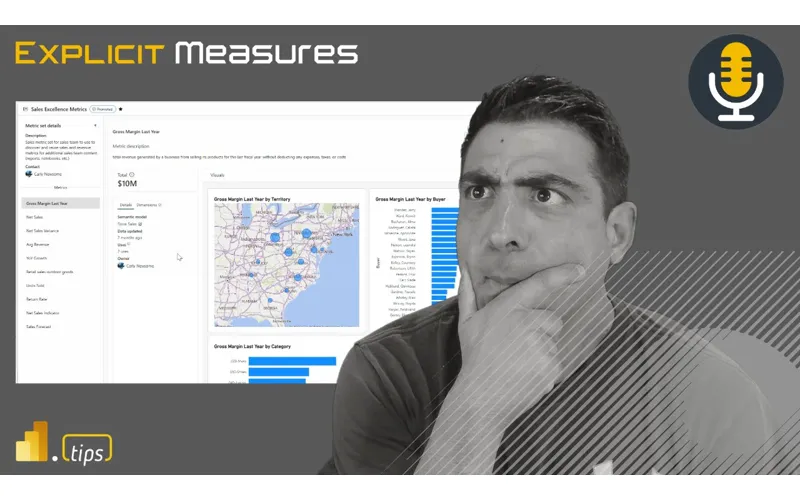
In this episode, the team breaks down Metric sets in Power BI and why a shared, reusable catalog of KPIs can change how organizations define and trust their numbers. They cover where Metric sets fit in the experience today, what it means for business users, and the practical impact on model design and governance.
News & Announcements
This episode is all about a familiar problem—every report defines “the KPI” a little differently—and how Microsoft’s Metrics experience (Metric sets) is aiming to make trusted metrics easier to define, discover, and reuse.
-
Get started with Metrics – Power BI | Microsoft Learn — This documentation walks through the Metrics experience: what Metric sets are, how users consume metrics, and how teams can structure collections for different audiences. The key idea is to reduce “metric drift” by giving business users a dedicated, curated place to find the right KPI (and understand its definition) without needing to navigate the full semantic model.
-
Announcing Metrics Sets are widely available in Public Preview — Microsoft’s announcement frames Metric sets as a centralized layer for KPI management, emphasizing discoverability, reuse, security/governance, and richer consumption experiences for business users. A notable practical detail: at the time of the announcement, Metric sets require Fabric to be enabled and creation in Premium/Fabric capacities, with plans to broaden access over time.
Main Discussion: Metric sets (and why they matter)
Metric sets are about moving beyond “measures hidden inside a model” and toward a more intentional productized KPI layer—where definitions, ownership, and consumption are first-class.
Metric sets vs. “just measures in a model”
The conversation highlights a real-world pain point: even when an organization has a centralized semantic model, people still end up recreating KPIs in multiple places because they can’t find the right measure, don’t trust the definition, or don’t understand the dimensional context.
Metric sets aim to:
- Make KPIs easier to find (search/browse a curated set)
- Provide clarity on what the metric is and how it should be interpreted
- Encourage reuse instead of reinvention
Adoption and governance impact
A key theme is that metrics are never purely technical—they’re social and organizational. Metric sets can help teams align on definitions, but only if there’s ownership and a lightweight governance process.
Practical takeaways:
- Treat KPI definitions like products: owners, descriptions, and intended use
- Start small: define a “golden” set of metrics for a team, then expand
- Use Metric sets to reduce the “spreadsheet KPI” problem by giving users a sanctioned place to go
What this changes for report builders and model authors
Metric sets don’t replace good semantic modeling—they build on it. The episode frames this as a shift in how value is delivered:
- Model authors can focus on consistency and correctness
- Report builders can spend less time reverse-engineering KPI definitions
- Business users can consume KPIs with less friction (and fewer “what does this number mean?” loops)
Looking Forward
If Metric sets continue to mature, they have the potential to become the default pattern for organizations trying to scale self-service BI without sacrificing trust. The most interesting future direction is tighter integration across the ecosystem—making it easier to define KPIs once, govern them appropriately, and consume them across reports, scorecards/metrics experiences, and downstream tools.
Episode Transcript
0:33 good morning and welcome back to the explicit measures podcast with Tommy and Mike good morning everyone welcome back to the the podcast we’re we’re jumping into a new year here we’re starting at 2025 so very excited to join the new year with you and talking about all things data Fabric and power be related Tommy how are you doing this New Year I’m good I’m still a little sad you guys may notice if you guys have not did not join us on Tuesday that somebody is not here and I guess Mike I don’t think
1:05 here and I guess Mike I don’t think you probably put it better than I can but there are some updates to our podcast yeah so we’re just making some change to the podcast this New Year Seth has decided to pursue some other endeavors which we’re very encouraging of Seth should definitely do that and focusing on family some career things and just generally pulling back some with some parts from the community so we’re encouraging him to do that he’s having a a good time in the 2025 year doing that engagement but that being said we’re going to
1:35 but that being said we’re going to change up or mix up the format here a little bit for the podcast so if you have have ideas if you potentially want to be a guest on the podcast or are interested in potentially joining us as well let us know in our forms you can go fill out our form at explicit measures podcast or sorry power. tips podcast and if you’d be interested or want to be a voice on the podcast we’re looking for potentially a third person we’re going to see how it goes here the format may change here a
2:05 goes here the format may change here a couple times in the early part of 2025 as we settle on our new format now but that being said we’re still going to keep going we’re going to keep doing two days a week we’re going to keep pushing forward with the podcast so this doesn’t stop the podcast we’re going to keep moving forward and see if we can find other personalities to join us at this this next year so with everything there’s a lot of change going on so that being said let’s move on we’re going to go into Tommy it’s a a new year here we have a new
2:36 it’s a a new year here we have a new feature from powerbi it’s released at the end of last year 2024 our main topic for today will be metric sets and the impact of what metric sets will do for your organization and your team how you build things I think this is going to change how people build things or impact how you create content for powerbi or other users of the powerbi reports and models very excited to unpack this one but before we get into that let’s just do a couple news topics here Tommy
3:08 do a couple news topics here Tommy what are your 2025 resolutions do you do you go through with your family and unpack how the year is supposed to look or make some goals or write them down no I treat new US resolutions the same ways I treat Christmas gifts if I really need it I don’t have to wait till Christmas kind don’t have to wait till Christmas thing okay so I’m a big proponent of of thing okay so I’m a big proponent of that’s like hey it would be great if I had a car off a machine I guess I’ll wait six months for Christmas no like that’s something that’s practical that I can start using
3:40 practical that I can start using today no thanks so with new user resolutions I always reflect on the year and I guess more than resolutions it’s more like more like goals shortterm longm planning but yeah resolutions like I’m gonna get on the bike three days a week things like rather than doing that I I forgot there is actually a great person who talks about this rather than trying to do those type of items it’s better to set more of like an objective like I want to get healthier that is the type of things
4:11 healthier that is the type of things that I aim for rather than like the actual activities that I’m this is going to be an area where I’m going to sorely disagree with you I don’t like I don’t like doing General vanilla level like let’s get healthier so our family does and and we do it for us I have heard and I think honestly it really works works out very well for us if you don’t write down your goals whatever those goals may be right get healthier whatever those things are if you don’t write them down somewhere and put them somewhere visible you won’t do them and we have been tracking our goals in
4:42 and we have been tracking our goals in our family since 2009 so my wife and I we go out to lunch around the New Year time frame just the two of us and we we bring out the goals we had from last year and did we achieve them and all my get healthier goals have never been achieved I never I never stick to them all the other business and financial and all the other goals I’m much better at achieving those things but one thing I’ve been talking to your point really lousy ride my bike three times a week or something along those lines H I haven’t done a good job of
5:13 lines H I haven’t done a good job of that so every year there’s always another goal on my calendar of be more active do more things and it’s it’s been actually really hard now working from home to keep that goal but as I’m thinking ahead to what do I see for powerbi what I see for fabric a lot of things are changing I’m actually reflecting a little bit this year and saying of of all the things that came out what objectives do I have around powerbi what do I want to learn from powerbi what
5:43 do I want to learn from powerbi what skills do I want to continue to hone in the fabric and powerbi ecosystem and I think right now I guess I would say I’m just want to my goal one of my goals for 2025 would be just to learn more of the breath of what is fabric I think I was feeling very overwhelmed throughout the year towards the end of the year 2024 so many new features were coming out we have userdefined functions we have now SQL databases in fabric we now have all these additional new features and it’s very difficult for someone to have the full spance of knowledge of all
6:14 have the full spance of knowledge of all of that so I might try to unpack portions of this U and absorb those new features and I think I’m going to probably Focus my attention on tools or or features this year that move from preview and actually become an official tool I think it’s good to have head knowledge of what is occurring inside a preview feature but I think as we last talked in the podcast prie features I’m not sure if we should really push them into production are they actually going to last this is one of
6:45 actually going to last this is one of the the rubs I have with data Marts it’s been out for a long time it’s never been pushed to production I’m not sure if it’s going to continue to live on so I don’t know if I would want to encourage my customers or things or other users to use those features if they’re not fully released yet so I don’t want them to build something in there that you’d have to eventually throw away yeah so going off that the idea and I I already sent you the video so you can watch this after but my kind so you can watch this after but my theme for this year if last year the of theme for this year if last year the theme with fabric was like from a
7:16 theme with fabric was like from a developer point of view the coding the integration seeing what works what doesn’t work well some of the best practices is really working on processes and like hey you’re going to be using a database or Lakehouse how do you set it up the best way because I’m already seeing like okay I’m using task flows all the time now I’m relying on them Mi just the organized things so depending on the situation of what something’s trying to be achieved what are the best processes or
7:46 what are the best processes or suggested like structure around this is interesting Tommy this is an interesting topic I think in itself if I just think about let’s just hone in on one particular area let’s just hone in on the notebooks area of fabric there’s like three different engines you can use to go run notebooks now you can use tsql you can use P spark and you can use straight python who knows that there’s going to be another language or another engine that will be able to run on top of that but that’s interesting that you meant that make that note because I’m seeing a lot of
8:16 that note because I’m seeing a lot of MIM who does a lot of blogging I think he’s out in the Australia New Zealand area but he does some blogging around these these topics and he’s finding great performance with using things like Duck DB and other engines that live directly inside python that are really fast multi-threaded but very fast and actually I’m actually evaluating like does this make sense should I be using p spark for everything or should those for only be for larger jobs and maybe I should start thinking about using just straight python notebooks for smaller jobs things that
8:47 notebooks for smaller jobs things that are not a lot of records and we’re not doing a lot of complicated things will it run faster so Tom me to your point there I’m going to add on one more goal for my 2025 goals will be more around
8:59 for my 2025 goals will be more around understanding what is the compute usage of all the things that I’m building and making sure that we optimize that I think that’s going to be a new message or thread I think a lot of organizations are going to jump in with yeah fabric solves a lot of our problems at some point you you get done building net new things and you start reflecting on what you’ve built and say we need to optimize it so there’s always this need to make it better faster run more efficiently it should be part of our process to reflect on that and
9:29 process to reflect on that and figure out what we can improve improve anyways oh yeah oh the last thing is becoming a master in real time intelligence everything to do you do I’m going to push back on here a mean I’m going to push back on here a bit do you think real time intelligence is going to be that impactful there are Industries and businesses that need real-time intelligence but looking at it I don’t hear a lot of customers asking me for real-time intelligence it sounds it what I hear the most is the business says we’d love this data to be real time and then I tell them about the price it cost like hey you’re going to
10:00 price it cost like hey you’re going to basically 10x your compute usage they’re like nah let’s not do that let’s actually just do it like twice a day okay now we’re happy so like do you really see real time being a big mover in this next year I I think obviously we’re seeing all the Investments That Microsoft’s doing and I think that the more accessible it it is I think the more the solutions or really practicality of it
10:30 solutions or really practicality of it will actually take place right where really real time has always been like hey you there’s a lot of setup in order to get that really up and running I think from a moning point of view I think now I I had a project maybe three years ago that I’m someone asked me about Real Time dating I’m like well do you have an event Hub and all and yeah and now I was like actually we may be able to get that up and running pretty quickly and have that with so less about making it like all your data is real
11:01 making it like all your data is real time but more around if I need real time the ease of turning it on and getting it working is more frictionless that kind working is more frictionless that what you’re thinking exactly exactly of what you’re thinking exactly exactly I would agree with that I think I think the fabric ecosystem does make it easier for you to get real time data into the system one thing I haven’t played enough with which I think is related to real time is custo DB or kql so I think that’s another area I’d like to invest some time in understanding I’ve actually heard some really good feedback from individuals
11:31 really good feedback from individuals who are doing real time is data coming into things they were typically using SQL before and they moved over to custo and we’re doing more data at less cost so again I’m all about the optimization side of things if I can optimize it then great but I’m hearing really good things around custo so that means I need to go research it a bit more excellent all right enough of our goals for today let’s get into our main topic so the main topic today is we’re going to go talk about the metric is it metric sets
12:02 talk about the metric is it metric sets is that’s the right name of it is that what we’re landing on yes it is officially metric sets this is an article that comes from Carly Nome and Carly was actually on the powerbi tips Channel I don’t know gosh it was almost like a year ago now announcing the feature we actually went through a whole hour long video of this topic and so the topic is now in the description and in the chat box as well Tommy give me a quick overview what are metric sets and where do you think we’re going to use these things this is pretty crazy and I’m
12:34 things this is pretty crazy and I’m really excited but really metric sets and the preview of it is really finally a way to manage all of your metrics that are being used across semantic models and reports really storing them and managing them all in one place the biggest part here I think is from the discoverability point of view where anyone in organization can go see and actually view a metric rather than having to go to the report to look at that metric they can see the definition and as the creator of the metric sets and the metrics in it you can actually
13:05 and the metrics in it you can actually set up how it’s going to be grouped by like hey we always show our members and member counts are always shown based on their subscription status or whatever that may be and that gives that high level overview this is huge from the ability not just to have that discoverability now almost putting metrics I guess more from a cognitive point of view rather than the technical on the same level as a semantic model in terms of in the
13:36 a semantic model in terms of in the same playing field it’s been elevated I don’t have to always go to the report but some of the other features here too is not just you exploring them but I can actually use a metric and create a new report off of that metric both in the service but I believe also it’s going to be something in the powerbi desktop yeah and I think this is this is where things get really incredibly powerful here I had had a number of customers we worked on where we build these really large semantic models there’s lots of tables there’s lots of facts inside these tables but
14:07 lots of facts inside these tables but if you think about what audience that serves there are needs where everyone needs to see all the tables all the facts all the dimensions but I think what you you look at here and one of the things that Karly points out here when she talks about this feature right whether it’s metric sets or kpis or calculations whatever whatever you’re thinking about here he makes a very bold statement to beginning of the article metrics are the backbone of any data strategy right if you if you think about like what you’re trying to accomplish in your business the kpi what is that
14:39 your business the kpi what is that metric sum of sales comparison of plan to sales whatever your those key data points calculations those are things that you want to reuse you want to leverage them over and over again and I don’t I think this is a really impactful portion of this because now we can carve out from this larger data model tens of tables hundreds of columns we can carve out a subset here’s a particular measure or
15:10 subset here’s a particular measure or two and here’s the dimensions you may want to put against those those tables and I think that would allow users to do a little bit more self-discovery right so it’s a bit difficult to self-discover things today currently but now with this feature you’re able to go here’s a window a narrow view of the entire data set go play with that and I think if we if we focus on like that I think this meets Tommy you talk a lot about like the the learning or the knowledge that the business users consume content from
15:42 the business users consume content from and I think in this example here this is allowing us to take a really complex thing distill it down and hand it out to people as they’re able or capable of handling more and more and more things let’s not give them all the dimensions and all the tables we can carve out metric sets for very specific an or questions and I think that would let users build smaller subsets of things on top of like the larger model yeah and I some people have asked to how is this different from the scorecard
16:13 scorecard right yeah this was the the forefather to what metric hubs really is going to be or metric sets scorecards were great and I was huge proponent of it when it came out really really pushed for in a lot of projects and it was nice but the problem was again I’m in a sense creting a link to a metric in in that case so you could have multiple scorecards that are all having the same metric being used is it synced
16:43 the same metric being used is it synced so I didn’t have a place to say hate I’m an organization our three biggest you an organization our three biggest our kpis are Etc not just for this know our kpis are Etc not just for this quarter but overall these are what our dimensions are these this is what we track and the scorecard was really kind track and the scorecard was really geared towards I have a start date I of geared towards I have a start date I have an end date I have a goal yes again this metrics now really have that high level overview where you can say if here’s the overall this is how we count members this is how we count a lead now we can then use the metrics sets to
17:15 we can then use the metrics sets to say okay what’s happening this quarter what’s happening this month but again it’s the elevation of a single place for that metric even if it is in different semantic models that’s what we would push to be the official Universal company definition of a metric and this is our number man if I had this seven years ago this would have saved a lot of headaches I I’m I know I’ve shared the story before but my biggest Turning Point towards data governance and powerbi was a lowly data
17:45 governance and powerbi was a lowly data analyst focused on the marketing team we had a leads report and it was like seven in the morning and my Chief
17:52 seven in the morning and my Chief marketing officer came up to me he’s like how many Elites do we have like I looked at the dashboard we have x amount the this month he’s like so tell me why the chief sales officer and the CEO are coming to fist in the executive room like what turns out sales also had a lead report but we counted them differently and I remember like how could that happen but again without the metric sets even if you have that gold model that has your metrics in
18:22 that gold model that has your metrics in it people are probably wanting where’s that official documentation or I’m probably going to use it in different reports right I can’t rely on a single semantic model even if it is certified to say that’s the only time you’re allowed to use that metric because odds are most people want to use a variation of that metric in their own reports maybe it’s filtered by something maybe like it’s for this particular team it’s Members Plus for only Community Based subscriptions whatever it may be but the
18:53 subscriptions whatever it may be but the base is still the Universal metric right what you’re describing there is is that a failure in the metric itself or is that a failure in the report development that you’re describing there and the reason I’m the reason I’m pointing this out is because whether it’s a metric so you whether it’s a metric so let’s talk about subscriber base know let’s talk about subscriber base right if I have a subscriber base and I’m looking where did users come from on my website or how do we get purchases from people or or user groups right there are different teams that are going to count that number differently the
19:24 to count that number differently the metric should be consistent across all teams what you should be talking about is this is the consistent metric I’m going to calculate it like this that definition should be constant but if team a decides to include certain Geographic geographic regions or Team B says I’m not going to go C cut by geographic region I’m going to cut instead by medium or how the information came to us or you did they use promotional codes or not those are all the dimensional pieces of this so
19:54 all the dimensional pieces of this so what you’re describing to me sounds like it sounds like it’s a miss and requirements mixed with did the report actually get built correctly such that the users can switch and select what they want get the answers they need out of the reporting or that the same metric I’m I’m going to push back a little because I think it’s just the complexity of creating a single or like how data is actually flown through an organization right one thing you find out is even if we have the official number in our certified model again
20:25 number in our certified model again let’s use members as that case company relies on members in some variation correct if I’m marketing but I need to see it a different way and to say hey the only place you can ever get that count like from the definition is only from that single model across everything well again some people are combining with their you people are combining with their with their own Department level know with their own Department level data which would then require a different semantic model because it has to have different sources again it’s the
20:55 to have different sources again it’s the same the initial idea is you have that base company model you may not be reporting up to like changing the definition but there’s some filtering or there’s some variation but still there’s that Bas on like a yeah but members is still the same thing regardless whether you’re one team members to the finance team is the same members as to the the sales team it should not members should be meaning the same thing whether you change the filters on that that’s just a in my opinion here is that’s that’s a
21:26 my opinion here is that’s that’s a feature of the report that’s how that team wants to count or not count members as a as a total at the end of the day it’s irrelevant how you count the members what’s what really is important is what are each team’s goal for members and are how are you tracking to that goal would you I would argue with the members argument here is like it’s actually irrelevant to understand how many members you have unless you have an objective of a number to get to then
21:56 objective of a number to get to then it actually starts meaning something and then you could actually say you can Define based on the goal what is a member right a member is someone who has actually paid for something in the last three months or six months that whatever that definition is that should be consistent across all teams and if someone wants a different version of a member whatever that means I would argue you don’t call it a member you call it something else change the name of the measure so that it’s specific to the need of whatever that team is
22:27 the need of whatever that team is talking about like I Financial member might be different than an actual member and then you actually start changing the definition so if it’s if they’re physically a different definition for a metric you change it and then that becomes its definition but again I think this is this is where I think metric set metric sets are going to start coming into play here because when you create a metric set you actually have the ability of on the creation of it you have the ability of entering in like the name of that metric
22:57 entering in like the name of that metric set you can add a description of the metric set who to contact I think Microsoft is in particularly in this feature it actually feels like we’re talking about like a data dictionary here’s here’s actually some of the documentation that we really need in order to support users actually using our semantic models this is what we need we need to be here’s a handful of measures here’s a handful of Dimensions this is what it means this is the definition of it and to your point Tommy right let’s go back to your example of members if we’re thinking about members
23:27 members if we’re thinking about members of our organiz ation or members are they paying for things you could have two different metric sets one metric set talking about the members as it relates to finance another metric set relating to members as it relates to sales and marketing so that way they can count them differently but you’re still looking at the same semantic model and you may even be using two different measures in both of those those instances so anyways I just some thoughts around that I I think there’s just some Nuance there about how you track it and how you you you metric
23:58 track it and how you you you metric are intended to be this a dictionary yeah Donald I was just going to say this one reading your comment here Donald I do I think the metric that is is meant to be the dictionary of facts Dimensions with some additional descriptions and information around them to help users understand these are the kpis are these the metrics that we should be using so I I think we’re on to something here and something to push forward but Mike let me ask you
24:28 Mike let me ask you how do you see me the metric sets in an organization from the adoption point of view obviously we if to your point if metrics are the heart of the organization where everything starts what the initial assumption here is well when we start our adoption we start with metrics and then metric sets where how do you see this getting integrated into the initial culture of an organization yeah before we get talk talking about the culture and like the process and the people part of this thing I have a couple more
24:58 of this thing I have a couple more points here I’d like to note here one of them I’d like to just call just before we get to that one so can we Del that conversation right there think that’s good one thing I do want to point out here is let’s talk about where can we use this like one thing I’m look I’m looking through some of the documentation here is one one thing that comes to mind here is the licensing requirements what what license do you need in order to use these metric sets so if you’re listening to the podcast right now and you’re saying oh metric sets sounds interesting I have large semantic models I want to start shelling out metric sets to my team what does
25:28 out metric sets to my team what does this look like the metric set requirement is there depending on what you’re doing with metric sets requires different licensing portions of this one so for example if you want to author and share metric sets you need to be a premium workspace so that means a premium per user or a fabric skew and you could also throw in there the a the eem and the P skes but I think those are going away anyway so I’m going to primarily talk in premium per user
25:58 to primarily talk in premium per user and a fabric skew so authoring and sharing them are required to have premium or fabric when you go into viewing the metric sets so view metric sets and metrics you need a minimum of a powerbi premium license which is this is interesting to me because they don’t really call out a fabric workspace so I’m not sure what they mean by this one I would assume that this means a powerbi premium license which could be Fabric or
26:29 could be Fabric or a yeah so you must have a premium be enabled to use metric at all so I guess the example what I’m saying here is if I’m trying to view a metric set I can’t come in as a pro user like a premium per user can’t create a metric set and then share that to a pro user I think that’s what they’re trying to say there I
26:49 what they’re trying to say there I believe if a user has access to a metric set they would be able to utilize that inside they could view it inside a workspace that’s theirs now this again this is where I think I My head goes immediately when I see this I’m thinking oh shoot now I’m going to have a semantic model workspace I’m going to have a reports layer workspace do my metric sets go into my report workspace do my metric sets go into a separate workspace that is just metric sets and not the report layer I I need to un I
27:20 not the report layer I I need to un I need to unpack this a bit but it sounds to me that the the workspace needs to be attached to something that is premium in order for users to see this one if they are a premium per user they can just see them without having to be attached to the workspace however if you don’t have a premium per user license you need to attach a fabric a premium capacity to the workspace and then give them access to the workspace so that’s something I need to test a little bit on how to unpack that and then finally here is you can use co-pilot to help you summarize a
27:50 can use co-pilot to help you summarize a metric or metric set Coop pilot only works in a fabric F6 64 skew or higher it also this is interesting co-pilot summaries for metrics and this is maybe a mistaken their documentation but they said a co-pilot summary for metric will work in a powerbi premium workspace so premium per user could use co-pilot or Fabric’s f64 or greater capacity my impression was copilot didn’t light up
28:20 impression was copilot didn’t light up for anyone unless it was an f64 so it’s interesting to me to see this in the documentation that the powerbi premium workspace is usable able with fabric co-pilot or metric sets that’ll be interesting I’m not sure if that’s actually a real feature is that right I don’t know I don’t have I’ll have to confirm that but for those of you who are listening in the chat here’s the documentation on the licensing requirements any thoughts that stick out to You to You Tommy yeah I think the biggest part here too is I’m not sure why this is
28:50 here too is I’m not sure why this is It’s TI of fabric because I know they’re obviously retiring the premium capacity so basically Microsoft just going is going to be fabric fabric fabric is everything that premium is and and more right and so they’re basically saying well in in the near near term we’re pushing you to S there is a deprecation of in 2025 you will not be able to purchase a powerbi premium P1 skew anymore I don’t know what’s happening with the a or the EM skes no
29:20 happening with the a or the EM skes no announcements has been made or any changes to that one but I don’t know why you’d want to buy an A or an em skew anymore only if I’m in if I’m an administrator if I’m building any embedded or isv type Solutions dude I’m only going to use fabric skes anymore at fabric skes hold all the licensing you can embed internally you can embed externally it has all the features you would never need and let’s be frank where’s Microsoft building all the new features all the new features are coming to the fabric skew you’re not getting new features built in premium P SKS or a
29:51 new features built in premium P SKS or a or em SK there’s no features being built I haven’t seen anything announced over the last 6 months of any new featur there so I would not use them anymore or i’ plan on migrating off of them into something else and migrating my opinion migrating from an an aew to an fcq really easy not very hard hard yeah so a few of the things Metro sets can do and I think this is where a lot of this use case is going to be besides the data dictionary side which is all manual at this point if I
30:22 is all manual at this point if I want to add a description on the metric set co-pilot yeah little bit manual if yeah sure but I’m saying as the the yes fine so again for those who are wondering metrics the metric set is a set of metrics so in order for me to add something here I basically create a metric set and then I have multiple metrics in let’s talk more about what the metric is the metri che specifically is dimensional columns columns that have text in them and then a handful of measures right so it’s it’s things you
30:52 measures right so it’s it’s things you want cut the data by and then the calculation that you want to use with those cuts really the met the metric sets is a collection the the required thing is a the metric itself the measure yes the fields are optional like diens are optional I don’t have you could just give them a kpi that’s just like a total like yeah yeah here’s here’s month to date or total yeah so the metric set itself could just be single measures that are used you can show how you want to view it by but really the thing that someone’s going to see is
31:22 thing that someone’s going to see is okay I’m going to look at the community metric set here are the set of measures for them so do to speak so but the main the heart of that is the different measures in there I have to feel though when I look at this feature though only adding just measures to a metric set it seems it to me it seems a bit limiting now I you can add the fields that’s but I think that’s that’s the power of what we’re talking about here that’s that’s what I feel like I would want to be able to start handling and again I’m not going
31:53 start handling and again I’m not going to probably add all Fields this is an area where you probably have to figure out what is the need of your audience this is this is a new feature I think honestly people are not used to thinking this direction like do I give you the membership count by year by year and month like what is the what is the metric that someone else would want to look at a lot of these things are comparing well I need to know not only what is the metric what it is today but I also want to compare that metric to what it was like last year or prior year period of time or what’s my
32:23 prior year period of time or what’s my percent change to last year I think those calculations are also very relevant to put together here and so I still don’t have my mind formulated around how I’m going to stitch those standard metrics together but everyone who builds a report they’re always trying to compare it to some other time period typically so I think building a metric set without some sort building a metric set without some time period is probably going to be of time period is probably going to be minimally useful at this point we’ll we’ll have to see where this is going to land and I have to do some more testing on this to see what we
32:55 testing on this to see what we get get so I and I think here too like the the data catalog of the dictionary part here’s here’s fine the I want to talk about that other case of the using the metric so I don’t know if you played around too much with this but it’s actually pretty neat if I’m viewing the metric set I can basically say hey I want to explore yes the like these measures or I can create a new report office this feels like an exploration some degree like when you do the exploration item
33:26 like when you do the exploration item that you have in the workspace hey here’s my semantic model I want to build a table or a matrix give me some simple table information oh and by the way I’m using geographical information let’s put this on a map or something like that as well like that’s what the example they give us here is but I like that experience I think people need are overwhelmed with the entirety of the entire model and so they’re you they’re they will be helpful for them to see a metric set that is just a handful of things that they can play
33:58 with and it’s actually now in powerbi desktop or I think it’s going to be that when you click on the one L data Hub drop down to get data it’s now the second option in the menu it’s which is interesting that they put it up that High in terms of like being able to connect to it and was testing this out with I’m like all right let’s say I already had data in in a model I’m building and I want to add like the a metric to it well you can basically choose the metrics that you want to add and then you get that option to choose those fields to your point because I’m
34:28 those fields to your point because I’m look it’s still again tied to a semantic model right so it’s not no matter what you’re not creating a metric that is no longer in a sense has any lineage to an initial semantic model which I think to your point what we talked before is an essential part here quick question and I don’t want to let me know if this is diverting but with this my initial thought here is this may change how we actually build some of our semantic models
34:58 some of our semantic models from a certified point of view what and this what way do you think your those certified models will be changing because I I agree with you I think I think metric steps will will need to so in the past we’ve been considered of okay here’s a semantic model we need to think about building this model in a way that is easy for our external users to consume right building a very clean Dimension table very very clean fact tables adding a lot of extra descriptions to things to help them analyze that information but also I’m making more when I build models I’m
35:30 making more when I build models I’m finding that building domain specific models are better than just building one monolithic model for everything because users get confused the models get too large it gets very difficult to manage so if we can carve out like hey I know these pages of reports or these types of
35:45 these pages of reports or these types of reports are required for this single domain of data it makes more sense to locate domains of data your point here Tommy with metric sets metric sets could carry the weight of the domains and I could have one larger semantic model under the hood still that large semantic model will come with the complications of it’s big there’s lots of things in it you could break stuff like you can’t you can’t break things in it so that being said how do you see this metric set changing like what changes would you do in your model building yeah to help
36:17 in your model building yeah to help metric sets or why are you what what changes are you thinking of I guess is what I’m trying to go after and I think really relying on the metric Sy is a start right so right now again we have those certified semantic models that we’re also one building our main metrics for the company there but also where’re we know that from a manage s Service people are going to be building additional reports from so what happens usually is we have that model but we need to now add additional things because we need to report on
36:47 things because we need to report on different things so there’s a a lot of things in the model not just the metric not just only the the minimal to define a measure or the metrics but it’s all the other field that someone may also need to expand on well with the metric Hub we can again have this core definition of what a metric is have obviously whatever those necessary fields that you would Group by or filter on but keep it very minimal and what really happens there is you can
37:18 what really happens there is you can create a more and I’ll say concise or compressed semantic model that’s really only meant for the exploration it’s really meant for viewing so like if I want to build a generally report thing or a quick summary view I still have good amount of other fields and descriptors but it’s not I think with a lot of additional information that we always have in semantic model for in a sense multiple use cases right so again the idea here is you could still have your other semantic models
37:49 still have your other semantic models that are more for the the purpose of those are for report building right those are for each and every workspace and team to build off from but these metric cementing models are really the core for the organization for here’s our cord metrics you can view and if you want to say by date you want to look at buys the customer fine but it’s only including in sense companywide
38:19 descriptors I I’m gonna what you describe to me makes sense I totally agree with what you’re saying there I think a lot of requirement Gathering and understanding of your business is required to get to that step I think most organizations are not that mature and would have the ability of being able to oh I know I need these 10 or 15 metrics to be applied in this metric set most organizations I do not think are capable of being able to put their finger on
38:49 of being able to put their finger on those handful of metrics that are what they require in a Enterprise certified metric set base so I think my opinion here that’s an idealistic look or lens on this IDE it would be great if we all could get there to that level at some point but in reality I don’t think that’s possible I don’t think many organizations are prepared or have the rigor that they need to do that now I’m not disc crediting all organizations because I know there are some out there that have a lot of rigor around their metrics their kpis and how they distribute data but my opinion is
39:22 distribute data but my opinion is you’re going to need to slight slowly roll this out you’re going to need to like pick and choose a little bit of this and you’re going to to iterate on these metric sets multiple times push some dimensions in let them ask for what they here’s what we have there’s going to be missing Dimensions there’s going to be missing measures or or metrics that you’re going to need to add to it going to need to be an iterative process working with the business to continue adding things in there or if you’re a department lead or a team lead right you’re going to have to work with your team request what they need and try and figure out how to bundle these things up and push them out
39:53 bundle these things up and push them out there one thing that comes to mind when I think about the whole metric set space though is every time you create a metric set we’re now creating another item or element or artifact inside the workspace and if if we didn’t have enough items in the workspace already this is now just proliferating like think of this is like we have the Master model and each one of these metric sets are a mini model a smaller window of the entirety of the model this could mean I could have 10 or
40:23 model this could mean I could have 10 or 15 additional little metric sets that I’m just handling specific purposes for inside a workspace so I’ve just taken a single semantic model and now I’ve I’ve made 10 15 of those things and on top of those metric sets people could build reports on top of those metric sets so imagine I have a centic model three metric sets and on top of those three metric sets we build three more reports I’ve now multiplied that number of artifacts by a factor of was it nine
40:55 artifacts by a factor of was it nine we’re going from so what I just in a very simple way like this is creating a proliferation where we’re literally like blooming everything that’s inside the workspace and all this hinges on that model and so this is where I have the caution for myself here is if I’m going to make changes that to that main semantic model I really need to understand the impact of my change like if I’m changing this measure that measure could have an impact to multiple
41:25 measure could have an impact to multiple metric sets those multiple metric sets could be impacting multiple reports so one change at the semantic model level has a huge impact Downstream now because now we have multiple things depending on it nothing goes worse than having a semantic model change that changes all your numbers across all these metric sets and now everyone starts questioning your numbers so I think this is going to actually put a lot more rigor around the need for certified semantic models I think it’s
41:55 certified semantic models I think it’s going to be very very important that we do that I don’t know if we have the lineage that we would want here and Tommy I think this is a need that Microsoft should start providing us if I change this measure the only thing that I’m aware of is the semantic link Labs has the ability of saying pick this semantic model and it will find all Downstream interactions with that semantic model like down to the visual level I think so I think we’re going to
42:26 level I think so I think we’re going to need more notebook type tooling that will help users to understand here’s my semantic model and I’m going to change this this singular measure where is that measure used in everything that’s Downstream and that’s going to have to be part of your certified process measuring the scale of the impact of the change but that that’s that’s just where my mind goes from an administrative side of of things I love the feature I like where this is going semantic link
42:57 where this is going semantic link Labs helps out a lot with this identification of where things are and what’s relying upon what stuff but you what’s relying upon what stuff but have to get schooled in what is know have to get schooled in what is semantic link labs and how do you produce that in that output so you can use it I love it it’s great it also adds a lot of automation to like I can regularly test things now with semantic link Labs but man I’m stepping back at this going there’s a lot here this could really break a lot of stuff very quickly yeah and I I think I will kind quickly yeah and I I think I will close on this to where do we go from of close on this to where do we go from here then because obviously there’s
43:27 here then because obviously there’s going to be that additional complexity again with all these features Microsoft’s releasing and as cool as is that I can start playing with it again there’s only four or five pages in the documentation about metric Hub right now or and they are pretty standard on crate use it and an old article to scorecards for power aomy and that’s a basic basically it from a governance point of view from really that deployment point of view that’s I think where the biggest gray area is
43:59 think where the biggest gray area is creating it super simple and yeah you can start in a sense deploying that right away but to your point Mike and I think this is what like a lot of things in fabric but especially something like this it’s so easy to create but do we have we want to set it up right the first time right yes and no like I’m not I’m not on the I’m not on the set up right the first time you’re never going to know all this this feature is brand new it’s in preview like there’s no way to set it up the right the first time it’s not possible you’re going to have to make adjustments
44:29 you’re going to have to make adjustments what I’m what I’m trying to do is I’m trying to install something or build something that’s going to have minimal pain coming out of the gate right so I don’t really I don’t subscribe to the area of things are moving way too fast
44:40 area of things are moving way too fast in in the powerbi space to say you’re going to do it right the first time I don’t even want to use that in my part of my vocabulary rather I’m saying look I’m looking for the large pitfalls where do I see this potentially causing a lot of extra friction for me and as I am an admin and user of a lot of these these areas I what I don’t want is I don’t want a whole bunch of like HEC de coming into building these new things so yes very interested to try them definitely going to get my hands wet with it but I’m not looking to jump in and make a
45:10 I’m not looking to jump in and make a bunch of mistakes at the at the very beginning so I’m just trying to look for where do I see large amounts of friction where do I see areas of this tool that are going to be like I need to think about this first before I really roll it out so again it’s in preview it’s just out recently I think Community needs to Rally around it a bit more communicate more about how to use it where they’re finding value with it and I think I think it it serves a purpose I really think it fits a need here that we have in PBI that will be very useful for us in the
45:41 very useful for us in the future so it’s just very early days right now the community needs to have some more blogs and articles and you some more blogs and articles and where’s Kurt ber when you need them know where’s Kurt ber when you need them Kurt come on on here give us the the one two of metric sets how should we use these things what should we be thinking about what’s the checklist we we now need a metric set checklist from Kurt on data goblins to give us like all the things we should consider when we talk about metric sets I think we need more articles like that from the community because Microsoft’s not going to provide them Microsoft’s going to provide the tech here’s the tech this is what you can do with it the community and people
46:12 can do with it the community and people in the industry that are using this stuff needs to say hey or here’s the bounds of what we say is what you should be considering and thinking about as you deploy this stuff th% and honestly be because I think already the the the current version that it’s in would this be something that I’m telling the CEO about no but I’m would absolutely encourage to at least have like we’re gonna call it a beta feature like a preview feature in our
46:43 like a preview feature in our organization right yeah i’ build an MVP around it I I would look to see like I don’t think this I don’t think this I think the the amount of effort that was spent to get metric sets working from the Microsoft team is enough time like Lally they started they announced it in March of build I think the build conference is when they announced it in March or March or April time frame they announced it then it took them entirely all the way till November to really officially release it and get it widely available that’s a lot of development
47:13 available that’s a lot of development time that Microsoft produced to get to that stage to me that tells me they’re committed to making sure this feature works and gets out of preview so I’m hoping that they continue investing in this this continues to becoming more of those common elements one one thing I did not actually note here and I didn’t see here is I wonder if the metric sets can be part of an org app or the workspace app that’s one area that I looked at and thought this would be interesting if I could get that same
47:43 be interesting if I could get that same metric set experience inside an app that I publish to people so I don’t really know where that’s going to sit yet I don’t I haven’t seen anything in the documentation that says those things should be added there but in my mind if I’m like if I want to really use metric sets I want them to be in the org app or a workspace app that makes sense to me that that they should be they should be there and I just tested this out too recently and for whatever reason I am not seeing in the or in
48:13 reason I am not seeing in the or in the a new org app the metric set from that workspace which is a little interesting well and and I like this the other thing I would also quickly note here as we wrap up here one of my final thoughts is I think metric checks are also intended to be used in other places beyond the scope of just a report or a REV visual so one other other area you’ll see here if you go into the documentation around use and monitoring of of metrics you can see the usage of them and or use them in Microsoft fabric
48:43 Microsoft fabric notebooks notebooks will let you so if we think about things we may want to pull into our notebooks from an analysis or a data scientist or this is going to help me bundle or package a portion of my semantic model and give it to other team members to analyze inside the notebook I think that’s really important notebooks is becoming the Swiss army knife of everything that you couldn’t do in powerbi like desktop or in reports notebooks can do a ton of stuff and so while I I can’t expose the metric set in
49:13 while I I can’t expose the metric set in an or G app I can put a notebook in the OR app so you could take the metric set build something with it put it in a notebook and produce a readon version of that notebook that you can then give out to people inside the or Gap so yeah you can’t Direct irly put it in there today currently that’s not part of the vision I guess right now but there’s no reason why you couldn’t have an or Gap attched with a notebook that has the metrics in it so that again this is another area of like again the the lens the layer of the onion goes deeper as we think about where we can utilize these
49:44 think about where we can utilize these things yeah another use case for our Senpai the cementing Li Labs man so I’m really excited about this I think this is what scorecards always wanted to be be and I’m really excited to see I think where this takes organizations and how they actually change their process and also the that adoption point of view so love it I’m so happy this is finally finally a available to start working with and test out there is last thing I’ll call out
50:16 out there is last thing I’ll call out here is they’re also calling out the use of apis so metric sets are fabric artifacts and you can use the public apis for fabric artifacts to to use the the metric set in the the metadata there is some caveats there are definitely some limitations here as well so you’ll need to read that in the article as well but there is some API access as well so I need to unpack more I need to figure out how this is going to pair up we didn’t talk about on this podcast but there is a link in
50:46 this podcast but there is a link in if you’re using your traditional U metrics you can also link those to power automate I wonder if metric sets will also link to power automate at some point in time as well I’m assuming so thing because it’s I always love these things when they’re updating so quickly they had they still do have the scorecards documentation but yeah that power automate feature I think they’re working on power automate and Metric Hub which would be interesting that would be really interesting to see how that would impact things there if you could
51:16 impact things there if you could have a metric set running and then when it hits a certain like for example a single metric hitting a certain number then you do something with a power automate but it’s interesting the metx Hub is containing the metrics and power automate feature and when you talk about scorecards it still also talks about metrics and power automate so it feels like it’s going to be integrated but there’s no official documentation on it yet we also hope I like the the integration of power automate in all the power Bings anyways so I would
51:46 the power Bings anyways so I would encourage that as well you can take it from us here Microsoft you can tell what we what features we would like to build in the future but that being said you’ve burned through a good hour with us we appreciate your time as you’ve listened to us chatter around the new metric sets that have been released from Microsoft powerbi I hope these are giving you some thoughts on how to use them or understand a little bit more where they might fit in your business they are currently in preview so check out the documentation that we’ve linked to in the video there are some
52:17 to in the video there are some considerations you want to think through make sure you read the limitations on the metric sets themselves and let us know if you have additional questions from the podcast if you start testing out metric set give us a a hello on the the form under parb tips podcast and let us know if you’re using them and if what you’re finding value from the metric sets with that being said we only want to just say one last thing is we don’t do any advertising we don’t push the podcast at all it’s up to you the community to push it to people you think is valuable so if you found
52:47 you think is valuable so if you found value in this episode or you had enjoyed this podcast please share with somebody else let somebody else know either on social media or share your thoughts around this topic we’d love to have your feedback and comments post it out on social media and talking about the episode that being said Tommy where else can you find the podcast ah you can always find us on Apple Spotify or wherever you get your podcast make sure to subscribe and leave a rating it helps us out a ton you have a question idea or a topic that you want us to talk about in a future episode head over to
53:17 about in a future episode head over to powerb tisp podcast leave your name and a great question and finally join us live every Tuesday and Thursday a. m. Central and join the ation all the power tips social media channels awesome thank you all very much and we’ll see you next time [Music]
Thank You
Want to catch us live? Join every Tuesday and Thursday at 7:30 AM Central on YouTube and LinkedIn.
Got a question? Head to powerbi.tips/empodcast and submit your topic ideas.
Listen on Spotify, Apple Podcasts, or wherever you get your podcasts.