
Defining Key Results – Ep. 289
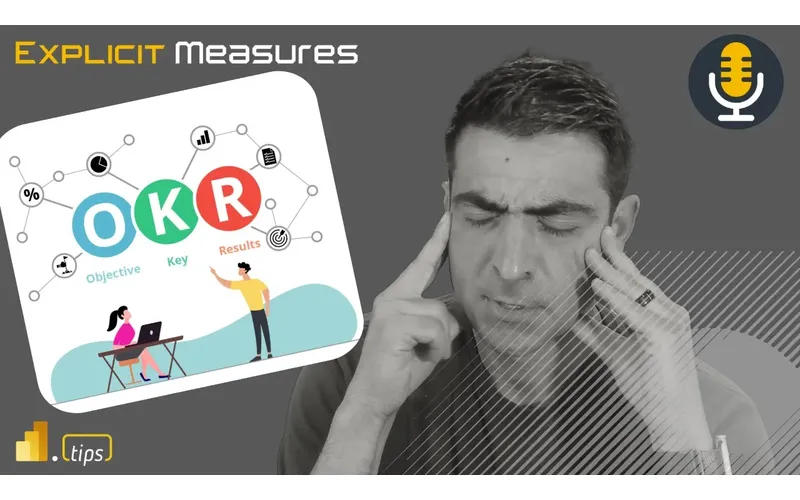
Microsoft’s Power BI strategy documentation is a great starting point — but the value only shows up when you translate strategy into something measurable. This episode focuses on defining key results as part of tactical planning, using OKR-style thinking to turn vague goals into outcomes you can track, communicate, and execute against.
News & Announcements
-
Step 2: Define key results (Power BI implementation planning) — The Microsoft Learn section the team is walking through, focused on writing measurable key results for your BI strategy.
-
Suggest a topic for the podcast — Got an idea or a question for a future episode? Drop it here so the team can add it to the queue.
-
PowerBI.tips Podcast — Subscribe and listen to the Explicit Measures podcast episodes and related content.
-
Power BI Theme Generator — Build and download Power BI report themes using the PowerBI.tips theme generator.
Main Discussion
This episode continues the team’s tactical-planning series and leans into a deceptively hard question: what does success actually look like in a BI program? The conversation centers on how Microsoft updated parts of the guidance to better align with established planning frameworks (like OKRs), and why consistent definitions (goals vs. objectives vs. key results) are essential for communication and follow-through.
Key takeaways from the discussion:
- Key results are the measurable proof: they aren’t aspirations — they’re the evidence that an objective is being achieved.
- Language alignment reduces friction: inconsistent definitions create cognitive dissonance and slow down decision-making.
- Borrow proven frameworks: OKRs and similar models exist because they scale across teams and keep priorities clear.
- Make it easy to apply: practical tables/examples help teams translate abstract strategy into day-to-day execution.
- Feedback loops matter: when guidance is unclear, push back — improvements can happen fast when the community engages.
- Communication is the real constraint: if you can’t explain success crisply, it’s nearly impossible to delegate and deliver.
- Treat BI like a program, not a project: strategy is ongoing — key results keep the work grounded quarter over quarter.
Looking Forward
Pick one current BI objective and write 3 measurable key results (with an owner and a target date) — if you can’t, the objective isn’t defined well enough yet.
Episode Transcript
0:30 hello hello and good morning welcome back to the explicit measures podcast with Tommy Seth and Mike good morning good morning good morning and a happy Tuesday gentlemen happy happy Tuesdays to you for those of you who are wondering why did the podcast start a little bit early today well we have we have some people who need to get stuff done today so meetings have been shifted people not feeling good so we figured we’ll knock this one out here fairly quickly and get this started a bit early so for those of you starting at we apologize you can watch it on Fast
1:01 apologize you can watch it on Fast replay but yeah cont popular belief we all have jobs believe it or not this is not the only thing we do and the podcast doesn’t really Reen any money so we this is like all pro bono so when we can get up even earlier just to make sure I enjoy that podcast I love getting up earlier let’s do that January January’s been good for me man I you January’s been good for me man I been the the getting up early and know been the the getting up early and earlier and earlier and setting up with the day it just means as as old as I am
1:32 the day it just means as as old as I am I I crash earlier too you’re like okay kids get in bed I’m done yeah it’s I don’t care what you do I’m going to bed it’s no longer getting the kids in bed priority it’s like getting myself in bed kid kid yourself to bed come daddy in no we’re not we’re not whining tonight dad just got to go got to go toly I’m not in for that tonight okay that’s funny yeah any other intros or open ERS today Seth I think you’ve got a
2:02 ERS today Seth I think you’ve got a couple comments around we’ve been doing this we’ve been doing the let’s let me introduce the main topic here and then we’ll come back to this we’ll a little did a little news here we’ve been going through every Tuesday the bi strategy we’ve been working our way through the documentation that Microsoft provided awesome documentation by the way lots of good stuff and we’re going to be tackling today tactical P tactical planning and inside that section we’re going to talk about defining the key results but in lie of that some major changes have been
2:32 that some major changes have been happening in the documentation all thanks to our one and only Seth bow I don’t know if we’d say that I let’s all thanks thanks to Round of Applause Here We Go Round of Applause for Seth who tortured himself and listened to this podcast so so no so on on Thursday last week I I briefly mentioned this but I I want to lean into it a little bit more in this one so as Mike is Mike as you said said we’ve been doing the adoption road map ton of time spent in the
3:04 road map ton of time spent in the technical planning here and I think it’s really valuable because we’re just throwing different ideas we’re we’re raising to to light for our listeners that there’s a lot of great knowledge sharing going on and if you joined us last Tuesday I I started with a bit of a rant that there was a lot of cognitive dissonance so the analogy I used is when looking at a power VR report page if if we’re W looking at visuals that just don’t make sense or they’re really challenging or hard to
3:36 they’re really challenging or hard to understand because they’re not part of our dictionary they’re not part of like how do I I read the data out of this thing every time you go back and use it you have to think a lot about what it’s telling you and that’s where I found myself with the documentation and I I finally lost it last week because it was it was creating its own definitions for goals goals and objectives and when we compare those against Frameworks like
4:06 we compare those against Frameworks like ogms or ogms or okrs they weren’t aligning and this was creating this like kind the the gears in my head were clanking together the in tension kept rising and Rising like CLI click CLI click and I I I expressed my frustration and the path I would CH choose which is Alig Alig passion it was passion on the mic it was that’s what it was passion aligning
4:36 that’s what it was passion aligning to Frameworks that exist because I think having spent a lot of time learning these Frameworks I realize and see how powerful they are in organizations so Kurt heard this and not only reached out to Microsoft but started implementing changes in the documentation almost immediately reached out to me on LinkedIn and as of like coming in this morning it’s it’s like reading a completely
5:06 it’s it’s like reading a completely different set of documentation in my mind like all of the new stuff we were going to review and talk about today was in the same Frameworks that you’ll find in a tool that Microsoft uses or created called Viva engage it’s the okr framework yeah what is so fantastic about this and why I’m excited to now jump in and talk about this is every aspect of this is now reinforcing for people not familiar with these Frameworks not only what tools they can
5:37 Frameworks not only what tools they can use to go like learn more about them but that you start to apply these Frameworks within your own business if your business doesn’t do them right and and this is transformational stuff so we’re just talking about like the nitty-gritty of technical stuff and strategy and planning and in all of these areas within this documentation but now it’s it’s coupled together with really strong
6:07 it’s coupled together with really strong Frameworks that have been around for a really long time and it was for me the gears were oh we were flying this morning guy it was just man this is perfect we’re talking about key results yep that makes total sense and then we’ll get into it later but there’s a table in here that is beautiful it’s exactly what you would want to present to people because if you’re not familiar right like hey I know we’re talk SE Seth ranting and raving about objectives and key results that doesn’t mean anything it’s a a real life example of here’s the
6:37 it’s a a real life example of here’s the objectives I’m talking about in this documentation here’s the key results and here’s how you go implement it and it just guys I I love it love lots of love to to Kurt and and the fact that all these changes happened so quickly in the span of a week is just utterly amazing and maybe this was meant to happen too in all this framework because time and time again I think we’ve all been part of this we’re we’re really have meeting and you at an organization
7:08 have meeting and you at an organization with a team working by yourself if you have not defined your goals and you have not truly defined what that actually means not just I have a goal I’m GNA lose 10 pounds or whatever your New Year’s resolution lose more than 10 that’s for sure yeah but whatever your objective is and then trying to communicate that with someone else that just truly just goes back to the raw fact of your ability to communicate and if you cannot communicate with someone else how in the world are you going to achieve whatever you’re expecting to
7:38 achieve whatever you’re expecting to achieve because all words have meaning all of this is so important I I I really
7:44 all of this is so important I I I really just go back to all this whole framework this whole tactical planning strategic planning it all starts with what are we really trying to achieve here if we’re going to be do all this and spend all this time here whether we’re talking about it or you’re going to organization at when if we’re at the end end quote unquote why are we celebrating and if we have not defined that or can’t Define that across a team there’s no success going to happen yeah the only the only cognitive dissonance dissonance that now
8:15 cognitive dissonance dissonance that now exists are people who are listening to our previous podcasts where our words don’t align directly to the documentation anymore and I’m okay with that that just means they have they like are these guys really the journey am I am I in the right Place yeah oh I see what you’re saying they’re going to go what are you talking about I see he results here why is he so angry Seth is crazy crazy he’s talking about stuff that doesn’t even exist it used to exist and now it does not so two two things out of this one Kurt thank you very much
8:46 out of this one Kurt thank you very much for aligning on a direction of like okrs you making the messaging very clear I think this clarifies a lot of what’s going on here and I think this is great that you’re using the same messaging we’re seeing in other like fiva goals other places like metric from powerbi like all these things seem to be aligning better and in general this feels like yes the right direction so thank you very much for the changes we’re really looking forward to jumping into the article then so with that let’s any other openers or any other new announcements on things just going to
9:17 announcements on things just going to take a quick look over here at the blog. par. com to make sure nothing new has appeared for anything interesting I do believe there is there Microsoft is heavily pushing the Microsoft fabric conference coming up this March so if you’re not engaged that’s in Las Vegas this year it’ll be March 24th 25th and I’m sorry it’ll go through the 24th through the 29th the actual I guess sessions I guess what would be the the conference is the 26th
9:48 be the the conference is the 26th through the 28th and then if you want some precons the 24th 25th and 29th are also precons and postcon that you can go through to learn more and get additional information around Fabric and things as well so well so stay tuned there’s more information coming up but that’s like the main focus here for the next I think couple months Microsoft’s really going to push that conference so if you’re not haven’t got tickets go ahead and see if you can go get some tickets I wonder if if we could since Kurt’s doing so many good things I wonder if we can go get some discount codes from Microsoft hey hey Microsoft I don’t know if there’s anyone listening from Microsoft which is there
10:18 listening from Microsoft which is there probably like one of you guys anyways reach out to us we’d love to give away some discount codes to the podcast if you if you can for all of our Avid listeners long-term supporters we’re we’re pushing we’re pushing the okr framework some discount codes for vivage exactly that’ be great yeah there you go love the idea Mike that’s what the co-pilot told me to [Laughter]
10:48 [Laughter] say it’s so good it just came up and it’s writing my own emails for me now I just you I have I have I have prompts now know I have I have I have prompts now for right this email for me and then it says please go to the Microsoft FB conference sponsored by co-pilot thank you for listening to the podcast excellent well with that let’s get into our main topic for today so the link for today here I’ll go grab the link for everyone to to go follow through with on the chat this is the section we’re going to talk about today
11:19 section we’re going to talk about today in in our podcast we’re going to talk about defining the key results from the Tactical planning section of the implementation strategy so initial thoughts here let’s Seth you’ve been having some good thoughts already let’s jump in with some of your initial thoughts on the this next section called Define the key results I think he starts it off well and we may have rehashed some of this towards the end of our our previous episode but but ultimately hits on the three ke key points right
11:50 hits on the three ke key points right which we’ll we’ll dive into demonstrate progress and I think there’s even a little warning thing in here this doesn’t have to be like a full ramp out right like this is this is just incremental we’re just trying to find incremental ways to in improve the business improve an area keep it small like very rarely is this going to be like yep we’re all in and like all the sudden 20 resources are are all at everybody’s disposal and we’re just going to crank this stuff out in a day yep so but then demonstrate
12:23 day yep so but then demonstrate progress right like we’ve got to understand what we’re going to do there’s got to be a strategy behind how we’re going to execute and that’s where okay our framework’s broken down in here and then ultimately there’s a recycle like or a reset just keeping that continuous Improvement theme in mind you’re going for short you theme in mind you’re going for short quarter by quarter know quarter by quarter Evolutions where you’re re-evaluating whether or not like are we on the right track do we need to tweak what do we accomplish what do we what did
12:53 accomplish what do we what did we still need to finish up where are we going Etc I think it behooves us if I think that’s the right word Bo us to kind that’s the right word Bo us to touch on key results because on the of touch on key results because on the idea of this because we might have touched on it it’s already in the documentation and I’ve noticed that it’s easy to see it’s hard to create and just talking about really what a key result is because I think a lot of times we try to boil the ocean with key results and I’ll give an analogy that’s actually from the measure what matters book this is where the whole okr
13:24 matters book this is where the whole okr framework came out yeah and the idea of how do the okr how does the okr framework really work because it becomes like a trickle down effect and I’ll use a great analogy again from the book but also what a good timing we have the Super Bowl coming if you had an objective and you were the owner of a football team you had an objective the objectives is to be one of more successful football teams in the in the league by itself that does not have anything measurable so you have to create your key result if we’re going to have that objective to be the Patriots
13:55 have that objective to be the Patriots of the NFL what’s the key results well it’s probably he’s gonna have two or she’s gonna have two the number of seats or s fans that come to our games the number of wins that we have okay those are two Direct Key results to the objective now the beauty of that key result and what they do is that becomes the objective for the next level down so now if I’m the general manager and I’m the manager of the stadium my objective is I need to get wins and the objective
14:25 is I need to get wins and the objective for the next person is I need to fill up our stadium with % cap whatever whatever that measurement is they have key results begins and begins to jcle down the J manager okay I need I need to get 15 wins I need a great quarterback so you begin to see how it trickles down but the key here of a key result is the key result in itself is not the whole success measurement of the whole project or what you’re trying to do it’s directly correlated and tied and binded to that one objective with a set
14:57 binded to that one objective with a set date for or a set measurement it doesn’t have 18 measurements in it and I think this is what gets a lot of people and the okr framework becomes a lot more complicated than it needs to be where they think like well we need we need the conversions and we need the sales and we need to get this underneath so we try to do everything with one key result or one objective but this is why I think everything up to be up till now has talked about Define your objectives very clearly and ver and prioritize them
15:26 clearly and ver and prioritize them because you’re not going to be able to boil the ocean the beginning so that’s then where the key result really becomes impactful I I would agree with that and I’m going to repeat what you said in Seth Seth speak that’s okay right so an objective is the what right it’s the describing what we want to achieve and it it’s supported by the the goals and deadlines for achievement right so
15:59 deadlines for achievement right so these objectives can fall into two buckets right the really audacious ones like these really big Ideas like hey okay we have this objective that could could happen for the year but oh my goodness if we did this right we would shift into the next level and then there are are not I’m not going to say more realistic objectives but there are objectives that are shorter term but still big impacting but more on the nebulous idea not nebulous in in the
16:31 nebulous idea not nebulous in in the higher level description the the what of what what it is we’re trying to achieve key results are the how like ultimately how are we going to achieve the objective and the benchmarks of how you get to achieving that deadline so they to your point Tommy they’re specific they’re time bound and they’re measurable and ver viable right right so typically objectives are set off in quarterly
17:02 objectives are set off in quarterly spans and the key results and this is where it’s like really interesting for teams too right or organizations is some of these things can link together and some could be independent but at the same time like you have a measurement stick along the way of the objective and these are the key results and every one of them should have a a a a way to measure whether that’s a percentage or actual number like these are the things that let us
17:32 like these are the things that let us know whether or not we’re on track with our objectives and overall how these things roll up which is why there’s programs like viang Gage other ones out there that help you track these things and see what your progress is to know well before the deadlines how far along you are in in these efforts towards shaping change within the organization and I think the Mantra in the okr framework is anything that you’ve done
18:03 framework is anything that you’ve done or worked on or set an objective you must be able to say we were successful in Project X or campaign X as measured by Y and if you don’t have the ability to say the as measured by aspect of that there’s no way to really say you’re successful and that’s the key Point here with the okr framework and love that we’re bringing that into the our implementation here yeah so Mike were you gonna say something no go ahead okay so like right
18:34 something no go ahead okay so like right off the right off the the the gun here right we’re talking about the indicators for success in the technical documentation like we’re picking somebody we’re tracking changes we’re automating as much of this as possible as far as like just this roll up of how how effective we’re being and there are many different ways like whether or not that’s a kpi measurement in a report or a key result in an objective that we’re tracking as we go it’s important that like we’re defining
19:04 it’s important that like we’re defining that these are structures that we’re we’re setting up to execute on here’s what’s interesting about this as I’m I’m going through the Kurt’s article and doing about the effectively using indicators it’s also a great indicator of without using the word twice but of your data culture too because what’s a big part Seth of a key kpi or a big part of having a key result it’s the accountability and I’ve seen this time
19:36 accountability and I’ve seen this time time again we’ve talked about this a ton I think this is one of our almost origins of the podcast too where the big AGA that we’ve had or the big pain points where we’re trying to get these things measured but people are not willing to take on that responsibility that they’re going to be tied to a number I know and we always laugh about that but we’ve seen that and to me as we’re going through this too it’s like reporting your indicators how are we going to track that change reporting if we’re actually going to make it towards the target it becomes a lot easier in
20:06 the target it becomes a lot easier in anything but I think especially in this if we can’t do this I think this is a good indication of where we need to focus on as an organization to get powerbi successful or be make powerbi successful these go hand in hand now I’m gonna I love your point Tommy but as soon as you were use the word agida sorry I got stuck because I think there’s a lot of non-al out there see that’s where that’s where I I can’t fathom but okay AA means literally a pain in the stomach or acid in the stomach anxiety anxiety or suffering
20:38 stomach anxiety anxiety or suffering there you go I got hung up on the word there I I agree with you Tommy like if in all of this if there is one Lynch pin like the one thing that you don’t have it that will make all this fall apart is if you don’t have specific people that are like in positive way we would say owners owners of certain things in a negative way it’d be like people with with their their
21:08 with their their respon things on the line yeah yeah yeah people are like we there’s no skin in the game if there’s no skin in the game things aren’t going to change so this is this was one of my one points I think I was as you guys were talking through the the article here and you through the the article here and key results a couple things that know key results a couple things that really stay stood out to me was making sure that you have clear objectives I think a lot of times we’ll have generalized goals we’re trying to achieve look I need to get this report out okay that’s a goal that’s a very tactical piece of what you’re doing yeah
21:39 tactical piece of what you’re doing yeah how does that align to your objective and this is one of the phrases that we use a lot in the podcast if it doesn’t save you money or make you money why are we building the report and so I think this is even more important when you’re spending centralized bi costs to be able to build reports or different business units if it is not making you money if it’s not saving you money seriously think about why you’re actually doing it so and again I’ll I’ll put in that save you money that’s a very large bucket
22:10 you money that’s a very large bucket saving you money is saving you time right so if I save time by showing up with this report great that’s saving you money at that point it’s doing it faster than it was before and I think one area of measurement here that’s very hard to quantify is people’s time I don’t think we have a good grasp on how much that actually costs organizations to to worry about people’s time if you think about where most of your expense comes from in your
22:40 most of your expense comes from in your teams does it come from the computers does it come from the hardware likely not it likely comes from the people you hire to move the data around so the more I can automate the more I can spend money on computers to do the things that I need to do and have people thinking about again they’re they’re a valued asset so I want people thinking about hard hard problems solving things that are very challenging I want to focus I don’t want them moving data between Excel sheets that’s a waste of my time I have someone
23:11 that’s a waste of my time I have someone here who can think and do things I want them thinking and doing things like what how are you how are you like our objective is to make X number Revenue get those people thinking about how to get to that goal yeah where where do we go is there waste we can take out of the process is there something can do more efficient that’s what I want you focusing on I don’t want you sitting there going from one Excel sheet to the other motivate that crap it it is it is shocking to me how many organizations don’t recognize that value at it’s hard
23:43 don’t recognize that value at it’s hard it’s hard to quantify it’s not hard to quantify how do you measure it though I quantify how do you measure it though well so how regardless of regard so mean well so how regardless of regard so so in the the reason so in Consulting it’s very easy because you’re used to saying here’s here’s what my dollar my hour is Worth’s my hour what my hour is worth how do how do we calculate that well there’s 280 hours in a year it’s like here’s what it is per hour whatever like you can easily break down how how much money is being spent
24:15 down how how much money is being spent not not and it’s based on a 40h hour work week so regardless of you’re also getting paid on a 40-hour work week we all work more more than 40 hours but we’re not quantifying that correct it’s it is what are you what is in the paycheck so I love doing this and I just did it again not long ago where it’s like okay we going to we are going to do something we’re going to do something let’s do some analysis based on that decision yeah and the outcome of that analysis for implementing this thing is
24:47 analysis for implementing this thing is a net negative effect or a really bad decision related to the direction we want to go because it’s introducing inefficiencies into the organization and and Mike this is like to your point like when when you’re always looking for efficiencies right especially with manual work around data or data movement or manual this or manual that sure like I think our our area is just Rife for like like glomming onto this or like
25:18 like like glomming onto this or like getting the red siren like there’s one over here there’s one over here come over here you like yes but that it’s so relevant it’s so relevant and I I was gonna say go ahead Mike I was gonna say I just I like that idea in this framework I think this is really good and the only the last point I want to make here was looking at this thing another one I find is very challenging here is measuring the goal what is that goal that you’re going to measured I think dollars are very easy to measure you want to you increase
25:48 to measure you want to you increase Revenue great it’s a very quantitative number that you can go to but there’s a lot of other things in your organization you’re trying to deliver and Tommy we’ve actually argued about this on the podcast we’ve like Tommy’s like hey we want to get more listeners heck yeah we do we all agree on that we want to get more people engaging with the podcast that’s what we want and then the question becomes to bring it really home here is well what does we would all agree and we’ve all agreed on this is like yeah we want more engaged users okay Define an Engaged user well and then it gets a little bit more
26:18 well and then it gets a little bit more fuzzy because you’re trying to Define parts of this and you can define various pieces we trying to Define our goal like okay we have more engaged users now what yeah what does that mean no no your your your your objective is we want more engaged users key results are challenge this actually is a great dovetail into like your points Mike that I wanted to stress for the audience o okrs and talking about these Frameworks is super easy saying like objectives this is what this is key results this is what that is yep it takes practice and a lot of like
26:48 yep it takes practice and a lot of like man like to bring home your ideas in your business and get it into the framework that fits right so don’t trivialize this why I’m excited about the changes to the documentation because it points people into the directions of oh engag what is this thing what is this framework what is because this is a practice it’s a trained skill to go in and understand how to define these levels and and when you get them right
27:18 levels and and when you get them right man it’s fantastic but when you get them wrong same difference right that’s guide Spin The Wheels on something and I’m not I’m not going to go to my Seth so box here but there one thing I would say the one thing I would say with the identify the key results is there’s a list here of adoption governance and implementation of all potential key results the one thing I would say here is that’s it’s a great list but the key results again the success and the real
27:48 results again the success and the real tress of them is because it’s tied and binded to an objective it’s great to have something you can measure here but by itself those key results really don’t mean a ton and I like I said it’s a good list but you have to have what it’s tied to you have to have if you’re gonna say adoption that’s gonna be one of our objectives right yes and that’s to me adoption is a great one to use as let’s see what those objectives are and then we can say what we’re going to measure that success of adoption correct
28:19 measure that success of adoption correct and I feel like for adoption pieces you can say Okay adoption is and then you can actually put some real numbers around it adoption is more people access seen reports in power. com you access seen reports in power. com this in the in a 30-day window know this in the in a 30-day window right you can define a very specific metric around that that’s something that’s very measurable and to your point Tommy this exactly fits very well with the effectively using indicators right there’s another great section here talking about report on your indicators tell people what you’re measuring Define what that is automate the data collection of those things so if you
28:49 collection of those things so if you don’t and again I’ll go I’ll stand on this again another soapbox if you don’t have monitoring on your powerbi environment beyond what Microsoft gives you that will only take you so far if you have a larger organization and you’re rolling out premium and all these other things in your organization how are you going to measure year-over-year adoption on your in tenant if you don’t have some better method to collect things you need better tooling to collect how people are using your power environment right and then you got to track your change you have to sign someone to own it and these are a lot of these tasks I think particularly around
29:20 these tasks I think particularly around data culture rest or reside in that Center of Excellence the center of excellence is going to take on the responsibility of collecting the data making sure it’s right and and Reporting on it because if you don’t report back out on that no one no one’s doing anything like yeah it just goes by the wayside and no one’s actually going to push and try you have to it’s like a it’s like you’re trying to balance on something right it takes effort to balance because I think again too the the part of just having the key result is we have to remember that
29:51 result is we have to remember that everyone’s going towards that same objective and everyone’s already bought in so like all the adoption ones here like they’re good I host a number of mentorship sessions guide a certain percent of sales towards data literacy all fine but again the get it’s not just one person doing this right you’re getting a lot of people involved and a lot of people are going to be accountable so if that’s going to work again they have to be tied to some objective and Seth I’ll just say this real quick at a big point it’s a lot
30:21 real quick at a big point it’s a lot easier to talk about it than it is to create it yeah and you make a good point because otherwise all this just becomes busy work yeah right it’s not it’s not like there’s not a benefit to the organization or your area because you’re producing something but it it there’s a story here you have to be able to Define like okay we’re doing all this stuff what is it getting us and sometimes like I said a lot of that a lot of the times a lot of these objectives are quarterly maybe or or longer term but typically
30:52 maybe or or longer term but typically you try to keep them in a quarter but at
30:54 you try to keep them in a quarter but at the same time like some of these big long-term strateg iies right these key results are the opportunity to be stepping stones towards that long-term strategy or they could alternatively not be stepping stones and I think that’s the biggest difference is if you think through all these things right and then make sure that how you’re aligning all these little steps like one day we’re going to be at the top of the mountain instead of just circling the mountain right same amount of steps but it’s just
31:25 right same amount of steps but it’s just like one is going to get us somewhere and Others May get us a quarter of the way up because we’re circling it instead of just going up in a straight line with that there’s another other I line with that there’s another other as I keep walking down through this mean as I keep walking down through this tactical planning section here there’s another and again keeps hitting like on really good points here and I really like how this article is also dovetailing back into the adoption road map right you’ll see a couple sections here where it says in in the section called identify your key results there’s actually another call out here that says
31:56 actually another call out here that says directly address your weaknesses and the opportunities that you have that you have found and identified in your data culture review in your technical assessments so again a lot of one of these things I would really point out here is the technical assessments of where you are and where your skills of your team is this is really important to understand this and again I’ll think when my experience is many organizations overestimate how confident they are in
32:28 overestimate how confident they are in powerbi we have we’ve got someone building reports they’ve been doing it for two years they’re great let’s go and then what happens is these models get slow they get out of they get out of sorts they’re not managed well we start running into problems and challenges and nothing wrong it just means the user hasn’t had the scope of experience of what they need to have to build Enterprise powerbi Solutions that’s fine there’s there’s no nothing wrong with this it just means no it’s not it’s not fine because there’s a cost to the
32:58 fine because there’s a cost to the business and usually it’s one that goes P1 P2 P3 really rapid succession and maybe more of what by that is it’s it’s fine in the fact that it’s okay to identify that the team members don’t have the expertise they need but you need to invest in them right they have to go learn what they need to go learn and so you got to go find solid training right I can’t speak highly enough of any of the sqlbi training is just absolutely incredible and when you start getting
33:29 and when you start getting people who really start wanting to learn how to data model there are definitely distinct in my opinion there’s definitely distinct personas of people who like to do certain things some people like just to make reports some people like to do the data modeling and some people actually like doing a combination of data modeling and data engineering altogether you find those people and anyone who’s interested in data modeling push them down to sqlbi go get some training get some formal from formal knowledge under them they will build better models and I can’t tell you we we had it to happen again we have a
33:59 we we had it to happen again we have a model that was sent out to a service and we cut 40% of the model by removing two stinking columns yeah 40% that’s ver back analyzer that’s not training but but it’s knowing where to look there’s a high cardal column here and here and if we remove that join if I take this one dimension table and made it two it takes the joins or the amount of joins way down in in level so one the performance of the report went up and the number of
34:30 of the report went up and the number of high cardinality joins went way down performance went through the roof and Soom member text ID and date time date If you’re yeah exactly if you’re mean if you’re yeah exactly if you’re talking models that are 8 n 10 gigabytes if you can cut 40% out of a model at that size that’s massive and you’re not going to get the hundreds of millions of records that you want to put into reports unless you start doing these things so again if you’re a small business you got light small business small problems
35:00 small business small problems big business big problems you’re just accelerating that that need there it’s just going to be that much more difficult for your team to build things that perform well and then what you have and you’ll know this one too you’ll have is finance will keep coming back to you and go why are we going to a P2 where is all why are we spending so much money on this all because we didn’t understand how to tune and optimize the models and actually remove Columns of data we just did need for the reporting purposes if it’s really not required
35:30 purposes if it’s really not required ditch it get rid of it so that’s that’s my point there this is real dollars this is real not only real dollars but I think you put this full circle too where when you put this okr framework and when you’ve identified those key results you can actually get a lot more buying too so take that example we need better powerbi experts we need some champions in powerbi right sure great well what’s that actually going to do for us well they’re going to know Dax a lot better cool and you’re trying get buying here yeah say hey I’m G to take your P2 and
36:00 yeah say hey I’m G to take your P2 and make it a P1 now you got people’s ears like hey you can save me 60 Grand a year meur by people okay now we’re talking right and then you actually get buying on okay if you’re G to spend all this dollars on either hiring people or sqlbi and they’re going to take we we know that we’re not going to have our reports now it’s going to be a few months from now to get that proper training sell me on that and that you’re going to they may not say sell me on that but you’re going to need to have we’re going to have we invested all this time in
36:30 have we invested all this time in powerbi and our people and we know this worked as measured by what and that’s where it becomes a little harder but to your point yeah there’s all those other measurable things we’ve cut our models down by 40% but that’s where other input goes into as well but all that also really helps with buying yeah so I do want to make sure we get through this section at least we can go to the by next show but like like you guys were saying like some great examples in adoption in government one of the the the key Parts about governance that was
37:02 the key Parts about governance that was like beneficial to me is I always get stuck in this data govern when we talk about governance I always think data in the pipeline like ensuring data values and and things like that but it’s not always that right and in this in these examples we’re talking about like governance of administrating administrating the solution right so part of that is one of the main key points and drivers Mike that you addressed in here monitor you cannot you’re you’re not going to be in a position to make these sorts of changes or decisions unless you
37:34 changes or decisions unless you understand what’s happening in the ecosystem and predominantly that’s either based on usage or performance of your models because it’s going to indicate Mike to your point we’ve got a problem something’s scaling out like rapidly and it shouldn’t be we got to go we have to go performance tune we have to go look at like the the actual reporting or we have the flip side is we have performant models we just have like rampant usage ramping up on all these
38:04 rampant usage ramping up on all these other things and that is something that you would need to pay for right that is a hey we’ve got broad adoption of these reports data and insights are getting into people’s hands this is a positive thing like we we’re getting a lot of value as a business out of this and yeah like it requires a ramp up because we don’t have the capacity because people are complaining how slow it is so like those are some of the key key factors I think like dumped into you key factors I think like dumped into the end part of this this
38:34 know the end part of this this particular section yeah I like this one a lot and so I think I’ve gotten through
38:39 a lot and so I think I’ve gotten through most of the article now I’m down to the section here we’re starting to talk about completing the technical assessment identify your main tactical areas identify your maturity levels again I can’t emphasize enough the identifying maturity levels in the various aspects so when you talk about about there’s another Link in here that I I really want to highlight identifying the maturity levels of the fabric adoption road map a fabric adoption road is another great library of information here but it is slightly separate than this implementation
39:09 separate than this implementation planning but making sure you go through those those maturity levels and identifying where you are you’re not going to be 500 level and all those things you’re going to be some in the middle and some in the lower ones you don’t need to you don’t need to jump two three levels at a time just make a make progression move to the next level kind progression move to the next level thing so I really like this ending of of thing so I really like this ending of the me anything else any let’s let’s do I know we’re at time here just because of our our needs internally here
39:39 because of our our needs internally here for timing let’s just kind do a quick Roundup here of final thoughts and then we’ll we’ll call it here I I wish we had more time the last thing I’ll say is the buyin and the collaboration side is one aspect here that I I would love to talk more more on because we’ve talked about the bi team and really that core aspect but with okrs and especially with the key results it’s so imperative that you get the Buy in across teams from
40:09 the Buy in across teams from accountability to what they’re also measuring as what they deem success all those things there’s such a cross collaboration here that’s so important that communication side that I feel like we could spend another four podcasts on Seth any final from you what stood out to you in this next section here okrs for the win gentlemen okr for FTW all the
40:39 FTW all the acronyms right ultimately ultimately you acronyms right ultimately ultimately bringing putting together these know bringing putting together these ideas into cohesive Frameworks that not only make sense from a logical perspective but how you go about then building Technical Solutions for them is is what the meat of this is all about right so so refining those areas like get familiar with okrs you understand what how to create an objective and key results and a measurable thing
41:10 and key results and a measurable thing and then apply these particular areas that you’re going through when you’re engaging with the business in this tactical planning like because this is where the meat of it is right we’re we’re getting to this like the actual paths by which we make big impact within the organization yeah I would say two things that stood out for me in this section here here is it’s very important to understand what you’re measuring it is hard to figure out how
41:41 measuring it is hard to figure out how to measure it correctly because what you measure what your incentives are will determine behavior I I can think of an example off my top of my head of this not in the powerbi terms the world but organization I think I was listening to another podcast and the organization had incentivized their customers to get points for showing up in their store so the thought was if if you if customers show up in your store we’ll give you a rewards then you go into the store you
42:12 rewards then you go into the store you check in will give you a certain amount of points and you can redeem some of those points later on to get discounts on things or whatever you want what they found was by changing the incentive by measuring that value of stepping in the store they found users would drive to the store walk in check in walk out and go on their merry way they would intentionally change their driving routes to make sure they they were able to go through the store check in and leave and that’s all they were not
42:42 leave and that’s all they were not buying anything extra it was just literally there to acquire points and so they they realized while it it had the right intention we want people in store checking in it didn’t necessarily have the right outcome they were looking for so again the measurements side of things you have to be strategic about what they are the article has a number of really good measurements you should be thinking about I’d recommend those and I would also recommend this is the strategic planning section pairs very well with the adoption road map so you need to read through bi strategy you
43:13 need to read through bi strategy you need to read through strategic planning but you also need to go through the adoption road map as well and make sure you read that additionally because I think this they they are two great lines of thinking that work very well I’m GNA make one more point because one more bonus point of the the things you just talked about y I would recommend go and listen to our episode 286 if you haven’t creat creativity in powerbi right it’s the John C one because yeah this is this is the opportunity right
43:43 this is this is the opportunity right now in the planning the talking about these things with the business units the objectives the key result like this is where we get creative where we’re thinking about things on a higher level when we get into the implementation of this is where you take that out and you’re just executing so now is the time where we we we should be like thinking about sky the limit figure out where you about sky the limit figure out where we can make the biggest impacts and know we can make the biggest impacts and then refine these ideas down and this is where we’re at where because once you
44:13 where we’re at where because once you click into that mode you turn off creativity and you just get it done and then we do it again in a different cycle we talk about this later can we keep this conversation going other day so fun excellent well with that I want to say thank you very much we appreciate your time listening to the podcast we know your time is very valuable we really ask that if you like this podcast go grab a snip it I didn’t know if you can do this but you you can we let you snip or clip any one of our videos if you find a a value in the video piece or the segment in the
44:44 the video piece or the segment in the video clip that part out and share it with somebody else so we’ll give you a challenge there so go ahead and get a clip going clip part of our video we’d really encourage you to to grab that especially any of the things Seth says that are not really real like how much he loves Excel and how much everyone should use Excel and if you can find anything that Seth says about access and how much he loves it those would be the best parts to snip and share those as well so we really appreciate your listenership please share with somebody else like And subscribe so you can get more of our content as we as we produce more Tommy where else can you find the podcast you can find us in apple Spotify or wherever
45:14 can find us in apple Spotify or wherever you get your podcast make sure to subscribe and leave a rating it helps us out a ton do you have a question an idea or a topic that you want us to talk about in a future episode if you do head over to power RBI tips podcast leave your name and a great question finally join us live every Tuesday and Thursday or 7 am and join the conversation on all powerb tips social media channels we promise 7 AM will not be our normal time it just it just happens occasionally so thankfully you can go back and rewatch The Beginning of the episode and start from
45:44 Beginning of the episode and start from the beginning to so you can still start at there should be some content available for you thank you all very much and we’ll see you next
46:20 [Music] n
Thank You
Thanks for listening to the Explicit Measures podcast. If you’ve got a topic you’d like us to cover, drop us a note via the podcast page and be sure to subscribe so you don’t miss future episodes.