
BI Strategy Wrap Up – Ep. 297
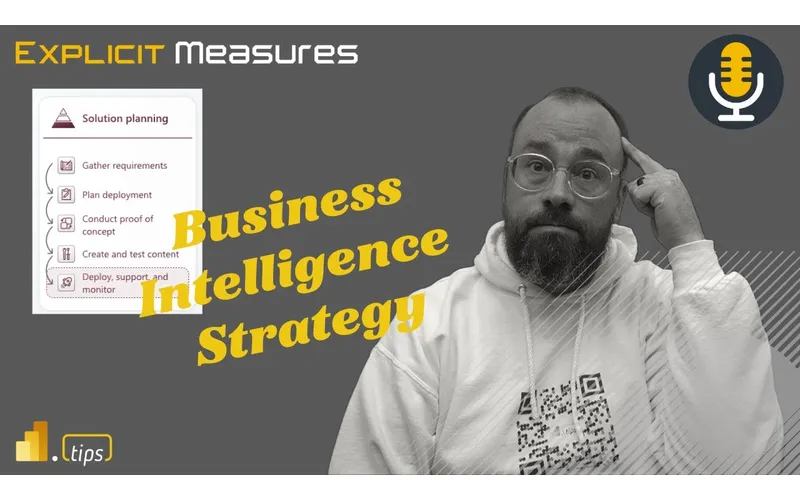
Deployment is where good strategy either becomes adoption—or becomes another unused report. In this episode, the team wraps up Microsoft’s BI implementation planning series by focusing on release communication, training, support, and the monitoring and feedback loops that keep a solution healthy.
News & Announcements
- Fabric Git Migration to TMDL — A practical walkthrough of moving a Fabric semantic model from legacy files to TMDL, including a branch-based workflow and a clear reminder that the process is still preview-era.
- Azure Data Conference — Event details plus workshops; the episode also mentions a discount code (Carlo100) if you’re planning to attend.
- Power BI implementation planning: BI strategy and BI solution planning — The Microsoft guidance referenced in this episode (Step 5: deploy, support, and monitor).
Main Discussion
Step 5 (Deploy, Support, and Monitor) is less about shipping assets and more about shaping behavior: how people learn the solution, how they ask for changes, and how the team running BI stays ahead of the next wave of requests.
- Treat release like a product launch: communicate what changed, who it’s for, and what “success” looks like.
- Train both consumers and creators: audiences need different guidance; pair sessions with short docs and office hours.
- Separate feedback from requests: feedback helps polish; requests should include context, value, and what was tried.
- Create a community channel: Teams/Viva Engage turns one-off questions into searchable answers and peer support.
- Define support and escalation: clarify who owns models, reports, and workspaces—and where issues and changes go.
- Handover in stages: self-service is a gradual transfer of responsibility; set guardrails before broad permissions.
- Monitor usage to find champions (and risks): usage metrics show what’s working, who’s building, and where coaching is needed.
- Schedule retrospectives: periodic review prevents standards from going stale as capabilities and needs change.
Looking Forward
Pick one adoption metric to track, review it weekly for a month after release, and use what you learn to drive your first training and office-hours agenda.
Episode Transcript
0:29 hello and welcome back to the explicit measure podcast with Tommy Seth and Mike good morning everyone good morning gentlemen and happy Tuesday to you another Tuesday looks like we made it another Tuesday yes we’re still here it’s hard keeping up with two episodes a week it’s like we’re get like plan it out and stuff it’s almost like sometimes life gets in the way it’s busy this is a recorded episode for
1:00 busy this is a recorded episode for those of you who are joining us online live on YouTube or LinkedIn this is a recorded episode so we’re just kind is a recorded episode so we’re just pre-recording something here of pre-recording something here however our main topic for today is we’re going to finish up our bi strategy planning from the implementation documentation for Microsoft we’ve gone through the strategy overview strategic planning tactical planning and now we’re finishing up the bi solution planning and in doing that we’re going to go through step five deploying supporting and monitoring for today so that be kind
1:30 and monitoring for today so that be kind and monitoring for today so that be our main final topic here with of our main final topic here with that I would open it up for before we get to our main topic let’s open up for any news items anyone found anything interesting either across the interwebs or people explaining what’s going on here and how people are building and working on their RBI stuff this is pertaining to our conversation last week or yesterday however you want to put it but Darren Godspell literally just talked about the workflow of thinking get and trying
2:01 the workflow of thinking get and trying to convert it to timle and was pretty interesting in terms of like if you were to actually go through that process from an Enterprise workflow that was that Darren’s blog I didn’t know it was him dos on data that’s him I’m pretty sure oh I must have I I looked at the article I saw someone kind to write up how to migrate from timel to Tim Dole but I I must have not Daren CS okay I didn’t I didn’t I would I think I would have recognized the name if it came across from Darren yeah I saw do oh I must have
2:32 from Darren yeah I saw do oh I must have changed it well either way it’s a really good I’ll put the link in here but it just goes too like yeah it’s really cool what it’s able to do but this is literally our our presentation was like this is great however if I’m syncing it through the service it’s stimel and if it’s not automatically G to get converted to timle then I have to change a few files he was talking about there’s encoding you have to do in order for it to actually work work on the service so
3:02 actually work work on the service so there’s there’s still a few unnecessary steps they’re still working out the bugs at this point there’s still some pieces that need to get figured out yet but we’re we’re getting again I think the idea here is we’re getting really really close for it to just fully work this way moving forward so I be just to make sure we give credit to the right person this is dobs on data and that’s is that is his blog and he goes through and just kind blog and he goes through and just explains okay I’m going to make a new of explains okay I’m going to make a new work item in Azure devops I’m going to
3:32 work item in Azure devops I’m going to cut a branch off this this is what I found was interesting in this article he had already published the report using a main branch inside his git repo and then what he did was he cut a branch from it deleted some things replaced the model. Bim file with a definitions file and folder and then put in all the timle stuff so it was very so the reason thought this was very interesting was he he basically manually
4:04 interesting was he he basically manually edited the model and it worked like he he took out the old Bim and replaced it with the new stuff and then it just seemed to work seamlessly which I really like this because yeah that’s how it should work I should be able to switch out the code and the service should just realize and understand oh it’s just different now I read it this way instead of I read via timle versus timil and it just works so to your point last time Seth we talked about this when you’re were
4:34 talked about this when you’re were talking about partitions and how that’s going to work this may have implications on larger data models where you’re focusing on looing hundreds of partitions that are very large in size models that are bigger this may may create some more pain but maybe not I don’t know maybe maybe it’ll be smart enough to read both of the formats because there’s that’s not losing any data interesting true and and to also point out he he does say in bold that he hasn’t done this in a production
5:04 hasn’t done this in a production environment yet so caution I don’t think I don’t think I would recom since all of this is in preview right now I don’t think I would really recommend changing all of your workloads over to timle immediately so that would be I probably would probably shy away from that one as well Microsoft blog just came out with some other really good stuff we very positive this is very good so Miguel Meers the lead developer lead PM I guess it would be for visuals and visualizations for powerbi has just released a columns bars
5:35 powerbi has just released a columns bars and and ribbons blog and and it’s awesome one what two things here one I appreciate Miguel’s attention to detail and the fact that he’s working on building better visuals that’s one thing I appreciate the second thing is his blog posts are by far the most beautiful blog posts I’ve ever seen anything at Microsoft holy smokes his thumbnail that he uses for the beginning part of it looks amazing it when you
6:07 part of it looks amazing it when you go through the Stacked bar chart and column enhancements it’s very clear he’s got little arrows there’s little red markers around everything it just looks so professional and he does a great job explaining exactly what’s occurring and has little infographics and Graphics that helps illuminate he’s got the little little notes Here for elements one two and three on the bars and showing the V like all this stuff so very impressed with not only the work that he’s producing but being the visuals guy I’m very pleased that he has
6:38 visuals guy I’m very pleased that he has very good visually appealing blogs so outside of how his blog looked what do you think about what was inside of it I don’t care about anything inside it has to look good it’s just like it’s just like making a beautiful report but the DAT inside his junk again these are the these are all the little features that everyone else I think wants to use in inside powerbi and they just don’t have the opportunity to use them because you have to like build it into the visual there’s not there’s not a lot of
7:08 visual there’s not there’s not a lot of extra coding that occurs when you want to render or build these visuals so I think this is going to add two things I think this is doing one I’m pleased at enhancing the visuals the second thing is now we have more options so it get it just gets more opportunity to make bad stuff that’s what I see this as too oh but I go ahead no it’s just the refinement on this is is way overdue right and I love
7:38 this is is way overdue right and I love the fact that Miguel and his team are are sticking their teeth in here because it is an extremely valuable area for Microsoft to continue to invest in because this is where typically it loses out to other visualization engines and and and particularly that challenge becomes a lot higher in embedded scenarios where you’re working within an application and uiux engineers and people who want to make all of the
8:09 people who want to make all of the things seamless and fit that application in the right way and these little things like controlling the space in between bars overlap which is cool like that nothing does that in powerbi right like so overlapping bars and a bar TR like all of those little things we can say like oh yeah they’re just Ticky TI properties but to have those as part of the options in the default visuals it’s a big deal it’s small but it’s a big
8:39 a big deal it’s small but it’s a big deal well this looks like the things that I’ve seen people try to hack and do just even the the inline borders on the bar chart I’m like yeah it’s a small refinement but we’ve talked about this with visualization too like those little things can make all the difference and then I’m sure we’ll all get used to this but and that’s going to be the norm but it’s very refreshing to see I do like his color palad too but it’s just very refreshing to see not just that we’re making is it’s not major
9:09 just that we’re making is it’s not major changes to everything it’s like it’s no longer a bar chart but just the little things and how much more professional that can look but then the honestly with the the column bar and the clustered enhancements those are also things too when that to me that conversation we had about visualization and in a sense Analytics like being able to sort each category within within a visual there’s a lot more you can do within that from in terms of like how what you’re going to
9:39 you’re going to communicate one of the things that is added here and this is one that we’ve talked a lot about in the podcast we’ve talked a lot about the international business communication standard ibcs ibcs ibcs is a language by which you can draw different visuals and if you are building bar charts or charts that have there’s a language around that that helps you see data comparison over time and so again these are like standards
10:04 and so again these are like standards people can follow them and and you can get a very consistent looking report these new improvements get powerbi closer to those ibcs standards and you can now build things closer to what these were looking like so very pleased to see these things getting closer to standards that again it’s a recognized known quantity people across the world can read these charts and someone has said I’m going to spend time and build an organization around standard communication through visuals I think this is great I I wish there was more of
10:36 this is great I I wish there was more of this like hey here’s some recommended visuals based on what you’re saying we’re already going to style them in an ibcs type way we’re in an age of AI man AI should just be able to whip this stuff out for us and be like boom here’s an ibcs report on and you pick out what data field you think you need to compare like it should just show up anyways we we’ll see how good the AI eventually get gets anyways really good blog post any other final statements before we move on to our main topic don’t think so all
11:06 to our main topic don’t think so all right with that let’s jump over to our implementation Tuesdays let’s go for our closing thoughts and our final notes here around the article that Microsoft produced all around bi strategy implementation things here Tommy kick us off we’re on Section number five giv us maybe a bit of an overview of some talking points we’re going to walk through today ah yes we are finally reached the end almost three months now of us talking about implementation planning like oh finally you’re done geez well some some of us
11:39 you’re done geez well some some of us are oh man like all day baby honestly we were finally near the tail end of rolling out getting people on board aligning our goals making sure everyone else agrees expectations and how we’re going to measure it now we’re at that deploy validate and see success so this is where in a sense all the rubber is going to really meet the road there’s going to be a lot of stresses both good and bad anxiety we’re we’re what we’re expecting to see we know
12:12 what we’re expecting to see we know that whether there’s going to be Road bumps or not but it’s actually now going to actually see the first fruitions of all the work that we did it’s not just we’re doing report for you everything to this point is now leading or has led towards these are the specific goals I know that we are we trying to accomplish look look how close we’re getting to this and what this is gonna actually do yep I like this and I think in one of our prior conversations we were talking a lot about the the amount of
12:43 a lot about the the amount of and again I keep I keep going back to this Microsoft is continually bringing very robust tools from it and Landing them in the hands of the business and this is this is very this is great because now we’re taking awesome things and we’re able to then build them into okay let’s start deploying things so as we read through the next section here there’s a couple key main bullet points it talks about communicating the final release conducting training for Content customers and I think this is an area
13:13 customers and I think this is an area that is way under undervalued in an organization I feel a lot of times we whip things out and we send them out with not a lot of training so I feel like training could be another aspect so if you need some more training call Tommy he’s not busy enough as it is yeah Tommy could use some more training there I still got my voice still got a voice for now so call Tommy he’ll come train you and he’s great at it so addressing additional feedback and requests yeah there’s there’s usually not enough of a feedback loop I think this is another weakness for organizations planning to connect
13:43 organizations planning to connect with the user community and then finally hand over hand over actions I don’t know what it is but whatever happens in my daily work it always seems to dovetail very closely with what we’re talking about in the podcast and the articles that are here so one thing I’ll note here is I’ve had a lot of conversations around Handover activities so the the the conversation around when I give you a data model when I give you a workspace who’s responsible for some of this stuff and so when you
14:14 for some of this stuff and so when you start talking self-service you’re really talking about what is the agreed upon delegation or or handoff of responsibility to me I feel like I’ve been saying self-surface but I’ve not really been grasping being the concept of self-service self-service is a handoff in responsibility and I think Handover actions and clearly identifying when you are in control of this workspace or this data set or this report here’s the implications of that and by you
14:45 implications of that and by you absorbing the responsibility you’re also going to absorb these other actions and you are responsible for that I think that’s important to have that agreement anyways I’ll pause there I I really like this this next section here thoughts I like I like that thought because well in dovale I guess you you are handing over a solution or the training all if it’s bringing new people into the powerbi ecosystem that they’re going to start build their own reports
15:17 start build their own reports engage with it Etc yeah you ask access to mod there there is that aspect of things but there’s also a process part of that which is how do those like what are the support models that those people can engage with what what are the like what are what are the not just support but what what other teams are in the mix here and going to be managing different parts that they need identify players yeah
15:48 that they need identify players yeah yeah I like that that’s a really good point because it’s like you’re there are admins you’re they’re going to monitor what’s going on in the system they may reach out and you may have to you may have to fix things or you may have to hand over your report because you’re sharing it to everybody and it’s taking down our system and we’re not like it’s a it’s a game of it’s a game of playing fairly with everyone right I think you’re right yeah that’s a really you’re part of an ecosystem I had another SE your comment brings up another really interesting
16:18 brings up another really interesting question or it maybe initial thought we had an organization talking about we have two premium subscriptions we have two P1 or two PS I don’t know what they were but they two P SKS yeah one for Dev one for test and they were asking a question they were like well how how should we break these up like you’re you’re telling me that fabric is on a PE skew what if I want to give a business unit a fabric environment do I give them the production one or do I give them the dev one and I said whoa whoa time out I
16:50 dev one and I said whoa whoa time out I said if you’re talking about just premium SKS you actually have more options in your disposal now than just premium I said Fab fac allows you to bring the price of that unit down much much less much much lower and you don’t need a PC anymore you potentially could get away with an fq so how much do you trust your business unit do you do you think they’re G do you think they would abuse the the production workload if if the answer is yes then maybe you don’t give them a production one maybe you say
17:20 give them a production one maybe you say we’re going to back charge your business for the value that you’re producing with powerbi here you go here’s fabric go run with it but by the way you’re going to be paying for your fabric skew if you want a bigger one if you if you don’t build optimized things which they will and until they get stuck and then they’ll start building better stuff right that’s how it works build something not good learn build something better but now you can control a little bit more of what they’re doing and you’re not impacting production or certified reports in that Central area
17:50 certified reports in that Central area and I thought oh man that’s another really good example here of like how the planning of what you’re trying to accomplish really makes sense here and honestly even with the subdomains or nested domains now you can get very grantly with the cost too but that I that’s it’s great but I I want to be a little cautious when you keep we keep saying handoff right now because the same there is a big red caution underneath the handoff so maybe that’s May should further in the article yeah don’t hand off right away
18:20 article yeah don’t hand off right away that’s what was actually saying so this handing off is a preview feature yeah but I think like that Ro of they probably not a Microsoft MVP at the organization who’s done this again we’re also I 100% agree with that yeah that’s probably 90% of the use cases here everyone’s on the same Journey right going through this so handoff can mean a lot of different things but even if it was one of us or someone who’s been doing this for a long time handoff
18:51 been doing this for a long time handoff is in stages especially with something like this I think that’s a great I think that’s a great observation What stages would would I hand enough go through then if you you think it comes in groups or stages well obviously it depends on whatever the solution or that initiative is but let’s just take something as the man Self Service I think that’s a great example okay so you’re gonna own your content like and you’re gonna then begin to deploy well all the questions that come up and I think that you plan your stages based on where I think the concerns are so where where the top
19:22 concerns are so where where the top concerns that my stakeholders would have how do I know they’re going to build the right reports how do I know that they’re going to not like the reports are not going to look awful or that they’re not going to abuse how many like all the content it’s like okay so let’s put some guidelines around this first roll out of handing off it’s not just you have a bike you have a car go crazy it’s there’s a curfew so what’s what are going to be our our our limitations for this
19:53 our our our limitations for this first stage I know it’s hard to go down to like you can only share it at 25 people but there’s still the relevant rules of hey the workspace admin okay there’s going to be a one or one or two there’s it’s going to be very limited that person has to meet some criteria in
20:09 that person has to meet some criteria in order to be an admin you don’t just get to be one would agree with that so like were like training that’s happening before they they get the keys to the castle I agree with that right on a monthly basis they’re doing there’s a meetings call with the admins you don’t make you don’t make that call you’re out thing because you really need to be obviously we don’t want to limit anything but people will get their content it doesn’t mean that everything’s going Buck Wild now so I think the stages are based on the biggest concerns the business gonna have as this begins to roll
20:40 gonna have as this begins to roll out I I like your points I don’t think they belong here I unlike unlike pushing unlike pushing back on your your other like a different podcast where you were like hey can we push this back up further in the process I think you pushed what you just talked talked about further up into the process like when we’re when we’re figuring out what the solution looks like we’re Gathering requirements we’re planning the deployment already we’re doing the pocc already like all of what you’re talking about to me is like the
21:10 you’re talking about to me is like the things that we’re figuring out with the business group as we go along because this what this should not be is oh hey we’ve been there’s a group of people that have been doing all this work and surprise we’re we’re now giving it all to you this is an ongoing this should be an ongoing conversation or update stream or just as important it is in the communication of the final handoff I
21:40 communication of the final handoff I think it’s very important that while you’re going through this you’re keeping the teams that you’re gonna engage here up to date here’s what we’re doing I’m I’m re receptive and taking feedback through the POC we’re validating things on that like level and and ironing out a lot of this Nuance before we even get to this point I think this is where you take all of that feedback and you’re like Hey do you remember the conversation we had about admins here here’s what we’ve created like this is
22:11 here’s what we’ve created like this is the process if to be an admin here’s here’s where this documentation is here’s how you would become one here’s what you can share with other people here’s our source of definition documentation it’s a lot of process that you’re you’re building process that you’re communicating to the team and I do 100% agree with that Tommy I want to go back to your comment I I like your comment I agree with it but I want to give maybe let me I want to articulate an actual example here of how I potentially see this rolling out and it might there I have a mental model
22:42 and it might there I have a mental model of how this I think this works or at least what I think works in a in a a situation like this right PBI gets introduced you identify some strategic data to go after like basically this is where I’m hired and other people are other consult are hired to show up and say we have data we have problems help us get started with powerbi what do we what do we need to do to your point Tommy like there’s there’s no strategy initially there’s no strategy around workspaces or reports or deployment or
23:13 workspaces or reports or deployment or how anything that works so usually what happens is there is someone who comes in and starts planning out okay what do we need to do in our organization to make the initial run of the prty report you start with we’re going to build a report and data set or data set or semantic model and Report we’re going to publish it to an app and we’re going to give we’re going to distribute all the content via apps but we’re going to not let you download it you can’t do anything it’s very locked down initially so I find that that’s the starting point for a lot of where organizations should
23:44 for a lot of where organizations should begin is powerbi. com is a development only Center we’re not sharing workspaces we’re not giving view access on workspaces all we’re doing is building apps and Publishing those apps we start there over time and again the plan potentially here is okay team there’s going to be certain parts of the organization that says okay I understand what’s in this report but if I could get a little bit different if I could expose a little bit more and so you then plan the work or the training that says okay let’s build them their own workspace so
24:16 let’s build them their own workspace so now we start opening up another layer behind the app so okay we’re going to here’s our data model we let you copy these reports and put them in a group workspace together and you can start playing with them there by the way though here comes more responsibility so you basically give them little responsibility initially get comfortable with going to power. com and consuming data and then you start walking your way back okay so now we get now you get a workspace now you’re a member now you start building your own reports okay let’s go through that for a bit and you like okay does everyone does everyone happy with what we’re getting
24:46 everyone happy with what we’re getting are we getting real good data out okay good and then the next step beyond that is okay now we’re going to start exposing some of our Lakehouse tables we’re going to give you a little bit further Upstream you now can build your own model let’s work through how that knowledge information works so I see it as a progression from the report is the very ending portion you start there and as people become capable you work your way Upstream further into here’s the tables that come out of gold
25:16 here’s the tables that come out of gold or silver for that matter here’s notebooks or the SQL endpoint but you only give them out after we’ve had time in these other parts of the system system so that it it feels like we’re giving more control but only over time does that make sense no I I love what you said because this goes right back into our tactical planning about the the need about the revision side yeah because no and I think you think about revision it’s not necessarily because something’s wrong it’s because it’s gonna be so
25:47 wrong it’s because it’s gonna be so Dynamic you we didn’t know what we could do before like yeah we’re just leared about wow this is new capab I didn’t know we could do this okay let’s let’s talk about that like what what can we do to make it easier for you to do your work work yeah because everyone’s starting at zero in terms of skill level you have to identify too who’s in a sense leveling up like hey this is a great team they’re already taking a hold of this we’re going to focus on them on their data because we’re noticing that they’re really turning out report and that’s I think where the that revision goes
26:17 think where the that revision goes because that is an unknown known at the very beginning you don’t know who’s going to take to it whether it’s the consumers or the the business where like look what we’ve done now they’re getting the skill they’re they’re already putting the solutions together okay there’s a focus there right there and I think that’s where the revision comes to me because there’s gonna be teams that are gonna farther down the line or are lagging behind I agree and I think that’s I think where you have to try to
26:47 that’s I think where you have to try to align your new strategy because it’s GNA be about how people actually take to it whether or not they actually have the resources there I I think I think you’re speaking speaking to the data culture of those teams and the reason why I’m saying data culture there because some teams hire very analytical people because they need them Finance going to hire very analytical Excel understands how to shape data people they just will they just have to yeah other teams may
27:17 they just have to yeah other teams may not hire people that are in the data realm super skilled so to your point Tommy there’s going to be certain teams that someone on that team is going to be like oh I love this data this is great this is just like Excel but way better and they’re just going to really dive in and they’re going to learn and I think it’s up to the community or the center of excellence that team of people to identify across the organization where this is occurring and your point duv tells really well into the monitoring aspect of this next section so
27:47 aspect of this next section so monitoring what is happening what reports are being used and who’s creating how much content that is a key identifier for you the organization to figure out great what’s happening in our environment let’s figure out how to engage those people because those are great candidates to educate more and give them more responsibility it’s a it’s a growth plan there’s there’s one part there that I I do want to hone in on because it
28:18 I I do want to hone in on because it to me out of everything that we’re talking about that we’ve talked about the last three months it’s the one that gets the least amount of love and don’t worry so this is actually it’s relevant but it’s it really is the feedback side in terms of like how do you actually do that effectively yes you can monitor the the data you can monitor the usage but I think our consistent following up whether it’s like a weekly call a Champion’s call or getting other people’s feedback in terms of how things
28:48 people’s feedback in terms of how things are going is is an art that I don’t think people realize how difficult that can be it’s also time consuming yeah and if you have a lot of things on your plate and there’s a lot of things to do do we do we really I and this is a question for the data culture do we really really prioritize going back doing a retro I prioritize going back doing a retro even even in scrum and agile I was mean even even in scrum and agile I was doing huge development projects with companies and they’re like yeah yeah we’ll we’ll do scrum or agile and there’s always this thing called the Retro at the end of every Sprint you sit
29:19 Retro at the end of every Sprint you sit back and reflect on what you did what could we have done better is there anything we could how many companies actually do the Retros no none of them do none of them do this because they’re all like let’s focus on the next thing like if something goes sorely wrong they step back and say oh that was bad let’s let’s let’s not do that again but every time we’re doing a Sprint are we sitting back and doing Retros probably not we’re just burning on to the next project right that’s my experience with it I it I am oh that wasn’t a question to me oh
29:51 am oh that wasn’t a question to me oh you’re doing Retros after every single every single Sprint yeah they’re invaluable aesome because your data culture has I would expect good things out of that from you that’s my central team right okay I I like technically the the executors right like if you’re if you’re in a Sprint mode and you’re in an execution mode like
30:12 you’re in an execution mode like absolutely I think that that’s that’s a great way to put yourself into a mind mindset of especially for teams that deal with high volumes of requests right like retro are we seeing the same request coming all the time it’s a it’s a way to identify core problems instead of just staying in the rat race oh I like that anyway like I do like I do like this call out because the I I but I I separate it to me feedback is one
30:43 I separate it to me feedback is one thing requests are another right somebody saying I like I like color blue your blue shade is off like I would like the to to update that the reports would be so much better like great thank you for your feedback trash right like you’re not going to you’re not going to take the time to develop or fix certain things right requests are hey the business is changing like we have this report it’s fantastic but if we had this column this would open up the doors for us to understand all all
31:14 the doors for us to understand all all XYZ things new things and that to me isn’t the same dynamic environment that you can create with conversation tools right whether it’s teams whether it’s like Viva engage right is another one or Yammer right like whatever your your form of creating a space for end users to ask questions and it’s just a forum like Community right like hey I have a question maybe not all the technical stuff but you could also throw that in there where there’s just this back and forth of feedback what’s going on you
31:46 forth of feedback what’s going on you forth of feedback what’s going on are the solutions working etc etc know are the solutions working etc etc versus and and potentially some of those could be requests but I think the request channel is is hopefully more more robust one where the the requesters put some time and thought behind what what they would like to have and the reasons why why there’s value there and it’s going to go into a process of review for actual development and to me that’s a separate
32:17 development and to me that’s a separate thing because it’s very easy for people to say I would like a new report and I would like that report to answer all my problems and it’s like well thank you for your thank you for your feedback you’ve obviously put no thought into that so why would we spend development time right or go build you something that’s impossible right or you haven’t put the the thought behind like correct what are you trying to measure what’s the main outcome of this what actions are you going to take after looking at this report no you’re just telling me a bunch
32:47 report no you’re just telling me a bunch of things you want is that really adding us a lot of value yeah and the reason the reason I’m saying that is because I I think a rampant problem in any business is people who are like I think we inadvertently do that to one another and essentially it the the what you’re what you’re doing is you’re saying I’m not going to spend enough of my time but I want to take your time to
33:18 my time but I want to take your time to go think about this problem because I haven’t so I’m going to use you as my Easy Button because you this area so I’m going to take from you because I I don’t want to do that work and and I think it’s not just in request land it’s it’s all over the place and I encourage it’s been a topic in my team lately where I don’t want to see that in my team let alone when we cross- collaborate and that
33:48 when we cross- collaborate and that comes up in another area where hey we’re we’re triaging a bug or we’re looking at something if I spend 45 minutes doing the work but I I go through the five different things that I know how to do and I’m still stuck if I don’t communicate effectively and give all of the work I’ve done along with the request for help I’m doing the same thing to somebody else because they have to start over yeah they have to start all over and now I’m I’m not only
34:19 all over and now I’m I’m not only consuming my time I’m consuming their time to solve the same problem and we’ve just doubled our estimate or doubled our time spent trying to fix or build something and that’s just as bad as this other scenario so like I always and I I don’t I don’t think we talked about this but I I saw a a YouTube short not long ago where a CEO was talking about this request where a he had a sales executive then in HR
34:50 he had a sales executive then in HR and they had to hire 30 people and he called and he said hey I got this huge problem we got to hire all these people in 30 days and CEO is like okay what are the what is what is you’ve outlined what is the spe like what is the specific request what are three things that you did to try to solve it and what what is it specifically you need me to do for you and the guy was like I don’t know yet I’ll get back to you and then the next morning he was like I solved it and and I’ve like that is like there’s a lot of different ways in which you can
35:21 lot of different ways in which you can manage things but I really glommed on to this one I’m like hey you have a problem understood what do the three things you tried to do to solve it and what are you what are you specifically asking me for and when you go through this ultimately if you you guys know this too you have to to explain in detail like what are the things you’re trying to do and how many times when you’re explaining something do you solve it in your head oh oh yeah what I’m saying no matter how long you spent on it as when you’re articulating it to somebody all like so
35:53 articulating it to somebody all like so often you’re like oh never mind I know how to Sol this yes why that’s why you go through this so I would encourage everybody in whatever phases just to make sure that if you are requesting for things if you’re providing feedback like give the details so that you’re picking up where you left off or give them from the get-go if you didn’t invest in any time in making a request then don’t expect anything but if you did then let’s pick off from where you started and then we accelerate instead
36:23 started and then we accelerate instead of repeating the same Cycles over and over in business I like that I think that’s really good any other thoughts Tommy for your feedback no I’m actually very surprised the way you took that because that’s completely different when I was thinking about feedback when it come to the request I was thinking more of like how the people who who are are getting the requests now who I don’t have to take the requests anymore the new people in powerbi building how am I
36:54 new people in powerbi building how am I walking them through this journey now now on a weekly or monthly basis and extracting their experience in powerbi and their walks of life are they getting the skill are they getting comfortable with Dax so to me that’s a whole other type because some of them may get request something from you like we need help with this model but I think that’s more it’s a a very different stream because we have to be more proactive with them on how’s everything doing how
37:25 with them on how’s everything doing how are your models thing like is everything working out for you what do you guys need basically and offering that support because we that’s a very different relationship than when someone’s requesting for me to do a report or a request compared to now I’m like the guiding hand or the the people who are rolling out whatever the solution is is more of a guiding hand to whoever’s taking it on yeah I I I agree but at the same time like having feedback channels
37:57 same time like having feedback channels meaning like the open conduits of chat to me help facilitate that much more than generalized questions because if I’m an owner and I have I have to get feedback from a group me asking them five survey questions which is like what you were repeating to me like isn’t is gonna get this hey how are you guys doing everybody’s gonna say good f do you guys have any problems in and it’s to a group no we’re fine or there’s that one guy who’s like hey I got this major problem can you solve all my
38:30 every every time do you guys need more training oh yeah what happens in the training you’re talking the whole time like the engagement level just isn’t there right so you’re not going to get down to like the the keys of what you need to know and that’s where to me like the free form chats of hey this this Channel’s open to you guys right all it takes is one person going hey Tommy Can can you run another session on Dax for us and then other people going yeah i’ love that yep yep yep yep yep is different to me than these generalized
39:01 different to me than these generalized like questions that you’re throwing I because I’ve never gotten good feedback through those and but you’re also you’re also talking Seth you’re talking about like more of like the engaged community of practice which I think is an understated thing in a lot of organizations I don’t think a lot of organizations emphasize or try to centralize that conversation and and chat communication threads around a community like yeah but at the same time at the same time like why not open that door right away to these smaller groups
39:32 door right away to these smaller groups right if the if you’re because it also opens the door into the next part of the conversation where we we talk about what are the different levels of where an organization is at and how they can utilize all of this strategy you can utilize all of this strategy all these planning things and I know all these planning things and I think that’s where it it it does interject because if I’m just going to if I’m going to do this on a company level like it’s it’s a it’s a much B smaller or bigger deal than I’m just very small I’m going to incrementally do
40:03 very small I’m going to incrementally do that but you’re the structures I think of some of these things are the same way it’s just they’re implemented differently right like that feedback Channel like can be very limited we only our our scope is 10 users and these are the only people that we’re engaging
40:16 the only people that we’re engaging right now because we don’t have the capacity to take it up higher yes so I have a channel but 90% of the organization doesn’t have access to it because we can’t handle the volume yes or they don’t know because we haven’t done this thing for them or whatever whatever yeah I like that again it’s a meter response to things yeah that’s why that I think that’s why this for us is an it’s an art like there’s an actual strategy that need to go instead of yeah those random calls going how’s everyone doing okay good and if we don’t have
40:46 doing okay good and if we don’t have benchmarks that we’re looking for for these teams as they go on my going back to we’re going to give people a workspace okay so what’s our expectations of them and three weeks what’s our expectations of the teams in six weeks and rather than just going where do you have problems yeah we are not going to see success so whatever we’re rolling out those calls and support is not just how’s everybody doing how can we help it’s making sure that we’re getting to the next level basically
41:17 basically like as simple as it sounds thing is like is everyone on level three now where their admin knows how to publish the content on their own they created their audiences we should be there in six weeks everyone should be at least comfortable doing that so at least there’s in a sense these mini Milestones that we’re trying to get to we’re not running it obviously because that’s the teams now or the the people are taking those on but it’s almost like a very data level project
41:47 very data level project manager this so I like what you say there about for the PM because I think there’s if I think about what happens in powerbi I think there are multiple roles that are occurring here and I think delineating these different roles inside what happens inside your your organization is very helpful now granted these are roles these are not people so this could all be handled by one Central person if you’re a small organization but this also expands to multiple people if you have a larger organization and I like what you said there Tommy about a PM or
42:17 what you said there Tommy about a PM or program manager because there is a lot of like communication across getting the right teams together to your point Seth you’re going like when there’s coming from the business someone’s got to filter those down someone’s got to kind filter those down someone’s got to align okay what are our main goals of align okay what are our main goals for our our company what are our objectives we’re going to get to and someone’s going to spend some time figuring out okay these requests coming in do they align to our goals are that what we’re going to try to do so I think there’s a report consumer person someone who’s just purely give me reports I’ll consume them I think there’s a report
42:48 consume them I think there’s a report Builder someone who’s focusing on building the reports and does a little bit of light modeling but not like an expert I think there’s a data modeler and I’ll even now with fabric I’ll put data modeler slash data engineer that’s like the the the next level I see of skills and then there’s an admin who works who worries about is it Dev testr is it devr how do I deploy things like they’re focusing more on the administration sides of the tenant settings the publishing of content and I do think there is that release manager
43:19 do think there is that release manager is part of this ecosystem and that is the release manager is someone who’s focusing on these things they’re they’re acting like a PM to help move things forward and I think I think that’s a skill that is required here to help organizations keep balance of make sure we’re not always in the weeds but we’re also innovating and building new things that are helpful yeah I think I think this is a good dovetail I think into the into the the the aspect of can can organizations
43:53 the the aspect of can can organizations with no data no powerbi no like smaller well like I almost think about this in small medium or large because I think throughout this there may have been a lot of like listeners that checked out and be like Yep this is not me I I am this person right or it’s me and this other person and that’s all and what I would what I would say is in the small scenario if you don’t have this root working group I think it still points
44:24 working group I think it still points out that these are the roles that need to be played by people when you go into the the full strategy tactical solution that if you don’t have all the people you’re going to have to play some of these roles as you try to roll something out there’s still a lot of value here though right and in structural pieces of just one going through the thought process having objectives having the key results having
44:56 objectives having the key results having like even if these are not standardized in your in your organization what it does is it gives you the story of what you’re accomplishing for the business right so as you go through these things and take pieces of starting to build the architecture of what this looks like in the organization it solidifies in your head what direction you’re trying to go but also is the foundation for hey maybe the organization is g to spool up a lot
45:27 the organization is g to spool up a lot of efforts around this or the organization is getting larger and there’s more opportunities to do that and you would be the person that would can speak to all this right yes this the other spectrum is the really large organization where they’re full committed right they’re saying Yep this this is now a very large strategic Initiative for us we’re we’re Gang Busters and you can probably almost read this documentation for btim to go be successful in a wide organizational way I would say start small though start
45:58 way I would say start small though start with a business unit and learn and iterate and grow as fast as you can because there’s going to be tight Tim lines around it there’s going to be objectives that have to fit in certain timelines and it there’s still going to be a capacity thing of like making sure you have all the right people it’s probably more process oriented and getting everybody onto the the same the same like scope to accelerate quickly and then you have the middle ground where is probably the most challenging because I think it’s
46:30 most challenging because I think it’s it’s rare that organizations are going to be like 100% we’re all in here’s all this here’s all these people and here’s all this thing and yes we know we’re going to realize gains but we really don’t we can’t quantify at 100% we know that like you’re saying there’s going to be efficiencies we hear that out there that data is really valuable but you can’t tell us that it’s going to you can’t tell us that it’s going to increase Revenue you can’t tell us know increase Revenue you can’t tell us spe specifically how it’s going to benefit the organization because you can’t have those conversations without
47:01 can’t have those conversations without all those people yes you can’t make the commitments to the business and have all those conversations unless you have people right so it’s the cat and mouse game of knowing it even when and understand and can articulate a strategy it still doesn’t always come into fruition that you’re going to get the capacity to do it so the balance is trying to figure out I think much more on the small level where you can make the impact even though you
47:31 you can make the impact even though you C may be able to draw and correlate it back to a higher level objective because your organization is in some Flux Of You your organization is in some Flux Of data literacy and data culture Know data literacy and data culture building so it’s been a really like either way I’ve Loved a lot of the the details that have come out of here and I think it’s a fantastic structured you think it’s a fantastic structured documentation but that’s that’s how know documentation but that’s that’s how I see like the the three levels of different ways in in which to you of different ways in in which to Implement what are you what are you
48:02 know Implement what are you what are you guys’ guys’ thoughts go ahead Tommy you gonna say something I I was just gonna say I you realize how many more every single time with this even though how many times have we’ve talked about it how many times I’ve done it I’ll always go back to like there are so many hats that we have to wear and be good at in this space and I don’t know how many other technologies have to deal with how many front-facing and back
48:33 many front-facing and back facing of things we have to play I’m a journalist I’m a project manager you journalist I’m a project manager obviously I’m the I’m the data know obviously I’m the I’m the data guy I’m a trainer I’m a teacher you guy I’m a trainer I’m a teacher like all these different things know like all these different things that we all have to be good at because it’s a weird space where you have to know the technology for it to work it’s not it’s not just like learn how to work on an app but there’s that data culture side and so we like that unicorn aspect here is so important
49:04 that unicorn aspect here is so important because how can you communicate half the things you said Seth if you don’t know those the like what could potentially be an implic a problem how do you be an implic a problem how do all the different parts of the know all the different parts of the infrastructure and then more again how the businesses actually they don’t have to worry about all the technical side they just want to see the results so there’s all these things we’re juggling and need to get right it’s usually just one person too too I’m Tommy you take a very strong
49:35 I’m Tommy you take a very strong approach on you must know everything before you do anything and I feel like that’s I feel like that’s what you when you say things that’s how it comes off to me okay and I disagree with that approach you’re probably not saying that that’s the way but that’s the way you’re communicating it to me and that’s how I’m reading what you’re what I’m hearing what you’re saying but I feel like like the what works in organizations and especially when I when you’re talking about newer organizations there’s going to be some mess ups there’s going to be some rework there’s going to be we
50:06 some rework there’s going to be we didn’t know that it existed so unless you’re going to an expert or someone who unless your company’s willing to say we’re we’re going to go pay a third party expert to come in and tell us everything we should know or or go through specific training to do this a
50:19 through specific training to do this a lot of organizations do not do that and it starts with one individual or a couple individuals who find this free parbi tool start playing with it get access to par. com and start growing things and that knowledge or that that experience continues to develop inside the company and so I find that this I the company and so I find that this this pattern of democratizing very mean this pattern of democratizing very Advanced tools I I I see the same thing in like power apps right you can do a lot with power apps you’re big You’re
50:50 lot with power apps you’re big You’re Building web apps basically but do the users of power apps understand all the intricacies of underneath the hood what’s going on in power apps and do they build the most efficient thing day one probably not so I feel like there’s a there’s a progression that’s happening here there’s a starting point every organization just needs to start looking at this documentation I feel very overwhelmed just in just personally like there’s a lot to go through here and if I want to do everything I’ll be spending so much time planning and getting things
51:21 so much time planning and getting things going I’m more of a like let’s I want to do a little bit of action and then come back and review I want to do a little bit of action I want to come back and review so I feel like a lot of this stuff is very valuable and again everything that I’ve worked on as an expert a lot of this stuff applies I would recommend a lot of companies you should if nothing else you should at least take a day and read through it all just that at bare minimum start there and then you pluck out what you think in this documentation is most valuable for your organization and you start with
51:52 your organization and you start with okay well these are areas we’re weak at do we think this needs a lot of value for us to move forward can we deliver business value now you probably pick and choose a couple things here and start just going a direction and eventually you’ll run into a problem you’ll figure there’s an issue you’ll have to upgrade your premium you’re going to have to spend there’s going to be some challenges but this is what happens when Microsoft Microsoft democratizes data this is what happens when Microsoft democratizes the reporting side like you’re it’s now everyone can use it
52:24 you’re it’s now everyone can use it that’s what they want we now have to figure out as a company and our culture how we’re going to manage that and how we’re going Tove forward yeah hopefully there’s value in the experience the experience that we have had right I I I agree I don’t and it well I don’t know where I agree on the the who’s saying what but the the fact is like most people don’t have the experience across the boards I think business intelligence is one of those areas that the more engaged you become
52:55 areas that the more engaged you become in the business and the technical and build your technical skill sets the more valuable you become to the organization because you can have like it surprises me and the greatest compliment I get is when business folks or new people that have never met me before say man you’re you you’re so tied into the business side of things it’s it’s it’s weird right it’s weird as a tech a person should be are two different
53:26 person should be are two different things so I agree people are going to fall on a spectrum typically have more experience in one area or the other and I’m saying like this is a really unique area to be in because it allows you to explore and grow in both of those areas at the same time I think I I love your example in in the recommendations and my my final recap of ingesting all this yeah I agree get the holistic view of things read through all of the bi strategy strategic planning tactical
53:56 strategy strategic planning tactical solution it’s going to be a lot of information what I would recommend is take out the big chunks that resonate with you and then figure out which one of those chunks are things you could are going to make the biggest impact on your area or your business right and if it is an incremental thing which a lot of this is going to be for organizations it’s going to be a rarity where somebody’s like I saw the Microsoft documentation here’s 10 people go solve that problem in the organization right fantastic it is because like there’s
54:26 fantastic it is because like there’s a lot of value here but pick those things it like ultimately it just gives you the road map for how to incrementally add value to the business yes so some of the big takeaways I’ve had from the strategy part right yes yes the working team could should and could be people depending on how large the scope of the project is it could also just be the roles these here are the roles you’re going to have to play if you’re going to go on this journey of implementing data and and Reporting with powerbi in your organization strategy
54:58 powerbi in your organization strategy does not mean investment right like ultimately you got to sell people and maybe the idea is great but maybe your organization just isn’t there where can you continue to do stuff and where can you support to enhance things and I think that’s where the focus should be in there tactical goals one of the one of the best parts about this conversation that I’m super excited about is our conversation enhanced this documentation for however many other people read it right
55:28 however many other people read it right there’s this the confusion we had if you want to go listen about it again like around goals and objectives was clarified was updated in documentation now it’s all on okr framework which I think just will resonate much bigger and much wider with people and make a ton more sense so I was super stoked with all of the conversation around there and then in the solutioning communication right this is the execution phase we’re we’re we’re closed in we’ve got things going
55:59 we’re closed in we’ve got things going we’re rolling it out to people we’re making the impacts and now it’s time to iterate but communication and those feedback loops are are the biggest and most important aspects of that and that’s my that’s my take I like those observations Tommy any final thoughts on this whole article and what’s coming on here or like everything we’ve been doing here yeah there there are another 15 more articles we can go through in the implementation so as much as I love these I want to talk about other things I do enjoy it but I probably not
56:29 I do enjoy it but I probably not no honestly like without being too redone with everything we’ve said listen I am trust about making mistakes or breaking things there are going to be a lot of that because even if you’ve done this a hundred times the people are always going to be different where how they are experiencing that or how they’re perceiving if they understand it or not and there’s just going into all of this of this with the idea that we’re going to have to be flexible there’s going to be
56:59 to be flexible there’s going to be things that are going to work out really well and there’s going to be some hindrances but I think the idea of sticking through with this on what are going to be our Milestones that to me is also a great framework just building trust in a process too because if there’s one thing that our industry has not had is a consistent and a unified way of how we do things unless it’s a semantic model but then no one cares about that from business point of view but how do we actually roll out data
57:29 but how do we actually roll out data initiatives and make I think this is obviously professional but I think it’s something structured in a way that I think everyone can get get behind yeah I think my final thought on this one is this works honestly like doing these things in this article I’ve seen it working in organizations I can attest to these are great principles to live by be careful you may be overwhelmed that’s okay don’t feel like you have to do all of it day one this is a progression right Rome wasn’t built
57:59 progression right Rome wasn’t built in a day your data culture won’t change in a day so it’s it’s going to take some time you’re going to have to be patient and I think as long as you have people that are willing to put the work in align on a key Direction and everyone marches together I think in general you’ll be able to improve the data culture the reporting and the actions that come out of your reporting stuff so I I do think this is this is a whether you’re picking powerbi any other reporting tool all of this stuff applies it doesn’t matter what reporting tool
58:30 it doesn’t matter what reporting tool you’re technically talking about here all of these many of the bi tools that you’re looking at today are trying to go more towards this self-service method and these are great ways or great patterns by which you can then say developing good better techniques and data culture in your company so really like the article I think I learned a lot from it I also love talking with you guys about the the patterns that you’re finding and what works well in your organizations what you’re seeing so I think this this is why I enjoy the community here I like learning from
59:01 community here I like learning from other people just be a lifelong learner anyways with that thank you all so much for listening to our podcast we we’ve burned through a perfectly good hour with you our only request is if you stuck with us this whole time and you’re now here at the end we really appreciate you sharing this with somebody else let them know or share on social media let a cooworker know that you’ve enjoyed the podcast we’d love to get the word out there a bit more Tommy where else can you find the podcast you can find the pod pod anywhere you get a podcast Apple Spotify make sure to leave rating And subscribe it helps us out a ton do you
59:32 subscribe it helps us out a ton do you have any question idea or topic that you want us to talk about in a future episode maybe you want us to run it back implementation Tu days in the summer we’ll do it I’m gonna veto that all right and then finally join us live every Tuesday and Thursday AM Central I think I said everything yeah cool all right with that thank you all very much appreciate it and we’ll see you next next [Music]
60:22 [Music] time
Thank You
Thanks for listening to the Explicit Measures Podcast. If you enjoy the show, please leave us a rating and review on your favorite podcast platform.
Learn more about our work at Explicit Measures and PowerBI.tips.