
Overcoming Challenges in a CoE Rollout – Ep. 338
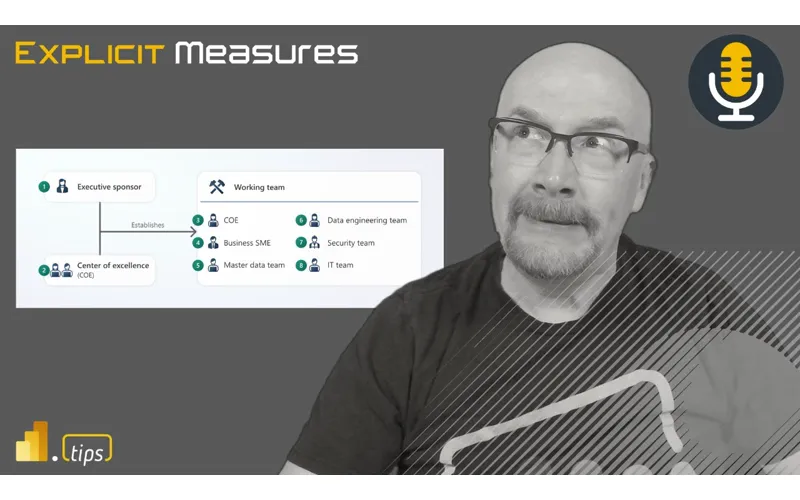
Mike and Tommy dig into the real-world friction points you hit when rolling out a Power BI / Fabric Center of Excellence (CoE), and what to do about them.
News & Announcements
-
Power BI implementation planning: BI strategic planning - Power BI | Microsoft Learn — This article helps you to define your business intelligence focus areas and objectives through strategic planning.
-
Power BI implementation planning: BI strategic planning - Power BI | Microsoft Learn — This article helps you to define your business intelligence focus areas and objectives through strategic planning.
-
PowerBI.tips Podcast — Subscribe and listen to the Explicit Measures podcast episodes and related content.
-
Power BI Theme Generator — Create and download Power BI report themes using the PowerBI.tips theme generator.
Main Discussion
In this episode, the conversation focuses on the organizational (not just technical) realities of rolling out a Center of Excellence: how you set expectations, where governance helps vs. hurts, and what to do when adoption doesn’t match the plan.
Looking Forward
Try this on one real project first: choose one idea from the discussion and apply it to a current report or model. Once it’s stable, write down what changed (and what didn’t) so the lesson sticks.
Episode Transcript
0:30 good morning and welcome back to the explicit measures podcast with Tommy Seth and Seth and Mike good morning everyone welcome back morning good morning good morning good morning how are you doing well feel great this is a next section yes next intro section moving on I just going to say this is a pre-recorded episode so this is one that we’ve recorded we have individuals traveling it’s summertime people got to people got to move so we’re doing a couple
1:00 move so we’re doing a couple pre-recordings here for for the audience so just FYI we will probably not be live in the chat window but we’ll still try to make this a good Lively episode as well we’re at the last like what 50 days before school starts so we’re all getting our vacations and we all got the stuff yeah we’re we’re close when you guys August 20th for us in Chicago we’re a little bit later here in Wisconsin we start on September 1st I think is when we start okay I believe that’s because we get really
1:31 that’s because we get really good weather we get cold weather in the winter but like they try to extend our summer as long as possible and it really gets warm towards the end of August and sept into September even a little bit there so I think I think they try to extend the the season as long as possible listen we we see your guys is advertising it’s everywhere yeah come to the Dells yes come to Wisconsin Dells still open you get a lot of Lake Geneva stuff too no it’s I dor county S they have all the money apparently for County come get the D County cherries
2:03 County come get the D County cherries yeah it is yes that’s a big one they are good they are good that being said let’s jump into Zoom our main topic today will be a mailbag so we have a great mailbag topic coming in today we have a longtime listener who has a great question it’s going to be quite elaborate so talking a little bit more around what the Coe does how to better engage your leadership inside your center of excellence I think this will be a very interesting topic honestly I think this is more common than we think think this is happening more often than most people would like
2:34 more often than most people would like to acknowledge so that being said let’s do a quick little beat from the street here Tommy you’ve got something a little topic around the center of excellence yeah we’re closer closer to the adoption side of things and it’s funny when we go through all the documentation in the road maps it’s and I think all of our examples it’s like well they were using Excel and we should have powerbi and everyone was wow however I’m finding a situation where that doesn’t always happen and this is pretty pretty relevant again again it is happening where you have
3:05 again it is happening where you have these archaic processes in archaic tools showing them powerbi showing them an easier easier way however they’ve been using these processes for so long and not just the last two years we’re talking years and the same people in those situations not new people with this tools why are we’re using this tool maybe even the people who bought tool in the first place or or were responsible for getting that tool who are dead set holding on
3:37 that tool who are dead set holding on and not willing to let go of like well I get that but we can’t change this because there’s a hundred things that in the past that would also have to be affected all the dependencies on this archaic process and I think to me this is showing one of those where just because you can show the wow or the demo doesn’t mean that everyone’s going to be on board or more importantly the right people going to be on board and I want to get your guys’ opinion how much do you see that and even just now I think we’ll see this with fabric but how much
4:08 we’ll see this with fabric but how much are you seeing this with you are tooling are your other other clients or other departments this is a great question so I’m going to I’m going to take your question I’m going to slightly maybe modify it to what I’ve seen as well so I’m I’m going to keep I’m going to keep the vein here of there are old there are old things in existing processes inside your company that potentially need to be updated in in general like when new tooling shows up I think there’s two ways you can approach it you can conform the new tooling exactly to your old
4:39 the new tooling exactly to your old process or you can take your process and relook at it and saying in lie of the new tool how should I adopt my process so that the new tool can be used in the same fashion right maybe the the the general availability is the same but the data and how you process it might be different I I feel like there’s a lot of things in companies that have just been built and established and they’re just processes that people have built and moving them into fabric
5:10 and moving them into fabric particularly maybe the semantic model and the powerbi side is a new world for people they haven’t really been able to think about sharing data like sharing the the the semantic model as the key element usually it’s been around I’m building this information I’m doing the data engineering as a person and then I’m sharing out the Excel file or those other documents PowerPoints whatever those things are so there’s there’s a lot of things here that I think are just fighting against culture because there’s a ingrained data culture of how we do things what what what I will say with this though is I also feel like any of
5:40 this though is I also feel like any of these data engineering activities that happen behind the scenes semantic models and reports are pretty visible you can very quickly see that there’s actually something being produced and developed when you look at backend processes or these archaic systems and like archaic processes they just happen whether they’re right or wrong I don’t know whether whether they work every single time I don’t know but they’ve just been working behind the scenes and so I think there’s this assumption that oh powerbi shows up and I’m going to take a 10-year Excel document that we’ve been to building the
6:10 document that we’ve been to building the last 10 years we’re going to be able to in a week turn it over to powerbi and I’m and on one hand I’m like yes we can do it faster than it took you 10 years to develop the process but you need to give us some time and there’s this kind give us some time and there’s this it’s not a black hole I would say but of it’s not a black hole I would say but there is this element of when you look at how much time you’ve taken to build the solution and then you compare okay I had to unbuild that and rebuild it in a new in a new tool there’s a lot of effort yeah documenting learning
6:41 effort yeah documenting learning figuring out what the old thing was doing figure out all the edge cases okay you designed this part here to clean this data because of this XYZ reason okay I have to repeat that same cleaning process in the new process like there’s all these things and you have to be patient there has to be some like you can’t just expect all that stuff just to turn over and when you start working on backend things it’s much harder to communicate progress is maybe where I’m trying to go yeah that’s a lot of words to say it’s hard to communicate progress in the back end of things because you have to learn what
7:11 of things because you have to learn what the process was and go figure out how to rebuild it again in a sustainable way yeah I think yeah yes I’ve seen this before yes you have individuals that are doing that I I guess what some of the relevant questions or statements that that come to mind when going through those is the the first question is are you just are you presenting a new technology to them and the value is not there right like does the value of the change
7:42 like does the value of the change outweigh the the burden of moving to something new because that there is there is a like on a high level it’s got to it’s got to be it’s got to deliver something way better than the current solution does the business want to change something that already works right do the resources want to learn like those are the things that like okay what does the business do well if they’ve been here for 20 years and they know the business in and out it’s not like they’re going to get rid of the
8:12 like they’re going to get rid of the person because they don’t want to learn a new thing right so what are they going to stick with so good point so all of those like a lot of those are the push backs to saying like we don’t want to move forward with like the newer stuff in in those areas I think it’s really important to lean into risk reward right so what are the risks with existing sticking with the existing system what are the rewards for
8:42 existing system what are the rewards for that and then do the same thing with the the next gen of whatever you’re trying to push them into because that takes it out of like the technology only conversation and it’s like listen here’s what we’re thinking about future state right your your risks of this stuff being deprecated it’s not in Cloud it’s gonna like it could blah blah whatever they are and then hopefully what you’re presenting in terms of like going to fabric or some other nextg solution is you’re setting them up
9:14 nextg solution is you’re setting them up for the future well if AI is part of the conversation maybe that’s a driver right I I don’t know but it’s also a caution for technologists I think in that just because it’s a flashy new thing doesn’t mean that an organization wants to adopt it because it’s a flashy cool new thing you need to you need to bring the value to the business so all in all I think push backs like this require a a much stronger reward list
9:47 require a a much stronger reward list yeah because there’s there’s probably harder conversations whether that’s in time and effort because with ingrained processes there’s a lot of dependencies that do like Ripple through and sometimes those answers are just no yeah right like there I yeah I’ve been I consulted with a few companies where it was just like man that tail is so long and there’s so many areas of of departmental engagement that that’s a major change so drives to like change
10:19 major change so drives to like change those things you don’t start there like it’s great let’s focus on these other areas let’s show a lot of value and then over time if that’s something you also want want to roll into we’ll tackle that at the time but it’s not like it’s like building up the know the data culture does it
10:37 the know the data culture does it fits in there but it’s like if powerbi and fabric and all these things are brand new to an organization you don’t pick your hardest thing and you say we’re doing this you you start and show you the value and then you you gain excitement and I think that’s a much better path towards success and that’s very similar to actually how we’ve approached this we’ve taken two approaches here one a word that comes up all the time when we talk about adoption is the empathy because a lot of times we realize two it’s not just the
11:08 times we realize two it’s not just the technology again the other big part of this is the people who are involved on who owns this and and and if you just go like the technolog is better well that means that can mean very little and the other side of it and I know it’s going to sound like a long stretch but is the patient zero of the housing crisis of 2008 and the reason I say that I know that sounds like a long stretch is basically douch or or deuts bank was in charge of shorting they got a guy said hey even though we’re really
11:39 a guy said hey even though we’re really big into the housing market we picked one guy who’s going to short it for us and he had to come up with a plan to show the value on basically doing everything that the whole industry was not doing which was we’re g to short the housing market so we’ve taken this approach in in a sense of looking at we know we have to show Extra value here we have to take extra attention to Showcase something that you may not want to do or you may not perceive the value in yet so this actually goes perfectly into what
12:09 this actually goes perfectly into what you said Seth where we’ll put slides together where we actually have a conversation on that risk reward side of thing where there’s extra attention that needs to be put together there’s extra data that needs to show why this is a good Focus for you like what are you actually doing now you’re not aware of of how many hours you’re putting in but we’re we’re really focusing a big time on and his DEA Bank actually
12:40 time on and his DEA Bank actually not the other one but really looking at what’s going on in excuse me really showcasing the value in actually putting together dedicated time yeah and again I think what you’re speaking there J Tommy is is that value proposition right is the pain of going through a change more or less than the value you’re going to get out of it and I think a lot of this is Executives need to weigh in is it strategically in the direction they want to be do they want to continue to leave and I think the
13:11 to continue to leave and I think the argument is very clear I love your idea Seth of pushing for the rewards the the the the I thought it was it was a good opportunity to like okay risk and rewards on this one and going heavier on okay where’s our current process right very few risks cuz just does its thing but there it’s a little bit broken doesn’t work all the time and by the way when Tommy gets a promotion who’s going to run the process who’s going to do the thing now moving forward all the things y do we have it documented well enough those
13:42 documented well enough those are the things that I think come up in those conversations that say no that is a risk oh we do want Tommy to do other things and just be spending his time chewing through data all the time now let’s really focus on okay what do these new tools provide us and how can we better automate and that’s one of the big stories I use every time I talk about powerbi is automate automate automate that’s the story here about there’s a lot of automation that can can take over that that helps move this on very very well excellent well that I think any
14:13 well excellent well that I think any other thoughts from Tommy’s center of the Excellence question all right getting a move on look from both Tommy and Seth all right let’s go on to the main question so Seth I’ll kick it over to you for our main topic today talking about overcoming challenges in the community of Excellence rolling out to your organization take it away Seth well for all of all of those who were looking forward to me reading documentation for pages on pages that
14:43 documentation for pages on pages that probably won’t happen this mailbag this is lengthy so sit back and enjoy the enjoy the story of of the mailbag CR it’s a good one though so we decided to read through the entire thing hey guys I’ve been listening to and Rel listening to episode 277 powerbi implementation Tuesday’s strategic planning for the past couple of days and I have some questions the problem the Coe I lead did
15:13 questions the problem the Coe I lead did a big powerbi roll out in January of this year it led to a deluge of requests for support engagement Etc that we do not have the manpower to effectively support this has led to a general breakdown in support and Trust from our executive sponsors who see the Coe especially the infrastructure components Gateway server management capacity planning is not meeting expectations some context we have a very very disengaged executive sponsor team unless
15:43 disengaged executive sponsor team unless there is a problem that they perceive as critical that we are not solving these include data connectivity firewall issues that are under the control of entirely different teams not the Coe our exact sponsor previously led a powerbi Coe but has not given us guidance on running and deploying the Coe we’ve been asking him for support since September of last year today 620 is the first time I will actually be able to speak with him oneon-one second bullet there is a conflict over Coe ownership between myself and two
16:13 Coe ownership between myself and two other individuals who support the platform I don’t necessarily care about ownership I just want the Coe to be successful that said leadership has never communicated to our group as a whole the delegation of authority bullet three we’ve developed racy charts goals Vision Etc but we do not hear feedback on these items from our exec sponsor until months after they’ve been written our user base has been developing reports since March of last year Coe was founded later there are entrenched bad
16:43 founded later there are entrenched bad practices especially when it comes to data modeling far too many reports are using many to many relationships in their models do not adhere to Star Snowflake schemas and have an over Reliance on big wide tables what we the Coe do and user support connections stack support Gateway troubleshooting error review training and ticketing bullet two onboarding and training bullet three capacity maintenance and management bullet four Gateway server maintenance log reviews Etc bullet five
17:14 maintenance log reviews Etc bullet five platform observability via powerbi apis bullet 6 portal support and development we both have SharePoint site where we publish connection change guidance information about best practices re data modeling decks Etc and more as well as dedicated teams Channel where users post questions and we post updates I guess what I want to know is how do we come back from this we did a roll out we have a huge engaged and very appreciative regardless of what the exact sponsorship
17:45 regardless of what the exact sponsorship perceives audience this is backed by survey data Community callouts and award and we support 1700 reports nobody is dedicated to the Coe full-time although I spend an average of3 hours a week supporting it as well as 20 to 30 for my day job as days as does another employee I heard all of the nightmare scenarios in the call but would love to hear if you have guidance for for resolution appreciate any insights links thoughts
18:15 appreciate any insights links thoughts Etc thank you guys for everything you’re doing this was an amazing question wow so first off there was no name left so thank you Anonymous user for sting us this incredible well thought out very well articulated question looking forward to getting into this one deeper there’s a lot to unpack here so if you told me or you asked me hey Tommy you’ve done some adoption projects before what would be the keys to failure and without even looking at
18:46 to failure and without even looking at this mailbag what’ll go well a disengaged executive sponsor conflict with Co Coe bad feedback and bad data and that’s exactly what this mailbag says so says so unfortunately what our our mailbag user is putting together is really the recipe for failure it’s all the things that you would not want or or would really be Catalyst for things to go bad and go bad quickly I would say I I maybe you’re
19:16 quickly I would say I I maybe you’re you’re using language that I think is a bit harsh in this situation from my perspective am I already doing the hot take just being really critical no I and I really though I don’t know about that well the reason the way I read this there’s a lot of things going well but it feels like the center of excellence and particularly this gentleman and the other Gentleman on their CA is carrying a lot of the load and acting as if they are more of the executive leaders on the part of the project and there are some things that are here that are
19:48 are some things that are here that are so let me give you some more I’m I’m going to read into a couple details inside this that may be sure insightful as to what we’re seeing here as well well when we talk about implementation and rolling out when you go so we went through the whole series around the implementation planning and strategy and like so we have the Strategic plan what we’re going to do what’s the Tactical planning how do we get into the solution planning planning now there always seems to be this area of we if we open the floodgates too
20:18 of we if we open the floodgates too early which it sounds like here this has done this Everyone likes the tool people are able to build what they want to build they’re able to get stuff done that they need to and what has happened is we’ve had a operation again they’ve been building reports way earlier than the center of excellence was established so there was no no rules no governance less control at the admin portal so you less control at the admin portal so imagine imagine opening up your know imagine imagine opening up your whole company to everyone makes workspaces and everyone makes data and everyone builds reports this happens this is this is a bottomup approach this
20:48 this is this is a bottomup approach this is starting from the business and saying here’s a tool that you can use they figure it out and get better from there so how do you pull how do you re in how do you start controlling something that came came that started with no control and to be honest I think this was part of Microsoft’s plan or or at least in inadvertently this was part of their plan the plan for Microsoft is
21:12 their plan the plan for Microsoft is everyone does analytics everyone gets value from powerbi this is why the powerbi pro license is attached at an E5 level by default it turns on you just navigate to the website it works you can build what you need to build from Microsoft standpoint it makes a ton of sense right that is the message that’s the right message so I I feel like what has happened in this organization and this is maybe my perception is you think about all the reports that could be created they may not be super quality they may not be super from the
21:42 they may not be super from the center of excellence I feel like there’s a portion of this that says okay look there may be a bunch of models and things that are sitting around the surface that are not using best practices they’re B directional relationships the Dex is efficient it’s not as fast as it should be however there should be some things in this pool of information that the organization is building that are more important than others there’s got to be some opportunities where we see the same team pulling the same data multiple times at 1700 users I guarantee you this is
22:14 1700 users I guarantee you this is happening at some parts ofr the organization so what I think the co the Coe should be doing I think a lot of the things they’re building and they’re talking about already are good they’re good good engagements I I would maybe look forward to trying to talk more of more of my executive level okrs down to what we’re doing at the center of excellence level and and communicating okay strategically what are the company goals that the company has and in this gentleman and his other
22:46 has and in this gentleman and his other partner or co-lead or whatever they’re doing right when they’re spending 35 hours a week between the two of them I would try to align those goals back up to main level company objectives and be very clear about that and even if the executives aren’t that engaged I would a minimum start me personally I would regularly weekly or something have a bit of an email a message a report something that I can just regularly push towards them I think executives are not
23:16 towards them I think executives are not necessarily always concerned with this data stuff and how this is all working and how it’s growing in the organization they just want to know that are we meeting our business needs with data and so if you can continually regularly pushing back things up I also my opinion here is I think there’s also an opportunity here to build a larger road map right you’re in the center of excellence what you’re doing what’s working what’s not working you should be picking out data sources or things that should be common you should be picking up bigger projects that last potentially quarters long and saying hey we’re going to work
23:46 long and saying hey we’re going to work on this major initiative to do XYZ thing we’re going to start whatever that thing is pick pick the things you think are going to be most impactful for your business and start there communicate it up Upstream and then work on up from there so that’s what how I would approach it yeah sure there’s probably a million other things we can do here too yeah but you’re you’re almost too far past that right like you’ve open the floodgates to the organization true as a sport center so you’re like depending on what the day job is maybe he’s already doing that here she the person you
24:19 doing that here she the person you doing that here she the person so so that that’s a a potential know so so that that’s a a potential challenge point to me right like we’re already out of time right because it’s I I think some of the things that stand out to me and I’m going to probably preface the the the feedback in this conversation to what am I what am I seeing what would I recommend for others who have not found themselves in this position and then I think some potential ideas of how to not necessarily get your way out of this but
24:50 necessarily get your way out of this but help help solve it so things that stand out the first thing that stands out is that whoever the author is has a lot of passion like it is driving this initiative from the bottom up and that is the most difficult way to make change in an organization especially when you start throwing out the names like Center of of excelence the other glaring thing that I think is the reason why all of
25:23 that I think is the reason why all of the other things are such challenges is you don’t have an executive sponsor right you you have someone who said yeah sure go ahead go ahead and do it it sound sounds like a fantastic idea like yep solve that solve that business problem and then walked away that that’s not an executive sponsor because an executive sponsor does things that are outlined here as pain points right
25:54 outlined here as pain points right who’s providing overall guidance who’s assigning ownership of particular things within the organization there should not be infighting in a Coe right like there should and you you absolutely could have people who are he out here or she outlines two other individuals right so you got three people in this realm there should be clear roles and responsibilities of these individuals who owns overall guidance who owns overall Coe who’s doing what and
26:24 owns overall Coe who’s doing what and that can only come from the executive level so in some respects it’s the the other byproduct of this is it it reads as if the idea was accepted without any of the Staffing right so what you’ve done is open the doors to solving all of the problems across the board without aligning that to the
26:55 board without aligning that to the actual like needs that are going to be a byproduct of opening that door can I can I jump in I love that point you make there Seth and the lack of I know you have probably more I just want to jump on your lack of executive sponsor here and I’m I’m Googling or going back to the Strategic implementation planning strategy and I like the phrase that Microsoft I just want to point in here in Microsoft’s documentation the executive sponsor is typically provides top- down objectives to support the working team including
27:25 to support the working team including funding right so they’re paying for someone’s salary to some to own the center of excellence part these two things seem based on this conversation that I’m hearing here sounds like they’re a bit in Conflict right you have a day job that you’re doing something for support maybe your it and then you’re also supporting the Coe that’s also a lot of your job so you’re working more hours per week to keep both things running the one I would like to point out here is it sounds like there potentially as many executive sponsors in this organization and no one person
27:55 in this organization and no one person is taking lead or point on this to take ownership of that and I think you’re right Seth I think this is a lot of these problems are potentially stemming from someone at the executive level top needs to say these are our objectives we’re going to do these big thinking goals for data stuff we need to like make those our North Star our Direction where we’re going to go and then the team can start falling a little bit more in line and then with that commitment is if people aren’t falling
28:26 commitment is if people aren’t falling in line EX executive sponsor steps in and says look I’ll go talk to these other executive leaders in different teams and say look we’re trying to do a thing here if you want to play ball with us this is how we’re GNA have to play ball so I I find it interesting where Mike you disagreed with me but I don’t know if you actually refuted what I said and I want to make sure I didn’t say this is a failure saying this is a recipe yeah for a failure yeah I would agree with you yeah and I think I thought was just a bit harsh I think I would just soften my blow bit that’s the only thing I would because and and I
28:57 only thing I would because and and I agree agree and and Tommy only to interject only only because like the when you open the doors to the organization or if the organization is already developing self-service without guidance right like that isn’t that’s a beast man like it is you never know what direction that’s going to go in and this is a state of things are getting out of control so to be like super harsh and critical about it it it does it does
29:28 it it it does it does it’s there’s a little push back I’ll rephrase I’ll rephrase it but that’s our thing but or a little little personality thing there though too thing let me rephrase it if this trend continues it’s going to be very hard for this to find success does that sound better to you because we’re we’re on the right track okay but again I still I still I still would stick with my first phrase though because you’re talking about a lack of
29:58 because you’re talking about a lack of executive sponsorship which we have said many times before you don’t have that you’re not going to succeed or you’re not going to do well you’re already dealing with bad data models you have a guy who’s a person who’s gonna deal with burnout very soon and they have no dedicated bi people like they’re all part-time and you’re dealing with this much support I’m sorry I’m I am not I’m going to stand by what I said or who would I be if I didn’t stand by I said because dealing with the things that are
30:29 because dealing with the things that are most critical for adoption and and the reason I think maybe why I’m pushing back just a slightly bit on your phrase there right I I I think that there is this idea of I think we all would agree that some of the the major Milestones or some of the major rocks that need to be moved in organization are at this very large centralizing shared services area area I’m not sure all businesses are equipped
31:00 I’m not sure all businesses are equipped in strength well enough to really get their heads around what this looks like and so I do think there are there are businesses out there that are doing like pockets of analytics and it’s more about so think think about like you so think think about like the center of excellence is like know the center of excellence is like here’s main here’s Big conversations that we’re having about data that we’re going to be utilizing throughout the entire organization we’re going to be the central body and then we’re going to just give out access to other people I think a lot of times you can can run your business and I think I’ve seen this as well where
31:31 think I’ve seen this as well where certain teams just decide they’re going to handle things the way they’re going to handle them right the the the IT team is only there to enable and give access to powerbi that’s all they’re trying to do and that’s actually all they want to own there does not want to be an
31:45 own there does not want to be an initiative of that team being a center of excellence so I feel like in some cases here again this is where I’m going to go back a little bit to like I’m going to make the argument for a business-led bottomup approach growth of powerbi and so there may not be a unified strategy around some of the central data sources there may not be a unified strategy around making common things or common elements that are reused across departments it may turn into each department
32:15 may turn into each department doing their own thing sure personally I would like to not agree with that I’d like to have more companies communicate and work well together across the different teams but I fully well know certain teams are going to be more analytically there than other teams and they’re going to build better models they’re going to get through harder challenges and this is this is potentially a A tradeoff in the business right the business May trade off you right the business May trade off hey we’re going to spend a little know hey we’re going to spend a little bit more money on our people our things because
32:45 because the we’re going to spend more on premium but we’re not going to have the most optimized models in the world like right that’s that’s a fair trade-off because you can be a bit more abusive with the models tab tab models are incredibly fast and so because they’re so stinking fast you don’t need to have the most optimized everything to make it give you give you results and and so I what I feel like is they may be pockets of teams teams and departments that are going to be more an analytically Savvy and getting things done hopefully what I would see here is the success of those teams the wins of
33:16 the success of those teams the wins of those teams as they get further down the road here I hope that they’re more prepared for things like fabric better automation thinking about things like analytics and AI like more Advanced feature sets and so you can use that as an example to then make the case of hey this finance department is just crushing it they’ve got these great processes they’ve built their own mini community of Practice Center of Excellence around their team let’s rinse wash and repeat that and let’s spend the money to bring that data culture from
33:47 money to bring that data culture from that department to other parts of the business oh and by the way we’re going to we’re going to put a re-emphasis on a better Center of Excellence to help this we’ve done something that works well in this one Department let’s try spread across other departments so to be very clear I’m pushing for that Central bi team I’m pushing for the Coe I fully realize if we don’t get that level of adoption at the highest level maybe at the departmental level we can get departments to adhere to this a little bit and you get a department sponsor and they figure out what what works well for them yeah I I
34:19 what what works well for them yeah I I guess to Tommy right like it’s still it’s still harsh from my perspective because it it’s really easy easy to judge an outcome it is much much harder especially with larger organizations to navigate the culture of an organization adapt to all of the self-service tooling implementation people priorities and push for strategic changes which a Coe is fundamentally a strategic change to try to elevate an organization and that
34:51 try to elevate an organization and that is if it was easy there wouldn’t be you is if it was easy there wouldn’t be 10 pages of implementation know 10 pages of implementation documentation there that Mike and and do trainings on and he wouldn’t have people coming all the time going how do you guys handle this how do you guys handle this so to make cart blanch statements is very easy and speak I’m not going to go in on you but like speaks to it’s really easy to look at a situation and be critical of somebody or say like hey
35:21 critical of somebody or say like hey what you should do is this without the context of a lot of those other things a thousand per. so if I were to say how I’m G to tease on one more thing I like your point Seth and before we move on to the next point I just want I was actually thinking about this as well this I think slightly changes depending on how the size of your data is and let me let me give you some context you can put a lot of data in a 1 Gigabyte tabular model if your if your company doesn’t deal with a large amount of data there’s not a SI there’s not a volume issue here I’ve seen entire companies
35:53 issue here I’ve seen entire companies put all their sales data for all history into one one tabular model sure yeah yeah and and the reason I’m saying this is because there’s a difference between I can fit all my data into a one gigabyte model or less because that means a pro license can be used for every single use case in your business and that’s an entirely different plan and and that’s an entirely like if you imagine the it’s the control part right if everyone can do all their data needs inside Tab models that are under 1
36:24 inside Tab models that are under 1 Gigabyte Pro licenses are the way to go because you can build as many models you need they can be not nearly as performance as you want it doesn’t you’re not spending any more money for poor performance on those models other than the fact that you’re having people wait longer for results to be returned so there’s there to me there’s also potentially a threshold Point here too if this company has 1, 700 users and everyone’s able to get the data out under that threshold or build lots of models that support the one gig or less size you don’t need to start thinking
36:54 size you don’t need to start thinking about larger Central models that would then require a bit more engagement from that Center of Excellence so there’s there’s potentially even a need here around the volume of data you’re dealing with and if it’s not that big and you’re just trying to build reports I think that also impacts some of this decision and how much you need to engage I I agree but at the same time like if it th this individual and one other half time are supporting 1, 700 reports that’s a lot of reports that’s that’s nuts so even if you have the data
37:26 that’s nuts so even if you have the data you still have the lack of resources and I think it’s a huge part here so to me and and I feel like I agree that’s a great solution but I feel that’s building the deck without having the foundation for the house and to me again without trying to say the only the and I’m not saying either the only way this works is the ideal approach that obviously we know yeah both from experience and experience that’s not the case but you have to start somewhere if you’re going to turn this around and
37:56 you’re going to turn this around and it’s not we’re going to just or 10 people well it probably starts with the goals right you’re already into it to sess point we’re past a like we have gone past the point of no return H to some degree we have rolled this out people are expecting this we’re not just going to turn it off or start over we can’t do that so we have to deal with the cards that were given so it starts with you have to one have a dialogue and a cons somewhat consistent dialogue with an executive sponsor and the Coe and you
38:27 an executive sponsor and the Coe and you have to at least start with okay do we have our goals our long-term goals and our short-term goals for what this is going to be for the organization I don’t think you can really get the right resources without that you’re not going to get the data or the dedicated time to fix those data problems without that so right now if if I were this person and we’re looking at everything and what the Coe is already doing and the burnout that probably already is already being felt by by this person and
38:59 being felt by by this person and others you have to begin that conversation with the Coe or find that dedicated person and at least start with can we have a conversation about what what’s the goal what does success look like for having powerbi or having business intelligence at our orc for these 1700 people what does it mean for you what does it mean for the organization and I feel like everything right now is more permanent than ever to have have that I easy easy to I think I think the challenge Point even
39:30 I think I think the challenge Point even to to Mike previously is like you reference okrs and I think tons of organizations do not have these and I I would if I’m going to infer I don’t think this organization does either yeah if if they do then somehow it reads like the supposed executive sponsor was not aligned to a major objective revolving around the Coe and the organization which would be astounding to me if you’re going to open that door
40:01 to me if you’re going to open that door to not have that as an objective or for the executive sponsor which should filter down to the person who’s pushing up and actually doing all the work here because it’s not it doesn’t seem like it’s the objective of the sponsor because they’re not engaged they’re not helping they’re not assisting so they don’t have any skin in the game is what it it reads like you need Buy in right and I think that’s what you’re you’re talking about Tommy exactly a thousand per. I I like your point there Seth around the okr because there’s there’s in here in listen in reading through
40:31 in here in listen in reading through this there’s a lack of a couple phrases or terms I’m looking for right your okr even just talking about like is there’s no language in this question around the company has established these objectives are critical and I think honestly I think if we step back and said hey let’s go talk to any of those executive leaders and say look we think analytics is strategic to the decision- making in our business they would agree we think that having a a department a team a support mechanism around our teams using
41:02 support mechanism around our teams using analytics is important I think we would also would agree so I think there’s I think there’s this idea of like there’s probably an Unwritten or they don’t have a clear objective of all those okrs at the organization level because I think any business you talk to at that leadership level would always assume we’ve got to get better at data we’ve got to get more of it we’ve got to have our people be equipped enough to be able to handle that data and make decisions on it we’ve got to be able to trust it all of those conversations at the very highest level I think makes sense and I think tying back the what we’re what
41:34 think tying back the what we’re what we’re missing here in the set of Excellence is we don’t have a dedicated user running the Coe even just one person there should be a minimum of one person I think in this organization to just say you’re the guy we’re going to shed the other responsibilities from you let’s move them to other people in the organization and because you’re already spending 35 hours a week executing on this okay you’re dedicated this is your job and it and and like that that is an interesting one and I’d like it’d be it’d be good to get your feedback too
42:04 it’d be good to get your feedback too here though Mike is like it depends is there a dependence on like what type of Coe is it like is it because a Coe in many respects just can be the central bi team with added responsibility right like in terms of like data management governance like it interjects and opens
42:21 governance like it interjects and opens above and beyond just business intelligence so are you opening that door to like you already have a team you’re adding to it or was this like hey we do these things but we’re also going to tack it on but it we’re assuming those responsibilities without the additional Staffing thing right like how do you usually see a CO set a CO set up just a performance body is it is it a a shared resource across multiple different units that are talking about
42:51 different units that are talking about data governance that are doing data management across the ecosystem that are creating standards like you can run things like that that’s more of a govern as opposed to diving into the support aspects because that could just be say hey you’re business intelligence you’re you’re part of the action arm of a Coe yes so I will say I’ve seen it multiple ways in organizations and I feel like I see in smaller organizations there becomes it almost grows a little bit more organically there is that one individual
43:22 organically there is that one individual that spes values from wins with doing things with it where I feel like those one individuals make a lot of successes those individuals build specific reports EX for the executives to make decisions so when things when the center of excellence really fundamentally shifts here is that one individual or th those narrow group of individuals that are serving the data to the executive leadership executives are going to ask questions how’s our Revenue what’s the best health of the business there there are some main questions that are occurring here that are getting
43:52 are occurring here that are getting pushed down to a person or teams in smaller organizations that falls on one person that person typically Globs on to powerbi they become this the report server to the executives and they are then challenged with how do I roll this out to more parts of the organization and then they start exploring getting feedback getting help and at some point I think there’s a there’s a there a moment here where that individual stops doing as much of their other roles or jobs and becomes more of that Center of Excellence leader and corresponding
44:23 Excellence leader and corresponding directly with executive leadership to make sure they get the data they need that’s like like to me what you’re defining to me is is I I guess an evolution of how business intelligence and Reporting can open the doors but like the Coe is strategic yeah it’s not just support and but that’s just that’s just in small organizations I think in larger organizations it changes there is a dedicated Coe team and I think that comes more out of the it organization that might just be a semantic thing I would say you don’t have a Coe at that
44:54 would say you don’t have a Coe at that level yeah because well I’ve seen the most most successful is their the higher level of the Coe they actually have authority to make decisions and it’s not just like everything I’m seeing at least in in the mailbag where end user support onboarding and training that’s all great but to say point it is strategic where it’s also make it can H it can make decisions and it has the authority to do so to modify or change things based on end user needs but also the resources like we either need these resources we’re only going to do things a certain
45:25 we’re only going to do things a certain way that that that you’re you’re making these declarative statements like the Coe has power and they don’t in this example they don’t unless it’s sure yeah okay fine in this example they don’t I’m telling you what I’ve seen as a successful one okay so I think they do make statements but who enforces this in this in this world right a lot of the what the Coe does listed here in this in this question was and user support helping people which is great on
45:55 support helping people which is great on boarding and training good we’re getting we’re letting people get into the program and utilizing things training and support bucket yeah and and there’s a whole bunch of Maintenance right performance are the logs on support something falls down like they’re so they’re doing all what they’re doing what I would say is these are a lot of the aside from the end user support and maybe the onboard and training those are the two things I would maybe say are purely Coe related activities because it’s about educating and grooming Talent across the organization everything else feels like an IT ticket
46:26 everything else feels like an IT ticket to me so it feels like this is instead of being this is not actually a center of excellence this is a ticket it based team that’s supporting needs from The Business Without much Direction it with data so yeah and so I think what you’re right there Seth is things that a language I would like to see in here would be what does the Coe Coe do the Coe does quarterly key project building it does strategic views of existing data
46:58 does strategic views of existing data assets and decides project planning for quarterly quarterly objectives and it sets a plan it prioritizes the work and it works towards that end and reports that back up to leadership so to me that’s what I’m thinking that’s the part that’s missing in this cue that I think is needed and potentially because this if I read a little bit more between the words here the reason the CU is not getting the love that it needs is potentially
47:29 love that it needs is potentially because executive leadership looks at them that’s the ticketing team send them a ticket do the thing and they’re not thinking of them as strategically moving the business forward it’s thinking of them we have problems you’re the team to solve those problems get them off my plate you just own it that’s your job yeah or it was the plan and the Del of support has now consumed all of the time to do all the things and it swamped which which will will kill those long-term things especially if it’s you long-term things especially if it’s trying to dig your way out of this
47:59 know trying to dig your way out of this unexpected thing and trying to move towards those directions either way a couple things I want to note as far as like ideas potentially to help get out of this situation or just let it die a fiery death because ultimately like I have seen many many people within organizations go out too fast and they burn out and what’ll happen is you hit hit the large audience of the organization hard a lot of messaging a
48:30 organization hard a lot of messaging a lot of announcements a lot of updates a lot of meetings a lot of invites a lot of like here’s how to do things blah blah blah BL blah and then all of a sudden one day it just dies it stops because either you didn’t get engaged the audience didn’t engage with you right or you opened a door and you couldn’t support it and all of the sudden you disappear off the face of the Earth because you’re no longer able to do those get keep engaged audience as a leader as a whatever because now you have to to
49:02 whatever because now you have to to Mike’s Point you’re just in support hell so I I guess my points would be this identify and point out the failures that are happening in this support area and and point them to the lack of Staffing right and one of the things I think especially in this realm is developing kpis or metrics that identify and outline that particular struggle area or like where it sounds like executives are pointing at failure and
49:33 executives are pointing at failure and make agreements and say okay well what is an acceptable number here I will push it and fix it with X resource I will I staff me to do this thing and I will turn this around to solve that problem because if it all of the sudden is like what what I think has happened here is you the organization itself started to use use self-service there’s the idea of a Coe a an idea which I think we pointed out as the problem it got traction enough to have an executive say
50:05 traction enough to have an executive say oh that sounds like a great idea they said yes without any any skin in the game and you went for it and that’s great but we you you need to roll those things into great well we all see the problems now and those problems don’t stem from lack of vision they don’t stem from from people not wanting to do things it stems from there’s not enough resources that are dedicated to solve these problems and we open to door as an
50:35 these problems and we open to door as an organization and either we are going to close it or we’re going to support the flood right and I think redirecting to the areas where it sounds like Staffing is needed is absolutely something that should be done because you need to get out of an expectation that like oh you can just handle this all right oh you just became a support team too like Whoa We did not sign up for that we signed up for the Coe there’s this area we did not see right and now we need to collectively as an organization solve
51:05 collectively as an organization solve that problem so part of that I think comes with the hardest part of this and hopefully in the meeting you were able to do this but it’s pushed for shared ownership like either this executive sponsor wants to see this succeed and has skin in the game or you get some buyin and shared ownership of the success of this because they said yes right and what I fear and I hope didn’t happen is somebody was just like
51:35 didn’t happen is somebody was just like oh yeah that sounds like a great idea run with it and if it fails it’s on you because I I it doesn’t matter to me but you’re going to you’re going to solve something for the business and I I’m not like there’s no additional budget there’s no additional anything for me to actually impact me as an executive sponsor so I really like that you did you mentioned paino because pain points are such a great way to easily become a goal if you don’t have goals or anything set something that
52:05 goals or anything set something that I I’ve seen before is this person’s probably pretty involved with knows the stakeholders on other departments knows the people like they high up on sales team marketing team or requests and reports start getting the feedback if you don’t have any feedback on pain points or you don’t have any feedback on what the goals are what are teams struggling with hey director of sales we’re working together a lot what is your team feeling are the biggest pain points with getting their data start writing these down that’s what you bring
52:35 writing these down that’s what you bring to your executive sponsor or the person who’s tied to that budget that becomes all of a sudden this a list of look we’re seeing it’s not just me saying these were the pain points it’s not just me saying I’m having burnout people are already expecting a lot and they’re not getting in a time and this is across the board so these are our biggest pain points now executive
52:56 biggest pain points now executive sponsors whoever’s tied to the business intelligence budget or the powerbi budget here’s what we’ve identified let’s prioritize them if they if they’re willing to do that or have that conversation all of a sudden you have yourself some goals and if one if one of the biggest one is lack of getting responses back or getting reports back in a timely fashion okay that’s easily found that resources are one of the biggest things you’re not going to get the resources I think unless you actually
53:27 unless you actually to one of our phrases show the value but I would start with just getting feedback from teams who are already seeing the frustration and saying we’re going to work together here you tell me what you’re frustrated with I’m going to bring this back to who’s in charge of this and or my executive sponsor and this is where we’re going to start and you’ll see Authority becomes one of them who’s in charge of this the resources getting the data right hearing from the team is going to be more or from the organization is going to be more powerful than you just coming to
53:57 more powerful than you just coming to the executive sponsor with your perceptions at this point I’m going to maybe wrap here with a little bit of starting the final thought going here as well so Seth do you have one more point before you want to go to like last thoughts here no I just have a a final overall overall thought in the whole thing okay so I’m going to love this discussion I think this is very very pertinent question was amazing this is this is like really causing me to think deeply around how does this work in the organ ganization where is the gaps that we’re
54:28 ganization where is the gaps that we’re seeing here a couple a couple thoughts or actions that maybe come to mind as I’m giving my final thoughts here supporting 1700 reports is insanely amount a large amount of reports you’re you’re trying to support that’s a lot of reporting are all of those regularly being used is there is there a an ability to to deprecate or move some of them off of your plate by saying these are no longer being utilized we’re going to turn them off and we’re going to we’re going to delegate that the other thought here I’m thinking is there’s no
54:59 thought here I’m thinking is there’s no mention of a powerbi champion and there’s no mention really around the community of practice either so I was thinking about how do we Tamp down some more and and basically offload some more these very technical supporting tickets to experts in departments I have to imagine if you’re the if you’re the only team that’s doing this again depending where your culture is in your company some data cultures and some companies are there is no self-service self service is I fill out a tip a ticket it goes to a central team they build me the
55:29 goes to a central team they build me the report and then it goes back to the users I think there is an ability here to make an opportunity around equipping Department leads or equipping people in departments to become that support center person right identifying who they are spend additional time with individuals that are really just crushing it in their department and then and then when people are requests come in say hey this request came in there’s reports broken hey I’m going to the the department lead for you is this person let me offload some of that to them and
55:59 let me offload some of that to them and so I think the also the idea here is not being I don’t want the center of excellence to be like a pure ticketing system I don’t think that’s a very good use of your center of excellence is to make them pure tickets I think it’s better to make them to move them more towards strategic movements planning education and trying to push that self-service role out to the broad Port of the organization so those are maybe a couple of my thoughts here try to get full funding for a full Center of Excellence person Center of Excellence
56:29 Excellence person Center of Excellence should be INF Federated and engaging across multiple business units there should be representatives from each business unit be able to communicate what their challenges are and then you should be able to build policy and you should be able to work with those departments to build powerbi champions in each of those groups to help service and offload some of that additional Central request and central pain and that’s maybe where I would go with some some of that using that all the information to go back to okay this is how we’re aligning to your okay is for the top of the organization and just communicate and see what happens Seth
57:00 communicate and see what happens Seth you want to do some final thoughts as well man I feel for this person it’s a tough spot to be in and there there are paths out but it’s it’s more challenging because negative sentiment around unrealistic expectations is is a real thing regardless it’s across the spum not just business intelligence right yeah so I guess my final thought are are some some ideas for other who are who have yet to go on the journey a little bit and and
57:32 the journey a little bit and and potentially for for this person well so for not for those who have not started right listen to all of the implementation episodes it’s not just one thing read through all of the documentation and get the whole scope in your head before you start taking actions would be my first point part of a plan when you’re getting this in your head and laying out the strategy to engage with an executive sponsor needs to be how you’re how you plan on Staffing it part of the plan is
58:03 Staffing it part of the plan is setting up infrastructure whether that’s tools and Technology implementation with your organization how are you going to engage and and everybody has to expect that you are going to adapt as you go because your organization is not like every other organization that’s going to be different it’s going to have different needs planning includes milestones and objectives it includes owners commitments and skin in the game
58:33 owners commitments and skin in the game from the top down because that’s how you start to start to avoid complete lack of Engagement from certain areas because there’s agreement across the board and finally I would say like you’re you’re not going to get everything perfect in your head a great way to do this is to sell it by a particular business area or a smaller group of people so start small because you’re going to learn the pain points you’re going to learn what things
59:03 points you’re going to learn what things you’ve missed in your plan you’re going to learn how to scale up and you can grow into a solution create Buzz create positive feedback right from what you’re doing and then that adds to the strength of the argument where you now have internal data that shows to Executives and others that there is a cost to this right there is a value to what you’re doing hopefully in the byproducts of what that team is able to accomplish the insights keep on track of like how
59:35 the insights keep on track of like how the benefit of engaging in these things with that business unit is changing the organization and then you can equate that to cost and either that’s a Time cost or a resource addition cost because the value I the organization is seen at the time so like it it’s tough all of this is very complex there’s a lot of mix and mash of strategy engaging with many different people changing processes
60:05 many different people changing processes and if you do it too fast sometimes you find yourself in this state where you overcommitted and you can’t support it and that’s a hard place to come back from because depending on what was pitched could have been the right idea could have been the right plan but if you miss any parts of these things can go off the rails and when they do it’s a real challenge to get it back on track because the Optics aren’t just you and a executive leader or you and a smaller group of people it’s the entire
60:36 group of people it’s the entire organization and that’s a hard thing to sway so good luck to you Tommy any final thoughts I feel like I’ve said all my hot takes and thoughts but no I I I would say like I said the biggest thing is there are some found foundational attributes that you can apply regardless of where you’re at it doesn’t mean you have to always start at the beginning and I’ll just mention really I think the two is is setting up those goals and if you need to get those from the pain points I’ll reiterate that
61:06 from the pain points I’ll reiterate that that’s a great place to start if you’re hearing or you can get the actual data of where frustrations are it’s a great place where someone’s going to start listening because someone else is tied to the budget there and then it’s really I think to your point mailbag person is get that Authority and whether it’s you or another person on those roles and responsibilities those are literally two critical aspects of the beginning of implementation planning is our goals and our roles and responsibilities obviously to
61:38 responsibilities obviously to everyone’s Point there’s a ton out other things out there but to me that’s the foundation that’s the base of wherever whatever else you’re going to do resources good data right people it starts with your roles and responsibilities who’s doing what who’s in charge of what and what are we actually aiming for I like it excellent very good conversation I really like this topic today very thank you very much for the U the question this was really good conversation I think we could talk about this one for at least another episode and keep going down this rabbit hole but anyways thank you
62:09 this rabbit hole but anyways thank you very much we appreciate your time if you found this conversation in Cel if if you found that this resonates with your organization around the lack of Engagement there’s lack of direction from your side of Excellence hopefully there’s a couple things here at the end of planning being strategic and getting that engagement that you need to the executive level leadership so you can really be successful in winning here so hopefully there’s a couple nuggets observations here that maybe you could take away from this and leverage inside your business with that being said please if you don’t mind if you
62:40 said please if you don’t mind if you like this topic and you think someone else should hear it please share with somebody else that’s the only way we promote this we just do it by word of mouth and people who like engaging with this content Tommy where else can you find the podcast you can find us on Apple and Spotify or wherever your podcast make sure to subscribe and leave a rating it helps us out a ton we’re doing a lot more mailbags you can tell today one of those days and if you have an idea a question or a topic that you want us to talk about on a future episode head over to powerbi. com
63:15 accolades and praise and whatever those things may be and obviously a great question join us live every Tuesday and Thursday a. and join the conversation on all power bi. tips social media channels thank you all very much and we’ll see you next time [Music]
Thank You
Want to catch us live? Join every Tuesday and Thursday at 7:30 AM Central on YouTube and LinkedIn.
Got a question? Head to powerbi.tips/empodcast and submit your topic ideas.
Listen on Spotify, Apple Podcasts, or wherever you get your podcasts.