
Writeback With Fabric: Mailbag – Ep. 344
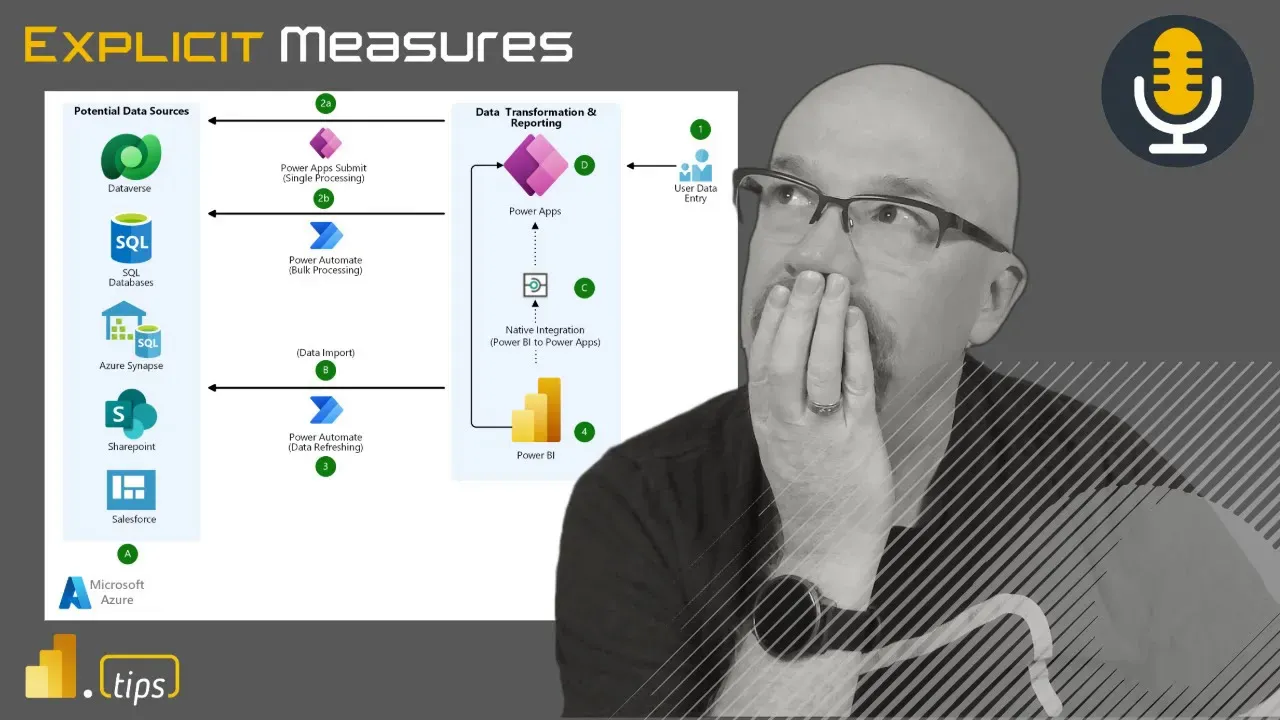
In this mailbag episode, the crew talks through writeback scenarios in Microsoft Fabric and how to think about building practical, maintainable solutions.
News & Announcements
-
PowerBI.tips Podcast — Subscribe and listen to the Explicit Measures podcast episodes and related content.
-
Power BI Theme Generator — Power BI.tips - The worlds best theme generator for Power BI reports. Increase your speed to develop stunning reports using this free theme generator. Themes are essential for any report developer’s tool belt. Visit…
Main Discussion
Writeback comes up constantly: capturing user input, approvals, and “what-if” planning — but doing it safely (and in a way that doesn’t turn into a reliability nightmare) is the hard part. The team walks through common patterns, tradeoffs, and practical guidance for Fabric-based solutions.
Looking Forward
Start with the simplest writeback that actually meets the need, and make the data contract explicit: who can write, what they can write, and how you’ll validate and audit changes.
Episode Transcript
0:32 good morning and welcome back to the explicit mures podcast with Tommy Seth and Mike good morning oh there’s a little kid introduction there here we go yeah good morning we were just talking before we got on the podcast that we think the kids and or the parents are ready for everyone to go back to school that was actually my wife so yeah I think it’s the parents okay that sounds like the parents are ready for kids to go back to school you can sound proof in office as much as you only so much but you can’t get through August with that yeah work
1:03 get through August with that yeah work for June and July August nah August yeah August you need a different house so you need an outside office sound sound rating should really have like like the family modifier right like a bunch of kids and a mom right go into a room or stand outside and it’s like what is your level of filter that out the AI should filter that out family Stars right because because when when push comes to
1:33 push comes to shove and Mom is mom is laying down the law right does does it really soundproof it yeah you gotta amplify the Irish and Italian in that too because that’s actually half like 20% more decb 20% more decb love it excellent well today we don’t have any we’re going to jump right into our main topic today so today is a mailbag item we’re going to go through some mailbag items and talk through those and review what it’s we’re going to skip the news and we’re going to skip
2:04 skip the news and we’re going to skip our beat from the street just to jump right into our main topic with that Seth you want to take us away and read us read us our our mailbag today yes yes I can do this looks like we have one mail EG today Tommy so Tommy thinks we’re gonna we’re gonna hang here for a while which is all right so longtime listener Andrew here I work for a large Professional Services firm and I’m often called on to assemble reports about clients and prospects for
2:35 reports about clients and prospects for meetings with regional or business line stakeholders the goal of these meetings is to use my reports visuals slicers and tables to help gain insights into which products and services are taking hold in markets and then to identify lists of prospects or existing clients to try and sell to the challenge I’m often faced with is largely what I believe to be some species of right back how do I assemble a list of say 10 records in the course of a meeting and then maintain
3:05 course of a meeting and then maintain that list somewhere in my report so we can revisit in subsequent meetings modify it Etc I don’t need to be able to go all the way back to our source system necessarily I just want to be able to pull my open my report and say okay team here’s the list of clients we identified in our June meeting how did it go generally I’m wondering about your take on the state of writeback capabilities in powerbi and perhaps fabric what are the best practices and where is it going ooh great question it is a great
3:35 ooh great question it is a great question yeah I think this comes up fairly frequently I think this is a fairly common use case actually you’re in you’re in a review want to track some things and just tag I’m thinking about these items it’s the month of June there you go go away do your thing and I’m assuming this is say he’s from a large Professional Services firms I don’t know maybe there’s 10 20 30 meetings like this a month when they’re trying to scope this out and make plans so this could be a lot that’s
4:06 plans so this could be a lot that’s excessive maybe 100 me is sucessive but well but actually actually to your point this is a team meeting for this purpose but if it’s a large Services firm this is likely happening throughout the organization with other teams yeah well and I guess maybe my point was I’m not thinking about one individual person I’m thinking about you individual person I’m thinking about if I’m giving this to a number of know if I’m giving this to a number of managers of sales teams right this might be a solution where I want to not have this one individual responding to all of
4:36 this one individual responding to all of them but there’s like 30 people that are all regionally sales people that are having people underneath them that need to do something this this feels like this feels like Insurance honestly it sniffs of insurance to me just because of products and sales and what we’re going to sell making sure that the right fit that’s what it felt like initially when you read it set that it felt like like a facturing item but now I’m like looking at this one I’m like this feels like an insurance kind like this feels like an insurance thing where you would have a number of thing where you would have a number of insurance plans or patterns and then
5:07 of insurance plans or patterns and then you sell into them based on and then there’s like a lot of review like what did we sell what products are selling well how do we do based on what we thought so anyway that’s just my inition money there yeah I would I I could throw it in multiple different directions probably yes yeah right I think really the bigger the bigger item here is I’m realizing too this whole right back discussions it’s not going going away this is something I probably periodically hear once every two three months a question from a client where I’ll get a LinkedIn where someone’s
5:38 I’ll get a LinkedIn where someone’s asking me hey do a good solution for right back and I know there’s a lot of custom TOS out there yep power apps but there’s still not one definite solution out there otherwise I don’t think we’d be getting the question on not just can I do right back but what’s the best practice what is the best Avenue for WR back two thoughts on that one so one is let’s just Define what right back is and I think we should probably talk about how other programs or let’s call
6:08 about how other programs or let’s call about other visuals do this there is I don’t think there is a standard powerbi desktop right back solution there’s nothing that does that for us automatically correct would you call would you call power apps that standard one well it’s the it’s the tool set in the Microsoft ecosystem that allows you to yeah I think the push back and CH well push back and Challenge on that one is it’s difficult to set up up right for business users or you need
6:40 right for business users or you need multiple parts of the platform different liing I think though but to your but to your point though Tommy I think if you’re talking about the the solution that’s probably the most cost economical and I don’t know how many people are using it because power apps does come with additional licensing costs so in every right back solution that I’ve seen so far everything comes with the need to have something written back as a paid service right so all the one all the services that I’m aware of they’re all doing right backing
7:11 of they’re all doing right backing because they’re maintaining what’s what I think is happening is the visual that contains the data that you’re going to do the right back on there’s like a live direct query and this is before lak houses existed and the direct Lake feature existed you would just have it it would just be a table that’s living somewhere else in a SQL server and it’s direct query then so then the the visual will cache the the value when you enter in the data it would then send you would cash the value locally send the data back to the SQL
7:42 locally send the data back to the SQL server and the SQL Server then round trip a response back to the visual and say oh the data has been updated here’s a new refresh of the visual and then the data just updates itself so there there’s some round trip they’re doing there if you’re in like a table and that’s I think my my main exposure to right pack has been budgeting and planning exercises right who are some companies that do this off the top of your head do you remember any Ed power on is the one that comes to my mind power on I don’t they don’t have any
8:13 power on I don’t they don’t have any direct custom visual with powerbi they have tools part of it but there’s not a custom visual I thought they had their own visual that made it work it’s like their own product so it’s outside of the powerbi report itself it just plug into it yeah yeah I’ve not used their tool I’ve only know of them yeah there’s mean I’ve only know of them yeah there’s like visual tables or visual solutions they have the full table solution have you guys seen the info River one that’s the one actually
8:44 River one that’s the one actually info Rivers that one seems yeah intense it’s intense so honestly the the most direct one but I think Mike the big point that you put out there is all these products Solutions approaches require some additional cost there is no free way into this without without paying I don’t think so even power apps is and that’s a really good point what’s really interesting about this though even like in if we
9:15 about this though even like in if we think about it from the fabric standpoint and especially I may I guess with with the direct connecting to a model right like it is just the table that there’s just got to be
9:31 that there’s just got to be some some new feature Innovation that would allow you to potentially write back a man I don’t know let me propose everything yeah let me propose something to you and I I think then we could talk about more on the fabric area one of my greatest projects I worked on had to deal with I’ll say quote unquote right back but it was somewhat similar to this where records need to be needed to be tagged to be reviewed at a later time so very similar to this and we realized
10:02 so very similar to this and we realized very early on dealing with SQL database that it would be I don’t say too difficult to write back to the SQL database but that was not something that it or everyone wanted people allowed to do or so easily in powerbi so the solution that we came up with was a power app in the report a dedicated page for these people but it wasn’t actually writing to the same table we’re actually writing to a SharePoint list or another database and
10:32 SharePoint list or another database and they would say they would choose that record and say submit it added a record for that given month that same data source was also part of the report so when the report refreshed do emerge and you’re basically looking at those records so to the user it looked totally like you’re writing back or you actually modified or did something of that record we’re simply just adding a record and then doing the merge on whatever the primary key was and that was one like I said for me personally in my career one of the best solutions that we came up with because
11:03 solutions that we came up with because of the impact that we had but again that’s that’s not technically I don’t know if you call that right back because we’re we ar we weren’t touching the initial Source yeah I think when I think about right back I think about there’s a there’s a time frame involved with right back that that to me indicates how fast you’re able to get the data in and then back out to the user so I feel like that’s that’s to me what you’re describing is capturing data from like there is no really good method inside of powerb report to Output data
11:34 inside of powerb report to Output data there’s no there’s no good way to save it however there are no visuals today if you think about what you’re saying there Tommy like everything you’re doing is like a SharePoint list it’s a SQL Server it’s a SQL database right so with fabric you get SQL server list you get the analytics SQL engine or a warehouse so you could stand up SQL and have it become that data point where you write data into we just need visuals that are that are going to be able to talk to
12:06 that are going to be able to talk to those components I guess is what I would say but but today why would if you’re a company like these companies that are doing right back things why would you want them to use a server that lives lives inside fabric because your secret sauce is a server that has the information like you’re part of your install and that’s what I’m understanding is for power on is they do and install it’s expensive but you you drop in a machine they maintain it for you and you talk to their API and their API takes
12:37 talk to their API and their API takes the copy of your data or or absorbs that and then is able to then round robin it back to the visual whatever that may be yeah round robin it like real time yeah within like a second under a second it’s supposed to you edit the value it sends it to the server the server then says tables updated and then sends a message back to the visual says visual update yourself This Record has changed and so that way the visual stays in sync with the records or maybe it’s adding records every time and just repopulating it I don’t know it’s doing something there that’s like a
13:07 something there that’s like a lot of configuration yeah see see I think what I I land more on Tommy’s original description of of right back like to me that’s right pack right pack is I want to take an action that stores data directly from my report it’s a good definition what what you’re describing Mike Mike is making my reports a production system like if ANP yeah yeah right like and you
13:37 like if ANP yeah yeah right like and you you we’ve obviously talked about like hey powerbi is like an application yeah and this just extends it to the point where it’s like you’re now doing doing work in a reporting world right and I’m not saying that’s bad there’s obviously use cases for it right but in this case and specifically with Andrew’s question I think the TR maybe it’s like the traditional right back of just hey man like I’m looking at reports we’re we’re finding some cool
14:07 reports we’re we’re finding some cool insights and we’re we want to catalog right components of this like if I’m going to if it’s a customer right I want to tag that it’s June and yep we’re going to go act do some activities on this and I want to do that directly from my report interface as opposed to you know finding like okay now I’m going to dump out the Matrix of where we’re at right now and then we’re going to go back we’re going to do some more insights and then I have to do that again and then
14:37 then I have to do that again and then whatever the case may be now what’s what’s interesting that you guys talked about too is what is like is the use of that data in the in the future right and that’s where some of this like that’s where this question in my mind goes that’s a better well do you write back like there’s such a reluctance to write back to Source system
15:11 but it like when when when should you be writing back to a source system versus writing to maybe the intermediate which is a SharePoint list in a shared environment versus something local and I think there’s two distin there’s a distinction here that I think we need to make there’s really two use cases that we’re talking about right back and they are fundamentally different I think on the techn ology you’re using you’re either I think like Andrew cataloging something reference for something later or what Mike was talking about you’re actually modifying a value seven becomes five whatever the case may be those are
15:43 five whatever the case may be those are fundamentally different because one to your point where yeah we can use a SharePoint list and in a sense hack it to the user it looks like something’s modified it’s just two different sources in powerbi but the source system has not changed at all but Mike’s Point we is like hey that’s not a rate of 20% it’s 22% and that changes everyone’s data yeah there there’s a there’s a comment around here like this is like I think of the updating data that mean I think of the updating data that sounds more like budgeting to be perfectly honest what this feels like to
16:14 perfectly honest what this feels like to me is this is people who desire the same functionality as Excel I can do all these really Advanced calculations I can have measures I can have models autoloading data great love it oh wait a minute that number for the budget is not quite right and when you look at most of the the people that sell these Solutions into companies their main selling point is they go after the leadership of the company and they go after Finance it’s financial and projections and budgeting those are the those are the Departments that have the money and understand the value of these tools and solutions
16:44 value of these tools and solutions because they’re not cheap they’re like thousands of dollars per month or more to get these things turned on so you have to be really committed to those solutions now I would argue power apps if for one user this is where power apps gets to me right for one user power apps is the cheapest option or n I don’t think I don’t think you can do any of that but you could build the whole time to your point it’s around Robin click these items and the power app can be contextually aware of what you selected
17:15 contextually aware of what you selected and you can hit save and then those can go into a list that just says okay on this day we selected these items for these regions or whatever and then hit save and boom it’s captured as a row or a series of records that you can then pull back in and to your point Tommy and and actually Seth here I’m going to I’m going to pull back on my right back scenario a little bit on my definition because I think you’re right any anything that that writes data out of powerbi reports would I think would be considered right back for whatever
17:46 considered right back for whatever reason I got myself hung up on looking at the the capabilities of these other tools and like well they all do it with like in a table and very fast I don’t know this is that use case I don’t think we need very fast potentially here or the technicality and I think let’s give power apps a little love here because this is something we’ve talked about it’s near dear to my heart but it’s not difficult off the bat but dang it’s intimidating the first time you ever build a custom visual with power apps in it especially if you are
18:18 power apps in it especially if you are basic user you basic user it feels like it I’ve done it a ton know it feels like it I’ve done it a ton now where it’s it’s one of those I don’t have to think too much in terms of getting everything set up yes where you kind but again the first time it’s I would use the word intimidating not difficult because you’re like am I sure I got everything how do I know that the values are going to show up correctly but power apps is an awesome solution yeah there’s the licensing involved but again if you want to go down this Trail anyways there’s G to be some you’re
18:49 anyways there’s G to be some you’re gonna have to pull out your wallet regardless but I think there’s a lot of cases that are not what people would think and I think the biggest one that we’re saying here is there is the ability to use other
19:01 there is the ability to use other sources to catalog it’s a bit of a loop or a bit a bit of a loop and it’s a bit of a hack but for those who are listening there’s still I think an element of that user who knows powerbi and is also the Power Platform we’ve utilized a whole solution with power apps power automate and powerbi and it’s this whole an ense this whole functioning loop again there are things to be desired I want to make sure that there that’s not a perfect solution but
19:31 there that’s not a perfect solution but it has solved a lot of use cases very similar to this to the cataloging we want to reference this back in your solution in your tracking you said you you you you sent it to a SharePoint list yeah were you keeping track of like customer customer yeah it’s actually very similar so it was well in this case it was generic obviously yeah exactly yeah yeah so no the it were records or I events that
20:01 the it were records or I events that occurred and they wanted to ensure that those events were valid for a given entity we’ll say so so you’re approving them basically to yeah basically approving or in a sense like this either need to be modified or moved before it gets to the next stage so it’s part of your your process the customer right so the process actually was in the powerbi report we actually had three pages for different users like this team went to this page to review things once they
20:31 this page to review things once they submitted those changes Team B so to speak would review the next page because those would be all the only show those events that need to be reviewed or modified yeah I guess what strikes me here that I I just struggle struggle with in in general when we’re talking about data right back or tracking especially is I’m I’m fine with solutions that would write back to a shared shared location ided the company knew that that was part of the
21:02 was part of the process right there’s such a to me there’s such a reluctance and maybe it’s because when business has immediate needs and when it butts up against a third party system or its own systems like it’s not immediate if you want a new field if you want a new something it’s going to take time to implement that that and immediately they’re like well we’ll just figure it out on our own and I that that what I I guess what I’m recommending is like ideally I do think
21:34 recommending is like ideally I do think something like this belongs in the source system like you write back to a source system now is there a bunch of ambiguity in there because Mike to your point if it’s a really large organization there’s a bunch of teams doing this how like is there a way to manage that is it does it actually belong in there but I think I think the view has to start from the technology side of saying okay there’s a there’s a need here and the need is if somebody goes into our source system source for
22:04 goes into our source system source for for customer and says H like what is the what is the health of this customer or how many things have we tried to sell them if you don’t write back to the source system you’re not going to know that all of this activity is going on that these conversations are happening in meetings and like or you would not be looking for that in the source system the company would have to know to look at this report because the only place of data would be off on the side here whether that’s God
22:36 off on the side here whether that’s God forbid not somebody’s personal computer but even in SharePoint right that is not part of the source system so it’s not part of a customer record that your team is engaging because you found this really interesting in your meeting and you’re Now tracking it and I guess that’s the part for me it’s not just an ad hoc thing it’s like we identified customer we’re now going to do initiatives right towards that and unless there’s a byproduct of something that they’re storing in the source
23:07 that they’re storing in the source system that I’m not understanding but this right back to me would be we identified an opportunity right back to the source system because then that comes into fruition of like hey guys collectively there’s an objective we have coming out of this team meeting and the objective is we’re going after 10 customers for this product that’s to me something you want to store company that’s company value because to your point like if it’s part of a larger
23:37 your point like if it’s part of a larger organization what if the other team also identifies this customer for their product should you be hitting them two or three or four times or should you just consolidate and hit them once with all the products is there a duping process is there more that goes on here is there like there there could be depending on how people again this is why I think UI X is going to be very important in this conversation or at least understanding what is the process of what we’re trying to accomplish I think the process is very clearly laid out in the question but there might be to your points at I there’s other
24:07 to your points at I there’s other considerations inside here that are is there other considerations here that we’re not thinking about in this processing I want to push back a little bit on on your question though Seth so I I agree with you that I think I agree with your concept that the broader organization should be aware and know that this table exists this is part of the process I think I disagree with where I would maybe put it I think you’re saying when you say Source system it I agree with you it it goes back into maybe sales
24:37 you it it goes back into maybe sales forces where you’re tracking things right should it go back in there that other people can access it I would maybe also also argue it’s not necessarily Source system maybe it’s the Enterprise data warehouse or a part of the Lakehouse that exists where you’re or servers that are you where you’re or servers that are so I would say the edw the know so I would say the edw the Enterprise that is probably an easier place to put it than to have to push it all the way back up to Salesforce because I would I would not want the extra friction of going okay we’ve made some changes in the Power
25:07 we’ve made some changes in the Power report we’re pushing things back to the source system and now we have to do like another load or import or API call to get it back out that just takes time to get it down back down to the warehouse I feel like though if we’re talking about this and hopefully this is a larger organization I’m hoping there’s an it-led pipeline of data and I think as we move towards Fab fabric that pipeline or the owned artifacts of that can be living inside the it space and so when you have reporting that is writing things back you could build supplemental
25:39 things back you could build supplemental tables back into Fabric and this is where earlier in the conversation my head went everything that I’m aware of today is everything is SQL based it’s server based and that’s how they’re doing this quick turnaround time or storing it either updating existing data points by tracking the changes or cataloging additional data and using that in the report later on regardless of whatever it is I think fabric solves this problem in direct Lake because direct Lake should be able to have those changes be resolved or
26:11 to have those changes be resolved or saved into tables where I’m not importing them so I’m waiting so there’s maybe an idea here that someone hasn’t developed yet but who’s going to who’s going to be the first company to build the data Lake custom visual that will allow you to go see data from a model identify what it is and then right back to the lake or the lake house table because you can do all that all that should be usable you should be able to write back not not overwrite the data
26:42 write back not not overwrite the data just make another table that is capturing those changes and then you’re merging them somewhere else I don’t think you need a right back T you don’t need a direct Lake visual for this do no visual does that well not necessarily if I’m connecting if I’m connecting directly to direct L like or the SQL database in a custom visual say power apps in this scenario if I make those changes those should be reflected immediately in powerbi right yes but you
27:13 immediately in powerbi right yes but you have to in that example you have to use no let me say this’s a couple different ways my understanding if you use the SQL endpoint that might that’s acting as direct lake or direct query that’s a direct query path back to the lake housee the that will still read The Lakehouse but it’s using direct querry to do it where I was going was does someone want to use direct Lake that doesn’t even involve the SQL engine to go get the data and pull back in the report and again you’re probably right Tommy at that point what we’re talking
27:43 Tommy at that point what we’re talking about here is probably like we’re not we’re arguing about thin air at this point because it’s probably the almost equivalent in speed or or doing those things but but to your point though it’s like it doesn’t really matter get it to a table get it somewhere in the lake and then you can either access it via the SQL endpoint which is a direct query or if you put it in if you could have the visual right directly to the lake house table well that’s always up to date anyways and you don’t have to refresh the data set it just right the automatic things of powerbi says oh I will check this Delta
28:15 powerbi says oh I will check this Delta table and see if it’s out of date and I’ll go grab a new one if it’s out of date it’s important to understand with power apps when you connect to your when you create that connection the data source is powerbi you have to then set up in power apps what you are GNA push to correct it’s not necessarily what’s it could be anything you want to post to
28:33 it could be anything you want to post to Twitter in power apps from powerbi you can do it you could do it yeah so no I I see what you’re saying but it’s still a lot of Hoops right now and I I think that’s what you’re trying to say there’s still a lot of steps to get it is but I think I think the lake house and the ability for us to direct Lake things potentially gives us opportunity to build something a bit different here right so if you can imagine and this is this is where things I think for me fall apart a little bit right there is no custom visual that uses like an
29:03 is no custom visual that uses like an Azure function that can immediately write things back to the lake now I’ve I’ve built Azure functions that can write things into a Delta lake or a table a Delta table those are those are fully possible that just means the visual needs to be able to communicate with the with the function to do the right back so that’s just not that doesn’t exist there’s nothing out there that I’m aware of that lets you do that like BR Robin of automate still no power automate actions with Microsoft fabric no which is crazy and I’m I’m
29:34 fabric no which is crazy and I’m I’m going to say I I like power automate but it feels too clunky a little bit for me like it works okay I’m not again I’m a little bit more I agree with you I’m a little bit more Cy on the pricing of it I like I don’t really quite understand it I think you get a lot of free actions that you can just go do so when do I really need to start paying for it and who needs access like that’s where I’m a little bit more gray because I haven’t done as much yeah so so I don’t I don’t know if I agree with you Mike how how many organizations have you walked into where every single Source system and
30:04 where every single Source system and third party application have are directly tied into analytics and all teams are using reporting only through your Solutions or only through the the company Solutions it well I would say this it’s increasing in frequency more and more organizations realize the lake is where I need to bring things to so anyone that’s I’m not arguing that I’m saying only digesting data through the solutions that that are coming through that pipeline I think well I think the larger
30:36 pipeline I think well I think the larger the organizations you are the more it becomes locked down and the only ability you have to get analytics is through that solution I don’t agree with that at all yeah I I’ve observed that so you’re talking like big companies know you’re talking like big companies like Milwaukee tool they’re not letting you touch anything production they not touching anything that is operational systems there’s no there’s no right back to anything that’s in those other systems like but but everything comes out of the edw in a very in a very specific use case but that’s all systems go through like are
31:07 that’s all systems go through like are are going through that how many third party programs are they using probably not many right if they have them use Solutions all tied in and it’s it’s a handful well I guess I guess my push back goes from like the argument where there are many organizations that use many thirdparty tools as production tools for teams to solve problems right and and one of the Salesforce CRM systems Etc like proliferate across the board right sure
31:39 proliferate across the board right sure that’s one of many many many many tools the vast majority of those all have reporting tools the vast majority like are very specific in the in the business driver for the teams because that’s their production system that’s how they do business on a dayto basis the the other reporting provides an in a completely different value ad to those teams and typically it’s because
32:09 those teams and typically it’s because their production system has dependencies on other systems for some really key metrics to help them Drive business right or like combining it with data from other areas a large part of the business you do comprehensive analysis and that little third party is just like 20% of the data but holistically the reporting you’re doing is is much more much bigger than that and that comes out of our systems for for for you to
32:39 of our systems for for for you to suggest that all the right back goes into the analytic system I guess raises my like the flags the warning like the red Red Alert Bells because you’re making you’re trying to make that analytics platform the production system and I don’t think that works nor does it long in a lot of implementations because it’s not unless you tightly like unless everybody’s aligned and everybody’s consuming stuff through you that it makes sense that
33:10 through you that it makes sense that you’re interjecting these really key like business driver things in the analytics realm I try I almost try to do the opposite man like I always try to push back to Source systems because that’s the key area where everybody should be should be consuming the the direct source information for a customer if we’re doing something on a customer that’s where we should be cataloging it so that regardless of who’s going to look at
33:41 regardless of who’s going to look at look for it where they’re going to look for it or consume it they know it’s in there right and I guess unless unless you’ve changed the whole culture to say yep we’re not using reporting out of that system we’re only using reporting out of my system you lose track of this key key information that and I’m not saying all right back is key information but if you’re driving teams and you’re tracking against customers and you’re doing activities to me that does belong in the
34:13 activities to me that does belong in the source system and then I’m going to consume that and push that forward in my reporting just as well as the reporting in that interface or any other reporting somebody else is going to do because otherwise you get into the same scenario too where it’s like if I don’t do that like like then well I suppose in the sh shared scenario it works where other somebody else needs to plug into that somebody needs to plug into how many different locations of shared whatever so I’m pretty miffed here because there
34:43 so I’m pretty miffed here because there I was going to say yeah go ahead Tommy we’re we’re introducing a ton of complexity and a ton of what if scenarios to something where there are so many Avenues to go and I think if I were to take a quick step back and look at the direct question that Andrew proposed or the direct scenario that Andrew put here that case in itself I would lean more towards it’s a oneoff case maybe rather than we have this whole
35:14 than we have this whole governance program around right back I I because you’re when when you’re introducing that hey every Source system or every table has to have the potential for right back or has to have the capability for us to implement this yeah I I would lean much more with what Seth’s saying but I think these are very the use cases are incredibly impactful on that scale of impact but they’re not incredibly
35:47 common this I see your yeah I want to I want to argue both points here I think I both you yeah well I understand exactly what you’re saying Seth I understand exactly like we have the source systems the people are already there there’s already reporting built into them right so you don’t want ever you don’t want to lock things away into side tools or the Enterprise data warehouse assuming that that’s where everyone pulls their data from my experience though feels like the larger the organization becomes the more companies are unwilling to push all of their data back into all Source systems
36:18 their data back into all Source systems it this one could be identified as an opportunity that if we’re talking about customers or opportunities here this may be something that is specific to an actual application like a Salesforce or a net Suite or something else that you really do want to push the data back into that system for people to see it inside their analytics however I don’t think that’s any different than people going to the Salesforce and saying there’s data that I need to to merge or blend with that other data that’s inside Salesforce and them going into Salesforce making the
36:49 them going into Salesforce making the simple report exporting and then doing the blend in Excel or powerbi or things offline so I don’t know if that’s any more I see the value of what you’re saying by pushing things back but I think there’s also a thirst of or a threshold threshold around does do companies actually want to push all that data back in there because that’s a cost that’s like those Salesforce loves to take your data because then they charge you a lot more for all the tables and the extra things you’re pushing back into it does that make sense maybe it does for your business but I think what we’re seeing here is I’m feeling like this is a a
37:20 here is I’m feeling like this is a a process that is Centric to a particular team or sales team or or area and I do want visibility to what they’re doing so I think a good compromise is pull it back to the Enterprise data warehouse where everyone can see it and observe it but I would also argue I don’t I’m not sure if I’m I’m willing to make that commitment to go all the way back to Source system for that particular data points I think there’s going to be a lot of like bolt on data that’s potentially occurring and again I would argue if you’re updating things that’s
37:51 argue if you’re updating things that’s probably a much larger candidate setep to what you’re speaking to right if I have the record and I know it’s wrong I’ve got to flag that it’s wrong and I’ve got to tell someone to go do something about it and that means the
38:02 something about it and that means the record is flagged as wrong we catalog that someone goes back into Salesforce makes the update and then we can verify the change has been made good we can move on so I think if we’re talking about updating existing data 100% go back to the source system but if I’m building process where I’m cataloging or collecting or building little processes that are going to supplement my main output of data projections budgeting forecasting those things I think people are going
38:32 things I think people are going to continually want that very flexible Excel experience where we need to be able to track over time what was changing in our process we’re building bigger budgets by these departments and then we’re like like tracking that over time to see how we meet our goals to me that feels more yes we want to expose it to everyone but the Enterprise data warehouse feels more appropriate to me to put those those items yeah and I you make you make sense I guess my push back was there I don’t think there’s one solution right there’s not this is hard and I I think there
39:04 not this is hard and I I think there there there are trade-offs right like if if if if everything doesn’t belong in the source or I can’t say there’s a standard way we’re going to do it there there there are other standard ways to do it Mike to your point if that’s some written somewhere in the analytics layer or maybe it is closer and it is SharePoint but it like and it managed by Excel and then you’re also going to have a business area that you pulled that into the warehouse because that’s a part they own of the data because they
39:34 part they own of the data because they are a source but you’re trying to standardize that yes I guess Tommy you said one of the things that just also raises the like the alarm but like you said oneoff maybe this is just a one-off I hate that man like be because that’s what creates silos and challenges with with people building solutions for themselves or their teams yeah and and there’s always value to have this conversation in a direction of
40:05 have this conversation in a direction of it or like the mic guy right where it’s like we’re analytics this is what we do what guys I need to track this information somehow what’s the best way to do that because at bare minimum that conversation should at least lead to a template or something that’s an artifact for somebody else to leverage and it’s generic enough that it’s like okay this is our tracking system this is our tracking thing you need to go track something out of powerbi here’s the tracking thing and
40:36 powerbi here’s the tracking thing and Andrew is going to use it for this use case and here like or like you can it should be specific enough customer tracking right Andrew is going to use it for this use case and somebody else can use it for another use case and somebody else can use it for another use case whatever whatever and slap in your email and then when we we’ll we’ll ingest this and this will be part of the reports Andrew you can use it for your stuff whatever like that way you have a path a way people are leveraging and using something as opposed to
41:07 using something as opposed to customizing and building all of their own stuff as oneoff and then you’re never consolidating that like you’re never going to like be able to it just complicates upgrading reports and you complicates upgrading reports and whatever in in that path that we’ve know whatever in in that path that we’ve talked about before there’s a lot of rocks you’re gonna have to look under no and I agree real side note I have another t-shirt idea and I think it’s Seth trigger wordss and just put them all in the back we build a word cloud of that yeah I think we have enough of them to make a full t-shirt so that way that
41:39 to make a full t-shirt so that way that way people can just just combine just saying twitching at conferences I like one offs yeah thing I a oneoff day govern forever yeah but no I think let I’ll rephrase it because I think this is actually more is leaning and this is actually Something Mike you always touch on that to me I’ve also seen where additional steps are and where I think I’m not going to use the word oneoff but a little more custom will’ll say and I think if the system or if that process is eventually going to
42:09 if that process is eventually going to touch Finance does that very much drastically change on the approach that we’re going to do so I and I’ll give a little context here that initial scenario that I I provided at the beginning well all those events were eventually going to be something that was going to be billable so Finance had to actually utilize this so there was a ton of of up work in the beginning and verification that we had to do before we could even introduce this into a product
42:40 could even introduce this into a product we’ve had other things for events and management where we had a little more leeway so to speak in terms of like getting it up and running and I think there’s a there’s a distinction here that we’ve also always said we’re if it’s going to eventually touch Finance in any capacity that data source or that table is going to reference or get to the finance department that’s where I think that Universal approach needs to go on but I think if you’re dealing with I don’t
43:11 think if you’re dealing with I don’t we’ll say marketing events that they’re doing events in this case where I just want to catalog a client for my my own team there there’s a very different I think more direct approach here or we’ll say not as many Hoops to jump through I I like your point there Tommy and I think I think one off was the wrong word that you were indicating with that because I really liked your point though Seth I think what I think Tommy what you were just saying this is more of a special case is maybe more of
43:41 more of a special case is maybe more of what you were trying to go after because just saying oneoff doesn’t mean hey we’re just going to just do this in a vacuum and not talk to anyone I think it was more of the idea of this is a special designed system and I think to your point SE it’s very important I really like what you said there around you should go back to it you should go back and review like Hey we’re going to do this hey I have a need this is the need I need to go get this data I need to take these reviews we’re having these meetings we’re going to select 10 items and we’re going to then need to store that data somewhere it where should we
44:12 that data somewhere it where should we store it does this and this is to your our Point our conversation earlier Seth does do we put it in the edw or do we go back to Source system and so depending on what those Solutions are we may have more control around just write it back into a new gold table that lives something that we’re going to use for just reporting for this team you’re still having the conversation you’re still articulating the need and what you’re trying to accomplish sometimes you don’t even know what how to phrase the question right so you don’t even know how it works so some this also may
44:42 know how it works so some this also may be a part of hey we need to proof of concept this with a power app to see if it even works can it even do what we want and then once you’ve got that figured out you stub it out then you come back to the a broader part of the organization say okay this is what we’re doing this is what we’re finding what works for us okay okay business where do we put it do we go back to Salesforce or we just drop it in the Lakehouse and so where you’re consuming that data from and who needs to see it I think 100% influences how complicated the solution needs to be and that also is this is this
45:12 that also is this is this process important enough to spend you process important enough to spend a developer a month worth of time know a developer a month worth of time to figure out that solution or is it not that important and we’re just trying to help ourselves become a little bit more efficient reporting and it’s it’s only worth the price of an intern for a week right what’s the what is the value this thing’s adding if it’s adding a lot of value then we spend more time making a more robust solution if it’s if it’s not adding a ton of value then we shouldn’t spend as much time really building this elaborate machine that potentially could break easy so we don’t we don’t want to do that I’m also thinking here too from a
45:44 that I’m also thinking here too from a tactical standpoint again I keep I keep going back to the Technical Solutions I’m sorry I’m really I’m really getting like hung up on this part of this there’s a lot of other interesting things that I haven’t even explored yet that could solve this problem like your visual could make an API call to a streaming event Hub so there’s a streaming event piece of this that could detect when changes are being made and when you get a certain amount of checks or queuing up of that information then it could then do an action where it
46:15 it could then do an action where it actually puts it into austo database or runs a pipeline or does runs a notebook you could technically so the reason where my head is going with this is you can write back today currently with semantic link inside notebooks albeit notebooks are not a good experience to go get data and put it in front of users so it’s like this weird like in a notebook you can render a report you can go get pieces of data from that report but the report clicking on things and the report doesn’t pass
46:45 on things and the report doesn’t pass back to the notebook so it does a lot of interesting things notebooks I think are much better for like predictions and collecting those things and so taking data out of the semantic models doing something with it and then pushing those projections or forecast elements back into the Lakehouse that can almost 100% be real time as soon as that notebook runs the lake housee can update their tables the projections and forecast can be done and it can be built into your normal data loading process which I think is really smart and very Advanced thinking here
47:15 smart and very Advanced thinking here if we’re thinking about right back we now have access to the kql database and we could do real-time streaming and you can send little events there and so that can be your collection for all these little SharePoint listing so in my if I’m thinking about the solution I would probably try to well one I’ll say fabric will give you many more options
47:33 fabric will give you many more options to do what you’re trying to do here if I can get power apps to talk to a kql database if I can get power apps to talk to a SQL database I think the cheapest option in this realm is start with power apps I think that’s probably the cheapest most easy to ous solution for this anything else you’re going to buy I think is going to be more expensive I think than that solution I got cheaper it’s just not right back well think about this right like we were just talking about rather
48:03 like we were just talking about rather than doing oneof you you you you have a template yes so it a hacky way to do this which isn’t really hacky right or it’s an interim solution until you build right back to to the same thing essentially is create a template in Excel yep right I have a customer I have a date I have a product I have progress or whatever fields are most important you’re identifying open close and then notes so you tie the tie that Excel file into the report right it’s now a new
48:33 into the report right it’s now a new data source keep it open during your analysis and as you’re going just copy the values out like you’re you’re gonna you’re you’re using powerbi for the power that it has which is driving driving to Insight yes you’re you’re GNA land on a table right and if you’re identifying customers that you want to go track and attack right like grab the customer information really easy right click cop click cop put that in your and now that’s now that now that’s same thing as right back it just next time you refresh the report
49:04 just next time you refresh the report that’s all there you can start doing time analysis that’s the cheapest option that’s the cheap but you’re right make make a visual that you can filter down just to the items you need right is you then just export it yeah and then you get it out and then now you have a collection of CSV files that have maybe the customer name in them and then you have a new report then you have a new report page which is we’re tracking against things that we’ve talked about before what’s the status of these things I’ll go update them as we go because
49:34 I’ll go update them as we go because it’s all all the report is doing or should do is drive insights Drive communication Drive action right and if we’re if we’re doing that in a cheap way even better right the more the more value there is for the business the more you escalate I think into direct right back scenarios proof or concept that’s a great start for the process here I think that I’m really like that solution to just say does this work and the only the only thing I could think of that would make that fall down is if this is being reviewed with many different managers
50:05 reviewed with many different managers and you have to have them all follow the same process it gets a little bit trickier there and that’s where I would start saying do it with one manager first work down this process figure out if this is going to be a useful if you can get that working then it’s time to think about okay let’s make it more robust for more more people to use I’m only trying to help Andrew here I know care his other teammates I just care what I think we’ve exhausted a lot of parts on this question so I know we we’re running short on time here so I would recommend maybe we just go through and just say okay what
50:35 through and just say okay what would be your recommendation where would you where would you if this if you were Andrew where would you spend some time in what systems to build this solution where would you where would you work on it and maybe Seth you already gave yours yeah so I I’m going to lean slightly on Seth here we’re I’m going to definitely say we’re going to use use power apps as a proof of concept and by the way Mike I think that’s another the topic talking about proof of Concepts so but we’ll talk about that we should definitely have that as a topic I
51:05 should definitely have that as a topic I but the power app to doesn’t necessarily have to be in the powerbi report to cess point if I just trying to catalog we have this meeting hey what client client one two three there’s a submission into what will incredibly help prodct just list the power apps power apps knows who’s logged in all that’s taken care of so you can in a sense have that data source wherever that’s writing to now connected to powerbi where we have that inter merged report so to speak if there’s a better bigger need that’s
51:35 there’s a better bigger need that’s where that integration with power apps and powerbi come from and if you want to get really simple personal bookmarks maybe too where you’re just choosing the ones that you want could all interesting so I didn’t I do I do like but the the power apps automate system like it like that’s where that’s where you get it’s like not only are you identifying for your team though it’s like okay is this supposed to kick off something in marketing is this supposed to kick off a
52:06 marketing is this supposed to kick off a notification here is this like that’s where power apps like just do that for you after you’ve already identified the process right so like you can scale exponentially in there with a bunch of different work streams and that’s I think where your idea is a really good one and and I think I’m going to say throughout powerbi just go to like cck I think that’s what you should do just just delete the whole thing start over it’s a different no no I’m just I’m totally teas feverish well no have you
52:36 totally teas feverish well no have you ever heard of our studio do it only in a notebook just do everything in a notebook it’s fine it’s good of it one I love your recommendations I think Seth you may give a really good practical one just just start with some files in a folder love that Tommy I think you’re right on point I think I would agree here I think I think your next step out of if it’s a man process right now I think you’re more your second step that is more automated but less labor I think is still power apps so I think I’m going to recommend going down the power apps
53:06 recommend going down the power apps route where I would probably push a little bit differently Tommy is I would not recommend SharePoint lists if I can help it I would probably push towards maybe making the power app collect the information and pushing files to something I do feel like Fabric in this scenario will add some value to the reporting so yeah I feel like if nothing else get like a very small fabric skew like an F2 this is not going to take a lot of compute so I would say I would probably combine the ability of
53:36 I would probably combine the ability of using power apps from an experimental standpoint because I think both your your scenarios Tommy like make a power app that’s pointing at the same list where you can select the customer select the products hit submit boom it just takes the data away and you can have the power Bay report in those meetings running and someone’s taking notes on those in real time and then again to be very clear here if you’re doing it in the power app that one table that’s pulling data where that power app is putting it hopefully something that’s a table you can immediately direct querly query that table inside your Lake housee and as
54:07 table inside your Lake housee and as soon as you submit those records back to the table they show up in the report so it will feel more like real time but I and I really like that so I think power apps is a very solid app pairing with what you need in the data side of things where I would go a little bit further with this one might be is I would like Power app to talk to custo or realtime streaming or other real- time things where I could immediately create lak house tables and I think I’m going to I’m going to air on the side the side of have that conversation with this is
54:39 of have that conversation with this is the process document what you need done as the business go back to your leadership in it or whoever is helping you with the the broader data solution in the company and if you’re that person great put it in the edw but be mindful of going back to the original system and again if this is more of like budgeting and supplementary data I think it belongs more in the edw than it does in the source systems if this is if you have hard requirements that people are in Salesforce other places that you need to see this data as well that you might
55:09 to see this data as well that you might have a bit more of an elaborate process to get all the way back into the source system so that people can visualize and see the actual you’re talking about so it’s hard when you have many different computer systems that are all trying to communicate and and be to working together all right with that I just want to say thank you very much this is a great topic I’m thoroughly challenged by this and this is going to require me to go experiment and figure out what’s the easiest way to do this one I still feel like there’s a miss here someone needs to build the the visual that right backs to a lakeh house table that that should
55:39 to a lakeh house table that that should be a thing why that’s not a thing yet I don’t know I should literally be able to enter my lake house and just say this is the lake house send the data here make it so it all right I feel like that was make it so I feel like that’s a quote from Star Trek Seth that you were saying like I’m giving it all she’s got Captain she can’t take no more from Scotty anyways I think that was a warp speed one well maybe that’s warp speed yeah I’m sorry about that wrong joke insert inserted wrong
56:09 that wrong joke insert inserted wrong Star Trek joke oh boy our data our data team people are just just rolling over now like you you’re so not on point Michael anyways thank you very much if you like the very bad Star Wars jokes or Star Trek jokes feel free to subscribe let us know you like it in the comments or give us better jokes that you like and maybe we’ll reuse them in the future Tommy where else can you find the podcast you can find us on Apple Spotify or wherever you get your podcast make sure to subscribe and leave a rating it helps us out a ton do you have a question an idea or a topic that
56:39 have a question an idea or a topic that you want us to talk about in a future episode just like today head over to powerbi. com channels thank you all so much and appreciate your time see you next time [Music]
Thank You
Want to catch us live? Join every Tuesday and Thursday at 7:30 AM Central on YouTube and LinkedIn.
Got a question? Head to powerbi.tips/empodcast and submit your topic ideas.
Listen on Spotify, Apple Podcasts, or wherever you get your podcasts.