
CLM Part 7 - Retire & Archive content – Ep. 359
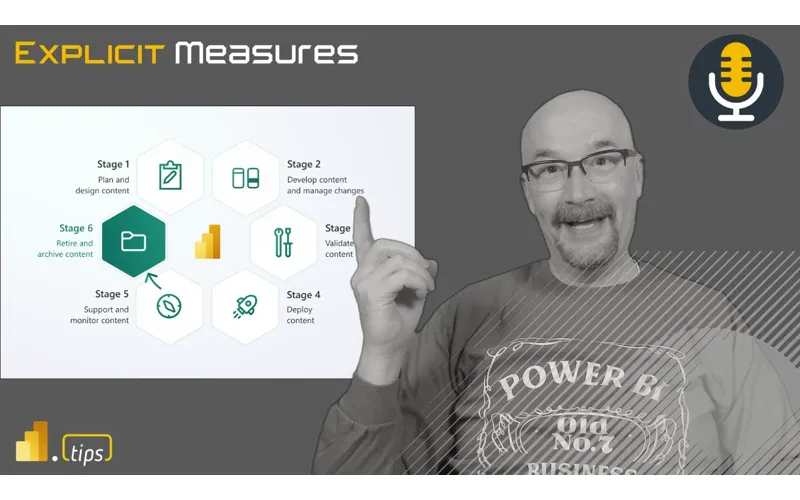
In this episode, Mike and Tommy wrap up part 7 of their CLM series by focusing on how (and when) to retire and archive Power BI content. You’ll hear practical guidance for avoiding content sprawl while still keeping history, context, and compliance in mind.
News & Announcements
-
TMDL in Power BI Desktop developer mode (Preview) | Microsoft Power BI Blog | Microsoft Power BI — We are very excited to announce the adoption of Tabular Model Definition Language (TMDL) as the semantic model file format for the Power BI Project files.
-
Native execution engine for Fabric Data Engineering - Microsoft Fabric | Microsoft Learn — How to enable and use the native execution engine to execute Apache Spark jobs for faster and cheaper data processing in Microsoft Fabric.
Main Discussion
This episode is the final segment in their Content Lifecycle Management (CLM) series, focusing on the end of the lifecycle: how to decide when a report, dataset, or solution should be retired, what “archiving” actually means, and how to do it safely.
A key theme is that retirement should be intentional and policy-driven. Instead of letting workspaces accumulate stale artifacts forever, define signals that something is no longer actively used (usage telemetry, ownership changes, business process retirement, or replacement by a newer solution) and use those signals to trigger a retire/archive workflow.
Retire vs. Archive (and why the difference matters)
Retiring content is about making it clear to the business that the asset is no longer the “current” solution. Archiving is about preserving what you need for reference, audit, or compliance—without keeping it in the active path where it creates confusion and maintenance burden.
Mike and Tommy discuss the value of consistency: if you have a standard approach to naming, labeling, or segregating archived items (for example, a dedicated workspace or foldering convention), you dramatically reduce the cognitive load for both creators and consumers.
Practical steps to reduce content sprawl
They talk through common “content sprawl” scenarios—duplicate reports, abandoned datasets, and iterations that never get cleaned up—and why a simple retirement process pays for itself. Even a lightweight approach (clear ownership, usage review cadence, and a defined archive location) can prevent endless growth in storage, refresh costs, and support tickets.
If you want the deeper planning guidance, this Microsoft Learn article is a good companion:
Looking Forward
Closing out the CLM series, Mike and Tommy reinforce that lifecycle management isn’t just “governance paperwork”—it’s what keeps Power BI environments usable, trustworthy, and scalable over time. If you implement retire/archive as a normal part of delivery (not a once-a-year cleanup), your teams spend more time building value and less time navigating clutter.
Episode Transcript
0:31 good morning and welcome back to the explicit measures podcast with Tommy Seth and Mike good morning everyone good morning gentlemen and happy Tuesday we’re back we’re back we’re back live again this is a new live episode so we’re going back into our live modes I’ve I’m done traveling I’m finished my my Adventures over into fabricon fabric conference in Europe so was super fun it was over in Stockholm Sweden this year before we get into our news and Main topics there’s
1:01 into our news and Main topics there’s actually a lot of news we need to cover a lot of announcements were made at the fabric conference so I’m going to cover the ones that I think are interesting and most Game Changer there’s prob a lot of things that going to be that will change how you do things but we’ll probably cover a couple of the key ones here but before we do that our main topic for today is we’re going through the content life cycle management we have part seven this is the final step here which where we’ll talk about retiring And archiving your content how does how do you get rid of things how do you take content
1:31 rid of things how do you take content out of cyul circulation circulation that’s what we would say yeah I would argue that this is something that no one really does very well and probably needs a lot of assistance just to to to do better process to make this happen that being said let’s jump into some of our news all right so I’m still probably a little tired from getting back from from from Europe I will admit getting over to Stockholm from the US was rough oh
2:01 to Stockholm from the US was rough oh wasn’t it was rough I flight problems not the flight was fine everything was traveling there was was okay it was the sleeping conditions I was up to like or 4 every morning until like I could forcibly reset my body and like get it to go on schedule and by like took me like a good three days to like really reset things and and not be exhausted throughout the day oh that’s the worst that really is the worst oddly enough though coming back to the US I stayed up really really late the night I
2:31 stayed up really really late the night I was leaving and then slept on the plane the entire time came home said hello to the family and then slept again and have been on schedule since it was almost like less than a day and I’m back to back to normal schedule here in the US it was weird coming back was way easier sleep deprived State yes exactly right that’s funny well good good for you my my wife currently flew to to Europe and had like a three-hour delay oh oh no it was one of those it was one
3:02 oh oh no it was one of those it was one of those fantastic ones where really busy airport but in Night Flight so just Breeze through all the lines it’s like it’s going smooth as butter all the way through and then they get on the plane and they’re like oh yeah we can’t start the engines oh no that takes two hours then they then they figure it out start the engines leave start taxing and they realize they don’t have enough fuel so they have to go back and fuel up so miss a connecting fight but the lucky thing is like there was like an hour like one an hour later so it was
3:33 hour like one an hour later so it was like n n you only lost an hour in the so it’s one thing to be like oh our flight to Colorado got delayed like that’s fine but if I’m in a different country or I have like a 10-hour flight already yeah that that’s an added extra stress it is what I’ve learned of going over to Europe is there’s usually some layover in a US city we’re we’re in Milwaukee but Tommy you’re in Chicago does Chicago does a lot of direct flights over to Europe right gold in here yeah we have a terminal literally just meant for international flight so I
4:05 just meant for international flight so I find that I have to go to different US based locations and so we went into JFK this time I’ve never been to JFK before that was the first for me it was interesting and there’s a lot of people there it was very busy they could you could clearly tell they were building a lot of new things at the airport as well so there was like a whole another Wing they were trying to add on it was it was crazy every I so traveling traveling a lot more than I used to you get the you figure out oh lounges are where you need to be lounges are the way to go
4:35 need to be lounges are the way to go when you travel and every single one of them had like a line to get in everyone so it was crazy it was just so busy those special Delta things I don’t like how special those are where they have like the black doors and a guard have you been in a have you do you travel in lounges Tommy no I no I I travel in you it when you start traveling and you do a lot more travel the lounges Chang the entire experience it’s so good I had I had the privilege of I had the
5:06 I had I had the privilege of I had the privilege of traveling with Mike once to a conference oh yeah and it was fortunate that we did because the Lou we were still preparing for a precon and the flight was super delayed no it was like seven hours or something ridiculous yeah we ended up being stuck in there but great great area to put a presentation together it’s we sat down we just talked we got our whole presentation done cleaned up and ready to go it was great I’m with you next next sequel Saturday or or I think is what we’re
5:36 Saturday or or I think is what we’re with you flew over there and it was a fantastic conference fantastic conference tons of announcements got to meet a lot of the product team a lot of the product team actually is working out of Europe there’s actually a number of teams that are based out of that area so we get to see people we don’t typically see in the US for conferences which was wonderful ruy knocked our socks off I’m there’s a lot of really interesting things that came out out but the one that I’m most excited about I think that came out of this conference that I think is very underrated some people I think saw the
6:07 underrated some people I think saw the vision of this but it’s going to be incredible Microsoft clearly made it very very aware that the pbir format so the broken apart files it’s not a single PBX file Microsoft is moving that direction everything is going towards the pbir format and one of the main features was inside powerbi desktop you now have the timle tmdl editor and so I’ll put the the oh there’s a now a timle editor and it’s
6:38 there’s a now a timle editor and it’s not just the fact that timle exists it’s that desktop is going to get a timle editor for you and you’ll be able to go into desktop and you’ll be able to script out a table a measure the entire model and then with that you can use co-pilot to say document my model document my measures add all these measures to a full F ER all kinds of interesting prompts that are coming now to help you edit the code of the timle and it will help you build things or write things directly this they they had
7:08 write things directly this they they had an example of they pulled out a table and they said based on this table here’s a a prompt that will allow you to create all measures for these numerical columns that are in this model and it went through the table it found which columns were numerical and made sums or averages of them based on your imp and I even gave formatting it it was one it was super impressive but and you can live edit these things on a Model that lives in the service wow so there is this is I
7:38 in the service wow so there is this is I looked at this and I think people are like oh interesting code and cool it is a incredible game Cher and this really I think this is pushing desktop so I I feel like right now we’re in a mode where desktop has traditionally been this tool that you build things in and it’s been report building and then it’s the the viewer Builder I think they’re pushing more to be desktop is going to be the pro developer tool think if it’s like the vs code for like all your stuff that you’re going to
8:08 like all your stuff that you’re going to be doing and what you’re going to be doing more is if you need to build reports and other objects you’re going to they’re going to push you more towards the service so I think we’re going to start seeing a break in the who is using what tool I think you’re going to start seeing desktop becoming more technical heavier it’s going to be more code Centric and what you’re going to see is you’re going to see people who need to build content not modeler people they’re going to continually get pushed more towards the service I think and they’re going to keep enriching that experience for model Builders or report Builders as opposed to model
8:39 Builders as opposed to model Builders anyways this interesting take because incredible feature did Microsoft actually explicitly say this that they actually want to push people more to the service that are more of the business users or is that the feel this is this is the feel of I get that I get with like what are they investing inside parb Des toop they’re not doing a little bit of like they’re not making the visual building experience easier they’re not making things in desktop easier what they’re doing right now is they’re building a lot around this PBR format
9:09 building a lot around this PBR format and everything seems to be geared more towards look we now have well let me think of it right we’ve had a a viewer of the report we’ve had a model view and now we’re getting a DEX query view which is getting a lot of new features and we’re now getting a timle editor all inside desktop so we have in in the last year we’ve gotten two new code editing experiences versus anything on the visual side there’s been no changes on the visuals there’s been minimal changes on the on the on formatting there’s been
9:39 on the on the on formatting there’s been minimal changes on how to build reports so all the building of the visual side of stuff there’s almost been no net new development there and everything’s been focusing on these code-based ways of doing things so that it’s just incredibly important to to note that sweet so that was one that was hu super huge so I just put the the link to this timle in desktop developer mode to go read the article Ruby writes an incredible article about it it’s awesome so amazing really really excited about it
10:08 amazing really really excited about it there’s also going to be a vs code extension coming pretty soon that’s going to help you with the editing and the formatting and all the prompting and it’s going to have every so one of the things that you needed for tabular editor was what are all the what are all the the options what is all the what are all the options that are yeah inside the model timle A timle extension you mean the timle extension will give you these are all the options you can push into the model so these are settings you would need ta and yeah all that stuff it’s going to be amazing so really
10:39 stuff it’s going to be amazing so really really enjoy that super super excited about that feature that would been out since we went to SQL bits this they’ve been talking about that they’ve been talking about timle but they haven’t talking about the editor too we we have code extension yes yes yeah I’m waiting I don’t think it’s officially out yet but they announced that it’s coming very soon so moving ahead then another main topic that came out so one of my main development patterns that we use
11:10 main development patterns that we use now with fabric is we use pipelines and we use notebooks and the reason we like those things is because they’re supported with Git integration so another major feature that was just announced was there now is availability for using GitHub GitHub went GA General availability so now you can use GitHub and GitHub Enterprise to St save your models and and details from workspaces so that’s really good for companies who are on GitHub this now opens up another world for them so you don’t have to only use Azure devop it’s a a minor feature but the one
11:40 a a minor feature but the one I really want to talk about is in my pattern of building things pipelines and notebooks Microsoft has now created the native execution engine the native execution is basically it sounds to me it’s like the competitor to what data bricks has done with this thing called Photon it’s a faster way of let running the engine it’s more optimized and they’re they’re touting really high performance numbers
12:10 really high performance numbers off of this native execution engine and there’s no changes to any of your notebooks you can still write all Pi spark Pi SQL right or sorry spark SQL spark all the different languages You’ normally run and it runs on the native engine and the neat thing is data bricks charges you almost double for that Photon faster engine they do now yeah Microsoft is not charging you double it’s the same price that’s fantastic like
12:41 price that’s fantastic like Photon was super cheap when it came out right but in preview but yeah you’re you’re paying a lot more for the performance there’s a balance between how long things run without it versus what they do right and you’re basically paying for the speed so sometimes it’s a wash like wash like it’s it is more expensive in general but at the same time when you’re pushing large volumes you the the option to have it and complete a full process an hour or two earlier it’s worth it’s worth it
13:13 or two earlier it’s worth it’s worth it so that’s fantastic start becoming more valuable then right so you say that too because I before with notebooks it was if I wanted to start it running once this got running or before got running I would go cycling go Jog and then maybe the notebook would start it took a while to spin up even if it was something relatively small and the other day I started running something I went up and I’m like it’s done wait it ran it even started so I’ve noticed that performance has been incredibly improved lately I so
13:45 has been incredibly improved lately I so you can tell they’ve been doing a lot to improve that experience there so one kudos to the spark team they’re doing amazing things if you look at the the monthly update on the blog there’s updates for desktop there’s updates in the service there’s updates for different things and you look at the spark section of updates the spark section of updates is huge they’ve also bumped version the spark version from 1. 2 to now 1. 3 so that means there’s a new Spark engine there’s new Delta tables a lot of new things are being supported in The Spark engine as well so
14:16 supported in The Spark engine as well so it’s going to also make it more efficient for you and they’re using newer code they’re getting those out more frequently awesome extremely excited to see that as well so I’ll put that article also in the in the window here as well I think this is going to be incred impactful because the native spark execution engine s will save you time and the the to me the big differentiator here is look if if Microsoft really wants to be competitive in the space they’ve got to offer faster better cheaper Solutions than their competitors and do it at the same price
14:46 competitors and do it at the same price yeah as what they were doing today so I think this is a huge huge feature that came out I believe this is already out today and I think you can already try this now currently so here’s the article for that one is execution an enabled thing or is it just automatic now it’s not automatic there is a setting you need to set in order to have the native execution engine run they recommended making like an environment in your in your workspace and then in the environment you set the property of spark. native. enabled
15:17 property of spark. native. enabled equals to true and setting that property in the spark notebook will then use the native run engine so that that’ll hopefully make things more efficient and I I’m really curious to see what the the community is going to build and do just to see what they see for performance there’s a lot of people who do a lot of performance testing MIM at Microsoft does a lot of this as well he seems like his initial feedback has been very positive so far so I follow him and he’s my my my read for if if this is going to be good stuff or not those are the M there’s probably a handful of other really cool
15:48 probably a handful of other really cool announcements that came out but those were the main ones that I think that really stood out to me I took a couple videos of Amir announcing things one thing I do I will point out we’ve had a lot of grief around data flows Gen 2 and the fact that it’s not supported in git you can’t you can’t check it into a g repo and they have officially announced that by the end of this year data flows Gen 2 will be a part of git and you’ll be able to check in those data flow gen 2s directly into the into the pipeline I they announced that they
16:20 pipeline I they announced that they announced it I have I have a picture I have video you feel responsible for potentially like pushing it that far I don’t know I don’t think so I don’t think I don’t think they care about what I I say but I I I do across across the board everyone who says hey we really want to use data flow Gen 2 but the I can’t get it into the git repo I can’t check it in I can’t move it around as easy it’s just a pain and so this is a major pain Point that’s pretty
16:51 a major pain Point that’s pretty impressive then like it’s it’s Q4 yeah right so end of year it’s the quarterly objective there hear the desperation of Mike’s voice because he didn’t just say it’s announce he says I have photographic evidence I have a photo of of and I I posted it out on Twitter and I I sent it out I said data flows Gen 2 will now be coming out to it’ll be in the the deployment pipelines it’ll be able to be in G it’ll be part of this ecosystem I don’t know what happened here like there this should
17:21 happened here like there this should have been worked on way earlier but whatever we are where we are we’re going to get the feature that we want I think it’s going to be very helpful to have that we know some High people us there some people high places so thanks Mike you Mike we complained about it enough apparently oh I think there’s an honorable mention it wasn’t necessarily at fabrion but to me this is absolutely something that should be discussed this was in the September update of powerbi my friends and for the first time in nine years we have dark mode dark dark we
17:52 years we have dark mode dark dark we have dark mode dark mod available it’s a thing in powerbi it is a thing it’s phenomenal I like it I think it’s good I think I like it more so it doesn’t make sense I think a ton in the report viewing experience no it’s actually terrible because you actually have this really dark border and then all a sudden this really white page that you’re building things on because you’ve been particularly building things yeah opposite right like so dark mode on the screen white border like it’s really light yeah you have a white canv and a dark mode yeah yeah a white page of
18:23 dark mode yeah yeah a white page of canvas and then everything else in desktop is black it’s dark so I like that however what I will say is when you transition to full code editing and doing the timle and the Dax query view anything else other than building a report it now looks beautiful it’s very easy to use and it’s actually I I feel like it’s way everything on my computer is all dark mode everything is yeah huge fan it’s just easier to on the eyes I think so I really like that part of it and the fact that desktop is becoming more code Centric stuff it’s easier to
18:55 more code Centric stuff it’s easier to look at timle it’s easier to look at Dax query view it’s easier to see tables data it’s just not a good experience for building the report so I’ll probably start building my reports in the service more now so but this is available in the September update you don’t have to wait for this it’s sad for me because I have to I still do a lot of training and I go there’s dark mode I know we’re going to turn it off because not everyone has the update okay now we’re back to light mode it’s a very sad moment every time I to turn it back you have to toggle it I I got to toggle it a lot that’s funny but
19:25 got to toggle it a lot that’s funny but yeah anyone can download dark mode and powerbi desktop in general I felt like dark mode has been pretty good there’s been a couple I’ve seen a couple people even say there’s like dark mode there’s like default and then there’s like light mode I’ve even heard some feedback from the way that some of the text is styled in the light mode that the they actually prefer the light mode a little bit better because there’s some contrast of fonts a little bit different it’s not just the theme you’re right they Chang some of the user interface buttons yes for example just the color of them that too so in power query a lot of the options would either you click the
19:56 the options would either you click the button or there’s a drop down but you had to click on the drop down it was a in counterintuitive like use first row as headers if you clicked on the actual text it would do that action but there were two options yeah there a look a drop down carrot menu option now it’s only the drop down which makes a
20:13 it’s only the drop down which makes a lot more sense a lot more sense little things like that thanks Microsoft it’s these these these little cuts that the the user improvements it makes goes a long way oh yeah we caught that we caught that all right I think that’s it for all the main items here let’s jump into our main topic for today if we’re good for that so I know we we burned a lot more time than normal in our intros but I think there’s a lot to talk about there’s probably more things that’ll trickle out over time and we’ll we’ll try to update you as we hear other announcements about things so today
20:43 announcements about things so today we’re going through our final section of the content life cycle management articles that Microsoft has recently put out and we’re talking today about archiving and retiring content Tommy you want to give us a bit of an overview of the article and Ki us off with the discussion absolutely Mike we have now gone through seven episodes dealing with content life cycle management from planning and designing it develop and manage validating and deploying and again you said at the very beginning
21:14 again you said at the very beginning probably the one with the least amount of effort love or research involved at our organization is how do we get to the end of the road with content how do we know what is the process how do we make sure it’s smooth and that’s what we’re going to be talking about today and talking about cleaning up content understanding what would be the threshold or Key activities so to speak that would actually constitute retiring content and what steps should they take before we actually archive and retire
21:44 before we actually archive and retire content yeah I agree with that one so jumping into this article this is one coming to beginning here I really like the the initial Target so every time these articles they they’re written they’re talking about who are the people that need to be paying attention to this one I definitely agree with these the main topics for this one is fabric administrators people who are looking at the entire fabric environment the center of excellence should be heavily involved in this process any data operation teams so
22:16 process any data operation teams so thinking about I have an IT central team we’re going to be building lak houses and data we’re going to distribute that data out to the rest of the organization like that that data operations team needs to be part of this processing thinking because you can’t have a whole bunch of tables that you create as Central bi that are old or stale or no longer being refreshed if they’re not being refreshed the value of them I think diminishes over time and and now you’re start need to thinking about how do I deprecate and communicate back out to the team we’re going to take these away if you have existing reports you have a period of
22:46 existing reports you have a period of time to transition onto something new or something else so I think there there’s there’s definitely a Channel of clear communication there that needs to be there and then finally content creators and content owners so this is I think this spans everyone who’s touching powerbi yeah I’m GNA right off the bat when we’re talking about the fabric ownership and I think ownership is the place to start when we’re talking about all of this we’re dealing with the idea of taking away content from people where not all reports are looked at on a
23:18 where not all reports are looked at on a daily basis and I think we all have to accept that some reports are even meant to be on a monthly basis too or a weekly basis they’re going to have low viewership yes so who’s responsible for again the the actual taking away of content and I wouldn’t I wouldn’t personally actually say it’s fabric administrators I think it’s too high level these are we’re dealing with workspaces we’re dealing with apps so I think it’s the content owners I’m dise with you on that one so let’s okay let’s let’s start there then because if you’re
23:49 let’s start there then because if you’re dealing at such a high level with a a lot of content why would the fabric administrator be the one in charge of archiving content they’re not the fabric administrator clearly says in the article it says the fabric administrator is responsible for overseeing the fabric organization they need to agree with that give the reporting to the organization to let okay what is on so the fabric administrator is going to be the one to look at how many times is something hit the fabric administrator should be the one thinking through what reporting are we using to to show what content is it
24:19 to show what content is it certified is it not they’re the ones that are going to have access to all the administration details and I’d argue the the relationship between the Coe and the admin of the Fe administrator they should be producing reports if you are delegating workspaces or domains or other sections across your organization that administrator should be thinking about how can I build a report that shows you here’s the workspaces that you’re managing and then giving you information about how many reports who’s using them what’s most popular right
24:51 using them what’s most popular right I think as you think about delegating things you can set these policies but it’s going to be up to other teams potentially to listen to them and adhere to them and actually take this on as their own exercise nothing you said I disagree with and that’s why I think they’re involved that’s my main point my main point is the reason the admin is involved is because they’re not doing the actual archiving it’s not up to them per se right yeah the center of excellence May set here’s what we’re going to do here’s how we’re going to handle and again I do think there’s two levels of this right is it is your
25:21 levels of this right is it is your content certified are you going to have what’s the plan for that content and what’s the plan for Content that we’ve de delegated to business teams because I think the business team we want to be able to delegate ownership and responsibility to that team and it’s up to them to clean up their area we’re not going to forcibly come through and just clean out their stuff without at least letting them talk about it or think about it for themselves and I think that’s a really good point because like you said everything you said I am completely unboard with and I agree
25:52 unboard with and I agree with and I think that’s good too where the report because every ownership team needs to have that data there’s no way this is a non-starter yes unless those ownership teams actually have their either own report that looks at usage or whether it’s a weekly report however it comes this is a non-starter unless you actually have that right but they won’t because you need ad levels to see usage but I I can create we can do rooll level security reports we can easily
26:23 security reports we can easily distribute a single data model to this I I I I like I like what I’m hearing so far because I’ve seen it successful right like where you have an administrative whether it’s group like security works this way as well so does central it right like what what happens is that group is responsible for identifying the patterns of you’re on the short list for deprecation right and there’s a reason that like we
26:53 right and there’s a reason that like we we come up with standards for the organization with b or with the business units and say hey anything that is you units and say hey anything that is that doesn’t have a model that’s know that doesn’t have a model that’s refreshing or hasn’t had viewer is viewership below this or whatever the case may be is going to come out of this periodic right quarterly report and what’s nice about it I I think from this standpoint is you already you you have the workspace owners right so ultimately the racy of like who owns what is
27:24 the racy of like who owns what is probably that that vein where that comes through this quarterly probably process and policy that the admins reach out to these owners they’re all part of this group there’s a meeting you say hey time to go review what we’ve got going on here so that we’re maintaining the Integrity of our systems which is really what admin cares about right like if if something’s just consuming space like they’re they’re more about the I think capacities usage like all of the Necessities as
27:58 usage like all of the Necessities as as opposed to just the Clutter right like that we get used to and in that case then there’s an expectation from the organization that while the admin team may be fully responsible right to track down or get an answer on all the line items in that report there’s a responsibility of the business unit to actually go clear it out or have a reason why it needs to stay yeah when I when I was a bi manager when I fir first joined a team one of the
28:28 fir first joined a team one of the first things we instilled on our weekly meetings was we had an audit loger we had the data and we had a threshold of 60 days where the conversation starts and we would talk about where things would be coming up to the 60-day Mark we go okay such and such we know this report has been viewed 45 days who looks at this who’s this intended for and our team that was part of our weekly cycle was looking at not just the highest usage but things that may be down where
29:00 usage but things that may be down where the conversation’s going to have to start about retiring content and I don’t know why a lot of teams don’t stress the importance of that organization of content but that was a big part for us that 60-day Mark for us what and then when I became a director director bi something that was instilled as a global standard with the organization was a 60-day threshold of content where the conversation starts where the tick where the bomb count down starts the communication starts where we go hey we
29:31 communication starts where we go hey we are going to retire this content in seven business days unless we hear otherwise and that message would go to all of the users of that piece of content if we didn’t hear anything after those seven days or if there was hey we need such and such from the data we may pivot but it was a 60-day Mark that we instilled and my question for both of you this was something we instilled globally in the organization the 60-day Mark should every
30:01 Mark should every organization have a global standard or Global threshold or should that be controlled by each team I I think I think it depends on again I’ll go back to like what content you’re looking at so I’m taking some notes Here on some things you’re you’re talking about as well as looking through the article a little bit further down there’s actually some really good pieces further down the article here
30:21 pieces further down the article here that I really want to touch on but you that I really want to touch on but should there be a corporate policy know should there be a corporate policy I think the center of excellence should at least set up on areas of data that are controlled certified things there should clearly be a thought a communicated plan around what this looks like for certified data sets so I think certified is to me the threshold of okay at the certified Enterprise bi level what reports are we building for the Enterprise identify what those are and have a plan to understand what that looks like and
30:52 to understand what that looks like and actually in the article it talks about think about what time of window you want to evaluate whether or not a report is still relevant or not right do you think about it are there certain reports that if it hasn’t been used in a year you you ditch it if it hasn’t been used in the last quarter you ditch it it hasn’t been used last month do you ditch it right so there’s this these boundaries of like you should think about these not every report will be used every single month there may be end of the month reports or quarterly reports or end of the year Financial
31:23 reports or end of the year Financial rollup reports those things may exist and so the frequency in which people look at the reports there has to be some mindfulness around those pieces so I guess I would say at at the at the to answer your question directly Tommy the center of excellence should specify here’s what we think are the best guidance practices for deprecating content and then the Enterprise the center of excellence should do that for their certified content whether or not the business adopts or uses that pattern I think it’s
31:54 adopts or uses that pattern I think it’s going to have to be up to the owners of those departments that they can tweak it or adjust it for their needs and to be honest if we’re going to relinquish responsibility we’ve got to let them make decisions because if you tell them you’re responsible and then take away all their ability to make any decisions and you come in and forcibly do things you just lose trust and then they just do what they want to do anyways that’s fair and I don’t want to divert too much but unfortunately when
32:24 divert too much but unfortunately when the way you put that the only thing I can think about is walking in kids’s room and saying you’re supposed to clean your room and I am stepping on dolls and toys and it becomes a jumbled mess and I I definitely agree obviously with the certified but it’s got to be more than just certified that there’s a threshold that there’s a standard around because I just say you start with certified you could use that same standard for everything else that’s in the organization but I think certified again if we think about the what is which
32:54 if we think about the what is which which of the things do you build in your organization that you spend the most time around you spend your time around the ones that are driving the most amount of impact and have the most bottom line dollar impact to your business so if I’m if I’m focusing my attention on something I should only focus my attention on the things that are driving the biggest amount of value for my company and I think that starts with the certified stuff when everybody’s visiting your home Tommy do they really go into your kids bedroom or are they more oh no we clean like crazy before people well maybe question for you what I’m saying
33:24 maybe question for you what I’m saying is I know sure yeah but you yeah I I agree with Mike like when when you start playing Global rules and swaths and swatting people like that that’s a Tommy you’re playing your it Overlord card again like what what I would say is there’s you define a process you define the buckets that require different sorts of analysis you go through these review processes to understand what what could be deleted or deprecated and if if you have long running things and teams need
33:54 have long running things and teams need those there’s a justification for it or there’s not right it gets more scrutiny the longer it goes out term but to say part of the organization can’t retain reports for a longer period of time like why is it because you don’t like clutter or is it because there’s actually an impact and I think that’s ultimately going to be the the L Miss and it is it is by group like I don’t yeah I’m not a big fan of like just Kart blanch what you’re
34:24 fan of like just Kart blanch what you’re suggesting I completely and usually I take offense to the it Overlord statement but not today today I’m I’m fully embracing that and right and I’m not and I’m not saying every single part of retiring content needs to be St like globalized and standard but I think there’s a threshold I think there has to be at least a universal if we’re past 90 days with without except with some exceptions right because again there’s always going to be some scenarios you
34:54 always going to be some scenarios you got to clean up you gotta you got to start the process and even if it’s a minimum standard it does not have to be the whole process managed and documented everyone has to sign their doctrine of how we retire content but man if you let everyone try to do their own thing they’re not going to care about it we know this because most organizations from a global point of view don’t put this as a big part of their process the retiring content I would agree with you
35:24 retiring content I would agree with you so if I’m walking in I’m putting this as we at least have a baseline we have a baseline from there you can manage it but 60 days you got to start the conversation we’ll be looking at this because you get clutter and what there is an impact with clutter because then we have a lot of redundant content because that always happens always happens with redundant content what’s interesting you say that though inart I we don’t even to say larger organization it could be small
35:54 larger organization it could be small how how would an admin know that there’s redundant in content that’s well one that’s exactly what happens that becomes very hard in the that’s not the question the question is how do they know it’s redundant how would they know yeah how do how do you’ll never know oh I would be know you’ll never know oh I would be willing to put fine I guarantee how would an admin know that there’s duplicative content in the system where are you going to put your money I agree there’s no absolute way to
36:26 money I agree there’s no absolute way to know admit that you don’t how to answer this question I I just said that I admit there’s no guarantee but if you’re put your money do you think it’s redundant or not no I’m I’m saying you can’t solve that with this process this is this is not for redundant content this is for stuff that’s not being used yeah and I’m purely one of the major criteria that I use on this is if this thing has refreshed in a long in a long time it’s another right anything that’s sitting
36:56 another right anything that’s sitting out in the content area that I would assume if it’s being used it will have a recent Refresh on it or there’s a very broken process where someone pulls down a file they do some Refresh on their local machine and they publish it back up to the service like I’ve seen that happen too where people are like I can’t get it to work I can only get to work on my machine and I’m I’m manually updating data that that’s one of the only exceptions I would argue we should really work hard not to do that that’s a very bad practice let’s not encourage that but it does happen so other than that you could
37:27 does happen so other than that you could literally look at every single data set and say when was the last refresh and how many failures did I have until the data set refreshed if you’re getting data sets that are continually refreshing with errors I’m clearly thinking that that’s not a data set that is used or the report is not regularly looked at so instantly I’m looking to say have conversations with those teams and say what are you doing this stuff looks like it’s not being used and I think that’s a let’s take that out of the system let’s just download what you have let’s put it in a share Point folder
37:58 let’s put it in a share Point folder let’s just archive it away give it put it somewhere and just get it out of the system because I’ve done a number of migrations from other tools into powerbi my first activity every time every time everyone comes in oh we’ve got a thousand reports okay do you do you and what I do this is the every single time I say let’s sit back let’s understand how many times are these reports used and I guarantee you you can cut
38:28 guarantee you you can cut let’s I’m going to say 40% maybe on the good side up to 60% of all that content that was created it’s just people created something I was looking for a question I figured it out and that report is no longer needed so a lot of the stuff is just things that just exist and they don’t get cleaned up very well and to be clear there’s no easy button in powerbi to like archive or deprecate or move things out there’s really no easy movement button that does that that just creates all this old content and just has it somewhere else in case you
38:58 just has it somewhere else in case you want to go look at it for references so that’s not very well done but I think this is where the process and the center of excellence really helps show best practice in doing this and then actively manage that content you’re you’re firing me up in such a positive way I don’t know if it was because the weather’s great and I want a big great bike rider last yesterday but what you said 1, 0% and I understand too this is not easy to do in an Enterprise setting but one of the other processes that should
39:28 one of the other processes that should be in place and at least if I manage a team let’s say that I’m not going to say I’m the global it Overlord here but I am but let’s say I’m just the manager of a team every report if you can’t answer if you can’t think of two to three questions that report answers and a dedicated audience gone that content should be gone and that was one of the other processes we had on our teams where okay let’s go through our reports everything that you you have can you write on a reference page what questions
39:59 write on a reference page what questions this this report answers can you write the purpose of this and those questions change over time and they change over time F say report I’m not saying the model here so let’s say report if that is too hard where we don’t have a dedicated audience and not we can’t even think of a question that this report answers there’s no report there’s no point for that report to exist sorry and I know that’s very hot take very extreme but at the
40:27 take very extreme but at the same place you’re probably dealing with a lot a lot of like you said either reports haven’t been refreshed we can at least clean to your point Mike 30% a lot of people say have a thousand reports not a thousand reports that are answering not actively being used not actively being refreshed not actively being used yeah from March 2022 and later on the article I’m going to skip ahead a little bit more on the article here because I think there were some ones we talked about like times of window to evaluate when
40:57 like times of window to evaluate when content is relevant I do want to push on these metrics of determining what metrics you care about that decide if the content stays and I think they give some really good examples here and I’d be curious if there’s something in the article that they missed that we would recommend as well they talk about you may want to determine your usage metrics by the number of users using the report the number of views on the reports the potential user base meaning how many people would have the access so my organization this report has
41:27 my organization this report has published the entire organization of a thousand people but we have very low usage so the fact that the report has very wide audience but not many people use it might be a case where people just don’t know it exists and they need to start using it more so that’s that’s a you may want to keep content around like that and then they talk about what is the you so those are the things that they call out in the article I think one thing they missed here was you need to identify what level of the content are we talking about and this is what Microsoft talks
41:57 about and this is what Microsoft talks about in their harbi adoption road map or the the release programming is do you have an Enterprise report is it departmental is it a team or is it individual and one thing I would also note here is does leadership look at the report you will you will intentionally keep reports around just because that one executive needs that report to be done and they asked you to produce it and they look at it infrequently but if any leadership so there’s there’s actually a seniority thing here happening as well if that if that data
42:27 happening as well if that if that data needs to be there and available to that leadership they may not have high usage on it it may not be a very large audience but there is executive level kpis that are making bigger decisions for the organization yeah you turn that on you keep it on you don’t you don’t deprecate that so I think it’s very important to also identify What level in the organization you’re talking about is it Enterprise reporting is it for the leadership or is it these other departmental things I was just want to comment those metrics out there was there any metrics that we missed what other things that would you discuss around key metrics you
42:57 would you discuss around key metrics you would want to you to use there unfortunately there’s not a lot of outof thebox metrics and I think you spoke to a few that are possible with all the apis in powerbi but it’s not direct where I can connect the gateway to my audit log and the gateway to my scanner API to so I can actually see hey this model has these reports with these views they’ve been refresh that mod
43:27 views they’ve been refresh that mod model has been refreshed such and such times and here’s the last times I think that is the secret sauce there but I I I do want to hone on that that last part it’s not just the number of times something’s been used and I think a lot of people fall into that trap or like oh so only getting viewed five times a month well if that five times a month is around your Chief something something that’s great think because that there’s a critical Factor there there so this this goes to me like do you
43:57 so this this goes to me like do you actually have that this data available these metrics available and I know Microsoft talks about it but how important again just to Hon in on actually having the usage me metrics here yeah I’m not sure Microsoft gives you some insights with some of their stand of reporting a lot of things that we’ve been talking about for you that we’ve been talking about for what is the window of time to know what is the window of time to evaluate whether or not something’s good or not if you’re evaluating anything beyond a month there is no usage metrics on that you can’t get it from Microsoft you have you have to build you’re so
44:27 you have you have to build you’re so this is why my company offers an accelerator solution around monitoring all built-in fabric all those things so if you wouldn’t drive your car with your eyes blind you should not run your powerb environment without monitoring attached to it so to me number one is you got to have monitoring on things because that helps and to your point Tommy I think you added another kpi on here that I didn’t add which was the model refreshing is is the model that is servicing those reports is it regularly getting refreshes or is it being updated from people making changes
44:58 being updated from people making changes there as I’m thinking about this problem to me this is an a this is a very specific question that organizations need to answer and there should be from the usage metrics that come out there should be a what content is hot basically and you should be able to identify who are the consumers how often it’s being refreshed and what level in the organization is this content being done and focusing on how often is it being used one section I’m going to keep skipping
45:29 one section I’m going to keep skipping ahead here in the article just to kind ahead here in the article just to push us along here so I get close on of push us along here so I get close on time once you identify some of the content you retire you start preparing to retire the content and one second oh yeah I’ll pause because I think there is I think there is one other metric that okay yeah that is that is valuable in this conversation right if if we if we look at the value to the business right the vast majority of this article focuses on resour ources resource time to manage the bloat right
46:00 resource time to manage the bloat right like just the explosion of crap in the system and and that does have a negative effect over time and and one of the reasons why I agree let’s and it should be part of your life cycle to have some process that that cleans things up and especially if you have policies or things in place where admins create a report to understand which data sets like stop refreshing maybe the de facto is like okay yeah great it turned off after 30 days but we need to turn it back on to ensure that any report usage
46:32 back on to ensure that any report usage after 30 days still sees the relevant data Etc so like y you’re perpetually turning things on or keeping things live that’s more important in this scenario to deprecate that or un like have it as part of the conversation that that’s happening so that you we can determine whether or not we need to consume the resources and that leads into my second point of if I think about value to the business in terms of the things
47:02 to the business in terms of the things technology speaking or admin groups should be monitoring that wouldn’t necessarily be it’s it revolves around like the capacity usage right and what I would what’s not in here that I would include is low usage on models that take a long time to refresh ooh that’s a really good one right yes so it’s a combination of like understanding what are the models that take a really long time to process and then really
47:35 long time to process and then really understand how often is that being used because could that be a certified thing could it be executive absolutely that it’s the green checkbox no problem but is it Bob or Susan who’s creating something and like we’re constantly turning that model on and really the only viewership or usage we see is once every 60 days however I like in terms of capacity usage it’s chewing up 5% of the capacity or something like that every time it refreshes like that’s a problem that I would want to solve or be aware
48:06 that I would want to solve or be aware of and have as like a red blinker that on that quarterly review something has to be done about it either we’re performance tune it or not because to the value for the business is not high enough to to justify the usage that it’s consuming what if I throw a real a random statistic what if it’s minimum minutes refresh per user right if you just if you just threw a little number at it and the lower is
48:36 little number at it and the lower is better right lower number is better so if I if it takes for example if it takes three hours to refresh something who cares if it Services a thousand people that that adds so much value for the number of viewers at that level so there’s there’s a metric there but if it’s a a 2hour refresh and I have five users the minutes per refresh per user is is very high that number is a very it’s a very big score of that number that’s a that’s a great metric because there’s two things there’s two actions to see out of that is maybe I should retire that content maybe I should look at faster as
49:07 content maybe I should look at faster as looking back at the content and say is there a better way to compute or process am I using a data flow gen two should I be migrating into a pipeline and a notebook like there should be other things I can do to bring that number down because this is all about capacity that consumes more of your capacity and you may need to reserve that for other things that are more important if not retire can we optimize but at least maybe it’s not retire maybe it’s retire the way you’re building it right now but optimize it and re and re-release it I really like that that’s great yeah all
49:38 really like that that’s great yeah all the conversations Mike you and I were having was not putting into I think even the factor of having a capacity and what that resources does that has to be part of the conversation if you manage that I know we’re getting your time or at least can I add one more thought before we go another thing Seth I really like your idea and your idea spawns another thought in my head here that is something very difficult to manage as well if you think about so we’re retiring I think I had too too large of a view of what we’re talking about here
50:08 a view of what we’re talking about here I’m thinking about retiring entire models or entire reports but if we go a little level deeper we should even be thinking about okay in the models that we do have that are running are there columns Andor tables that we do not care about that do not be need to be a part of the reporting experience so we’re talking about deprecating I think content but I think when you’re talking about certified level content we should have even high levels of scrutiny around
50:36 have even high levels of scrutiny around what Columns of data are we bringing into those models and even are those columns of data are being used because if you if you can delete 20% 30% of those columns that speeds up your your refresh time it simplifies the experience for users you can get rid of old measures that are not being used anymore like there’s other metrics here that would be really useful in that space to give like a heat map of how much of the model is being utilized for your organization so you’ll actually that’s something that power VI gives you no visibility to it’s not there and
51:08 no visibility to it’s not there and anything you build to do that is 100% homegrown yeah I think I think it’s a fine line and even as I was thinking about like that metric being something that I would like to do in in this area it’s a fine line between Performance Tuning efforts and this right whereas like when I drop into that to me that’s a different type of monitoring that the dev team should be doing which is sure you’re your your models are refreshing we got a problem in that like in that refresh problem go figure out why make it streamlined
51:39 figure out why make it streamlined create a better performing model in calculations in removing objects in and things like that but I I think it’s it’s the it’s the very next step after identifying that this is a prime candidate for either deprecation or Performance Tuning yeah I would put that the optimized bucket rather than the retirement because you still have the content understand I’m just I’m just unpack a I love it no I love it I completely love it but there there’s I
52:09 completely love it but there there’s I completely love it but there there’s that’s a great opportunity for you mean that’s a great opportunity for you to say okay I’m running out capacity what should I be doing this model’s getting too large I’m hitting the one gigabyte threshold limit like what do I need to do to be honest there’s no monit there’s no lineage I can’t see what’s going on there’s a lot of this stuff that’s time for it overlords well I’m thinking about like Pro users right Pro users care about one gig right Seth only cares about 50 gigs because he’s on like super duper expensive things things so can’t get that size man but but those but those are important to start getting to that like that’s the level of stuff
52:39 to that like that’s the level of stuff we need to start thinking about we need to start thinking about these things and and I think there’s I just just to be clear I had a very simple mindset of coming into this article right now I think Seth your comments really pushed my mind a level deeper and saying yeah there’s there’s probably more that we could even be doing to make more efficient usage out of our models I just don’t even have the tools built today to even do or support those things and this maybe brings me to the final part here the last section I just want to very briefly touch on a couple things the last section here is talking about
53:09 the last section here is talking about prepare to retire unused content and I think there’s two points I’d like to make and i’ be curious your guys if there’s any other points you care about here too one is my step in in the prepare to retire content they talk about verify your dependencies and I would argue this is hard there’s no good tooling today to let this model what are we exporting to excel I have no clue I just know that it happens I can see events that say something was analyzed in Excel
53:40 that say something was analyzed in Excel I can see things but I don’t really have visibility of what’s being used of models at that level so I there is a very holistic picture that needs to be made here but sometime the verifying dependencies we don’t have great lineage between we have some right tables like houses to semantic models semantic models to reports but when we start doing analyz in Excel things start falling off the radar a bit I have a little harder time figuring out what that looks like and then the last point I’ll make here is where do you archive your content where do you put it
54:11 archive your content where do you put it when it’s done my initial thought here is I love putting it in git but I think you’re going want to use the pbir format or when you start moving more towards this modern format because I think I’m trying to Archive the definition of the model and the definition of their reports rather than I’m trying to Archive the data that was in the model I want to be able to have the connection strings what I connected to how to transform the data all the logic that decides what to do to the model to me that sounds like a very good option to save that as the code that I can go into
54:44 save that as the code that I can go into my archive I really like get I really like this format of pbip or PB formatting it it takes away the data in the model it takes that out and then it can just the definition how to build it so if I ever want to come back to it I load it I hit refresh I go get the data connected again and then I can see what’s what’s going on so I really like that pattern there I’d be curious if you guys have other examples or other things that hit you in this last section your your pushes on the last section are actually driving me in a
55:15 section are actually driving me in a different direction which is my final thought I I want a new feature I want I want an archive status on no I want an archive status on an object object that basically just makes it inaccessible like I don’t have to delete it I don’t have to turn things off it just takes takes it out of the share takes it out of like doesn’t is not accessible to people and that would be the first phase of a deprecation for me because then in those scenarios Mike
55:45 me because then in those scenarios Mike where it’s like like we’re pretty confident nobody’s using this yeah but we’re going to shut it off completely and it sits in there for 60 days or something contact us if you have if need this on exactly exactly but there’s there’s no additional resource time involved of like okay we got to delete the object we got to remove all this like now if somebody needs it we have to redeploy it depending on how large that model is that’s a problem etc etc I would like a deprecation feature that just lets me as an admin say okay our
56:18 just lets me as an admin say okay our policy is such this is what we’ve decided or business unit person whatever turn it off and if nobody complains then we hard delete it I remember that for CHR I love that I’m I’m going to propose to you guys a three C approach to I think we’re doing wrap-ups right now so I don’t think we want to propose things is this is this part of your final thoughts maybe this is going to be my my final this is what I was mentioning the 10 minutes before I’m very passionate about this this approach or at least the
56:48 about this this approach or at least the final thought here and it’s communication countdown and care and when you want to actually put a process together because you have to understand even even if you’re putting content that you don’t think people are looking at there are still there’s a data culture aspect here of just retiring content and deleting something and removing it that you can really mess up someone’s day frustrate the heck out of a team even if they only look at it once a month so there’s the care factor of this where we
57:18 there’s the care factor of this where we have identified the content we’re going to retire we start the communication process with those people who we know we’ve at least looked at it in whatever the time frame your team or organization has said where we say we’re counting down on September 15th this content will be archived it’s going to be gone unless we here otherwise to me this is a non-starter to do especially if it is in some managed workspace or app obviously if it’s in my workspace or some very small PE thing doesn’t matter but if
57:50 small PE thing doesn’t matter but if you’re dealing from an Enterprise point of view you have to start the communication process you don’t hear from people the care part of it then fine then we can actually begin the countdown and we can do this in a proper way because eventually there’s always going to be someone going where’s that report and if you didn’t say well we just removed it you you’ve broken a lot of trust to your point Mike about where do we actually put this if I have content that has been widely used at one point and I have the data to back this up I have an archived
58:21 data to back this up I have an archived workspace or multiple I don’t look at it and I don’t use it but I at least store things that I have been Mission critical in the past maybe I need to reference it at some other point for example we had a CO report to say how what the effects were well Co went away but some of those numbers were pretty critical and the metrics that we had in there so I’m not just deleting that so again it’s communication communication those who have affected or have been affected by this countdown you actually have a set date you’re going to retire it and
58:52 date you’re going to retire it and people are aware of that and the care for critical content or content that’s been critical in the past I agree with that one too love it with that I’m just going to wrap here and just say thank you all very much for listening this has been a good discussion this potentially could be another discussion later on we might have to unpack this again and go a little bit deeper on how to retire content I think there’s a lot to unpack here and again I would argue this is an area of businesses that we’re not thinking about we are very excited to get things on turned on running moving there there’s not really a lot of
59:23 there there’s not really a lot of effort around spending time to unwind or think think about what content’s not there so stay listening to the community I think the community is going to come up with really good ideas around solutions that are going to help you Monitor and do this better I think there’s a couple questions we should starting to be answered now if you have questions around monitoring you need more help with that reach out to any one of us we all have some form of this in all of our organizations or things that we deploy so make sure you reach out to us on LinkedIn ask if you have more questions we’ll be more than happy to help you out and figure out how to do better monitoring in your tenant as well with that we only ask one thing
59:55 as well with that we only ask one thing if you like the this content if this made sense to you and you like what you were hearing here make sure you tell somebody else about it that’s the only thing we can do here we don’t advertise we don’t push this very much please let somebody else know you found value in this content that being said Tommy where else can you find the podcast you can find us in apple and Spotify wherever you get your podcast make sure to subscribe and leave a rating it helps us out a ton do you have a question an idea or a topic that you want us to talk about in a future episode head over to power head over to powerbi. com
60:26 power head over to powerbi. com leave your name and a great question finally join us live every Tuesday and Thursday a. m. Central and join the conversation all of powerbi i. tips social media channels wonderful and we’ll see you next time [Music]
Thank You
Want to catch us live? Join every Tuesday and Thursday at 7:30 AM Central on YouTube and LinkedIn.
Got a question? Head to powerbi.tips/empodcast and submit your topic ideas.
Listen on Spotify, Apple Podcasts, or wherever you get your podcasts.