
PowerBI.tips

Copy Power BI Desktop Server:Port Connection String to Clipboard
September 12, 2021 By Mike Carlo
Copy Power BI Desktop Server:Port Connection String to Clipboard

Howdy, folks!

A few months ago, I was writing and running various PowerShell scripts to manipulate the connected data models in my Power BI Desktop files. During model development, I was constantly having to open DAX Studio to copy the Server:Port connection string, and thinking, “there’s got to be a faster way to do this.”

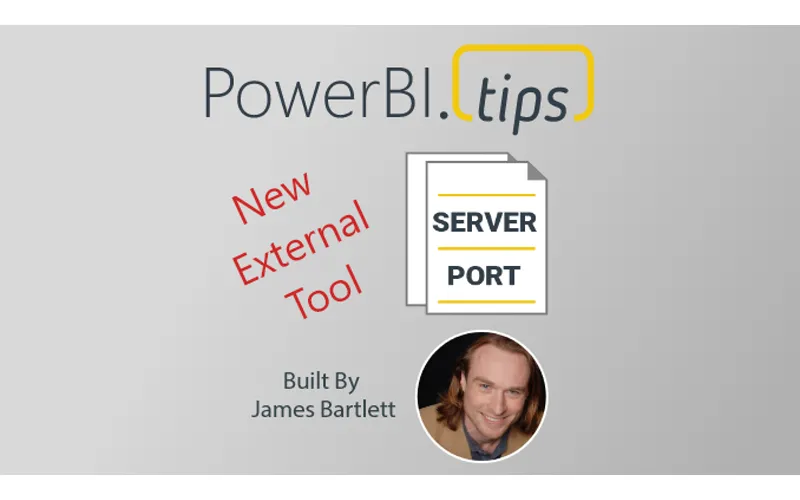
So, I developed and released a simple External Tool for Power BI Desktop, which copies the Server:Port connection string for the currently-connected data model directly to the clipboard.

I’m a strong believer in modular design, so when I build something, I try to make it do one thing, and do it well. I believe this External Tool for Power BI Desktop is a great example of that philosophy in action.

This external tool is now in the Business Ops tool from PowerBI.tips.

Enjoy!

James

Previous

Power BI Bookmarks Tips, Tricks, and Best Practices

More Posts

Jun 10, 2026

Microsoft Build Recap – Ep.535

Mike and Tommy recap Microsoft Build 2026 through a Power BI and Fabric lens, focusing on the announcements that matter most for report builders, semantic models, and agent-driven app development. They unpack why Rayfin, Replit integration, OneLake, and new Fabric skills signal a shift from asking AI for answers toward using agents to create real production artifacts.

Jun 5, 2026

CI/CD Automation with Agents – Ep.534

Mike and Tommy explore how agents can simplify CI/CD in Fabric by helping teams work through Git workflows, merge conflicts, validation, and deployment automation. They also compare deployment pipelines with Git-based approaches and explain why small, testable automations are the safest way to start.

Jun 3, 2026

Claude Design & Power BI Embedded – Ep.533

Mike and Tommy explore how Claude Design, agentic workflows, and HTML wireframes could reshape report prototyping for Power BI teams. They also debate where today’s tooling still falls short, especially for Power BI Desktop users who need practical ways to turn context, design ideas, and embedded experiences into working reports.