
Deploy, Proof, and Validate – Ep. 295
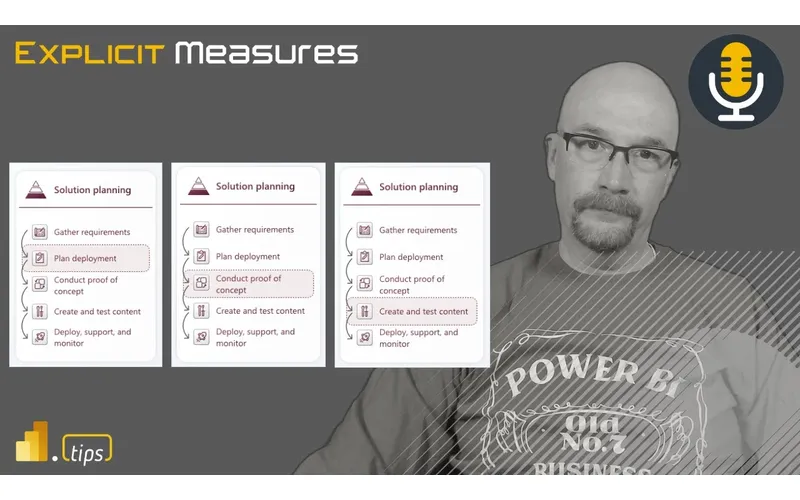
In this episode, the team continues Microsoft’s implementation planning series and focuses on the part that determines whether BI strategy turns into adoption: planning for deployment, running a proof of concept, and then creating and validating content with a tight feedback loop.
It’s a practical reminder that the ‘real work’ isn’t just building the report—it’s enabling the environment, proving the approach with evidence, and communicating changes so users understand what the solution can (and can’t) do.
News & Announcements
- FabCon Community Conference (Microsoft Fabric Conference) — Conference details plus workshop days; the episode mentions discount code Carlo100.
- Power BI implementation planning: BI strategy and BI solution planning — The documentation the team is working through (deployment planning, proof of concept, and validation).
- PowerBI.tips Podcast — The full Explicit Measures back-catalog, plus links to listen on your preferred platform.
- Power BI Theme Generator (Tips+) — Generate theme JSON to standardize colors, fonts, and visual styling across reports.
Main Discussion
The point of these steps is to reduce surprise. Deployment planning forces clarity on ownership and setup, the POC exposes data and process risks early, and validation creates the loop that turns a first version into something users actually rely on.
- Start with ownership, not visuals: define who owns workspaces, data access, gateways, refresh, and the support path when something breaks.
- Plan deployment like you plan development: environments, credentials, security, and governance are part of the delivery checklist—not afterthoughts.
- Use the POC to find the hard problems on purpose: data quality, missing definitions, and refresh/performance constraints should show up before a broad rollout.
- Let evidence drive scope and timelines: a good POC gives you the receipts for sequencing work, adjusting expectations, or adding capacity.
- Validate with real users early and often: people respond better to a v1 they can react to than a requirements doc they can’t visualize.
- Close the loop with monitoring + feedback: release, centralize feedback, watch usage, revise, and ship again—repeat until it sticks.
- Communicate progress and wins: adoption improves when users know what changed, why it matters, and what to do next.
Looking Forward
Pick one high-value business scenario, run a time-boxed POC, and use the results to finalize your deployment checklist (access, gateways, training, and validation cadence) before scaling to additional domains.
Episode Transcript
0:31 out welcome back to the explicit measures podcast with Tommy Seth and Mike hello everyone and welcome back to the episodes happy Tuesday gentlemen I was a little higher than normal but it is a Tuesday and you get a Happ so there we go it should be good day always a good day jumping into things today we are continuing on our conversation around the implementation planning particularly around the bi solution planning section of this article that has been written by Microsoft we have been enjoying it there’s been a lot of things to unpack
1:02 there’s been a lot of things to unpack here and go through it’s feels very relevant for building things around powerbi and powerb content related things so that’ll be our main topic for today but before we do that we’ll get into some introductions any news or things across the internet I know that the powerbi desktop has recently been released so that’s that’s some news I don’t think there is a Blog for that yet I think there was know if that’s out yet no I think it’s coming out today out today but yeah they’re delayed on it yeah the
1:33 but yeah they’re delayed on it yeah the desktop has been released but the blog Associated blog article about what is going on what are the the elements or what’s what’s changing has not been released yet so what’s the big one in there that was part of a tweet I think that we discuss in the future but we didn’t in that episode the visual calculations visual calculations has been officially released which I think this should let the entire audience and a hush fell over the the entire audience because now your
2:03 because now your tables total row can just now equal the sum of the rows in the table there’s no crazy decks and filter context you need to understand in order to make that work yeah that’s be to it though what was that there’s a lot more to you than just getting getting your totals aligned that’s part of it right but you’re right there’s a lot more there’s a lot of other things going on as well so I think that blog is that blog out on the the on the on Microsoft blog thing where
2:35 on the on Microsoft blog thing where is it is it on the blog. par. com or is it blog and fabric oh my gosh there’s so many I’m checking real quick but okay anyway definitely something that’s going to to change I think the a lot of capabilities it’s really exciting we should probably spend we probably will spend a long episode talking about just that thing but I’m excited that it’s out I think that it adds a whole different layer of
3:06 adds a whole different layer of capabilities within the tool and potentially is either going to simplify things or create more confusion in some regards create new problems we’ll see we’ll dive into it but anyway I wanted to point that out in your your one tweet that that is it’s a big feature it’s a big change and it’ll be interesting to see how it it resonates through the community community I I’m I’m cautiously optimistic about the feature I think it will be good however the down the the area that I’m
3:37 however the down the the area that I’m most cautious about in that feature is I’m just not confident that I like the idea of having things stored at the visual level and you can’t reuse them anywhere else so it’s going to be potentially more work on the individual visual to make it I guess run correctly or run how you think it should run correctly I don’t know we’ll see we’ll see what it does we’ll see we’ll see but it it’s at the same time there are many cases where you’re you’re building a lot of specific measures for a visual right
4:09 of specific measures for a visual right that’s true the model and boys report potentially if I’m if I’m doing a lot of specific things just for with one Visual and I correct just have it in the visual instead I don’t know I don’t know we’ll see I think it it depends on discoverability and and what it’s going to look like agree in the ecosystem of understanding what’s going on in the report because the troubleshooting part is going to be really important I lean more on Michael’s side too because we’ve had the discussion about even report level measures and
4:41 about even report level measures and like how hard that is to organize now we’re down to the visual like yeah because it’s going to be not part of your model not GNA be part of any third party tool I think it’s going to be helpful for some CA situations I’m trusting that they figured out everything with filter context and how everything’s going to show up for measure totals and all that jazz but yeah I think from a prolonged point of view it’s probably not the best way to go or I don’t know I’m I’m
5:12 way to go or I don’t know I’m I’m intrigued to actually see it now out in the open and it needs to happen it needs to happen how I can Discover it I think is another question and I think that’s a that’s a great Point like how will we discover what is it doing and that’s going to be with all things it’s the part of the part of the e system it now anyways great new feature really excited about that one we’ll have to play with that more when we get it into parb desktop and actually building some features if you want to learn more about visual calculations there’s actually a number of really good videos go look for
5:43 number of really good videos go look for visual powerbi visual calculations on Google or YouTube I Believe jerone has done a number of YouTube videos and and and sessions around from the Microsoft product team who’s done a bunch of just explaining what it is how it works some demos of it what formulas are there what equations are there so that was all out there on the internet and you can go look at it and observe it yourself so go check it out learn some new things and with that we can get into our main topic today all
6:13 can get into our main topic today all right Tommy we’re moving through our implementation planning section of the Microsoft documentation let’s jump into solution planning Tommy give us an an a a heads up of where we’re at in this and what are we talking about today yeah I’m not going to lie some of this feels a bit like cheating this is part nine of our implementation Tuesdays and this is a shorter article we’re doing steps two
6:43 shorter article we’re doing steps two three and four on solution planning we probably could have finished it today but man we got to do 10 we can’t just end it that would bug me forever so we’re at nine straight it would bu wait it would bug you how long if we didn’t do 10 so let’s r wrap it up today is what you’re saying done no we’re so close I think we’re done this will be the last episode no problem after this one we’re doing so good well let’s also switch the numbers around so Tuesdays and and Thursdays are a different number two for Tom I I’ll never do again I’ll
7:15 two for Tom I I’ll never do again I’ll never I can’t do anyway we’ve spent yeah we’ve spent a lot of time in this article series it’s not just one article it’s a it’s a whole lot of technical technical documentation and now we yeah now we’re finally getting near the tail end we last Tuesday talked about getting the requirements and had our conversation there now we’re finally the action is the kinetic energy our deployment our proof of concept and then
7:45 deployment our proof of concept and then validating our content and you really think about everything we’ve done up until now and man do you go out of the gates running it’s all this amount of energy and planning and ideas and we’re stuffing right now into the last three steps are deployment validation and solution i’ agree with those so this is the solution planning section and last time I think we we kicked off we didn’t do a great job of explaining step one
8:16 do a great job of explaining step one which was trying to get through Gathering requirements we talked to think a little bit about it and actually we talked a lot about Gathering requirements just because I feel it was such a paino to us it’s it’s hard to deal with it’s hard to go through we’re on step two now which is talking a little bit more around planning for development so any key areas or key insights here around planning for development I think CES you’ve got a lot of good thoughts around how to get a team team equipped staged ready to go and
8:47 equipped staged ready to go and plan for that development process yeah what what’s interesting is it’s right it I I was assuming that this part would be exactly the way Tommy like outlined it right like Bo this is like here’s all the things you do to get get things in the development cycle and I I like this intro because it it kind I I like this intro because it it made me do a mental like hold on hang of made me do a mental like hold on hang on a second like when we’re going to do planning for development this is their outlining kind development this is their outlining firsttime
9:17 of firsttime only roles and responsibilities of people or things or parts of infrastructure that you absolutely need to be aware of right and it also reminded me of a lot of the parts of the article which is fell into this man this is a lot of time that we’re taking from teams and doing these things but a lot of it is first time right like you get into this cycle of like I understand that this is part of just what we’re doing in the
9:47 just what we’re doing in the implementation like a all this is all all in a day’s work thing we all know these things the the initial parts that they lay out here are the are the hold on like here’s the parts of the things that you need to be in implemented or engaged in so it kind implemented or engaged in so it dovetails into areas as well as of dovetails into areas as well as particular parts of the tooling right and and a slap in the face is
10:17 and and a slap in the face is like how often are you guys building things straight out of the gate with compliance or Security in mind they’re inborn in the tool and it’s nice that Microsoft keeps me in the the loop of like the bubble of safety right yep but when we do Implement things who has permissions who should see the different layers who has access like all of those are really important to keep in mind compliance as far as specially related to data is called out
10:47 specially related to data is called out like personal identifying information especially as you start to cross the boundaries of outside your area United States is like ramping up on pii and there are different states that have different rules but like in general just like follow the what is that governance body or the European Union and like layout GPR got to be aware of that especially as you’re you’re you
11:17 of that especially as you’re you’re you of that especially as you’re you’re crossing the bounds of the ocean know crossing the bounds of the ocean data gateways right so a lot of this stuff works only on on premises unless you’re in Cloud EA Cloud this is one of the best reasons to be in Services is not have to worry about gateways yep correct workspaces fundamentally we we’ve talked many many times but if you have confusion about how do you set up workspaces especially in the the fabric ecosystem to work effectively with this
11:47 ecosystem to work effectively with this reporting solution how you deploy right Dev and Dev and uat all of this stuff is like the foundational aspects of like before you start launching stuff into the service these are the key areas that you need to focus on and then they like round It Out by like support I think that’s an 8ly whoever’s creating the stuff has to support it yep user training which dovetails I think more into a lot of the conversations we’ve
12:17 into a lot of the conversations we’ve had related to developing reports that end users can consume easy and that reduces the amount of training that you have to do around visualizations or the data sets But ultimately if people don’t know how to use powerbi at first or how to access the service or what an app is or where they can access that there’s a lot I think that has been or should be added into user training maybe Tommy can
12:47 added into user training maybe Tommy can speak to this a lot because he does but like there’s a lot of features that are that make consuming reports in a Microsoft ecosystem extremely easy and it it’s valuable to spend time in there to say hey man like hey people this is really easy like if you want to add this app in teams because you live in teams it’s very easy to consume your reports there etc etc yep and then ultimately a governance piece which I don’t want
13:17 a governance piece which I don’t want to not talk about but I think a lot of organizations may not have that piece of things like fully baked in yet but ultimately our Solutions need to align to those governance strategies and there’s a lot in the tooling in the properties in the setup in the different certification levels all of that that have to follow any governance strategies that you have in place so it’s it’s a good gut check I think before you get into the guts of
13:48 think before you get into the guts of like hey we figured out all the areas we want to develop and like let’s get stuck into it without any forethought around the the particular area so I I really really do like how they they they started out this section I feel like a lot of these areas here are things that are usually after thoughts especially if you’re a young organization thinking about this or if this is coming from the business side it may be thinking about this a bit more because they’ve had a bit more rigor around having the requirements to have
14:18 around having the requirements to have compliance and security but I I think many organizations don’t understand the organiz like the the ramifications of what workspaces do I use do I have a model workspace do I have a report workspace how does that distribute and I think a lot of these things these these characteristics these different areas they apply to many reports once you establish a lot of these criteria like this is how we’re going to work with a Gateway this is how we will build a certified semantic model
14:50 we will build a certified semantic model and Associated reports we’re going to publish through an app when you start aligning on some of those main key objectives I don’t think you need a lot of time on these things but you do need a stance on them on these elements and I think companies have existing security policies or existing governance policies around how they want to handle data but they’ve never been communicated to the business and they’re May they’re not refined in the lens of how do I do this with powerbi you may have governance policies about data like we don’t export things we don’t send them via emails
15:21 things we don’t send them via emails that may be established but how does that work in the context of powerbi that’s where I think things differ because people are thinking about these elements but not how does powerbi implement these types of solutions and that’s where I feel like a lot of companies fall short is because they’re not thinking about these things ahead of time Tom me you’re nodding your head you got some got some thoughts yeah I wonder as I think about this in all the context of everything we talked about would you think anything
15:51 we talked about would you think anything here that we’re talking about even though I’m assuming we’re all consider thinking chronologically here on we’re going to do this step by step do you see anything anything here that you would actually want to either move forward earlier on at least getting the ball rolling or more actually actually complete throughout all the stages we’ve done I I have a few thoughts but before I get into an argument I want to see what you guys think because a lot of
16:22 see what you guys think because a lot of this I I really do feel we can do in parallel with with our planning and workshopping yes we know that obviously we need to get the priorities but they’re still getting your ducks in a row so to speak from the technological side there’s still the the base things that every organization is going to need even if if it’s minimum and those are usually pretty significant to me on you usually pretty significant to me on getting our work spaces set up know getting our work spaces set up making sure people know how to use the tooling both from the consumer side
16:54 tooling both from the consumer side and from the developer side the author side the the governance of making sure do we know our metrics I’m going through all of this and and I’m trying to go through this like I said if we had a road map and every every episode that we’ve had was the next day I really think a lot here when it comes to especially the validation how are we going to test running into a few mistakes early on would be would be better earlier in our process in in our
17:26 better earlier in our process in in our journey than now not sure if you asked a question in there is your is there a question that or did you just say a lot of things so my my my thoughts here is I I think we can do a lot earlier on do you see anything at least from the deployment we’ve talked about a lot of things what I would no no anecdotally I I I don’t I agree with the approach thus far are there some specific areas you want to discuss about whether or not we would agree in bringing them forward I think
17:58 agree in bringing them forward I think let’s start there as opposed to yeah I I would I would take the this particular piece we just talked about and move it forward I don’t see I don’t see that I guess I’m again I think there’s a difference between like I guess where I’m trying to get my head around this this topic here is there is solution planning for a solution like we’re going to talk about the model the kpis the group of reports that go off of a single semantic model
18:29 that go off of a single semantic model I’m looking at this and I’m thinking more holistically across the company right this is to me this is looking at like the center of excellence the community of practice these are General guidelines you’re going to want to establish I think a lot of these things apply to the entire organization or a broader Spectrum than just one report or one semantic model like how you handle workspaces who gets access to them what does support look like who’s going to own that basically assigning
18:59 to own that basically assigning responsibility there are some things I think that you you do need to accelerate and do this earlier in your process like user training user should know how to use p. com user should know how to use an app user should understand what a filter pain is versus having slicers on the page I think there’s a lot of very low-level hanging fruits here that organizations do not do that they should be doing in order to make their reports more effective or helping get people on board faster is that what you’re alluding to Tommy or yeah because you go through all the things about the organizing the
19:29 things about the organizing the workspaces the making sure the credentials the gateways that’s
19:34 credentials the gateways that’s what the biggest the highest level part here of the solution planning is man wouldn’t you want wouldn’t you want to get that rolling in the interm when we’re still in the Strategic be and the reason I say that is a lot of the stuff I’m seeing here is not like it’s not going to get done regardless of what solution project or initiative you’re going to put in place you’re going to need some gateways credentials set up security I see you’re going with this now yeah yeah I I I think I’m going to
20:05 now yeah yeah I I I think I’m going to argue I like where it’s placed in the order of things I think you need to have strategic strategic overview planning and tactical planning first because those are your your big objectives those are the main goals the organization needs to drive towards this is now getting into the weeds we’re now getting into like how do we make things happen what are the settings we need to turn on or off what are the policies we need feel to handle governance workspaces and apps I think this stuff is yes you could you can definitely do this earlier at a high
20:37 can definitely do this earlier at a high level but in the in the context of the article you can’t do this stuff before you actually identify what your main goals are I feel like that’s I feel like the articles are organized the right way I see what you’re saying yes these could happen in parallel and maybe the decision makers you’re talking about here are different than the ones we’re talking about for strategic planning and tactical planning but I think the way the article is written this does make sense to me from a logical standpoint okay rubber’s ready to hit the road here let’s make sure we plan to address these areas really you think the work from the
21:09 areas really you think the work from the workspaces to credentials gateways initial training those things that couldn’t be done any earlier no no the reason ultimately the Strategic and tactical are are very I would say business side right the solution planning starts to dive into the technologies that we’re going to use to implement those business needs like we’re we’re we’re figuring out like where do we want the
21:39 out like where do we want the organization to go from a data perspective yeah and you’re making these big big buckets of here’s the things that are going to happen in these quarters how do we Define those those are okrs we’re breaking that down into work type things are you in this point picking Technologies like fabric powerbi is the solutions to what you’re going to go Implement especially if this is first time then part of your solution or part of the things that we’re talking
22:09 or part of the things that we’re talking about are there’s training there’s the technical aspects of insuring that our organization is ready to adopt powerbi reports that are going to be start generating out of this this planning and POC it’s the same thing that we’ve talked about before though is like you’re not going to just broad Strokes blow powerbi out into the organization hopefully no way should not do that you’re gonna you’re gonna do exactly what is talked about in the solution planning like hey you have all these Core Concepts of things we have a POC so
22:39 Core Concepts of things we have a POC so you’re going to start with a particular area or a group of users you’re going to make sure that what you’re developing from a training perspective meets their needs and etc etc and or figure out how it needs to adapt as you’re telling them how to absorb reports as well as figuring out who the smees are and and integrating I guess on a deeper level to support them so I guess to me all of those are objectives because an objective would be prep the organization for powerbi and that’s where I’m going
23:09 for powerbi and that’s where I’m going to stick all my training things and that is squarely in solution planning here right because right before this we did our tactical so we’re defining all the objectives that we need to to cover and the key results are supporting that so my objective is powerbi is going to be the reporting solution nobody in our organization knows anything about it we need to ramp them up so that in order to complete the objective our organization and people know how to consume reports where to get
23:40 know how to consume reports where to get them how to use them and we’re going to have some subject C experts and they have a path to getting into Tommy who’s going to manage all of that for me so you’re going to have a bunch of key results that are all training specific and at the end of the day you’re going to put a big green check mark on the objective that we’ve we’ve covered that and to me this is exactly where that belongs just and like I said we’ll move on and I’ll say I agree with you for
24:11 on and I’ll say I agree with you for the most part I think the biggest the last thing I’ll say and then we’ll move on is I don’t I agree with yeah you’re not going to get very far with a lot of this setup and I think that’s probably a more appropriate word but there’s a lot of hon ly set up a lot of the the behind the scenes work that you could at least get some Foundation built some structure built and that’s because that’s I’m just looking at the doc looking at what they’re saying like hey make
24:41 at what they’re saying like hey make sure you have Works spaces make sure you have a Gateway like that’s not going to dras you don’t even you don’t even know like yes you do but who’s controlling like so gateways who’s controlling it what data sources do you need you can’t identify where the data sources need to live what data sources you want until you’ve identified what data is important to you for reporting so you’re putting the cart before the horse in my mind I think you need to have those high level objectives and goals made first because then it you identify we we’re going to go after sales data first you can’t do everything
25:12 sales data first you can’t do everything at once I understand that you may want to do these things earlier but I don’t think it’s worth I don’t think you will be reworking you will apply rework if you go if you do this too early after those Main High goals now once you identify those things can you start these things later on yeah should people know about how these things work yes these training on these elements and making sure people understand how it works and how it’s being built you can do that as early as you want because they can understand it because there’s an equivalent of you have to understand all these things before you really go out and build them
25:43 before you really go out and build them but am i g to go build a high concurrency Gateway no I’m not going to build that until I know I actually need it are you arguing for the conversation or the or the action well Mike you actually bring up a very interesting point we’ve done all this discovery and yes we’re not going to build these complex models but at what point in this process are we honestly like in a realistic point of view are we really sitting down for a few days or hours and diving into what the data is
26:13 the data is like what point are we just taking everyone’s word for how what the process is where the data is coming in and then that transition to okay now we’re actually going to hight tail it we’re going to set up everything we have our goals we have let’s look at the equal database or whatever the database is is it even I think that’s I think these are the next couple steps it’s talking about conducting a proof of concept you’ve gone through you’ve decided here’s the work spaces we need here’s the gateways we want this is how we’re going to govern it this is what we’re going to do to build the models
26:43 we’re going to do to build the models then you go build a POC proof of concept you go out you go look at the database does it support what you want can you build some data model maybe it’s not perfect but you get it started like the what you’re describing to me is what’s coming in the next step three and step four which is actually doing some of the go get the data and things in there as well I’m not doing that stuff before this at this point in my mind I think I think you’re yeah yeah running too fast into the into the process it’s just that’s how my opinion is no no and I think obviously you don’t
27:13 is no no and I think obviously you don’t want to do anything to car for the horse but I honestly the the biggest hindrance I’m having when I think about this is we’re starting this now and again if you are actually really to do this at an organization with your team with a department or with a client this is many days I know like at least a month of to getting to this point now and that that’s I think my biggest thing where I would have a concern where getting everyone to keep being
27:44 getting everyone to keep being involved there’s still no product and now we’re doing those beginning steps but like I said so I’m I’m going to push back a little bit all right I don’t think throwing time frames on this stuff is acceptable or things you should be pushing out to people that scare people away from engaging here no it doesn’t take a month if you if you have an individual who is experienced in these areas and is a pusher in your
28:15 these areas and is a pusher in your organization and is 100% dedicated to solving this problem things can happen very rapidly things can also happen very slowly because there are a lot of pieces to it ‘s a lot of buyin from the organization from different parties and individuals it entirely depends on the organization itself and how motivated it is to step down these strategies as far as how fast things can go I’ve seen things accelerate extremely quickly
28:45 things accelerate extremely quickly because the organization is way ready to go and has given a lot of authority and power to individuals to Wrangle the troops and go solve problems and you can start to do that very quickly is there a lot of content in here we’ve taken Nine episodes so far to talk about it yes there’s a lot of content there’s a lot of things that you should be aware of to add to your strategy to adapt to your organization
29:15 strategy to adapt to your organization because all of this is variable this they’ve they’ve done a really good job across the board of keeping I think this
29:22 across the board of keeping I think this documentation to the book The the things that matter right that have caught trip up organizations tripped up us we’ve gotten stuck in the Rut of talking about some of these things but I I would not start throwing like oh this is the the largest biggest effort your organization’s ever going to take on blah like in the same ways that we start think thinking about high level how do we take action action we are on the high level somebody needs to Define what the road map is across the board for where
29:54 road map is across the board for where you want to achieve things by the end of a year those are big things you do that through the okr framework which creates those highle things and makes them actionable and measurable and now we’re in solution planning everything you’re bringing up in my mind is solutions to objectives that solve the bigger problems you can take these one at a time you can take them two at a time like a a big chunk area may take you six months to complete because that big
30:24 months to complete because that big chunk area is several quarters of OB objectives the entire first quarter could be like setup of the infrastructure development of training development of processes development of all these things quick wins and reports like all of these objectives that are going to happen but you’re still moving the needle it’s not like this is some monolithic thing that you need to interject all of this first Technical Training stuff into strategic or
30:55 Training stuff into strategic or tactical planning like it doesn’t doesn’t belong there these are parts of the solution in my mind that you’re outlining that get me from point A to point B and you can do those incrementally you can do these pieces in like the way that makes the fastest impact and then as you go along you’re going to slow things down as you you going to slow things down as you start to start to implement all know start to start to implement all these pieces that are going to round out all of the framework that you’re trying to to to accomplish but I don’t I don’t
31:25 to to to accomplish but I don’t I don’t think interjecting the training or like technical parts of this have anything to do with solution or tactical planning I I think they they’re squarely right here where we belong and to Mike’s point we’re going to talk about all the other areas that are specific to I think what you’re trying to push further Upstream which I just doesn’t make sense to me I think this is going to I think I also agree with your sentiment here as well this is going to vary widely between organizations some organizations
31:56 between organizations some organizations are going to be very resistant to this and they’re used to using their old tools they’ve got click that’s how they’ve been operating for years there’s there that just means that means you have a different part a different objective correct in here right yeah you need to transition from one tool to another what does that look like and how do we achieve that and that may take longer based on how much you’ve built in the old tool to where you’re trying to get to in the new tool so again it’s a lot of that again this is where I think this is why I think this article is great is because that really plays into what happened in strategic and
32:27 into what happened in strategic and tactical planning right hopefully you’re not trying to lift the entire old solution over all at once you’re picking out okay what are the most important things we care about what are the what are the key reports we look at every day let’s focus on those first and then we can have this solution planning where we go in and now we start and I I want to I don’t know I I like the section on planning for development I think those were a lot of great points but I think really to me the really value in this section here is doing the proof of concept getting someone in and and starting to build out what like making things happen this is
32:59 making things happen this is where you start looking Tomy to your point this is start where you you start looking at the source data you demonstrate you can get the volume of data you need into a report you build out the environment hey let’s test this let’s put everyone in a workspace does that work for our organization how are we going to share this oh by the way I don’t want people modifying this data model okay great we need to that’s not going to work so this is this is where we do a lot of like the initial build of the environment the proof of concept how are we going to deploy things do we Dev test prod do we need more than that
33:29 Dev test prod do we need more than that do we need less than that can we just do Dev prod these are those those steps where you have those conversations and you start putting these out and start figuring out okay does this solution work for us or not and I think I really like this next step here step three around conducting that proof of concept I think this is immensely valuable I think one of the one of the big things and I’m trying to see whether or not there’s it reference later on but I don’t think so is to Tommy’s point in the PO I think the Call
34:02 Tommy’s point in the PO I think the Call It Whatever you will some organizations hate the term p and true there there are two cautions I would have and it actually I think outlines in in the red and I 100% agree with it is when you put something from a technical solution perspective out the door it is very hard to tell people no tell people that it’s not production final deal business doesn’t care yeah you produced a report
34:33 doesn’t care yeah you produced a report a a PO in the business Realms very quickly becomes production all the time and that’s why like you can be as clear as you want but maybe the POC is not to a wider or wider body of people maybe it’s only the people that know it’s a PC and are going to help you build the production thing either way or your POC is version one and it is production is ready and you’re just going to bury a bunch of tech debt to build it up to production
35:04 tech debt to build it up to production but that’s the danger of PC’s like it it is the fact that nobody cares if it’s producing good data or 9 95% right and they’re they’re accepting the margin of error because we’re still saying it’s a POC if they’re getting business value out of it they’re going to continue to use it the other caution I would have in here and it’ll be interesting well let me let me table what are your thoughts on that I I like your thoughts on this one and I think I’ve I’ve run into organizations that have the same problem
35:35 organizations that have the same problem poc’s turned into production too fast just ship it there’s not enough rigor around testing the data that the quality is there and I I feel like an opportunity here is to use some of the deployment pipeline pieces so you can build what you want to build in Dev you can roll it to test you can give metered control to reports coming out of that test environment which is great because you can have the workspace named test environment prototypes only like you can be a bit more specific about
36:05 be a bit more specific about that but the idea here is part of your planning earlier on should be this report will live in this area until someone approves it once it’s approved your access is removed and the final report gets moved to production so I think by adding a bit more process or rigor around actually using the test environment for doing real testing you have the ability and and you really I have the ability and and you really to your point Seth right there mean to your point Seth right there needs to be a clear mindset around we
36:35 needs to be a clear mindset around we will deploy something I will let you look at it this is early previews and when you’re done you need to come back to us we will this is where the the program management comes into this a little bit as well I’m going to reach back out to that user and say okay you’ve had a week with the report did this meet your needs have you got things done because your access is being removed and we’re going to move that same report over to to production now if there’s any changes we need to go back to development and fix those and move it forward before we go out I think using part of that deployment pipeline helps with some of these expectations around
37:07 with some of these expectations around things that may be proof of Concepts that’s my opinion and it does and I think a lot of my experience and my view or lens into viewing this is predominantly production data okay yes because the vast majority of time we are playing in production Realms or production Realms only it’s at least in my experience it’s not often you have full environments of data that are ready or usable for like reporting tools or backend structures especially when you get into like the the Big Data
37:40 when you get into like the the Big Data not to say that some organizations don’t have full environments and it’s great it’s easier to control a POC when it’s not in production whereas I think my comments are around if you’re using prod data and there’s value careful could get stuck there yeah I agree the other the other strong point I want to make here is the the the POC is a proof of concept right we’re taking a lot of tactical things that are already time
38:12 things that are already time bucketed right and we’re saying hey we’re going to have this done in this time frame but to Tommy’s point this is data and we we know data and it’s Rife with issues could be the source system it could be the complexity it could be a migration from one system to another it could be any number of things and the POC I think is the first place where you’re getting stuck into that element
38:42 you’re getting stuck into that element of like okay well we need to make this work we’re going to do a bunch of Discovery around these activities to understand all of the things we don’t understand and once we do understand oh my either like we’re in line with the expected business outcomes or we’re not and I think this is where you have the we’re not we’re not conversation right where okay we’ve got
39:08 conversation right where okay we’ve got a problem or problems to solve that we you’ll notice our our huge gaps in our proof of concept in order to solve them it doesn’t mean that our well in order to solve them we have two options as an organization right the in order to hit the timeline we need X more bodies right or essentially the capacity that we now know is required to go solve these things and we need to either disrupt
39:38 things and we need to either disrupt somebody else’s workflow and fix a data source yes or we need to accelerate the team somehow and that means maybe repurposing priorities it means whatever whatever or you extend the timeline on this particular area the project thing Etc and now you’re talking about the other thing that business doesn’t want which is no we said in our box as we’re doing strategic and tactical planning that this was going to be done in q1 and that’s the fun conversation that
40:10 q1 and that’s the fun conversation that should come out of the POC this is this is a common problem where you where you have yeah time timelines and when things get delivered either throw more people at the process and even and again I’ll even argue sometimes throwing more people at something doesn’t get it done faster because it’s bottleneck to one person so sometimes you actually need to have like poc’s are are generally like Hey we’re not three4 of the way through if we throw more bodies even though
40:40 if we throw more bodies even though we’re 6 months into this project we’re going to get it done that is not the case at all it is it’s a lot of a crude knowledge right of of all these individuals pushing towards a direction and there there’s a fallacy in there right like there’s a there’s a phrase I know that that that is used where people think that you can just interject more bodies and then like accelerate the timeline okay yeah agree like but this is this is the challenging part the bigger the pro bigger the project and almost every time I’ve I’ve done one
41:10 and almost every time I’ve I’ve done one of these things or rolled something outse there’s always data quality problem somewhere because sometimes you don’t even know they exist until you actually get the data into a place where oh I can actually see the data now for once I can actually really look at the details of the information oh I never knew that was there and again this is this is where hundreds of millions of rows you one user can’t go through and verify that all 100 million rows are right it’s just too much so you have to do some level of aggregation and get to a point where you have better tooling that can actually illuminate where there are challenges so yeah this is this is
41:41 are challenges so yeah this is this is going to be an EB and flow thing it’s going to really determine how much effort the organization is willing to put behind it what are your thoughts Tommy I’m G to pause here because I think we’re actually making good progress in the conversation let me think about this so I can actually put in a better idea because I I already diverted us enough so sweet moving on all right great so we’ve conducted our POC now we’re going to create and test content create and
42:13 to create and test content create and validate right create and validate content yes the POC is successful the project team shifts from POC to creating and validating content this is great though I like the docu I like the diagram that’s being presented here so the development and validation life cycle I think makes total sense communicate there’s going to be release centralize the feedback monitor the solutions see how people are using it this is something I think people miss a lot respond and follow up with
42:44 a lot respond and follow up with feedback why things were broken how we’re going to do things review revise your solution develop again and kick it back to the beginning so like there this is this I like I like the feedback loop oh man coming be from coming from a mechanical engineering standpoint there’s this thing called the P loop I don’t even know what the acronym stands for but it’s basically it’s a feedback loop right you can’t build something and not get feedback to improve the solution you can’t just get a great solution initially so getting something out there and letting people react to it super
43:14 and letting people react to it super helpful and you learn like was I even answering the right questions do people understand how to use the report where where are we missing things and this is this is a great development life cycle that helps you Define the usefulness of a report I think this is great I agree and I don’t think this also has to be confined to test Realms right like this is going to be dependent on what your solution is that you’re building like this you could plug this into the development of training you
43:45 into the development of training you could plug this into the development of first big major report the the important parts in here I think are it it’s iterative if you’re if you’re adding iterative business value this will always be a success and you’re also creating to your point Mike this Fe feedback loop yeah where it especially as centralized efforts that are engaging either across the business or with particular business units allowing yourself to adapt and change to all of the different criteria that are
44:16 the different criteria that are going to come in from data projects so I think this also like puts in guard rails around ensuring that you’re making progress and time like issues that are are brought up or found are addressed and put into spectrums of achievable areas but ultimately you you what I found is like there’s there’s a still a mix between
44:46 there’s a still a mix between agile and waterfall as far as like things that you’re developing and actually pushing out the door but scr scummer fall scrr fall around but ultim like that development cycle of like just continual Improvement and Microsoft’s a great example of this with RBI or fabric right we may hate it but like it’s not like they’re not shoving stuff out into production as the features are there instead of the way it used to work with old SQL Server it’d be a quarter or a half a year before you get
45:17 quarter or a half a year before you get a new a brand new download of things so by teaching people that like hey there’s this cycle of feature development that’s happening here is I think adds adds the value but also one key in here is it’s really important to open and create those communication channels where the audience whether that’s a business group or the organization itself understands when updates happen like
45:48 understands when updates happen like what to look for or not you can’t just keep shoveling stuff out and not tell people what you’re what you’re enhancing that’s a true statement there Tommy what do you think what are your thoughts on this see this is what I love and I think in order for the excitement because there’s there’s a big part we have to play where we’re balancing I think I don’t to say people’s emotions but you’re balancing that excitement too and getting everyone involved there’s been a lot of technical so I love this part
46:18 lot of technical so I love this part because all this is is now new features and hey we’re we’re working on this now and if you properly planned the things that you’re actually coming out with the things that you’re doing behind closed doors are going to make a significant impact even if it’s the low hanging fruit but there’s that high margin effort where it’s like we have a report now and you’ve never had a report or guess what it also refreshes once a day even to the little things of just
46:48 day even to the little things of just how people can interact with their data or just have better access so this I think this was from Melissa coats she had that diagram about the the CLE cycle celebrate your wins and I think a a big thing we have to do is that part marketing right now too is we’re making these minor incremental updates and some of them are will mean more to users than we think and we need to have that communication on guess what
47:18 to have that communication on guess what you can do now guess what’s coming I think that’s a huge part that goes honestly understated a lot of this section around around the the proof the creating and validating content I feel like a lot of this is expectation management from the report Creator side I’m trying to manage your expectations around what you’re going to get and then from the report consumer side you’re M you’re helping them understand this is what this report is
47:49 understand this is what this report is capable of and I think I think when there’s a large disconnect between the report consumers of what they expect the report to do and what the report developer did to make the report when there when that Gap is large that’s where you see friction so I feel like a lot of this proof of concept stage is helping align both sides of that team so that way everyone’s on the same playing field and some of the other parts here that are in the article as well it talks later on talking about when you’re
48:21 later on talking about when you’re validating the content you’re like you want to encourage user back tell me how you’re using it show me what you’re doing and then you want to isolate larger requests because there’s potentially again this is what I find most users can’t articulate what they want until they see it I have to give you something first and then I can react to it yeah I agree with what you’re saying completely like bi developers people developing reports can’t just assume that launching things
48:51 can’t just assume that launching things into the service and sharing them is
48:54 into the service and sharing them is when the job is over correct because ultimately what we want to do is change business process Behavior we want people to engage with our reports Y and in order for th those reports to be meaningful you need to make them meaningful like you need to show people what the value is or what problem it’s solving in their workstream that they may not be aware of right so it’s it’s that not only communicating what is out there but engaging with them and training them on how to use it if po if
49:24 training them on how to use it if po if if needed but also encourage them to provide feedback in that Loop where maybe you’re enhancing the report maybe like there are improvements or additional views or insights that can be generated and those get put into the backlog for the next cycle what are your thoughts on there and even verging moving on here to step five potentially a little bit there’s this concept of deploy support and monitor if I look at those
49:55 support and monitor if I look at those three elements when you see organizations utilizing these three areas what do you feel like they’re best in and where do you feel like they’re weakest in either deploy supporting and monitoring do you have any the gate yeah just what do you think that I think most organizations are good at deploying things I would agree firing them out there yep here’s here’s it is out the door and I think I think especially with when it comes to RBI support is probably
50:26 when it comes to RBI support is probably higher ranked than monitoring I almost think most most organizations have no clue how to monitor what’s going on in their their environment I would agree with that I I think I think that that’s not just a bi thing I think that in general most organizations know how to deploy and support the the problem is is when you get into situations where what you deployed are causing issues okay you have a bunch of people with like the support issues increase which require
50:56 support issues increase which require more people to triage the support issues and you can’t understand what the actual source of the problem is unless either you’re so far down the road that you can create these massive buckets of support issues right that lead you to to point towards potential problems y but without with monitoring you proactively can get in front of some of those before you have all the count like the issues that are being generated and I think that’s
51:27 are being generated and I think that’s the value and why in many cases we we’re huge proponents of ensuring you have proper proper monitoring as part of the solution upfront because you need to have like you want to have an idea of potential conflicts or issues that are arising in an ecosystem that is especially as far-reaching as the capacities of powerbi or the powerbi service right you have a lot of players in this
51:57 right you have a lot of players in this ecosystem and any one of those could cause cause issues it’s a good point what do you think Tommy deploy support or monitor which one which one’s easiest to do which one’s hardest to do we do more no we do more in the deploy but it’s I think it’s absolutely harder just because we get a lot done it feels easier but are you really going to rank that on all the technical debt that incurs yeah we’re great at getting things out the door because most of the time too nobody knows what it’s supposed
52:27 time too nobody knows what it’s supposed to look like because it’s Tech and we’re the only ones who know it’s easier it’s easier for us to deploy because there’s not as many things in our way other people it’s like no one else is going to know how this works so we have a a straight shot but when you really think about some a good solution the deployment goes well so you don’t have to go back as much we’re always gonna have the validation but if
52:58 always gonna have the validation but if we’re going head head first I think they’re always correlated in most cases what what we give the least amount of time to is that support and monitoring and I love that we’ve talked about that a ton on our like episodes dedicated to that we’re always so focused on that release the so we can close this project or close this it’s easy to check that box hey I was going to deliver three reports here’s the deployed three
53:29 three reports here’s the deployed three reports done next thing it’s harder to say well now we’re going to support it here’s how many tickets we get through here’s how much here’s how we’re monitoring it like here’s the that’s I think that’s a little bit more it’s planning it’s required but it’s it’s not as easy to check a box I think th% well you’ve done it again we’ve burned through pretty much a good hour of just talking content around the solution NBI planning so we’ve this is our ninth episode around talking around what this solution
53:59 talking around what this solution planning looks like I think it’s a great article yet again go read it the link is in the description below this video it’s also in the chat window as well what we’re talking about today so make sure you go hit that link read through the article and just see how this fits for your organization I think that’s really well let’s do final thoughts here Tommy final thoughts for the next three sections step three I think it’s two three four and five here maybe that’s four sections I don’t know anyways what are some of your final thoughts here on these solution and
54:30 thoughts here on these solution and planning planning pieces I think we can do a good job as we look forward to what does that type of program or really schedule look like in real life in terms of encouraging others getting feedback like how do you’re actually doing that successfully because that is the most in a sense subjective compared to did you create that report but that we’re putting enough time and we’re getting enough value out of getting user
55:00 enough value out of getting user feedback being able to get enough information so if we do need to Pivot or we do need to change our goals that we are not going to lose that or be at a side of that so that’s where I hope we go in our next conversation Seth any final thoughts for you as you as you review or reflect back on these next couple couple sections I think I think all ultimately whether it’s these three sections or the entire conversation across these things like just it’s
55:30 across these things like just it’s important to get the full picture understand the pieces that you you were not aware of and align them to which areas in the business are are going to make the largest impact and start down these paths you can iterate across a a solution you can iterate across objectives you can all of these things are things that you can make progress on big big picture know where you’re going though right so whether it’s the solution or the
56:00 whether it’s the solution or the strategy just just get started I think if you look at this article particularly in solution plan I think this will look very overwhelming to a business unit just trying to get out a couple reports and help their team so what I would say then in my perspective here on this is what you’re looking at in this documentation is more of a central team trying to serve a large number of larger reports and models to a broader part of the oran organization so to me this feels a lot like certified things certified data sets certified
56:32 certified data sets certified reports I think you can do this in a quicker faster standpoint if you’re looking at a single business unit every single business unit and every single report that comes out doesn’t necessarily need to go through all these steps so I think there’s a there’s a potential of thinking about does this content live in our Central bi team or is it something that’s a bit more self-governed or self-managed and then you can yes be mindful of this but then allows you to step back
57:02 back and take a little bit less of that that that main exercise through everything there anyways try trying to figure out how to balance this between like I want to do everything but then I need to get stuff out the door too so there’s there’s a balancing act on this article as well with that thank you very much we appreciate your ears you’ve listened to us for an hour talk and ramble about powerbi thank you very much we appreciate your time and our only ask is if you like this content if you like this article please go share it there’s this is a great article
57:32 there’s this is a great article recommend you go share it with your Co your colleagues your co-workers and hopefully you’re working through these things as well with that Tommy where else can you find the podcast you can find us anywhere there are podcasts and apple Spotify wherever get your podcast make sure to subscribe and leave a rating it helps out a ton you have a question idea or topic that you want us to talk about in a future episode leave your name and a great question head over to powerbi. com
58:39 [Music] you
Thank You
Thanks for listening to the Explicit Measures Podcast. If you enjoy the show, please leave us a rating and review on your favorite podcast platform.
Learn more about our work at Explicit Measures and PowerBI.tips.