
Two Edged Swords – Ep. 301
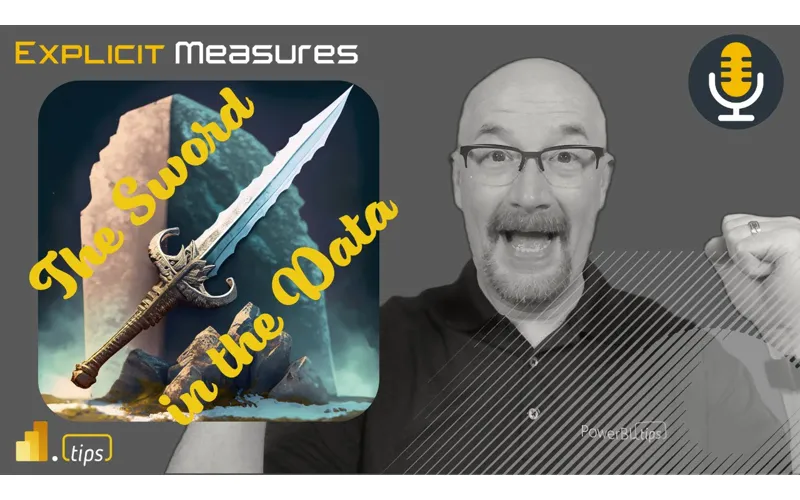
In Episode 301, Mike and Tommy break down the key takeaways from ‘Two Edged Swords - Ep.301 - Power BI tips from the Real World’. You’ll hear what matters most for Power BI and Fabric practitioners and what to try next.
News & Announcements
-
Fabcon Community Conference — See link for details.
-
Data Culture: Self-service BI as a two-edged sword – BI Polar — There’s a new data culture video! After I finished my 2020 video and blog series on building a data culture, I figured I would revisit this topic at some point. I didn’t expect it to take quite so long, but life is…
-
PowerBI.tips Podcast — Subscribe and listen to the Explicit Measures podcast episodes and related content.
-
Power BI Theme Generator — Create and download Power BI report themes using the PowerBI.tips theme generator.
Main Discussion
The main theme is that self-service BI is a two-edged sword: it can massively accelerate insight, but it can also create duplicated logic, conflicting numbers, and governance pain if you roll it out without education and standards.
Key points from the conversation:
- Data culture matters more than tooling: a great BI platform won’t save you if the org doesn’t agree on ownership, definitions, and how decisions get made.
- Self-service needs training + guardrails (not a lock-down): the goal is to enable people safely, not prevent them from doing work.
- Central BI vs. business-led BI isn’t either/or: the team talks about balancing a strong semantic model/enterprise layer with flexible exploration.
- Governance is a practice, not a checklist: naming, certification, documentation, and version control are what keep self-service from turning into chaos.
- Roach’s Maxim in practice: push transformations upstream when it’s repeatable and shared; keep work downstream when it’s specific and exploratory.
Looking Forward
Key next steps and what to watch for coming up in the Power BI / Fabric ecosystem.
Episode Transcript
0:27 good morning and welcome back to the explicit measures podcast with Tommy and Mike good morning and a happy Tuesday so it’s it’s this is a a good episode I think we’re going to enjoy this conversation the article of today is by none other the world famous Matthew roach Matthew does has an an amazing what is it the roach’s Maxum he’s made his own Maxim so roach’s Maxim
0:57 he’s made his own Maxim so roach’s Maxim is transform the data as far Upstream as necessary and as far no as far Upstream as possible and as far Downstream as necessary so that’s that’s Matthew roach’s phrase and he’s been in the bi space for a long time he has written the adoption and governance road map with Melissa with Melissa coats and so all of that those years of knowledge and exercise around Bibi practices is in Matthew roach’s head and now what he’s doing is he’s writing a series of Articles and videos around the
1:27 series of Articles and videos around the data culture which I think is something that we’re going to resonate very well with here the roach’s maximum too I I think we need our own maximums because I actually use his maximum in my training on my five-day training that I do and I say oh there’s the concept called roaches maximum it sounds like something that’s in a textbook like it does it does Textbook option it’s great yeah so I have I have Michael’s Maxim I I have I have Michael’s Maxim maybe mean maybe that be as lazy as possible whenever you do build a data process so I have pul of
1:58 do build a data process so I have pul of principles so Jia principles I like that oh there you go yeah best practic yeah Bowers build B best practices so we’ll have to think of our own various maxims or phrases that we should use actually mine probably is if it’s not making you money and if it’s not saving you money you shouldn’t be building it that’s that’s probably mine right there that’s a pretty good one that’s a well that was a change one too
2:28 that’s a well that was a change one too because it was think like the business act like act like it joint come up with in all actuality the funny thing is when I was growing up my parents had like white shirts like oh you remember those white shirts with that like had tapered almost like collars that were different colors and the sleeve things different colors everything was white shirts and you had like almost but not really but you had like the slogan words or just every all the words on them or whatever I I don’t
2:59 the words on them or whatever I I don’t know maybe it was just to me thing my my our family was like a bower power B power that was that was like on shirts to remember as a kid no way so maybe that’s it power power powerbi power power power powerbi power powerbi power power it sounds like something you would get on the Power Wheels like pow pow Power Wheels excellent so before we jump in today we have a couple announcement pieces or things that are coming out so we will this is actually a episode so
3:30 we will this is actually a episode so just FYI this is already a pre-recorded episode myself Tommy and Seth are at the Microsoft MVP Summit hanging out with Microsoft and thinking through and learning more things around the Microsoft Power Platform particularly Fabric and powerbi so we will be there so this is going to be just a pre-recorded episode but that being said there is another event coming up this month and it’s getting close you need to get your tickets now before all of them are gone there is the Microsoft Azure data conference so it’s called Azure datac com. com this is the Microsoft
4:00 datac com. com this is the Microsoft fabric conference it’s going to be on March 26th through 28th and there are workshops for the 24th and 25th of March and also on the 29th use the code Carlo 100 to get $100 off your purchase ticket hopefully that works for you hopefully the code is still good that being said any other openers or things you guys have found interesting over the past week or so or last couple days I think I know man I think we’re
4:30 days I think I know man I think we’re ready to go all right we’re going to jump on into this one so today this article we’ll just jump right into the main article today talking directly from Matthew roach and so in this video it’s about a 12-minute video on the website and so what he does he does a great job of just giving you an introduction to data culture but then he also wraps it if you if you dally don’t want to watch the entire video for 12 minutes which is not that long I think it’s actually a pretty good watch for that amount of time he gives you a couple bullet points or summary key points of what he’s going to
5:00 summary key points of what he’s going to discuss inside the video and I think these are the really the meat and potatoes portion of what he’s trying to get out here and what he’s trying to talk through the the analogy that I think he’s going for here is that there is two worlds to this data engineering space or or powerbi and and bi in general right there’s the it realm of things that are more essentially controlled and then there’s the business side of things and so I think the analogy here is Matthew is trying to utilize the the sword is like
5:31 utilize the the sword is like your self-service bi or your let’s just say this your bi tool whether or not it’s selfservice or not really depends on the culture or the the culture you put in place at your company and I think there’s a culture piece here that he’s going to elude to in these in this video talking about just because you don’t know how to use the sword doesn’t mean the two-edged sword is extremely dangerous you need to learn the tools of the trade and figure out how to best utilize them because once you utilize them they can become very
6:01 you utilize them they can become very effective so I think that’s the analog is going for here Tommy let’s jump in with you your opinion what were your initial thoughts and what where do you think Matthew is going with a lot of this main topic here yeah I think we’ve talked about this a ton I think self-surface is becoming more and more Paramount in the first part of I think an organization’s dialogue in terms of adopting data I think talking about the different errors of bi we’ve always been with okay centralized bi teams and enterpris and
6:31 centralized bi teams and enterpris and bi I’m finding more and more reading about it more and seeing with organizations and clients where they want to jump right into self-service and they want that to be the almost primary way obviously still focusing with Enterprise but self-service is becoming more and more of a a hight topic conversation first off and I think this is a great article and really kind this is a great article and really a great concept on this is good this of a great concept on this is good this is good that we’re having this conversation however we do need to go through things
7:01 however we do need to go through things because it can be incredibly powerful but there’s also a lot of gotas that we need to be careful about or you can get cut really bad get cut yeah swords swords we’re talking swords is that your boss an accent any no no yeah I don’t know it I like swords Matthew that’s what I I’m going to hit him up when we’re out there I want to go want to go swing some swords it be better than my hammer Hammer throwing sequel bits last oh my
7:31 Hammer throwing sequel bits last oh my goodness you should have seen Tommy throw so it wasn’t Hammer throwing cuz throwing Hammer well were that would be weird we were axe throwing at sequel bits and well I was attempting it I wasn’t doing it Tommy was was good at bouncing them off the wall that we’ll say that his he had a good bouncing effect off of the wall meanwhile I was just as well been throwing hammers killing these these axes and I was like I don’t know what I was doing I had the right step or something it just fell off the hand just right and every single one it was like Bam Bam the guy was like oh
8:02 it was like Bam Bam the guy was like oh you got to you got it down I’m like I’ve never done this before I don’t know what I’m doing meanwhile Tommy’s like I’m going to do one more come on one more I can get it to stick just will not stick was looking at me like it’s not your thing it’s not your [Laughter] thing that’s funny so let’s talk more about the the data culture and the two-edged sword so Seth do you do you perceive it that way do you feel like the the powerbi are you getting the analogy here right powerbi or bi in general is the sword and there’s two edges one Edge that cuts from the it
8:34 edges one Edge that cuts from the it side of things and then one Edge that maybe cuts from the business side and so if you don’t know if you don’t know the other side’s sharp you’re in trouble yeah I get it but at the same time it’s it’s in the context of self-service and that that’s where I think you can get cut in trying to like just unleashing everything on a user base that is uneducated about the the tooling Andor the the data and I think there there are like
9:04 data and I think there there are like warnings warnings around how you go about implementing powerbi is a great self-service tool if utilized in the right way but that actual actual implementation could could very well easily backfire could we focus on the educated part because I think this is a really big aspect when we talk about introducing self-service we’ve obviously know that there’s going to be some training involved for any user but how do we know when there’s enough
9:34 how do we know when there’s enough training right is is a week’s worth of training you’ve done your workshops and now you’re ready to go to self-service do you release different things in steps because I think this is really where you can get cut you may know what a sword is or be able to hold one right but going to battle or whatever the circumstance
9:52 to battle or whatever the circumstance is I don’t know if we have a good concept or a good handle on the adequate enough of not just training but ALS also experience to say okay now you’re ready your team is ready to do self-service if it’s that it’s that easy I you made a comment earlier Tommy that I that really resonated with me you made a comment around you felt like some organizations aren’t really ready to like jump in and they they want self-service but they’re not prepared to one maybe supported or
10:23 prepared to one maybe supported or they’re not really ready to go and I think you’re right I feel like I’m I’m feeling the same sentiment I’ve been doing some training classes recently and so that always refreshes my mind of like where people are in their Journey right it feels like a lot of times there is pockets of analytics that are using powerbi inside organizations and there’s a little bit of wins or successes coming from those pockets of analytics and what’s coming out of that is a team of people that are like I need some more training now some people are self-driven and will go to their boss and say hey I need to go get some formal
10:54 and say hey I need to go get some formal training where should I go get some so they go to a school they go pay for some training they actually go through a course that will help them get from you course that will help them get from getting data into powerbi and know getting data into powerbi and utilizing it so just getting in some good good runtime but it’s also hard I think from a data culture standpoint if the company is not going to continue to support that user things will fall apart and so I I I a little hesitate a little bit when organizations are so ready to jump in with okay we’re going to just do self-service without any plan there’s no
11:25 self-service without any plan there’s no Center of Excellence we don’t know what we’re building what is our project like so I feel like there’s also some not not quite the culture is not there yet I think the culture needs to support the ability and the the capabilities of the training and then that’s maybe one comment that I have about what you said Tommy the second part was that that resonated with me you said maybe we should trickle things out I really think
11:55 should trickle things out I really think so I don’t think you come in and say okay we’re going to selfservice every everyone gets deployment pipelines and GitHub and and and devops to go do I think you start very small with a small group of people and you slowly release features and you start with a limited set right we’re not going to give everyone work spaces we’re not going to let you just make whatever you want because a lot of times organizations that run this wide open I’ve been talking to organizations and they’re like we’re going to start doing powerbi I’m like great what do you have and then I go look at their capacity
12:25 and then I go look at their capacity metrics app and they’ve got multiple PE SKS laying around the and I’m like what you’ve already got parbi very well established in your company and they’re like well we’re starting in our department like we’re just going to get going so like it sometimes it’s like one hand doesn’t talk to the other inside the the organization do you think that’s an expectation issue because I think what I’m finding is we want self-service it’s like well what do you want out of that I I think I think what you’re
12:56 that I I think I think what you’re speaking to is the buzzword culture right like and that’s where that’s where businesses get themselves in trouble like somebody like all of the sudden you like somebody like all of the sudden it takes a couple well-known know it takes a couple well-known technology magazines or a big push where everybody starts using powerbi right and everybody’s doing self-service oh well that sounds like something we should do let’s buy powerbi and just turn it on and we have self-service that that would be in like a way to go get cut
13:28 a way to go get cut righty righty yeah and to your to your point Mike though like in in terms of the the the the the methods by which you can find success in self-service I think you’re speaking to like somebody has to at least have an idea right we’ve got to have a strategic way in which you’re going to just open the do the floodgates to nonata professionals right and the vast majority of business people
13:58 and the vast majority of business people are not data professionals they work with data a lot right like they may be in Excel and push data around but that doesn’t mean that they’re like creating a lot of functions or calculations or like th like doing analyst work so while like that’s where you really get in trouble I think where you just unleash because everybody’s just going to be like okay well I’m going to try this thing one two are you even prepped for it from a data source perspective like do you have something available to
14:29 like do you have something available to that wide audience that is not going to instantly get them in trouble or are you expecting them to just know where everything is and it magically works right versus a slow trickle out like you’re saying where it’s like okay well maybe we engage a few analysts or or data people business data people that are manually doing a lot of things but they certainly know data and we engage with them in different business units because I think
14:59 different business units because I think those are the folks that you’re going to find extreme success with right off the bat because some of the prevailing themes that are going to resonate with those users is automation oh yes and connecting to multiple data sources and just combining data in this one tool for analysis purely from an automation analysis perspective and like once you have that hook you’re already driving
15:29 have that hook you’re already driving for efficiencies they’re already primarily the the the heavy data users within a business unit and they’re they’re going to be ones on a path or a trajectory to get down where I think a lot a lot much lower percentage of self-service actually lives which is creating high value reports that are shared throughout the organization be honest I think there’s a bit of an ideal there that I don’t know if that’s Paramount in every organization large or small and just the
15:59 organization large or small and just the things you’re talking about where so honestly the the data analyst side right like that every Department already has someone dedicated there which is usually required no and I agree with everything you said like completely that there’s that path but I think it’s just not that easy a lot of times because a lot of organizations they don’t have dedicated people who work in data maybe they’re doing right yeah but then but right you doing right yeah but then but right but that’s the big point so how are know but that’s the big point so how are you going to do self service are they
16:30 you going to do self service are they going to have to hire because I think usually you’re trying to do everything from within that’s the the expectation no yes but my my my point there would be and it’s a good call out it’s it’s a good saying like hey yeah in a great world Seth trickle down would be fantastic if you had those types of users in every bus business unit what happens if you don’t right you you have a lot more prep you have a lot more process you have a lot more training I think to make it to make something
17:00 think to make it to make something successful because like what are what are some of the outcomes that you guys would perceive or have seen in really poor self-service implementations well well it’s it’s the idea some of it is you’re what what I see a reaction to some of this so one one poor self-service thing is there’s no plan to how we get data out of our systems so we’re consistently loading the same table from the same server in multiple
17:30 table from the same server in multiple data sets so what a symptom of what you were asking about there Seth is our backend servers are starting to fall over because we’re looking at the queries and like oh my gosh at 8 in the morning we get like 30 different queries for this really large fact table that’s just getting reloaded in its entirety every single day now we like when you come in and say I want to produce powerbi do you think first thing day one oh I got a plan for my servers not the fall over I don’t think that’s what your thought is
18:00 think that’s what your thought is initially and and when I see people at least exploring and trying to figure out like what can powerbi even do I feel like the general journey is can I just get some data from Excel how does that work okay let’s go a little bit further that works let’s go find where can we get the data instead from Excel can we go back to the original system is it a as400 model from IBM maybe we go there and maybe and so I think what happens is you start taking these incremental steps and I think this is why the data culture is so important to me in this
18:30 is so important to me in this conversation because you need to have open conversations we need to let the business explore a little bit but with guard rails because at some point we’re going to need to identify what’s being run in our environment who’s running those things and starting to address the culture that’s starting to develop and so either you let it just happen naturally and it grows within the organization which at some point you’re going to have to clean it up or you’re going to wind up paying more money to not clean it up and you’re just going to
19:00 not clean it up and you’re just going to keep throwing more PE skes at things to keep it keep it running so it it’s a a mixed bag here I feel like and I think that’s why the expectations are so important too you’re talking about the back end just on the front end too there are certain tooling including Excel that can do for the consumer things better than powerbi but not in a whole like a macro that someone just clicks a button and updates everything and I think without the expectations you’re like here here’s what we had in Excel duplicate that in
19:31 what we had in Excel duplicate that in powerbi with the same stored procedure and everything I click on and I get this whole row of tables or whatever that circumstance is you’re like well we can’t replicate that in powerbi because again the amount of work work in the
19:44 again the amount of work work in the back and to get that up and running in the first place and every month the consumer doesn’t care about that they don’t know about how much work every month takes or all the manual labor so they just know that they click a button and this tooling or this software or in Excel and they get their results and I I think that’s the other side of it just like our our server may fall or we’re calling it too much consumers are also if they don’t have the right expectations going into what their team’s going to be able to do and as
20:14 team’s going to be able to do and as we’ve said they may be limited in their Tech in their Skilling in powerbi there’s going to be a lot of frustration right off the bat I I I’m resonating with your comment there Tommy around there are and I’m trying to I’m trying to materialize what you’re saying into like like how how I perceive it mhm there’s this concept of the Excel file the scripts the store procedures these are business level rules that someone has worked out and said data came in
20:46 has worked out and said data came in like this and data needs to leave like that someone and but someone designed this in those tools because that’s what they had access to they designed it maybe in a vacuum without a lot of other input from other people but what’s happened is the difference here is well powerbi comes into this world and we’re saying gear is a process that was Legacy and now we’re throwing a brand new tool at it and we don’t really know how the new tool works we think we do so what do you build out of that like and this is where I think going back to your point much earlier is that you need to bring
21:16 much earlier is that you need to bring in experts or have people who are spending time learning what this is building into the data culture of what do we need to understand in order to produce the value from our data right so someone’s to go through that Excel file and say okay what are the risks of keeping that Excel file around are those greater than us migrating to Something in powerbi or a lake house or fabric pipelines or whatever the thing is is there a value there and someone in the business is going to say yeah this is worth our time we should actually do
21:47 worth our time we should actually do this and maybe initially some of those things still live on until it falls apart and breaks and someone says okay the pain of not solving or fixing that solution is now high enough that I need to go build another solution right and I find that pain occurs when someone gets a promotion someone moves on the tool doesn’t work and the data does not load when those things occur people throw a fit and that’s enough pain to push people to H maybe we do need a different
22:22 solution I don’t know I don’t know how if you guys feel the same way about that no I I’m I’m a th% with you because you just said everything that happens to to when you’re releasing people or processes too quickly we’re we’re saying hey we’re going to do powerbi and we want again there’s High anticipation for it there’s High excitement for that okay well get these people on it now well again these are people that maybe just done a week of training or they’re two weeks into it or they have not seen all the different scenarios and they’re now trying to
22:52 scenarios and they’re now trying to solve problems that they’re not equipped for right and maybe they either shouldn’t be yet or that’s just really more of an Enterprise problem but here’s the idea especially around powerbi and I think it’s going to be more with fabric where it can solve all the data problems and maybe it can but doesn’t mean you just take your existing solution that was probably broken in the first place or not optimal and now you’re just trying to put that round peg in the square hole whatever the the saying
23:23 the square hole whatever the the saying is but I think that’s very much what you’re saying is releas releasing people to too far or too quickly out of the gate and they’re expecting to do a lot more than I think what they intended to do or what they thought they were going to do I guess maybe another another talking point around here so going back to Matthew roach’s points that he outlined here at the bottom of the article article one thing he pointed out here is in reality the two-edged sword is a very
23:54 reality the two-edged sword is a very versatile tool and it can be used in a multitude of different ways Rising raging from different circumstances and scenarios I think this is what we’re also starting to see now with powerbi in general because I feel like there’s now we say we say powerbi but I feel like I’m finding myself or catching myself qualifying well okay when I say powerbi semantic model and reports or the old data flows and the reports side like so I feel like I’m qualifying my comments now because now
24:26 qualifying my comments now because now there’s a whole bunch of other things that I think are valuable but then now they’re bolted into the system and so I’m like well okay well we could do data engineering things over here but really what you want to do is connect these data sources we really want to get them to the lake as fast as possible and then we can start talking about okay now how do we shape the data get it ready for semantic models so I see more conversations being held around the broader scope of spectrum that’s happening with all the tools that are in fabric now and so yeah it’s a very versatile tool but if you don’t know how
24:57 versatile tool but if you don’t know how to build the table if you don’t have process around those things how well is it going to work for you and where I’m where I’m having some headache here in this conversation is where do you find the the information where where is the Oracle that tells me this is how it should be done and I think I get a ton of questions in the classes that I do around hey what’s fabric how do I use it what’s the best practice I’m like guys it’s just been out like it’s just literally launched like in November no
25:27 literally launched like in November no one’s had time to BU build like real solutions on this in environments or in companies that are finding incredible value from this I think it will get there I do have some opinions on how I would like to build things based on other Solutions I’ve built outside of powerbi fabric but I do feel like there’s there’s this everyone wants the answers right now and I think the MVPs the community of experts haven’t really wrap their head around yet what this looks
25:59 like Seth I I saw Tommy making making he’s wiggling in his chair he’s wiggling in his chair we can say that description so okay here’s the here’s the thing here’s the thing we’re just trying to tackle powerbi powerbi self-service and you’re right Mike because all these things are I’m getting the same questions too around data lakes and fabric if we can’t even tackle successfully and I think we’re seeing the wild west all the problems or why we’re talking about the two-edged sword
26:30 we’re talking about the two-edged sword in powerbi and again I’ll use your frame of reference here semantic model reporting culture which is it can’t be just limited to reporting it’s everything yeah but we’re seeing this as you need to be really careful how you roll this out or you will get cut as Seth said this and now we’re the idea of trying to then introduce a data Lake and then this whole workflow I don’t think or or actually I don’t know yet I haven’t
27:02 actually I don’t know yet I haven’t finalized yet in my own head if do you need to be an expert in powerbi reporting semantic models to then learn the data Lake in fabric do you need to come from a powerbi background to then go into fabric I don’t know yet however if we’re still struggling and I think all of us are still struggling with just the introduction of getting a good report out there forget the semantic model and Dax right it’s I would say even the concept of getting a rolled out
27:34 even the concept of getting a rolled out from a self-service point of view to Consumers where they are trusting the data again we could talk about data flows gen two and notebooks that’s all great but at the end of the day if people have low expectations and low Trust of the reports and the content they’re looking at that all that’s for not if we had a difficult time before fabric fabric right you and and the reason I chuckled is I I thought you were actually going
28:04 is I I thought you were actually going to take it way which is what percentage of people are we actually talking about in self-service scenarios that are going to engage or be able to engage in engage in fabric without an expert that’s very true yeah and I and I think I think that’s where I I do really like the analogy that Matthew uses where there’s the the true Edge or the front edge and then the false like the back right so like the Cor between a a business intelligence team bi developers that do know all of the
28:35 bi developers that do know all of the things that Mike Carlo does a fraction that Mike know I know that they’re very but they’re proficient Google knows a lot of things I’ll just say they’re just not as good co-pilot can tell me a lot of things these days so so but but there’s the the technical leadership that’s that’s required to make self-service work and the this false Edge or the back end is where there’s this theme of where he’s talking about the business leveraging self-service tools to answer
29:05 leveraging self-service tools to answer their problems and I it is a balancing act that like you have to lead into the into a self-service solution with a strong bi team I think that understands the technology and at least has a process in place that shows business users in multiple different ways how to Leverage The Tool the processes they have to follow and I think there are prerequisites like you talked about like you have to have if you’re going to do
29:35 you have to have if you’re going to do self-service it’s not just data access
29:38 self-service it’s not just data access right because they probably have some data access now if you don’t have that you need it proba then you need you’re probably starting with export to excel at least initially yeah shape data for them so that it’s like there’s a centralized place or you’re least consolidating well formed information for them to do their own analysis on and then they have to like then you have to put in guard rails because the you can’t just open up system and and we’ve we’re talking about it we did like the load on production systems yep like the
30:10 load on production systems yep like the very fact that opening up the doors on something without any guard rails or anything like means everybody’s going to create their own version of the same report you’re going to have duplication all over the place you’re going to have oneof reports right the thing that’s created and then not used again going to have that getting cleaned up there’s just stuff sitting everywhere so that’s why I’m saying like do you do you need to go through like these extents of really long no but you have to have an idea and somebody leading the effort to
30:42 idea and somebody leading the effort to implement a successful selfservice implementation and be aware of how you’re going to deal with certain aspects of it right like but to your point Mike that’s why it’s always great to do it in stages or try it out with a group first pick some users and you’re going to run into challenges there Tommy back to our other point where what if you don’t have them right there’s a big need maybe the business intelligence team has to take on that group right and
31:12 team has to take on that group right and there are no analysts and that’s like that’s the reporting they get unless they can volunteer somebody to support that right because if it’s like so there’s so much Nuance I think within here and it’s the balance of these two groups working together swinging a sword right a bit of reporting and and that’s the uniqueness I think of a ton of our conversations around powerbi and fabric now is the versatility of this weapon is
31:44 now is the versatility of this weapon is crazy right if we had the sword and powerbi now it’s like the Flaming PowerUp sword from Zelda whenever we’re around right like it starts glowing and we’re all like yeah it’s doing even better now fabric green right that’s fabric green now exactly right I I like that analogy a lot and I think that that bodess very well for what we’re trying to accomplish I think I think in general like again as you were saying that Seth I literally had in my mind we had this moment in time when we
32:14 mind we had this moment in time when we had par a desktop and you and I communicate this to users we were saying hey did that the same tools you use to create power query is the same tool you can you can do the data engineering you can build the power query and you can literally hand it to the it organization and say Here’s my steps I went from this step to this step and you can click through and walk through and Seth I was a flabbergast that I said this is amazing we now have a tool that has the same language I’m not writing store procedures I’m not writing SQL statements I’m building a
32:45 writing SQL statements I’m building a power query mbased logic to say here’s how I transfer my data oh and by the way it here’s what I did you want to go build that in in SQL no problem you have all the rules that I require to get to the the answer that’s what I’m doing and when you when you made that moment I had this another Epiphany like what if the same thing happens with fabric like what if what if the DAT engineering team is just like Hey we’re going to go to we’re going to work hard to just land tables into the Lakehouse oh by the way here’s
33:16 into the Lakehouse oh by the way here’s a default data set business go explore and figure out what you think you need from that here’s a little s here’s a here’s a little proof of concept here’s a little mini project go to discover and build what you want to build business comes in mucks around with it for a little bit hey I need some help and this is just facilitating the conversation between the traditional it and the business more and you’re having more convers conversions or conversations back and forth and that’s helping the situation is
33:47 situation is it I I think it’s a I think it’s a good I have projects running right now where I’m working with the business and the engineering team to figure out what’s the right pattern of where we land this data and when can we start looking at it seeing it because the it organization doesn’t know how to shape it for what we want to do in reports they don’t understand it yet so we need stuff to play with to figure out what we’re going to build in the semantic model layer scale things out make sure things are going to run well we’re not hitting up
34:18 going to run well we’re not hitting up so instead of hitting the actual production stuff we can just flip over tables of data into our Lakehouse and we’re using that as a a way of experimenting and preparing things and now we’re having the conversations around we know the big objectives we know where we’re headed and now we can then build value added tooling off of that data now will we keep that final semantic model there will we keep the data engineering we built in Fabric in there permanently not sure yet but at least we have the rules at least we know what we built I don’t
34:50 at least we know what we built I don’t know if that’s self-surface though Mike how is it not like so think about manage self-service right I’m not especially in IP something Seth said too made me think like is self manage self-service the best self-service or the only optimal self-service and the reason why I’m the reason why I’m questioning that is you’re talking about this workflow where everything that I’m working on is going to be handed off eventually right and I guess the question then is in in your model or the
35:20 question then is in in your model or the framework that you’re talking about how much does the business own because I think that’s the big part of the self-service side and if whether you’re talking about the data lakes or or lake houses and fabric but semantic models too there’s two sides of the coin with Self Service you have Enterprise Le semantic models and then you have business-led semantic models with their own credentials or are their own you own credentials or are their own what’s certified how far the reach know what’s certified how far the reach is to the consumers okay which is all
35:50 is to the consumers okay which is all part of self-service everything you’re saying which I can see working because I think there’s that workflow in man Self Service too where we’re handing off models we need updates to these models that goes to Enterprise right but then and I guess the worry there and this is of in terms of how much we know is taking place how much is what is the business then owning in that lake house are we giving them that much control if they have full capacity to a lake house when are they going to hand it off so here’s a great
36:21 going to hand it off so here’s a great so you don’t hand off things in a vacuum I think there’s also a very clear handshake that needs to be occurring between the business teams and the IT teams right so the if the B if the it teams see the business abusing things and producing things that are not relevant there’s there’s got to be a conversation so the whole the whole idea of this is more candid conversation between both teams so let me let me change your analogy just slightly Tommy and give you my lens of how maybe I’m perceiving this right I think of there’s multiple layers to powerbi. com you have
36:54 multiple layers to powerbi. com you have apps and reports that is like your consumption layer right if we’re talking self-service that that by itself could be labeled as self-service I will make you an app I will put a handful of reports in here you go go look at the report yourself change the filters that is now quote unquote self-service then you can draw that line further upstream and say well maybe we’re going to give a little bit more access to the business well instead now I give you access to the data model so now you can have access to data model not the workspace now you have one layer deeper in this
37:25 now you have one layer deeper in this ecosystem I’m going to go do analyze in Excel I’m going to go build some reports potentially off of that now in doing that you’ve now changed the roles and responsibilities of who’s responsible for what reports for example if the business comes into your semantic model and starts making really bad data filtering things out reporting out inaccurate information when someone comes back and says hey this is really wrong someone needs to get fired you reported something incorrectly who’s responsible for that report this is
37:55 responsible for that report this is where you before you hand that over there is an expectation hey we are going to control up to this level we control up to the data set we will guarantee that the data set is accurate anything that happens beyond that is the business I’m not going to go the full analogy here but you can continue to back like deeper and deeper and deeper and then I think you eventually wind up in someone’s looking at the lake there’s there’s there’s a lake here and potentially even silver level lakes and
38:25 potentially even silver level lakes and not bronze or gold or or gold level which is I think more curated but you could keep peeling that onion back and if your data culture allows it potentially you can give access to those deeper things but the data culture requires process expectation management and a lot of other things that I think is part of the data culture and I think that’s where Matthew roach is going here is if the data culture doesn’t support these things you shouldn’t be going in and saying here’s a lake housee have fun well let me let me ask you one just
38:55 fun well let me let me ask you one just pointed question there before you get to that layer of the lake house with that onion and before you get that smell what’s the number yeah what is the number one concern organizations have when it comes to where you’re at with semantic models and self-service what’s their number one concern from a high level point of view so I think it slightly depends on who you’re talking to I think at the upper end levels of the organization you have sea level people saying am I
39:25 have sea level people saying am I spending the right amount of money and are my people happy with the data
39:29 are my people happy with the data they’re getting so if they don’t hear complaints around Tommy is such a pain to work with I can never get data from him the systems are always locked down if that if that conversation is bubbling up to that leadership level they’re going to say why am I spending so much money on whatever the bi tool is and I’m still getting these complaints so I think that the barometer for me or the barometer I think for many organizations is what is that feedback they’re getting at that upper level now conversely what I find their successes we start having people
40:00 their successes we start having people who really own the powerbi and start handing out apps and reports and start strategically giving access to data sets for people who can handle it and what happens is the feedback now bubbles back up to leadership and says this is working for me I’m getting data faster and having more value from it and I have more capability to shape it for what I need to do my job when that feedback comes there now that leader says okay we’re spend spending money in the right places either people or on the tooling
40:32 places either people or on the tooling to let that business unit get their stuff done so to me that’s where I would feel like the barometer should be sitting I don’t know if that answered your question at all though I like the answer but for me the number one thing I hear across organizations and I think it’s more maybe where Seth level’s role is oh he’s Tommy’s pulling you into this one Seth he’s this is a two dog fight and Tom is trying to like feel my buddy Seth my buddy Seth will come help he’ll slug
41:02 my buddy Seth will come help he’ll slug a couple he’ll he’ll get a couple come around the neck we’ve done this for almost 300 episode over it’s like I’ve been picking on Tommy the whole time and all of a sudden Tommy’s poking like Tommy wants his big tall friend to come around the corner and like Duke’s up buddy Duke’s up we’ve got enough of these conversations we know who’s going to be on which on which side that’s true that’s true yeah the number one thing I always heard from where I think cth role is at it’s concern is if we’re going to release self-service and we’re going to start
41:33 self-service and we’re going to start having this greater access how do we control all these models and how do we control that the right data is getting out that is the the concern that I hear constantly and I don’t know if that is sess case especially if they’re releasing this more into the wild where it’s hey we’re going to start doing this self-service but how do we make sure that everything is at least not I want to say controlled but that they’re not building things they shouldn’t and they’re doing the right
42:04 things I think that goes back to Mike Mike’s Point that he made which was there there has to be clear Communications and ownership of who owns what when those capabilities are given to the business yeah on the same Tac though right there the responsibility of the of the people building the model certainly is that the model itself works as it would EX you would expect without error if somebody adds to that or has the capability to muck with the
42:34 the capability to muck with the the data or reshape things and build a reports then the onus is on them like ultimately like that that’s a data data trust issue right but my assumption in that scenario is that like models are there so the the there’s a team that owns the owns the models but depending on the capabilities provided to the business user ultimately the reports that they generate like are probably owned by
43:04 generate like are probably owned by them like like the the the larger like to to point back where where where you’re you’re obviously data quality and the accuracy of that data is extremely important yeah but the scenarios that we’re outlining here depending on how you implement cost is probably the biggest driver yeah so I I like where you’re going with things Tommy and one thing that came to thought in my mind was
43:34 that came to thought in my mind was you’re you’re asking about are the kpis right is the information correct I think we have to decide who is going to say that that is who is going to be the owner and responsible for defining what is right and making sure those are handled correctly in the report and this is where I think the delegation of responsibility is really important here from a data culture standpoint is if you if you’re going to say if you’re going to give access to the business unit or those things if there’s not kpis coming from a higher level in the organization then they’re
44:05 level in the organization then they’re allowed to make up their own kpis or they are going to be responsible for their kpis for their team whatever those may be if they have a problem with that or if someone at the leadership level has an issue with what kpis are coming out from that team then that’s a culture change that needs to happen inside the leadership of that company that leader needs to come in and say no these goals these scores these objectives that you’re working on in your team aren’t aligning with our greater business objectives really talking through the okr framework right and so I I think you
44:36 okr framework right and so I I think you okr framework right and so I I think at the end of the day right there know at the end of the day right there should there’s going to have to be some major top level objectives that are going to have to be delivered right we wna we’re a manufacturing company we want to ship things on time under cost blah blah blah whatever those things are right so there’s there’s going to be some component around the expectations to the business around what they’re going to be doing so if those numbers go up I don’t really care what your kpis are if if the main objectives get done
45:06 are if if the main objectives get done and we’re making more money than we were before and we’re shipping more products than we were before and we’re bringing down costs those are our big drivers of like what makes us a business then we’re good so I I think sometimes that leadership level has to have some strength behind them to say what is really important and if I didn’t have to have a thousand kpis what are the main ones that I care about and so I think at that leadership level they have to communicate down to the different departments HR shipping operations like who are those teams and
45:38 operations like who are those teams and communicating to them and saying okay we need from your team this is your set of requirements either you I will help you build them or you build them yourself and you report back out to me what those kpis are as the bi or Central team is I think the that team is focusing a little bit more bit more on I’m going to I’m going to just Source the for you like I’m going to I’m I think there’s the fabric space of things allows me to focus more on getting the data into the hands of the people that can actually make the kpis and the decisions and then giving them the
46:09 decisions and then giving them the responsibility to own that I love so much what you just said because I think this is the biggest lack or I think the thing that goes without consideration and a lot of organizations when they want to do self-service is you want a good data culture there’s an investment there from the business and from the organization not just in the technology and the skills that’s where we focused on so far is oh well we need to know people need to know how to make semantic models great yeah that’s part of it but
46:41 models great yeah that’s part of it but it’s not all of it yeah that’s part of it but the business need to have to play a role in those kpis and the metrics do you have a data Steward do you have someone checking those numbers and validating that you have the correct logic and there’s a lot more investment there if the business is going to own it not the idea that you have the business owning the data I think we always think or I tend to think there’s a data analyst on that team but it needs to be so much more it needs to have that again the business having the validation and
47:12 the business having the validation and spending the time and the resources on not just a data analyst who can build models or reports to your point but also they’re owning the kpis and being part more intimately part of that workflow and I think that is where self-service becomes prey Point has a culture I think that is the really the Lynch pin though as we’re as we’re discussing this right is and I I don’t want to be negative but if if we
47:44 don’t want to be negative but if if we look at the large swath of organization right you have data providers on whatever level business intelligence Enterprise developer bi Developers Etc analysts people who are in charge of coming up with the numbers the vast majority of people in organization are data consumers though yeah they don’t understand data right they’re they could look at a spreadsheet and they can group things or
48:14 spreadsheet and they can group things or filter things or do things to get an answer or pivot data but if you ask them to like combine data sets have no idea where tell me how you got to that number yeah they they don’t they they even it’s even more fundamental than that it’s even more fundamental than that so and so gave me a hundred rows of data that’s all I that’s my world there there’s never there there isn’t a question of well that’s 98% out of 100% of all the things and this is it’s filtered down from a million based on
48:45 filtered down from a million based on the criteria that you gave me like they don’t care it’s the it’s the thing that’s in front of them and they will make a decision based on what you gave them quickly because that’s what the business is demanding of them I like that point so if if that is the Baseline what really I think is the mo and Baseline just meaning like the vast majority of people don’t know how to work with data and it’s when we say self-service I don’t think we’re talking
49:15 self-service I don’t think we’re talking about them what I think we’re talking about and a lot here is to your point
49:22 about and a lot here is to your point Tommy Tommy technology and process but the glar ing thing here is people and it is extremely important just as we talk about building reporting building models what are we trying to communicate or build like it’s all audience-driven so who is the audience for self-service it’s the data providers what you’re trying to do is accelerate into a business the Uber Technical Resources
49:52 business the Uber Technical Resources that can do everything they can connect all these data sources they can build the models they massage they can create facts and dimensions they can create these Enterprise systems that people plug into why to extend the reach of those few into a much wider audience but those that audience is still data providers yeah they and and I think what’s cool about the technologies that Microsoft has and what’s so fantastic and we love talking about all the time it brings up all this Nuance of how do
50:25 it brings up all this Nuance of how do we become more effective that implementing these Solutions in many different ways throughout an organization is the fact that the capabilities are there Technology Way out in front now and it’s accessible right it wasn’t before fabric breaks down how many doors within an organization exactly right just by allowing all of this capability to someone with the permissions does it do we care who that someone is no no it
50:57 we care who that someone is no no it could be the analyst the analyst could start to learn how to do the lake and could learn about one Lake and Spark and all these big things and Delta tables and Bam Boom light bulbs big time things happening in the business because that individual had the capabilities put in front of them to make a big impact and to me if you talk about five years ago or seven years ago however many years ago it was at T I came out point my gosh our excitement right oh my goodness
51:30 our excitement right oh my goodness there’s nothing out there that can give us the data sources like we can plug all this stuff together and there’s quick wins and we can we can bring insights so much faster and now that’s almost like table stings yeah now we’re now we quickly move from like quick wins and all these like little things we can do to connect all these data sources and now we’re trying to figure out ways to talk to the business about yeah that’s great but let’s take your 400 gig thing and just dump it in here and then make
52:00 and just dump it in here and then make it accessible and then we’ll like add everything we want from your solution into the Enterprise oh and we don’t to have to go anywhere we just have to go to this other button here that’s crazy yeah right but try to tell that to the data consumer no clue not yet they won’t yes so I think that’s that’s where if I’m going to lean into an area of like hey what are we talking talking who are we talking to who do we need to engage in and it’s not a a specific title it’s
52:34 in and it’s not a a specific title it’s it’s the subject matter expert it’s the person providing data for everyone else and what we want to do is enable all those people because they at least have some idea how valuable data is we want to extend their capabilities within the organization to make them more powerful and thereby bring everybody up along with them does that mean we’re like totally ignoring the consumer no but that’s a in my world that’s a much larger growth pattern and you
53:06 larger growth pattern and you want to put guard rails around those people so they don’t destroy your ecosystem the funniest thing about you said and by the way one of the best I think soles you’ve ever done on on the podcast by the way Sol solil I can’t say it works but that ends with the data consumer going is that number right did you check that in Excel after all of that I I’ve seen that we like we’ve done all these amazing things look how we’ve been able to transform data oh my gosh the hours we saved and then there’s a report going did you check that with
53:36 report going did you check that with Excel or did you check that with Tim I don’t know if that number is right and then it goes right back but I I think that’s I I agree that may occur but that just means we haven’t done a good enough job explaining how we got to the answer and making sure that they understand where the data came from so I think that gets resolved when we work on the process and work on the people and instill trust in what’s going on at some point in time someone’s got to have authority to say this is the number
54:07 authority to say this is the number these are where they’re coming out from yeah people are not going to trust it initially sure build that trust and that’s where the adoption roadmap comes into place that’s where we have these processes these trainings the skills that’s where we start talking about the people in the process pieces and I think that’s the part that really starts driving better adoption and more pieces with the business because we actually have the capability of bringing them in and teaching them okay here’s how we’re going to do things this this is the way things will work yep one
54:37 is the way things will work yep one let’s end we’re almost at an hour here so let’s just wrap it up here just a brief moment here but before we go I want to add one more comment from Matthew’s bullet points from his video video here here the the comment I really resonated with me was a mature organization learns when to use self-service pi and when to use it driven approaches it learns how to use them with a combination through effective processes and Partnerships and I feel
55:07 processes and Partnerships and I feel like what we’ve been talking about for the last 20 minutes has been about that we need we need effective Partnerships and processes those two things are not technology related and I think that’s why Matthew is so in into this topic right now because I I would agree with with him like there’s a lot of fluffy things that are happening around the space that are people and process related and the technology doesn’t necessarily address those directly that’s that’s the part of
55:37 those directly that’s that’s the part of the data culture piece that is why you read the Microsoft documentation that’s why you work time and take little steps to continue to educate and grow your people because getting them more data Savvy is going to have to be on your road map to make your business more competitive it’s almost as if you could spend like 300 hours talking about or more a lot of this area yeah it feel so you should start back at episode one and start
56:13 over that is 100% true so we are getting close this is what this is 301 episodes now is where we’re at right now so you you are now 300 hours deep into all the analytics and ramblings from the explicit measures podcast so if nothing else there’s if you like this episode if you felt like this was good valuable stuff we got 300 more of these you can go listen to so we still don’t know the answer imagine the number of miles you could run in all that time all right Let’s do let’s do final thoughts and we’ll give a wrap here Tommy final thoughts on this article final thoughts around this data
56:44 article final thoughts around this data culture piece here honestly I’m going to tell users just rewind about five minutes to what Seth said I have nothing better to add that was phenomenal it’s and he’s completely right we have more access in the ability ility for a single user going down the road can equip themselves and Empower themselves more than ever before so you don’t know I’m talking about just go back five minutes listen to Seth all right Seth what’s your final words I’ve said what I said I don’t think anything to say said what I said and I need to say no more awesome
57:16 said and I need to say no more awesome Dr yeah that’s exactly where my head was well I I do think this whole conversation wraps very well with with our with our moniker and our sa so from what is it Matthew Michael’s Maxim is Think Like the business act like it that that will be that will be my final statement there that’s if you’re not making money if you’re not making money if this report doesn’t make money it better be saving it if not don’t do it awesome with that thank you all very much we appreciate your time thank you for listening to the podcast this is
57:47 for listening to the podcast this is a free thing this is just out of our spare time if you wouldn’t mind if you like this content if this is helping you in your organization if it’s giving you some other things to think about that’s what we’re here to do we’re helping you to weigh over what’s happening in the powerbi ecosystem and think through all these other little fluffy areas powerbi the the process and the the procedure and the people right the process and the people so those are the other areas here that we need to think through as a business with that being said thank you very much for listening Tommy where else can you find the podcast I I just realized my own pul
58:17 the podcast I I just realized my own pul of principles you can find us in apple Spotify or wherever get your podcast make sure to subscribe leave a rating it helps us out a ton do you have a question I idea or a topic that you want us to talk about in a future episode head over to power. tisp podcast leave your name and a great question finally join us live every Tuesday and Thursday a. m. Central and join the conversation on all of powerbi tips social media channels awesome thank you and we’ll see you next
59:12 [Music] out
Thank You
Want to catch us live? Join every Tuesday and Thursday at 7:30 AM Central on YouTube and LinkedIn.
Got a question? Head to powerbi.tips/empodcast and submit your topic ideas.
Listen on Spotify, Apple Podcasts, or wherever you get your podcasts.