
Should People Return to the Office? – Ep. 334
Mike, Seth, and Tommy dig into the return-to-office debate — what mandates get wrong, what leaders should consider, and how data can (and can’t) guide the decision. They also cover Semantic Link updates and community resources shared in the show notes.
News & Announcements
-
sempy_labs — semantic-link-labs 0.5.0 documentation — Contents:
-
Semantic Link Updates June 2024 | Microsoft Fabric Blog | Microsoft Fabric — We are excited to announce new and exciting updates to Semantic Link over the last a few months: Semantic Link is preinstalled in the default runtime At the Fabric Conference in March 2024, we announced…
-
GitHub - microsoft/semantic-link-labs: Early access to new features for Microsoft Fabric’s Semantic Link. · GitHub — Early access to new features for Microsoft Fabric’s Semantic Link. - microsoft/semantic-link-labs
-
PowerBI.tips Podcast — Subscribe and listen to the Explicit Measures podcast episodes and related content.
-
Power BI Theme Generator — Create and download Power BI report themes using the PowerBI.tips theme generator.
Main Discussion
In this episode, Mike, Seth, and Tommy discuss the realities behind return-to-office mandates and the tradeoffs teams face when deciding between in-office, hybrid, or remote work. They cover the talent and productivity considerations highlighted in the linked Gartner article, share practical perspectives from client work, and talk through how leaders can use data to make (and communicate) better decisions.
Looking Forward
Try this on one real project first: choose one idea from the discussion and apply it to a current report or model. Once it’s stable, write down what changed (and what didn’t) so the lesson sticks.
Episode Transcript
0:30 good morning and welcome back to the explicit met podcast with Tommy Seth and Mike hello everybody good morning good morning happy fourth H happy fourth May the fourth be with you no no that’s May sorry that’s wrong month yeah it does have a fourth in it though was so bad I didn’t realize it was July 4th until last e or yesterday evening I was like oh it’s a holiday so that’s right welcome to working at home employed folks right don’t have there
1:01 employed folks right don’t have there there are no holidays holiday holidays yeah well it’s Al it’s also interesting to you and this is one of the reasons why I’m bringing the topic today so today’s main topic is should people return to the office I actually found an interesting article someone shared this with me and Gartner is putting out a a quick article and and normally I would be like okay whatever someone’s talking about their opinions about this yeah this is this is Gartner Gartner is talking about this so Gartner’s a an organization that studies
1:31 Gartner’s a an organization that studies things for businesses and produces reports about interesting things so anyways this is I thought this was interesting articles going to be in the description below we’ll also put in the chat window as well that’s our main topic let’s jump into some news and other things I don’t know I’m it’s sorry it’s a holiday in the US this is a holiday and so as we work with so Tommy you to your point though around it’s a holiday well it is for the us but if you have customers that live in other countries it’s not a holiday for them they’re still working
2:03 holiday for them they’re still working and the American way is well let’s outwork everyone else let’s keep working harder because that’s what we do we don’t ever take breaks which is why we’re here right now right now make for for no reason other than we love it I guess I think we like each other we play poorly I think that was it yeah exactly cuz we play poorly no Tommy We Know exactly what we’re doing we don’t ever Wing this by the seat of our
2:33 Wing this by the seat of our pants anyways let’s jump into some news items here what what do we have going around there’s actually a couple interesting announcements that I think have been coming out from the community let’s head off a couple here Tommy give us one of these that you I think I found this one maybe you found it I don’t know semantic link labs this is something from Michael kovalski so or so this is actually hand inand with a Blog article that came out yesterday on the fabric blog major updates do semantic link and fabric and part of
3:03 semantic link and fabric and part of that is the semantic link Labs one of the big thing is it’s actually pre-installed during runtime now you don’t actually have to import this manually U notebook and if you’re using manting link it’s a big timesaver the biggest thing is yeah the semantic link Labs which was U Michael VY are good fan he’s done a ton with Tableau editor 3 and scripts is now I think fulltime on how can he enhance the notebook experience in fabric the basically this it’s I believe
3:35 fabric the basically this it’s I believe it’s like a wheel or a package that includes over 120 functions that can extend extend the capabilities pushing things to direct Lake actually pushing your semantic models to direct Lake pushing things to actually look at the verac analyzer and you can do that all in a jupyter notebook which is incredible that’s amazing to me a lot a lot of the external tooling that we needed to use was is doing a lot of these things that are just inside this semantic link now
4:05 are just inside this semantic link now and and this semantic link Labs is now letting you modify things of the model so you’re able to not only just read things from the model but you can change things if you want to adjust your semantic model and push up a partition or repartition something differently you can Now command it to do so this is I think this is really interesting they have so there’s there’s an update item there’s update spark settings update workspace user update custom pool so
4:37 workspace user update custom pool so really incouraged to see some of the features that are coming out here it’s no longer just listing data from the system it’s actually making changes to it now yeah I think the one honestly the verac analyzer one selfishly I’m really excited for because I back in the day initially set up a project to go across your entire tenant with apis and a power script and a bunch of other automation to basically look at a tenant and analyze each organization’s best
5:07 and analyze each organization’s best practices and now you can just do this in fabric with probably three blocks of code and and the other thing the other option here too is right it returns a table of information for you right correct so it becomes a data frame so the reason why I think this is important is because this now can be incorporated in part of your release cycle right so this to me is really interesting so it’s it’s interesting to have ver pack analyzer tell you the size of the columns how many rows
5:37 the size of the columns how many rows what data what’s going on there it’s just a small table that describes information you’re looking at yeah what you’re looking at so I like this idea of being able to incorporate this and I’m I’m sure John kir is going to jump on this one if he hasn’t already he I probably haven’t found the blog he probably already talks about this one anyways but John talks about a lot of these tests you do to the data sets well this is a perfect example of run this this notebook connect to the data set get out all your statistics and then every time you move a data set from Dev to test into production you can see
6:08 to test into production you can see exactly what’s occurring in that data set and compare this run or this build versus the last build and you can see if things are missing if there’s any numbers that are drastically different number of columns your fact table gets smaller for some reason maybe that’s happening maybe it’s not but like you could at least have some checkpoints on what’s going on inside your data model so I think this is really interesting I’m actually doing maybe this will maybe I’m going a little too early here I’m going I’m doing some things with migrating other tools into
6:39 migrating other tools into powerbi and one of them is I think we’re going from click to powerbi there’s not a lot of usage metrics in click that you can get your hands on so we don’t know what people are doing with the reporting we have the reports but we don’t get to see their definitions what they’re storing how they’re using it what are they creating what what queries are being run against the servers we just don’t know those things now that could be just the way the customers turn things on but we lose a lot of visibility and this gives me a
7:10 lot of visibility and this gives me a whole bunch more RBI in general just gives us more visibility to what’s happening behind the scenes which is cool anyways in all facets and I think we’re finally getting to the point even and with tools like this it just enhances it the ability to really dive into the back end right to hone and performance tune sols and keep maintained longer it’s not just how are people using things or I’m running out of space or I’m I’m having some complications and I don’t know how to
7:41 complications and I don’t know how to how to solve them and that’s for for better or worse I I think one of the the things Microsoft products have always allowed you to do like has it like get at the guts of the systems and what they’re doing as opposed to obis them or put them behind a layer where you couldn’t you wouldn’t really know well and I think really now with notebooks to it’s not just the back end it’s because Mike to your point it
8:11 it’s because Mike to your point it becomes a data frame all these Solutions were in what in a sense somewhat available through someone’s custom powerbi report you had to download or some function but the problem was it ended with you there was no way then to actually push that data out without much more advanced tooling yes now very very easily because you’re using a Jupiter notebook if I can pull this data but then I can again to push it where I need to to make it more visible that we’ve never had with all these tools
8:41 we’ve never had with all these tools before because they usually just lived on your own computer if you want to actually see that information so this is really creating that bridge for a lot of things we’ve talked about in data Ops there’s I’m I’m even picking I’m I’m picking up the documentation here so the link that I put out here is the semantic link document mentation for Senpai Senpai Labs there’s there’s a couple other items here I’m looking under the sub packages there’s like the direct Lake package The Lakehouse package and I’m
9:12 package The Lakehouse package and I’m looking at one of these functions here there’s one called optimize lake house tables this is really interesting because the UI today in powerbi does not give you the ability to optimize an entire Lake housee and all of its tables this is a function that can run that will optimize the entire table or basically you can pick a table in a lake house or you can just not specify the lak house name and optimize everything in the Lakehouse which I think is incredibly helpful and something that should be done regularly anyways on your
9:42 should be done regularly anyways on your Lakehouse stuff so I i’ I’ve talked to a couple customers help them do some things with optimizing things in data bricks because they weren’t using deployment delal live tables which automatically optimize but this is something that people don’t understand they’re not used to maintaining tables like you would do in SQL it just handles itself you don’t have to clean stuff up you do but you’re not having to run like clean up commands on the SQL tables themselves this is something that’s kind themselves this is something that’s different for the lake house and
10:12 of different for the lake house and customers are going to overcharge themselves on storage costs because they’re not properly taking care of their their tables and again it’s it’s this stuff it’s like these it used to be only a read only I’m just very impressed by what’s coming out here because it feels like a lot of the stuff that’s missing in the UI and powerbi powerbi is not getting solved by these other tools and this is one of those tools that’s extremely helpful anyways we’ll move on another news article here we’re going to skip
10:42 news article here we’re going to skip the June 2024 update Tommy let’s go
10:45 the June 2024 update Tommy let’s go right over to fabric Studio Tommy what did you what did you find there so this is from our fellow MVP and said you’re goingon to have to help me with pronunciation I’m not even going to try to butcher it but it’s Gerald Gerald beart I guess that wasn’t that hard at all okay still terrible so the way you make it sound so he he already has a powerbi visual vs code extension
11:17 powerbi visual vs code extension correct that has a ton of capabilities to query your data with notebooks using the API to actually pull look at all your data models look at your gateway your configuration well he now has come out with another vs code extension called fabric studio which now actually incorporates the fabric API for a lot of Intel sense so if I want to quickly U utilize the API
11:47 if I want to quickly U utilize the API but I’m not sure of all the documentation all I have to do is simply just right click on the semantic model or the artifact that I want to see and the vs code extension basically already sets it up with parameters and says oh here are the allowed things that you can get from this particular artifact there’s a lot more capabilities coming down the road but this is pretty darn cool that what’s available here and honestly it becomes almost a better way to manage things
12:17 almost a better way to manage things than you would do in a user interface in some ways so this is something I think he’s just he just released so I’m sure there’s more to come I’m going to go again this rout the last two t items we talked about here on the on the news are these are very technical items this is very code based stuff for us who don’t mind using vs St visual studio and rolling rolling around these things this is not bad at all this is actually very helpful U believe it or not but I’m not sure I’m going to
12:47 not but I’m not sure I’m going to recommend this for like the average user like if you’re a power user for sure this makes total sense if you’re not I’m not sure not sure Tommy there nothing you install it’s just a vs if you if you’re already opening V code extension that’s what I’m saying like if you’re if you’re already in V code you have that’s already doing Crainer thing yes yes yes just say I’m just wondering what our our audience understand like this is like a very detailed way of going into it and like your comment on
13:18 going into it and like your comment on it’s probably a better way to navigate than the portal I’d agree it’s just a folder structure it’s a lot simpler to that degree but like you’re already like we’re in the land with code that I’m prefacing this like yeah I’m probably not going to throw away par. com and and just go what everyone in the company we’re all going to install VI vs code we’re only going to do things reporting with vs code from now on Gard you should you should build another extension that just basically runs everything can you render the report in vs if we can render the reports in vs code that’s it we’re
13:49 reports in vs code that’s it we’re throwing out the portal vs code for everybody vs code for everyone we’re we’re just deleting all of par. com we’re just going to render everything through vs code Al Tommy would Tommy we’re going that way with most things yeah yeah that and everything on the on the internet on the web right right sorry I was doing a little quick jab there we could keep going with that yeah we could any other news things we want to talk about or jump over to a beat on the
14:19 beat on the street all right sounds like we’re going to beat on the street Tommy you’ve got you got a so this is this is AIT more of just real world here right so Tommy’s it’s a holiday for us for kind Tommy’s it’s a holiday for us for letting what little hair we of letting what little hair we have down Tommy will what what’s going on in the Tommy household household so it’s the summer we our house were continually always doing improvements and one of the big things that’s been on our bucket list since we moved in was
14:49 on our bucket list since we moved in was our deck it was already falling apart it was even the concrete was falling apart on it and we’re finally now getting one of our local guys to come in and basically build the deck out so it actually be something you can be on it’s all come apart yesterday started yesterday and my wife was walking around and showing me all the different components she is the one who planned both both the
15:20 both both the design the measurements the tooling the the actual what wood we’re going to have where things we going to go we’re going to also move this door because her past life she was actually interior designer and she actually helped now she’s an exterior designer designer yeah she expanding the role now yeah but basically helping people with the so she knows all this in and out and I was looking at all this and all I was just freaking out one about the old wood on the side I’m like how many nails are
15:51 the side I’m like how many nails are there and two I don’t know squat about any of this my to your point vs code Cod and I don’t it was just one of those moments of oh yeah you’re an expert here and you’re telling me things about joints and where things are coming together that I have no context on and it just I had just a moment of like it’s good to have experts in things because if she wasn’t if she was just
16:23 if she wasn’t if she was just not your normal person who didn’t basically spend her entire life help building houses and and putting those together I don’t know what this would look like she’s telling the construction guy Tommy if you if you did it if this was designed by Tommy my go people would die everything would be a square people would die it would be everything would literally be a square it would just be okay we’re just going to make a bigger square and it might even look like from the from the sky like if you could a drone up and looked at it it would probably look more like a bar chart it’d have like cascading bars that are
16:54 have like cascading bars that are rectangles that are increasing look like a powerbi icon Maybe amazing deck yeah exactly yeah it would be good luck to actually have me out of the right proportions she’s even we’re actually even moving the door and taking down the wall and she’s yeah you’re doing some serious remodeling then seriously stuff but the way she put it yeah anyways but she knows this and for us we were talking about vs code and apis and all that and can’t be an expert in everything but man you
17:26 an expert in everything but man you realize us being MVPs and all the time that we spent doing this no matter what there’s always another like there’s more rocks to uncover and is always good to to learn it’s interesting you say this Tommy because this this is this is a a tra this is a trade-off that we’re making at this level right so we do the data we work hard on these things we try to be balanced with our family and whatnot but to your point though like these are not I would say these are not things we could not I feel
17:57 these are not things we could not I feel all of us could be very capable to do these things do we choose the time to learn them and grow and do house remodels or do we choose the time to instead learn more things about powerbi I honestly I would prefer prefer to choose learn more things about data and powerbi I like I like that part I don’t think everyone has that mindset nor It’s just also we’ve chosen a mean it’s just also we’ve chosen a Direction that’s we’re going to specialize in something and and not specialize in something else which I think is actually interesting
18:27 think is actually interesting just in general from where do you spend your time what’s important to you it’s interesting I take I take this as a a broader analog not maybe it is an analogy right where Tommy’s outlining that his wife’s expertise in in particular areas right I is yeah is valued in the things that they do right and if you extrapolate that across like are you more of a general contractor where you’re just
18:57 general contractor where you’re just following your building things right or are you are you the architect are you designing what it’s going to look like you understand all the components you are the one that’s telling the contractor here’s what I want you to do here’s why here’s what this is going to look like because you already Envision the final product and I think that’s the value of experts or people that can can build the right things for you to last a long time right like and not everybody
19:27 long time right like and not everybody is that person however ever it takes a lot of time and effort to become those people right and at like in your in career progression right like are you the one that is just putting things together as someone has designed for you or are you pushing yourself to the point where you’re designing You’re Building you can do everything from start to finish and like build something that lasts and I think there’s a lot of correlation between his example
19:58 correlation between his example and or any any work environment actually this just got really deep I think there as you were saying this I’m thinking man I really want to be the person doing the designing as a person as a as opposed to the person just working out the design from somebody else that’s that’s if I’m if I’m choosing the place to be that’s where I’m trying to pick I don’t want to be the person making the deck I want to be the person designing the deck well and I think I think like so there’s a career parallel there but I also think that’s where a lot of people get bit
20:29 where a lot of people get bit because just because you can hammer a nail into a piece of wood yep doesn’t mean that you hit the joist right it like did you did you do some did you do what you needed to do because you figured out a way to do it or did you do it the right way like meaning the most optimal the most performant and like pick pick 500 things like in your past like I can look back and be like oh man when I first started right I would do this and this and this and now I’m
21:00 do this and this and this and now I’m like five iterations past that because I’ve learned and I’ve grown are are you doing that are you and that’s a question to everybody like are are people just figuring it out or are you figuring it like do how to hit the nail but you also know what to look for underneath like is there intent behind what you’re solving for the business meaning you’ve done like you you implemented something but it just
21:27 you implemented something but it just gnaws on you you’re like I I know if I did that the right way so I’m going to go like I’m going to do more like background research I’m going to look at this I’m G to like figure it out for myself so that I can performance tune or iterate on it or next time do it better what I’m saying you YouTube must know I’m very dumb because every time I’m on YouTube shorts there’s like always like a thousand contractors that show up showing them like taking an extra board screwing a nail halfway through it putting a board into
21:57 through it putting a board into something and then using it as like a lever to push the boards into the right place I I have seen probably hundreds of hours of people doing Rafters and Roofing I’m like how how does YouTube know I need to I need to know this stuff like all these shortcuts but but to your point set like it’s all these like if you do it a lot you find a faster way to do it or in a more efficient way of doing it and sometimes if you’re not doing that all the time you don’t really know the best way to pick things honestly I’m I’m beginning to realize that I think be calling yourself
22:27 realize that I think be calling yourself an expert or feeling feeling that you are an expert in something is all about what I would call context where to your point Seth you may know how to do something but could have been done better do what else could be uncovered or like what other technical debt or what other debt you’re incurring if you do it a different way it’s just going into a situation Even in our world talking to someone or seeing a single report going okay I can already assume some of their adoption I
22:57 already assume some of their adoption I can assume where they’re at based on how many filters are on the page because I’ve seen this before so yeah it’s not just the knowledge it’s I it’s really that all in covered with context excellent well I think with that I think we’ve got some good intro pieces and with this and Tommy getting all the work done on his his home I think it’s time to we talk about should Tommy actually go into the office now is that is this is this the right time for Tommy or is the office getting improved so
23:27 or is the office getting improved so that he can he stay at home longer now so this is great good topic now this this topic comes from Gartner Gartner is I guess I’m not sure exactly how to explain them Seth I I think they’re just like a thirdparty research company and they just research General business insightful I guess action items research around businesses and then just produce white papers around Trends you pay for their services and they give you here’s an extract
23:57 they give you here’s an extract of our findings with doing research with these large companies is that is that an accurate way Seth of portraying who Gartner is I I don’t know why you’re leaning on me it sounds fantastic Mike I think I think you’re right they they go around their they’re a body right that is respected yeah right and and they do a lot of research into these different things that help guide companies as well as give the lay of the land on across the whole Suite of of products and things like that as well okay okay again I don’t know why I lead on you Seth you just like you feel like
24:29 on you Seth you just like you feel like someone who would read a lot of Gartner I don’t I don’t knowbe it’s it’s I I think ultimately it’s it’s just a research based firm right that’s what I thought yeah just like a research firm but they’re very I would say they’re very well known mean I would say they’re very well known because almost every single bi tool this is how I know about them right the only reason I know about them is because Microsoft continually puts their articles up and say look how good we are we’re the best we’re the leaders in in in ability to execute we’re the leaders in Innovation and analytics
24:59 leaders in Innovation and analytics so they’ve been doing this for quite a long time I think I just saw an article from Kim Manish pop out that said Microsoft I think this was 17 years a leader in bi and then I think six years ability to execute has been they’ve been the leader in the ability to execute on their vision of the bi and the bi platform the quadrant yeah yeah the magic quadrant piece which I think is a great graphic showing all the competitors in the analytical space excellent but this and this article the article is really around return to
25:30 the article is really around return to office mandates aren’t really worth the talent risks and this is very interesting to me and I I think this one also corresponds to someone who was also playing out the idea of this idea of going back to work work and I’m not don’t quote me on this but if you if you have companies that are pushing more Dem mandate come back to back to work think about that I I think about it now as an employee or as an as an owner of a business basically I have my
26:01 owner of a business basically I have my space in my basement I know where I go to work it’s literally 2 seconds away from where I’m at I can go upstairs I can see my kids in the summer if my wife needs to dip out and go do something and go build a deck on the back of my house I I can still see the kids and help out a little bit there’s there’s a whole bunch of really I think advantages for me with work life balance that happened by being at home and so I really enjoy this I’m and in no way am I trying to get back into a corporate setting and going into office all the time I I actually very much write my
26:31 time I I actually very much write my statements of work to make sure that it’s very expensive for who the clients I work with to make sure that I don’t have to go into work so I try and keep myself at home but that being said there’s a large impact of time effort wear and tear on your car gas imagine you’re driving 30 minutes into work into your office well that’s an hour every day that’s 52 weeks of get getting into an office that’s gas money that you’re not getting basically
27:01 money that you’re not getting basically compensated for if you’re in a place where you have to park downtown they’re not providing you free parking you got to go pay for parking and stuff like that someone said it could be anywhere between like 20 to $30, 000 more just to go into the office based on the time that you’re driving not working that’s an expense to you treating your time and then all the car things that go along with it as well and the parking I’m like that’s interesting so I’m curious your thoughts on this Tommy and I have the luxury of being able to make our offices our basement so I think
27:31 make our offices our basement so I think we’re going to lean on that a little bit there but Seth you you work for a company that has offices do you got what’s your policy is the policy changing in your world are you seeing other businesses do the same thing I don’t know it’s it’s curious what’s what’s happening here yeah so yeah I’m I’m hearing things right I think what what strikes me is the the preface for this article right so over the last 12 months what they’re saying are 63% of HR leaders report an increase in expectations for employees to return to office right so so corporate coming
28:02 to office right so so corporate coming right so of those though 74% of HR leaders cite these mandates as a source of of conflict so huge and and for reasons that they’re talking about it but like specifically I like you really enjoy working from home for some of the things that you outlined like all of the sudden during the periods where all everybody is working from home yeah you we figured out how to work from home
28:32 we figured out how to work from home effectively and when you do that I I personally also Built My Team during that time yeah you built a team one of one of the benefits of like you can pull Talent from anywhere opening the doors is yeah is I can pull Talent from any so I’m picking the best people for the position yep where they live right as opposed to being relegated to only a small set
29:04 being relegated to only a small set subset of people that come into an office and I think that is a fantastic thing for businesses that that they encountered now is it unique that my entire team was built during that time yes it is so like there are two things that I look at one is it makes no sense for me to go back into the office like a large part of our organization is is spread out but it also like there’s also this the more Global the the business
29:34 this the more Global the the business the more all of our time is talking with other people in different areas so we’re not in the same places yes so I I think in the technology area specifically it may look different related to like are like should you be applying these go to work kind applying these go to work mentalities for folks that are buried of mentalities for folks that are buried in technology and communicating across all these things I think that’s where a lot of the friction comes in and
30:05 where a lot of the friction comes in and also like there’s the real world aspect that you lay out Mike which is it for individuals who appreciate like who value their time at work or or out right like a two-minute walk up the stairs or down the stairs is much better than a 30-minute drive into the office y because I save an hour a day right it’s not just the drive it’s the time that the business gets because when I wake up I can just walk upstairs I can walk to my thing and I’m I’m plugged in right
30:37 my thing and I’m I’m plugged in right away so all of the sudden I think there’s been this challenge where folks are like well okay if I have to do that I’m burning an hour a day minimum maybe it’s two hours a day yep and either that eats into my time but conversely it adds or can add to the business’s time correct because it’s just this is the routine and part of the day and there’s a lot of conveniences I think that people have started to really appreciate with work from home but there’s
31:08 with work from home but there’s there’s trade-off I think some teams don’t don’t or like don’t work well from home and and may benefit from return to office but it’s the the challenge of are you are you telling some people to come in and work in the office and you’re allowing other to work from home and you’re creating friction in that direction because I know that that exists as well so I don’t know those are just some some real real- time
31:38 those are just some some real real- time thoughts but so on on my company but I have more to say about other people I know so I let’s consider why so many organizations are also pushing for this too this is not so Tommy’s taking side of the the corporate all right Tommy let’s hear about there there’s an ARG either way I’m not even saying I agree with but there’s also this part of this even article happening is there are so many many organizations that are not just hey could you come back to work but they
32:09 could you come back to work but they want to actually make it a mandate yes
32:11 want to actually make it a mandate yes correct and it’s not just do it or we’re firing or like you’re gonna be let go in a certain amount of time like right I get honestly I get it and I think to your point Tommy I think about your I know where you’re going with this one I’m going to keep hearing your comment so keep going let’s I think I have some comments on this one too I I’m now I don’t know where I’m going but we’ll we’ll see where we go back but okay no so there’s there’s obviously a need that organizations and and Leadership sees having people come in or else when they wouldn’t be willing to risk people leaving I don’t think they know that
32:42 leaving I don’t think they know that though I I honestly I don’t think I think leadership is making decisions based on okay the pandemic’s over we’re coming back into we’re g we have bought so I think there’s also this idea of like corporate has bought this building has made this facility has has like there’s been Investments made to build infrastructure to support teams of people showing up at work to do stuff and I I think at some point they’re like okay we’ve had enough it’s good and the interesting thing I think is for me is I don’t know if productivity or people’s
33:15 don’t know if productivity or people’s efficiency goes down when they’re not at work now I totally agree that there are certain industries again I’m I’m very much talking the IT Tech space of the world and I’m working in companies that are not building more infrastructure on Prem they’re moving things to the cloud so I think in our industry we have a bit of a luxury around the things that we work on you can’t even go touch them honestly the things that we work on are in a browser that’s what we have to go work on anymore realistically yeah right
33:46 work on anymore realistically yeah right and from the technical side it’s almost no-brainer I was happen to be lucky enough to be at an organization going every day when the pandemic hit and so it was an immediate jump from I always thought I was the type of person that working from home I I would get fired immediately because I just didn’t think I could handle it to there’s no choice now we’re still trying to figure that one out Tommy we’re still figuring that out but but really every day I connected to my PC’s VM so it wasn’t even the my own
34:18 my PC’s VM so it wasn’t even the my own computer computer but there’s still this other side of and I’m going to go off with one of the words I said is this convenience factor that can get a little on and off because I’ll give you a little example of something’s happening right now that’s not even necessarily an organization but we’re actually trying to start up the fabric and Chicago powerbi usering and I just had a nice call with someone who’s gonna help manage it we’re gonna do it in person we haven’t done it in person person for many years now when it was a monthly
34:50 for many years now when it was a monthly thing because that’s what you did but it’s so much easier just to set up a YouTube video sit down do your session and be done with it because right I don’t have to go downtown I don’t have to worry about food this is easy and I can say I did it yep however we obviously know there’s something me Miss with that there’s something being left behind with it so part of me can see from a leadership point of view why they want people to
35:20 point of view why they want people to actually see their faces because we’re not just it and I I want to make that distinction even though we’re in the it space we’re we don’t work in a corner office with all the lights off helping set up servers like if if we’re doing our job right and I think regardless of where you are on the the business intelligence space there H to be some personable skills and I we just had a conversation about that and one
35:51 conversation about that and one of the questions could be asked could adoption be affected without ever seeing the people who are actually going to be touching the like nothing beats in person right like in in terms of engage like certain engagements right like if if you’re doing a large training if you’re you can you can look in people’s fa be like okay hold on like we’re we’re going to
36:21 okay hold on like we’re we’re going to pause here and we’re going to dive into what what the the stuck point is here or whatever the case may be and I I don’t I don’t there is that but I think personally speaking I’ve also adapted to working really well online right the point I think key things that are important is pushing a culture where people have their videos on yeah I agree with that 100% it is the like you you
36:53 with that 100% it is the like you you have to pick up on facial cues you have like we’re still having a conversation albe it digitally and and the difference between that and looking at initials so different is night and day right agree with that if you’re not in an environment where like 90 plus percent of the people like or it’s just a mandate that people are using video I can see that it it would be very disjointed and I don’t think that’s a good positive remote culture working
37:23 good positive remote culture working experience where it’s accepted that you have the vast major majority of people in a meeting not not showing the video right because it’s supposed to be a dialogue y like we have to solve a problem together we’re still relating it’s just I’m we’re looking at screens instead of you being in person but I can still pick up everything that I need to and like for business intelligence it’s weird right because a lot of what we’re doing is technology but I could make an argument that like does it make more sense that when we
37:53 does it make more sense that when we engage with a business user that sometimes it is more effective how however right like being able to pull up my screen and and have everything prompted and here’s what I exactly what I want to talk about as opposed to Y messing around with the stupidity of conference rooms and just Hardware right the hardware stuff and it’s too small and I can’t do that like so glad I’m so glad I don’t have that that anymore right then it’s not just yep the the
38:25 right then it’s not just yep the the stress of putting together a presentation or trying to have a session with a business User it’s something’s not working and like great we’re in the same room together but now we’ve te technical difficulties and you we’ve te technical difficulties and like it’s it’s breaking the flow of know like it’s it’s breaking the flow of what is just a a very good back and forth of communication to get a work output done but having said that I know that like this we’re we’re talking specifically about like business
38:55 specifically about like business intelligence right like our techch technology people because I could make an opposite argument where I would say it’s been shown like I would I would like there are certain teams Even in our organization that are not like work within operations and business that that team of people consistently goes into the office at least four days a week because every like all the issues coming in are there’s so much tribal knowledge going on in this small group
39:25 knowledge going on in this small group of people sharing how to solve something like the the conversation about solving problems within their area of expertise is is all chatter all the time and when you’re ramping up people into those areas that are support and build and you areas that are support and build and data modification and stuff like know data modification and stuff like that those teams like they benefit from being around each other in and in those areas and I think there’s been some benefit in commercial areas as well with sales folks because there’s a a
39:56 with sales folks because there’s a a competitive spirit or the interaction is more appreciated I think but like it’s a it’s an interesting I think Quagmire that businesses have to navigate here and what i’ what I don’t see in this Gartner like analysis and maybe it’s part of the the deeper research is what areas of business are are creating the most struggles right like there’s probably
40:27 struggles right like there’s probably some some areas that love the fact that mandates are going back in and they love people and they want to they want to be in the office all the time to have that interaction versus where I land is probably the opposite Spectrum which is I don’t like I I appreciate not being bugged for 45 to 50 minutes a day like where people are just coming by to say hi because that’s detracting from the mountain of stuff I have to do that is more business that that is that provides business value right like and I think
40:58 business value right like and I think that’s like the the difference here is like do businesses think that the social interaction that is not happening because we’re all like a lot of us are still remote all of the sudden like creates creates better culture or better engagement in the office but in reality like it just wasted time like like so from anti guy not anti social but it’s just like
41:28 guy not anti social but it’s just like I’m introvert I’m the yeah I’m The Bu don’t people don’t energize you so when Seth’s tired he just turns off his camera and just takes a little nap while while in meetings like I’m done with this call I’m just going to turn off my camera now we’re we’re done I I found that very effective yes [Laughter] yes so Tommy you’re gonna say some things I have a couple points so before we move on topicwise I think you said a lot of really relevant things I want to sit on this point for a bit here Tommy go ahead no no you I
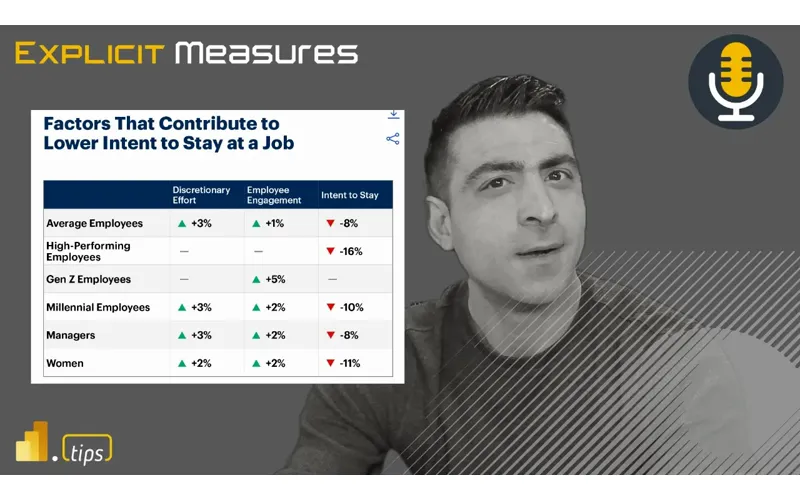
41:58 go ahead no no you I you okay so I wrote down a couple things here I think there’s a couple I really like your your observations I think they’re very relevant and and in the article I want to point out a couple things right there’s this really drastic chart they put on top of here right they said an average employee is factors that contribute to why users would stay or not stay and they their intent to stay when these mandates are occurring an average employee is down 8% so you might lose 8% of your Workforce if you enforce these mandates a high
42:29 if you enforce these mandates a high performance employee which is that’s the one I was going at the more item here was and I think the the observation here is very relevant a high performer May SP feel especially resentful about these mandates because they were able to maintain their performance over long delivered times during the pandemic where they kept their level of performance so they perceive the return to office mandate as
42:53 perceive the return to office mandate as a signal of mistrust from management hey I did the job when I was at the office I maintained my level of job effort I changed I adapted I got cameras I moved my stuff like there’s still high performers this is your risk honestly to me this is what companies should be very quick to protect because you lose those high- performing individuals What’s the phrase Seth or or Tommy like is like 80 20% of the people do 80% of the work sometimes there there’s a couple it’s terrifying it’s
43:24 there’s a couple it’s terrifying it’s terrifying and so to me I’m like looking at this going like hey someone needs to pay attention to this because what will happen is you’re you’re going to see companies that are doing well they’re high performant they influence this mandate and what happens is their talent leaves and goes to other companies that will that will leverage their skills and so yeah I would love to hire the top performers give me a top per performer from anywhere let me use them right and so I think there’s this there’s this in
43:54 so I think there’s this there’s this in my mind there’s this mindset of that that person is really helping our company out we cannot we we don’t need it’s strategic for us to make sure that they’re engaged with the company so that was one of one of my thoughts I thought that was a really relevant point in the article and I it really resonated with me I’ve seen brain drain I’ve seen leadership in the company change and all the really smart people start leaving the company and the company really just like washes out it’s like ah you’re not really as Innovative as impactful as you used to
44:24 Innovative as impactful as you used to be because a lot of your talent has left with this also I want to say the tools I think we use today now after the pandemic are different than before I think digital whiteboarding very relevant I use mirro all the time now great tool I think it’s honestly I would rather go into a meeting with that miror project or tool in front of me diagramming things out talking to clients explaining things to we can graphically show things much better I don’t to your point Seth I don’t have to run to a wall in an office to go
44:55 to run to a wall in an office to go start drawing on a scribble whiteboard I can use real icons I can use real things that represent I think it helps really the story of like what you’re architecting with the client so I think it’s great screen sharing you think you point out I think is wonderful it actually helps out a lot as well and then the last one here I put out is there’s all all of our tools are becoming more collaborative so I’m thinking about notebooks where two users can come into the same notbook so data engineering two users can be in the same notebook doing the same code at the same time dude this is amazing like that’s
45:26 time dude this is amazing like that’s unheard of you can’t do that in an office in a meeting in a meeting room you can’t write code together like that so I I think the tools themselves have designed themselves a bit more for just in general collaboration and to my and to that point I expect this right why isn’t why doesn’t powerbi online give you the ability for multiple people to be in the same report making changes on things I have the same experience in Meo I can make an object I can stylize the object I can click on it
45:57 can stylize the object I can click on it and and add elements and change the text meanwhile Tommy can be in the same document editing something somewhere else this this is the power of like this should be here already so to me I’m like this is amazing and I think the expectation with more and more of our tools will be multiple people collaborating editing on the same things together I think that’s huge another one I’ll just point out that I love is live share in vs code I’m I’m a good developer let me say this I’m a decent developer I’m not an expert but I have
46:27 developer I’m not an expert but I have people on my team that are great developers and I love learning from them so having to tools and things like that as well where I can watch them write code I can navigate a code library with them at the same time and we can work together we don’t even share screens we just work solely in a live share inside vs code to get stuff done yeah so I I feel like I need to push back a little and I I do want to take this from a a little more macro because all of your examples while one I do agree with Yep they’re also taking the
46:58 agree with Yep they’re also taking the from the perspective of someone who uses a lot of cloud-based systems and what I’m saying this is specific to our industry I think our industry has it’s very specific to especially you and I where oh look I am a company of X you like four or five number number employees where the problem I think a lies is everything you said I don’t think you can really anyone can argue with however let’s take this from a wider approach here and you’ve ever done
47:28 wider approach here and you’ve ever done or Tred to do a dashboard on day with 50 people online good luck to get everyone on board there becomes a point of scalability and the volume of people where I really do believe and we already saw this in one of the surveys we reviewed I believe in the earlier this year they’re seeing people are seeing more data but they are sensing a decrease and a data culture of their organizations and this was from the guy who did the a storytelling with data
47:58 who did the a storytelling with data and that that was another survey that also came out there is something that we have to consider here where to your point I can still shut off my video if I want if someone’s doing a screen share and I’m sitting at my desk I can follow if I want but I don’t have to compared to being in an office okay that that’s what I that one and how camer on I think works really well in this situation because if you turn your camera off what are you doing and we don’t know and so totally the convers immed I’ll say this
48:28 totally the convers immed I’ll say this for my observation on that point exactly Tommy the conversation immediately degrades when the cameras are off because people start doing other things and they get distracted and that’s why I think the camera on mandate as a as a leader or a manager is really really important because it helps people kind important because it helps people focus and you can see oh look of focus and you can see oh look Tommy’s always looking at the bottom lefthand corner he must be watching so oh yeah writing notes oh yeah yeah writing notes not watching not watching ESPN no really guys I’m paying attention I’m so attention right now this is great yeah keep talking Tommy y
48:59 this is great yeah keep talking Tommy y I got Focus I’m with you phenomenal phenomenal I’m gonna do Audio Only podcast moving forward but but it’s we’re also still talking about micro interactions when it’s me and five people in this time period when we actually start looking at Enterprise organizations or just mediumsized organizations managing all of those people where they’re also not developers who are more inclined to use
49:29 who are more inclined to use cloud-based Solutions how do we actually manage data culture and adoption I think we’re really going to see some struggle here where one we have the uses numbers but the way people can actually one get to a question and two getting the Buy in I think it’s going to be much harder so this is actually going to lead into the hot take of the day and I think I’m I really do agree with this so again that 1 to S scale but in the
50:00 again that 1 to S scale but in the coming years if the grow the continuing increase of work from home continues it is going to be harder than ever to grow and support powerbi adoption and increase data culture it’s going to be harder than it ever was before so one is totally disagree and seven is totally agree one oh my goodness really Seth great these hot takes I love
50:31 really Seth great these hot takes I love these can I disagree with that so okay continue Tom so so so Tommy you’re saying let me let me make sure understand the question because I’m not sure if you said with the if if the work from home increases it will be harder to maintain data culture and particularly reporting is that what you’re going after 100% I said it in like three words it’s great all right I think I understand what you’re going out for I I think I’m going to also go with Seth I think I’m going to say a one on this one I don’t think it’ll be more difficult to so I would also argue harbi
51:01 difficult to so I would also argue harbi is trying to be more of this online collaborative tool get it anywhere you want build it and put it on your phone build it and put it on your iPad be mobile like I don’t think that’s required I don’t think it’s going to be harder for us to to continue to engage that way so I think I would say no zero or one Seth let’s I do you what are your reasons for this in a row by the way yeah I think you’re you’re conflating
51:32 conflating certain presentation or generalized training classes with data culture like increasing data maturity or building a data culture in an organization has everything to do with the tools and capabilities of individuals understanding how to work with data and the value that it brings to them and The Business and none of that has anything to do with doing that in person or with doing it like
52:04 in person or with doing it like remotely it it’s it’s so unbelievably different in my mind that you get a one one like otherwise otherwise none of what I’ve been able to do in the last five years would have been a value like Mike built a business during this time on business intelligence data data culture building and most of them Wisconsin like so I I only have one company in Wisconsin that I do work with everything else is remote so like I I felt like for
52:35 else is remote so like I I felt like for for me being able to be on camera have a studio be able to do things quickly I can be on a meeting in Australia in the morning I can hit a meeting in Europe midday and then I can jump into a meeting in California in the evening more you’re even more effective more the opposite it’s so far the opposite it’s almost a negative negative ra on Tommy’s minus seven a minus seven but I I honestly I think I was in a very
53:05 but I I honestly I think I was in a very unique position and I honestly got very scared when the panamic hit because I thought oh shoot I don’t know what’s going to happen and I thought as soon as that occurred I’m done like my business is going to be go under I’m hoping someone will hire me back to a full-time employee because I think I’m in trouble because of this and so I I think at the end of this article and I’m GNA maybe to your question Tommy the hot take and maybe part of my final thought here I’m going to kick in here is at the very end of this there’s like three things to tell your peers and I think this is talking to like leaderships of companies
53:35 talking to like leaderships of companies that you should observe from this article right it sounds to me that they’re trying to say look going back to the office isn’t a bad thing they’re not trying to say that at all it’s the hard mandate and your policy is not allowing for the flexibility of users to engage with that how they will will we ever go back to everyone coming back into the office full-time probably not honestly I don’t think we’ll ever really fully go back to everyone in the office five days a week however I think you’re going to need to let culture take its route and it will need to I
54:08 take its route and it will need to I think slowly we’ll get more engagement back to the office I think slowly we’ll get maybe three days a week maybe there’s always going to be this one or two because honestly the the world and how families work I think is changing right there’s a lot more dual both parents work in or both Partners work in a company or work in companies it’s just more flexible with kids someone gets sick it’s easier to work from home and and take care of people at home and have that a bit more balance between those things as well so I think we’re
54:39 things as well so I think we’re in a very unique area I think our industry allows us to push way more towards remote work and and it can be still successful and we can still deliver a lot of value will all companies do this I don’t think so I think over time companies will start downsizing their offices they will get smaller there’ll be less space for them to require as companies and they’re going to they’re going to work more efficiently that way I think sorry what’s your final thoughts Tommy no I think there is a balce so it’s funny you you were wondering about
55:09 it’s funny you you were wondering about your business and I started one during the pandemic so you started y exactly right yeah but however I got kicked out of work and just said go home anyways he just like I just might as well start my own business but I it’s funny ironically enough I still get asked like people find me because I’m in Chicago y Chicago’s a big area right and that was part of the reason why I think so far so good but there’s still something to location that I’ll say Under The Human Condition that we won’t get into I agree
55:40 Condition that we won’t get into I agree every day I think it’s Preposterous but well well certainly but I also argue this too I certainly but I also argue this too depends so I think different roles mean depends so I think different roles require different things so Tommy you’ve done a lot of like proactive sales in your business like reaching out making relationships talking to people getting them to absorb you’re doing I didn’t have that necessarily and people reached out to me just because of RBI tips found me on YouTube and to your point there Tommy as well I think one of the things if anyone’s
56:10 think one of the things if anyone’s coming trying to become a consultant I’ve always said it’s the sales funnel that kills you you can be the best consultant in the world but if you don’t have a good sales funnel to get people that have needs there’s people that there’s people that want to buy your services period there is 100% it’s finding those people and getting them to a place where they see the value of what you deliver and are willing to pay you for it that’s that’s the trick and so it’s that sales funnel and again I lucked into this I didn’t I didn’t build parbi tips to be a sales funnel it just happened and people know me from that space and so I think a lot of those
56:41 that space and so I think a lot of those things just evolved and that’s what’s helped a lot of the business pieces as well and that’s why I continue to invest a lot a side point to this is when I do I’ve done a number of interviews for companies around powerbi Developers and one of the things I always ask I got and this from from you Seth is where do you learn like how do like powerp what are your sources of information like how do you get that information in like how do you learn more and a lot of people say YouTube so even so and the
57:13 people say YouTube so even so and the reason I’m pointing this out is even the way we learn has changed we’re not going to webinars we’re not going to a building in a training room to go through training all of that’s been digitized as well well and now our most popular Learning Resource is the internet and it’s now just YouTube videos you you want to go fix it you want to go learn how to build a deck Tommy YouTube it there’s a there’s like 60 companies who’ve made how to build a deck YouTube video and you could do it
57:43 deck YouTube video and you could do it yourself like so to to me anymore like the whole the whole ability to learn things has now also changed I don’t actually need to be in a place knowledge and information is so easily shared anymore and now it’s all done in video form so now I don’t even have to like it’s not reading a manual it’s just sitting there and watching what they do and mimicking it it’s crazy what we can do now so I think the I think we’re going to I think work remote is here to stay I think it’s going to be a challenge for companies to find the balance of how much of that to enforce or not to and and and to retain that top
58:15 or not to and and and to retain that top talent still yeah I think in in total I agree work work Dynamics changed during the pandemic fundamentally we figured out how to work remotely this presents challenges to companies especially with very large investments in brick and mortar and I think that’s where you find a lot of these RTO policies what is I think a point of pause is if Gartner is basically saying
58:45 pause is if Gartner is basically saying you could if you mandate lose 16% of your high performers that should make you pause for a second and probably follow some of the guidelines that they’re saying which are it’s probably a good idea to engage and maybe maybe figure out your work work remote policy or in office on a team basis because some teams may may love to come back others will be like none of us want to come in the the other point in there is if
59:15 in the the other point in there is if you could lose 16% of your high performers this is also a leverage point that other companies can use against you so to just go true mandate things is is very risky because High performers know that there are organizations out there that will allow them to work remote and if you enjoy the convenience and or have a million different reasons why like working remote is a better fit you’ll you’ll be able to find it you you’ll
59:45 you’ll be able to find it you you’ll find it having said that I think I like that even with even with remote work work I think companies need to embrace tooling and that increases remote communication you you need to create policies you need to have interaction unless there are exceptions most people should be on video because that is how we’re engaged we we’re visual people I need to pick up on you visual people I need to pick up on the the non-verbal cues to make know the the non-verbal cues to make sure I’m I’m resonating with people and you absolutely need to work at
60:15 and you absolutely need to work at keeping the relationships within teams active that means having teams meetings that are one-on-one at between employees and managers or team meetings that are not specifically gauged for business it’s just for team interaction and like catching up and like carving out like teams meetings right for four time for teams to be teams because that is super important otherwise you will completely lose that and then
60:45 completely lose that and then ultimately I think that just dictates do do teams build their own policies as it relates to like getting together and I think they make one of the really poignant ones one of the things I absolutely do miss are opportunities where Twinkies snacks in the office office snacks where you you have a really big a really big project or a really big initiative or an a big conversation around next quarter objectives where it would be fantastic to have a team in your conference room and you’re just
61:15 conference room and you’re just hammering stuff out for a couple days yeah not to say you can’t do that right you just bring the teams in but the more remote you are the more challenging that does become but it’s a it’s a new landscape ape and I think this just shows that hard mandates are probably not the direction organizations want to go without a little bit more due diligence with their HR teams I I like your I like your final point there Seth around bringing people in for a powow and then letting them go back I would maybe also argue that the Savings
61:47 would maybe also argue that the Savings in cost in not having a bigger building and not having to have extra desks EXT having like like those extra like if you don’t have those things potentially you could just spend a bit more on the intense focused period of time make it a special moment for the team to bond and and get together and then from there you’re able to like do the focus intensity for a week workshop and then everyone goes back to their and honestly people feel energized to have something like that in your company is an energizing effect it builds camaraderie
62:19 energizing effect it builds camaraderie there’s a lot of really good things I’ve seen that effectively in my company as well when I bring everyone together so that’s awesome all all right I I was I was skeptical on this topic I didn’t know how well we would go down this route I thank you Tommy and Seth I I picked this topic so if you hate it it’s my fault if you lose all your talent because you are having mandates for bringing everyone back in the office that’s not my fault that’s your fault I tried to let you that’s your fault I tried to let in the podcast so a warning you you know in the podcast so a warning you you know in the podcast so a warning you if you’re if you’re if you’re top
62:50 know if you’re if you’re if you’re top talent and you want to leave your company come talk to Tommy and I we’ll be more than happy to put working this whole episode was I need more people to help me do work just kidding that’s actually not the truth but if you do call me or Tommy we’re yeah we’re yeah we’re available on LinkedIn that being said your reply you always get it so I’m just teasing not really and then thank you very much for listening to this episode we appreciate your your ears listening to us we’ve got a a good number of followers Twitter
63:21 a a good number of followers Twitter you’ve been killing it recently Twitter you’ve been you you have a ton of listeners so thank you very much Twitter listeners we really appreciate you jumping in and listening on Twitter so I want to directly thank you very much for your time and your ears if you like this episode if this was interesting to you if you want to jab at your boss a bit about having his return to work mandate a bit give him this episode let them know Tommy Seth and Mike all agree that work remote is a great idea or not anyways that being said what Tommy where else can you find
63:51 said what Tommy where else can you find the podcast well unfortunately they’re all online Mike you can find us on Apple Spotify or wherever get your podcast make sure to subscribe and leave a rating helps us out a ton do you have a question idea or a topic that you want us to talk about in a future episode head over to power. tisp podcast leave your name and a great question and finally join us live every Tuesday and Thursday A. M and join the conversation on all power. tips social media media channels thank you so much and we’ll see you next time