
Fabric's Impact on PBI Developers – Ep. 336
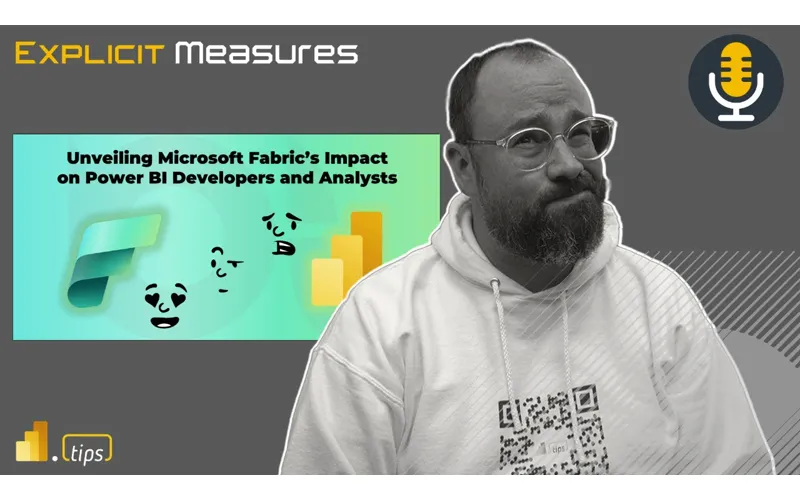
Mike and Tommy discuss how Microsoft Fabric is changing the day-to-day work of Power BI developers and analysts.
News & Announcements
-
Cleaning the (Staging) Lakeside - IT’S NOT ABOUT THE CELL — Hiding The Gridlines That Hold Us Back — Excel, Power BI, Power Query, and Microsoft Fabric
-
Unveiling Microsoft Fabric’s Impact on Power BI Developers and Analysts - BI Insight — Microsoft Fabric is a new platform designed to bring together the data and analytics features of Microsoft products like Power BI and Azure Synapse Analytics into a single SaaS product. Its goal is to provide a…
-
PowerBI.tips Podcast — Subscribe and listen to the Explicit Measures podcast episodes and related content.
-
Power BI Theme Generator — Create and download Power BI report themes using the PowerBI.tips theme generator.
Main Discussion
This episode digs into how Microsoft Fabric is changing the everyday reality for Power BI developers and analysts—what shifts in tooling and responsibilities, where the new “center of gravity” is for modeling and data prep, and how teams should think about building for maintainability.
The conversation also touches on practical adoption patterns: what to learn first, how to avoid creating accidental complexity, and what to watch for as teams move from traditional Power BI-centric workflows into Fabric workspaces.
Looking Forward
If you want to apply this episode, start by choose one idea from the discussion and apply it to a current report or model. Then write down what changed (and what didn’t) so the lesson sticks.
Episode Transcript
0:31 good morning and welcome back to the explicit measures podcast with Tommy Seth and Mike good morning everyone good morning gentlemen good morning I guess I should say good morning good evening some people are this is not their morning all over the world our morning evening hello welcome all right let’s jump into some main items around our topic today so our topic today comes from I don’t know how to say his name very well soell so so so H he’s a developer
1:01 well soell so so so H he’s a developer and and Microsoft MVP he’s he actually made a solution has great has a great book out expert data modeling with powerbi with ped very very good author and has some really interesting things to say about the history of bi and how fabric is impacting our analysts and data Engineers or developer powerbi developers what’s happening to them in lie of the fabric experience we’ve been talking about this for a while now and it’s it’s nice to start seeing other people starting to pick into this topic a little bit and explore this
1:33 this topic a little bit and explore this a bit more as well so anyways really interesting article we’re go through that today and then jumping in let’s go right into our news now Tommy what what article did you find in your news area oh man it’s it’s nothing better than when my news feed gets something from our very own Alex powers and I think summoning the Alex powers to the podcast yes sir yeah we may this may transform into its
2:04 yeah we may this may transform into its own episode but what Alex is really going through is really the purpose of your lak housee really right off the conversation we had Tuesday about like where to people start so what do we do with our lake house what are some of the best practices then like also what services you want to connect to it so I think we were just talking off flying one of the things is it’s always in the service and always has a destination so just some good principles as you start creating random artifacts I always
2:35 start creating random artifacts I always like it when Alex writes things down because one I feel like he’s always got a very experienced eye at looking at why he’s saying these things and what like by that is he’s talking to hundreds of really large customers who are dealing with struggles or challenges or working through these complex data issues he’s got he sees it he sees people building stuff and he says these are best practices or things you should be doing when you’re building these things turn off the staging it’s on by default it should be off make sure you’re writing every table down to the
3:05 you’re writing every table down to the lake housee that’s more efficient than having to spin up these hidden nonstaged elements sitting somewhere in the data flow like yeah I agree this stuff makes sense to me so I really really like what his article’s discussing here any thoughts Seth from your side are you using a lot of data flows Gen 2 in your world at this point are you still more on the back end your your data engineering happens Upstream a bit more Upstream a bit more you’re you’re a data bricks company so you’ve got a a larger
3:36 bricks company so you’ve got a a larger back end like why would you use data flows if you could just do it data re yeah that is true which is usually why I’m a little quieter on this topic I’ll let you guys talk about it I’m I’m still I I really I got to be honest I still really really enjoy data flows and it’s very much a it’s a great experience honestly to me I think it’s a great experience to use and run them I’m just a little bit myed it doesn’t work very well with the rest of the system it just doesn’t have the cacd
4:06 system it just doesn’t have the cacd capabilities that I want and it doesn’t let me send parameters very easily from a pipeline into the data flow I think with a couple very small efforts or changes in the system man I really wish data flows was like the number one priority was you should be able to use the dogon parameters that are in a data flow and just send them in from a pipeline C like I don’t see why that’s so hard that should have been goal number one man no no no not goal number one we I think the goal number one is the performance of it because what the
4:38 the performance of it because what the user interface and what data flows can do and like just already what the me do with powerbi but really trying to incorporate that into fabric is where the game changer is we’ve already done enough cost comparisons and performance comparison versus that in notebooks but the ability to transform with a not book with or within with power query the ability to use that user interface even if it gets somewhat on par or close to because right now it’s
5:09 par or close to because right now it’s just the Gap is so wide yeah I I agree with you Tommy but like even as a business user right I could probably get away with the performance being a little bit slower it has a lot of really neat features in there one other I was working in one the other day and I’m like man I am really annoyed that the formula bar cannot be long larger than three lines deep or four lines deep and I really want the formula bar to be like as large as I want it to be I can I can grab the table make the table as large I want I can see the little diagram of the icons of all the different
5:39 icons of all the different Transformations happening in different tables great all wonderful I can’t make the formula bar any larger that seems like and this is a basic thing Excel I can make the formula bar as large as I need I should have the same capability inside the data flow come on welcome to my world I’ve been asking for this with power apps for five years years now just have a different formula window yeah we do windows in powerbi oh man it’s just it’s it’s a bear if you have anything that’s longer than three lines deep like if you’re writing a API call or if
6:10 if you’re writing a API call or if you’re writing a complex something anything that takes a little bit more effort in a single statement it’s just not easy to write I’m finding myself going more and more to the advanced editor now just because I can see the code a little bit easier and format it so I can read it better anyways just another gripe of mine awesome great article I’ll put the article here in it’s in the description below but I’ll also put in the chat window as well please check out this article go learn from Alex the master he seems to know what he’s talking about I really appreciate his input here and yeah I
6:40 appreciate his input here and yeah I think this is actually a really solid article and I’ve observed a lot of the same things as well so definitely get some give Alex some love and go check out the out the article all right with that we have another announcement we have all been able to be this this is a very nerve-wracking time of year I’ll say that this time year a lot of MVPs get very nervous about okay did I contribute enough it’s a little bit of an an anxious moment for us so I’ve been able to I got a nice little email yesterday afternoon they said they were
7:10 yesterday afternoon they said they were announcing the MVP renewals because as a Microsoft MVP you don’t just get it you have to earn it every year so that way it it’s like a it it feels like an influencer before there were influencers right before there was the word of the influencer it’s it’s like that phrase are you being a technical leader in this space so very happy to say I’ve heard from Seth Seth you’re also an MVP Tommy you made it as well just made it so con congratulations
7:42 well just made it so con congratulations to all of the other MVPs most certainly it’s it’s it’s it’s a great group to be a part of it’s humbling so big thanks to Microsoft as you’re the bestower of the MVPs and recognizing all these fantastic people who we’ve had the opportunity to meet and develop relationships with and partnership with but they amazing work right and we talk about it on podcast all the time and if it’s representative of the types
8:13 and if it’s representative of the types of challenging questions or opportunities or fantastic things about Microsoft products that we get to discuss a lot of those are driven from MVP articles and the way they’re implementing some some new thing in a certain way or their perspective on how we can all be better business intelligence professionals or data people through Microsoft products so it’s a lot of fun totally agree with that one excellent all right let’s jump into our
8:45 excellent all right let’s jump into our beat from the street Seth I think you’ve got a Beat from the street this week yeah we need an intro on this one too yeah we do I need I need get together some audio clips man I don’t know beat on the street yeah I I wanted to to we’ve we’ve talked at nauseum about hiring right and talk a lot about this yeah and and I think the we recently added a new member to the team and It just strikes me thank you thank you because we hired hired
9:16 thank you because we hired hired another winner yes right some and by that like somebody who integrates well with the team but brings automatically value right it isn’t somebody who’s got to ramp up a lot that you’re working with you’re training a lot Etc it’s like the conversation and and when you’re when you’re in hiring phase right you get you get brief interactions with people you get to see their CV and their resume right challenging and it’s a real challenge to like
9:46 like compress do I really understand what this person is going to bring to the team who they are as an IND individual in the span of like a few short hours yeah so when you nail it it feels good and I think I think we another winner somebody who’s who’s you winner somebody who’s who’s we what we do is we introduce know we what we do is we introduce people with fairly straightforward things right they’re still helping the business you’re altering reports you’re you’re McKing around with things and this individual just ripped through them and was like okay can can we get on to the fun stuff now hard all right
10:19 to the fun stuff now hard all right let’s do it so the I guess the the feedback on the beat on the street would be be there there is something that has altered altered the success or the win rate of finding the right people that is interesting is not really intuitive that I’ve started implementing and that is I have I have not gone against my gut interesting I know that there’s a saying like professionals who
10:48 there’s a saying like professionals who are in HR and and things like typically there’s a time frame and it’s very short it’s like three to five minutes I think or something where you meet an individual and whether or not you’re going to hire them and and it’s really bizarre maybe that’s more of a from a personality perspective or something but I I know I’ve read that somewhere interesting and and I’m not saying like hey in three to five minutes but at the end of an interview I usually know and I’m trying to like and it’s normally the folks that can that are very technically answering all
11:19 that are very technically answering all the technical questions really well yeah but I still don’t feel good about it that have never worked out interesting and it’s for various reasons it’s not like they don’t know what they’re doing technically but yeah I I would just say listen listen to what your guts telling you when when you’re in hiring mode I hope you’re GNA say like here’s the three questions IED looking for I was looking for the E on this one lock of theet yeah I I I hopefully you’re in tune with yourself
11:50 I hopefully you’re in tune with yourself because you’re gonna need it exactly right I thought I thought you were gonna say look if I if I asked these six more new questions I knew 100% I’d have a rockar of an employee add team and like that would be perfect especially for the more technical driven do you actually do any tests with them I know that’s a requirement for a lot of Engineers where they they’re gonna get a code base or something is that is that something that you test yeah like before an interview yeah yeah no no se if anything we do live we do
12:24 no no se if anything we do live we do live live walkthroughs and that was actually when when I started in company was you when when I started in company was just in like had I think know just in like had I think just gone through a round of purchasing or something Mike was with me we interviewed a ton of people yep and I think we honed in on a pretty good kind think we honed in on a pretty good methodology and one of those is you of methodology and one of those is you of methodology and one of those is we do a walkthr open up your know we do a walkthr open up your powerbi desktop let’s let’s let’s go build some stuff and and the cool part about that is when that was right when powerbi added in the sample data set so there’s no excuse right everybody’s
12:54 so there’s no excuse right everybody’s got the same thing yep and it’s 15 20 minutes of walking through different things show me how you’re doing something and that alone tells you whether or not a person plays a lot in powerbi desktop so there there’s there’s that depending things in that level like can you create a measure make a measure that’s it’s not even hard stuff it’s not like I’m trying to ask you’re like okay that’s so you’re not wasting my time here yeah please use treat as in a in a in a deck statement like like oh no no it’s simple stuff yeah I would argue I
13:25 it’s simple stuff yeah I would argue I would argue if you’re trying to stump people in an interview you’re doing it wrong right like it’s they’re already nervous enough so when you play in it’s like hey like I think we we also kind like hey like I think we we also go by this like easy medium hard of go by this like easy medium hard levels of questions in the same area so you can instantly go like hey here’s a couple easy and that they they got it and I’ll move to hard right or you struggle a little bit and you never make it into medium and that is there there’s a threshold of like how you gauge people Etc it’s a it’s an art different organizations do it
13:56 different organizations do it different hopefully standard ways for candidate but ultimately yeah you got to ask enough of the different types of questions and have people walk through to just like verify trust but verify right as as people come in you you bring up a really good point Seth because I think this is actually very much leading into our main article right now because you’re we’re asking questions you’re and interviewing and we’re talking like powerbi desktop building reports making some model stuff right all these have been very
14:27 right all these have been very traditional powerbi things now now we add into the realm of fabric and I I feel like in a couple recent interviews for companies that I’ve been doing it’s been very similar to like people have really know pretty well like how to manipulate and move around in powerbi desktop like report side the report pieces of things people don’t know a lot of fabric yeah it’s it’s like it’s more the backend piece like hey do you understand what is data flows how many data flows have you built in the service well I’ve played with them but I haven’t done a lot right okay well
14:57 but I haven’t done a lot right okay well have you done anything with pipelines have you play with fabric no we we’ve just dabbled in fabric there’s not a lot of people and and this is I think maybe part of where the article’s going here is the ex the expansiveness of information now that you could potentially need to know is rapidly growing and even myself I’m I’m working with Microsoft in the MVP program there’s a ton of teams building a ton of stuff all over the platform I’m talking with other MVPs are like we don’t deal anything with real time what’s this real time stuff how do we make that work like what’s a good example budget of where
15:29 what’s a good example budget of where that is coming from so it’s it’s really like a lot of like it’s it’s ramping up very quickly so yeah it’s very interesting to see like how the skills are adapting and changing potentially and I really have to understand like when you’re hiring you need to know like what do you want the people to do in your world are you really are you trying to get into fabric are you going to be doing more data engineering do you need people who understand spark cuz you may not need them initially but if that’s the direction you’re going you’re going to want to find someone who’s at Le had
15:59 to want to find someone who’s at Le had some experience in that but that really speaks to training that’s not necessarily building reports dashboards talking to the business so now I really feel like there’s roles that are very much pulling people two different directions now well I think the gut side of it too is if you’re in this space odds are I’m not GNA Hold Your Hand teaching you and probably what you’re coming in here for now six months from now or a year from now you’re going to be working on other products or other toolings and I think no matter
16:29 toolings and I think no matter where you are or who’s coming in I’ve seen each person at least in my internal orgs that they were hey I just do this in powerbi but then there becomes a need for something else and that is only become more apparent so you’re looking for also someone’s like were they just monotonous are they monotonous like I do a DAT blond bronze medallion or bronze silver no one talks like that yeah yeah that’s it I don’t do anything else but theion approach no
16:59 anything else but theion approach no it’s like about the unique experiences when what do you do oh I build P pages of reports and how do you pick a visual well I just talk to the business and they tell me what they want like that’s like the general feel that I get it’s a lot of like lower hanging fruits I feel like and as I’m working with these organizations they’re trying to put in Fabric and I need people who understand or at least have the capability of like dabbling with understanding figuring out things of fabric fabric awesome let’s jump into our main topic then this I think this is a good transition let’s go into our main
17:29 transition let’s go into our main article or topic today Seth congratulations on the hire I really I’m really pleased that you got another good person I like all your I like your non-helpful tip of trust your gut on on hiring that’s great for me thanks well I thought you were going to follow it up with like well how do I tell if it’s not if it’s just [Laughter] indigestion oh you’ll know oh you’ll know either now or later or later exactly
17:59 later exactly oh that’s funny all right so jumping into our main article today this is from soill and he is another MVP talking through the transition of fabric and how that is impacting the standard bi developer I think this is actually a really good transition talking point from hiring to looking for people that have the right skills and what should we be doing either helping other people on our team or where do we start experiencing learning about Fabric in a way that makes sense that builds our
18:30 way that makes sense that builds our skills and makes it valuable back to the organization Tommy you want to give us any kickoff here or some you have some initial thoughts we you want to talk through this yeah so I I really like the way that this is put together because I think still everyone’s a lot of people’s fear especially if they’re just hearing about fabric if they haven’t if they haven’t been able to get started is what does that mean for my job either am I losing it or do I have to expand it at the same pay and really what he’s going through
19:00 pay and really what he’s going through is those different roles that again are not universally defined but he’s trying to Define both from the business side and both from the de developer side really what’s changing where they’re probably going to be adapting but then I really like that also goes through the history of bi or powerbi at the end just showcasing too like this is nothing new in terms of a industry or a skill set that rapidly evolves evolves I’m disappointed in the first
19:31 I’m disappointed in the first section in the in the history yeah it it it just it just paints this as this very like smoothly rolled out product which is probably beneficial but there’s always one point that that I love leaning like not leaning into but remembering which was the the trying to launch this in the SharePoint like the thing I was like it didn’t last long probably probably easy to miss to miss it was it was the precursor precursor to
20:03 it was it was the precursor precursor to the Standalone tool that we all know and love today I would agree with that one Seth because I I definitely remember the SharePoint pi and doing I think it was something like you had to did you I’m trying to remember the the build pattern here right was was it start in Excel build a power viiew and then publish the power viiew to the SharePoint Pi is that how it worked and and they got us used to power Maps power maps map did not come along for the ride no did not and we were like where is this
20:34 not and we were like where is this where’s the maps so there’s history in here for and was a little more history yeah we we were so excited when Maps showed up we could we could put things on a map you can’t do this in Excel like there was just amazing well reality was like how much data can you really get out of a map honestly like it’s more like a pretty fancy it’s a fancy pretty thing it doesn’t really doesn’t really do a lot for most of my reporting I don’t I don’t feel like that map visual is one of my most popular visuals oh total total side note do you guys get like School District metrics back from
21:04 like School District metrics back from your schools does your does your school district like send you like reports back about what’s going on in your school district you get like maybe our school district just sent back a a a report and I’m like okay this is a report and I’m like looking at the visuals that they’re put on the pages I’m like oh boy I’m really having a hard time understanding this thing there was there was one visual that was like boggling my mind and I had to literally look at it for like two minutes to figure out what the heck I it telling me it was a pie chart okay wrapped in a dut
21:37 it was a pie chart okay wrapped in a dut chart where the wait I’m sorry yeah right in the donut chart that’s what I said it’s a pie chart in the middle in the in the doughnut hole and then there was a little white space and then there was a doughnut chart around it okay so the pie chart the thing in the middle was how much revenue and where did the revenue come from for the school district district then the donut chart told us where all the expenses went so both of them made up a 100% and I look I know government there’s no way that they’re
22:08 government there’s no way that they’re like actually spending all the money or or only the money they’re getting I I hope they both add up to 100% but mean I hope they both add up to 100% but not quite confident that that’s true but I’m looking at this going like I’m so confused by this chart I didn’t know are we trying to compare this portion of Revenue with that portion of spend or were we just trying to show here’s the whole of where all our money came from and here’s where we’re spending it to and meanwhile I’m looking at it the dut chart had two large slices right we spend 50% of our money on salaries for
22:39 spend 50% of our money on salaries for teachers totally makees sense people are your most expensive asset yep 100% agree with that one and there’s all these little tiny slices well there were so many tiny slices they had to put little notes on the side they had to draw leader lines put the label of what it was and put the number next to it and like these are all like less than a percent of money I’m like dude I really don’t you should just ramp or or just you just see note right and here’s a little note that has all the different data I’m like I’m like oh my goodness this is like yeah it
23:09 like oh my goodness this is like yeah it was very weird I had a really hard time reading it I’m like man there it needs to be some visual helps across the world here like there other people need some and your this is coming from the education system feel like they should be able to do this Jack Herby says sounds like a Consulting opportunity Mike yeah might actually it might actually be I was actually contemplating like can I just scan the data in I’ll take a picture with my phone I’ll get it into Excel I’ll whip it over to parbi and I’ll send them a published to web report of the same [Laughter]
23:40 [Laughter] information but then I don’t need more work so we’ll and I don’t know how they how much they pay and I don’t think they pay very well because I’ve seen their budget and another quick segue and I don’t know why maybe it was the way Tommy was describing the the intro pet pea mine do you guys have people calling powerbi
24:10 bi just hey the bi report oh for some reason that just it grates on my nerves not it’s not just bi oh I’m using that all the time now tool you are no no I’m going to now because you said that oh like well bi is business intelligent that’s everything that’s that’s all the things it it like let we’re talking about a tool it’s called powerbi yes powerbi reports dude just get with the program man that’s how people get it h whatever
24:42 man that’s how people get it h whatever it it hey on the plus side if they think of it as bi then every every conversation they ever have regardless of tool they’ll think powerbi exactly it’s the this isn’t bi you’re right it’s not it’s more powerful than that [Laughter] powerbi anyway that was my I like the chat the chat said they should rename it to Power by Bui instead of bi Power by
25:12 to Power by Bui instead of bi Power by premium that actually works really well if you do powerbi Premium Power by premium there you go win it we’re great at marketing here we can kill it right all right moving on back to the article so we we go through the history and I would agree with you Seth on the History part it was a little it’s a little light for me on the history of things I think there was some some more drama that was coming out there around powerbi one does a good job of staying away from the drama that we love to talk about well one of the
25:42 love to talk about well one of the things I think that’s one of the things I do think that’s important that you I do think that’s important that in the history of powerbi is its know in the history of powerbi is its Legacy like it this stuff is built on very welldeveloped well-matured systems and so like I I think yes it’s it’s interesting that we’re calling out the powerquery and we’re the verac engine and the the initial 2009 we have power pivot and those really impactful business tools but I really want to say like this is built from a team that has been doing like SQL Server SQL bi reporting SSRS like all
26:12 Server SQL bi reporting SSRS like all these really rich business tools like it’s been a staple for businesses for eons and Excel has been what 30 years plus of just solid it runs businesses I’ve been the companies that walk into makes Excel makes huge multi-million dollar decisions this is Excel doing this stuff so like I I love like I I feel like there should be a bit more emphasis on like look we’re coming from a great heritage of really solid tools
26:42 a great heritage of really solid tools anyways that’s what my point about that one well and and extended right like and and I think what’s what I I would add to the history here is yes business users Excel power query Advent if you want to call the Advent to power B in these tools sure fine right but there there were also programs to to try to launch power query in the the Enterprise baces as well like I I recall I forget what the the original code name or whatever
27:13 the the original code name or whatever was but I do recall being part of an organization that was in in engaging in like power query in the back end and then where powerbi went is leveraging the same those same big engines and services underneath the covers right you had power query for all the mashup and then you had the tabular models and Analysis Services tabular had been around for years so like having the underpinning of those technologies that were fully vetted and then the user
27:46 were fully vetted and then the user graphical interface as this independent product like that’s what gave me confidence and convinc customers right out of the gate because you had that solid foundation to move on and you knew it was going to be good right for for whatever we had to develop and and move forward on the the visualization side I like that a lot all right let’s let’s move on I think this is another good one here another section here you start talking about he starts talking about who are the power P users and I think I’ve
28:18 the power P users and I think I’ve done a lot of thinking around this one especially when I talk with organizations around how to classify different users there’s a there’s a thinking that I’m trying to instill here in the community and we’ll see if it gets anywhere I we need more of a black belt a bar a threshold you a black belt a bar a threshold if you look at the adoption road know if you look at the adoption road map Microsoft has done an excellent job of really indicating like hey you’re an organization you’re trying to do things that are powerbi related here’s a level 100 through 500 of different areas that you should be thinking about when it comes to powerbi this is the surface
28:49 comes to powerbi this is the surface area of what powerbi touches how mature are you in these various areas and I think this is a really compelling story but no one’s really putting together a really solid view of this in lie of powerbi and now fabric related things so Seth I’m on the mean this is your your creation here that you came up with there’s the parb skills Matrix we’ve done an article on par. tips talking about the parb skills Matrix and thinking through you Matrix and thinking through from a hiring technical powerbi know from a hiring technical powerbi space What are the things you
29:21 space What are the things you could know right and you can gauge yourself in those spaces are you good at writing decks are you good at making visuals or choosing the visuals that you like or to use on reports are you good at Administration do you do anything around embedding these are all skills that you don’t need to have all of them but it also does point to like if there someone is bent more towards just the report side and they’re and you need someone to administrate and do edting you would hope to hire someone that has some of that experience and can speak to why I
29:51 that experience and can speak to why I would want to build a whole bunch of security groups and add them to my Administration or do you understand or know where to go find information on all the admin features sorry you guys both going to say something Tommy it’s it’s already killed me for years and I’ve harped about it on this podcast now for three years is that the lack of defined roles or titles that we have and again maybe I’m just jealous of my brother-in-law who is in logistics and he’s like hey I just got promoted oh what are you I’m a 13 now thing
30:22 what are you I’m a 13 now thing which yeah was great thing it’s like yeah you can’t go from a nine to a 13 you have to and there’s all these rules under some of these industries I don’t think we’ll ever get that granular but I feel like we’re on the other end of that Spectrum where I’m a business I’m a bi Pro to sess Point okay so what do you do I build reports do you do Advanced Stacks no I just do a lot of visuals well I’m also bi Pro this I can do all the technical stuff so we
30:52 I can do all the technical stuff so we have very much lacked defined rules and I think what the article is doing well and I think even more with that skills Matrix is how is this going to play in fabric guys I just rolled out the skills Matrix to a a client of mine who’s looking to build a powerbi Champions and basically as a stepping stone y so and again that’s not officially from Microsoft but it’s just a really good reference and we’re going to need this more and more especially as people begin to play in fabric H I am Brewing some
31:25 to play in fabric H I am Brewing some new ideas all right I like it when Seth Bruce think things we’ll we’ll we’ll leave it at that though all right okay we’ll leave it at that so I I really like this idea and I I I think around the skills Matrix piece of this I’m really excited to con see like continue investing in this thought I really do think from a powerbi perspective and I’m I’m probably growing again I’m looking at this world from I’m powerbi developers and we’re we’re learning Fabric and expanding our knowledge I think there’s there’s definitely Microsoft has taken the very
31:55 definitely Microsoft has taken the very clear approach that hey fabric is for everyone right you are a data scientist you are a data engineer come to fabric play well with our with our data and our and our and our business team basically is what I’m hearing them say so Microsoft is basically I feel like the Microsoft message is hey everyone in data should come and bring their information to the same place which I think is a very good story probably the right messaging but if I look at the user base of powerbi and fabric it’s a lot of it is starting from the business so I like to think of it as the lens of
32:26 so I like to think of it as the lens of I’m bringing business people these other Rich tools and I think especially as I look at the maturity of fabric things that are more mature pipelines are pretty good data flows are still got some way to go the lake house is pretty awesome SQL SQL analytic endpoint really like it editing data sets in the surface much better for me so when I look at this I see a lot of things like I’m comparing what I know as a powerbi developer and adding to that all this knowledge of like these other
32:56 all this knowledge of like these other great tools that I’ve potentially been building somewhere else I had another MVP asked me a question they’re like how how do like what size project like what’s the threshold all right you’ve got a data project you have a customer who’s who’s going to be doing some data things what is the size or scale of that project and when do you leave data bricks and you go do it all in in fabric what’s that threshold for you and I’m thinking wow that was a really insightful question and I’m
33:26 really insightful question and I’m trying to think about it in my head right do I is it how do I quantify because a lot of the things that datab bricks does are the things that fabric does but fabric doesn’t do them quite as well as datab bricks yet it’s getting much better but I’m also a developer and I like the experience of working with the data bricks world of things so I’m trying to in my mind I’m trying to think about is it like hundreds of millions of rows in tables is it you millions of rows in tables is it 50 tables plus where I start using know 50 tables plus where I start using is that does that my breako so
33:58 is that does that my breako so as it’s not going to be a hard rule I’m not going to say it’s going to be oh it’s just picked fabric with check check check these boxes and this is when you use Fabric or check these boxes in this you don’t you don’t have the top three things I don’t I know it’s it’s a gut feel just like I [Laughter] don’t well done well done all right good yeah like that okay but but to your point there like it’s what I’m what I feel like I’m saying is the threshold for me to bring larger andar larger
34:28 for me to bring larger andar larger projects to fabric is increasing like the the ability like comp more and more companies are going to get the features they need get the capability have the speed they want and do it at a price point that’s reasonable where they can just yeah we don’t need we don’t need other tools we don’t need snowflake we don’t need data bricks to do these projects or for our company we can solely live only in the powerbi ecosystem and it’ll have enough compute and enough horsepower to do everything you need and that that barrier that threshold is quickly moving more toward
35:00 threshold is quickly moving more toward like I’m getting a bigger part of the pie for fabric and I’m I’m eating away some of those opportunities that would potentially have been data bricks does that make sense what I’m saying there like it’s a it’s a it’s a gradient scale it’s occurring yeah I I I’m picking up what you’re putting putting down and I agree I think I think in really broad Strokes right yeah the fabri fabric has a lot going for it from the standpoint that it’s a unified platform yes at nause the the benefits of building
35:31 at nause the the benefits of building something like that they’re building something like that so as customers have only had options to use Delta tables in one location or snowflake tables of and I don’t know what they use over there but yep Iceberg those yeah the those tools right are used for different purposes right so in some cases maybe maybe a transition can happen today right like fabric offers
36:01 happen today right like fabric offers all the features and and more that is compelling enough for organizations to roll into it because it’s got a a great story and there are no issues that they’re they’re going to encounter by by moving in other cases there’s going to be more challenges and some of the features that aren’t in fabric yet will be in the future but they aren’t they aren’t something that we can move to right now because of extremely large data sizes or certain features that are leveraged in other tools that
36:31 that are leveraged in other tools that aren’t available like and those are the those are the blockers right so I I think the Nuance is yes there’s going to be opportunity across the board for organizations to start leveraging Fabric and they should yeah yeah mainly because of all of the facets of bringing these groups together in a way to produce better outcomes faster and every organization is interested in that right like wait I can get the if I if I do fabric you can
37:03 can get the if I if I do fabric you can build this thing faster and I can get insights that I can impact that will impact the business weeks ahead of time yeah and there’s like the more use cases and this is why Alex joining a few podcasts ago throwing out those use cases where it’s like comparative analysis like hey here’s how long it takes to set up these tools and Implement these new Solutions that estimate or that exercise was done in our experience with working with
37:33 done in our experience with working with other customers and it took two and a half weeks fabric we did the same thing and it took two days this is huge those are the stories that win right at the end of the day totally agree that specific to a particular use case and a business need and things like that so as fabric gets stronger I think the the case for that becomes more compelling for those different use cases this brings up an interesting maybe conflicting question here oh sorry Tommy you’re gonna I apologize no we actually
38:03 you’re gonna I apologize no we actually may be on the same page here so we okay well maybe maybe we’ll see what I’ll say my thing t no no no that’s not what I’m thinking at all not not so I your your point around Alex pow bringing up the ease of getting some of these Solutions implemented and started and I totally agree with you and I think honestly I observe very similar the same thing right I’m seeing a lot of the same language around making easy for you to bring a process you used to be doing that could take a long time and now you can do it in much less time
38:33 can do it in much less time awesome my my question here around is or the thought I’m thinking is that always comes at some potential cost right so what I’ve always observed is the more custom stuff you build is usually you can build a cheaper less expensive solution because you’re trimming all the fat away from all these other things like for example right I could use a power automate to bring some data in or I could use a pipeline to unpar a Json file and flatten it out but
39:03 unpar a Json file and flatten it out but if I used an Azure function more technical more specific but I could run thousands of power of functions for the price of one pipeline run right I the price of one pipeline run right the cost of them are just not even mean the cost of them are just not even comparable one of those things are extremely cheap the other one comes with some additional overhead like I got to spin up some machines the power’s going to run there’s a there’s a run time that goes with it that that needs to be used and so there’s a little bit of extra bloat potentially compute wise that’s costing you some more money so I
39:34 that’s costing you some more money so I love this analy but where I where I’m thinking through is there’s usually a balance of value to money right when you have a great transition from it took me a month to do this now I can do it a week makes sense but is there a longer term running cost of that that’s affecting that solution that we’re not considering yet or is there a value or SP that we’re increasing because of that speed does that make sense it totally does because and that’s that’s where a lot of my feedback has gone in certain
40:05 lot of my feedback has gone in certain in certain aspects because yeah in especially when you move into the cloud realm there there’s there is and Azure it is not easy to get your hands around around costs to the level that you want to as an organization it’s just not there’s a ton of work you got to do to do it yeah and then you throw in new services so it’s very easy to implement a service but when you’re talking about wide varieties of data volumes or
40:36 varieties of data volumes or different business needs and the things that you can pump through these services and systems yeah I think that is one of the challenges that I would like to see more of is or the challenge that has to over to that has to be overcome like you’re outlining is it takes a very long time to dial in costs and knowing exactly which levers to pull to make sure to make sure that you’re you’re operating a
41:08 make sure that you’re you’re operating a very streamlined system in the back the challenge for fabric is going to be how do you how do you how do you give confidence to to customers that they don’t have to start over again right like if I’m going to if I’m going to change my platforms of data movement and transformation and it’s taken me this long to to get to this point I can’t just move onto new stuff because I’m going to get thrown into this realm again of I don’t know how
41:40 this realm again of I don’t know how this is going to behave I don’t know what the compute costs are going to be I don’t know how that’s going to leverage my capacity etc etc yeah and and maybe maybe maybe there’s a a pitch in here where it’s like hey I’ll go do this for you but I need you to throw a bunch of like like free stuff this way and then we’ll do a comparative analysis across these things or whatever but I across these things or whatever but there’s there’s some challenge in mean there’s there’s some challenge in there because you’re not talking insignificant amounts of money when you have really big data volumes and I think
42:10 have really big data volumes and I think that’s going to be just the long poll where organizations that have large data in Frameworks that are leveraging other tools you you have to do your D diligence you have to nail all this stuff down because at the end of the day if you’re going to make a recommendation to shift tool sets the business doesn’t care what the business cares about is Can you estimate can you budget can you align existing systems to net new what they will care about is if you just move
42:40 they will care about is if you just move stuff and all of the sudden your cost Spike or yes they will in a better version they go down but like how often does that happen so yeah I going a little off of the just the price point of view I think one of the things is actually going to help at least the business side get more familiar or a little more defined roles is if everyone isn’t finally playing in the same space and I I think this is actually G to really help like
43:11 this is actually G to really help like oh you do this I agree there’s gonna
43:13 oh you do this I agree there’s gonna have to be a lot more collaboration because every bi team I talked to and it is a bi team right it’s not a power bi team I just want to make sure but every every bi team I I’ve talked to no no it’s just a bi team we’re just G to call I just want to make sure they only use team I I just want to make sure I’m not I’m not stepping on toes here so no you’re not that makes sense because we’re talking fabric all of bi yeah go ahead oh okay okay got dang it but they build bi reports so exactly but they might have done the the
43:44 exactly but they might have done the the analytical side of semantic models but a lot of times the data engineering side was another part of the company it wasn’t even underneath them and just like hey if we want something we have to submit a ticket we don’t know when they’re going to get back to us and it’s very much even the business intelligence people are still working as customers to the data Engineers but now if fabric is really allowing everyone to I guess see
44:14 everyone to I guess see everything in the same space I think it’s gonna really open people’s eyes to one those Define roles but then two now I can ask that person a question on why did they do this because I can see it now there’s actually going to be that Insight where ‘s not a curtain up between the different teams I I think you’re making bringing on to a really good point Tommy that I I think I resonate with and especially when I talk as the teams is the idea is like we’re all playing in the same environment security is Unified across
44:44 environment security is Unified across all the artifacts the security system of workspaces and down to like semantic models and even lak houses now you can now secure things down by user specifically to different teams this is immensely huge and one thing I haven’t I don’t think fully leveraged yet and and maybe it’s just more about time in being able to leverage this is I’m not using as many shortcuts as I thought I would honestly like but that’s to me that’s the secret sauce of a lot of this is if you have access to other lake houses you
45:15 you have access to other lake houses you can shortcut your data across different teams and so now you can have Central teams designing this is our Master data this is our like you can you can more I think there’s a app ension maybe in the business that I observe of like letting other teams utilize the what if they do it wrong what if they calculate something incorrectly what if they don’t do it right well someone’s got to take responsibility for something so either we keep all the responsibility centralized into a single team that it becomes the bi team for everything in the entire company or we start opening
45:45 the entire company or we start opening this up and saying look I’m going to give you responsibility here’s the expectations of playing in this new world this is what modern quote unquote self-service looks like everyone talks about the self-service buzzword and terms and terms we have like never before I feel like this is really good self-service stuff that we could be doing yeah anyways I’m I’m getting a little bit passionate about that I guess I surprise myself surprise myself it’s like when you you hiccup and you’re like oh I didn’t were surpris shocked like I
46:17 didn’t were surpris shocked like I wasn’t gonna get a hiccup there I was surprised myself about that th this this conversation is I don’t know why it’s taken me this long to figure this out like or Draw the the the connection what one of the okay slight Segway come it’ll come back okay okay J jir is a a big project management like tooling tool right like helps helps teams streamline work together with product to develop requirements stories execution right within this
46:49 execution right within this platform there are many I’m not going to go into like uber detail most teams work within a project right they have their own code like here’s my project I have my backlog I have all the things I need what what I was able to do was configure things in such a way that yes I have my own project but I also can ingest or or have visibility into every other project right so as there are business intelligence needs or data
47:19 business intelligence needs or data needs in other projects which are essentially other teams right there’s certain configurations you can do different views to set up so that all of that work stream comes right into my purview right like here’s the stuff I need to do and if you think about it like fabric is that same thing for a four different teams and I think we’ve been I’ve been wrapped around just because I have these different
47:49 because I have these different workspaces that open up the doors for all these capabilities to different teams it doesn’t mean that you’re all of the sudden Shifting the organizational structure it just means that to to to your point Tommy if data engineering still needs to help out a business unit it it just means that rather than a central place that that team does that they may pop into that workspace right because that’s where the business works and you have Technical Resources doing
48:20 and you have Technical Resources doing things in that workspace and if the business person wants to look at things they can but that’s where the work is done and then they pop out and they go to a different workspace or a different team right and ultimately it could be on the same data set but like architecturally speaking it gives a lot of Leverage points because you’re understanding how the how fabric is growing in the organization and there should be some thought behind it but in reality these same teams I think could could
48:50 these same teams I think could could coexist as they are today you’re just working where the data is for everybody right and I I think that’s the real value in here where rather than maybe like some of my initial thoughts being like man like what are you doing like what do you does that mean like we’re carving off DE into different business units and it it’s taken me a while I guess to resonate and and get along the same it’s the same thing like no it’s you’re just helping out all these different teams in the areas that they work as a or could have visibility into
49:22 work as a or could have visibility into which Pro which tightens the relationship right like hey you’re the SME okay listen look we’re in your workspace we’re in your your stuff here here we’re going to go modify this thing here’s the business logic boom right there’s no question and I think over time that that has the potential of doing what we would hope a data culture initiative would do which is your engineers are closer and almost
49:53 your engineers are closer and almost teaching business and business is closer and almost teaching engineers in the same spaces on the same data sets all the time and people learn and grow yeah because they have access correct they can see this is this is exactly my point of like why power query was so revolutionary for me like I could use it in Excel I could use it in powerbi and I could say hey it team look at my steps I documented how I get this raw data in step by step yeah you may not know understand how to write the M code but at least you can see my logic
50:23 code but at least you can see my logic like join here merge this delete that column like this stuff gets complex like it gets challenging like because I the data data has never I’ve never been on any project 100% with 100% certainty every project I’ve been on when there’s a source system sending data to somewhere else none of the source systems have the data in the shape that needs to be ready for reporting doesn’t even have to be star schema it’s just not shaped correctly there’s there’s missing things in tables that I have to join or merge or clean or something’s wrong it’s always wrong and I’ve heard a
50:54 wrong it’s always wrong and I’ve heard a couple customers come in be like well it’s it’s ready to go we’re just pulling out of here and we’re going to just report on it like there’s where’s your black box where’s where’s the black box in the middle of the process that shapes and conforms and fixes data you’re going to need it and whether you’re going to be doing it in Excel with people or automate it with power query or automate it now with all these other tools notebooks and pipelines that’s huge like that’s amazing now and I think I’m I feel like really excited about this because I feel like I’m getting to a place where I’m seeing patterns like you
51:26 place where I’m seeing patterns like you do things enough at some point you start seeing a pattern evolve yeah and I was leaning on other people’s patterns initially when I started doing all this stuff like data bricks learning from other people The Lakehouse the bronze silver gold blah blah blah I feel like now I’m seeing my own patterns like I’m seeing enough of the work repeating itself that I’m like yeah this is common you have a table it’s sending you data it either has an updated date or it doesn’t you either can see deletes or you can’t let I have solutions that solve both things we can figure it out
51:56 solve both things we can figure it out like we we know like there’s Now new patterns evolving that I think are becoming clearer to me and I and I’m able to observe them and say we can we now know how to solve for this here’s two or three ways you can solve for that problem which makes the most sense for your your company this is getting exciting to me and a lot of these patterns I think I’m trying to be very vocal about the patterns I see back to Microsoft so they can they can build quick win tools like data flows
52:27 build quick win tools like data flows but do them like using pipelines or other workloads inside the the fabric system sorry total random side note did that the little the little the little brick that you click to make a data flow the little brick that you click to create did each one of those things are called a workload did that everyone is called a workload yeah so when you click on when you click on the lake like I’m going to create a lake house that brick that you click on to create the lak house object in the
52:58 create the lak house object in the little menu when you click on that’s a workload Microsoft has made every single like real time analytics the custo database every single one of those things Microsoft I didn’t know this this was like something that was new every one of those are called a quote unquote workload that’s the name they use there’s a team developing these things called workloads and that’s the same thing that the custom workloads that they’re also going to be so there so there’s the tie-in so I’m heavily looking in these now thirdparty
53:29 looking in these now thirdparty workloads that could be added into things and I think like let me let me tease your brain here for a second because I think I’m starting to see the writing on the wall here on some of these things right we’ve got all these cool workloads for like pipelines we have the SQL endpoint we’ve got powerbi things we have data flows gen one we have data flow gen two these are all workload things we have all the realtime analytics all these workloads imagine what your business can do if you can understand how to build your own workloads on in like imagine whatever your company’s name is right your
54:01 your company’s name is right your company name workload where you integrate your company proprietary data for users of your systems like workloads could be huge you could think about all the different really interesting things that companies could extend Bridging the Gap between your company and a different company that could all be bridged now hey what we’re not going to send you data flat files anymore what we’re going to do is we’re going to have a workload that exists somewhere in the powerbi ecosystem that you can just go get for free or whatever buy a license
54:32 get for free or whatever buy a license from us or hey you’re a valued customer we’ll give you a key it’ll just work boom now you instead of you dealing with all the mock of data for the customer you tell them go buy a fabric something go get it show up add our workload sign in data appears like wow this could be this this literally could be a product for people or for companies that are making data stuff are you are describing a product of a different company right right now oh I
55:03 now oh I am but I’m I’m seeing that like that’s that feels like something we should be doing like these workloads should be those products similar it’s similar to the same stuff on Marketplace right now with apps and things that you can leverage exactly same thing same concept except it’s all built in like to me the neat thing here is like the re the The Epiphany I’m having now and I’m really diving into this topic is by building the workload I have access to your Lake housee I have access to other things that we can automate and push into that
55:34 that we can automate and push into that environment so like this yeah so chat’s letting up here yeah M manufacturers of external sites representative and a like everyone’s got a website everyone’s got Google analytics data external sales external sales stuff boom it it just it just shows up you could just have things from your company that just appear there and makes it really easy for people to integrate with with your with your data things anyways I think this is a really interesting topic then and the workloads I think many large data companies or companies that deal in data they should seriously
56:05 that deal in data they should seriously look at the idea of workloads because I think it could be a really Advantage selling point for your business and your products that you make I feel like that’s a another mic ISM workloads boom like who is that Chef who who always did boom boom Oh hand motion like on the TV boom yeah boom spices workloads boom workloads boom I don’t know I’m good point no no yeah it I I like it like your thoughts we’ll see where it goes I don’t know where it’s going to land on ultimately
56:35 where it’s going to land on ultimately right and so my team is trying to scale up on how do we build workloads what can we do with them what what what’s what’s where if this is something mic if Microsoft is using workloads today to build all their internal tools data flows everything else right why wouldn’t we want to leverage us as other businesses and what what potential products could come out of that you want to talk about getting archaic systems out of there finally all one place you’re going to build the ssis workload oh trust me that is the tip of
57:06 workload oh trust me that is the tip of the iceberg my friend there’s some tool that they bought 15 years ago that’s only local but the company relies on their data going through it you’re going to build the MySQL the MySQL workload I’m going to build a CRM system that’s gonna be fully integrated to some some POS what I’m finding like never mind it’s such a it’s such a rabbit hole I’m not I’m not every time
57:36 rabbit hole I’m not I’m not every time you triggered me CRM you said CRM and then my mind just goes boom Rabbit Trail yep not g not going to take it when’s When’s the sales first workload show up right when when does that happen right that’s that’s what we need here let let’s get all the data out of there like you can go ahead and use Salesforce but then now all the data just shows up in in fabric now you can now set up jobs synchronize your contacts get everything just landed in the lake house like all that right am I am I wrong here like this is what where’s the sap you workload right there’s going to be these
58:06 workload right there’s going to be these things that like you’re going to need this stuff to like Link in and suck the stuff out like this is a really good opportunity yeah maybe you maybe you don’t go to your Salesforce page anymore maybe you go to powerbi and log in there and you do all your Salesforce work right in the workload that’s there no no now you’re going too far because like just kid just Kidd because ultimately I’m going to put Tableau in a Workforce those are those are those are production platforms to solve business needs for for areas like commercial
58:36 needs for for areas like commercial groups right so it’s like why would you go recreate all of that in reporting inter an like an interface for analytics oh because you I’m sorry Mike then let’s do it let’s do it I’m sign me up let’s just pay for that product not use it pull the data in we’ll rebuild it in here exactly see you got it you got my vision why why would we do that workloads boom yes we’re done work’s
59:06 workloads boom yes we’re done work’s done here I love it anyways we’ll bring it back here to the to the article I think the last piece here I think we should probably wrap here on this because we’re getting close to the end here how does the Microsoft fabric affect the developers and analysts right I think this is a this is a great summary of like what we’ve been talking about on the podcast for a while right the Vel opers the ones that create reports right they don’t just have to create reports now they now have extensive experience or Explorations into these other really rich tools we’ve been talking about this for months like how again it’s the view
59:37 for months like how again it’s the view of let’s think about the fabric opportunity as we’re growing The Experience we’re growing things that are inside that space I also think really I think there’s really another neat Point here made around the self-service analysts I think was very relevant I got to be honest there’s not many people that I have found who dislike notebooks and and their experiences I think a lot of people people are comfortable writing code with good examples and when people start using
60:08 using notebooks it’s people love it honestly I think I have there’s very few people that I’ve found especially in the technical spaces if you’re a bit more if you’re a deeper than just I you give me a report and I need to consume everything from a report if you’re writing dacks if you’re writing SQL code man you’re going to love notebooks you’re just going to like them and if it’s the place to do self-service picking out a bunch of tables stitching some stuff together like it’s going to be amazing yeah it’s going to be super super important to do that so I’m really really excited about the the
60:38 really excited about the the self-service analysis part and seeing what that grows into because I think you’re going to actually have a whole bunch of people using notebooks Lakehouse data and that’s going to be incredibly important for you to leverage as you just go explore what’s in your data because I think a lot of times we don’t know what we don’t know in our data we still we have to figure out out what’s in it and so that’s a great exploration tool an analysis yeah cool anyways I’ll pause there any other final thoughts Tommy Seth no o overall I think
61:08 thoughts Tommy Seth no o overall I think great great summary article that that brings together a lot of the different areas for folks to recognize and and see within all right looks like that one done love it that’s the best thing he said all day so all right Tommy what’s your what’s your final thoughts here I can continue with it I know honestly I think I know I feel like some of the things we’ve been saying over and over but I think that
61:38 saying over and over but I think that just shows how excited we are to we are beginning to bridge the gap and finally have oh and he’s gone gone okay so now I know what it feels like to be on the other side of that no just we’re I we keep saying it but it’s true we’re continuing to the bridge the gap between all the other Engineers all the other skill sets and actually having that visibility and finally fostering some communication our implementation guides are contstant life cycle management that we’re gonna
62:08 life cycle management that we’re gonna be doing every other Tuesday I think is G be so important in this to to where one of the exterior things that can happen is frustration because there’s too much content so I think that’s a big part especially we talk about slow service you’re right Tommy we’ve been overwhelmed we’ve been buried in a very deep pile of new knowledge that we had to dig oursel out of here and I this is not going to be a three Monon maybe not even a six-month this is going to be like a multi-year learning experience of figuring out what works
62:38 experience of figuring out what works well what doesn’t work well building new patterns figuring out how to best leverage of this from the business users and again I think this is a great opportunity for us we we’re giving again most incredibly amount incredible amounts of power we can do really neat things and we’re going to be this is the foundation of better analytics this you can’t do AI you can’t do generative AI you can’t do even just general statistics or algorithms none of this stuff works unless you have the data to put it somewhere so you can start from it this is the foundation of getting the
63:08 it this is the foundation of getting the organization to bring everything to the lake house to bring all the information to common places where we can start working on it so anyways Welcome Back Lake yeah just remind me I’ll talk later excellent with that thank you so much we appreciate your time this has been a great conversation so soill thank you very much for the article it was really good we really enjoyed your article very insightful and gave me some new things to think about so really appreciate it go check out his blog go get his D his book expert data
63:40 get his D his book expert data modeling with powerbi I’ll see if I can snag a link here really quick for everyone just so you can have it as well go snag the book a really good book as well would highly recommend it if you’re going to go dig deeper into powerbi so that the link to the book is there as well that being said Tommy where else can you find the podcast so you can find us on Apple Spotify wherever you get your podcast make sure to subscribe and leave a rating helps us out a ton do you have a question an idea or a topic that you want us to talk about in a future episode well head over to powerbi
64:10 to powerbi powerbi. com in that we’re beginning to schedule them out and finally join us live every Tuesday and Thursday a. and join the conversation on all powerb tips social media channels I feel like we should stop sending Tomy you need to change your phrase here you need to stop asking for questions you need to start asking for money that’s what we need to start start doing we lost the MVP if there’s so many questions coming and we can’t handle them all we’re
64:40 and we can’t handle them all we’re having to schedule them out just kidding just send us questions this is all free We’re not gonna we’re not going to charge you for this one yet just kidding we’re not going to ever do it thank you all very much we’ll see you next time