
The End of the Line for Datamarts – Ep. 450
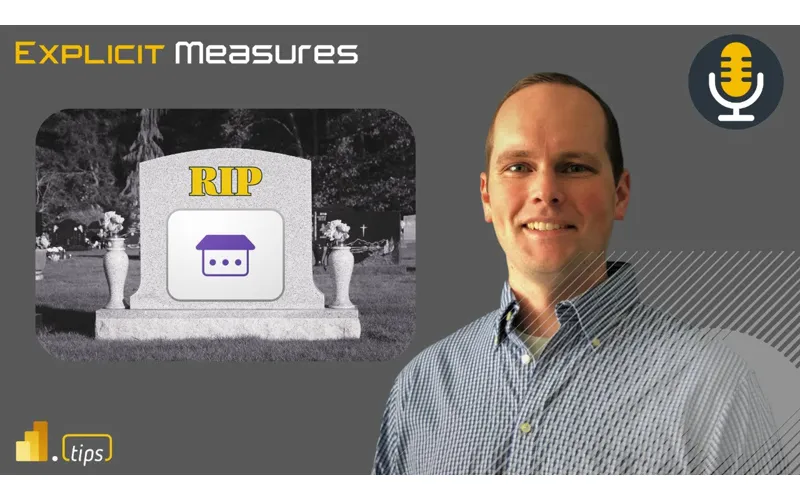
Datamarts had a short run. Microsoft is unifying datamarts with Fabric Data Warehouse, effectively ending the datamart experiment. Mike and Tommy discuss what happened, who’s affected, and how to migrate.
News & Announcements
- Power BI August 2025 Feature Summary — The monthly roundup of Power BI updates.
Main Discussion: Datamarts Are Done
What’s Happening
Microsoft announced the unification of Datamarts with Fabric Data Warehouse:
- Datamarts are being deprecated
- Existing datamarts will need to migrate to Fabric Data Warehouse
- The warehouse provides a superset of datamart capabilities
What Were Datamarts?
A brief history:
- Launched as a self-service data preparation and storage option within Power BI
- Aimed at business analysts who needed more than dataflows but less than a full warehouse
- Included a visual query editor and auto-generated SQL endpoint
- Never gained significant adoption compared to other Fabric workloads
Why They’re Going Away
Mike and Tommy’s analysis:
- Fabric Data Warehouse covers the use case — With simpler T-SQL access and better tooling, warehouse serves the same audience
- Overlap with lakehouse — Between warehouse and lakehouse, datamarts became a redundant middle ground
- Simplification — Fewer artifacts to manage, explain, and govern
- Focus — Microsoft concentrating investment on warehouse and lakehouse instead of splitting across three options
Migration Path
For teams currently using datamarts:
- Microsoft is providing migration tooling
- Warehouse supports the same SQL queries
- Data pipelines may need adjustment
- Semantic models built on datamarts will need reconnection
Lessons Learned
- Not every self-service feature finds its audience
- The Fabric ecosystem benefits from consolidation
- Teams should invest in capabilities with clear long-term commitment (warehouse, lakehouse)
Looking Forward
The datamart deprecation is a sign of Fabric maturing—consolidating overlapping features into stronger, better-supported workloads. For teams still on datamarts, the migration to warehouse is straightforward and gives access to a richer feature set.
Episode Transcript
Full verbatim transcript — click any timestamp to jump to that moment:
0:00 All right, welcome back to the explicit measures podcast. Good morning, Tommy.
0:32 Good morning, audience out there. Happy to have you with us today. Well, hello Mike D. Carlo. How you doing? Doing well, Tommy. I’m doing very well. Today’s main topic is going to be all around the unification of data mart with the fabric data warehouse or SQL databases that are coming out now. Currently, SQL databases are currently in preview. This will be our topic. This was an announcement made by Priyanka on May 7th, 2025. We just want to bring some more awareness to this around hey just FYI things are changing.
1:05 This is no longer really going to be supported. This was a PowerBI only database thing that you could get your hands on but data data marts are no longer going to be available. And we’re getting close on time here Tommy. October 1st 2025 the existing data marts will not be supported and will starting to be cleaned up from workspaces. So to avoid losing your data and breaking reports built on top of this stuff, you need to take action before October 1st. So I just want to call this out. There are a number of accelerated scripts that we
1:37 Can talk about here later what those do and how to help you migrate into something that is more appropriately fabric. I’m going to be a little more clear than you, Mike, because you said the unification of data marts. This is aa in case you’re not hearing it. It’s the end of the line for data. End of life. End of life. Yes. Data march. So, that being said, , we’ll go back into that. We’ll get into the main topic there. Let’s do a couple news and announcement things. We did have a great announcement this week. I believe that was on Wednesday. I think it was Wednesday. Was it was that when it came out? The PowerBI blog came on the 12th. Oh, so on Tuesday basically.
2:10 So, T is of course, right? We do a podcast episode and immediately right after our episode, the blog post comes out around all the new features for PowerBI. So, let’s talk about new features here. What new things came out? Let’s do a little draft. What do you call it, Tommy? What’s the thing we call draft? Yeah, a little feature draft here. We’ll pick the best features for this month. And I will admit we’re looking a little light, but I think that’s because Fabric Conference is coming up next month. So, I think we’re potentially, this is typically what happens when Fabric Conference Vienna and Fabric Conference
2:43 Las Vegas were happening every time right before the big conferences. There was a lot of announcements trying to be held back a little bit before the main conference. So, these tend to be just more like support and lightweight things, but I do think there are some interesting things here worth picking. All right, Tommy, draft is to you. You pick first. All right. So, I’m going to try to not pick yours here. And if I’m going to pick one from here as my first round pick, I’m going to go I’m going to stick with the co-pilot and AI AI. They are three in one here. So, just like getting instead of getting one blue chip
3:15 Prospect, you’re just you’re trading for three up and coming. And I I do like actually some of these. I’m not sure how they’re going to turn out, but I think there’s a lot of potential here. So, what we’re doing with Copilot, well, there’s actually three good ones. Copilot and embedded reports for SharePoint online, meaning I can use C-Pilot if I’m in a SharePoint page with an embedded report. I really like this because more not so much as in SharePoint, Mike, but because it’s allowing you to have the same experience with Copilot in all the different places
3:49 That PowerBI is going to be. And I think this is really important to get that adoption of C-Pilot. Number two is a GA, which anytime anytime I get one of those. Yeah, let’s celebrate. Yes, it’s a celebration, which is this is one of those strange ones. You’re like, how is that not GA? Like what bugs were there before? But co-pilot to write measure descriptions are now generally available. So now co-pilot can write through all your measure all your measures and write a description which basically it’s basically a button now. It’s just a button inside the bottom of your measure here. Generate with
4:22 Copilot. The only downside of this is if I’m doing generate with copilot it’s doing generation. It looks like it’s doing on one thing at a time. Can we do like we can select multiples? Does it automate yet? Does it we have so and this is so the problem is I can do this in an IDE like VS Code and I can get that done with Timol in a second. So yeah, that so you’re you’re also right there too, Tom. Like the UI doesn’t really need to support it, right? Tim supports it, right? That’s really what you’re right. If you want to multi if you want to be able to document lots of things, you prompt
4:54 The VS Code or you prompt desktop user experience, this works thing. I agree. I agree. You and I, the nerd, there’s no reason to overbuild this feature when you can just say if you really want the fancy stuff, just go to Tim. Yeah, I agree. Exactly. And then finally the last the last blue chip here is the filtered report summaries and answers in standalone co-pilot which simply means that any filtered report summary that you have works in the standalone copilot. So if you filtered a report that will translate to your standalone
5:27 Experience and I think this is a big distinction because we’ve always dealt with the semantic model and you’ve looked at well and even if I had a filter report copilot or these AI summaries are going to look at everything. So this is simply context over in that filtered the standalone experience. So these are to me not so much these amazing new features but help seamless experience. , I’m I’m okay with that. And do you Let me ask a very pointed question, and feel free to to, , bounce my question off, Tom, if you don’t really like it. How
5:59 Often are you using the Copilot standalone experience? Are you finding valuable things from it yet or is it just more of a novelty at this point? You haven’t really landed like how does this fit a workflow? It’s so much experimentation right now, Mike, to be very honest because I’m only deal doing it with prepped with data with AI. as long as I prepped my data because at that if you don’t you’re just you’re leading to a lot of wonky answers and just a lot of a lot of like a lot of fluff. So to me if you’re
6:32 Going to use this it’s going to be in that prep for AI. I think I think prepping for AI is going to need to become a very robust feature in its own right just to really support really solid or decent answers coming out of the AI co-pilot piece of this. It it does feel like we’re on the cusp of something very different here just because we’re getting the ability to like tune a little bit these agents and add our own instructions. I think that’s really been helpful because again the AI is not going to understand our data out of the box. We need human instructions how we want the answers to be responded. What does our business users like language they
7:05 Use? How does that translate to what the AI is supposed to be doing? I think that’s going to be a really big win there. Okay. Love that. , one of the things I’m actually interested to hear a lot is there is now a new feature. Again, this is another one, Tommy. When was the last time you remember a PowerBI Pro feature appearing? Ooh. Right. , a pro user getting a new thing, right? Everything we’ve been pretty much for the last 6 to n months, everything’s been fabric. It’s been workspace in
7:39 Fabric. It’s been AI things. It’s been agenty things. All these all this stuff is a 100% mostly maybe with the ex exception of the co-pilot home experience but even that still you need a fabric skew I think to run that one as well. So like that doesn’t work either. outside of fabric there hasn’t been really many prolevel features. It’s been my like business as usual. There’s been a couple visual changes for pro users because that’s PowerBI but outside of that nothing. So now there is support for organizational apps inside a
8:12 Pro workspace. I just did a demo on this one for our class. We do a training.tips class. We’re doing more Q&A and live demos around different features that come out from PowerBI. And to that end, the organizational app is a very interesting feature and this is coming from a fabric workspace. It is now available to us in the pro workspaces. I like this feature a lot. There’s a mental shift I had to make just very briefly around this one. As I’m playing with this new feature, interesting you pick this.
8:44 Typically, you would do one workspace, one app, one one app from the workspace. So, you could have a one to one relationship. This breaks that mold. You can now have a single workspace with as many apps as you need from a single workspace. So, if you want to group a lot of reports, if you want to have one single BI team and that’s where they dump all the report pages, that’s fine. You can pick and choose which reports are getting added to that organizational app. The difference here is in the workspace app you have an organization and an audience. You have the the or you
9:17 Have audiences of that organizational app. So you can put 30 reports in it and then show different reports to different people based on who the audience was. It was a clunky UI, a little bit hard to set up. Am I am I giving sharing to everyone or not? It was a little bit harder and more difficult I think to set up this new organizational app area much easier. You could think of each app you build can be its own audience by itself. So the audience thing’s basically been removed. The whole UI is simpler. I like this new organizational app. This is what should have been built with apps originally. I think,
9:48 , it’s interesting you picked this one, especially for the pro because I think I would trade you away if I had this because Mike, the the selling point for me with or apps is the fact not just that I can choose things from other workspaces, but it’s all the different products I can put into an or app. A pro doesn’t have a lot of options. It’s really reports, scorecards. You don’t I don’t think you even get metric sets with Pro, right? So, I’m gonna I’m gonna argue with you a little bit here, Tommy. So, I’m going to agree with you. This is potentially a precursor to something better, which to
10:20 Your point, I do want my organizational app to have a metric set in it. I do want my organizational app to have a exploration in it. Those are experiences that I think I want. We don’t have them today. So, to your point, Tommy, like it is good that we’re getting this, but I want to also argue with you like I would agree with you. We need more in the organization app. I should be able to add a PDF. I should be able to add other objects. I should have explorations. I should have a dashboard built in. Like all the all the artifacts that we should be able to get
10:53 In Pro should be available to us inside the organizational app. Hopefully, we get there. But I’m I’m more interested that the fact that the pro user now gets these things. And now we we’re no longer bound by , how many people are just , to be honest, on me, our best practice has always been Yeah. Share with an organization. Share with an app. That that’s the way to share. Yeah. build the workspace. It’s for developers. It’s people making the content. If you’re going to give readonly content, use the app to share it. Period. But if you’re on a pro too, if your whole organizations on a pro too, we got
11:26 Other things to talk about too. And that not necessarily. Yeah. Your company buys an E5, you get pro by default. Like so some organizations are thrusted into this like they just have it there automatically and they’re like well we don’t really know how to turn it off easily without having everyone add it to a capacity that’s been automatically turned off to disable it. There’s really not there’s really not an easy method to like if you get an E5 you have PowerBI is like when you download a free iPhone app and it’s like yeah it’s free but you got to like click the X to get away from the advertisements. This shows you the report but before it shows you a fabric
11:59 Advertisement first. Yeah, please use fabric. Yeah, this is a better experience. I’m surprised, Mike, you didn’t pick. I’m actually really surprised you didn’t start your draft with the tindle view enhancement. That’s my second one. That’s my other That’s my other pick. So, I’ll do my second pick now and I’ll kick it back to you. So, my second pick would be in the modeling space. I do love code. I’m a developer. I love doing all these things. Tim view enhancements are the way to go. That’s that’s the way to do that. And appreciate that one. Hey, Alex Powers is here. I got a comment here. Alex, thanks very much.
12:31 Appreciate you providing donation today. That was fun. but yeah, we’re hoping yeah, Alex is hoping that Brad is going to appear today with more discussions around data warehousing. So, we’ll see what happens. it’s still alive. It’s still So, Tim view enhancements are fun. They’re doing it’s not a major change here. It’s like some feature life preacher feature enhancements like what do what do they call that? Improvement of life thing. paper cuts, I guess, is what I would call it. Couple paper cuts here that are removed. , now there’s a
13:03 Section for expressions, and you can grab just the expressions over for your M code or your variables or parameters. You can see those directly in the code. You can drag over an individual section. So, previously I had to drag over the whole table or all of the timal code. Now, I can grab just the measures, just the perspectives, and just the relationships. Makes sense. And this is Ruie, you are spot on. what you’re doing. and you’re building good developer tools. Keep going. I love this. Call that you call that a paper cut fix, but man, how many paper cuts have I gotten from this?
13:35 And like I’m doing a lot of typing, but a lot of times you’re like, “Yeah, I’m just going to drag that.” It creates a new tab. It’s frustrating. It feels so It felt so unintuitive. And I love when we have features like this that just add to the experience that you’re already in. So, no, I I agree. The Tim one is huge here. Mike, I’m going to go a little matrix on you for my for Do you have anything else with Tindle? Nope, that’s it. I just want to call out the Tindle and I like it. It’s a good feature. Solid for developers. Yeah, every now and then there’s something that comes out with PowerBI and I feel like I’m out of the matrix or
14:06 Into the matrix, however you want to put it. And the more that they’re doing with the editing, the model, and the service, I I feel like it’s just in a surreal world that I’m not accustomed to, even though I’ve been doing quite a lot with it. And the big updates here is Power Query in the service for editing your model. So again, where did Power Query first come out in PowerBI service data data flows? Then you had data marts. Yep. And then it got stuck and then you had then you had fabric and you
14:38 Know we had data flows gen two but that normal experience that people are used to for developing a semantic model wasn’t there and now then they introduced this idea where hey you have a model in the service well rather than you can edit your DAX which was possible but you couldn’t edit Power Query they not allowed that and they’re making this easier for native queries and error handling in Power Query. Like this experience to me, I feel like I’m out of sorts sometimes. I love it, but doesn’t it feel just almost like you’re not
15:13 Supposed to do it? Like it feels like almost wrong. Yeah. A little t That’s the word I’m looking for. It feels a bit taboo to be able to edit the Power Query of a semantic model in the service. Nope. I go back to episode one. This is the way we’re going. I am not good with it. Yes. I like it a lot. So, I’m I’m very happy with edit your model in this. And again, to your point, Tommy, right? If there’s an import something going on in the service, right? Like sometimes you just need a little quick change to something or add a column here or something’s not like something I’m
15:44 Fixing something, right? I should be able to fix this stuff in the service. No problem. So, to have all this, , in the service available to me. I can go ahead and edit the data model right there. Power Query just shows up and we’re happy. I like it a lot. I wish there was more of this around the embedding space. I wish embedded solutions could start leveraging a little of this as well. Like, hey, here’s a semantic model for a customer and the customer could make slight changes or modifications to their semantic model. It’d be nice if it extended a bit, but for this, I like this experience. Again, this is one more push that I’m getting
16:16 To let me get a bit further away from requiring me to have desktop. And even now, , we were talking, I think it was a couple days ago or I was talking in a class, you can now connect to the SQL database, SQL fabric SQL database, and you get a semantic model that’s not published on your local computer. It’s actually in the service already ready to go. So, so now I’m I’m editing those models locally, but now the model creation side of it is actually becoming more servicebound anyways. So, I like that experience. I think it’s the way to go. I’m going to continue to shift more of
16:49 My workload or my daily work into the website. It just makes more sense for The last thing I’ll say is data analysts today, Mike, they don’t know how easy they have it. If I had this feature when I was a data analyst or in 2018, oh my god, amount of time. People, these data analysts today, they don’t know how easy it is. When we we could do it just you had to go buy a different program. It was like a talent or some like it wasn’t free. It wasn’t part of Excel. It wasn’t just part of PowerBI. Download it for free. You get all this stuff. Like that’s amazing to
17:21 You and I had to do our Power Query backwards in the rain. Okay. Walking uphill. That’s how with paper shoes. Exactly. So people, kids today, they they just don’t know how easy it is. So easy. And now they just talk to large language models. They don’t even know how to code anymore. So different. All right. That being said, let’s jump into I think we’re good. Is that all the the things we want to talk about for openers? Good, man. I’m ready. All right. So, let’s talk about our article unifying data market pieces here as well. And with that, oh, did you we’ve got a a special caller. You did hear that finally. We
17:54 Actually it’s working today. we have a special caller today. I’d love to bring back to the audience here. Brad, welcome back. You were here on Tuesday. You’re here again on Thursday. We really appreciate you showing up today twice in one week. I appreciate it. We’re striking gold. Terrible on Tuesday. So that means I get to come back today. I love it. Well, welcome. Let’s talk more about what’s happening with data mars. What’s what’s going on here? there’s a unification. Tommy says it’s getting deprecated. I say it’s unifying. It it there’s another experience here.
18:27 Give us some background here. Like what’s from the Microsoft side? What’s happening? well, I don’t think it’s really a secret that this was going to be happening. I think most folks probably saw the writing on the wall, but yeah, according as you see in the the blog post that you were just referencing there, Priyanka had had put this out, I want to say in Mayish time frame, April, somewhere around there. May 7th. Yep. Yeah. So, data marts are finally going away completely. So, the question that we we’ve gotten all the time is when’s
19:01 The GA date for data marts? And we can tell you that that GA date is never because October 1st they are just going to no longer be there. So yes, the short time frame. So I’ll probably say that October 1st date like a dozen times just so people people know that. But if you miss the announcement like you’re on vacation a bunch just coming back Europe. Yeah. Yeah. That’s that’s the big date. They’re going away on October 1st. So got to do something before then. Yeah.
19:32 Going say I’m do a little history on data marts and where they served and so I I also want to point out just a a big distinction here and Tommy maybe you can back you up and sorry I didn’t mean to interrupt you there Tommy data marts was like this hey we need some SQLesque experience inside PowerBI and so to me there was like a a wind that had gotten data got swept up in the wind of change I I’ll call it that right okay so let me let me I’ll expand my analogy here a little bit right we’re in PowerBI we’ve got data flows gen one we’re building tables of data sometime
20:05 People were just clamoring for we need some SQL we want to run SQL near where our PowerBI is being built and so I think from this there was a lot of requirements around data marts and I thought data marts were interesting because it seemed to blur the line between the semantic model definition and like the tables and the SQL stuff of things and I think there was a lot of confusion maybe initially when it came out which was is data marts a SQL database or Is it the semantic model? I can build relationships in the data mart, but then they get carried over to the semantic model. So, it was
20:38 Interesting to me because there was like two technology stacks. Again, it’s still SQL server. It’s SQL Server and SQL Server Analytics Services, right? So, there is they were the same stuff and essentially it ran on the same machines, but it was a blurred line between both of these. I think that was a little bit interesting when it came out, but again, pro or premium per user, right? I think it was premium per user, but PowerBI people could use this stuff, right? And then all of a sudden it got got silent like the whole data mart like we got it, it was announced. I remember doing some videos with Charles Webb
21:11 To announce this thing and like get some feedback and like this is what we’re going to be doing. I thought it was really cool and I was just trying to unpack like understand why it’s there. Then all of a sudden couple months later we hear announcement fabric is coming like oh wait wait wait a minute okay timeout. So I see what happened here like it it was started it was being built and then all of a sudden a direction shift came from leadership and said we’re going to build all of the data platform things. We’re going to basically migrate Synapse and all of its richness into a more PowerBIcentric ecosystem which I think was the right
21:43 Move and now here we are. So now we we’ve stopped development on data marts. We then developed all this new stuff around data warehousing SQL databases and fabric and this is where we’re going to land. So let me just pause right there. Tommy, was that your impression too? Yeah. Do you feel the same way? The problem was timing. If data marts came out four years before, it probably would have taken up a lot more. But I was looking at when we when we talked to Charles, that was August of 2022. Yeah. Not 6 months later or eight months later was the announcement of fabric, which took all the wind out of the
22:16 Sales. And yes, I know for me when Data Marsh came out, a huge amount of testing, Mike. I was going gung-h. Yeah, because I thought this was a bridge that a lot of we’ll call them problems or a lot of scenarios could solve for. But again, once you heard about fabrical, okay, it sounds like this was what data marts was trying to do or wanted to do, but then fabric is really going to be what that what that solution is going to be. And I think that took a lot of win out of the sales. I’ll say that with,
22:48 Hey Mike, we’ve got a ton of mailbags around data marts where there are organizations we know today who rely on data marts heavily. Well, not until October. Not until October, but they do and hopefully they’re listening today because they’re going to realize this. So Brad, let me bring it over to you here and this whole journey that we’re talking about does this sounds I guess similar from the Microsoft point of view maybe even that collusion between fabric and data marsh and what happened. Yeah, I think in a lot of ways like you
23:22 Guys were saying this came out and then six eight months later we we announced fabric and all these things changed but I think in a lot of ways fabric is the realization of what data marts eventually could have been like sure it’s there’s a like a specific path that you have to go through to get data into a data mart there’s limitations on what you can do with the data once it’s inside the data mart like how you update and interact with it, but it it gave you a lot of the things that that you see built into the the the default
23:56 Experience inside of Fabric. So like you go build a you build a lakehouse or a warehouse, you’ve got the SQL endpoint there to just be able to query the data and you can you go in there and you’ve got the default semantic model that’s tied up to it and you can go ahead and do your build your relationships and build some measures and things like that. So that’s where I say like I do think that fabric took what data marts were going to be and just said hey here was an interesting preview of that. Now look at all these other fantastic and amazing things. And we talked on
24:27 Tuesday a lot about the lines blurring between like data warehouse engineers and data lake python data science folks. And to your point, Mike, I think this has done a lot of that. , data mart set the stage for a lot of that same stuff here, blurring that line between, well, what can I do through through reports and and now through data marts and but now I want to do all these other things like I know a little bit of TSQL. Maybe I don’t know a ton of it, but now I can go do all these other things now that I’ve got the
24:59 Option to use lakehouse or warehouse or whatever that happens to be. So yeah, I think it’s I think it’s cool that we’re opening it up beyond much further than what it was in data marts. But if you liked exactly what was there, like I just want to load the data with the low code, no code experience and then build a a model on top of it, like by all means go do it with with the warehouse and stuff today. But so yeah. And and we’re also so I’m gonna I’m gonna poke a bit of fun here. we’re going from one preview item to a new preview item. I think bad where
25:31 I’m going here. So, , if you don’t want to go full data warehouse, which is GA, it’s it’s out. It’s running. Like, you can go use a data warehouse. If you want to stay in more of that SQL space, you can go from data, which is in preview, and you can more than happily stay in preview and hop on over to SQL databases, which is also in preview. I will say this though, the the level of effort behind SQL at Microsoft in general, 100% SQL the SQL database in fabric will 100% make it out of G. I guarantee that’s going to be a thing because it’s data Mars. I can’t
26:05 Guarantee like we we couldn’t guarantee that at the beginning, but I feel really confident 99.9%. Let’s I’ll even go as far as saying I’m 49’s deep on this one. 99.99 like the full, , resilience here. I will I will say the the that will become a real product because it’s actually strategically a strategic investment by Microsoft to make sure that SQL lands well. And I want to point out with this comment as well. Yes, we’re talking about, , going from data marts and I’m poking a bit of fun around fabric SQL. It’s not GA yet. It will get
26:38 There eventually. But I do want to point out Priyanka’s highlights that I thought were really relevant. Right? There is some of these onboarding ramps that were made really easy with the data marts, right? Simple, low codecentric, easy to provision. It was easy to manage. There wasn’t there wasn’t a lot of bells and whistles that not you didn’t need a lot of knobs to make it go, which I loved. And then it had seamless integration with PowerBI. The more the easier you can make it for me to get data into a semantic model, the happier I will be like that. That’s just as long as you keep sticking to that as
27:10 Like a core value, make it easy to get data to semantic model, everyone will be happy about that. So I really like that part. But then the requested features I think is great. Now again, I don’t use a lot of DDL or DML support, but the fact that it’s like that wasn’t available for data marts. You didn’t have any git integration. You couldn’t back them up. Like there’s no auto backup capabilities. And then if you wanted more security than what’s given to you out of the box based on just the workspace access, there’s nothing, right? So to your to your point, Brad,
27:44 If you give someone like half of SQL, they’re always going to be unsatisfied and they’re never going to be like, I oh I love it. Thank thanks for giving me half of what I could do somewhere else in full like so I think actually properly rethinking the idea here and bringing to fabric the full SQL like experience with all the rich Azure SQL database experiences bringing those forward and just landing them in fabric I think is the right approach this is the the full materialization of all the right features and I’ll just pause there Brad what do you think no 100% agree and to be fair we get that
28:18 Complaint fully transparent. We get that complaint with the data warehouse today. It’s like we’ve got these features that are available in SQL. You tell me you’re SQL, but now I can’t do a merge statement or identity. Like some of the stuff we talked about the other day like like okay well we’re getting there. That’s great. But on this topic here like exactly if you just want to do something simple like maybe you got a a script that just builds out your date dimension for instance it’s very easy now to just go in like if you’ve done data warehousing for long enough you probably got a TSQL script that’ll just
28:49 Go generate all that stuff for you. so it’s really easy to now just go in and just run TSQL script where you couldn’t do that with the data mart. So even just little things like, oh, there’s this one record that that’s messed up. I just let me go update it and run a run an update statement with TSQL. Like even just little things like that, being able to reduce some of those friction points, I I think is going to be going to be big. And like you said, it it’s giving fabric SQL DB as as the option for a place to land this again, even though
29:21 It’s preview right now. Go GA later. that’s going to open up even more things with fabric in general again that you couldn’t do in there. So like as far as like getting things easily into a PowerBI model too fabric as a whole like with direct lake and everything that’s going to be a big advantage over here on this side as well like if so people do have these these smaller data marks and they just want to say hey let me go with direct lake and just get the data in there then all the data is already out there in in the paret format we
29:54 Can go pull put that stuff into direct lake and all that stuff whether it’s SQL DB or or inside the warehouse. else and again like let’s bring it all together like use the shortcuts and bring stuff from other places if you want. So I guessing it’s super easy to just start small and then combine all these things together. Now that was one of my complaints around the SQL stuff which was delta lived somewhere in a storage account and the SQL databases just was difficult to get it to read stuff from Delta. And so I feel like again now that we’re talking
30:26 About fabric seems like fabric has this mentality of everything must be able to read and write Delta like across the board all the computes must talk to it. And I think that just for me as the user of this I’m glad that Microsoft unified on the Delta platform Delta Lake as the standard. Again they were enhancing it and make it their own thing like a v order and other fun cool stuff but I really like the fact that it’s just going to work and I don’t have to worry about it and I know everything can get in there. Sorry, Tommy. Go ahead. No, I I actually I have two bones to pick with the article, unfortunately. So, one one with the title.
31:00 I think I need to go. Got a meeting. He’s got So, one with the title because it’s so happy for something that’s ending. Like, this is like getting an email from my mom like grandpa’s going to a better place. Like, okay, he’s gone out to the farm. Grandpa’s gone to the farm. So, let’s be clear here. Data marks are going away. And but I think that but marketing wouldn’t approve a a blog post titled data marts are dead. I I’ve seen that on Azure like announcing the deprecation or whatever we know a lot of the article
31:32 Titles are going through AI and co-pilot. Me and Mike know that it’s not a secret but that’s why they’re just giving us fodder. Tommy they were just this was a this was the Microsoft soft to us. I’m so happy you oh I can’t do that anymore. Oh, I can’t do the thing. I’m Anyways, but the big thing I I really the real more honest question I have here is data marts to me was the journey of the self-service the citizen developer and it really felt like that was the persona. That’s who the aim was. I didn’t have access to a data mart. I didn’t have access or this
32:07 The language Azure subscription but I can now create that infrastructure. That was actually a big part of the mailbags that we had was it was a BI team who did not have the data warehouse or SQL database to them or or access for them to create. So they makeshift that in a data mart and yes they do have the accelerator script now but the and I I I’ll refrain from saying the word problem because I I think that’s too harsh. But the situation here is you those teams now are dealing with
32:41 The warehouse. They can get the data in but now they also have to have the on top of that the skill the TSQL skill or the Python skill they can’t use the same process that they did before and has that been a conversation at Microsoft or with this with this migration to the warehouse with the accelerator scripts. Yeah. So I think like one of the great things about just fabric in general that you alluded to there was like I don’t have to have all this other infrastructure and stuff. So I don’t
33:12 Have access to the the subscription and in Azure, right? Like the good news about this is like you’re not losing that capability. We’re still you’ve got all these other things actually now that you can create inside of fabric, not just the the database. But for the people that do want that low code experience to say I’m not a developer. I know my data super well and I know what it, , essentially needs to look like. I can get it into that using Power Query and land it into the database. Like continue just using data
33:44 Flows for that. Like I wouldn’t say do anything different. Just sure you’re going to shift the backend but you’re still going to use data flows to be doing your your modeling and your data cleanup and all those things. So, I think for the most part for for folks, it should be fairly well business as usual on on a lot of those those fronts there. It just now they’ve got some extra things that they can do and some other places that they can pull data in from and and opens up some new possibilities for them. So, I don’t necessarily see it as a as a big paradigm shift for those folks. I see it
34:17 As yeah, my my tooling is going to be slightly different. like sure now instead of like clicking a button inside the data mart and bringing up my power query I do have to go someplace else like I’ve got to go to a to a data flow outside of that in order to do it. So there is there’s going to be a little bit of friction a little bit of learning curve I think for folks there but I think they’re also going to find that it’s not so much that they they have to like rewire their brain for everything that they need to do in order to be successful in there. I want to double down on that point because I think that’s actually a super strong point. Right. Would I rather hold on dearly to data marts and not have
34:51 These features or would I want to just retool my thinking slightly and get all the features? And I think you would argue I think if you went to anyone who’s using data marts today currently and said look I’m going to take away your toy car and give you a real car. They would be yeah sure okay it’s a little bit different. It’s a bit more dangerous. I have a bit more control but like now I have a lot more capability. Right. So, I really do feel like this is a a great upgrade to what we’re doing. And again, Tommy, I’m going to take issue with your comment, right? We’re not Yes, you’re trying to emphasize a bit more the dramatic side
35:24 Of like the deprecation of the the data the data mart, but I think the reason why the article is a bit more positive here is because you’re getting all the things you were getting and more and it’s actually unifying the experience. So, I don’t I really do feel that this is the right approach. And to me, I’m I’m looking at again, I’m a I’m also a very weird Tommy, you and I are both are very weird. We love fabric. Like, it’s going to be part of our world. We’re we’re getting into it. We’re learning it. We just we’re figuring out how to make it part of our ecosystem of doing data engineering and reporting. It’s just part of what we do. So when companies aren’t embracing the fabric
35:57 Side of things, this is just one more really big push for them to say, look, you really need to seriously consider getting away from just pro licenses and start thinking about rethinking your licensing strategy on how you get into the fabric ecosystem because you will want to play in this space. And if you’re using data marts, you probably should be paying a little bit of extra to get into a fabric skew. And this get to be honestly perfectly honest here, you can get this stuff at an F2. like that’s a very low price point for organizations to get started. And if you’re a big organization, odds are you’ve already got a P or FQ laying
36:30 Around already. You’ve already got the stuff in your ecosystem to like use this. So I do think there is a slight barrier to entry because this is now a fabric only item. But I think it’s an acceptable trade-off. That’s this is hopefully a shift that we begin to see too because I Mike, I know that we’ve talked about what’s your beat on the street? What are you hearing from you from clients and organizations? Brad, I know you work with huge organizations and you’re obviously in the belly of the beast, so where the shift is going, but we hear
37:02 Too all the time where we’re not sure if we should take the jump to fabric. We already have a working infrastructure with PowerBI. So for me this bit of a comment initially is hopefully this is a shift now to as we begin to see everything go to fabric and that’s okay for a lot of organizations. I think they feel like they have to move everything over. Some of that’s going to be forced on them aka our data march with the data warehouse. But I think hopefully we’re beginning to see the shift too where you don’t have to be the developer. you can be that citizen developer and still use
37:36 The fabric playground so to speak. there’s a conscious shift here I’m also seeing around the data flows and and power query too. Brad I don’t know how much you can speak towards how much how conscious and a little love to Alex here too on the on the podcast but how conscious has the effort been around power query with with this as well understanding that was a huge part of data marts. Yeah, that’s obviously got to continue to to be a place of investment. You’re going to see a lot of stuff that continues to happen
38:08 With with data flows. Like that’s not something that’s that’s going to lose investment. Like there’s things we’re doing around performance improvements and making the the experience excuse me the experience a little bit better. Right. Python. I’ll just write Python. I’ll just say that. I’ll just throw it out there. I thought you were going to say cost. Well, no. You’re going to make Alex unhappy out there. So Yes. Sorry, Alex. This one’s for you. We’re gonna we’re gonna jab you there later. But yeah, go ahead. Sorry. Sorry, Brad. I didn’t mean to interrupt. But no, I think you’re you’re just going to continue to see see investments to
38:41 Make that make that the best possible experience that you can. , you go out to the fabric blog every month and there’s there’s usually one or two things in there every single month for for data flows. So, it’s going to continue to to be there. It’s going to continue to be a heavy path of investment, I I would imagine. so that we do continue to serve these folks. There are conversations all the time going on about like how do we make sure that we we don’t leave behind any one of these developer groups like you
39:14 Go back to the beginning of of fabric and a lot of things were were focused on the low code no code side of things and then we had a bunch of people that complain like I want to be able to do this through code and so we started to make that a little bit more of a core piece of of technology as it comes out is make sure the the proc code people are satisfied with that. But like we can’t leave behind the low code, no code folks either. PowerBI is built off the citizen developer. I think it would probably be unwise if if that were to to go by the wayside. So I guess the simple answer is
39:47 There’s there’s going to continue to be heavy investment on that side. I don’t see any way around that. And to to your guys’s point like they’re on the barrier of entry with getting into fabric. Like I’ll be honest, that hasn’t really been a huge issue with this announcement that I’ve seen so far. Like sure, there there have been a couple of organizations that say, “Look, we’re not going to fabric yet.” And on some level, I want to just reply and say, “You already are on fabric.” Like, you’re just using a subset of it. Like , on you just don’t know it, right? Yeah. , so, , it hasn’t been a huge
40:22 Barrier to entry though for for most folks that are that are looking at doing this. I I think most organizations that have have data marts are are probably a little bit more data forward than , , those teams that are using data marts are probably a little bit more data forward, if you will, than sure than ones that are purely just using PowerBI and semantic models and reports. So they’re probably already looking at the PowerBI eco or the the fabric side of the ecosystem already. So not not a huge deal there. I don’t think I would agree with you Brad on this one.
40:53 I think also to me the wise move here was the fact that I could get an A1. So again I’m going to go back to like the legacy pricing of how things were working for fabric A enabled things. You got premium. You had premium per user and then you had an A1 which started at about a thousand bucks a month a little bit less than that but like it was pricey pricier. The fact that we brought the fabric SKs all the way down to like entry level pieces a couple hundred bucks a month. Like to me I’m like okay maybe you’re skeptical. Is it worth
41:27 Two months of 210 $220 $240 a month for two? Is it worth 500 bucks to experiment for things for 2 months to figure out does this new world help you remove friction and getting analytics done? I would argue a $500 test around this definitely worth it. And also what do you mean it’s a Z test? You get Z test 60. Okay, so even better you get you get a 60 you get a 64 F64 which is awesome by the way. Has a lot of power to it. But
41:58 Like you get an F64. It’s free. You can test it out today. like there’s zero trial effort and so if you feel like you can you can put your stuff down you can build some things that you want and you can say okay how much usage do I actually get or need to use to evaluate whether or not this is yes going to be a place where we can invest in or not. So I really do feel like that that step the barrier to get into it is almost not even there. So I’m I’m super pro on this. I think every organization should be trying it out, at least figuring out does this extra spend equate to the
42:31 Value you think it delivers. My argument is it adds way more value than the cost of the product as long as you think about the design and what you’re trying to do with it. Yeah, I wouldn’t I wouldn’t start by running my first fabric environments with a whole bunch of data flows gen 2, but there is a lot of other things in there that I think really help you out as well. Okay, sorry Al. He knows it. I I’ll I’ll say it to his face like Well, and I and I think this is the hardest thing because you Here’s the thing, Brad. You’re you’re in a tough
43:03 Spot because you’re trying to make everyone happy with all these products, the the hardcore developers and these citizen developers. Data March had a very narrow lane, right? It was that BI more or less citizen developer. They knew how to do data flows. They knew how to do DAX, but they probably weren’t in the Python notebook data engineering side of things. And now you’re giving them the warehouse where yeah, it’s a full developer stack, but we’re also saying at the same time, citizen
43:35 Developer. So, as much as you can’t answer like how how do you make everyone happy? How how do we make everyone happy here? You’re never going to make everybody happy. No, you’re never going to make it ever. , but , I think that that’s one of the great things that we’re doing with the warehouse. Why I like that I hate to say this and I don’t know if this doesn’t give me in trouble, but I like the fact that at this point in time, like when this all happened that SQL database wasn’t GA, so it is pushing some more people to look at the
44:07 Data warehouse. And maybe that’s selfish of me because my focus is more on the data warehouse side, but at the same time, I do think I do I do think that we’re doing we’re doing a lot of stuff in the data warehouse that does help the folks that you are are describing right there. They they just want to be able to go in, have someplace to put their data, and not have to worry about all the other stuff to manage a database or anything. And that’s not to say that the the user experience and that we don’t have a bunch of like things to to autonomously help you run your SQL database in
44:41 Fabric. There’s a lot of stuff on that front that we are doing. However, the the warehouse side of it, we’ve from the beginning the the goal in Northstar, which of course you’ll never quite hit, but the goal has always been no knobs performance and a no knobs environment that just runs and works. Yes. And so like they don’t have to go in and know like we talked the other day about data distributions. Like that’s not something they’ve even got to worry about. Like the data flow will create the table for them even. They don’t have to worry about writing a create table statement. We’ll handle all the stats and indexes
45:14 And all the data compaction like all the things that you normally would have to worry about with running a database system that you don’t have to worry about on data marts. we’re gonna do basically all those things for you already on the warehouse. Like that was one of the things that we just did by default from the beginning. So as far as making everybody happy like sure I think honestly I think the people who are going to continue to be the least happy with the experience are going to be the proc code people just because in this SAS world that we live
45:46 In with fabric now you don’t get as many knobs. So the the people who aren’t expecting the knobs are going to continue, I think, to be very happy whether they land on SQL DB with this or or with data warehouse. So Mike, you go I’m going to agree with this one very much. I this is Microsoft is playing a very fine edge here along this line, right? To your point, it needs to be like all the performance, no knobs, easy to go like slider slider everything, right? I need more performance, slide it up. I need
46:19 More storage, slide it up. Like, it just needs to be like, okay, or even it just handles all of it. I don’t have to do the knob stuff, right? That’s what everyone desires. But we all know, and this is and I were talking about this the other day, which might come out on a future podcast, which is this whole data noodly mess of like the if we didn’t have semistructured data, we wouldn’t need lakehouses. If everything was in tables, you’d have you’d have one system. The whole reason these multiple systems exist is because the systems are designed to handle a a certain problem, right? Custo exists for a
46:51 Reason. SQL exists for a reason. Warehouses exist for a reason. There’s all these different use cases that are needing to be built and sol solutioned, right? They’re trying to solve the problems potentially slightly different. And the technology under the hood has to slightly adjust. If everything could fit into one system, we would just have one database structure for everything. it would all fit into the same place. And so this is the evolution of technology. There’s just all these different opportunities to solve different problems here. And so going back to your comment, Brad, it’s not we do need all
47:24 The bell. We need all the the prodevelopers are going to want all the bells and whistles. They’re going to want all the knobs. They’re just going to want that’s just how they are. They’re used to it. They’ve trained on it that they’re comfortable with it. There’s other people, the business user world, that’s coming to this data space and they don’t want the knobs. They just want it to work. And I think we’re it’s hard to find that balance of here’s a solution where there is no knobs, but if you click this button, here’s all the code that exposes all the knobs. It’s very difficult I think for Microsoft in general to
47:57 Validate or verify like if you think about the audience of size of things, there’s probably going to be less prodevelopers than there will be common everyday consumers of stuff. So, if you’re trying to build a fabric product that the most users can get access to, you’re not going to initially design for pro developers because they’re a they’re a smaller subset of the broader ecosystem. So, I think you’re going to have to land the first wave of a lot of these solutions with the okay, we know there’s a lot of complicated bells and whistles behind the scenes knobs. We’ll hide them initially, but slowly
48:30 Expose them as prodevelopers get them and we have time to like land the product. Do people use it? Is there a lot of usage happening at the warehouse or the SQL level? Yes. Now we can invest more internal resources to go finish out the this the features for the pro developers. I’m a pro person. Tommy, you’re a pro person. We want all the bells and whistles day one, , behind the scenes, easy to easy to access. Like I But I know that’s not physically possible. It just doesn’t happen. Or or we Mike, you you and I literally had this conversation on our
49:02 Last episode last week. , basically is the UI too making things too easy or too hard and or we develop in the right hand. We just put a toggle called tinker mode. Maybe that might be my secret Santa to you this year, Mike, where it just unveils everything thing. You can have the nice UI or you can have this large toggle. I like I like the way that sounds. That’s fun. Now with Fabric, you can go into tinker mode and there’s there’s actually no UI at all. It’s just a bunch. It’s just a command prompt. It’s just it’s just a command line.
49:33 MS DOS. Yeah. Yeah. LSE. The CLI will do that for you. I can get my terminal. Yeah. Yeah. So, when you log into powerbi.com, you now need to learn memorize all these Linux or Unix commands that you should run to to even see your and it would be better if you could just have an ASI key report just appear like so just it just prints the whole report in like ASKI characters for you. And you can see that right there. No, no report needed. It’s super fast. That would be incredible. So, as long as I can I’m not going to go should I go nerdy? Yes. So,
50:06 That would be fine with me as long as I can use mpm because there’s an MPM package called Ask AI which all you have to do is a you just say ask whatever your question is. It’ll prompt the command. So, let’s do it. Boom. Let’s do it. Nerd nerd away. Nerd away. Sorry. I think the only thing I don’t want to have to go through code to find is like to navigate the capacity metrics app as code only. Oh, yeah. for sure. That would be way easier. Yeah, that good point. Otherwise, I’m on I’m all on board with this. I’ll see if we can make the request to the right people.
50:38 Yes, exactly. Amir, if you’re listening, have to be in preview. Yeah, we really want a command lineon only powerbi.com environment. Just let me add a little URL parameter that says command line only. And I just there’s no UI. It’s just a command line. That’s all I want. PowerShell baby. Yeah. So, PowerShell PowerShell reporting. Yeah, love it. , I I I do want to mention I know we’re getting hurt in your time. This has been a great conversation, but Brad, I we were talking before and I know you and Alex actually worked on this idea of these accelerator scripts.
51:10 So, for people listening on, , like, hey, what, I do need to make this migration. Do I just have to build everything again? Would you mind just speaking to what you’ve been working on and why people need to know about this if I’m using data marts? Yeah, for sure. So, , we’ll mention it again. October 1st is the date to keep in mind. And that is really why we we put together the accelerator. , so it’s coming up on close to a year ago, I guess. , and it’s like we knew knew something was was going to
51:41 Be coming with this. We didn’t really know the time frame as to when it was going to be coming. So, we’re like, well, we should probably get get folks ready to to be able to do this. And like the whole goal of that, and I’ll I’ll be honest, I wrote a very small piece of that. I wrote the PowerShell piece that pulls the the data schema and moves it over and then Alex did all the fantastic magic. So he he gets all the credit for for all the cool stuff in there that the reporting side that people care about. but we we basically said look there’s there’s two pieces that we’ve got to got to move whenever we’re making this transition. We’ve got to move obviously the data mart itself with the data and
52:14 The the schema and all that and then we’ve also got to move the the reports and the semantic model. And so we said, well, this is a good opportunity for us to at the same time also showcase some of the the new functionality that you get with fabric with like direct lake mode. , and so the accelerator, there’s some scripts out there in the the blog post that we’ve been we’ve been talking about and on the the fabric toolbox that’s out there as well where it’s a a two-part script. One is a a PowerShell script that goes out and you say, “Here’s my here’s my workspace.
52:48 Here’s my data mart. give me the name of it and we’re going to go in and we’ll script out all of the the tables that are inside of there and at the same time we’ll convert it over to the correct data types and syntax and everything to work on the data warehouse for you and you tell us where your your new data warehouse is that you’re going to land it and we’ll go ahead and actually apply that schema over there as well. So it’s pretty easy. Like you only need like five pieces of information you type in. Where’s it coming from? Where’s it going to essentially and so that takes care of like we don’t have invarc support over on the the warehouse or we don’t have like datetime
53:22 Only goes out to precision six. Like again all these things people probably don’t even if you’re building a data mart you don’t know or care about like we’re going to take care of those pieces. Then the second half of that is you say all right well I’ve moved my schema and everything. Let me go actually take all the the the semantic model that I’ve got associated with my data mart. We’re going to create a new semantic model. We’re going to use semantic link labs. folks haven’t used that amazing tooling one of the folks from CAT that that works on that. , and so we’re going to use use semantic
53:54 Link labs and we’re going to say all right let’s go and basically recreate the model over against the warehouse and recreate all my calculations and all those things. And then we’re going to give you the opportunity at the very end of that to say all right let me look and see what reports were associated with this this data mart in the semantic model. let me rebind all those reports over to the new one. So, the only thing that doesn’t come over with all this, and of course, there’s going to be edge cases, like not every report’s gonna, , move and some things aren’t going to be
54:26 Compatible here and there, but for the most part, it’s it’s worked out really well from folks that I’ve I’ve talked to that have used it. , but the only thing that doesn’t actually move at the end of all that is the data that was sitting inside the data mart itself. So at that point it’s up to you because there are a lot of options at that point what you want to use going forward. Do you want to use pipelines or do you want to continue to use data flows? So there’s a little section at the very bottom that says hey if you want to continue to use your data flows here’s some guidance on how to get your existing mquery and move it over into a new dataf flow gen 2 in order to be
55:02 Able to load the data and go push it out there. So we get you the the most of the way there. We get your objects. We get your models. we get your reports and then we even give you some guidance on how to move the data flows. But if you want to from there it’s a choose your own adventure as to which way you go forward from that point. So for those of you listening I have created the link here. So there is a fabric toolbox accelerators, PowerBI to fabric data warehouse modernization document markdown file and in there is the Python notebook that you would need all the things that Brad’s discussing here
55:34 And how to migrate easily get you over to this one. very seamless. Alex, Brad, thank you so much for doing this. This makes a ton of sense to be able to to have a easy button to get over to the new experience. And Tommy and I love Semantic Link Labs. It’s it’s it’s it’s amazing. I got to give a mad shout out to Michael Kowalsski for taking on the project and owning it. And there’s there’s now it’s not just him now. There’s like a whole bunch of people that are now globbing on and adding features and helping and enhancing. So, he’s the one that is
56:06 Spearheading it and leading that project. But, goodness gracious, I absolutely love it. It’s so so good. , but this is great. I think this is a great lift and shift mentality here. , and maybe we should do Brad, we should probably do a special demo here at some point. We do another whole series called quick tips. We should go through a migration at some point. Just do the quick tip and just let you see all that stuff here. , as well. Yeah, for sure. Let’s do it. Awesome. , and I will I we’ll just call the the accelerator points you to data warehouse. If you did happen to want to
56:37 Do this over to fabric SQL DB instead, , or even to an Azure SQL DB, I think it would probably work fine. , all you really have to do is change the, , put the correct endpoint in there and the correct database name and you should be good to go. So, we want you, even though this label data warehouse, you should actually be able to land it into SQL DB if you so I want it in the warehouse so much. Please put in the warehouse. Warehouse is so much better. Warehouse is so GA right now. So, GA. Yeah. what, Tommy? That there’s a
57:08 Couple things here. Like what? One is, , maybe we need like an, , an I I still like I still heart data marts, right? There there’s probably a t-shirt here at some point. That’s that. And then, , , data warehouse is so hot right now. Like feels like it feels like data marts are dead. Long live data march. I’ll I’ll wear I’ll wear the long live data marts. Tommy, you can wear the SQL fabric SQL everything , , shirt. Yeah. I love it. But I I I I my closing thoughts here, by
57:41 The way, Brad, thank you so much for just coming on the last few days and taking our badgering for a lot of things. No, this has been fun. I appreciate it. No, I I think a big thing is that it’s it’s I Alex or Mike, whoever you are, I agree. It’s Geez Louise. we’re 18 products and 10 people. But no, the big thing here is you’re dealing with data marts and yeah, it may be the retirement of data marts, I think a better way to look at this is it’s really the maturity unification. It is unification of data marts. Yes. Yes. Yeah. Actually, now it all
58:16 Makes sense. Now it all comes now it all comes together. But really though, it’s not like there we have nothing to give you after they were just, , you’re losing like they’re losing micros Windows 10 like my computer’s going to lose Windows 10 in October. It’s actually they actually have a solution for you here besides buying Tommy. It’s like it’s like when your daughter gets married. You’re not losing your daughter. You’re g you’re getting you’re gaining a son-in-law. Like that’s that’s what’s happening here, Tommy. Well, trust me. Let’s not go down that road. You want that guy’s gonna have to go
58:49 Through blood, sweat, and tears. That’s funny. Tommy’s never This is just means Tommy is never giving away his data marks. He’s going to stand up his own little VM to try and data mart his way into a a fabric environment here, . So now Tommy wants contain. Hey Microsoft, now Tommy wants containers so we can keep his data mart around longer. He’s going to live in his basement. , Mike has every version of PowerBI desktop on his pretty much every every version of I have probably over a terabyte of storage space reserved just for all the different versions of desktop desktop. I
59:23 Have the original PowerBI designer when it was originally like I have like a couple EP I have in 2015 I have one or two installs of the original designer back in the day which I’m I’m convinced Tommy and I need to do a quick demo of this. We’ll spin up Silver Light and do all the things. Oh gosh. You’re giving me nightmares. like the the first I told the first book that I did was Excel like I had the Excel services chapter in a SharePoint BI book and I having to set up Silver Light and figure out Keraros and Excel
59:56 Services and share. So every time I hear any of that stuff it’s like that’s such a nightmare those days don’t exist anymore. Just give me give me the cloud where I don’t have to worry about all that stuff. Exactly. Exactly right. Everything should be HTML. All right with that we’re going to wrap here. Thank you all so much. We really appreciate you Brad for coming on today. It was a wonderful conversation. Good awareness of the added benefits of now migrating away from data marts into the new world. We’re going to get a whole bunch of new cool features. It is truly the unification story. I agree. I think it’s the right step here. with that being
60:28 Said, we do appreciate you the audience. We know you could have spent your time doing anything else. Working in your data mart, going to migrate all your data somewhere else. You could have been doing something important actually making money for your business. So, we do appreciate you spending the hour of time with us. We know you can be doing a lot of other things. For those of you who are exercising on their bikes and running, good job. You’ve made it all the way through. We do appreciate you. Keep up the good work. That being said, please share it with somebody else. If you like this podcast, if you like what we’re doing here, we our word of mouth is the only way we get this thing
60:59 Out. So, we would love it for you to share with other people so they can enjoy the chaos that is our episodes here. Tommy, where else can you find the podcast? You can find us on Apple, Spotify, or wherever you get your podcast. Make sure to subscribe and leave a rating. It helps us out a ton. And share with a friend. We we do this for free. And do you have a question, idea, or topic that you want us to talk about in a future episode? Head over to powerbi.tips/mpodcast. Leave your name and a great question. And finally, join us live every Tuesday and Thursday, 7:30 a.m. Central, and
61:33 Join the conversation on all powerb.tips social media channels. Thank you all so much and really appreciate you. And with that, we will go ahead and wrap. Thank you so much for your time today, Brad. really appreciate you and we’ll see you next time. Down.
Thank You
Want to catch us live? Join every Tuesday and Thursday at 7:30 AM Central on YouTube and LinkedIn.
Got a question? Head to powerbi.tips/empodcast and submit your topic ideas.
Listen on Spotify, Apple Podcasts, or wherever you get your podcasts.