
October 8, 2026
PADU and Fabric - Ep.570
Tommy Puglia borrows a four-bucket scale from Fatal Risk and asks where Fabric patterns land: preferred, accepted, discouraged, or unacceptable. Mike Carlo keeps the answer tied to the job, not the artifact.

Tag
22 posts
October 8, 2026
Tommy Puglia borrows a four-bucket scale from Fatal Risk and asks where Fabric patterns land: preferred, accepted, discouraged, or unacceptable. Mike Carlo keeps the answer tied to the job, not the artifact.

August 27, 2026
Tommy Puglia and Mike Carlo spend this episode on Microsoft's new guidance for choosing a medallion pattern in the Fabric Data Warehouse. Bronze, silver, and gold still describe the work; the open question is whether a warehouse belongs in every layer.

February 20, 2026
Mike and Tommy dive deep into what it means to live in a Direct Lake world, exploring the practical realities of building semantic models on top of Fabric lakehouses. They cover the trade-offs, gotchas, and best practices for teams making the shift from Import mode to Direct Lake.

February 13, 2026
Mike and Tommy dive deep into whether Microsoft Fabric has earned our trust after two years. Plus, the SaaS apocalypse is here, AI intensifies work, and Semantic Link goes GA.

February 4, 2026
Give the AI instructions, get data, put it here. Build the pattern in different tools and test them all in minutes.

November 6, 2025
Mike Carlo and Pragati walk through everything you need to know to level up from PL-300 to DP-600 — from lakehouses and pipelines to semantic model optimization and security in Microsoft Fabric.
August 13, 2025
Mike and Tommy explore the design considerations between Microsoft Fabric's Lakehouse and Warehouse—when to use each, where they overlap, and how to think about the decision for your organization.

July 25, 2025
Mike and Tommy tackle a mailbag question about the optimal Power BI architecture in the Fabric era versus the pre-Fabric world of dataflows and shared datasets. They explore how the lakehouse, notebooks, and AI agents are reshaping what 'better' really means for data teams.
June 6, 2025
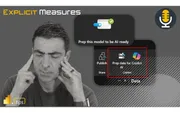
Mike and Tommy debate whether your next investment of time should go toward making reports better or making your semantic model AI-ready. They unpack Microsoft's new 'Prep Data for AI' features — AI instructions, AI data schema, and verified answers — and ask the hard question: is the juice worth the squeeze?

June 4, 2025
Mike and Tommy dive deep into Microsoft Fabric shortcuts — from managing connections and creating shortcuts programmatically to using them as data contracts between teams. They explore how shortcuts are changing data architecture patterns and enabling new ways to distribute and govern data across organizations.

May 20, 2025
Mike and Tommy debate whether the Power BI and Fabric ecosystem is still truly self-service or quietly drifting back toward corporate BI, exploring semantic model-to-lakehouse sync, data contracts, managed self-service, and where the line between central IT and business users really falls.
April 30, 2025
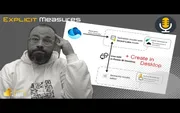
Mike and Tommy explore whether recent Fabric updates change how we should design a lakehouse architecture. With Direct Lake now available in Power BI Desktop and new workspace item limits, the design conversation is shifting fast.

April 9, 2025
Mike and Tommy break down the biggest announcements from FabCon 2025, covering agentic AI capabilities, new warehouse functions, and metadata-driven lakehouse patterns. They also spotlight the Power Designer Workload and Entelexos for Power BI Embedded.

February 21, 2025
Mike and Tommy celebrate episode 400 and dive into the Microsoft Fabric decision guide for choosing the right data store. They break down when to use a lakehouse, warehouse, eventhouse, SQL database, and more — helping you pick the right tool for the job.
January 22, 2025
Mike and Tommy tackle a common Fabric design question: can you ship analytics by building only a Bronze layer, or do you really need Silver and Gold. They break down what you gain (and lose) when you skip refinement layers, and share practical rules of thumb for keeping models trustworthy, performant, and maintainable.

November 8, 2023
A rapid-fire mailbag: incremental refresh vs full reloads, migrating off Report Server, pragmatic workspace governance, and how Fabric adds new compute choices without changing the core tables→model→report pattern.

September 29, 2023
Ep. 254 explores what ‘SQL in Fabric’ really means—from querying Delta tables in OneLake to the practical gotchas of building lakehouse-style pipelines. You’ll hear why the storage/compute split matters, what it changes compared to Synapse-era patterns, and where Excel-first teams still hit friction.

September 15, 2023
Ep. 250 tackles the practical question every Fabric team hits fast: what belongs in OneLake, and how do you decide the right boundaries for lakehouses, workspaces, and semantic models. Mike, Tommy, and Seth break down the OneLake vs. lakehouse naming confusion, then land on governance-first patterns that keep shared dimensions, security, and reuse from turning into a data swamp.
July 28, 2023
Ep. 236 breaks down the Fabric ‘SQL vs OneLake’ decision: what’s just different interfaces over the same Delta storage, where governance and permissions still matter, and how to keep architectures understandable as the platform converges.
June 16, 2023
In Ep. 224, Mike, Tommy, and Seth use Microsoft’s Fabric Decision Guide to clarify when a warehouse-first approach makes sense versus a lakehouse-first approach—and how to pick a default pattern your team can govern consistently.
June 9, 2023
In Ep. 222, Mike, Tommy, and Seth use Microsoft’s Fabric Decision Guides to pick practical defaults for ingestion and storage—and explain how to govern those choices so teams stop reinventing the platform on every project.

June 7, 2023
In Ep. 221, Mike, Tommy, and Seth break down OneLake and Direct Lake in Microsoft Fabric—what they are, how they work together, and where the sharp edges still are. If you’re trying to pick a durable lakehouse pattern, this episode gives you the mental model for shortcuts, security, and performance before you bet your architecture on the new stack.