
Solving Data Problems – Ep. 241
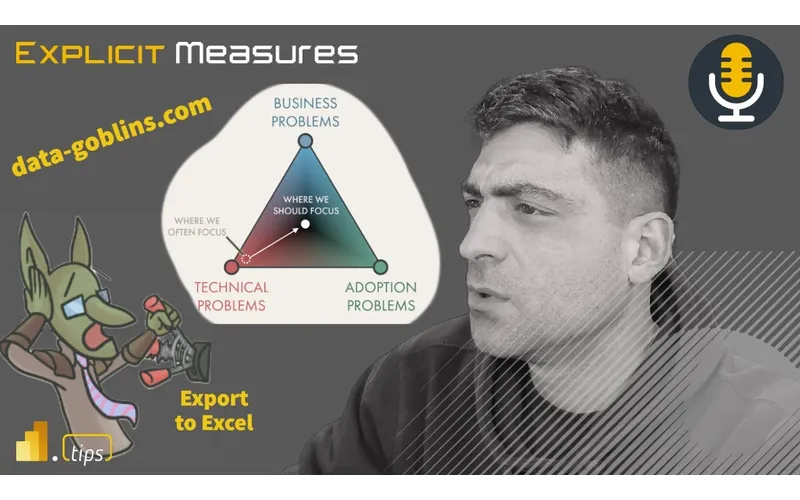
Most teams aren’t short on tools—they’re short on time to step back and ask better questions. That’s how you end up with a perfectly engineered solution that still doesn’t help anyone.
In Episode 241, Mike, Tommy, and Seth start with a very practical question—how to get an incremental-style result with Dataflows Gen2—and then zoom out into the real work: figuring out what the business is trying to accomplish, how people will actually consume the output, and what adoption/gov constraints can quietly sabotage the whole effort.
News & Announcements
-
Solve the Right Problems — A must-read on why most data requests are a blend of technical, business, and adoption problems—and how to avoid automating the wrong workflow.
-
Submit a topic idea — Send a question, scenario, or hot take you want the team to debate.
-
Subscribe to the Explicit Measures podcast — New episodes, show links, and the full archive.
-
Tips+ Theme Generator — Generate consistent Power BI themes fast.
-
Mike Carlo on LinkedIn — Episode updates and Power BI/Fabric tips.
-
Seth Bauer on LinkedIn — Engineering perspective on analytics delivery.
-
Tommy Puglia on LinkedIn — Practical leadership and real-world BI lessons.
Main Discussion
The episode opens with a nuanced Fabric question: can Dataflows Gen2 do incremental refresh? The short answer is: it can support an incremental pattern, but you need to understand what you’re actually getting.
The team discusses a practical approach where one dataflow pulls a current slice of source data and a second dataflow appends those records into a growing history table. It’s useful for amassing data over time, but it’s also easy to over-simplify: append-only approaches break down when you need to correct prior records, de-dupe, or handle late-arriving changes.
Then they pivot to the broader theme (anchored by the Data Goblins article): many ‘data problems’ aren’t really BI problems—they’re process + governance + adoption problems. If the business is still operating via emailed Excel exports, a slick automation might reduce pain in the short term while increasing risk and technical debt in the long term.
Key takeaways:
- Dataflows Gen2 can support an incremental ingestion pattern by chaining dataflows (stage current → append to history), but it’s not the same as partition-based incremental refresh.
- Append-only pipelines need rules: define keys, de-dupe expectations, and what ‘reprocessing/backfill’ looks like before you put it in production.
- If you can only append or replace, be explicit about how you’ll handle corrections (updated source records, late data, and changing hierarchies).
- ‘Ship the dashboard’ is rarely the real ask—confirm the decision being made, the cadence, and what changes when the metric moves.
- Adoption is part of delivery: if users can’t (or won’t) consume the Power BI experience, they’ll route around it via exports—no matter how good the model is.
- Governance matters most when it’s boring: automated distributions can multiply security risk and create dozens of fragile downstream spreadsheets.
- Sometimes the right move is iterative: solve the immediate request to earn trust, then circle back to redesign the process so the request stops happening.
Looking Forward
Try a simple triage template this week: for one request, write down the technical problem, the business goal behind it, and the adoption hurdle that will make it fail if ignored.
Episode Transcript
0:01 [Music] foreign
0:31 good morning and welcome back to the explicit measures podcast with Tommy Seth and Mike thank you I was discombobulated almost threw me off there the the video screens were out of order and it almost made me make a mistake mistake oh gentlemen happy Tuesday welcome back to another Tuesday yeah any interesting articles that you have found across the interwebs Tabby found a couple here or is one we should talk about well technically data flows Gen 2 now
1:01 well technically data flows Gen 2 now support incremental refresh well I’m technically it’s not it’s like not technically it’s the opposite okay this is a good question if it comes from the official source is in everything technical technical it’s a good question maybe you were just telling me okay we were just walking into this article and Tommy’s like this is totally a hack and then I’m like from Microsoft it is from the learn. microsoft side true right technically it is part of their technical documentation that would lead
1:31 technical documentation that would lead you down the direction of being able to solve a problem in a non-stra convoluted way that’s what I’m trying to say at the same time they’re also saying yeah there’s a few backstops you need to think about here okay so I did did we say what this is or we just okay we should probably actually talk about the actual feature Tony what did you find you find so technically you can do data incremental refresh in dataflow’s gen 2. okay okay the normal way that you would do it so
2:01 the normal way that you would do it so there’s a pattern yeah but there’s a caveat here you say incremental refresh and people go oh words matter I do I agree with this one pattern to incrementally a mask data with data flow Gen 2 is not the same thing Tommy you’re right incremental refresh is a method to amass data yes yes this is the question we’ve had on a previous episode going and task data
2:31 previous episode going and task data flows can replace data or it can append data how do we append it there’s no documentation here’s the documentation and I think this is a good point I do like this because the concept here is in this scenario you have two basically data flows that are running one data flowing to go get the data and just get whatever the current records of the current state is and then there’s a second data flow behind it saying I’m just going to keep appending those new records into my library of
3:01 those new records into my library of things that I care about which is totally fine this makes tons tons of sense however when you talk about real incremental refresh the way we’ve experienced it there’s a whole lot of extra not science there’s a whole bunch of other other technical pieces that Microsoft makes it easier for us like you do incremental refresh it won’t accidentally duplicate a day of data it’s smart to know there’s a Time range and I’m going to reload partitions and it’s going to break like this is not doing that exactly it’s a way a
3:31 doing that exactly it’s a way a workaround and I think the title here is more representative right yeah how to incrementally amass data right which is very similar to incremental refresh but not the exact same thing right and for me who is always interested in new things when the append and replace showed up and and two I was very curious what would happen if I did append and what happened was I had no primary keys ah yes so this is a nice little feature a nice great feature that’s now available for us to append data in
4:02 available for us to append data in dataflow’s gen 2. it they have a pen they have replaced or they have they have append and replace right they need like a fighting to replace like here’s the keys that I care about replace only the data that I’m doing like that would solve a lot of this I think that would get me closer to what I need to build I’m very very happy to see this for the record still knowing criminal refresh and Gentoo however this is still a great great feature that’s very needed yeah I’m just I’m just intrigued man because now we we have append replace a
4:34 because now we we have append replace a mass mass yeah append in the UI not a mass yeah right they had something new yeah that would be that would be I would say that’s a great analogy for it like a pending is amassing it’s just grabbing always always add to the table which is very interesting you can do this you can do it in a smart way or a not smart way another great question you can do it on a train on a plane you can do it in in the car you can do it from afar that that leads to another great
5:04 afar that that leads to another great philosophical question if the UI says one word and the documentation says another what do you use yes yeah I don’t know of course Greg baldini has the answer right her place is technically truncate and reload which is yeah yeah I’d agree -huh -huh honestly I feel like I’m having a Larry if Larry David was in power bi I’m having that conversation right now I I was just and this is this is very timely as well because I was just going through
5:35 as well because I was just going through with my team thinking through all all the data tables whenever you think about a source system there’s three things Upstream you must consider how do I capture the newly created records how do I capture any record that was updated and how do I capture any deleted records if you can handle those three scenarios of created updated or deleted records so the deleted records is is the problem I feel like a lot of times when when records if they go inactive much easier
6:05 records if they go inactive much easier but as soon as records get deleted from a source system so much harder to detect whether or not they’re there or not and this is I think a lot of the reason why we have these incremental refresh things and trying to keep data fresh or not and when does the data become stable or not there’s a lot of design work a lot of engineering work that goes around trying to handle those type of patterns and and Source systems once you get your head around those scenarios I think it gets much easier for you to load stuff that’s a that’s a loaded loaded phrase
6:37 that’s a that’s a loaded loaded phrase right there yeah I I would agree like it especially with certain systems right where you’re only tracking changes yeah because of volumes of data yeah sure like understanding what’s deleted in in a given days is a real challenge keeping things in sync a lot a lot of messaging or separate notifications or and I think for a lot of new people to seeing dataflows now push into Source systems like oh great it can just push there but you have to have that backup the fact that if something broken the
7:07 the fact that if something broken the data flow it’s going to replace let’s say you’re pushed into a SQL database it would literally replace everything in the database which wouldn’t be not what you want especially again going to what a source system is supposed to be for the record here I do not recommend pushing anything back to Source systems usually yes I carefully thought about since that’s it now a feature people are gonna do it that’s true that doesn’t mean it’s not it doesn’t mean it’s right down there you say that Tommy and
7:37 down there you say that Tommy and like once you start going backwards more I. T folks get a lot more stricter on like no Tommy you can’t have more than read access in the source system I’m not going to allow you to write into these tables yeah now please [Laughter] true statement true statement and what frankly as a business intelligence guy now and not the DBA anymore but yeah just give me read okay
8:08 anymore but yeah just give me read okay read it I just want to look at it I’ll figure it out I just want to copy it I just want to move I just want all right I’ll be gentle I’ll I’ll be careful with this system be careful but don’t get me more than that so let’s move on to our main topic for today so I don’t know if this is a self-feeding cycle here or not but data goblins is just crushing it every time we think about talking about a topic topic article after article after article for me hits home from data goblins this
8:39 me hits home from data goblins this is Kurt Bueller from over in Europe I’m not sure exactly where in Europe but we’re going to talk today about solving the right problems an article coming out from data goblins I’ll put that link in the chat and and this is a really great article where do we focus our attention and time to be to drive the biggest impact or even what challenge are we trying to solve are we trying to solve some business problem is this an adoption issue people
9:09 problem is this an adoption issue people don’t know how to use the tool or are we actually having really technical challenges or technical issues and I feel like when I in my recent experience with working with clients right now I’m facing a lot more adoption problems and business problems more so than technical challenges most the technical things are like that we can make it work no big deal it really becomes around how do we get everyone to use this thing how do we get everyone to use it correctly so this is going to be an interesting
9:39 so this is going to be an interesting I think talk around this one it’s it’s and I agree it’s interesting you say that though isn’t it because it is well no I want to lean into that one point like as you get into the business like we talk about business yes and like we just assume the technical and and I think right there I I just want to pause because this is where I think certain businesses get into trouble or business users get into trouble because it Technical Solutions are talked about like oh they’ll just
10:10 are talked about like oh they’ll just it’s yeah we’re gonna fix it it’ll be fine but you saying that Mike is different because you understand the entirety of the ecosystem behind that right so when you’re bringing those Solutions like yeah we’ll figure it out we don’t need to get into the technical details that is different yes and I’d like that is that is the challenge point
10:30 like that is that is the challenge point where it’s it’s really important that if you’re in the business you’re talking to somebody has the expertise to solve those problems as opposed to just promises that you can solve them and I think that’s the distinction that yes absolutely as you get more into the business it should be about solving business problems we’re talking about objectives all the time we talk about a lot about lot about business related business intelligence aspects as opposed to hardcore technical things all the time on on the show here for the very reason
11:01 on on the show here for the very reason that it’s a very meaningful but I like lately I don’t know like you saying that and I’m just like man it’s real real it’s really important that you understand like yep yeah as long as that guy knows what he’s doing or a girl well it’s as much as I say new articles probably in the last month for anyone who’s worked in power bi or in business intelligence hit so close to home I think I got some anxiety just reading it it’s like oh yeah I can think of all of the situations that I’ve been in and
11:31 of the situations that I’ve been in and had to learn and adapt and the Crux of the article or at least for me was there’s three areas for problems technical business and adoption I dealt with this last week I was talking to someone and they’re like well we got the technical side now we just need to sell the business on X Y and Z is like oh okay right yeah exactly right you need a backup yeah yes and and pointed out here very well very well from our our chat here it says the the sub text here is a story of
12:02 the sub text here is a story of questions answers and Export to excel which again I think this is also one of these really like sore moments for me as well because like yeah you can get data out but why why are we pulling the data out of the power reports what did we miss on the report that requires you to get the data out and this is where I think I lean myself a lot and I think the story really Rings true am I looking for those insights on data or am I just asking for access to the data those are two different kinds of questions and I don’t need to spend a
12:33 of questions and I don’t need to spend a whole bunch of time building you a fancy looking report if you just want access to in like the data tables the the ironic thing is we talk about data storytelling all the time and Kurt opens this blog with us right and everybody I highly like we’re talking about this so you guys go out and read it read make sure you do read it it but not right now just take our hack together like description of it and our thoughts
13:05 description of it and our thoughts anyway anyway the story itself is I think resonate can resonates with everybody right give us a summary and summarize it so essentially there is the the power user right in one area of the business that gets approached to by another area and they present the problem and the power power users like I have a technical solution for you and I’m going to implement it and it lasts for like a week and then the user comes back and be like yeah this was great but this this
13:37 like yeah this was great but this this doesn’t feat fix the actual problem I was having and it’s taking me too long to do these things now this is a common problem in report requests right off the right off the bat and this is why we push you towards like having a process having a grooming talking to people make sure you understand the end and because this is the cycle that starts I wanna I I need you to solve this problem for me got it technical problem solved here you go didn’t didn’t solve the actual problem and another conversation and I’ll give
14:09 and another conversation and I’ll give you more information that I didn’t give you the first time yes well and the first the first question here is like like The Simple Solution was hey I need data quick just just analyze and Excel just go get it here’s your table it’s in Excel okay then I just want to make sure we tie off like some of the features that you’re talking about here too so so yeah in terms of feature hey great but what I actually need is I need a system that’s going to generate these files because I have to email them and I I have one of these myself right right I have to email them yeah and then the
14:41 I have to email them yeah and then the technical person Dives right in and try to figure out okay hey we can do that with paginated right like let’s let’s figure out how do we generate this report and have it emailed out to send everybody everybody and ultimately it keeps going down this cycle where eventually they’re stuck in this Loop of well it solves the problem but doesn’t and let’s let’s get together and actually figure out like what are the end users using this report for what are they generating
15:11 are they generating and like try to solve the problem from the end user’s perspective all the way back so that whatever we develop is the best solution for the business and the walkthrough of this I think is fantastic because for those of you who haven’t gone down this path before it’s a eye-opening like really this is how it happened yes 100 just change change words change people and this will be a repetitive theme for you all the time
15:43 repetitive theme for you all the time and it may not be the export to whatever it but it could be the hey you get one quarter of the information you need and you’re so keen on like technical skills I’m gonna I’m gonna crank this out I can do this in 15 minutes for you and then or an hour and then an hour becomes two three four five six it’s a power bi Mad Libs yeah yeah yes yes well and I need I need something that has connection okay let’s go with live connection I need that let’s go down yeah name a visual you
16:14 yeah name a visual you yeah name a visual okay pie chart name a you know okay pie chart name a you know okay pie chart name a name of something and even for someone who’s new the game you just take everyone at face value oh you’re you have this problem I can do that I know the technical thing and you go down this route and for I think for us and I think it’s our personalities why I enjoy talking to the two of you is because you can’t get away without someone asking the why behind it if I say good morning to you it’s like well why are you asking well that’s good part of I think
16:45 part of I think this morning did you have your coffee I haven’t gone but part of I think what I’ve learned and I I think as a skills like almost being like a cynic at heart a bit where someone is always asking for we need this is like well hold on you’re not are you sure that’s what you need and diving into this a little more like well what are you doing like well what are you trying to do rather than I just saw this feature and I want this this outputs like well tell walk me through
17:15 outputs like well tell walk me through the actual frustration I call it the therapy session a bit because I I always tell people like you wear a lot of hats in bi and one of them is the therapy like well what’s the problem right now like what are you dealing with right now tell me about it and then let’s figure it out together I think I think I would agree with you I I feel like there were some there are times when you want to push back and there are times when you don’t and I think sometimes I just go in and be like okay I’m here to just tell me what the challenge is let’s figure that out and I
17:46 challenge is let’s figure that out and I feel like what happens is there’s always limits to these Solutions right and then and Kurt’s post here right he talks about like there’s pagenet reports okay great we’re gonna email this thing out to a bunch of people great we’re gonna run this data set we’re going to make a data query we’re going to make a table and then we’re going to email it out to these people well all of a sudden now he’s sitting at well now we have 34 different reports being emailed out in this scenario and you’re like well now I’m abusing my Cube maybe or is there a better way of thinking about this or and then
18:17 thinking about this or and then there to your point Tommy it’s like okay maybe you have to do these initial steps just to gain some trust with that user because they don’t necessarily understand like okay I’m coming with a tech usually this I show up with a technical challenge we know how to solve those with PowerPoint oh yeah you can do it this way this way this way this way here’s three different four different ways to solve that thing but what they’re really trying to approach you with is some other problem and I think this is where the article starts going is you need to really sit down and critically access the situation right if I’m constantly
18:48 the situation right if I’m constantly emailing out and again the reason I’m saying email here is because I’m thinking this is more of like an external to the organization type scenario right I have 34 people that are not in my org I’m trying to generate data for them it’s maybe a sales team I’m trying to lift data out into that team via this automated process yes that can work but when we think about what do those people that are getting the reports care about do we really care about how they handle the data and are we expected to just drop them a an Excel sheet or maybe there’s a better way of
19:18 sheet or maybe there’s a better way of servicing them the data like what do they really want and and I think that’s where you start getting down a little bit further here saying what is the challenge we’re really trying to solve yeah and he he has this like really nice triangle right yes I like it and all those Graphics are are just hilarious he’s got to have an illustrator there’s no way yes he does he has someone he’s told me he has an illustrator for all the data goblins people it’s so awesome anyway like where he’s focusing in the red right here and we’re really close to
19:48 red right here and we’re really close to that triangular point is technical problems right and then on the top he has business problems and then on the bottom right adoption problems and the focus in this first dialogue right is is much more in the technical realm and where he’s suggesting and I think he’s finding agreement with us is you need to push into the middle or understand like there there are all of these points that you need to consider when you’re developing a solution
20:20 when you’re developing a solution the thing that strikes me as we’re talking about this is this is a very microcosm like I’m I’m a person there a person right this is a situation we deal with all the time but this is at every level like really like if you look at big big teams of test teams like product people project management like they bring in the business problem the technical people are just like Hammer Hammer Hammer right like I’m gonna I solve
20:50 Hammer right like I’m gonna I solve problems that’s what I do and I think the growth pattern and then like and then am I building something that can be adopted by end users problem right yes yes all of these are super
21:01 right yes yes all of these are super important but it’s still the same conversation that I have with tech folks all the time do you understand the business problem do you understand what we’re trying to accomplish here because that’s important for you to understand when you’re just hammering away but it’s the same conversation I just found it ironic that it’s like this we’re talking on a very micro level but on a macro level this these same principles apply oh I think it’s a really good observation it’s a huge that’s a huge point and Mike you said a big part of that too I circled the word before you said it but trust is a big part here but
21:33 said it but trust is a big part here but I think so in a parking lot Seth I want to touch on the the technical side here and this is true it really doesn’t matter if you’re talking power apps or business apps or even pi I I would argue though that there there is definitely a more intimate role that we play from the bi point of view because we’re doing the input value or we’re doing the helping with the process but we’re also providing a lot with that people are relying on so we’re forced as much as technical as we are and I think that’s the perception that
22:03 and I think that’s the perception that we have to a lot of people we are providing the business with their performance with with their actual information the information that they need so we’re forced to play that unicorn role or that ninja role that we’ve talked about that I think puts us Forefront into hey I know you’re technical but I’m actually needing a business thing but I think you’re technical so to speak yeah it’s still a learned skill yes but I think I think I think over time business intelligence
22:33 think over time business intelligence people and when you’re talking data you’re and you’re engaging with the business on a constant basis you just you get better at it the Technical Solutions that you’re providing are slightly different right for all intents important purposes like reporting Solutions Solutions but I I agree with you I think if there’s anybody that can be extremely successful in having a foot in I. T and a foot in business it’s people who work with data yeah
23:04 who work with data yeah predominantly because they have that but I think the caution here even for folks that have a foot in both is we are very wrapped up like not not wrapped up the initial learning curve to engage with the business usually includes a lot of vernacular of yeah measures and you of vernacular of yeah measures and complex column and models and I’m know complex column and models and I’m I’m introducing technical speak to a business user where it doesn’t belong and the more you
23:34 and the more you are engaging in that that pattern of understanding right leaning into business and I really like the one part that that I don’t I don’t think about enough is the adoption I think it’s just us you assume like okay yeah I have this business objective I’m solving it and I know how to do that blah blah the adoption part like do my end users know how to interact with it have we done anything to level them up a little bit to at least understand how to
24:04 little bit to at least understand how to engage with the reports that we’re we’re building I like that part but I’m all over the place in the technical realm here I think we have a prep everybody has a propensity to think about their the the new features or talk in those Realms but I think the important part for me in this article is what is what is the data Goblin doing right off the bat they know a lot of technical things right there’s a ton of there’s a repository of information that about Technical
24:35 information that about Technical Solutions that allow them to solve those problems and I think that’s first and foremost as a person who’s bringing Technical Solutions that’s why your breadth of understanding your capabilities is so important because you don’t know where you’re gonna like find yourself in these these conversations with business well you have to know the business lingo and and that’s where you’re putting the Forefront this is the same thing like going I want to be an actor and that night someone goes good news you’re Hamlet the same night like there’s so much we
25:06 the same night like there’s so much we have to learn not just the technical side of of we have to understand the business lingo who we’re talking to the politics of that I don’t know why you guys think this is so hard I just usually shove it into chat gbt and it tells me the answer anymore I don’t know I’m totally understand for sure sure [Laughter] I just amassed the incremental what’s your question how to get paginated reports to work yeah okay oh hang on one second let me go consult my technical expertise here yeah GPT imaginary reports okay yeah here’s three articles
25:37 reports okay yeah here’s three articles good to go see you later no I I do I will I will agree with you guys both I think you guys are are really on point I think these challenges are we are technical people and I think halfway down the article Kurt starts addressing this one we often Focus too much on just the technical piece and so this triangle that he’s Illustrated for us makes a lot of sense because what we’re doing is we’re basically over emphasizing the technical solution and we’re not focusing on we’re not asking questions or we’re not focusing on
26:08 questions or we’re not focusing on adoption problems and I think a balance like yes there needs to be a portion of the solution that is technical in nature but also focusing on what’s the business need hey you want to get all these reports out to people ask that question what is the business value of this why is this becoming value to us to us do we have any issues with current adoption like we already have a report that shows us and encourage example here there’s already a data set that they’re pulling this data from which means someone has done some engineering work
26:38 someone has done some engineering work to get the data together and figure out how this data relates to each other so what’s is there a mess why are we asking for emailed reports as opposed to can you help me build a report that tells me what I need or can we build something else that’s more automated and we don’t have to do these solutions and I think when we in litter about halfway done the article Kurt has a little like it’s like a little accordion section why do we focus on technical problems now I I know
27:08 focus on technical problems now I I know Kurt and he’s a smart guy and I’m and I’m I I’m gonna I’m literally going to inspect his page here Kurt has in his page many different accordion things down the page and I was wondering and if Curt if you’re not doing it maybe you should do it every time you have these accordion things you should send some Google analytics data on who people who clicks those accordions and opens them up because it’s very interesting like you’re writing this really rich article
27:38 you’re writing this really rich article and you have a lot of these like hidden gems throughout the report or throughout your blog here and I wonder if you’re capturing data to say did people actually click that button the people actually opened that section up there anyways I just I I feel like Kurt would be doing something like that where he’d be actually using like you where he’d be actually using like some technical know-how behind the know some technical know-how behind the scenes enthusiasts at its finest I’m exactly right if I if I add this little detail and hide the information do people actually click this scroll analytics exactly right so in here he starts the question is and
28:10 so in here he starts the question is and the expandable item here as I went up to Rabbit Trail sorry why do we focus on technical problems and I think the bullet points here are really relevant and I’ve seen these in action multiple times number one a technical problem is easy to solve you have a very simple question I need to email this stuff how do I do it quickly how do I automate that great I know I know exactly what you’re asking about that can be handled very technically it has a high urgency and we have a low
28:42 it has a high urgency and we have a low number of resources and I would probably put this one as number one of what I’ve observed we have so much to do and there’s so little people on the team who knows how to do it so it’s like just get it done ship it out the door make it work we’ll figure it out later and so we put Band-Aids on things and throw things out too quickly and then the other two items here are it’s our comfort zone this is technical stuff we know how this stuff works let me show you let me teach you what’s going on here and then we like to solve technical problems right give me
29:13 solve technical problems right give me challenge challenge technical issue I’ll figure out how to solve it here’s your solution move on go to the next thing it’s a very satisfying rewarding experience as opposed to like dipping your toe in the political landscape of your organization and saying well why do you want those reports and then trying to change data culture which sometimes is very resistant it’s just more work I agree with that and I I’m going to argue a little bit with that in terms of it’s all on us that we’re providing the Technical Solutions where I think a lot
29:45 Technical Solutions where I think a lot of times going back to some success said about trust trust to me is reliance and confidence it’s not just being aware of a solution but it’s trusting that person and it is always a it’s usually a person that I can rely on them and I have confidence in their answers but when when the business sees this as a technical answer they’re going to ask us technical questions and they’re going to expect a technical response whereas I think as in part of our our adoption in the organization not just the products
30:16 the organization not just the products adoption in the organization is that we are more of that Solutions architect that no the technology here is to solve business problems it’s not just a technical answer for everything else let us come in and help assist and support and I think then the business will actually ask us better questions or they would be more willing for us to come with a more business solution rather than you are technical give me a technical answer and I think a lot of times it’s very hard for us to get out
30:46 times it’s very hard for us to get out of that Loop because it’s very hard if they come to us say give me a technical answer and we try to go outside that realm and I think a big part of that is our adoption the bi team’s adoption into the organization I’ll take it I’ll take that the it it’s it’s it’s about level setting communication I think Mike you hit on a point where I think a lot of business intelligence folks are or people who
31:16 intelligence folks are or people who generate reports is the closer you are to the business the more prone you are to fire drills all the time because in many cases that’s how the business runs like oh my gosh somebody asked for me it’s the highest priority for me
31:30 it’s the highest priority for me okay okay do I have some checks and balances to to prioritize that fire drill for that person in the context of the organization or do I just assume responsibility that his their fire is my fire right and I think Mike you you brought up the well the closer you are the faster you have to deliver deliver and and that’s where I think yes building out a team like certainly getting like the road to
32:04 like certainly getting like the road to having a having a c-suite right say yep these are initiatives for adoption this is like you’re going to be the team we’re we’re gonna like follow your lead Tommy like before that even happens I think a lot of people are stuck in the how do I just organize my team and I think yes that starts with level resetting expectations with the business because as Aurora is pointing out in in the chat here machine solving technical challenges only increases the technical debt
32:35 only increases the technical debt and that’s what’s important to manage within your team or yourself is there are going to be times where you absolutely have to throw something out the door for the business but when you’re doing that if there’s a better way or you need a phase two that has to be written into a plan of we need to get this done this done for future longevity of the report or the report is consuming way too many resources this way
33:05 resources this way it can’t maintain that way for us to succeed in the long term and and that’s the important part is there is always going to be an immediate need but you also have to think about where are we going are we building something or are you just shipping it and triaging like are you just covering somebody’s wounds and not sewing them up or like not not not not stopping the person from cutting the arm right like he’s right there don’t put the Band-Aid on and think you’re fixing
33:35 the Band-Aid on and think you’re fixing it because he’s just gonna do it again right this is the cycle that I think a lot of teams find themselves in and you need to stop that cycle and that starts with communicating with the business like what it is your team does when when you’re going into these Realms of okay I’m going to give you this quick win but hey there’s also a week’s worth of work on the back side of this that we need to engage in you can’t have everything all all the ways you want all the time and and that starts with as technical people
34:06 and that starts with as technical people being able to describe that workload and what the teams have to do to the business so they understand that okay well well they’re they they are my easy button but I know if I make this request they’re not going to do it so I’m just going to figure out myself do you guys have a catalyst moment when you almost said this aha moment of yourselves in your career with bi me personally yeah but I think I think regardless it’s going to happen because what I’ve also seen it where
34:36 because what I’ve also seen it where teams start disintegrating because people burn out people don’t you don’t want to work there anymore yeah yeah and I also feel like there’s there’s a novel here too so Seth I’m gonna I want to address your question around when you see burnout and also Tommy when did I see this a part of my career right one thing I think I I gleaned in very early here was the automation of things right to me the automation of things and how to get things out in a regular pattern like I I’ve talked about this before I was in a company we had what we called picnic benches down the rows of aisles and this
35:08 benches down the rows of aisles and this was my aha this was my aha moment right I’m just looking like so the idea is you you you’re you’re able to walk down the road and you’re able to see everyone’s computer screens all the way down you computer screens all the way down but we’re walking through know but we’re walking through operations or sales or Finance or supply chain every one of them you could just walk down you can see someone you can’t read anything because it’s far away but you can see like oh I can General because you’re in an email I can see you’re watching a YouTube video I can see you watching a YouTube video I can see whatever there’s things there that know whatever there’s things there that keeping people accountable about what they’re doing well you’re looking at people’s screens and I couldn’t tell you
35:38 people’s screens and I couldn’t tell you I was walking down the row and I kept seeing Excel after Excel after Excel after Excel and I had this aha moment for me and I was like what this really feels like instead of us working in a machine shop where we’re building parts and Manufacturing things we’re in a machine shop of data and to me it was like we’re all just sitting in front of these machines now picking up data here massaging a little bit and then dropping it over there we were we were automating our own things and I was like Excel runs are billion dollar business
36:08 are billion dollar business we’re making great big decisions off of things that are happening inside Excel and then you read blog articles like well 95 of all Excel sheets have a likely error in it or some whatever some absurdly high number I don’t don’t quote me on the percentage there but there’s an absurd high percentage of excel sheets have issues in it there’s errors in it so myself is like well how do I test this and so I got introduced to a lot of Finance Concepts around okay well when you take when you take all the parts and you add them together and you have to do a sum to make sure know you have to do a sum to make sure they actually make zero so you didn’t
36:39 they actually make zero so you didn’t lose any money in your financial analysis I’m like oh this makes a lot of sense but it was around a lot about automating and making sure automation was working to help with this so to me that was my aha moment and I think that is a spurring moment and I was able to watch as I interacted with other teams about things around power bi I was able to see other people’s light bulbs click on like oh I can automate this oh I don’t have to do all this extra work I can make things easier or more efficient
37:10 can make things easier or more efficient for my workflow and that was I always felt like there was this give and take relationship when we say trust earlier on here I was like hey the trust piece for me was let me help you reduce the amount of work you do on a daily basis but in order to do so I need you to commit with me to learn something new so there was a lot of resistance in my culture while we were doing this work it was people like I’m too busy I can’t I don’t have time to learn something new but I was like if we don’t take the time let me help you build your first couple Solutions and from there I saw people’s like the light
37:41 from there I saw people’s like the light bulbs clicked on we were able to help them build their own things and we were slowly moving the data culture with strategic members of the team and as we did that those team members those leads those quote unquote power bi Champions across different teams started showing their boss how efficient they were how fast they could get data done and they started communicating their own successes and that success in that person in a different team is what started changing the data culture for the rest of that team they became the lead they got more responsibility they
38:12 lead they got more responsibility they were able to help other people on their team and it started growing a little bit like a very slow Wildfire it doesn’t happen all at once at one spot but it was trying to invest in strategic people to help move the broader path or the broader swath of data culture across the company yeah I think leaning into the business section A little bit there are like four four main things and why you want to lean into the business and understand the overall objective first right and he he does a great job of outlining this but the undertone within here in how
38:43 but the undertone within here in how they finally solve the problem I liked it is fantastic and and the first point I want to make in in why we want to lean into the business is what technical people tend to do even myself right is you over simplify a solution based on your previous previous experience right somebody’s telling you something you’re like up yep I got this one I know how to solve it and you really didn’t like you didn’t engage far enough meaning that in many respects also you need to have
39:13 many respects also you need to have somebody with you side by side that understands the domain knowledge like all the way through because as he’s writing a story it’s like hey I have this problem she didn’t the the goblin didn’t dig far enough it was just like I got you here you go and then when they got to together it’s like okay here’s what’s actually happening now we dig down and like oh my goodness like there’s there’s a ton more going on in in as it relates to the business and then you’re automatically thrown into adoption
39:43 adoption because she’s automating things right and that’s the point you’re making like one of the biggest value values we we bring is just getting out of this vicious cycle of people manually doing Excel yes correct and I don’t know what the propensity is right like 95 of the world runs on Excel but like why is it that everybody has like feels the need that they have to see the data when all they’re doing is the same thing that data professionals are doing like you’re just aggregating you’re just summing trust throwing a pivot table in there like trust you right could could be a
40:14 like trust you right could could be a component of that but also and I don’t know if this fits in the business area or in the adoption but like understanding that business process that you’re engaging in also brings the opportunity for us to communicate the absolutely horrible practices that have been created because business just runs at a mile million miles an hour right and even in this example it’s like oh yeah we’re giving these Excel files out we didn’t
40:45 giving these Excel files out we didn’t ask what the end users are doing they’re building their own reports that’s a huge time waster right and then they’re sending them out to people that they shouldn’t be sending the data to so you have a data Pro you have a data security problem yeah too a bunch of people sending data outside the organization whereas when you have a reporting tool or access to certain things like you’re locking down who has access to it it’s not this freeform thing that can be sent to anyone in anywhere anywhere and that’s also part of another push
41:15 and that’s also part of another push towards like an organization that hasn’t adopted any data strategy to say like hey this is why we at least want to put some guard rails on things let us help engage let us fix these problems but like we need to have some rules and governance around like what people know they can do with raw data in the wild the wild of that and I think your point to go you of that and I think your point to go go back to the article here just know go back to the article here just briefly as we get closer to the end of the article which is our conversation is very well filled like we’re a little bit
41:46 very well filled like we’re a little bit talking about the points right before Kurt gets the next section in the report so it I really I really align with the way Kurt’s presenting this one it’s just great but in his the question around what are you doing with these exports what are you doing with these
41:59 exports what are you doing with these reports that we give you and he does a great job this is what I see all the time hey I’m taking some data that you have you’re missing some data I’ll merge it together or I’m taking multiple reports and I’m merging it down into a PowerPoint slide deck but that’s and and my question here is oh man this is gonna this is gonna I’m gonna I’m gonna step on my own nerve here for a second Microsoft keeps touting power bi is the PowerPoint of data data no it’s not power bi is the home of data and PowerPoint is just a stupid tool you use to make stuff happen to make it
42:30 use to make stuff happen to make it smart one look pretty I know there’s a lot of people who have very different opinions on me around PowerPoint but I feel like PowerPoint is an okay tool again this is probably Michael’s inefficiency to be efficient with the PowerPoint and this is my weakness because it’s not my technical area PowerPoint rage world four let’s let’s call it what it is okay PowerPoint is a refined communication tool think think about a present well I can’t say Mike think about a presentation because you don’t like using power bi as slides I’ve seen those two especially with different
43:00 seen those two especially with different audiences PowerPoint is very successful because you you have it forces you to condense your thoughts 100 race slide yes like that’s what it’s it’s main focus I will agree more file tool personally I would like to walk away from PowerPoint but regardless right data makes it from whatever the place it is and it makes it into a PowerPoint slide deck because we want we want this PowerPoint slide deck to have images or screenshots or a snapshot of data and we want to get that
43:31 snapshot of data and we want to get that out to people so they can go look at or review those slide decks so and then the other parts he talks about here is right there is general managers sales managers right they’re using very specific portions of data what’s my month today is month to date sales what do I what do I need to do to make my to meet my objectives or there’s sales lead managers thinking about what are my year-to-date customer sales who which customers are lagging behind do I need to go tap on the shoulder and trying to increase that relationship so there’s a lot of different needs that are going on in the data but everyone’s
44:02 on in the data but everyone’s taking this different lens right and the fact that you understand okay we’re going from Excel building things getting to PowerPoint and that challenge or thinking about that scenario is slightly different here and I’ve I’ve just recently had this issue how do we build hey a Michael we’ve got all these reports how do I get these visuals and things into a slide deck well my opinion is just learn how to build the slide deck or a portion of the slide deck inside power bi it builds the slides for you can literally export the
44:33 slides for you can literally export the images of this report as slide slides in there and it even gives you the link back to the real report when you don’t want to look at static images anymore so you can at least carve out portions of that and use that for what you need but you have to be thinking about this power this this power bi report is my slide deck so you have to make it match what your slide deck is doing so they’ve kind your slide deck is doing so they’ve align them a bit there so there are of align them a bit there so there are some interesting things that you can do to be honest but I really like the framing of the why we’re using the
45:03 framing of the why we’re using the reports and then comes the why do we rely so heavily on exports and Powerpoints and this is another one it’s a deployment solution without any change management there’s no effective requirements the lack of requirements is a major issue here we people cannot articulate what they need it happens all the time and then there’s ineffective or resistance to change this is the way I do it I don’t want to learn something new we just talked about that earlier and then eventually the solution is just not used because these things build upon
45:33 because these things build upon themselves is it is it a difference in thinking though right like you say that and it is fundamentally one of the biggest problems when you’re engaging with a business user right but are they used to thinking that way do we do we just train people to be like what oh firefighter bam I’m gonna put it out put it out put it out put it out all day long and then the reality is is when you say hold on you’re asking me to go invest a bunch of time to solve this problem for you and I’m more than willing to do that can can
46:03 I’m more than willing to do that can can you encapsulate right what are the key things that you need me to do what are the things you want to do with this report and and I think it is the actual challenge that people don’t know how to respond to that yes I think because yes I think it’s the perception it is to me the more I’m hearing this conversation the proactiveness that Mike had the conversation what you’ve been talking about said this is about the perception everyone has about bi because they still consider them I. T and I’ll give two pretty
46:33 and I’ll give two pretty pretty large examples here of exactly how this worked I’ve been in a situation building a report to spec from one stakeholder that was going to be a big to do for a certain Department that report rolled out and nobody used it and it did not solve anyone’s need and this was when bi was relatively new but it was perspect drill through it had all the technical aspects you can fast forward forward with that same department and the proactiveness of the bit and doing adoption and rolling out saying like basically putting
47:04 saying like basically putting the sales pitch of we’re more than just data here’s things that we can do to actually deliver a report for a sub Department walking through with them talking through their problems what they’re having outside of a report or just data of what are they trying to do delivering something that became requested by basically every team or Department within that organization there’s a big part here of if people don’t know they’re not going to ask you a business or that type of question if
47:36 a business or that type of question if they consider you just in this small box and then that perception does not change I and I really do believe this unless we make proactive actions to go out there and promote ourselves and in a sense tutor our own horn or just to expand the perception this is all about perception of us whether people people think we’re in I. T or they actually consider this bi we’re this part of the support we can help a larger aspect here I I think so I I’m not as much of an I
48:06 I I think so I I’m not as much of an I I’m not sure how much I agree on the tooting our own horns and delivering that value there for people however what I would say is I think it’s more about helping people discover what their requirements are for me in my experience and if we go like a little bit further down in first article and again every time the further we’re talking right into the target literally we’re literally leaving the article as we talk here which is not in planned we’re just talking about things that we care about it it goes right into why are the power bi reports not being used and again Kurt does a great job right he
48:36 does a great job right he he’s hitting the nail in the head these were these are the points we need to talk about like if you’re not seeing this you’re not listening in the business of what’s going on here because it talks about why are we having this issue well there’s many reasons and in in this world this is what typically happens most or 90 or 80 of what you need in these reports that are being exported are already existing power bi someone’s already thought about it and portions of that already exists in the power bi data set and then he goes through and he says
49:06 set and then he goes through and he says here are some key bullet points to consider right we know that there is the data is limited right there’s there’s more data that needs to be added so what’s happening in some of the exports is they’re exporting a portion of data and appending it to stuff that they have historically so they get a bigger picture of information going back upstream and adding more data to these data sets or aggregating them in a form that people can use helps that’s also here it seems like they’re poorly designed reports right there’s the the images and the visuals on the report aren’t actually meeting
49:37 on the report aren’t actually meeting the needs of those users because these reports were built in a vacuum they didn’t go talk to the business and they didn’t work with the business to build something together to get it something they understood and know how to read this is this is what we’ve talked about in the past around the language of data right are we communicating to our end user with something they can understand they may not he also talks about bats big tables that he has inside the article as well so that’s that’s true and and we put a lot of
50:10 true and and we put a lot of times we’ll see Power bear ports with large really wide tables and their business is like well that’s not really helpful for me those are the comms I don’t need all those columns I need different columns I want to pick and choose the columns I need like so there’s a different requirement there this is one the thing I think is the most issue here is people were never trained on power bi I don’t know where it is but people feel like if you just drop power behind someone’s lap just like you did Excel people just know how to use it to use it people do not that’s only PowerPoint everyone knows how to use PowerPoint I
50:41 everyone knows how to use PowerPoint It’s just it’s just you’re born mean it’s just it’s just you’re born with it it’s in it’s in your brain and that’s why maybe why everyone’s trying to but there needs to be specific training around what is power bi how do you use it how do I get access to the reports the surface here like this is a huge Miss organization people just land the stuff in their laps walk away and then they leave and think that the business will just figure out how to navigate this report figure out the buttons that you input you put in here figure out the filter pane on the right hand side people have never been trained on this so it’s so overwhelming to them
51:11 on this so it’s so overwhelming to them they’re like this is such a hurdle to what I need to see I can’t even step in and get started anyways I’ll pause right there I’m going to say a lot more things but this is great and I think the last section Kurtz wraps up here is how do you incrementally get to that better solution and he gives a couple bullet points there as well I think yeah I agree right and incrementally in terms of larger push but at the same time I think the incremental or iterative approach is also the same one that is effective when engaging with business users back to my
51:42 engaging with business users back to my other comment around like do do we even know how to communicate and ultimately I think that that is what is probably one of the biggest benefits of increasing data data awareness or a data culture within an organization is training all users all people people how to have conversations around data and solving like understanding what the capabilities are within the organization to solve these data related problems
52:12 to solve these data related problems because a lot of this is just people don’t know in in the same fashion that we talk about I have a power bi person and they know 10 and that’s all that they’ve ever done in power bi for two years well they only know 10 still the same holds true for every area of the
52:28 same holds true for every area of the business right especially so so if we don’t to Tommy to your point if we don’t promote ourselves or promote those Solutions as potential winners for the organization then they’ll never know about them yeah and when we engage with the business if we don’t if we don’t control that communication related to I’m not just I’m not just a button you push okay I’m here to help solve bigger problems for you you have you have data data visibility problems let me solve that I’ll iterate here here’s some data
53:00 that I’ll iterate here here’s some data I’m gonna follow up with you next week because we can solve and we can automate all the manual stuff that you’re doing right so I’m giving you access to the information you need you’re gonna go spend 60 hours because that’s your problem to solve not mine right right as you’re spending 60 hours to solve that problem you’re going to figure out a way in which you figure like find the solution when you do come back to me we’ll automate it so you don’t have to do that again right and and by Nature all it’s going to take is somebody to do that one or two times and then realize they have a resource in you that they
53:31 they have a resource in you that they could just sit back and go okay if I had this data here’s what I would need to do with it here’s the report I need yes but we need to train people within an organization to be able to do those things as well and maybe this is where this the adoption part of it comes with that’s what that’s what a CEO Europe a bi series should be doing is training organizations and helping them understand what is available to them yes and at the same time regulating how much availability there is with teams and just doing that
54:04 there is with teams and just doing that you want to agree you have to enable many different aspects of the organization But ultimately it’s Gotta it’s got to be funded from somewhere that’s an imperative point because if if I’m trained or known as the report Builder what are people going to ask me to do what are what are going to be the requests if I’m only known as a report solve my problem build a report yeah but the report isn’t and people always forget are the reports not the end goal it’s a means to an end and if we’re only known as a report Builder or the bi guy that’s like well just do that thing that
54:35 that’s like well just do that thing that you do not that that everything we do every report that I build every visual that I’m supposed to do is to your point Seth it’s supposed to solve a bigger problem it’s just a Avenue to what the actual solution is the report will never be the solution no sometimes we just need to sit back and say unless you show me the art of the possible right yeah sure call out shout out to our last episode 240 around talking about the art of the possible but that again to your point time like people don’t know what we do sometimes and we think you’re
55:06 we do sometimes and we think you’re there to pump out reports but there’s and this is one of my things that I like to educate the teams around when I say power bi power bi and especially now with fabric there’s a whole lot more going on under the hood now than just hey this is just a pretty report that you can go get access to there’s data engineering and cubes and tables and like I can give you access to reports cubes or tables like there’s a whole control surface area and we have release pipelines now like there’s all these extra things that are more I. T elements that have been brought forward
55:36 elements that have been brought forward into the business and so I could definitely see why people would be overwhelmed with this because you’re showing up to this immense technical solution and going wow there’s so much to learn here what of I’m so overwhelmed which piece of this massive RBI thing do I care about and which one drives the most impact for me to move forward it’s going to happen with fabric too even in fabric no way fabric will be super easy it’ll just be like turn that on no problem it’s going to be a technical solution to a people problem or a technical solution to a business problem
56:07 technical solution to a business problem and I was being very sarcastic [Laughter] it’s the last episode where I’m gonna fight okay that’s right so but you are you you are 100 correct Tommy it’s the same thing right we’re bringing this massive technical piece here and instead of actually saying what is the problem what data am I missing we go into this whole Mantra around well I’ll just throw more technical pieces at it and that will solve the problem and then and when we look back
56:38 problem and then and when we look back at the solutions or the things that we built two or three years down the road we would have all wish we would have read Kurt’s article a little bit more in detail because we weren’t asking the right questions and we went down potentially the wrong path or spent effort or just solve things technically and we weren’t really addressing the problem which was the business and the people the people challenges or people technical issues why do I have 200 data pipelines exactly exactly and now I’m falling over and our finances now yelling at me because why is this costing so much and I’m like well I don’t know because we just kept throwing
57:08 don’t know because we just kept throwing technical pieces at it instead of actually thinking about it what is all the extra stuff well this I think this is a very excellent time so Kurt again always on point the Articles you you put out are well this one was probably the one of the longest ones I’ve seen you put out if you catch the end he’s he’s helping out with the yes in planning Microsoft documentation I was super thrilled to see that he’s got a link to it too yes into there so so the reason I think why Kurt is putting out all these articles here is because he’s actively
57:39 articles here is because he’s actively engaging with Microsoft at this very thought-provoking level as he’s as he’s diving a lot more and he’s also contributing to the power bi adoption roadmap which I’m a huge fan of because I run a course around that whole thing Melissa coates’s course around the adoption roadmap Power bi adoption governance that’s something that I’ve now own and now I’m running that course as well so I’m very in tune with this and I’m talking and teaching on this a lot with organizations because you people don’t think about this stuff they need a little bit of help anyways
58:10 they need a little bit of help anyways the last thing I’ll point out here is I do want to have one one final surprise announcements here maybe not surprise for those of you who use the theme generator we are very pleased to release to the world we have done a major Improvement to that so not only now can you build your theme files the way you have traditionally in the world’s best theme generator by the way it’s got all the latest features and and things in there as well but we we’ve also added this thing called wireframing so if your team needs templates if you want to build not
58:40 needs templates if you want to build not only a themed file but you want to add a different background per page if you want to rearrange your pages or even mock up again the idea of wireframe this isn’t a design an I. T idea we’ve made all that possible now inside our our theme generator with wireframes you can now build an entire report Pages images backgrounds and you can even drop mock visuals on your report and then go download the whole report as a package it is leak years ahead of every other theme generator tool out there right now
59:10 theme generator tool out there right now at this point so we’d highly recommend you go out and check it out we were very pleased not there’s many more features to come we appreciate all the the tips plus subscribers buying the tool because it helps us invest more into it so if you like the features there if you’d like to support us we try to make it very reasonable for you as well but go check it out I’ll throw down the link here if you wanna I do want to add while you’re grabbing that link yeah it’s not just a mock-up right like these are the actual visuals that whatever you set up in that wireframe and you download when
59:40 in that wireframe and you download when as long as you’re on the latest version and have the pbip enabled you you open that and just throw data in and it is the bar chart it is the whatever visual selection all the properties all to everything so it’s it’s a huge Time Saver and huge really exciting this because it brings in the capabilities of like UI ux teams to start engaging and creating something that data folks wouldn’t have to care about any of that right so
60:10 about any of that right so right if we want to focus on the measures and making great data models like and this is this has been the Gap that I think we’ve seen the whole time a lot of time here is there is a great wealth of knowledge and the number of MVPs I’ve talked there like I can I can make some great looking data I can make models humans saying great and they’ve told me I have no capability to build the right colors and Graphics to make the report sing and this is the pat there’s a new persona we’ve got two new personas from the power bi we’ve got the data Engineers through fabric we’ve got
60:40 data Engineers through fabric we’ve got our report developers our bi intelligence team and now we can engage with the UI ux team because the art of the possible what can you build in power bi is very unknown to that design team and they will build crap you cannot make so so this is really technical performance problems exactly we have made a great technical solution to solve all your business problems all your problems problems anyways we’re just very excited about this new least we really appreciate it check it out if you haven’t seen already it’s definitely free to go explore and
61:12 it’s definitely free to go explore and play around with but if you want to support it you want to get all the features there is a subscription that goes with it as well because we we help save some of your information and data for you while you’re working in the tool to make it easier to come back to anyways with that I will wrap up the podcast thank you all very much for your listening ears we appreciate your time we know your time is valuable we hope there was some other nuggets that we talked about here definitely go check out Kurt’s article we really enjoyed it he makes great content I would highly recommend reading it internalize it figure out how this pushes buttons for you and figure out
61:42 pushes buttons for you and figure out where you can learn and grow here a little bit with us as well with that our only ask is if you like this content if you like what we’re doing here please share with somebody else it really helps us get the words out about what we’re doing here in power bi and we keep trying to talk about the softer side of power bi I guess this is maybe the the squishier side of things so if you like this conversation that’s not purely technical we don’t do interviews we only do we just make up things and share them from our heads so that’s that’s what you get with this with us in this one two Tommy where else
62:13 with us in this one two Tommy where else can you watch we make stuff up podcasts squishy side of power bi or we make stuff up I don’t know which one we’re going to use I think I think those are new we’re gonna we’re gonna update this welcome to the squishy side of power bi anyways Tommy where else can we find the podcast you can find us on Apple and Spotify or wherever you get your podcast make sure to subscribe leave a rating helps us out a ton have a question an idea or a topic that you want us to talk about in a future episode it’s over to power bi. tips slash podcast and you can
62:43 power bi. tips slash podcast and you can do so and finally watch us live every Tuesday and Thursday 7 30 a. m Central awesome well thank you all very much we appreciate your time have a wonderful rest of your week and we’ll see you on Thursday see you on the squishy side good
Thank You
Thanks for listening to the Explicit Measures Podcast. If you enjoyed this episode, share it with a coworker and drop a question or topic suggestion for a future show.