
Domains, Tags, & Workspaces – Ep. 364
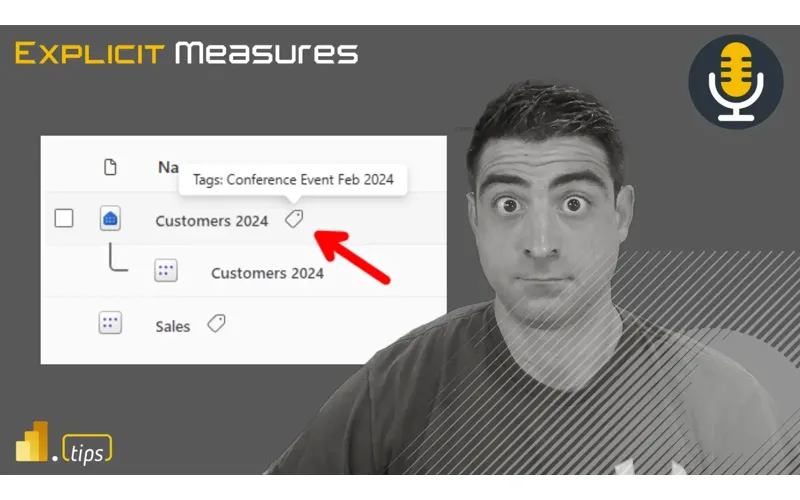
Welcome back to the Explicit Measures Podcast. In Episode 364, Mike Carlo and the crew dig into the latest in Power BI and Microsoft Fabric, plus what they’re seeing in the community and client work.
News & Announcements
- Power BI October 2024 Feature Summary | Microsoft Power BI Blog | Microsoft Power BI — We have a lot of exciting updates to share with you this month. Quick measure suggestions with Copilot to be replaced with Microsoft Fabric Copilot, we have an update with Azure Map – Data Bound Reference…
- Announcing the retirement of real-time streaming in Power BI | Microsoft Power BI Blog | Microsoft Power BI — Today, we are announcing that we will be retiring real-time streaming in Power BI.
- Live edit of Direct Lake models in Power BI Desktop | Microsoft Power BI Blog | Microsoft Power BI — You can use Power BI Desktop to live edit Direct Lake semantic models, improving your data modeling experience and allowing export to Power BI Project (PBIP) for professional development workflows.
- Fabric February 2026 | Norway’s #1 Microsoft Fabric Conference! — Fabric February 2026 will take place at ODEON Cinema in Oslo, Norway on Thursday, February 5th, 2026!
- Tags in Microsoft Fabric - Microsoft Fabric | Microsoft Learn — Learn about tags in Microsoft Fabric.
- Domains - Microsoft Fabric | Microsoft Learn — Learn about domains and how to create and manage them.
- PowerBI.tips Podcast — Subscribe and listen to the Explicit Measures podcast episodes and related content.
- Power BI Theme Generator — Power BI.tips - The worlds best theme generator for Power BI reports. Increase your speed to develop stunning reports using this free theme generator. Themes are essential for any report developer’s tool belt. Visit…
Main Discussion
This episode digs into governance mechanics—domains, tags, and workspaces—and how they can either bring order to Fabric sprawl or become meaningless labels if you don’t set standards. The conversation focuses on using these features to improve discoverability, ownership, and lifecycle management.
Key points:
- Domains should represent how the business thinks (not how the tool thinks): align to functions, products, or value streams.
- Tags are only useful when they’re consistent—agree on a small taxonomy and enforce it.
- Workspaces should have clear purpose and ownership; “misc” workspaces are where governance goes to die.
- Discoverability is a feature: good metadata reduces duplicate work and helps users find trusted assets.
- Governance isn’t a one-time setup; it needs ongoing stewardship and periodic cleanup.
Looking Forward
If your tenant is getting noisy, define 5–10 standard tags and a simple domain structure, then pilot it with one business area. Once people see assets become easier to find, adoption of governance gets much easier.
Episode Transcript
0:31 good morning and welcome back to the explicit measures podcast with Tommy Seth and Mike hello everyone and good morning good morning gentlemen good morning I hope you can see me sporting my first Chicago Bears since we’re actually with a winning record so oh man we’re gonna need to like seriously consider if you even need to be on this podcast anymore you just weather fan then like if it’s only because they started winning do Packer fans look down on Chicago fans or do they look on them with pity like they’re
1:03 they look on them with pity like they’re who’s what’s a bear fan they don’t even acknowledge you I I feel like it’s a little like oh look at him he made a pass that’s great there is a phrase the Bears still suck and then that’s what you hear no normal person would just make that up randomly man man mik unless you were two hours North or three hours North to be honest I’m not really into the sport stuff that much I’m I’m not I’m not really into it that much yeah I’m actually I’m excited to see the teams play this year yeah I think I think
1:34 play this year yeah I think I think they’re too I think the Bears have have turned the corner hopefully it will be a good game and And you’ll hang on to this quarterback for more than a year or two that’s what and that’s new but I will tell you if I’m a little stressed out today it’s and and I I’ll only say it on this podcast unless we get to the World Series the Yankees are two games away from the World Series and this is a big deal wife their players that’s that’s a bottom line being married and the Yankees in the World
2:05 married and the Yankees in the World Series have never overlapped yet and I made my wife acutely aware of this I don’t know how those two things are supposed to correlate though yeah oh it’s gonna affect the relationship it’s gonna affect your relationship hopefully in a good way well depending on how they do it’s performance-based you might go more broke who knows it’s going to be there be lots of random memorabilia things in the house that you’re like your like like what are we doing this does not fit
2:36 like what are we doing this does not fit the decor of the couch and the living room now you listen closely in a Wisconsin night outside and the Yankees give up a home run you’re going to be able to hear oh that’s funny Tommy’s neighbors love him during this time of year yes exactly right let’s jump into some well our main topic today let’s just talk about our main topic today our main topic is going to be just kind topic is going to be just unpacking more things about domains of unpacking more things about domains tags and workspaces and interestingly
3:06 tags and workspaces and interestingly tags is a new feature that have just come out tag you can tag all kinds of items inside the Microsoft ecosystem now inside fabric you can tag a a report you can now tag a semantic model can you tag a workspace as well think you can add tags to workspaces too right no I think he’s only artifacts okay maybe just artifacts but I think with the proliferation of the amount of things you can create attacking seems like a helpful way of also giving you the ability to to find and filter down
3:37 ability to to find and filter down things that you care about all right with that we’ll jump right over to our news items so we do have a really exciting October summary show up for Microsoft so desktop has just landed we’ve got a new version of powerbi desktop I to be honest I’m mean this may not go over very well for for your guys’ standpoint but I feel like with the things are starting to get settled I think in the Microsoft space like if you think if you look at like fabric as a whole in addition to what’s coming out
4:08 whole in addition to what’s coming out for powerbi now granted we are the powerbi that’s where that that’s where we came from that’s what we started in the powerbi side of things but I really like all this fabric stuff they’re creating and to me there’s a really neat excitement I feel excited about all the things of fabric like I did when first powerbi came out every week there’s tons of every month there’s updates all over the place you’re getting new features the experiences are getting better it’s getting faster your the native execution engine has now been announced inside spark there’s for me there’s been
4:39 spark there’s for me there’s been all these other Rich experiences that Microsoft is developing and pushing out and I’m getting excited I I don’t think I’ve been excited about development from powerbi for a while it felt very stagnant for a bit I think that was because they were getting things like settled and now that the the core rebuild or the core rework has happened we’re now starting to seem like get more features out that’s just my impression you guys feel the same way I reluctantly agree I remember when like drill through came out for the first time I think it was like the data inside Summit and then
5:09 was like the data inside Summit and then goals which then became metrics and then now goals go yes and I remember like specifically out loud telling someone oh did you see this new update this is awesome and wanting desperately to try it out like immediately yeah and yeah we’re we haven’t seen a lot on desktop and I bet you next year two years we’re going to see the whole like because I think Microsoft desktop got some big stuff like we we got some live edit mode in desktop from the that’s pretty cool like yeah dark Mode come on
5:40 pretty cool like yeah dark Mode come on that’s a that’s a big change that’s gonna make everyone’s life better it’s it’s gonna make people’s better but this is not where I’m like I have to do this now and you’re like with the fabric stuff I’m like oh oh with you they’re doing that now it’s like okay I got to see that I got to test that out I gotta see where is I agree 100% okay so one of the things that came out out that’s more semantic model related is now info view info. viw functions that just came out so you can now run a info view columns measures
6:11 now run a info view columns measures relationships and tables and all of those items can be used in I believe a calculated table so you can calculate a table use this measure and it documents all of your measures columns and relationships in the model as part of the model and when you refresh your model it automatically gets all the new definitions of things automatically in your your model yeah make the model be its own documentation that makes total sense to me yeah there there’s actually I would encourage people to go go
6:42 would encourage people to go go searching online I’ve seen some multiple different solutions coming through my LinkedIn feed lately where people have already have already built out full Solutions on on how to like basically just Auto doent your model which huge time saer huge timesaver so yeah I would I got to lean into that one a little bit because that that’s one of those places where Mike you could totally automate the the outputs and and keep keep documentation refreshed and up to date just because
7:13 refreshed and up to date just because like it’s so easy right you just it’s either part of it part of your report or the solution is really easy to to build on top of things so that’s that’s awesome I’m to look at that one that’s that’s something that will change how I build things I think yeah it’s gonna be it’s gonna be a macroon Tableau editor that’s for sure but we’re also seeing our third new lightning bolt visual or new visual come out and it’s another another slicer C we what does that tell you
7:43 slicer C we what does that tell you though people love SLI people love people love slicers well to be to be frank to be frankly honest right this is where things get really think of it I think of this from a developer standpoint right when when I’m a developer looking at what’s happening inside these visuals it’s very difficult to move the tech forward and have the same visual support all the old features and then support all the new features with new style or Properties or how you handle the data in the visual it’s
8:14 handle the data in the visual it’s difficult to have full backwards cap capabilities and then move all add all these new things as well so I really do I like the fact that Microsoft’s building a lot of extra visuals I feel like we’re going to get this really big pile of just lightning visuals and I’m like when when are you going to actually like deprecate the old things and get rid of them or just does the new thing always do all the old so we’re starting to create a little bit of confusion around okay now I have three different slicers which one should I really be using to actually make a
8:44 really be using to actually make a slicer that I want to do things with and I that’s actually where go ahead I love the fact that they’re choosing lightning bolts because their descriptions are like we don’t slicer we we don’t recommend using it in production currently currently however this is an excellent opportunity to experience the capabilities of the new slicer it’s like is that because I’m going to get bit like I’ll get zapped like in prod like oop it’s not working may shock your mouse careful it’s only when we take off the lightning
9:15 it’s only when we take off the lightning bolt yeah are all of them like that do all of them have that note on there it’s the same lightning bolt from data flows acceler I know the lightning bolt but do they all have the disclaimer of like hey lightning bolt means careful don’t use in production may break something I’d have to look at it but I this one certainly does have that disclaimer I don’t think it’s on the cards with the lightning bolt yeah speaking of the the ambiguity or ambiguousness between the like normal visuals and these new ones are you using the new card by default the new card kpi
9:47 the new card by default the new card kpi or are you using the normal one because I still use the normal one because I know that’s the one is the standard I haven’t checked I know initially came out with limitations and I’m not going back every week to check oh did they did they now make this in GA because it’s the advanced version and if you want to nudge people’s behavior just rip the Band-Aid yeah I I will say the new card visual I do use that one and I actually really like it from the idea that I can
10:17 really like it from the idea that I can add three or four measures it’s more efficient to the model so if I do have a three or four card kpi thing it does act like individual cards on the page and
10:26 like individual cards on the page and that’s really what I want I really want like a visual that has the numbers as a card and I just keep adding measures to it and the nice part is it runs a single query back to the back end to get that stuff so the these are I have seen reports where people are trying to build a more elaborate card and in doing so they add like eight visuals together to make one card like there’s a picture there’s an icon there’s a little line chart like all these really cool things but it’s still just a single card and I think the fact that we’re able to do more of this with a single visual is
10:57 more of this with a single visual is definitely the right approach one it makes my report faster it’s yes it’s more complicated to stylize that one visual but it gives you I think a lot more capability to like I don’t know it’s the righto to me it’s the right approach like it’s it’s what we should be doing we should be making visuals that can do more things as opposed to like the opposite effect of like you always are limited in in that visual space anything else that stood out to you on the on the October
11:29 blog no but I do really want to talk about John Johnny W’s point in the chat yeah It It kind yeah It It speaks to the preview feature of speaks to the preview feature proliferation so he he comments does anyone think Microsoft should stop start stop starting start finishing the proliferation of preview features because it’s becoming a massive bug bear and it’s it’s interesting because we talk about like what the minimum viable product is yeah for something and to get out the door and then Tech that right
12:00 out the door and then Tech that right like you you have something that you’ve got to streamline or make better or whatever however would you ever would it ever be acceptable for your people your organizations to put something out with known known bugs where you’re where you’re like hey we we’re feature complete for the customer but we already know this stuff doesn’t doesn’t work or we know 25% of the time it could fail fail because like if I look at this the
12:32 because like if I look at this the alternative though well but that’s what I’m saying but here but but I guess the alternative is would you would you rather them do four releases a year and that’s all you get sure sure sh but I guess the followup the followup to that is his second point which is what about the field parameters that are still in preview like are you treating that that feature with known bugs like you you accomplished it and the rest is Tech de which means it
13:02 and the rest is Tech de which means it just falls into this backlog way behind all these other preview features and now it’s not as useful because people aren’t going to put it in production or are you keeping it as a priority and it it’s only because you couldn’t release the full feature set but you wanted to get out the door and the next stuff is coming in the next release that I’d be okay with but what is the difference between some of these features that we see coming out that are not that have this disclaimer of like use at your
13:32 this disclaimer of like use at your own own risk with when we can actually like rely on them right because they’re they’re less question useful to me right now and you’re not going to get the type of adoption because if this is like a o let’s see who uses it and then we’ll finish it you’re not going to get the adoption that would let let you get those metrics because people are only going to test it on the side and you won’t get full-fledged adoption so to the point that you guys just talked about hey when like have you used card visuals or oh well it was buggy
14:02 visuals or oh well it was buggy and I haven’t gone back to stay up to date right but now we’re in this cycle all the time where it’s like well I didn’t I I I validated it when it came out and I read disclaimers don’t use it I’m I’m moving on and it’s like oh yeah six months later or not not long but three months later oh I I I could have been using this feature but I because when I evaluated it it wasn’t fit for my purposes yet let’s check it again right I think there’s
14:33 again right I think there’s multiple points I’m trying to make in that whole stream but I thought it was I thought it was an interesting poke I’m GNA let me raise my hand I’m gonna say something real quick and I’m I’m GNA I really want to hear your your comment too Tommy I think so I think this is a very hard game to play I think I think Johnny you make a great Point here as as I’m looking at this on one hand you so app development is is hard and the size of Microsoft and this team now around fabric and powerbi is probably massive now at this point you’ve got so many teams going so many
15:03 you’ve got so many teams going so many different directions trying to figure out what’s useful and what’s not useful and I know Microsoft and I think particularly SAA is very much driving the company down we use metrics to decide what things move forward and so there’s a there’s instrumenting on the tool they know what you’re they know which features are being used which ones are not that’s that’s good design of any product right you want to see what people are using to your point though Seth if something’s been out for 6 months and there no major hiccups issues bugs why not just keep it
15:33 hiccups issues bugs why not just keep it the way it is and not quote unquote finish it and just say okay we’ve done it for six months it works fairly well we’re not getting any major bugs back from it we’re just going to release it as is and then bring in new features or ask for more feedback around like all these other things I think this is very hard to do because as a developer or as a team that’s developing features you put out things you think customers want you do your homework but you really rely on the as I’m learning
16:03 you really rely on the as I’m learning this in Microsoft each program PM principal manager it’s really their responsible to get the feature dialed right and even if you think about the the whole of all the people who use powerbi is this feature intended to be used by every single person who’s creating content is it easy to jump in and use and learn how to do the feature you may have the most amazing feature but if no one knows about your feature it hasn’t been promoted well by the community hasn’t really been picked up it’s not solving like a major problem you may not get the usage you want but it’s still functionally useful to
16:33 it’s still functionally useful to building those report pieces so maybe to your point that like it’s it’s hard to balance that that gauge of like okay something’s in preview it’s in preview for so long we haven’t had any other major bugs with it well that feature I think to your point should just get released as is okay now it’s regular like it’s it’s ready to be used we’re going to support it regardless I think preview is just amount the idea of if Microsoft ever wanted to make a major change to it or break something in it they they can and because they can be like oh it was in preview like we’re not
17:03 like oh it was in preview like we’re not going to take ownership of that feature soone so what it’s a fine line and Mike that’s a really good point because unfortunately I think it’s the playground that we’re playing in too you don’t like this go to Google they’re doing the same thing you don’t like this go to chat GPT they’re doing the same thing I’m looking at my computer and I have teams in Outlook and they’re still in preview too and I I think a lot of it too especially with Microsoft they don’t have a user group case study team a lot of the preview could be AK hey do you like it if you like it then we’ll really focus on this and put a lot of time but
17:35 focus on this and put a lot of time but this is the way they H one verse competition but two it data March is a great example that was preview I don’t think it ever went I don’t know if it would ever went to GA but it lost a lot of steam it didn’t get a lot of usage but how would Microsoft know that unless they actually put something out there to say we’re just bringing this out there we want to see we’re already spending a lot of risk and time and money on this product or this feature and now we’re going to see people actually going to use it I I think I think after the
18:06 to use it I I think I think after the fact Johnny’s like oh I just derailed the guys again which he probably did but I do like the his other idea of like we should we should make we should make that a podcast we should go through and look at the ga features that are still like out in preview and and and do an episode around kill it or complete it right like oh I like it that’s great write down Tommy write it down we got to get a list I’m already WR or just mark it done just call it done like fine You’re Not Gon to add so so to your point though like push it get it
18:36 your point though like push it get it get it into like give get us out of preview please yeah totally and and this is probably also another thing that’s challenging too right the team’s always trying to build great things they’re listening to customer feedback it it gets the more people that use your product the harder it is to get everyone happy with what you’re building and you really have to have this very clean vision of like where you’re going and so as I’ve learned this the PMS having a great pm on your area is like really good to have like that that really can drive a feature and you can see you can see which parts of the
19:06 see you can see which parts of the product have strong PMS because the stuff that they build and comes out from their team is like the community loves it it’s dialed it’s the it’s the right things and so I think I think it really shows depending on like as the team grows you’re going to get parts of the tool that are going to be more polished than others just because they have the right vision of that feature coming right out of the gate m all right there’s a couple other announcements I do just want to pay some homage to them because I think we should talk about them one is the announcement of retirement of realtime
19:37 announcement of retirement of realtime streaming in powerbi so beginning October 31st which is not very long away creation of new real-time semantic models will no longer be supported beginning October 31st on 2027 so three years out existing real-time semantic models will be retired and no longer supported so just FYI that’s coming the announc was made on the blog on the 15th so pay attention and then the other note here we’ll just quickly touch on is a feature that I
20:07 quickly touch on is a feature that I love again this is a PM that’s just crushing it ruy Romano is just he knows what he’s doing the features are I’m excited about everything he’s building I’m like this is on point for me it it really it impacts my workload like what I do live edit of direct Lake models now in powerbi desktop and I’m I’m going to say it again like the service does so many things for me I can do so many things in the service desktop is becoming the pro tool it’s it’s not just
20:37 becoming the pro tool it’s it’s not just for building reports anymore it’s going to be like you got this Dax query viiew thing they’ve announced in timle editor and we can now do the edits remotely from it’s getting pretty stinking cool so I’m not sure I I feel like I know where the vision’s going on this one and
20:51 where the vision’s going on this one and desktop is getting a lot more investment on like really rich stuff for the pro developer you’re making this a new episode episode machine I just because I disagree so much with that statement but we’ll save that so okay all right Tommy’s over here squiring in his chair I’m just putting episodes in like oh that’s a topic that’s a good that’s a topic but we’re gonna argue about that one for sure yes exactly yes awesome Johnny just ripping out the the preview features here so Tommy keep keep an eye on the chat here and write down all of
21:22 chat here and write down all of Johnny’s comments around all the features in preview that he’s just roasting right now and that need to be talked about as a full episode awesome we’ll save them Al I’ll send you Mr Johnny I’ll send you my email so you can it directly up Tommy’s gonna have 100 emails of all these things that that Johnny wants to deal with awesome well okay enough of enough of the pre-t talk we we did a lot of news and announcements here I hope that was kind announcements here I hope that was fun there’s a lot of new things of fun there’s a lot of new things coming out so I hope you’re excited go read the blog that’s for sure a thing you should do I’ll go slap all these items inside the the chat
21:54 items inside the the chat window that way you have them and they’ll also be in the description as well if you want to check that out additionally all right enough said moving on over main topic for today our main topic today is going to be talking about the domains tags and how that relationship works with our workspaces so Tommy maybe kick us off here where are you thinking we’re going to go with this conversation maybe give us a couple initial talking points yeah so Microsoft just released fabric tags which allows us to categorize or put really any label is it in preview it’s
22:24 really any label is it in preview it’s in preview it’s of course it’s in preview okay just check in I think that goes without saying a fabric in G but tags on any artifact on in any workspace I can put on a report to your point a semantic model a notebook any artifact that exists in fabric I can label it with a tag but we also have domains and domains are overreaching part of over a workspace over the content and again with that we also have workspaces so now we have three pieces
22:55 workspaces so now we have three pieces of governance around a Microsoft team or a team that’s working business intelligence around categorization organization and security where I think there’s a few questions here now on who’s going to own what where do the new labels and tags and domains come from and where do you get started actually getting something structured out for a team because this could easily become a mess in an organization of all these
23:25 mess in an organization of all these names and domains and tags so where do we go from here with now three layers of governance three layers of security of a Microsoft team or a business intelligence team and I think that’s where I wanted to kick off and see what you guys think yeah I think these are really interesting features here and as I’m been diving into like who can make a domain how are domains created one thing I’ll just note we just did a live session on training. tips around what is semantic link one thing I’ll just say just for
23:57 link one thing I’ll just say just for dude like semantic link is incredible it is if you don’t know what semantic link is doing and you’re not out there trying to play with it in a notebook and you’re if you if you use let me say this way if you use Fabric and you are starting to learn how to do notebooks cemented link is awesome it does so much stuff that you just need to know how to use it’s going to be the most useful tool you have I I’m pretty sure I’m pretty good at calling features I’m pretty good I’m pretty sure semantic links semantic link Labs is
24:28 semantic links semantic link Labs is going to be the tool everyone needs to learn and use because it can pretty much do every single other tools work for you and more so dude it’s awesome anyways that being said I was playing around with semantic link and what you can do in semantic link you can create domains you can group users you can ask for all the workspaces that live inside a domain there’s there’s control around this so I really like the idea of domains I think domains is an underused feature and I think from an organizational standpoint if you think about happens with your
24:59 if you think about happens with your people and your company versus what how does it mirror the behavior inside powerbi. com you need to mirror your organizational structure into powerbi. com at some level I think it’s a better way to govern I think as your team grows in size and you’re going to educate your team about who can administer what things I think more and more there’s going to be features that you’re going to delegate to subject matter experts or leads in certain departments or certain domains I think that’s going to be very helpful
25:29 that’s going to be very helpful because as you think about how to scale the business we need this Federated approach there needs to be a central team figuring things out but all these other teams need to use it so I like domains tags on the other hand seems interesting to me I think they will be useful but the thing I find funny about tags is you make tags you can’t just make them as a user only the admin can make a tag and create it at the admin level and so you can have tags made let’s say you want to say I’m going to use tags for bronze silver
25:59 I’m going to use tags for bronze silver and gold or I want to use Tags by Department I think there’s a lot more flexibility with this tagging element of things interesting but I’m not sure how I would govern it yet or what’s the right I I don’t it’s too new to me to be like what’s the best way to do it or use these things I think I need to listen to the community and figure out proper use cases of where we should be using these tag things so tags to me feel a little bit more flexible it definitely helps me find things but what’s really the output
26:29 things but what’s really the output there does that make sense what I’m saying so which part all of it makes sense yeah but both of both of these I I think are in the in the administration space or the group space the space of Coe the people in charge of the environment Etc because the do and what by that is the setup right so you’re talking about domains the domain structure of the data mesh is essentially you’re
26:59 the data mesh is essentially you’re putting the owners of the data in the area and a lot of that a lot of times that’s just the business unit right so if if that’s where the data for that organization lives and then that’s shared with other parts like that’s makes makes a ton of sense right whether that’s owned by the same team and you’re just segmenting it out or they’re actually the engineers and the owners of the data and all the things like the structure is there that supports that and yes that’s what I think domains are
27:29 and yes that’s what I think domains are for on the on the polar opposite side of that though I think it the audience for tags is is completely different right domains is the admin thing and where everybody who’s doing stuff on the engineering and the data itself like they they all play in the area and and that that’s the ownership levels and they know they know that on the flip side as you’re building the artifacts that the business is going to use how do people discover the the
28:00 to use how do people discover the the data in those domains or across the organization and I think that’s why you do have like why having heavy control around tags is a good thing because you don’t want it to be the wild west of like agree everybody building stuff right it’s the admins or the the special permission that can say hey this you permission that can say hey this if there are special initiatives know if there are special initiatives within the organization and we need to start tagging a bunch of stuff for fast reference yeah there’s Pi data on
28:31 reference yeah there’s Pi data on something like you got to tag it so we can go find it like right or an automated process that that and I thought we talked about this once in another podcast but that like that dictionary or the labeling of like what’s acceptable to be used in those in those tags and how like you categorize the lineage of what is drawn out so that it’s easily searchable for the organization and then what you’re passing out to the organization is hey this is the booklet of where you’re going to go for looking for commercial
29:03 going to go for looking for commercial or sales information right here’s the tags there and and then they can go use the search features within the fabric ecosystem and find what their permission to see I that’s a major point oh goad I was say before we move on to another point I just want to hang on your point there for a moment Seth right now when you create a tag you only have the name of the tag Seth you added a so Microsoft if you’re listening all one of you please add descriptions and and the ability for us
29:34 descriptions and and the ability for us to put Rich Text descriptions with a tag because a tag is good but if I just have a tag that just says bronze silver what is that mean where should I use it if there’s a tag called pii what why is it there I understand that it’s just a tag on top of something but like as an admin if you’re if you’re letting admins or people build these things you should give us the ability to have more descriptions around where to use it how is there a description with it so that when someone’s in the app and they see hey there’s a tag here oh if I hover the
30:05 hey there’s a tag here oh if I hover the tag the tool tip shows up this this data is has sensitive information in it this may have contained da d da for more information click here and then it could go to a documentation page that we set up in our Center of Excellence or Community Practice that has a better description of what’s our policy on tags who sets them up how do you request a new tag this is the same process that I think we’re going to need to eventually build for like we do with workspace requests right some companies don’t let you create them they’re going to lock that down okay but if you’re going to do it at least give
30:35 if you’re going to do it at least give us a process by which we can we can go ask or request or fill out a form to go get a workspace created based on a business need sorry I didn’t mean to go down thatout was really relevant point there I like that because I thought you were gonna say Microsoft giv us colors I’m like I can I can go with that give us tag colors but no but I think both your points are very important here because when we’re dealing with this type of administration or governance we’re not just dealing with an API or a feature enablement we’re dealing with culture and not just data culture because we’re dealing with
31:06 data culture because we’re dealing with language and now we have words both with domains and tags that need to have meaning trust me take it from if you’ve ever worked in a confluent space and anyone can add their own labels to a
31:16 anyone can add their own labels to a page it gets very disorganized very quickly especially when we’re dealing with these artifacts to your point it could be bronze silver gold it could be a department-based it could be Security based it could be enablement based all the different ways you’re going the way you’re going to roll out tags is going to be important to me is I don’t want to say Mission critical but I am closer to that than I’m not and the reason I say that is because doing this wrong you’re just going to have tags that have no
31:46 just going to have tags that have no meaning at all and the goal of tags the goal of domains is it has some association with the word it has some meaning if you’re going to have domains if you’re going to do it right it has some meaning to something that is can be Associated by another human in that organization so when we’re dealing with domains especially too if you’re just randomly creating domains and you’re randomly creating tags then they have no meaning in the organization yeah mean to get to get a ton of use out of this I guess what I
32:17 ton of use out of this I guess what I would like to see in the future is is I’ll I’ll frame this in a in in the not a gap right just a a feature improv it’s in preview coming down the road right if if that was a JB tag tagging creating tags I I can understand controlling assigning tags is is not right so what I don’t see is if this is going to work effectively within your organization like what are the tags people can use and I don’t see that asly
32:48 people can use and I don’t see that asly like something that stands out to me like what can I apply and and then like understanding how many of my processes or artifacts in my system are tagged right like where’s my where’s my my dictionary for the wider audience of things that they could leverage and how do I understand the usage of of a tag in the organization because if it’s not do what I would assume right right and not not much is getting Associated to it do we need to
33:18 getting Associated to it do we need to modify it nobody’s the Tag’s not getting searched right like that that’s if the purpose is for finding and utilizing data in the organization I would love to understand how people are getting value from what we created as opposed to it just being yeah something that’s untraceable or untrackable but yet is supposed to be valuable how do I measure that what we created was a good thing and that’s exactly where I would start I I would start with just like we know what’s the
33:48 start with just like we know what’s the purpose of a workspace and if you were to break that down to the most basic fundamental definition I think we can all have a very similar definition and I think we’re getting close closer with domains but I don’t think we’re there yet where we’d have a universal definition of the purpose of a domain and I think before we start releasing tags it’s the same thing what’s the purpose of having the tag what’s the purpose of the tag before we actually start producing this and allowing people to start using them let me let me also give us some
34:18 them let me let me also give us some other parts here I think I really like your where you guys are going with this one I also think the feature it needs so for tags for tags specifically I think this is something that makes sense to delegate to domains or people inside domains so I think there’s a subset of your organization where we have this idea of okay I am I’m an admin of parbi but we have a handful of workspaces that someone needs to administer call it the the sales team the Ops Team right they’re going to build their own stuff
34:48 they’re going to build their own stuff so they’re going to have a collection of workspaces that they’re going to need to use around their items I think there’s the idea of when we have set the policies and we give some understanding around what tags mean right I think we need a little bit more metadata about what is a tag who’s the owner of it there’s some some more I think information about those tagging elements but I think at the end of the day it’d be really nice to delegate that to that same team and say look there’s only one person on your team who can make your own tags but that department should figure out what tags
35:19 department should figure out what tags make sense to them I think central it doesn’t need to have their hands involved in every single tag to me it feels like domains yeah Central it is going to be helping out building domains cuz that’s like a more alignment to your organization tags feel like something you would want to delegate to smaller teams and say okay look these teams can make their own tags for what’s relevant to them another thing I’d like to see here is semantic link Labs should allow you to scan through all your workspaces or your reports and you should be able to take metadata out
35:50 you should be able to take metadata out of everything and say should there be autot tagging of things should we run scripts that we say look as corporate we are going to go through and look for names of columns or certain measures or other things in here that we’re saying okay if we see this data we should tag this as sales we if you see this data we should tag this as Financial something that’s generic so I think there needs to be something that the that that’s going to help you automate the the addition of tags that we think are going to be most relevant for people when we’re using our our
36:20 for people when we’re using our our system right again I don’t it’ll be if you add some more automation there the businesses or companies can figure out the best way to utilize the tags and I don’t see anything today in some the glabs around tags but the the the thing that strikes me is like this just has to be tags have to be a managed entity in order to be useful yes you entity in order to be useful yes like it’s not a set it and forget know like it’s not a set it and forget it thing no and that’s what I don’t like in the initial implementation
36:50 don’t like in the initial implementation here is just like okay I can create the thing and I can associate it okay great but there’s a lot more to making sure that it we’re not just cre the next the next set of documentation that’s great and all the effort was really worthwhile for the two Monon project that we did it and then all of a sudden it goes It goes dark like nobody updates it it’s not valuable like now it’s confusing now people are waiting through like well is this this artifact or like what is how do I trust it it’s certified but it’s not a tag what does that mean yeah that’s my point but at
37:21 that mean yeah that’s my point but at the same time and that’s why I haven’t I haven’t been part of an organization that’s successfully deployed a data dictionary or a method whereby and users can easily can easily find the information that they need which is ideally where tagging would come in right you’re you’re you’re saying this is the artifact that’s important like when you search for this this is where you want to land and that should be a managed thing so there there’s an interesting question Seth is is the purpose of the tag or where we’re
37:52 is the purpose of the tag or where we’re going here for data catalog I I don’t know because Mike you said something I don’t like it the only reason I don’t like it is because you 100% right because I didn’t like it because it makes a lot of sense here where right now tags are a universal definition I create a tag from the admin it’s available to anyone but you’re probably dealing with scenarios and more often than not the situation is it’s going to be more domain specific than it is going to be yes universally defined so yes and and I so I think
38:24 defined so yes and and I so I think we’re not it’s like team it’s like I even maybe not Doms May a too big of a team like it may just team specific like maybe I’m in engineering and I have a small team in a larger engineering organization or maybe I’m one team in in the quality or and I I have like 10 people that were all I want to do is figure out okay this content was relevant for me here’s a tag that makes sense to my team yeah there’s something in there that you may want to tag for that team but it’s discoverable to everybody right exact and that’s where that’s where I do here’s the thing
38:55 where that’s where I do here’s the thing now right now it is to me this you you look it’s tagged to the item right right but if I’m if I now have a tag if I’m trying to like add a new tag that Tag’s discoverable not necessarily the oh oh oh yes I see what I would drive at what I would drive at is like call it admins but it’s more of like the Coe conversation the central group that would be creating tags I think should be working with whatever structure you have set up in fabric for the different groups right so if you have domains and that’s those are
39:26 if you have domains and that’s those are the different groups like important what’s important I think is is establishing how within the entire organization you want the tagging system to work yes so that so that for any end User it’s a consistent experience as opposed to mass confusion right out of the gate which it would be right so that’s why I do I do like the fact that it’s it’s only very small subset or one person can create them the content
39:58 person can create them the content owners of or the different groups can assign them right but that’s that that you don’t that I’m okay with that approach where it’s like hey you don’t have control to do that because you have like this should be a very useful tool and I don’t agree with the fact that like you should be able to create all these little things in your own team own team unless you can limit the view of only those tags to your team and I don’t see that capability yet I I think this is another thing that’s
40:29 I I think this is another thing that’s interesting to me and I like your point there Seth as well that’s a great point I agree with it one thing that I think is missing in the admin portal for tags is I can’t see all the items that have been tagged a certain way so there there needs to be more in my opinion as if you’re going to create all these tags the whole point is you have a whole bunch of things that have a tag on them therefore I should be able to go back into a portal and say for this tag produce to me the list of all the items workspaces the things that are attached to that tag and then I can decide from
41:00 to that tag and then I can decide from an admin standpoint again if you’re giving if you’re making this all Center controlled through the central place I need to see all the items attached to it I need to be able to kick things out or add things on the Fly inside the tagging screen inside the admin portal or provide me automation to allow me to do that as well so I th those are the things that we’re gonna need to get to and maybe part of that is like okay well you see what what is being used when you search for it and you’re dealing with access issues and yeah right so well but the admin would the admin would have access to everything but at the
41:31 access to everything but at the same time I I suppose like that infers usage but I would still like to know how many people are searching or finding that tag right so I I think we’ve dealt
41:44 that tag right so I I think we’ve dealt with a lot of the inefficiencies and the limitations of tags today unless we have some more what I like to do because we’re solution based right we we like to think of problem answers to problems and we like to think of problems too so if you don’t mind I would like to kind if you don’t mind I would like to transition here and talk about some of transition here and talk about some just a few quick questions on some scenarios on how we’re going to deal with tags and domains as it is in the state today okay unless you unless we want to put that in the parking lot and you had something else you wanted to
42:14 you had something else you wanted to deal with I think it’s good to go to that one I don’t have any other things around tagging so far so let’s start with the basic one are tags a got to tag them all type scenario it’s like Pokemon yeah for sure it is is it like yeah like that I like the little catch there so I see what you did there I’m glad you picked up what I put down so but are and that I think that’s the first question I was dealing with are we trying to tag if in the world that we’re in today from a universal point of view are we gonna try to everything should have a tag on it or is it very much a
42:45 have a tag on it or is it very much a limited basis on what type of artifact or item H not sure how I feel on this one I I don’t think everything needs to be I right now the way I’m looking at tagging is I’m looking at tagging thinking that it’s just a more helpful way to search for a group of things that are similar is what I’m what I’m and it’s cross it’s not just one workspace it’s across any workspace anywhere you’re like so look these are and you think about all the things that you have access to right I’m going to
43:16 you have access to right I’m going to have hundreds thousands of reports semantic models tables lake houses things I have access to I’m an admin of stuff so I see a ton of items in my list how do I quickly get down to the things that I’m either working on right now or a specific topic area like how do I get to that information I think when you start looking at the proliferation of items inside fabric this is supposed to help with some of that right and maybe that’s where I’m saying like look I don’t want to search just for a pipeline
43:47 don’t want to search just for a pipeline I want to search for anything that’s data engineering related and so data and this is where I think the tag to your point earlier Tommy tags matter words matter here because because if I say this is data engineering activities these are the things I’m tagging is data engineering it could be a real-time streaming pipeline it could be ingesting data through custo it could be that could be work that we say this is all tagged for the data engineers and then if I’m that role of person I could go find those things yeah I think I would lean on focusing on the audience that tags are
44:20 focusing on the audience that tags are I would think designed for and that’s that’s the people that are searching for Content that would be available to them right or that they would need so if if I’m going to start rolling it out it’s only on the objects and if you think about the entire ecosystem of of what’s being developed and built within a fabric environment it’s all the engineering artifacts it’s not everything I need to tag I I don’t think I’m trying to tag everything for engineers because they
44:50 everything for engineers because they they know how to navigate the system and they should certainly know like how to how to plug into the right spots for all the information it’s the people who don’t know right it’s it’s the final curated or gold standard or certified tables or models or whatever the case may be but I have certified for that ecosystem I I get it but it’s I think it’s a different set of of users right the ones that need direct access to data predominantly where I would see taging gate saying like hey commercial sales whatever whatever whatever or this
45:21 sales whatever whatever whatever or this is the view of information that is relevant to you that we’re spinning on or what there’s a a million different scenarios of data needs that people have yeah and tagging helps them navigate an environment that they’re not actively engaged with every day I think we want to you want to remove redundancy you don’t want to say hey where are all the notebooks oh under the notebook tag that’s which you can definitely see happening too but I
45:51 happening too but I happening too but so so that’s a good point though mean so so that’s a good point though too Seth where what would those tags then be for those more call them basic users more less experienced users what tags are we putting on that if if I don’t know if like I’m thinking like maybe there’s some like bronze silver gold level things that you’re using to help with that maybe because maybe you’re thinking I want to talk about maybe that’s where I’m I’m cre creating a bronze lake house I’m I’m creating a bronze pipeline that’s
46:21 I’m creating a bronze pipeline that’s loading the data in right this is this is the silver items right this is The Notebook that’s used to go help build things in silver that part of this to me is like I I can REM when I have lack lacking of when I lack the ability to figure out how to delineate which type of activities I’m doing on items what happens is the name of the item gets longer and more elaborate based on right if I’m if I’m doing a bronze Lakehouse it’s going to be bronze Lakehouse right I I’m I’m not using a tag that says lake house one Lake House
46:51 tag that says lake house one Lake House 2 Lake House 3 like I’m I’m to me this is a potential for saying I want to start using these things and I want to use tagging to start delineating other features of this workspace or item or whatever then I don’t then I don’t need to carry through the name of the item and maybe this is where this is coming from if you use tags I don’t need to have all this extra Dev test prod designation on everything I could just call it what it is it’s the bronze lake house and then when I move
47:21 bronze lake house and then when I move between environments I just tag them the right way and then if I’m searching for all the stuff and I can see it it’s it’s one that shows up if I’m looking for things that are prod boom add the tag of prod boom now everything that’s report based all the prod Stuff shows up like so maybe it’s that idea of like we’re taking away the the name the name of the object can only be so long until it starts turning into an ellipsis right and and so maybe this is a part of that solution is I can get I use the name to help me search for stuff and
47:53 name to help me search for stuff and maybe this is what I’m going to replace that with a little bit is okay what are the most common acronyms in my names that I don’t want to use anymore let’s just make tags for them and that becomes part of your tagging tagging system and in that state that makes a lot of sense because it also removes all right sorry just kid it eliminates the the point that Seth initially made about the data catalog where there’s no need here now or there’s not the critical need to like we need to catalog every tag and
48:24 like we need to catalog every tag and then what’s associated with this correct where because you’re right the names man like B rnz DM KT it’s a bronze marketing Lakehouse take take away all the vowels because I I don’t have enough characters to see the whole thing so we’re now we’re now using less letters in the name just to get LK LK right that’s the lake now we’re dropping letters just so we have enough designation to add the the dev the test the prod the 01 the O2 version on things maybe maybe we shouldn’t be doing that maybe we should be using tags for some
48:55 maybe we should be using tags for some of that stuff I think that’s in in my mind that’s like too much cuz I you already you already have I I think plenty of naming standards and of how you go build things that I I guess that just isn’t something I would utilize tags for because it’s over tagging and and I guess to almost reinforce my point and I don’t know if it’s a current limitation or by Design but I would argue probably by Design is a tenant can
49:25 argue probably by Design is a tenant can only have 10, 000 tags so you’re you’re not going to be able to tag every single object from from the dev perspective right like it what you’re describing is I’m I’m going to tag everything and then when I click Dev all my Dev objects are going to come up right there’s there’s probably a lot more than 10, 000 objects in in large organizations 10, 000 know trying to go through that but this is this is my point though this is where automation comes over right so that’s where the tags are essentially man but at what point at what point is
49:56 man but at what point at what point is your list of tags so prohibitively long that everybody’s just like why why did we do this again this is this is what I think quickly this is the balance I think we’re going to have to work through we’re going to have to like work through what the balance of that looks like I don’t know like this is It’s So new I don’t think we’re there yet I don’t I not sure if we really understand where’s the best use cases to use tags for I think it’s a good idea I think it’s a neat feature I think it helps me filter down things just like domain does now it’s just a matter of like is it just one of these features
50:26 it just one of these features that say in preview for a couple long years or are we going to finish it out I I I don’t know but like if I’m I still stick I’m still sticking to like the use case of the the audience that can access my data but just doesn’t know enough about how how to right where I could utilize that and say hey you’re not the domain owners right or you’re you’re this group that we’ve developed a bunch of data sets for and rather than
50:57 bunch of data sets for and rather than pointing people to the right locations all the time I could create a tag that’s just the hey go go search this all of your objects of everything you’re going to need are are going to show up on that search pane that’s extremely useful to me because that’s a shortcut for me to drive into the organization a useful place for them to get access to the data that they need and and I think that kind that they need and and I think that leads to really my my other question of leads to really my my other question I had for you guys is in its most raw fundamental state that we’re in now with
51:27 fundamental state that we’re in now with tags could you give me a scenario or something where you would roll it out and for myself I’ll give a example I can absolutely see myself pushing for this in a very small way where I’m not saying we’re gonna make this a universal adoption but to your point Mike having a bronze silver gold and those are the three tags that exist right off the bat but having that because that could be a pretty big help
51:57 because that could be a pretty big help when it come and then the next thing that you have to solve for immediately after you release the first three tags is who has input for the creation of new tags this is something that I I’ve been
52:08 tags this is something that I I’ve been thinking about as you guys have been talking and some of this I’ll save I think for potentially for another episode but as we talk about domains to and this intersection between domains and and tags I am seeing a new role being created just like we used to have the powerbi Champions at organizations where I’m going to need input from maybe a domain leader and I don’t know if that’s something that’s already established if that’s been a conversation but this conversation about Universal taging
52:38 conversation about Universal taging because that’s the state we’re in now that’s the world that we live in I would allow domain leaders or someone in that capacity to request new tax we start very basically with five tags like you said and they’re Universal can be applied to anything data engineering or it’s bronze or it’s silver that’s it when people ask for new tag it has to come from a domain leader or someone who owns that domain and there’s a conversation but the understanding right
53:09 conversation but the understanding right now that everything’s Universal but I think there’s absolutely a use case right now for me to get off this computer today and say hey let’s start rolling out tags in a most basic sense I I thought of another one so I I guess the end user thing was what struck me but at the same time like is there conflict with tags mean admin created for whatever purpose the one that actually I think also fits into this but would be one that I would roll out
53:40 but would be one that I would roll out is tagging the items that are going to be the cross collaboration between domains right because the the whole point of a domain is the subject matter experts and owners of data that know it best are the ones that own that data but that doesn’t mean that they’re the only ones with access to it right so can I simplify the interaction between domains by tagging and I think the answer would
54:10 by tagging and I think the answer would be yes right if you’re if we’re looking for this type of information from my domain here’s the set of objects that you would want to plug into that you will have access to because we’re sharing them but it will give you context about what area of our business you’re plugging into and I think that would be extremely important in in Cross collab of data usage I want to go back to Tommy’s comment around the whole feeding things
54:40 comment around the whole feeding things up through comments through the domain experts I agree with your process I do agree with the process I I think I disagree with the now my organization needs more data culture and more process and people to follow it and understand what the process this so they could get a tag made so they could go use it so like on that’s that’s my other like so I strug so this is where I struggle with the balance of like how do I govern it versus how do I use how do I enable people to use it so it’s useful and
55:10 people to use it so it’s useful and that’s where I think I struggle here with this I don’t know some organizations are going to be great at dropping out a policy and saying here it is here’s our it’s it’s on our community practice we’re going to have our our monthly meeting boom here it is let’s go right other organizations are going to be like they’re just going to struggle with it they’re just going to be someone decides this is a good idea in on their own in a vacuum a whole bunch of tags are created and boom now we got tags all over the place but really mean nothing and to your point Tommy if there’s not some because of the way it’s being rolled out right now it’s an admin centered only feature therefore it has
55:40 centered only feature therefore it has to have intentionality built into it to your point Seth like where can I use this what’s the most impact for this how can I get the users to find the most value out of this feature oh yeah this makes sense here’s a use case cross doain usage makes sense got it but is that you’re thinking about it but unless someone spends the time to do that and then write it down and make a policy and put it somewhere where people understand and know how it works we’re relying on the data culture and the people and if anything I know people are sneaky they’re going to be lazy they’re not going to go they don’t want to like it
56:11 going to go they don’t want to like it is like this is why we sir there’s this is why we have bad data in Data Systems all over the place because people are like they they want to save their data a certain way they hack the system they put data in where it shouldn’t be it’s not named right we don’t have proper controls Around clean data in the operational system and then Downstream we’re stuck here at the other end trying to make it ready for reporting and we’re just cleaning stuff all day long so like we’re the genitors of the data world trying to get everything like so how we gota we’ve got to play well in this space so that right but that that like
56:43 space so that right but that that like on on a theoretical level that’s the whole point of data mesh versus centralized team because sure like like Technic the the gripe you have is very real for the vast majority I think of us because that it’s just the the the standard way of thinking about data coming into a central place is yeah you’re you’re having to deal with systems of data that are just garbage but the if if it’s domain driven then and there’s something wrong with the data it’s the domain’s problem to fix
57:15 data it’s the domain’s problem to fix not yours right and that’s where a lot of business intelligence projects halt up is where like there’s this assumption by the business is just fantastic in all these areas and it couldn’t be farther from the truth yes and then all of the thing all of the sudden things start to bottleneck because the business intelligence team is saying or data engineerings are like guys this is jacked like you you’ve got a lot of work to do to go fix it and then
57:45 to do to go fix it and then well now we can’t get the reporting we need and they’re blocking things and bl and it’s like well that’s a very different different conversation as opposed to here are our ings we’re helping this domain of business understand how messed up their data is and the business focus is not on that Central team anymore it’s on the domain saying you’re not giving them good data you have to get it’s your responsibility to put good data in a place that’s useful for the
58:15 place that’s useful for the organization that’s the separation or what where I think some of what I’m understanding about data mesh theory is is you you’re separating out and and making owners of data areas yes as opposed to what’s been the standard approach which is we’re just believing all this good data is good and we’re bringing it into the central place and that Central team is doing all these things but things slow down then because they’re responsible for fixing it all
58:45 they’re responsible for fixing it all yeah I totally this is a great yeah I love that and I think I think this is one of the what you’re just talking about there with data mesh and the idea that there are more we need to push out respon responsibility to individual teams who are either curating or grooming or managing that data there needs to be a and and so data is not just a single experts only sport it’s a team sport everyone participates in data quality and I think that’s that’s the story I’m hearing and as I think about Fabric and where fabric is going this is in accelerating that story more
59:15 this is in accelerating that story more because everyone’s a player in the data World everyone’s needs to take ownership of responsibility and that’s a data culture problem that’s well it all of this is a data culture problem the organization just don’t realize that they have a data problem and it’s not a shared cultural initiative and that’s what data mesh does is pull that forward and say data is a central part of our organization and all of us have responsibility not to manipulate things on the side in our Excel spreadsheets but fix them in the core system so our
59:46 but fix them in the core system so our Collective business can use and leverage data and how do you think AI systems are going to work well all of us need to create clean data and good good data in our organization and I think having tool sets like fabric right have Microsoft has de not de like it’s a bad word I was going to say deleverage like Leverage their Tech stack to bring It Forward more so more people can play in the space is it as easy as like you want to
60:16 space is it as easy as like you want to say no it’s not right like lots of lots of things people need to learn but at least you’re opening the doors for all of the players that know about data to play in the same spaces and then you can create I think better domain silos but they’re not really a silo domain areas of solid quality data that’s then accessible to all other parts of the organization awesome well with that we’ve gone almost over on time here so we’ll just quickly wrap up things that was a great final thought
60:47 things that was a great final thought there Seth and then we’ll just give a quick wrap here thank you all for listening this has been a good topic I didn’t think we were going to go down this far on like we went down like tags and domains and all of a sudden we’re like everyone needs responsibility for data like how it typically welcome to every episode we do right everything starts with like a technical feature and we always land on yeah it’s a people in process issue it’s not really the the feature at all it’s just people in proc identity so anyways thank you very
61:17 identity so anyways thank you very much for listening I hope this is going to help you unpack where tags fit in your organization just some thoughts from us as we are trying to unpack what they mean how we use them where’s the best place to utilize them it sounds like you’re going to need to again continue to focus on your center of excellence and your community practice this is one of those things I think you’re going want to really unpack for your team and figure out what is going to work for your organization and also we’d love to see more people blogging about this if tags are something you’re going to use that there’s features missing from tags go blog stuff let us know in the comments we would love to talk
61:47 the comments we would love to talk about those things as well in a future episode with that being said we don’t really ask for any advertising we don’t do anything here other than it’s word of mouth if you like this episode if you value from what we were talking about here please go out and share it with somebody else because that’s the only way we grow the podcast Tommy where else can you find the podcast you can find us in apple Spotify or wherever you get your podcast make sure to subscribe and leave a rating it helps us out a ton you have a question idea or a topic that you want us to talk about in a future episode head over to powertip podcast leave your name and a great question
62:18 leave your name and a great question finally join us live every Tuesday and Thursday a. m. Central and join the conversation on all of powerb tips social media channels excellent thank you all so much we appreciate it and we’ll see you next time [Music]
Thank You
Thanks for listening to the Explicit Measures Podcast. If you enjoyed this episode, consider subscribing and sharing it with a friend.