
Dynamics Data & Fabric – Ep. 365
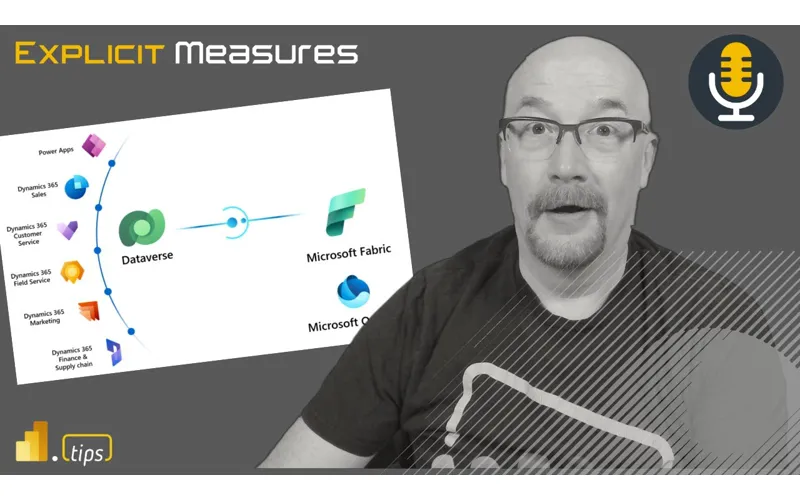
In Episode 365 of Explicit Measures, Mike and Tommy dig into the realities of bringing Dynamics/Dataverse data into Microsoft Fabric and what to watch out for in real implementations. They also cover Fabric news and how these platform choices affect teams building reliable analytics at scale.
News & Announcements
-
Announcing Public Preview of the “Share” Feature for Fabric AI Skill | Microsoft Fabric Blog | Microsoft Fabric — The Share capability for Fabric AI Skill is now in public preview. This feature enables AI Skill creators to share their AI Skill with colleagues, allowing them to consume the AI Skill and gain valuable insights from…
-
Fabric February 2026 | Norway’s #1 Microsoft Fabric Conference! — Fabric February 2026 will take place at ODEON Cinema in Oslo, Norway on Thursday, February 5th, 2026!
-
Gotcha’s of bringing Dataverse data into Microsoft Fabric – Data – Marc — Recently, I architected a solution for a client for their Microsoft Fabric data platform. The client works with Dynamics Finance & Operations as one of their main ERP system. Fabric offers easy ways to bring data…
Main Discussion
This episode centers on the architectural decisions and tradeoffs when integrating Dynamics/Dataverse data into Fabric for downstream analytics. Mike and Tommy talk through common expectations vs. reality, where the sharp edges show up, and how to think about building a reliable pipeline that won’t collapse under real usage.
Looking Forward
As Fabric continues to evolve, the best teams will treat “Dynamics → Fabric” as an engineering problem (governance, incremental loads, modeling, and operational reliability), not just a connector problem. Expect more focus on repeatable patterns, clearer ownership boundaries, and tighter feedback loops between app/ERP teams and analytics teams.
Episode Transcript
0:33 good morning and welcome back to the explicit measures podcast with Tommy Seth and Mike good morning everyone and welcome back good morning gentlemen and a happy Tuesday to you it’s a Tuesday I feel like indeed every time I do like a training session my brain’s like turns to Mush just like man I have to think so hard about all the things I got to say and all the the slides and all the all the the pieces that come together it’s good it’s enjoyable I really I get excited about it but man I’m just like next day
1:04 it but man I’m just like next day after I’m like man I need like a Break 8 hours of training is a lot I assume you were talking about yesterday that would be yesterday okay coming into today with the speaking hangover I guess you’re going to get a lot of like howtos this this episode I guess recently I was talking about exactly as a
1:35 yesterday all right jumping in main topic for today is we’re going to address a mailbag item for today let’s jump in and talk about the a question it’s actually a mailbag from us this week so we have a question around the integration of data verse and inside using inside fabric funnily enough I actually just had this question inside my class was like yesterday was like we have Dynamics data how do we get it I’m like I think they just work together so we’re supposed to able to pull in things from d from data verse which I believe is tables
2:06 data verse which I believe is tables being built by Dynamics so good timing of the question but before we do that let’s just do a couple quick announcements and promotions here so since you listen to our podcast we we like you so much we’re here to save you money U so we’re actually we’re going to promote one of the really fun events I went to it last year it’s called fabric February it’s over in Oslo Norway I think is where it is but you can go visit fabric february. so if you’re in the European area and you want
2:37 you’re in the European area and you want to go check out that conference we have a 10% off coupon for you use Fab Fab Feb tips oh boy maybe I picked a bad name for them Fab Fab tips to get 10% off your ticket so if you want to go join a lot of other powerbi and fabric developers over in Europe very good conference I went to it last year super fun they had a great snacks I guess they say it snaks and and so they had great snaks the whole time a lot of good food really good people
3:08 lot of good food really good people great speakers so it was super fun so I would really highly encourage you to go but if you want you can get 10% off right now I think that lasts all the way up until October 24th you’ve got a couple days here left to use this code until October 24th so code information will be in the chat Below in case you want to see that I’ll also be in the description if you want to go use that discount code so for your the low low price of free you get a discount on something all right moving on Tommy you have an announcement everybody wants to talk about but go
3:38 everybody wants to talk about but go ahead I have a major announcement I can’t I’m so happy I get to say this the Yankees are in the World Series all right I’m moving on just kidding go ahead Tommy I’ll let you have your moment Tommy go ahead a lot of people may know this but I am more of a Yankee fan that I want to be my entire life has been living and dying by the team and I think I say I’m sorry I think so too and I tell people I wish I didn’t care this much I like I so it’s
4:09 I didn’t care this much I like I so it’s not I don’t know if it’s an actual mental cognitive Choice there we lost a crushing for this I think so I lost they lost a playoff game on I think it Wednesday and I remember going I don’t want to do this anymore like what that brings you to but I told my wife because we’ve never dated or been together since the Yankees have been the world ser series those two those two worlds never overlapped so I was be like you have not met me yet until how does that how does that make Yankees last one it’s like
4:40 that make Yankees last one it’s like the Two Worlds like two friend worlds are coming together so I don’t know how I’m going to behave when the World Series starts it just matters so much so I I am pumped I need to say it we can move on but like continue continue share more share more about your feelings with the group here listen we really divert start talk about Mike Mike Mike explicit measure pocast canel we’re gonna talk about the Yanke therapy this is my this
5:10 about the Yanke therapy this is my this is Tommy’s Yankee therapy session Yankee therapy session tell me more how long has it been since the Yankees have been in the World Series 2009 2009 that’s a long time it’s you’re so you’re you’re very strong for lasting this long I just want to mention olve the resolve and inner fortitude that you have as a Yankees fan it’s impressive Tommy listen the worst thing you can have is Hope and I’m filled with
5:45 it all right moving on congratulations I’m glad your team is in continue to keep you updated World Series when when does the World Series start for our the rest of our Sports peoples Friday sports ball people Friday evening got it okay guess the dodg the Dodgers that’s LA LA Dodgers yeah yeah I no Sports I’m so good at this game easy easy amazing cannot wait all right jumping into another announcement we have Tommy
6:16 announcement we have Tommy you wanted to bring up a topic here just a news article here there’s a Blog announcement from an AI share skill what’s this all about Tommy yeah so announcing in public preview our our favorite term with Microsoft now is the public preview of the share feature for fabric AI skills which this allows you to do if you’ve created an AI skill you can actually now share it with colleagues allowing them to query what you’ve created there’s some enhanced publishing so they can add some
6:46 enhanced publishing so they can add some descriptions and there’s version management so that’s all they have now I was a was a little intrigued when I saw that it’s a preview feature for just sharing but I’m sure there’s a lot of things going on around the system but again it’s one of it’ll be part of our list of the complet it or kill it episode that will be coming in the future I feel like preview is pretty important or sharing’s pretty important here isn’t that the purpose of making an AI skill to begin with or anything in fabric you build it to share it so
7:18 fabric you build it to share it so why that’s in preview I’m not sure but maybe it’s maybe there’s other things but there’s a huge list of limitations on AI skill things so I’m still not sure I quite understand what an AI skill is supposed to be doing and like how does it bolt into your normal your normal fabric scenario so I just got to maybe spend some more time understanding what AI skills I haven’t built any myself I I can’t really speak to this area have you built any AI skills Tommy at all in fabric yeah and honestly it’s I haven’t spent a ton of time or maybe I should
7:49 spent a ton of time or maybe I should spend more time but I’m just going to go okay what’s some of the use cases here and I think that’s where I’m struggling so it’s like when you’re going to start developing this you really need to have that use case in mind it’s it’s actually very funny when you read this documentation you see the the AI skill switch must be enabled and so I keep reading this is the AI kill switch is enabled so I can’t do AI kill scenario the AI kill tenant switch the AI kill sharing oh wait a minute it’s skill it’s has an s in the front of it I don’t know
8:19 has an s in the front of it I don’t know why keeps keeps maybe it’s me being alarmed by the AI taking over all the things but I I haven’t really spent a lot of time building the AI skills so I’d have to figure out more of what what this what this means to us and how we would leverage it inside our inside our tenant honestly with all the limitations since the AI skill itself is still in preview is so limited now that it’s kind preview is so limited now that it’s intrigued to play around with but of intrigued to play around with but there’s nothing you can do here with production nothing that you’re gonna I
8:49 production nothing that you’re gonna I that I would recommend releasing to an organization yet anything would be for beta testing or start contesting with the team but not necessarily real world use cases because because of the current limitations gotcha makes sense we don’t know how much the AI skills actually consume compute units inside the fabric either so we there would need to be some one of again one of these things where we’re we building all these extra things onto fabric I’m concerned as how many compute units does it consume which means how much
9:19 does it consume which means how much does it cost me at the end of the day so that that would be one of my main needing to under standpoints okay excellent well that’s it for the initial announcements we can get into our main topic today main topic today is going to be talking about Dynamics we actually have an article around this one as well data Mark does a great job of he goes through some what we call gachas some trips some pitfalls some pitfalls of bringing data vers data into Microsoft fabric so maybe follow along with data Mark’s article but we actually have a question
9:50 article but we actually have a question directly from one our audience this is our mailbag for today Seth you want to take it away and give us a a read off on the mailbag you betcha Mike hey he guys I just said oh is it like the noral is that like I just I don’t know if that’s a hey you guys it’s like that isn’t that Elf the movie that’s Elf the movie right no not I’m gonna I’m blanking right now just spoke with Mike on teams about how
10:20 just spoke with Mike on teams about how I Mike are you planting these questions I am not playing questions wait a a minute a minute he said the com and in the mail the mail bag I’m everywhere are these your are these your workers Mike these are I’m I’m the AI actually so this is my skills AI all right and sorry I’m diverting
10:41 AI all right and sorry I’m diverting from the question hi guys just spoke with Mike on teams about how I think there are more interesting topics questions and issues with fabric related to backend stuff let’s say notebooks orchestration spark configuration settings Warehouse versus Lakehouse using azure devops pipelines versus deployment pipelines lots of interesting topics to touch upon for today I’m curious if you’ve worked with dataverse d365 fno data how do you find the
11:12 d365 fno data how do you find the synapse link fabric link to work and what are your main recommendations for designing an analytics Solution on Dynamics Dynamics data Finance fno stands for finance and operations I believe M yes yes just FYI so sometimes people say acronyms I’m not sure what they are I to go Google them but I think I know that one it’s Finance Dynamics 365 finance and operations well let me let me just comment to the nature of this question
11:42 comment to the nature of this question to where it came from I think the point here is I think a lot of topics we talk about on the podcast are very powerbi Centric just because that’s what we know that’s probably where we spend most of our time working with interacting with but I think now with the concept of fabric opening up many other options there’s going to be more topics coming that are going to be in the fabric space data engineering the back end where do we store data what are the options here but I also feel like I’m not sure if everyone particularly everyone on the comp podcast has had enough time to come to consensus on like
12:13 enough time to come to consensus on like one thought one way or the other like one example AI skills okay I’ve heard about it I hear that it’s there have I has been able to spend enough time in it to like really have a decision point one way or the other probably not I probably shouldn’t talk about it so I think as we get more and more down this fabric route and more and more people experience it more people do it and we have more patterns of oh this works well this one doesn’t work well I think we’re going to continually try to expand the the podcast into other things and I think this is a good topic right because this is something that’s not really specific to powerbi the desktop the application
12:44 to powerbi the desktop the application it’s more about the other things that go along with fabric and and integrating data into fabric so that’s I just want to comment on the topic we’re going to try I think we’re going to try I think we’re going to make more topics around fabric related elements and I think a lot that’s dictated too by the work that we’re doing and I think we’re seeing a lot more organizations going into fabric related needed Services too so and that’s going to go oh there’s a catch you there’s a gotcha there’s a good episode too so a lot of this is again this is our real world what we’re actually dealing with so H the real
13:17 actually dealing with so H the real world real world brought to you by the explicit measures I was going to say MTV but but okay so jumping in today so what are your initial thoughts around data verse and bringing things into Data verse from the fabric realm of things Dynamics is a deer sparring partner of mine with powerbi okay and so I I I have a long history of efforts to integrate data verse and Dynamics data
13:47 integrate data verse and Dynamics data and CRM data into powerbi prefabric and even out like to your point like getting still qu getting questions around it I don’t and I think we see some sparse article PS around here not just setting this up is it’s not as easy as it sounds because of how one the CRM data is in a sense structured it’s it’s Row Record based not necessarily analytical based so there’s already some limitations there but you would imagine that CRM data
14:18 but you would imagine that CRM data would be one of the more core parts of an analytical solution but that’s not always the case or that’s not really the case and I think it’s because of the barrier to entry or the limit ations of getting that data in we have fabric now we have now a different solution because if you tried before to try to directly connect to Dynamics or data verse and have that direct connection to a powerbi semantic model good luck good luck there were power query Advanced things you got to do in just to get that data loaded
14:49 to do in just to get that data loaded but we have shortcuts now we have other ways with the Lakehouse where we can actually store that data so I think that arises the question to do we bring everything into fabric from Dynamics is that do we have to do we need to isn’t the point of some of these connections to keep data where it lives especially with shortcuts I think that’s the idea of of shortcuts is you’re already paying for somewhere to store it in some other system right and for example maybe you
15:20 system right and for example maybe you are an heavy I work with customers that are heavy a AWS shops they’ve got and I call this is a term I think some I’m I can’t take credit for this term but heard the term and it makes sense to me I’ll just relay the information that I’ve heard they call this thing about the data gravity right the more data you make in a particular cloud or location or area that becomes the gravity of of what you are going to Center and build around so customers that are in AWS they’re going to make well we have data gravity in AWS what’s the visualization tools that go with AWS
15:50 visualization tools that go with AWS because it’s it’s there it’s in that area it’s not going to be efficient for you to move or take on the initiative of moving terabytes of data between clouds to do what right you’ve already made infrastructure potentially you have processes that are sending data to some location and it already exists inside AWS well you’re not going to rebuild all that that’s so much work just to move clouds just to get to the reporting solution so like people are going to want to have their data where it lives Google
16:20 Google AWS I think Tommy you’ve worked a little bit with like the Google analytics inside the Google Cloud well well well another but you but you wouldn’t you wouldn’t think I don’t think I I would argue here Tommy you would not say look I’ve got all this marketing analytic data in Google because that’s how we do our advertising and marketing M Google is the biggest marketing you M Google is the biggest marketing AdWords is your thing you’re not know AdWords is your thing you’re not going to say I’m going to lift all that data out in raw form over to powerbi you
16:52 data out in raw form over to powerbi you may aggregate it and then report on it somewhere else what is it Google big query is supposed to help you get through some of that to like summarize the data and then from summarizing data then you use it yeah it’s interesting you bring up the Google analytics and we’re talking about Dynamics because it’s the same problem arises where I think so with Google analytics 5 or the the new version two especially there’s five now we just got done with four four four what whichever the new one is the way I’m already
17:22 I’m already behind the way the data is structured is poor it is not meant as before where oh my God it’s clearly operational it’s clearly like it’s clearly operational but it’s analy yeah so it’s analytical data it’s event based data so and that’s where that’s where a lot of people get hung around is yes oh look I have all these events showing up but a series of events defines a session a series of events defines a purchase a series of events Define these different things not play well with tablet models
17:52 things not play well with tablet models well that’s not the point of Tab model T model is like summarized aggregated data we already know what’s going on you you have to shape it exactly and that’s the same with also Dynamics and CRM data too even if we have the shortcut right okay good analogy yeah so even if we have the shortcut or if the data if you have the gravity in Google if we have the gravity in another CRM system well the problem is that unless you’re gonna again work in that cloud you have to structure this data if you want to do any analytical solution to it and a
18:24 any analytical solution to it and a considerable amount too I think yeah I was going to say let’s I’m I’m going to go back into so I like this concept of where you’re going down Tommy the fact that the data lives somewhere else maybe for those of you who are not quite comfortable with what data verse is maybe we should just do a quick I’m just maybe thinking for me personally just maybe doing a quick summary of what data verse is and how that works with the interaction of all the Dynamics products I believe so my understanding is data verse is just a list of tables it’s a it’s a design
18:55 list of tables it’s a it’s a design of a system that may contain you just tons of tables customer lists product lists any interactions with customers it’s a known structure of how a company potentially would run the Dynamics side of things and this is I think I’m going to play some n some naivity around this because I don’t really know Tommy knows probably better than I do but power apps and Dynamics goes very well together yeah right It’s basically because power apps
19:26 mean it’s basically because power apps lives on top of data verse data verse are copies of tables that are inside Dynamics so that all fits in my mind my mental model is that that’s kind mind my mental model is that that’s why it makes sense so I in of why it makes sense so I in my mind this is probably oversimplifying things but d Dynamics is a is a a series of power appt interactions to information that lives in tables that’s what the system’s doing there now that’s probably not right it’s not super simple but I don’t I don’t deal in that space a lot I I connect to it but that’s that’s about it so yeah
19:59 it but that’s that’s about it so yeah I was goingon to say the only the the real important aspect here when you’re especially when you’re do with the power platforming like you said the common data model what you used to be called is all this even though it is tables and you’re exactly right but again how it’s actually engineered it’s again we call it record-based so it’s meant to query one thing at a time because I want to look up all the information of a single record yes and that’s what you’re trying to do so that’s and it runs fast in the Power Platform or yes in a yeah correct yeah because right and and my
20:30 correct yeah because right and and my initial mental model was like oh this is just a big it’s just a big series of tables it’s like it’s all just one big SQL Server da d da well apparently that’s wrong it’s not just one big SQL server with lots of tables in it it’s like a collection of lots of services that are all BT together it’s like there’s functions there’s Cosmos DB there’s SQL databases there’s I don’t know whatever other like but it’s it’s almost like I’m going to step back and say this again an outsider perspective looking at it it’s almost like T as a service you don’t care how
21:01 like T as a service you don’t care how they store it but they’re going to let you store groups of information with common known columns as a service and you can make new tables or you can make definitions of new columns inside those existing tables dynamically it doesn’t really matter what the table started with you can add six seven 8 nine 10 columns onto it whatever you want and now you have the the additional information and then
21:22 the the additional information and then what dataverse is doing is kind what dataverse is doing is like this I’m going to call it for of like this I’m going to call it for lack of better a term an API layer that allows allows Fabric and other tools to come in and talk to those tables so dataverse plugs in very nicely with power apps so if you want to manipulate those tables above and above and beyond the scope of what Dynamics gives you you can build a power app on top of it and you can bring the data together and you can join it and you can edit it and so it becomes this editable item in those tables is that a a good summary here anyone else in the chat working with Dynamics
21:52 else in the chat working with Dynamics is is that how you understand it is there something I’m missing here feel free to put something in the C in the chat if I’m off base with that being said around Dynamics and data verse now it becomes how do you get it to work with powerbi and fabric and I think that’s been something Microsoft has been touting for a while is hey look just connect to it bolt onto it and there’s this idea of shortcuts where fabric can read those tables or have a shortcut to the information but we’re not actually surfacing we’re not copying the data over to one Lake inside fabric is my
22:25 over to one Lake inside fabric is my understanding yeah and like I said I think this is a really great place as we continue continue because if you’ve ever have you guys ever tried to query like a CRM or a Power Platform table in powerbi yes and i’ I’ve done more with probably Salesforce than I have but that’s more like API CR it’s a CRM table so yeah again even with the shortcut to I I think there’s even some limitations there too
22:55 there’s even some limitations there too right because your first thoughts like yeah we want to bring in overall of operations data right I might might not probably want to pull in everything in your CRM because that’s usually incredibly large like all your account based information and again the gotcha if you’re just starting off here too and you made this point to Mike but it really needs to be emphasized if you’re envisioning the Power Platform or the data verse like a giant semantic model you are very mistaken because it doesn’t work like that so just saying hey we’re going to pull everything over into from Dynamics into a lake house
23:26 into from Dynamics into a lake house well it’s not going to make a lot of sense because of how table like what tables live where and what those purposes are so I I think just starting off with this question is there really has to be some use cases in mind I this is not something I would do because we’ll figure out a solution or a reason to have all of our operations data and all of our event based data and all of our account-based information fabric because you even though it’s a shortcut well you’re still going to pay some cost and then again two there is a lot of
23:58 and then again two there is a lot of specific work you need to do on specific tables for any solution to make sense the I’m just trying to I’m trying to parse through what Tommy was saying like go on well so this is I feel like the the tables that live in Dynamics or data data verse from dynamics that they’re supposed to be easily connect to and again I think connecting to them is is pretty
24:28 connecting to them is is pretty straightforward I think the question in my mind is what do you do with after the fact of that what’s what’s the processing that needs to happen to get into the reports that you’re looking to get into and this is an area that I’m less familiar with I’ve heard very clearly that Dynamics reporting is trash in general it doesn’t really help you it’s not very useful so at the end of the day you need be able you need to have people who understand all the richness of all the tables and can figure out okay what questions is my team going to ask about what this is doing now I’m I’m assuming finance and operations very much
24:59 finance and operations very much finance-based information this is this is where if I’m ever interacting with any Finance team it’s typically quick how can we get everything to excel as fast as possible that’s where we need to be we’re going to be building tables and aggregations we’re going to build where’s our Revenue coming from how much expenses do we have what do what does all that look like inside the operations and financing portion of the system so being said to that it’s kind system so being said to that it’s about okay do you have a known design of about okay do you have a known design pattern to get the data out of Finance
25:29 pattern to get the data out of Finance operations into powerbi and then I think the shortcuts make sense for connecting to the original tables but I think there’s going to be another bundle of work or you call it a black box whatever you want to some designing that needs to happen is from those shortcuts what do you do right so from those shortcuts let’s build out these series of tables and so this fits in my mental model very well with what I would look in the Lakehouse with Medallion architectures one thing I’ve been exploring a lot more recently has been
26:00 exploring a lot more recently has been what are the impacts and costs of using the we have a Lakehouse and we have a data warehouse data warehouses I have stayed away from a little bit I’ve just known how to build lake houses and think that that’s the right way to go trying to figure out what’s the right spend pattern usage for warehouses so U figuring out where that fits in this ecosystem of things as well this might be one of those other opportunities right warehouses are more suited for when you have structured table data coming to you so bringing in shortcuts
26:32 coming to you so bringing in shortcuts connecting to those data then directly jumping into making those rrich tables joining tables together making what you need to have building star schemas is essentially what you’re trying to do at the powerbi level and so that’s where I’m thinking this is going to happen you’re you’re going to connect to the tables you’re going to start there but then what you’re going to do is you’re going to immediately need to have a some engineering around that data shape the data bring it together together join multiple tables maybe even add some of your own supplemental data because it doesn’t quite match exactly
27:02 because it doesn’t quite match exactly what you want but in in my mental model here anytime I connect to some operational or CRM system people just enter information in wherever they want sometimes the system controls it sometimes the system doesn’t and what we do a lot in the data engineering space is figuring out wait a minute where does this data live how do we join these two tables together because we don’t have a clear connection between them the system doesn’t store it we’re going to to build up keys we’re going to build up matching elements ways to match the data
27:33 matching elements ways to match the data this is again this is finance and operations this may be different but like if I have other systems Google Google analytics website data that stuff probably doesn’t technically join very cleanly back to what I have in my dynamic system so how do I identify a customer across both areas is there a global identifier for that customer each system is going to have its own unique identifier for each customer but I need a central one that matches for everyone so like there’s this these major challenges I think that come out of play here as you try and build out these Data Systems and you have to think about okay what are you
28:03 have to think about okay what are you trying to do what do you really want to report on start small build what is adding value immediately and then from there you can keep exploring those tables and doing different things with it I think the the value in the different types right if we’re shortcutting or using the the link right like connecting to dataverse or any other data source the value of those special connections is not having to deal with the daily incremental load of data right it it removes a part of your
28:34 data right it it removes a part of your ETL and it’s a direct plug into the production system now as with any data source but I would all argue especially with CRM systems right like of course we’re building an abstraction layer right a business logic layer where we’re combining only the relevant information that we need and that’s going to live in your analytics environment regardless of what type of connection right that you can access the data you can pull it in you’re still going to have to do that
29:05 in you’re still going to have to do that it’s just a matter of like can you do it directly through not moving the data or do you have to move the data one of the thing I’d like to point out is yes whether it’s data verse and Dynamics or Salesforce Crum systems are a challenge to work with typically because you you normally don’t get good architecture behind them right right and and that’s in general let’s be honest like
29:35 that’s in general let’s be honest like like we we aren’t keeping a clean framework usually it’s somebody comes in with a new idea or some new area of the business comes in that wasn’t part of and you can’t scale and then all of a sudden the column explosion happens and then you don’t know what’s being used anymore right and I think that’s what I’ve seen repetitively is just new people new systems that have to be accounted for in a system that wasn’t designed to scale and then it creates this very large problem to solve constantly but I
30:08 large problem to solve constantly but I would say that I in certain systems I don’t think reporting is horrible I just think that the data that is collected within them is e like quickly moves into the realm of much more useful with other data coming from other systems and I think it’s that’s where a lot of the value value for the business comes in is why and why we want like talk about this being a primary connection for polling data into fabric is because this is the
30:40 fabric is because this is the stuff that hey can we tie these certain things to revenue or projected revenue or what’s coming in through the opportunities or etc etc because then it it it’s very enlightening right about how how healthy your business is and that’s where I think a lot of value comes in with plugging into these systems but with the promises of super fast super easy keep your data in the same place with some of these connections there are some gotas and I
31:11 connections there are some gotas and I think that’s where data Mark’s article comes out or comes into play Here let let’s talk about data Mark’s article because I’ve seen this actually occur for many organizations and actually I think this is a bigger challenge in general that people are not aware of and this doesn’t necess neily apply to Dynamics but this applies I think in general anytime you have a cloud data warehouse somewhere in the cloud this is something that you must first consider every time you’re doing a powerbi project so here’s the article
31:42 powerbi project so here’s the article from data Mark data Mark talks about there’s a a gacha about using Dynamics data and bringing it into the Lakehouse and I believe he’s also talking about bringing the Lakehouse data into like Microsoft fabric as a shortcut so a very specific way of loading the data so jumping jumping into his article he talks very briefly
32:02 into his article he talks very briefly about okay what is Dynamics data verse to the rescue the story initially here’s data verse shortcut get it into a fabric great now you can work with the data right it seems very easy but there has been some updates but I think the challenge here is your Dynamics environment can get spun up where you tell it to get spun up the fabric environment your default fabric environment doesn’t necessarily get spun up in the same region and I’ve seen this many times where organizations have made decisions to build in Azure and they’re
32:34 decisions to build in Azure and they’re in a East US data center for their data like literally the software that they’re making or the hardware they’re deploying is all in East us for whatever reason Microsoft just when you sign in for the first time to harbi harbi just picks a region that it’s going to go into that’s closest to wherever I think the first person logs in yes and it just says whoops like so if you have a company on the East Coast that was bought bought out and has some data centers on the east coast and you are logging in for the first time in powerbi on the west coast it’ll pick a West
33:04 on the west coast it’ll pick a West Coast Data Center that’s nearest to you which makes sense you it it’s not like it’s not a hey let’s turn on powerbi tell me what region you want to be in and then it it just picks it based on where it thinks it needs to go cool nice it makes it easy for us but then now when you start looking at like costs of getting access to your data connecting to your own data center which already lives inside Azure you now have to go between data centers and there’s there’s this concept of an egress and Ingress cost for your data centers so as long as your data is inside a data
33:35 long as your data is inside a data center mean meaning your VM for your SQL Server is in the same data center as your powerbi environment there is no cost to transmit the data across a internet connection basically right right and so there’s this concept of if you don’t think about initially and again this is a huge warning because I’ve seen a lot of customers just do this and I don’t think they even know that they’re having costs I think they just turn it on and be like oh it just works great no one’s even thinking about
34:05 works great no one’s even thinking about this now for fabric SKS you can move them between regions so I can co-locate the hardware to run a fabric workspace near where my data center is so that that works but there are aspects of power. com that don’t live in that area what I don’t know is are there egress inoss costs for that I I don’t know I don’t know how to measure that very well but I do know if you’re using sparkk if you’re reading and writing lots of Delta tables that can get extremely what I’m going to call quote
34:35 extremely what I’m going to call quote unquote chatty between the Spark engine and where the files are going so those things definitely need to be collocated in the same region so if you’re shortcutting to another data center or you’re shortcutting to something else and you’re reading everything with shortcuts there’s a potential for a high amount of data going between data centers so to me when I hear the word shortcuts I put in the back of my mind Hey I really do need to check the location of where that shortcut is going to and where’s my data center so one
35:07 to and where’s my data center so one they’re not like across the world right I’m I’m using a shortcut from a West data center into an East powerbi environment there’s going to be some additional latency that goes across by sending data all the way across the US is it going to be I don’t think you can get around that it’s just physical things so this is in my mental model that’s is one of the things that Mark points out in this article it says look if Dynamics doesn’t exist in the same in area as powerbi you’re going to have some problems you’ll need to co collocate your fabric environment where your Dynamics environment lives and I
35:39 your Dynamics environment lives and I think this is a really relevant point I see this problem all the time super technical very in the weeds here on this particular issue but it happens all the time every almost every client I show up I have to do an initial REM a movement or relocation of their powerbi tenant because they’re one something’s in the wrong region and I think Mark also speaks to that you had he’s actually having to creating another fabric skew to be in the same
36:09 another fabric skew to be in the same region as where their Dynamics data center was and he talks about that solution as well so migrating the tenant yeah this to your point Mike we can’t control where our powerbi location is and if you also don’t have that ability to create that tenant then again you’re right off the bat not getting anywhere where do you want to go from here do you want to keep diving into from the gotta with Mark I think that’s that’s for me the mean I think that’s that’s for me the gotta point just make sure
36:39 gotta point just make sure where your tenants are figure out where your your Dynamics lives and then make sure whatever you’re doing for shortcuts that they’re in at least in the same region so I think Mark outlines the solution there how to migrate how to get he talks about how to move your capacity how to migrate Your Capacity meaning take your existing content move it to New a new I don’t really love doing that just because it I don’t trust that microp is going to be able to get all the scripts working it’s all it’s a backend process it’s a help test help test ticket and migration could take a long time if you’re trying to migrate where your
37:10 you’re trying to migrate where your powerbi tenant lives could take a bit of time you could just spin up a new capacity using a fabric skew that’s another solution or you can basically delete your power environment and re recreate it in a different location that’s the fastest option if you want to move between areas and that’s the one that I typically prefer when working with companies we self-manage downloading hopefully a handful of assets cuz we’re just starting out with powerbi and then we move we basically delete replace don’t keep our the artifacts move over to a new region and then start from there so that’s those are the patterns that I’ve seen that
37:40 are the patterns that I’ve seen that seem to work Fair well but let’s we can move on to other things what other things should we talk about for this Dynamics Dynamics content I I think I want to touch on what Seth mentioned earlier because once we finally even just get the ability to connect to your point set there’s a probably a lot of work that we’re going to want to do when once we have that data into fabric because man again the way the tables are structured is there’s a lot of custom Fields there’s a lot of tables that are like two column tables that again make sense from a
38:11 that again make sense from a record-based system but I remember the first time I was trying to build a solution when I got the request and it was one table was what I again was thinking semantic model world was all keys and you’re like okay I’ll just pull in all the product information well product category had was one table or with two columns product name and then the ID subcategory every other product column was its own table because that makes sense in the way the record-based world so just to pull in five columns
38:43 world so just to pull in five columns you would need five tables so try again try to do this in a powerbi power query not great but there’s a lot of work just to get a to get a standard semi structure that you’re looking for and again I think that idea that we’ve talked about before going into this with the conceptual model first is integral or you’re going to be spending a lot of time and money just to try to find and explore and a lot of extra bloat so knowing where you’re going first but I want to touch on
39:14 going first but I want to touch on because we’re talking about all the barriers and all the extra work let’s think of the use case or the point of with if I’m in Power Platform what I’m looking at and again the what is that extra value than putting into powerbi a lot of cases with Dynamics or data verse is opportunity based for like your sales team I want to look up a customer information or account look at their opportunities look at what they last purchased or I’m looking at a quick snapshot of information
39:44 snapshot of information right I’m going off of with powerbi though I think it’s really integral that we’re not trying to recreate their Solutions because it works fine I don’t I it’s not necessarily a great analytical solution in power apps to look at my quick numbers but it’s fast and it’s usually that quick thing that someone’s looking for so I think going into this would you try to recreate just to look at the customer information or are we really having going in mind with some intended
40:15 going in mind with some intended analytical solution I guess that’s which way would we go would we try to recreate it or do we have some other analytical thing like a lot of things we want to combine this with I I think that question fits into the way I worded mine which was how does dataverse fit into the fabric into what fabric offers right because if I’m I I’ve never used data first like personally so get that out right away I
40:47 personally so get that out right away I know I know about it right I know a bit about it but it if if I’m just re reiterating going through what data verse provided MH as a solution right first it was like the common data service now it’s the data verse right it it was for Power Platform which powerbi was part of and power apps are and if that’s the centralized location for business data and I’ve got apps plugging into
41:18 into that how how does like we’ve been talking about dataverse as a data source right now but really it’s the platform that those bus business side applications are running off of so this doveet tailes into your question what are organizations supposed to do now like push fabric data back into Data bur or like if I’m going to extend the value of Dynamics or system and say we’re plugging it into other data within the system and I’m building a data mesh
41:50 the system and I’m building a data mesh in Fabric and I’ve got domain owners and I want to go down that route well isn’t that my source of business data for applications and for reporting or is it both and and that’s just where my mind is like how does how does how like I’ll I’ll leave it there and then I’ll make another comment after okay so let me give you my interpretation of maybe what you said and and kind maybe what you said and and how I view Dynamics as well one one
42:20 of how I view Dynamics as well one one the the running joke with powerbi people is Dynamics is just a data source for powerbi so that’s maybe maybe one of the running jokes there so I think with fabric we’re getting more of this ability to do like a round robin of data more so than just what we would usually do in powerbi which is a readon lens of data I think I feel like a lot of
42:42 data I think I feel like a lot of times I would design things in powerbi that would be connect to Dynamics connect to Google analytics get tables of data out shape it to what I want have a table of or tables or visuals reports built on top of that information give it to the business they find Value and then they go back to the source system Google Dynamics whatever and make their changes there right so it’s more of like a lens into the world of whatever that system is doing I think with the advant of fabric two two Trends
43:14 with the advant of fabric two two Trends I think are emerging right I don’t want to continue copying data because it’s expensive it it costs more storage it cost you more compute units to go get the data out of the system and bring it over so I think there’s this idea of shortcutting or they’re going to call quotee unquote virtualizing your data right making apis go get the data for you and then you just have a resultant table that you can go do reporting on top of however I also think there’s a story around so we’ve done a project where
43:44 around so we’ve done a project where we have a a power query data flow inside power apps that is loading data into tables that exist inside dataverse so in my opinion I think of dataverse as just a collection of tables it it’s it’s Ser it’s seriously a just a collection of tables that a Dynamics UI has been built on top of and so that’s why I like the idea of pairing my mental model really equates Dynamics to power apps it’s it’s literally apps
44:14 power apps it’s it’s literally apps built on top of table structure data and you can then interact with it you can then make a table inside a power app you can go find individual rows of data fill out the the items that you need Dynamics has the ability of making like a a s pipeline when this is done then do this then do this then do this so there there’s a lot more I think maybe what I would call the dynamic to me is the UI that runs your business there’s tables underneath the that that you support but now with power apps I can manipulate any of those tables or add other data or supplement
44:45 tables or add other data or supplement it so that’s where my mental model kind it so that’s where my mental model goes my mental model goes to that of goes my mental model goes to that direction what we do in powerbi fabric now is okay do we have all the data in Dynamics is all are all the tables there do we need to build a power app to look up edit or manipulate individual records because we can do that now we can build a PowerBar report we can embed a power app on top of it that lets you see data from powerbi click on customer records or transactions information which can then exchange the information over to
45:16 then exchange the information over to the power app inside the power Bay report or the opposite effect right you can be in the powerbi in the Power App application and embed a powerbi report you can pass data from the Power app into powerbi and say look filter this data based on this customer there’s the customer data in front of you so you could have this interesting interaction between the two pieces and so I think my mental model is when you want to manipulate the tables inside power apps or sorry in Dynamics or data verse you’re doing it with power apps and so you’re thinking of where can I
45:46 and so you’re thinking of where can I put the Power app element and what am I supplementing graphically with the powerbi report visuals those things as well so that’s how I see the interaction between the two I’m not sure if we’re quite there yet where powerbi is going to be writing or Fabric’s going to be writing data back into the data verse I think we very much can do it I don’t think there’s any reason why we wouldn’t be able to and now with this whole realtime streaming analytics data maybe we can detect changes from data verse and let people know when things are happening and and getting real- time information about what’s actually
46:16 information about what’s actually occurring in an operational system I don’t see a lot of blog articles around that yet so anyways that’s just my initial impression even the whole sales marketing thing of Dynamics versus powerbi is totally different do you back in the day Microsoft had these templates that you could download that would connect directly to your your sales and finance data versus oh cool and you connect to this and man I don’t know who created these reports but my word oh my gosh it was
46:48 reports but my word oh my gosh it was maybe some of the worst looking semantic models initially that was my first thought but how they’re structured but the visuals themselves it was like what the what is going on here and again I think because of the idea here too is okay connecting data verse great well guess what again these templates that Microsoft provided had 75 tables in them and these were simple get started like get started with sales are like I’m not GNA get started with 75 tables in a model trying to make sense of this
47:18 model trying to make sense of this because again guess what in a power app or in a data verse table and I’m I know it’s a table but again it’s not we I think there’s 23 types of column can be and notice I’m not saying data types because that’s not what they are there’s a lot of things called like lookups and and not just yes NOS but all these very custom fields that again doesn’t play well when you’re trying to think of this as a analytical solution so I think the one thing we
47:48 solution so I think the one thing we don’t talk about a lot is not just pulling the data in but with all the customization that you can do in power apps and how that does not play nice with trying to build a solution with powerbi you probably have some dataverse admin at your organization or someone who’s managing the common data model I I don’t know why you wouldn’t mean I I don’t know why you wouldn’t start there where trying to have that conversation with them first rather than trying to pull everything in as is yeah I I don’t think you’re ever going to
48:18 I I don’t think you’re ever going to want to pull things right out of Dynamics as is ever there’s been no operational system I’ve ever touched where that it is shaped and ready to go for reporting it’s just not right typically there’s always too many tables there’s the data is not Consolidated enough the the dimensions that we’re looking at is not spread across one table it’s just spread across eight different tables like every Dimension has its own key value pair or indexing table and everything’s a goid understanding is in Dynamics every property is like a random list of guids that attach to the
48:49 list of guids that attach to the property you want to pick the city that it come that the customer in that’s a single list of Aid and a list of cities it links to a customer table that has a whole bunch of other so it’s this really snowflakey weird optimized system for it’s a very optimized system for doing the transactional information exactly and that’s just not how powerbi wants to see it powerbi needs to see not all these snowflaking tables we need to see a centralized star schema and so I think Adrian is
49:20 schema and so I think Adrian is actually adding some really good comments and is and affirming my understanding as well he says here in the comments sinking near real-time data to the Delta Lake helps out a lot I would not consume the data directly from dataverse even if it’s possible because there’s always additional modeling needed in powerbi again me speaking not from Dynamics other systems 100% that’s true Seth you’ve done a lot with Salesforce are you ever taking even even when I did work even when I did work with Dynamics
49:51 work even when I did work with Dynamics and they both have the same thing directly importing into Power VI like you you get this nest link nature that at first glance at first glance you’re like oh like oh sweet like no bad juju right like you can’t in order to get at the data you really need yes you you need an intermediate layer I agree with that and I think Adrian also points out here as well there could be 10 to 20 tables behind a single Dimension table or a single factual table that you need again
50:21 single factual table that you need again it’s the idea of like the the system is built for operational data highly highly asset transactions it’s going to be edit records as fast as you need to many people in the system not deleting records or not locking out records when you can or cannot do so there’s all these like safeguards around a system that can allow hundreds maybe thousands of people interacting and adding data to it at the same time that’s a different data structure than I need a semantic model that is star schema it’s going to look different and so because of that there’s
50:51 different and so because of that there’s always that’s what I was trying to communicate earlier and I think Adrian just did it better than I did in communicating this there’s always this black block of data Transformations figuring out what the shape of those 20 tables turn into so you can actually use it inside reporting I think what’s interesting to me is if I if I look at data verse right it it it’s it spoke to the business side being able to conglomerate like con combine a bunch of
51:21 conglomerate like con combine a bunch of data sets in into this business side universe and I don’t know if like that now with fabric I don’t think the reporting side of that lives in there anymore it would or will potentially for some things if you’ve already like built out and in like restructured the data from your dynamic system and then you’ve got reporting off of that but now if I want to bolt that into other data that I Al also have in fabric are you really pumping that back into this directional
51:52 pumping that back into this directional which is now more just an operational system to me or are you actually doing more of your reporting in the system that all the other systems are going into because it’s more Enterprise is right and that’s where I’m still thinking about this because it it to me it’s not like where where I started with a conversation where I’m ending or kind a conversation where I’m ending or two different places because it’s not of two different places because it’s not just a data source right it it is a system that business teams are using and
52:22 system that business teams are using and it’s also like it could be a feed a push and pull of data data back and forth depending on how you’re using power apps or automate or like those are all tools for the business to do some of the same things that we can do in Fabric and now really is it you just teach people how to do that in fabric I I don’t know and it could be aite but and I’m not saying the whole Power Platform is isn’t relevant but it it’s interesting how I think fabric
52:53 interesting how I think fabric challenges parts of the architectures that were presented as go get it in Power Platform because it’s not like powerbi is its own entity now it’s just the reporting front end along with all the other horsepower behind it that are part of all of the Microsoft platforms for the most for the for the most part there’s an interesting comment here in the chat from LinkedIn and I was want to read this one they’re talking about I think powerbi is part of
53:23 about I think powerbi is part of powerbi is still part of the Power Platform Arena because power apps thinking about power apps power apps is connecting to existing tables manipulating data editing records right and then the power automate is like real- time actions actioning on data and things I and I would argue I think Microsoft has moved dataverse and and the power apps and the power automate it seemed like that has continued to be the Power Platform of things I feel like
53:53 Power Platform of things I feel like powerbi has now joined forces more with the data platform and because it’s now we we’ve now moved powerbi closer to fabric and so I would actually separate that mental model yes you can do power apps editing data in Dynamics you can edit tables in data verse with with power apps power apps can create its own tables right you can edit SharePoint lists and addit other things with power apps cool interesting but I think my mental model is really shifting away from power apps as being part of the it’s it’s its own Power Platform piece RBI has now migrated over to
54:24 piece RBI has now migrated over to fabric which is now I would say purely data platform because now it’s pipelines which were ADF spark which used to be synapse we got notebooks now which is totally a new experience and and powerbi is integrating much tighter with the fabric World which is data platform and I feel like finally for once we now have a real true home of where powerbi should live because it had been living in power apps for a long time and it was like well hey there’s power this is really popular product it’s in power
54:55 really popular product it’s in power it’s in power apps sorry Power Platform sorry my my apologies it the powerbi is in the Power Platform okay cool but when Tommy and I went to the Dallas conference for Power Platform and we were talking powerbi there was like a handful of us and we were like wow we are very different than the community that exists inside the the Power Platform group of people which was way more Dynamics way more power apps power automate like those make sense yeah
55:26 automate like those make sense yeah those group those products make sense together we just did not fit in that area and I think we were I think part was initially lumped into that group group not yeah it actually wasn’t initially no it wasn’t it was it own thing your SharePoint right yeah SharePoint bi initially I guess I guess if you look at the back the back end of powerbi all of that was Data platform and I and I honestly think like just from a structure perspective always been viewed as part
55:57 perspective always been viewed as part of data plat what’s interesting is Power Platform almost use power like we we we didn’t quite know did like did powerbi move over to Power Platform is like what’s going on is it part of platform confusing and if anything I think that was the first step for Microsoft going like yeah powerbi is just a reporting tool and we’re going to plug it into the Power Platform it doesn’t belong there belong that’s when our that’s when our data n AI conference turned into like the Dynamics conference and powerbi it’s just because we were
56:27 and powerbi it’s just because we were trying to figure out where where where do we fit like we didn’t fit here this is not our fitv high school do you remember this I remember I remember going for the first the first two data Insight Summits or whatever the first two was was all about data Excel bi awesome loved it and then what happened year three something changed and I was like what is happening here all of a sudden everything shifted and we’re like okay we had Dynamics Empire RBI like and I remember literally I remember teasing people people about the conversation we were like we had a
56:58 the conversation we were like we had a keynote and there was like almost no mention of powerbi the entire time and we got to the second keynote which was like then everyone started teasing like oh this is the real keynote now because this is really about data and now it’s just the powerbi keynote so I think you’re right on point Seth it’s it’s it’s been a tool that we didn’t quite know where to put it I think now it’s found its true home and now that we have like a an actual conference around the fabric conference which is solely focused on data analytics data science I
57:28 focused on data analytics data science I think it has it feels a lot more the vibe for me going to the conference has been a lot more like the original conferences it it does I think we’re also talking about like that from an MVP perspective or like where you’re you’re speaking in the audiences but like to be to be clear powerbi belongs in both of these ecosystems right it it introduced to business users ETL and data modeling and like the scale that you can create with reporting just above and beyond
58:00 with reporting just above and beyond let’s throw a couple tables or a single table and some visuals M into a report which is what CRM is like it’s like you want to build a report grab your columns and it’ll automatically just dump out like a paginated report for you or some visualizations right powerbi is an analytics ecosystem in and of itself right you you open that PBX ETL transform data model Dax I can extend it right I can build report reports on the same model all of that scales and I
58:30 same model all of that scales and I think it is very relevant to Power Platform and how you would engage and plug into the different data sources I also think it’s obviously very applicable to fabric and all of the Daya and ecosystems and analytics from there it’s just it becomes a conversation to me about the archetecture of your data sources within an organization in this ecosystem that is that fabric now encompasses and if if the direction is
59:01 encompasses and if if the direction is hey we’re creating the full data mesh how does a previous implementation from Microsoft I. E data verse Power Platform all the structures of data that support these tooling work within this framework and that’s where my mind goes so I don’t I’m not implying that power belbi belongs to one of these particular areas I think it’s a feature that is extremely powerful in both a very front-facing Business Solution as well as the Enterprise Solution on the back
59:33 as the Enterprise Solution on the back and I know we’re getting at the end but I I I would be remiss to really mention because Mike I think you highlighted something important here everything we’ve talked about right now has been I think much on the technical side on the logistics side but to your point Mike going to that conference the first time oh there’s a whole another world here in the Power Platform that I was not aware of and I think before even beginning this project you have to understand that the people who are living in dataverse and living in the Power
60:03 and living in the Power Platform they have it’s as like transitioning to powerbi even for them because of how they’re already consuming data it’s this is very much a start at the end I’m not going to start doing this because I just get a random request to bring this data into a reporting solution because of all the upwork because again these people the people in the department who are living in dataverse have some Solutions on the way that they are behaving with data and unless I know that my solution is going
60:35 unless I know that my solution is going to become one of my top five Solutions at the or I I because I don’t even have I need the business case that we’re transitioning and we’re moving people to look at powerbi we they’re looking at data where we’re doing it because again it’s not like they’re de devoid of any of the insights that they need I’m not necessarily reporting correct but because they’re like I need to look at an account edit but they’re going to try to do the same thing in powerbi and I think that’s my closing thought here is you have to start here at the
61:06 here is you have to start here at the end where I need the business case that the organization needs that I know people H like are going to be consuming this dependently they’re going to be dependent on this solution or it makes no sense to me I I like your point there Tommy and I think that’s exactly a standing a point I would make as well start with the end in mind start with asking the questions of business what do you need to do what do you need to see what information you’re trying to go after and then work your way back in there and if it makes sense for you to do a lot of your data engineering and shaping of information
61:36 engineering and shaping of information inside Dynamics or inside power apps then do it that’s fine that’s totally the acceptable solution here and then do a little handshake or you do a little handshake or final output reporting into powerbi know final output reporting into powerbi that’s also Okay so we’ve seen it the neat part here is it does couple very well between data verse and powerbi it does make it very easy for us to talk to both tools together it makes it easy for us to absorb data out import it into Data models and use it for your customer so I think that’s it’s a a very compelling story and I I hope they
62:07 compelling story and I I hope they continue to remove friction make this easier to work with my only final thought that I would add here would just be just be very mindful of where your Dynamics tenant lives and where your powerbi tenant lives you’re going to need to especially in Europe with with the gdpr laws and all that compliance information you’re going to need to be very careful around where are you storing the dat I need to make sure you collocate your powerbi and your Dynamics Assets in the same area just from compliance reason even for that matter well that being said I think we’ve done a a pretty
62:37 said I think we’ve done a a pretty exhaustive discussion around this hopefully this added some value I feel like we like wandered the conversation around a lot around Dynamics because some of us have experience with it but some of us doesn’t have we don’t have a ton of experience in Dynamics and connecting to things but I I’ll say it again Dynamics is just a data source for powerbi so figuring out how to get it in there is is is probably easiest for me I’ve probably angered all the Dynamics groups at this point poke poke poke anyways thank you all very much we really appreciate your ears we know that your hour of time is valuable we hope
63:08 your hour of time is valuable we hope this conversation was interesting to you and give you some value for your day you can have some more conversations with your leadership around Dynamics and integrating with powerbi we hope that worked well for you anyways we only ask one other thing is please go to the fabric February conference using Fab Feb tips to go check out the conference you can go get 10% off we’ll just push that again one more time awesome conference great to go meet some people there at the conference highly recommend it you can visit fabric february. that’s the the website for that with that tomm me
63:40 website for that with that tomm me where else can you find the podcast you find us an apple Spotify wherever get your podcast make sure to subscribe and leave a rating it helps out a ton do you have a question an idea or a topic that you want us to talk about in a future episode head over to power. tip podcast leave your name and a great question finally join us live every Tuesday and Thursday 7: 0 a. m. Central and join the conversation on all of powerbi tips social media channels thank you very much and we’ll see you next time [Music]
Thank You
Want to catch us live? Join every Tuesday and Thursday at 7:30 AM Central on YouTube and LinkedIn.
Got a question? Head to powerbi.tips/empodcast and submit your topic ideas.
Listen on Spotify, Apple Podcasts, or wherever you get your podcasts.