
Mar 1, 2024
TMDL is a promising step toward real source control for Power BI semantic models—human-readable files you can diff, review, and deploy. In Episode 298, Mike, Tommy, and Seth unpack what’s changing in Desktop and how Copilot can speed up measure documentation.
Feb 28, 2024
A BI rollout isn’t finished when the report ships. The team wraps up Microsoft’s implementation planning series with practical guidance on training, support, feedback, and monitoring adoption.
Feb 27, 2024
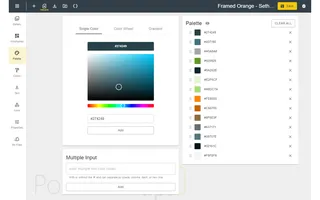
## Introduction Welcome to today’s tutorial where we dive into the powerful capabilities of the Power BI Tips+ Theme Generator. In this post, we won’...

Feb 23, 2024
A listener asks how to help analysts find the unexpected “aha” insight inside a governed Power BI experience—without exporting everything to Excel. The team revisits Ep. 294 and outlines where exploratory analysis fits, what audiences need, and which Power BI/Fabric tools actually enable discovery.
Feb 21, 2024
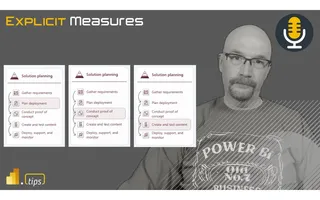
A BI rollout succeeds or fails in the messy middle: deployment planning, proof-of-concept reality checks, and a repeatable validation loop with users. In Ep. 295, the team breaks down how to move from strategy to something people trust and adopt.
Feb 16, 2024
In Ep. 294, the team draws a clean line: analytics turns raw data into meaning; visualization turns meaning into a message. If your Power BI work feels like ‘just charts,’ this one helps you reset the goal—and includes a quick sidebar on why Copilot feels inconsistent across Microsoft 365 right now.
Feb 14, 2024
Requirements shouldn’t be a dead document—they should be the shared decisions that drive your semantic model, visuals, and rollout. In Ep. 293, the team breaks down solution planning requirements that prevent churn and keep a Power BI build aligned with real business outcomes.

Feb 9, 2024
Most teams don't need a unicorn - they need clear responsibilities. In Ep. 292, Mike, Tommy, and Seth unpack why one person owning engineering, modeling, reporting, and governance becomes a bottleneck, and how to scale delivery without burnout.

Feb 7, 2024
In Ep. 291, the team translates Microsoft’s tactical planning guidance into a simple operating model: ship measurable BI solutions, run enablement initiatives in parallel, and revisit the plan every 1–3 months so priorities stay real.

Feb 2, 2024
It's mailbag time. In Ep. 290, Mike, Tommy, and Seth answer listener questions on adopting Power BI in a Google/BigQuery environment, surviving terminology changes like 'dataset' to 'semantic model', and balancing process vs. technology as tools evolve.

Jan 31, 2024
Defining key results is where BI strategy turns into execution. In this episode, Mike, Tommy, and Seth continue their walk-through of Microsoft's Power BI strategy guidance and focus on tactical planning: how to write OKR-style key results that reduce ambiguity, align teams, and make progress measurable.

Jan 29, 2024
Welcome to today’s tutorial where we’ll explore the Power BI Tips+ Theme Generator and its incredible features designed to streamline your Power BI re...
Jan 26, 2024
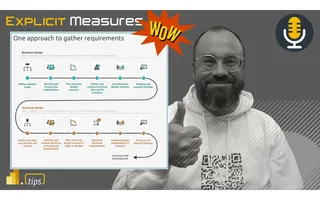
Episode 288 is a practical checklist for gathering semantic model requirements: who the model is for, what definitions must be nailed down, and the constraints (grain, security, refresh) that drive design decisions.

Jan 24, 2024
Power BI implementation success is won in tactical planning. In Ep. 287, Mike, Tommy, and Seth break down Microsoft’s Step 1 guidance: define actionable objectives, prioritize time-sensitive work, choose quick wins that compound, and lay the adoption/governance groundwork without stalling.

Jan 19, 2024
Creativity in Power BI isn’t decoration—it’s the discipline of making intentional choices (story, layout, emphasis, and interaction) so the report communicates fast and earns trust. Ep. 286 breaks down how to stay creative while still building something consistent and scalable.

Jan 18, 2024
In podcast #286 we take the time to review an older video of John Cleese giving a talk about the Creative Process in Management. We thought this would...

Jan 17, 2024
Strong BI goals turn Power BI from a queue of disconnected requests into an intentional program. In Ep. 285, Mike, Tommy, and Seth break down how to define goals you can measure, prioritize what matters, and keep the team aligned as the work scales.

Jan 12, 2024
Data programs don’t break because DAX is hard—they break because ownership is fuzzy and incentives don’t line up. In Ep. 284, Mike, Tommy, and Seth dig into the politics of data and how to create decision-rights, trust, and accountability that actually scale.

Jan 10, 2024
Strategic workshops are where BI strategy becomes real: goals get named, tradeoffs get surfaced, and ownership becomes explicit. In Episode 283, the team shares a practical approach for planning workshops that produce a usable roadmap—not just notes.

Jan 5, 2024
2023 was the year Fabric became the headline and Power BI’s authoring experience kept evolving. In Ep. 282, Mike, Tommy, and Seth review the releases that actually changed how people build, what cooled off, and what they hope improves next.

Jan 3, 2024
Most BI teams fail by skipping discovery. In Ep. 281, Mike, Tommy, and Seth unpack Microsoft’s guidance for planning workshops and doing strategic research so you can document business context, choose the right stakeholders, and prioritize the work that matters.

Dec 29, 2023
Customer 360 isn’t a dashboard—it’s an operating model for joining CRM, marketing, product, and support signals into one story. In Ep. 280, the team breaks down why Fabric’s shortcuts/mirroring + Direct Lake are promising for reducing data-copy chaos (while still forcing you to solve identity and definitions).

Dec 27, 2023
Ep. 279 is a holiday ‘Secret Santa for Fabric’: Mike, Tommy, and Seth swap feature wish-lists—better admin oversight, smarter lineage and monitoring, smoother migration into Fabric, and tooling that makes semantic models easier to build and trust.

Dec 22, 2023
Ep. 278 explains Fabric’s Semantic Link—how it connects Python to semantic models—and why that matters for repeatable data-quality checks with tools like Great Expectations (plus quick hits from the December Power BI Desktop release).