
Jul 9, 2025
Mike and Tommy break down the Fabric June 2025 update with a rapid-fire draft of the features they’re most excited about. They also cover Copilot inline code completion in Fabric notebooks, shortcut transformations from files to Delta tables, and new data agent data-source instructions.
Jul 4, 2025
Mike and Tommy dig into a very real Fabric pain point: connections that get created by one developer and become invisible or unusable for everyone else. They share practical governance patterns—especially security-group driven ownership—and what Microsoft could improve to reduce friction and ‘paper cuts’ in team-based pipelines.
Jul 2, 2025
Mike and Tommy tackle a mailbag question from a small business struggling to justify Power BI and Fabric over their existing SSRS setup. They break down licensing strategies, the value of the semantic model, and why even small organizations can find the right price point for Fabric.
Jun 27, 2025
Mike, Tommy, and guest Mathias Thierbach unpack CI/CD branching strategies — Git Flow, GitHub Flow, GitLab Flow, and trunk-based development — exploring how they apply to Microsoft Fabric, the tooling gaps that remain, and practical advice for teams just getting started with source control.
Jun 25, 2025
Tommy, Mike, and guest Mathias Thierbach unpack what DataOps means for Power BI and Fabric teams — from source control and automated testing to scaling with junior developers. The trio debates whether AI is the key to rapid DataOps adoption and why the click-and-drag approach to Fabric projects won't survive long-term.
Jun 20, 2025
Mike, Tommy, and guest Matias discuss the top-down and bottom-up approaches to adopting DevOps in Power BI and Fabric teams. From convincing leadership to grassroots adoption with Git integration, they unpack practical strategies for building a DevOps culture in BI organizations.
Jun 18, 2025
Mike and Tommy are joined by Mathias Thierbach to unpack what DevOps really means for Power BI and Fabric teams — beyond just CI/CD. They cover why source control is the starting line, where automated testing fits (and why Microsoft tooling is still thin), plus how PBIR/PBIP and modern file formats unlock collaboration at scale.
Jun 13, 2025
Mike and Tommy tackle a common frustration: how to give report viewers a simple experience without exposing them to the full complexity of Fabric. They explore SharePoint embedding, org apps, dedicated embedding solutions, and the importance of identifying user personas.
Jun 11, 2025
In Episode 431, Mike and Tommy break down what’s new with Microsoft Fabric CI/CD and what it means for teams trying to bring real DevOps discipline to analytics. They also cover fresh Copilot updates and a practical take on goal setting and skills development in the age of Fabric.
Jun 6, 2025
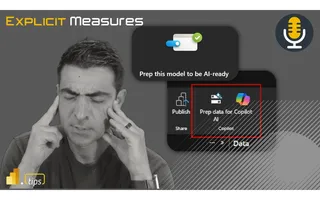
Mike and Tommy debate whether your next investment of time should go toward making reports better or making your semantic model AI-ready. They unpack Microsoft's new 'Prep Data for AI' features — AI instructions, AI data schema, and verified answers — and ask the hard question: is the juice worth the squeeze?
Jun 4, 2025
Mike and Tommy dive deep into Microsoft Fabric shortcuts — from managing connections and creating shortcuts programmatically to using them as data contracts between teams. They explore how shortcuts are changing data architecture patterns and enabling new ways to distribute and govern data across organizations.

May 30, 2025
Mike and Tommy break down what Copilot Standalone for Power BI is and why it changes the consumer experience for chat-with-your-data. Then they role-play a realistic rollout plan—starting with real problems, measurable wins, and AI-ready semantic models instead of a blanket mandate.
May 28, 2025
Mike and Tommy unpack Microsoft Build 2025 announcements through a practical lens — from open mirroring and SQL database tooling to the new standalone Copilot for Power BI. The main topic: a role-play exercise on how you'd actually roll out Copilot standalone in your organization.
May 23, 2025
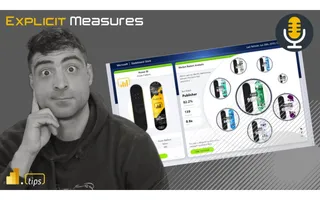
Mike and Tommy discuss how BI teams can move beyond basic bar and line charts into advanced analytics like Pareto analysis. They explore strategies for introducing these techniques to organizations and getting stakeholders to adopt more sophisticated analytical approaches.
May 20, 2025
Mike and Tommy debate whether the Power BI and Fabric ecosystem is still truly self-service or quietly drifting back toward corporate BI, exploring semantic model-to-lakehouse sync, data contracts, managed self-service, and where the line between central IT and business users really falls.
May 16, 2025
Mike and Tommy unpack TMDL — the Tabular Model Definition Language — tracing its origins from the monolithic BIM file to today's human-readable, file-per-object format. They explore practical use cases in VS Code, from find-and-replace renaming to AI-powered measure descriptions and unused-object cleanup with GitHub Copilot.

May 14, 2025
Mike and Tommy dive into the rich ecosystem of third-party and first-party tools that help Power BI developers build, test, deploy, and optimize their models and reports. From SQLBI's comprehensive overview to hands-on favorites, this episode is a toolbox tour for every Power BI practitioner.
May 9, 2025
Mike, Tommy, and special guest Alex Powers deep-dive into squeezing maximum performance out of Power Query—from Excel origins to Dataflows Gen 2 in Fabric. They cover staging defaults, V-Order optimization, query folding, the ELT mindset shift, and why copy-pasting Gen 1 code into Gen 2 will burn your CU budget.
May 7, 2025
Mike and Tommy dive into the Power Query skills every Power BI user should master. From essential daily transforms to advanced M language techniques, they break down what to learn first and what to tackle as you level up.

May 2, 2025
Mike and Tommy serve up their half baked ideas for the Power BI and Fabric ecosystem. From wish-list features to wild predictions, this episode is all about thinking out loud.
Apr 30, 2025
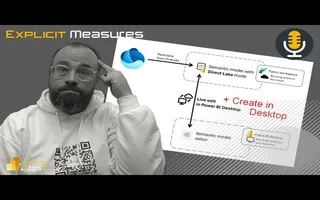
Mike and Tommy explore whether recent Fabric updates change how we should design a lakehouse architecture. With Direct Lake now available in Power BI Desktop and new workspace item limits, the design conversation is shifting fast.

Apr 25, 2025
Mike, Tommy, and guest Ginger Grant explore what education for a data scientist should look like in the age of Microsoft Fabric. They discuss whether traditional college degrees still hold up, the value of internships, and how the evolving data platform landscape is reshaping what skills matter most.
Apr 23, 2025
Mike, Tommy, and guest Ginger Grant explore whether now is the right time for data scientists to make the switch to Microsoft Fabric. They dive into the evolving data platform landscape and what a Director of Data should consider when adopting Fabric.
Apr 18, 2025
Mike and Tommy tackle whether data scientists should pay attention to Power BI, featuring a lively discussion on the intersection of data science and business intelligence. Plus, news on Fabric User Data Functions and VS Code custom instructions for Copilot.