
FabCon Barcelona - Feature Draft – Ep.568
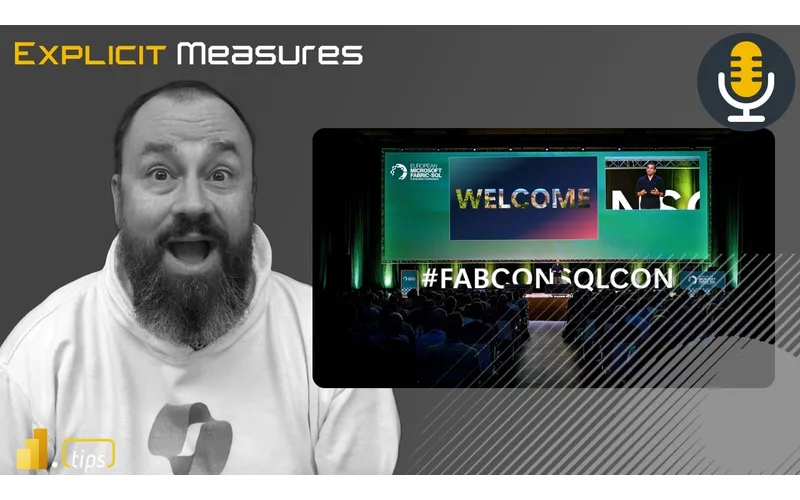
FabCon Barcelona landed more features than one episode can cover, so Tommy Puglia and Mike Carlo draft a team. Each pick comes off the board once it is taken, and they ask the comments to send the features they should take apart in later shows.
News & Announcements
-
FabCon and SQLCon 2026 in Barcelona — Tommy reads Arun’s Azure post as the vision piece that usually follows a Fabric conference. The lines he pulls are that agents are moving across the whole development cycle, and that organizations need trusted context, governed data, shared definitions, and guardrails. Fabric IQ is the shared business-context layer feeding Copilot, not only the Copilot inside Fabric. Under that, Power BI is described as moving from analytics to application creation: natural language in Desktop generates a working app from a semantic model, on Fabric apps, which are now generally available. Mike likes the SQL story of putting the data community and the Power BI community in one room. He is most interested in Fabric apps, and he hopes the Desktop build experience is the same one Replit already ships, because he has been building with Replit and he already knows Microsoft adopted Replit’s structure for deploying the apps. Tommy hears two camps under one name: apps on existing Fabric data, and an agentic visual experience in Desktop. His condition on all of it is distributed wisdom. A chat works on a larger project only when the company’s skills and business context travel with it. Mike’s metric for that world is monthly active agents, on the order of five to ten bots per person, and he says Microsoft is still thin on the MCP servers those agents need.
-
Power BI’s next chapter — This is the post behind the “analytics to application creation” section Tommy reads from the Barcelona announcements. The experience he describes lets someone start from a semantic model, describe an application, and generate a Fabric app. Mike has not seen the Desktop demo, and he wants structure around an agent that builds an app. Tommy is not ready to split Fabric apps into a report tool and an application tool.
-
Power BI and Fabric September 2026 feature summaries — These roundups are the draft board. They do not walk every line. The picks they do take are below, and they ask anyone who wanted a different feature in the comments or at powerbi.tips/empodcast.
Main Discussion
Topic: A feature draft from FabCon Barcelona
The rules are a fantasy draft. First pick is Mike’s. Once a feature is taken, it is off the list. They are building a team of what they expect to use, not a ranking of everything Microsoft shipped.
-
Mike’s first pick is Fabric app production enhancements. Warehouses join the SQL databases apps could already reach. Lakehouses are new, so a file upload can land in the lakehouse and then in a notebook. Semantic models were already there, and Mike has demoed that on Agentic Thinking. The piece he has been waiting on is the backend: a function, plus a secret store for API credentials, Salesforce, Shopify, or the Fabric API. He also notes private-by-default access. His example is a paywall on top of Fabric as the backend. Tommy’s read is that Microsoft is building Fabric apps with the same agentic development they are shipping, and that some of these apps will be things a customer buys without knowing the platform underneath. During the show they also confirm Fabric apps have just shown up in East US 2, which is the region Tommy had been asking Microsoft to open.
-
Tommy’s first pick is the Fabric IQ ontology authoring agent. The two complaints he and Mike have had are that the ontology is hard to build and that it is unclear what you do with it afterward. The new agent takes semantic models, OneLake data, and contextual documents, and Tommy wants a live demo where the two of them struggle through it on camera. Business rules and Power BI measures are supposed to land in the agent’s reasoning through natural language, instead of “build an ontology from the semantic model” and hoping. Mike is torn. Queries across the current ontology were expensive and hard to interpret, and he worries Fabric IQ meters every conversation the way Copilot has moved to pay as you go. He would rather catalog knowledge, tests, master data, and the same table copied across Databricks, a lakehouse, a semantic model, and a thin report. He notes Microsoft is now listed on the Open Semantic Interchange work, and he is in the public meetings.
-
Mike’s second pick is pay-as-you-go Fabric capacity. He dislikes the name and describes it as zero-provision, auto-billing, pay for what you consume. A small shop that loads once a day does not need every Fabric workload. A central F64, F128, or F256 can stay with the platform team while a business team gets a capacity it pays down as it uses. He expects a new optimization job for consultants. Tommy wants to know what is missing versus a trial, and whether this is Fabric with a meter or a thinner SKU. His context is the organizations that have decided they have to move, and that cannot tell the cost before they commit.
-
Tommy’s second pick is the Fabric notebook toolkit. He describes a Python library for end-to-end agentic notebook work from GitHub Copilot CLI, OpenAI Codex, Claude Code, or Cursor, and he wants to see how it sits next to the MCP server. Mike agrees on the spot. He throws agents at notebooks because he would rather review whether the notebook did the right thing than write the Python and SQL himself. Both of them read the library as another surface built for an agent to call.
-
Mike’s third pick is pre- and post-deployment support for Fabric CI/CD, in preview. The line he reads is “Automate every deployment with confidence.” His case is ordering: a lakehouse has to exist before a notebook, the notebook has to run before a semantic model can bind to the tables, and today that sequence lives in Azure DevOps or GitHub if it lives anywhere. The same gap shows up on a feature branch that would otherwise edit the only development copy, or that points dev, test, and prod at production. He hopes the plan is YAML an agent can check, not only a canvas. Tommy calls it a foundation pick.
-
Tommy’s third pick is string indexing and two new DAX functions, text contains and text similarity, marked coming soon. String indexing is for product names, customers, and long descriptions that currently scan row by row. Full text indexing is what makes text contains a semantic match rather than a substring, and text similarity a relevance score. He pairs it with the Outlook mail connector and with sentiment, product-description checks, and campaign search that used to live in SQL. Mike would have scored that text upstream and stored the score, and he is curious what it does to model performance. He expects an SQLBI article. They close the draft with two mentions they would not spend a top pick on yet. Project Osmos, from the company Microsoft acquired, is an agentic data-engineering loop: state the outcome, give it Fabric context and guardrails, and let it build and test the pipeline. Tommy’s question is whether it beats the Fabric MCP he already uses, and what the tokens cost. The other mention is agentic app creation in Power BI Desktop, which Mike and Tommy will not live in, and which Tommy still wants for the Windows users who do.
Looking Forward
Send the FabCon feature you want unpacked, either in the comments or through the mailbag. The one they already offered to do live is the ontology authoring agent, with the two of them learning it on camera. Mike’s longer bet from the conference is the creator agent: the agent that builds the report or the pipeline, rather than the agent that answers a question from a semantic model.
Episode Transcript
0:01 Fabric and A. I get your fix. Explicit measures. Drop the beat now. Can’t steal the crowd. Explicit Hello and welcome back to the Explicit Measures podcast with Tommy and Mike. Hello everyone and welcome back to the show. Tommy, how you doing? Mike, I feel overwhelmed from FabCon Barcelona with
0:31 all the Yeah, I’m really disappointed I wasn’t able to be there and participate in the actual event. people who may follow me on some of the social medias, Tommy, how whenever we have the keynotes, I’m trying to get like a minute or less clip of like what they’re saying on stage and nobody does that. Like there’s no one out there recording. I don’t I haven’t seen on social media anywhere like the announcements and demos that are coming off of the live stage. I’m guessing there’s going to be a couple days and they’re going to have an actual like demo video. I think
1:01 Adam Saxton the guy in the cube is now running a lot of the production v movement on these events. So he’s probably working with his team quickly to edit out the video. but it’ll be exciting to see the actual event and some of the real keynote pieces. It’s crazy, dude. It’s awesome. But yeah, there’s going to be so much we’re going to have to get through. Obviously, not just today, but in the coming months. Agreed. All right, that being said, so we’re going to do a we call it like the
1:31 mock draft. We we call it like a feature draft. So, this is where Tommy and I pick our teams from the features that are now available. What who’s going to be on our team and who’s going to have the most compelling team at the end of this. So, feel free to play along. feel free to look at some of the articles that we’re saying if you pick some. You’re more than welcome to agree or disagree with Tommy and I about what features we’re picking and why we like them. So, let us know in the comments what features you’re picking as well as we go through this., and give us a thumbs up or a thumbs,, thumbs down. Let us know in the comments if you
2:02 like or do not like one of our comments or picks that we have for our our picks for the teams. All right, that being said, Tommy, before we jump in directly, there is a couple other there’s an article here I think you want to go over first. Yeah. Before we go through everything else, what’s the article you want to review? So the article is on the Azure blog and this is from Aun. So typically at any conference for fabric for PowerBI, Aun writes a general the main business article on the Azure blog. And
2:32 this is the teles article, right? This is the va main vision of where Microsoft’s trying to go with fabric powerbi and really AI now. going over the main elements of both what we’re trying to do right now, but what the longer term goals are. So, this is a great way for a lot of people to really understand where where’s Microsoft spending their time. And there’s really a few key themes here that I just wanted to explore with you before we get into
3:03 each of the features. And there are so many things that came for Fabcon Barcelona here, Mike. Sure. So one of the first things here is frontier transformation with Microsoft copilot and Microsoft fabric and it’s really the idea now where Aon says here and I’m just going to read a little from him. Software development has changed dramatically. AI is no longer simply helping developers write code faster. Agents are beginning to work across the full development life cycle. The opportunity now is to bring that same
3:33 transformation to the rest of the enterprise. But more organizations need more than models and agents. They need trusted context, govern data, shared business definitions, operational knowledge in the guard rails that help AI act reliably. And this is really centered Mike and most of the article is centered around fabric IQ. This what just a few highlights here. Fabric IQ is becoming the intelligence layer for AI. it’s the shared business context layer. Fabric IQ
4:03 now feeds trusted business context directly into Microsoft copilot across the board not just the copilot and fabric and helping AI and users make decisions based on governed data. So that’s the main area here. Underneath that Mike we have PowerBI is evolving from analytics to application d creation. The agentic app creation experience in PowerBI desktop lets users describe an application natural language and generate working business apps from
4:35 semantic models and this is using fabric apps and on the behind that we we have talked about that briefly. Yes, fabric apps are now generally available. They provide governing platform for building and deploying AI powered applications. There’s a few features that they updated with there. There’s some AI capabilities for data engineering including which I know I can’t I can’t imagine this not being in one of our picks the new data engineering agent there is one lake expanses enterprise platform they have a new thing called IQ
5:06 sharing Salesforce data cloud integration real time intelligence is always a main feature and they have a few more areas that they talked about but the big bottom line Mike is Microsoft fabric is the data intelligence backbone known for co-pilot and AI agents. That’s what we’re hearing over and over and the direction they’re going. So, Mike, you see everything from Fabcon from a high bird’s eye view when you look at what Aun’s talking about. Do you like the, what do you feel about the direction? Does this
5:37 mix with everything you’re doing on your own work? This will be really interesting to see where we’re going to go here., on one hand, I really really like the the ease of use of SQL., they led with that at the beginning, like, hey, we’re here at this data community. We’re bringing all of our SQL friends and our PowerBI friends together, like I I really think the more they unify this SQL story, the better that is going to become. So, that part of the story I enjoy., I Let’s see how this new co-pilot turns
6:09 out. Now, I do know Microsoft has a very close relationship with Open AI. I do know Open AI is basically did we did a conference or we did the the news announcement for OpenAI and they produced a lot of me too. Yeah. In my opinion, right? There’s there’s a lot of me too of them building fun and feature parody against that. And if you want to check that out, I’ll make sure I can go find the live stream. We actually did a live stream like a mystery science theater 3000 type style of that where Tommy and myself and a couple other friends Matias and and
6:40 Ryan, we all sat down and we commented throughout their keynote of like what we liked, what was interesting, what was cool, what was not cool., at the end of the day, I’m hoping that this dots or bots thing that they’re trying to build,, a personal assistance, people agents that you can give them tasks to and they autonomously go through things, they have access to their own computer., giving them better access to all of the stuff that cross your,, elements here. Having more of that available at our disposal, it’s just going to be
7:12 helpful across the board. So,, anyways, that That’s interesting. We’ll see where Copilot goes. What I am most excited about is probably Rayfin. Rayfin, while it’s being built into desktop, I’m not quite sure I’ve seen a demo of that. So having Rayfin directly in desktop, we will see because I feel like developing a app with an agent really requires some structure here. Now, one thing I would one thing I’m going to call out here, Tommy, underneath the hood. Now I
7:44 think I this is totally guess that I do not know this at all. If in desktop Microsoft has partnered with Replet and Replet is the company that is serving the desktop build like experience with the desktop app and vibe coding the app. I really hope it they’re partnering with an existing company that knows how to vibe code apps inside websites and and and programs. So
8:16 there is a tight I do know there is a tight coupling between Replet and Microsoft fabric. The data structure that you get is been built by Replet and Microsoft has adopted it to deploy the apps. So I already know there’s a tight connection. I’ve already talked to the guys at Replet and I’ve had them on the podcast. We’ve talked about things. We’ve done something on adjunctive thinking with them. I’m actually reaching out to them now again to see if we can get them out to do a more demo and and tell us more about the integration. So, if I’m reading the tea leaves here a little bit, if Replet is
8:46 now inside PowerBI desktop and I’m able to use that same experience to vibe code apps into existence, that I like that I can get behind. I have been exploring Replet for a little bit on my own. I’ve been building games with it using the Replet system and just exploring like what’s possible, how hard can I make things work. what agents can I bring to it or not to it. So there’s a lot of really useful features that come with partnering with an
9:16 existing company that already has this dialed in. All right. What do you think, Tommy? Am I am I on board on the right place here? Well, it’s interesting because there’s another feature that they updated with fabric apps, not just in PowerBI desktop, which I find interesting because I am curious about the direction of fabric apps right now because you hear from one camp it’s application development, build your apps off of existing fabric data and then this other camp to your point with PowerBI desktop build your reports off your data with an agentic experience
9:46 using fabric apps. I am curious Mike if they’re going to in so many words honestly split the direction of fabric apps into two entities for applications or for the visual experience. One of the major features that I I am sure is going to be on our draft too the and I’ll just say as a preview GitHub copilot app that they’ve allowed a lot of features with building out fabric apps. So you’re seeing that direction of okay are we report developing or we application
10:16 building or or is it always going to be both and and not it can do both and I’m not saying pick a lane so to speak but I think there’s going to be in a sense like that umbrella of fabric apps or the and then what’s going to go underneath that because I see what you’re saying there but PowerBI desktop is really going to be met for the visual data visual experience I but I think that’s what vibe coding app like I think so if we think if I look at project here a little bit of what Microsoft’s trying to accomplish
10:47 here is I think they’re trying to project like hey look you already understand the business you already understand what data is inside things you’re already doing semantic modeling why not instead of trying to click and drag and drop things all over a canvas why not let us give you a more open solution where you can just speak things into existence and let it handle more of the technical pieces Tommy our team my team has not touched. We have not we we don’t write code anymore. We’re done writing code. We haven’t written code in in months at this point.
11:19 We’ve offloaded all the code writing to agents. We now describe what we want. It’s more about the requirements and can I articulate what it needs to do with my with my words and images and
11:29 graphics. So, our whole development cycle has changed substantially here with these agencies. And I think the cat is out of the bag. This is the way that people want to build. I have a very I me personally in in the since December January time frame I have reprogrammed my understanding of the world and how I think it to work with computers anymore. You you should go to Claude on your phone and it’s going to prompt you to do an survey that they’re trying to and
11:59 basically it’s going to go and it kind of makes you reflect on really your seinal moment with AI. how what’s the mo like what were the different things that have caused you to work in a different way and it was good for for reflection to your point but Mike this is all well and good but I will still Microsoft you’re doing a great job here very happy very satisfied with Fabcon Barcelona’s updates here but I’m still going to make such a large claim that this is all well and good your ability
12:29 just to talk to an agent which again I’ve shared I do that all the time however You can’t do that successfully to me Mike or in a larger project unless you have provided the proper context and your shared skills and this idea that I want to introduce to you Mike for another episode called distributed wisdom. How do we make sure the wisdom across the company both from my skills or the context of the business is in every place as you move along with a project?
12:59 It’s all well and good to chat, but you’re but it has to come with a back end. A back. This is constantly the problem I think we’re going to be facing, which is and this is this is a people problem. This is not a technology problem, right? This is this is,, people have in their minds how the business runs. People understand different definitions and terms and you the technology is really trying to be here to support that to to help assist with those things. but it this is really way
13:31 this is way bigger than hey I’m talking to my bot and it has a local memory and it doesn’t share at the team right I’m I’m firmly believe in the near term here there will be a way for some of this to get commonly shared across team members and we’ll have a better way of documenting understanding but the trend I see though Tommy is we’re going to move away move away from less and less technical solutions and we’re going to describe more of what we want., there’s a gentleman that I follow on YouTube., and then the name is escap
14:04 escaping me right now. Tommy, it’s funny when we say things and then the internet catches up a little bit. How long have we been how long have we been touting the fact that we are replacing parts of our business with agents or AI things? Listen, how long how many months like how many months ago do we start saying? I think we’re probably near over a year mark and if you’re a listener, you’re probably saying too long., but more I would say a aentic tooling
14:36 like when I was saying I I think I was starting to talk about it in like February March time frame of like hey I’m starting to replace tools in my company and rebuild them with agents and actually saying I’m instead of purchasing software I’m actively deleting things in my wheelhouse. Like I I would say accurate quarter one we used to use Opus clip to edit videos. No longer do we use that. We have a custom homegrown solution. It’s custom for us. It’s how we want to look at make it look and styled. We can adjust the
15:07 style at any time. No fees, no subscriptions, nothing. All gone. So like that’s a having a program that can videoedit and add animations on the screen is pretty heavy. Like that’s a pretty complex system. And so to a lot of people that’s a barrier to entry. They wouldn’t go do that on their own. they would go find an app that does it for them, right? So, so now we have our own custom solution around there. And this is common across many of the tools that I’m looking at., anything that has a
15:38 heavy subscription, I’m immediately looking at, “Can I replace them?” I was just on a call with some some friends and they were talking about some CRM systems and they’re like, “What’s your opinion, Michael? What would you do? Would you would you build and buy an existing system?” I said, “Honestly, at this point, since you’re a small shop, I would really look at the features that you’re getting from your current CRM system. Are you even really using all of it? How much does it cost you to get the data
16:09 out of that system and put it into your own system? If you’re not using a majority of the app to its fullest extent, dude, delete it and build your own.” We’re at that stage. Like now now the strategy becomes to me right now my my main strategy is where does the data go and how easily can I get to the data if my app doesn’t immediately put data in fabric in some form or fashion I’m less interested in using the set app and but it’s so easy to do now too if
16:41 you find yeah exactly fabric as a backend is a thing and I and I think though too there’s a shift there also a shift with ontology that Microsoft is pushing. I think there’s a better vision here. I think we’re getting there for what Microsoft vision for ontologies are because when it first came out like cool I think I didn’t say they’re there. I’m saying instead of going to a green grass plane there’s some roads clay dirt roads that are beginning to form. They don’t
17:12 lead anywhere yet, but I think there are beginning to be some marks in the in the in the plane that are showing some direction. I really dislike the word ontology. It doesn’t make sense to me. No one knows what it means. I get that this is a concept. The information contained in the ontology is relevant and important. Okay. So, this is I think Tommy I think the concept of it fits my understanding and we’ll have to unpack that one a
17:42 little bit because there’s a lot to unpack in in this ontology concept. I’ve been doing a lot of work with this. there is also some really big foundations. So, the Apache group, the open foundation there, they’re actually building a spec a specification around the ontology. And so, they’re actually getting into this and figuring out how to document it. What does it look like? How do you put information down? So I think bigger things are happening around the space. We know it needs to exist. Yeah.
18:12 The the big shift for me though is this information you’re talking about in the anttology space. It needs to be available to both people. People need to look at it, interact with it and agents. Well, I and I think Yeah, I think more now and I I posted Arun made a message here and I posted I think we need a new metric on top of Oh, you’re going to be pushing this. I’m going to hear this every episode for the next one. Oh, I think I think I think there’s a
18:42 new I think there’s a new version of a metric that we need to talk about. I think I think Arun, what is it? You need to talk about the monthly active agents. you need to start measuring this because for every one person, you’re going to have anywhere between five and 10 different bots that are going to be doing things. And I think actually your measure of success will be having less users in your app and more agents in your app and you’ll actually drive up consumption. So, I
19:12 think you really need to treat agents as a first class citizen in your apps. And monthly active agents is actually going to be more important than monthly active users because there’s going to be 5x more agents trying to talk and hit your systems. So, that means you need better APIs. That means you need better documentation for agents. You need more MCP servers to help these agents negotiate around your surface area of your application. And this is one of the areas that I think Microsoft is weak in for now. They’re getting better at this,
19:43 but there’s not enough MCP things that I need to make all my agents work together well on top of the Microsoft ecosystem. It still feels quite fractured in my opinion. Okay, you’re No, I listen, Mike. I Well, first off, no, I need you. I need I agree, but you I need to push back a little, call you out. You and I are the last people who can say that a a saying doesn’t make sense or a word doesn’t have any meaning. Okay? Because we make up all kinds of words. All we all we do is talk about grobots
20:14 dot llamas of hugging face. Okay. Our language has crazy changed. Tommy, right? Oh, there’s another word that has no meaning. Add it to the list. That’s very fair. Very fair, Tommy. Yeah. but hey, let’s go to the draft, Mike, because there’s I think we’re not gonna go through all of them for those listening. And also, if you are listening and there’s something from Fabcon that you want us to dive into because we’re trying to plan out our agenda, our EP,, our
20:45 schedule for the foreseeable future, which probably going to be a lot of these concepts. If there’s one that you want us to touch on, add it to the comments, mailbag us. where to go. Power. tipsodcast. So, and to help us out know what you want to learn about, what we’re going to do today is we’re going to do our feature draft. We do this from time to time. And it’s a fun little game between me and Mike. And what we’re going to do is we’re going to pick our best team. We’re going to draft, go back and forth on the features that came out this week at FabCon. And really once it’s on the
21:16 once someone uses it, it’s off the list. You explain why you want it. And what we’re going to just try to do is build the best feature list. It’s all for fun and games. But Mike, I will leave it to you with the first pick in the 2026 Fab Con. Oh, you’re gonna let me have first pick on this. I get first pick of the draft. Yeah, first pick. It’s a lot of pressure. I’m taking the thing that you’re going to love the most, Tommy. I I I Okay. Well, what? You would even be I’m going to say the fabric app production enhancements is by far is by far the
21:49 best thing that we’re going to this thing is going to enable everyone to build a whole bunch more cool stuff. This is going to push a huge amount of creativity into the marketplace. Really love this. Now let me give you my my read on this one. Right. So this is the fabric apps production enhancements. This is the feature that was noted here. Fabric apps now adds govern connectivity to warehouses. So we had only previously before SQL databases. Okay, fine. Now we can get the data from the SQL warehouse. Awesome. SQL data
22:19 warehouse. That’s great. Now you can add lakehouses which we couldn’t before. So if you have files or if you upload things, you couldn’t really put it anywhere. Now you have direct access through the app to a lakehouse. Awesome. That’s another great win. and then you have semantic models. We already had semantic models for for months. We’ve seen that. I’ve demoed that on Agentic Thinking. It makes sense. Okay, now this is the part that I like the best. They have added a TypeScript backend. I don’t care the language. Honestly, I don’t. I’m not going to write the TypeScript.
22:49 It’s just not going to be me. But the fact that the app gets a backend is huge. And the fact that there’s a
22:55 function now is massive. They have a secret store. So when you want to talk to an API and you need an API call to be like hey I’m going to go talk to whatever the thing is my Salesforce with something that requires credentials or login or some yeah anything any API like so this opens up like I want to talk to the fabric API I want to talk to Azure foundry like this this single feature here functions and secret stores unlocks
23:27 everything for an app everything. I mean, so this is huge. I don’t think people understand how important this is and this is the feature I’ve been waiting for in the fabric app space to really push things to the next level. , and then it has a private by default access now. So there’s some security and governance things, but the things that are hard to do which are authentication of people and things., and then there’s this whole connection to database and the function side like these are the main they’re solving the main hard parts. Yeah.
23:57 So Tommy Think about this. I can make this thing work. And with these functions, I’m able to go in and say, “Hey, , I want to add a payw wall. I want you to pay for something.” You can now talk directly to Venmo or PayPal or anything like Yeah. Shopify. All of it. It all exists inside now this single thing. And now you can have payw walls and have people pay for.
24:27 Dude, this unlocks entire businesses built on top of fabric where fabric is substantially the back end. This is going to be majorly big. You’re going to see me talk a lot more and demo a lot more around this one because this is a massive shift into a much better experience for building data applications. I I would agree this is probably it’s obviously in the first round. And Mike, I was thinking about this. I’m like, how fast did they develop fabric apps both
24:57 from the building of it to all the features they came out with? And I have a realization. They’re absolutely using their own agentic development to build fabric apps on the back end. And what this is such a but this is a cool place that we’re at. All you and I have talked about is our own developer experience. what we can build. Not thinking a company like Microsoft. We’re seeing what happens when they can be strategic and allowing someone to build. We’re seeing the fabric app. Again, to your point,
25:27 I it can be not just an internal app like a power app for an for a user or a couple people on a team. But again, this is gonna be something, dare I say, conventionally sell. Like this is going to be actually something that becomes really part of the ecosystem that you may not even know is a fabric app. And so I I I love this. I think this is my own experience now with fabric apps. Granted, I had a move heaven and earth to change my skew from yeast US2, which
25:57 is not available in Yeah, it’s not there yet, which I I don’t know. I think it just got added, honestly. Great, because I’m gonna move my stuff over because I pay for two now. Excuse. So, I I’m gonna check that. I think I someone online I think texted me and said EastUS2 now has fabric apps. We have to check that, Tommy. I believe that was just recently updated. Oh, come on. I really The amount of messages I sent to Microsoft. Really?
26:27 Well,, this is fabric app should be everywhere. I know it’s I understand it’s in GA, but like dude, roll it out to more places. We got to have it more more spots here. Yeah., there it is. Okay, cool. It was just added. Yeah, they just spent all that time trying to You’re glad your bot spent all that time,, right? You didn’t even do it. Yeah. Well, we’re going to spend some time today on the bot to move it over. Move it back. That’s great. what? That’s my first round pick. ESUS2.
26:57 ESUS2. We now have it. All right. So, that’s a good first pick, Mike. That’s my first pick there, Tommy. I was troubled on where I wanted to go because your first pick really, , in a sense dictates how else you’re going to make picks in the rest of the draft, what your team’s going to shape up like., you’re picking your quarterback here and Mike, I was torn between really three, but I’m going to go speaking of ontology with the fabric IQ ontology authoring agent.
27:30 And how much? Okay. And the reason why is because the amount of times you and I our biggest frustrations with fabric ontology were twofold. The first side was it is hard to build anything here and it does not make sense that front end. The second side that we’re still dealing with is what do you do with it? But we’re seeing a little more of that story. But still the fact remains a manual build when fabric ontology first came out, it’s like what the heck am I
28:02 doing here? What am I supposed to do? How much do I supposed to add? What’s the minimum amount? And now there’s engetic tooling, this agent that allows from some semantic models, one lake data. I want to play with this one. This one I want to demo and contextual documents. Tommy, we should do a demo on this one and figure out what the heck this thing means. We should do it for the first time together and try to figure it out. I would love to do that actually. I have not played with it, but I would like to play this. This we should we should tee up an actual video on this one. So if you if so, in the comments below, if you want to see Tommy and Mike struggle through a brand new feature on a new thing,
28:32 let us know. Let us know in the comments below and we’ll screen share ourselves struggling through struggle busing through this new ontology agent thing and figuring out what’s going on. So, if you want real reaction to a feature, let us know below. That’ll be like a Twitch live stream of me playing Metal Gear Solid. So, but with Tommy’s two left hands, right? You know, I forgot to dodge. Why am I keep walking into the wall? Why How do you crouch? I need to crouch. I can’t even walk around. I get shot
29:02 before I even get anywhere. I spawn and I die. Oh, for those listening, that was a fun game back in the day., but so the business rules and everything you need to do from both connecting to the data to the business rules, teams can do using natural language and reuse PowerBI measures in an ontology. So the metric logic goes into the agent reasoning. Like I I picked this as the first one because this has been the big if the the barrier to entry ontology is so high when you go into an ontology the
29:33 first time. It’s more complicated if you say build an ontology from the semantic model. That’s a terrible experience. You’re like oh cool I don’t know what I just did. So you need that development. I hope that is actually set up in a way Wow. I hope it’s set up in a way wow this guy so excited. So Tommy, we’re on a podcast and I know your mom is calling you. Your mom’s like Tommy.
30:03 Ma, I’ll talk about ontology later. Okay, I’ll talk about later. Mom, we’ll talk about the ontology feature later. Tommy, I know she’s so excited about the ontology features that she called. She’s calling to give you a thumbs up ontologies. Yes, talk about Yeah, talk about the agent more., but no, so my first pick is the ontology authoring agent. I think we should definitely go through this and see how easy that process is because that’s the barrier to entry. So, Mike, what do you think when you saw that feature?
30:34 Well, so I’m a little bit torn here, Tommy. On one hand, I I think the way the ontology is developed today is not very useful for people. I don’t understand it. It was actually quite expensive to run queries across it. I didn’t understand what it was doing., there’s a lot of this I build, we build Tommy now for both people and agents. That’s the same thing now. I I I think everything needs to talk to both of these systems. So, one of the things that’s a little bit nerve-wracking to me here is I’m seeing a lot of this Fabric IQ stuff show up,
31:05 right? And the fabric IQ is interesting, but I’m worried that every time you send something into fabric IQ, it’s going to start charging me more and more compute units just to talk to the data and things that are inside the system. So, let me give you an example, right? If I talk to an API, it doesn’t cost me anything. There’s no there’s no expense to an API call. I’m not talking to an an agent that’s interpreting something and then spending some money on things. So I am a little
31:36 nervous around this fabric IQ appearing everywhere and I really want to understand what’s its impact. Now I do know Microsoft has also made this position around their normal co-pilot pricing is no longer $30 per user for co-pilot licensing and even again that was like for what part of co-pilot you’re actually getting we don’t really know but now it’s everything is pay as you go like everything is consumption based right the more you use these co-pilots the more it’s going to be part of like the system so I’m hesitant Tommy I I am very much
32:10 this is going to go on a bit of a a random tangent here. Oh boy. Your catalog of stuff that you build the I’m going to call, for lack of better term, I’m going to call it ontology, but I actually think it should be like knowledge and ontology together. So, I’m going to coin a new termology, na chology. I think we’re actually building a chology, which is human knowledge built into some relationships between things. It’s got to exist. And that can work because we already have trans
32:40 analytical. So you smash words together until you it makes no sense and then everyone will have no concept of what it is. We’re not sure what to name David just smashed to a technology isn’t what we’re going to go with. So but the the principle still remains right. I still have you know when we look across the the the the expanse of my company right I have many representations of the exact same table and most of them are mirrored copies but some of them the business can change some of them don’t like so how does all
33:11 this work so cataloging is going to be incredibly important of like what’s going on what’s going on like the song u anyways I’m not going to sing to you here on the song and then the the other part here is like data governance and administration of like MDM, data quality, writing tests about your data, like all these things need to exist together. It’s part of when I when I think of ontology, I think of like the organization needs to understand where does data go, how did it get there?
33:43 Can we trust it? Are there tests on top of it? What is master data? All these concepts all pulled together. And like that’s the problem we’re trying to solve. the technology is getting so stretched out. There’s so many different places, right? I’m in data bricks. I’m in a lakehouse. Now I’m in a semantic model. Now I get a thin report. And all of those systems can have some knowledge or information about metrics and tables and DAX and not DAX and SQL. Like there’s so much we don’t have a
34:13 system to wrangle all of that together. And I think the ontology is trying the chronology is trying to Yeah, get it right. is trying to solve
34:22 part of that problem. So I I don’t know what it really needs to look like, but I do think there’s there’s concepts coming here. The way Microsoft is solving this is pro is interesting. I’m very going to be much in touch with this, but I think the the OC specification that’s been generating the open semantic interchange is is really going to start defining what we do here. And I hope that Microsoft continues to stay close to that project. They are now officially a partner. If you go to the website and look at the OSI spec, you scroll
34:52 Microsoft’s there. They are on the team now. So, every major data provider that I can that I’m aware of is now participating in this OCspec thing and they’re all trying to figure it out and what’s going on here. And I’m attending the open public meetings. I’m getting involved here because I really do think this is a technology stack that we need to have all across fabric and all across all these tools. when we have a rune on I want to I want to ask him what took so long like it wasn’t that long it’s still an incubation like it’s not even a real thing yet like nah
35:24 I I feel like we should have Microsoft should have been right off the bat like this is semantic modeling so Microsoft is never right off the bat to anything Tommy like they’re always last to the game but when they show up they do it better and cheaper than the other companies is how my opinion is right other other customers will show up with a really kicker project or kicker product and it’ll be like premium top dollar, really good, well done. Microsoft will sit back a little bit and wait for like Tableau hit first. Everyone loved it,
35:54 right? And then Microsoft’s like wait maybe we should compete with that and now I believe my opinion PowerBI is now surpassing like Tableau had its day. It got absorbed into Salesforce and I think Microsoft PowerBI has now surpassed them. It’s now a better system and now fabric is surpassing all the things that are doing with like Tableau now because it’s it’s a part of the bigger suite. So I like the direction we’re going here. We’ll see. I’m a little undecided. I’m going to hold my reservation. I’m 50/50
36:24 on this feature. Okay, cool. All right. So Mike, you are up for the round two. Yeah, there’s a lot of really good things in here. I’m going to try and pick one here that’s maybe not so common., I think one that is really interesting here that I’m going to put my name on. This is probably further down the list about people not seeing as being so ex so excited, but there is the fabric zero provision., there is a they call it like
36:54 what do they call the feature? I don’t remember what they actually called it. It’s like it’s like pay as you go basically. So I I don’t like the name they called it. I think it’s like auto billing or something like that., but they I don’t like the name of it. The name is horrible, but it’s definitely pay as you go. And I think this is going to be quite revolutionary for individuals., and and specifically for teams., let’s imagine, Tommy, you’re a small business, right? And you’re running some data loading processes and you’re only loading data once a day. Run a pipeline, put it in a
37:25 lakehouse, you’re done., move on. Right now, you don’t need all the bells and whistles of all of fabric. you just need a very small portion of it to pay for and now it becomes what you consume is what you pay. There’s likely a balance point in here that allows you to figure out okay and think of it this way too, Tommy. There may be a central team that’s running an F-64 or F128 or F256 because it’s a big model like you need stuff. So centrally
37:56 there may be something going on. There may be a business team that just needs a little extra fabric on their own to let them play with some stuff, do some things on their own. They don’t we don’t want them on the main F64 level. We want to give them their own capacity and as they use it and consume it, they pay for what they use. I think this is a really unique scenario and I this is going to give consultants a lot of work. We’re now going to have to figure out another whole optimization strategy around what that looks like.
38:27 I I like that because I think when you look at the zero I I did note that I’m like this is interesting. It’s like the PowerBI Pro when it came out that the that beginning and a lot of people use trial right now. So I’m curious how this is going to relate to trial because trial is still rampant, right? It’s still such a huge part of what people do. So I want to see what it’s going to offer. What features are not going to be available? Is it fabric jun like fabric light? in terms of like well it doesn’t have fabric apps you can only do
38:57 so much or is it going to be the whole kink kaboodleoodle with a cost to it so that’s where I’m the most curious with I’m intrigued that you put that and but I think it’s important though too because the conversations are being have happened this year to me Mike where more every organization at least that I’ve talked to or have really decided that we have to pick a direction now rather than just living in the power world with fabric and beginning to either have that conversation or in the process of migrating their information to fabric
39:27 and that’s tough to do when you have to pay for the skew right away. There’s a lot of proof of concepts out there and for a smaller organization, right? Like it’s like do we do the whole trial and commit all this to it? Can we understand the cost beforehand? I figured that I have another this is another difficult one for me and I think if you’re if you’ve read the blogs, if you’re listening, you’re probably wondering why we’re not talking about the main features. But again, I’m going off of what I think is going to be the most helpful for me or and in the workflow
39:59 that I do with the things that I know because I think a lot of these features while cool, I’m curious about cost, but also is it new in terms of what my workflow is. So, I’m actually going to go with Mike Fntk, the fabric notebook toolkit. Oh, that was on my that was one I was really much looking at at that one. That one’s interesting. Okay. explain what you understand this feature to be, Tommy. So it’s a Python library that is meant to support endtoend agenic development for the fabric
40:30 notebooks and it’s possible from GitHub copilot CLI open AI codeex and cloud code or really cloud codework or any cursor IDE and it’s a simple Python library that I’m very curious to dive into this to see how it supports or complements the MCP server in terms of what’s available here. It’s obviously, but it’s so new. But Mike, to your point, this goes back to the idea where a lot of the APIs that are coming out
41:00 now are not really meant for like,, a user to build that connection. A lot of the apis that fabric has released probably in the last month or two have been especially built for agentic or agents to actually read and consume and use. Sure. Yes. Not saying you can’t do it as a user or or build your own app, but they’re meant for an agent to actually scan it. This is another example of this. This is a really a Python library that is meant for an agent to run
41:30 through. It’s,, you could use it as a user if you’re wanting to build your own notebook. But yeah, this is where I’m seeing quite the shift now where even the coding that’s available. Libraries, APIs are built for the agent now, not for a user, not for a human. I think this is going to complement more of the development monthly active agents. Tommy, I I get it. I get it. Okay. Okay. Here we go. We’re already seeing features that are coming out specifically for agents,
42:01 right? Monthly. Is this true? This is true. I’m right. I’m I’m reading the tea leaves here a little bit. Like this is becoming a thing. We’re going to see more features. Like people like to interact with with different solutions and only using agents to do it. Tommy, you picked the you picked literally the tool that’s like for agentic development. This is this is to get your agents inside the system to build stuff. And I would agree with this one, Tommy, 100%. Whenever I’m working on notebooks, dude,
42:32 I’m throwing all my agents at notebooks. I do. Let me let me be clear. I love writing SQL. I love writing SQL more inside notebooks. I like writing Python. I like writing Python more inside notebooks. So, I’m a big proponent of like throw agents at this stuff because I’m not going to it. It doesn’t write No, it doesn’t write a line of bad code. The whole code thing may be doing the wrong thing, right? That’s where I that’s where my job is. My job is to make sure that’s doing the right thing and checking its work, right? That’s that’s still the onus of
43:04 the people at this point. But man, this is I agree with you, Tommy. you stole one of my picks on this. This is a good round pick here, I think, because there are some more like mainstream features here that it’s funny. But so I know, man, it’s always fun talking to you, but Mike, let’s go to your third. Does it Are we’re going to follow the same pattern? Okay. All right. So, my third one here is this one I think is getting not a lot of love here. the fabric CICD CICD deployment plan in preview. All
43:36 right, my under Let me go to the the feature article on this one. This is the CICD deployment, right? Deployment. Okay, where did it come here? looking for the feature on the website. I think it’s a PowerBI feature, correct? Or no, it’s a fabric feature. I’m looking at the wrong blog. Okay, fabric CI/CD. Yeah. Okay. the fabric CIC deployment I think the So Tommy let me describe some of the issues. Where is the feature
44:06 on this one? Hold on. I’m looking at literally looking for CI/CD. Okay. Okay. Automate every deploy. I’m going to read the article because this is really good. Automate every deployment with confidence. Introducing a pre and post deployment support preview for CI/CD. Okay, let me let me explain how I read this, right? Why is this so important to me? How often have you tried to deploy something or a lot of items into a workspace and there’s a sequence of items you need to
44:36 deploy? Right? If you try to rip out a notebook and there’s no lakehouse for the CI/CD to attach to, there’s an order of things on which you need to deploy. Right? So, as you think about what you’re doing, I need to first deploy a lakehouse. Then I would need to deploy maybe some notebooks. Then I might need to run some data or run the notebooks to hydrate or populate said data, right? And then I can go get now that there are real tables in the lakehouse, now I can go get the semantic model to go pick up those tables, right? So there’s actually
45:07 an order of operations and there’s when you deploy a physical item, there’s potentially actions you need to do before it gets there and then after it arrives, right? We’ve had none of this. This is you’d have to do all this in code and all of it would have to exist inside your Azure DevOps or your GitHub. You could do it. It just was harder to do. So I think this is going to be a really useful feature. and if they dial this incorrectly, I think this would be very helpful for us to build these proper
45:37 deployment pipelines and actually sequence things. Another challenge that I think I have here, Tommy, is like let’s say you’re working on dev test prod environments. These are what you’re building inside your system. Well, Tommy, if you want to go out and build a
45:49 brand new feature, what do you need to do, Tommy, to build your feature branch on data that you need to use to like manipulate something? So, Tommy, if your feature is build a table, update a column, do some things, you potentially could break the data that lives in development. And I know a lot of teams have a pattern of they actually use production data connections, which I’m not sure if I recommend all the time, but sometimes you’ll you’ll it teams do this whether you like it or not, right? It it happens. I I wouldn’t advise it for me,
46:21 but they’ll have dev test and prod sources all touching production, right? Well, if you’re manipulating tables there in the lakehouse in those different environments, are you actually doing it in separate things or is there something common that you’re trying to manipulate? So you potentially could be breaking your data in destructive ways and you need to affirm that your change is working correctly and doing the right thing. That’s where I think this also makes a lot of sense here. It would help with branching and feature development and building copies of things. And so
46:52 hey, I need this copy of a lakehouse down in this development space. Oh, and by the way, I need to copy the data too, right? Or some of the data and then work on it and change make the changes. This is I think a very subtle very technical engineering or data engineering requirement but I think this is needed to make it easier for us to work with the system. I hope too because they they’re really touting the visual canvas that you can use. But I’m assuming that this is going to support some like YAML or like it’s like a back end of GitHub actions because Mike I
47:24 look at this very much the same way you are but with the lens of to can I use an agent on this to help plan things out and I hope something like that’s available not just the UI. I am assuming that’s going to be the case because yeah, if I’m doing this, I want to make sure that,, either have it in YAML or some language that supports this, which I’m I think YAML would probably the best one here. Yeah. And being able to make sure like do a validation tech checks on this with my agents that I’ve already created. Yes.
47:54 So, this is a solid three, Mike. I know it doesn’t seem the the in a sense the most intriguing but I think for what we’re trying to do and the more things that are created in fabric is such a important foundation here. This is like the foundation draft for you and I. So love it. All right Mike it gets tougher because again we have yet to talk about again the main cool things that I think are here but I need to go where my heart is. Mike
48:24 and follow your heart Tommy. Isn’t that a song? Isn’t Is there Isn’t there a song about Trust Your Heart or something like that? Yeah. Yeah. Listen to your heart. That’s the one. That’s exactly the song I was. Exactly. Was that Rod Stewart? So yeah, we are showing our age. Metal Gear Solid and Rod Stewart on the Power. Yes. Well, I’m gonna go full PowerBI here. And Mike, we have full text search and PowerBI
48:54 semantic models. And we have two new DAX functions here. Oh, okay. So, and I and I’m gonna explain why it’s important. So, let me go over what what was actually coming out. This is coming soon. Okay. So, let’s be aware. But string indexing for PowerBI semantic models is coming soon. If your report relies heavily on text fields with products, names, customers, or long descriptions, you’re right. You lower lower performance. So common operations like search and contain string scan rowby row string
49:26 indexing builds specialized indexes so engines can local locate matching text more efficiently. There’s auto and full it requires metric model on a certain level. However, Mike there’s more. So that’s the first part. So we can now index text in PowerBI models which honestly as we’re doing more AI stuff and we want sentiment analysis and you can get more data in text is going to be more important than it was before. The ability to say what the information is but that comes with full text indexing.
49:58 what we also have now is full text indexing enables a more intelligent search experience based on the meaning of words in natural language concepts. This capability powers two new DAX functions, text contains and one called text similarity, which I feel just breaks what DAX is here, making easier than ever to analyze large large volumes of data. And what you can actually do with these functions with text contains returns true when a text matches a search expansion using this full text
50:29 semantics rather than a substring. And then text similarity returns a relevant score indicating how well the text within text column matches the search text. Enable similarity based text comparisons. H so sounds like interesting. Sounds like Jev. Sounds like an AI model that is doing some funny text searching things. Okay. It’s actually it’s actually not. But I get it. So pretty pretty interesting
51:00 here, Mike, that what we’re dealing with, why why is this why is this required, Tommy? Like like I get that we’re looking for certain things. Is this to help us build better measures around I don’t is this a measure that I’m I’m not so yeah I feel like this needs to exist agree but I’m trying to also understand like okay how is this going to impact performance of the model is this mean now I’m trying to rip across every
51:31 single column compressed thing and pull out like ah this is interesting I don’t I want to someone’s going to figure this out there’s going to an article from SQLBI. We’re going to read it. We’re going to be like, “Oh, that’s why we need it.” Yeah. Right. But right now, I’m like, I’m not sure I understand it. I feel that the way Okay, so this is this is why I picked this third in my podium. Like, okay. One, it’s the fact that we’re pulling we have the ability to pull more and more data from more and more places than ever before because of a
52:03 which means we’re pulling in forms. I can pull in email. That’s actually one of the new features, too. We have the mount Microsoft Outlook mail connector that’s also available that corrects directly to Outlook mail. So you can pull all the email if you want to do sentiment analysis. I can pull all this other information that’s more even considered soft data, right? Rather than just your numbers and aggregations and having that information you want to be able to do, like I said, the most obvious one is sentiment analysis is a positive review or negative review,
52:33 right? that ability can actually now happen in a semantic model rather than trying to do that clo farther upstream or or more upstream. There are there other t text things that we’ve always needed too in a product search product descriptions right how well data validation or at least text validation on how well are we creating product descriptions where I can use this textbased score does all my shirts have in our new campaign and
53:03 doing a search that a consumer can do here that was previously something for someone from the SQL database to search on now user can have a text search and go, let me see every, you know,, product that has to do with our new spring fall campaign. Is that in the descriptions? Return that list easily. Or, how well does it meet, other, items? I think we’re we’re getting closer here, Mike. The way I read this one, I I read it
53:33 like how you’re reading it, Tommy. So, I I agree with you there., I also read this in the is a lot of this is like they’re they’re describing things like text search. Now, text contains is interesting because text contains is like okay, it actually has that exact phrase or thing in it. I like I really like this other one that they’re saying text similarity. Yes. You you give it like you give it like a phrase or a part of a word or multiple things and then it says here what I think are the most relevant things based on that information. And so text similarity is nice. It feels
54:03 like they’re using some new algorithm here. When I look at this feature, it looks like to me, Tommy, instead of this is a this is a feature I would traditionally shove into [snorts] the back end before the data comes to PowerBI. Right. Right. Right. I would do the data there and then I would say from that I would then okay, we’re going to do some aggregation. I’m going to do some scoring. That is a one-time compute I do outside of the model. And then when I show up to the model, I already have
54:34 things scored by things. But that also bloats your model. There’s a lot of things in there potentially you don’t care about that you’re you’re not sure the users are going to look for. So this is interesting because this is moving that compute layer away from the offline stuff and into what’s happening on inside the semantic model. So I think that’s something that’s that’s changing here. No, and this does not work without that indexing feature, right? like there’s no way they would be able to do the text similarity or have it run,, in
55:06 in something that would be acceptable without the indexing feature. So, I think we’re going to see a lot here. Okay. All right. So, that’s your pick there for it’s your number three pick. So, I guess I’m on number four pick now. I don’t know. Near the end, so we should probably do honorable mentions. Mike, maybe this is our honorable mention. Then we wrap it here because we’re getting closer here to the end. I where where is this one here? So, one
55:36 thing I I don’t know where this all fits, but project osmos. Remember how Microsoft acquired Osmos? Yes. I think this is the first time they’re actually mentioning the Osmos application or thing that they’re doing. Project Osmos is an agentic engineering experience. It brings governed autonomous execution to complex longunning engineering work. you define the desired outcome and provide fabric content context with guard rails. This is this I believe is
56:06 starting to touch in the the realm I I said when agents get smart enough and when agents do things where things are changing very rapidly 100%. This one I believe is going to rock the rock the world of the data engineer. Most of the data engineering activities that we’ve done in the past are not are not agentic at this point, right? I’m doing a little bit I’m dabbling in I know John Kurski is probably dabbling in this a little bit as well. So I’m going to ping on I’m pinging John Kursky
56:36 calling John Kursky because I know you’re in the chat there already., John, I know you’re probably already dabbling in having agents work on notebooks and do some lightweight things there or we’re starting to, but this I think takes it to another level like where we define here’s the table that is the source. Here’s the table that is the output agent. You go figure out the best way to go build a pipeline, a thing, whatever the engineering, go test it, go run it, go optimize it, do all the things. this is potential for really shaking up the data engineering
57:07 framework of how we’ve traditionally been building things. And so I I want to stay close to this feature because I really think agree
57:16 Microsoft doesn’t acquire companies unless they have something cool to go do and that’s what Osmos is doing and that’s exactly what we’re seeing here. So no, I I love that. I think that I’m glad we needed to mention it. You know, now the curious thing is how much better is that going to be than my current agentic experience like for data engineering with the MCP? How much more is it going to cost? So that’s why I honestly wasn’t part of my top three. That’s why because am I all these tokens
57:46 agents are going to go faster than my MCPs with my skills? Can I change? Yeah. Right. 100%. And and I al not only that not only is it is it that part but it’s also do I how many tokens is this going to run right how much use is this going to use but it’s talking about long running data engineering processes right so can this thing do something in an hour that would normally have taken me weeks okay like now now we’re talking like
58:18 what did it build right so there’s something else here that I think is really interesting that I’m I’m going to really want to play with and I think this is going to be potentially revolutionary for the data engineering space and I still think data engineering is going to get wrecked here in the next couple if we didn’t have MCPS then this would be revolutionary to this that’s probably true unless it has a lot of new features again it’s very early you can do this without this feature but it’s a lot more MCP pull down notebooks work in local code like there’s not a
58:50 consolidated story about what this looks like it’s more effort on you, the agentic developer, right, to figure out what you need to build in order to get to work. But this But is it almost too late then? Because to your point, I’m like, I’ve been working with the fabric MCP now for it is so ingrained in my workflow. Yeah. And I think for a lot of people who are using the MCP, it’s like, okay, you have this new feature. Why am I going to move everything over here? Can I trust it? , does it work better? So, I agree. It definitely needs to be mentioned. And my honorable mention
59:21 here, Mike, is I know we’ve talked about already, but I am curious to see where this goes is the agentic app creation in PowerBI desktop. And yes, we know it’s desktop and we know everyone needs to go to Omar and Linux as you and Kurt would say., but however, for the normal person out there, right, who has a Windows computer, who uses a Windows computer noob,
59:51 but you just movie quotes throughout the entire This is a great point. Noob. Noob. no no but I think the biggest thing here you think about the mass people at an organization right this can be professionally per potentially a game changer obviously you and I yeah we’ll try it but it’s not like oh my gosh this is going to change everything now I think for a lot of users both developers
60:22 PowerBI developers and the majority of organizations and even that managed self-service side who knows where this can really fit into that story. That’s why I want to at least mention it. For myself, it doesn’t like change a lot, but for those users. So, Mike, I really want hope users can comment and let us know what direction you and I need to figure out. How are we going to navigate this? What are the stories here?, how does this fit from both governance and, all the things we normally do. So, it’s going to
60:52 be fun in the next few months. I would 100% agree with that one. And yeah, I I this it’s a very exciting world that we live in right now. Things are changing very fast and it feels like we’re getting a lot of net new tools. This is also an area I’ve been feeling I see a lot of these innovations coming from Anthropic. I see them coming from OpenAI. I see them coming from XAI on companies and I’m really excited to play with these new features. I want to touch all these new things and I’m finding these new features that these companies are developing are very exciting. They’re very useful. I’m
61:22 finding them changing my workflows and how I do things dayto-day. Awesome. Love it. I’m seeing a slower uptick of features that are specifically for agent agentic development coming from Microsoft. This conference gives me a lot more hope around all the agentic experiences that they’re building. And I’m going to continue to use this stupid term. It’s the creator agent. We are in the era of the agent developer, right? The ag the agent dev. I don’t know what we would need to call it, but I need to use agents to help me build things. I don’t
61:52 need agents to give me answers about stuff. And this is the first conference I’ve heard Microsoft really shifting their language away from we’ve been saying this for months. Stop trying to give me answers from a semantic model with an agent. I that is not what I want. I want the agent to build me the report, the visual, the thing, the creator agent, the developer agent. That’s where this becomes really impactful because then I’m running all of this. And I’m actually hearing now on on social media, other companies and other people are now like non-Microsoft
62:22 people are picking up this story of the Agentic Dev or the Dev Agentics experience where build you’re building the infrastructure on existing technology. The agent’s just creating it for you. And that’s where we’re seeing the biggest returns because now I can build things at scale way faster on cheap hardware. And that’s where the that’s the sweet spot here. I need to spend the agents tokens on the hard stuff, which is make the machine that
62:52 makes the machine, right? I one there’s another Well, that’s that’s that’s that is a I make the machine that makes the machine, right? So that something like that, but that that’s that is the the realm that we’re in here. Anyways, I’m pretty sure that’s how the Matrix started. Oh boy. Oh yeah, getting down a rabbit hole on that one. All right. All right, Tommy. where else can you find the podcast? You can find us at Apple, Spotify, wherever your podcast, make sure to subscribe and leave a rating. Helps us out a ton. Do you have a question, idea, or topic you want us to talk about a future episode? Maybe
63:23 something from Fabcon that you want us to dive into from a certain angle. Well, you can head over to powerbi. tipsodcast. Leave your name or great question. And finally, join us live every Tuesday and Thursday, a. m. Central on all PowerB. IP social media channels. Let us know in the comments what demos you want us to do on these new features here., so give us some heads up there. And with that being said, apology. Oh boy, Tommy, you’re you’re just going to watch a lot of swearing on on an episode. So we’ll see what happens. Hopefully hopefully it’s getting better.
63:53 With that being said, we’ll see you next time. I wrote the perfect script. for a pipeline that would shake. Every little scheme of change would make the whole thing break.
64:25 Then an AI agent learned to ride the storm and the brittle old approach no longer felt like form. Agent B script. Agent beat script. When the ground keeps moving and the sources shift ap script unstable pipelines need a smarter game. Agent B script. Let the
64:58 old ways bend. They are holding patterns till the night. Agent B square
65:28 of a world that never rearranges. Agents of a world that constantly changes. ETL that wobbles used to steal my sleep. Now the agent steadies what I couldn’t keep. April shable pipelines need a smart
66:00 script. But the old ways been AI holding patterns till the night scientist
66:30 Pulling out the craft I used to own. I’m choosing the weapon that can stand alone. When the feet is fragile and the rules won’t stick, that’s the moment agent be scripted and the chaos something that can adapt in flight. Keep the human judgment for the choice of right. Let the brutal cold rest when the world won’t sit still. Aging in the mix in the pipeline.
67:01 We’re all on the floor under an optimal sky. Feel the new rhythm as the old scripts die. My funeral just a change another god. Agent beat script. When the road gets high beat when the ground keeps moving and the sources shift. Agent beats script. Agent beat script. Unstable
67:31 pipelines need a smart again. Agent beat script. The old ways been they are holding patterns till the night. Age of peace with peace.
68:24 Explicit measures. Pump it up. Be it high. Tommy and Mike lighting up the sky. Dance to the day. The laughs in the mix. Fabric and A. I get your fix. Explicit measures. Drop the beat now. Kings feel the crowd. Explicit measures.
Thank You
Want to catch us live? Join every Tuesday and Thursday at 7:30 AM Central on YouTube and LinkedIn.
Got a question? Head to powerbi.tips/empodcast and submit your topic ideas.
Listen on Spotify, Apple Podcasts, or wherever you get your podcasts.